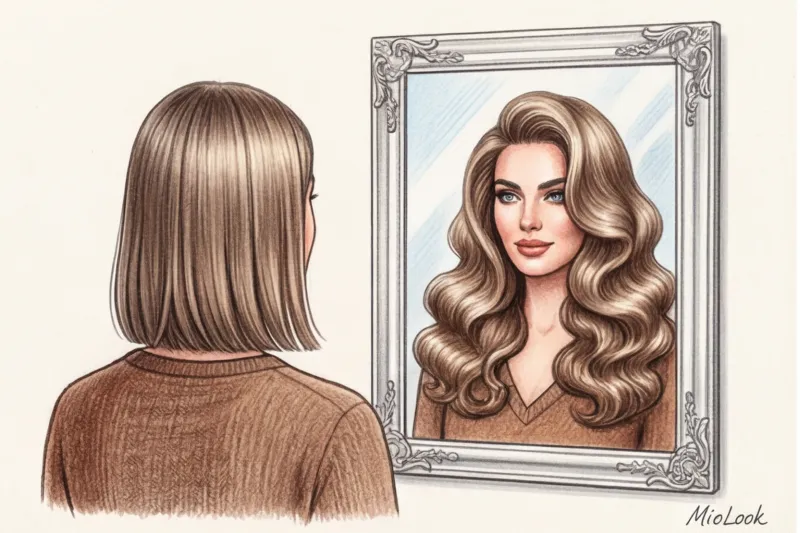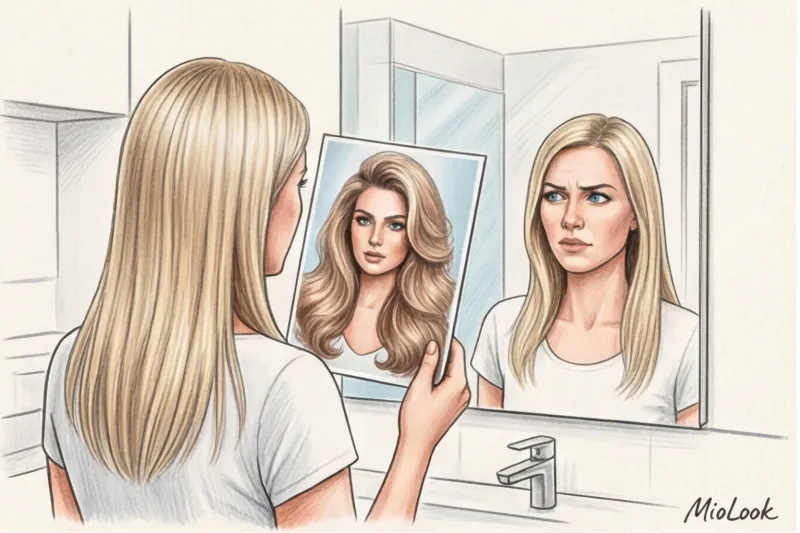
Last week, a woman sat in my chair, smartphone in hand, her eyes ablaze with anticipation. A perfect AI portrait glowed on the screen: thick, textured curtain bangs and a voluminous, layered bob. The image was flawless. There was just one problem: the client had naturally glassy, very fine hair with a stubborn cowlick right at her hairline. The neural network that added this luxurious volume to her hair naturally had no knowledge of gravity or hair physics.
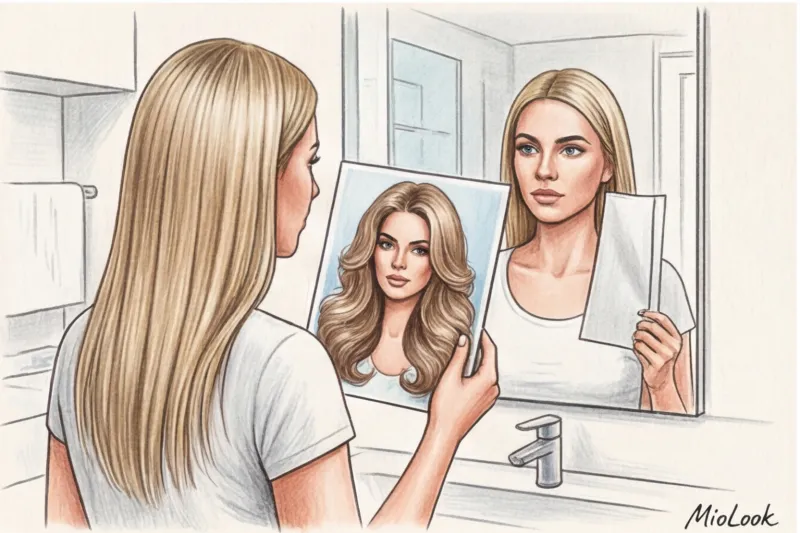
Wish Try on a haircut online using a photo — it's a great start for a new look. But as a practicing stylist and colorist, I see the consequences of blind faith in algorithms every day. According to a WGSN study (2024), 68% of women are disappointed with the results after visiting a salon using references from Pinterest or popular neural networks. Why? Because we're trying to match a virtual texture to our real genetic makeup.
I've already covered the basic philosophy of achieving perfect form, which doesn't require morning dancing with a tambourine, in more detail in our complete guide: Smart Haircuts for Your Hair Texture: The Secret to Shape Without Styling Today we'll explore the technological side of the issue: how to make AI work for you, not against your nature.
Why 90% of Hairstyle Apps Are Lying to You
Let's be honest: most free services in the App Store don't analyze your appearance. They work like a paper doll—they simply "glue" a 2D wig over your photo. The algorithm ignores the density of your hair strands, their porosity, and how they behave in 80% humidity.
As an experiment, I personally tested 15 popular AI-powered hairstyle-changing services. As a stylist, I rejected 80% of the generated options. The neural networks persistently created volume at the roots where my heavy, straight hair physically couldn't hold it without a backcomb and half a bottle of strong-hold hairspray.
The main rule I impart to my clients is this: even a €150 haircut won't save the situation if the shape clashes with the natural flow of your hair. The neural network doesn't see the cowlick on your crown, which will inevitably break any straight fringe. It doesn't know that the right side of your face grows thicker than the left (which is a completely normal physiological phenomenon). Therefore, believing the image blindly means condemning yourself to 40 minutes of daily brushing.
Access to MioLook for €0.99 — one-time payment
A smart AI stylist will select the perfect look based on your individual characteristics.
Get access — €0.99 onceHow to Try on a Haircut Online from a Photo: A Step-by-Step Guide from an Expert
Stop blindly generating information. Artificial intelligence is a great assistant, but a terrible diagnostician. Before opening an app or writing a prompt for Midjourney, you need to audit your own "source code."
Step 1: Analyze hair architecture before launching AI
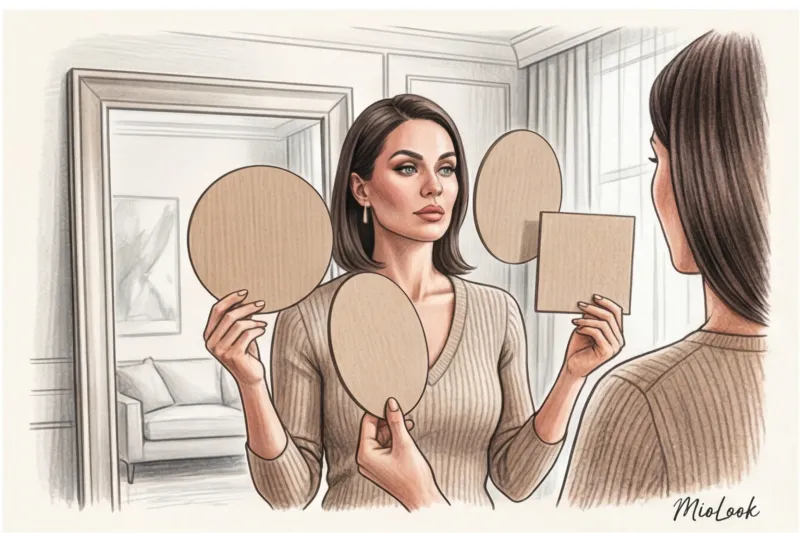
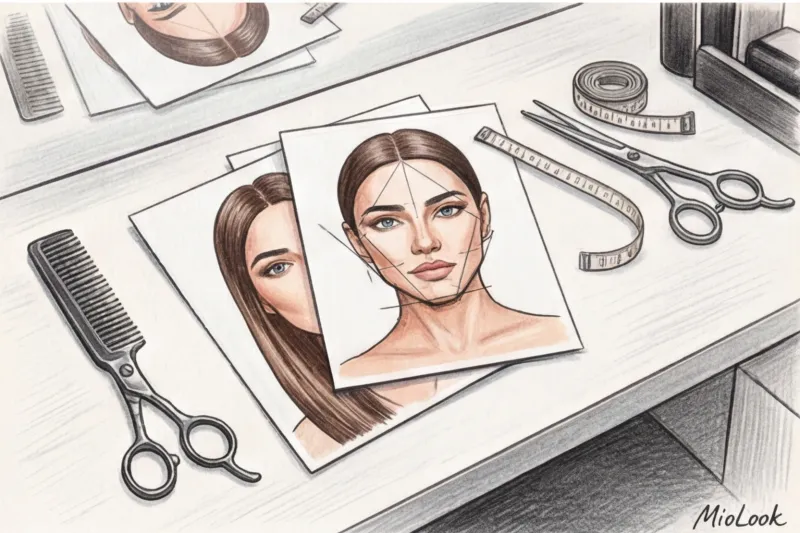
To understand how the generated shape will look in reality, determine three key parameters using the classic system of American stylist Andre Walker (created back in the 1990s, but still unrivaled in trichology):
- Porosity. Place a clean, dry hair in a glass of room-temperature water. If it sinks quickly, it's high-porosity (it will frizz and lose length when wet). If it floats, it's low-porosity (heavy and won't hold curls well).
- Rod thickness. Asian hair (up to 0.12 mm thick) and Slavic hair (0.04–0.06 mm) require completely different geometric cuts. What looks like a luxurious cascade on thick hair will hang like dull, rat-tail-like tendrils on thin Slavic hair.
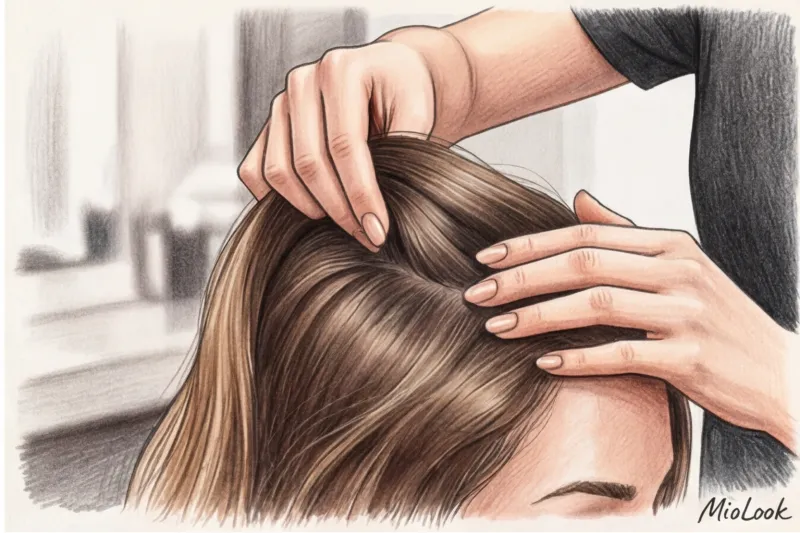
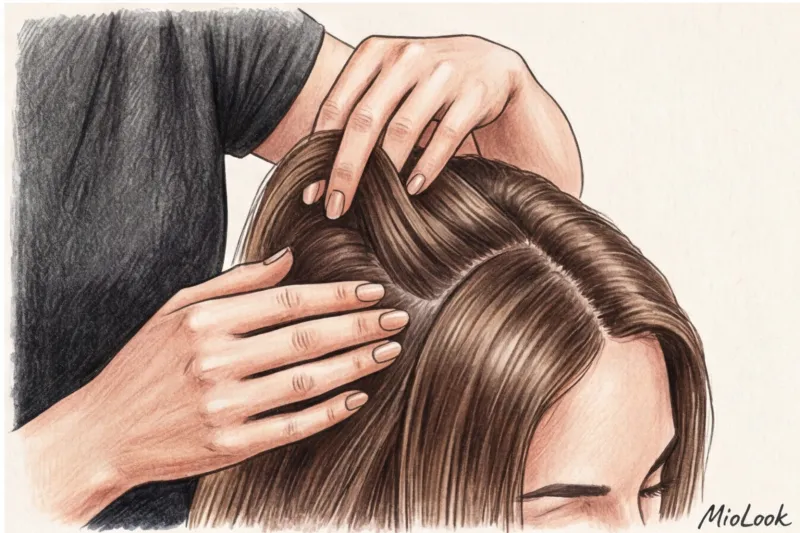
- Marginal growth line. Comb your hair back and look closely at your forehead. Where are your natural bald spots? Are there any areas where the hair grows upward instead of downward? These are the areas that will be problematic for any bangs.
Step 2: Configure the prompt and select references
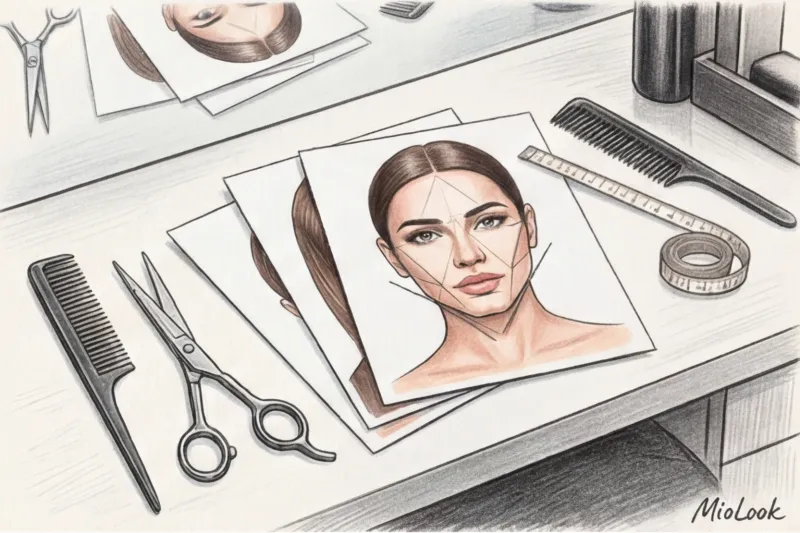
Here's my counterintuitive tip: If you're generating an image in Midjourney or Stable Diffusion, ask the neural network to create your hair. worse.
More precisely, more realistically. Instead of standard queries like "beautiful voluminous haircut," use professional terminology. If you have fine hair, be sure to include the following in the prompt: “fine hair, flat roots, natural fall, no blowout styling, realistic hair density” This will reduce the degree of unrealistic "Hollywood volume" and show you a shape that is as close as possible to what you see in the mirror in the morning after washing your hair.
And one more secret: always create not only a frontal view, but also a side view. Many haircuts look stunning from the front, but create a flat back when viewed from the side.
The Philosophy of "Smart Haircuts" and Neural Networks: Marrying Technology with Geometry
The concept of "smart haircutting" (or the famous "Wash and Go" approach) revolutionized the industry back in the 1960s, thanks to the genius Vidal Sassoon. His principle is simple yet brilliant: the shape should be maintained through a precise geometric cut and the correct angle, not through styling.
How does this relate to neural networks? Directly. The generated photo should be used exclusively to show the artist what you want. direction of lines , not texture.
"The architecture of a haircut is based on the bone structure of the skull. A neural network draws hair in a vacuum, while a hairstylist builds a house on a concrete foundation"—this is what I repeat at every color and shape workshop.
If the AI shows you bangs sweeping to the right, but your hair naturally parts in the center, a skilled stylist will tailor the shape to your natural parting. That's why the virtual try-on should be viewed as a sketch, not a blueprint.
Your perfect look starts here
Join thousands of users who look flawless every day with MioLook.
Get access — €0.99 onceHair Type Cheat Sheet: What to Look for During Virtual Fittings
The same query in the app will yield catastrophically different results depending on what's growing on your head. Here's a cheat sheet to help you filter out successful AI references from the doomed ones.
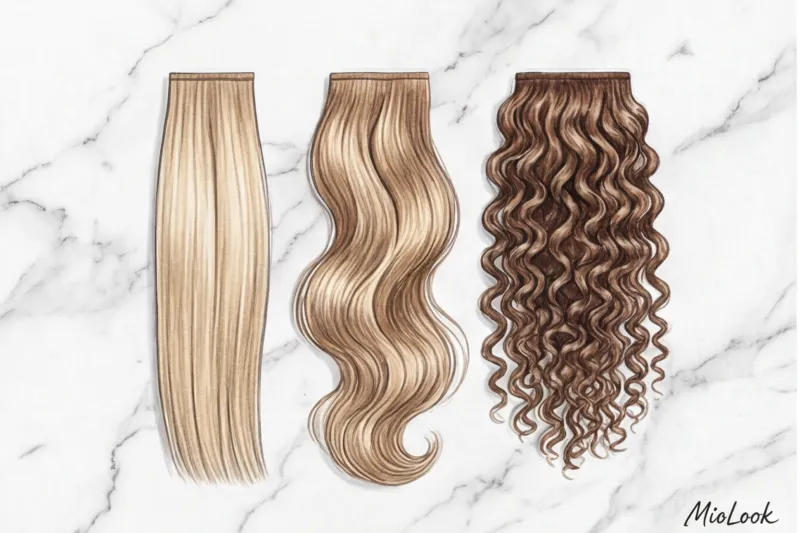
Thin and straight (Slavic type)
What to look for in AI: Straight, blunt bob cuts (straight lob). Length from jawline to collarbone.
What to avoid: Excessive thinning (torn ends) and multi-layered cascades from the 2000s. On fine hair, layers remove precious mass. If a neural network predicts a voluminous cascade on fine hair, it's lying. Without brushing, it will look transparent and untidy.
Porous and wavy
What to look for in AI: Textured shapes like the shag, mullet, or long bob with layers underneath.
What to avoid: Strict geometric shapes with straight bangs. Porous hair will take on a life of its own at the slightest humidity, disrupting straight architectural lines. Look for styles that have a slightly casual look in try-on apps.
Heavy, thick and hard (Asian type)
What to look for in AI: Invisible layers. This technique allows the artist to remove excess weight from the inside while maintaining the density of the outside.
What to avoid: A short, straight bob without texture. While the neural network shows a perfect triangular bob, in reality, without complex styling, you'll get a mushroom or house-like effect on thick hair.
How to visually distinguish a lie from the truth? Look at the roots in the generated photo. If your hair is smooth and heavy, but at a 90-degree angle at the roots, you're looking at the result that requires 40 minutes with a Dyson hair dryer every morning.
The right photo is half the battle: how to prepare the source material
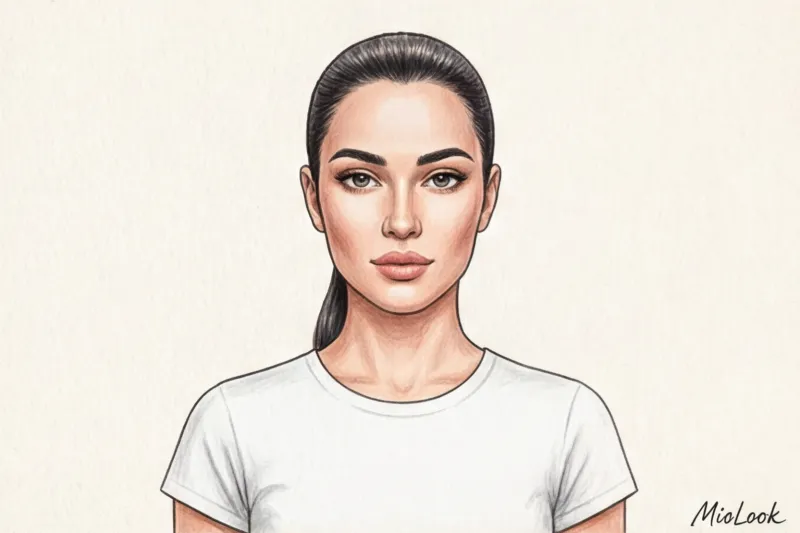
To prevent the algorithm from turning your face into a blur of unnatural hair, it needs the right "canvas." As someone who regularly works with photo diagnostics, I recommend preparing selfies according to the rules of portrait photography.
- Light decides everything. No selfies in the elevator or bathroom. Stand facing a window (for natural light). Shadows on the neck and face are distorted by the AI, distorting the shape of the chin and cheekbones.
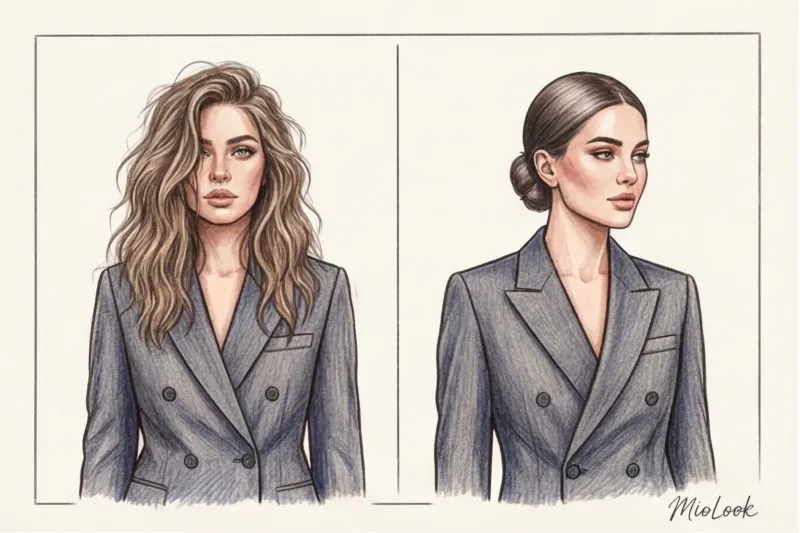
- Hide the current length. If you leave your hair loose, the neural network will try to overlay a new texture on top of the old one. The result is a messy image. Create a sleek, tight bun at the back of your head. Expose the hairline, ears, and neck.
- Neutral collar. Algorithms often get confused by complex clothing textures. Wear a simple, smooth T-shirt with an open neck (for example, a U-neck). By the way, when you upload your photos to MioLook base For wardrobe analysis, this rule works just as well—AI is better at reading your proportions without visual noise.
- Angle without distortion. The smartphone camera should be positioned exactly at eye level. Raise the phone too high, and your forehead will become massive (and your bangs will look odd). Lower it too low, and you'll get a heavy jawline, which will distort the perception of any short haircut.
Checklist: What to Bring to the Salon (Besides a Picture from a Neural Network)
You've created the perfect brow, assessed your initial data, and booked a salon appointment. But simply silently showing your phone screen to the stylist is a surefire way to disappointment.
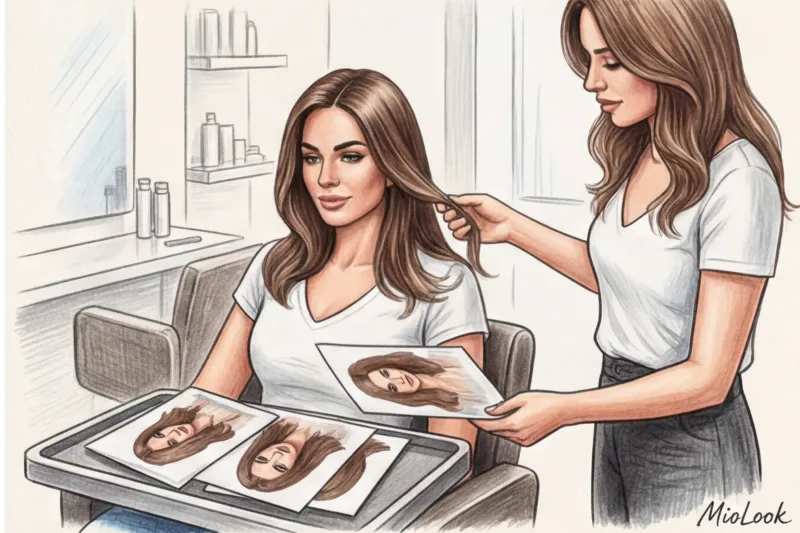
I always ask my clients not just to show me a photo, but to discuss it. Here are three questions you should ask your hairdresser before they pick up the scissors:
- "Will this shape suit my texture without straightening or brushing?" If the answer is "no" and you're not willing to spend time in the morning, look for a compromise.
- "How will this length work with the shape of my jaw and neck?" The neural network draws a perfect oval. In reality, the stylist may have to cut a couple of centimeters too low or too high to balance your proportions.
- "Can we replicate this texture given my thickness?"
Over 12 years of working with color and shape, I've developed a golden rule. Virtual haircut try-ons are a great tool for finding inspiration and understanding which shapes you absolutely dislike. Artificial intelligence provides the idea, the direction, the mood. But only a professional hairstylist, who feels your hair with their hands, can translate this idea into the mathematics of a precise cut.
Use technology to expand your style horizons, but trust the laws of physics and the professionals to deliver. After all, the best haircut isn't the one that gets likes on a generated image, but one that looks perfect, even if you just blow-dried your hair with your head upside down.