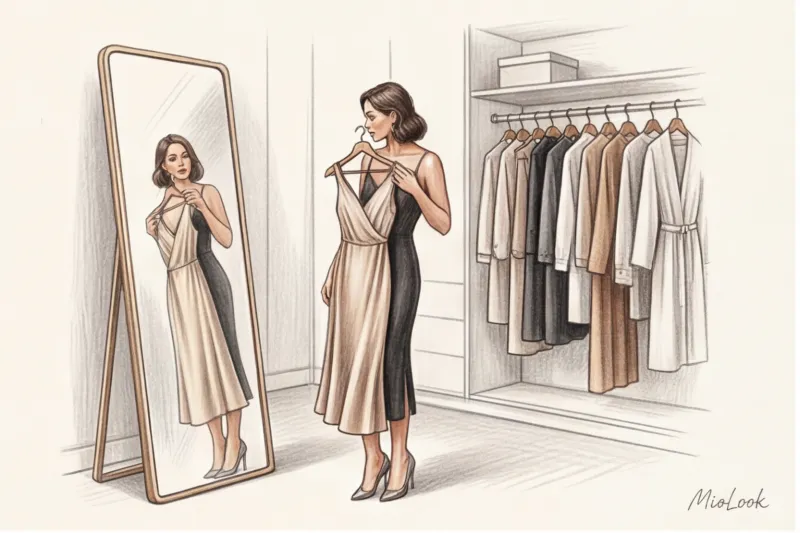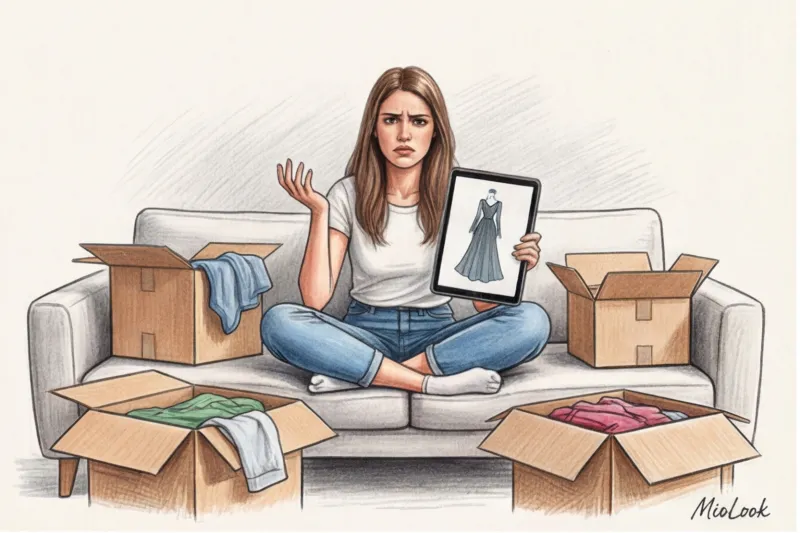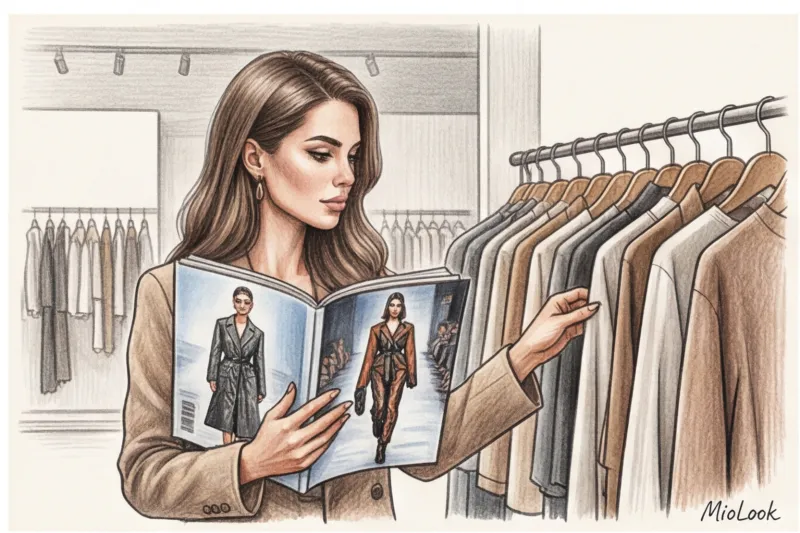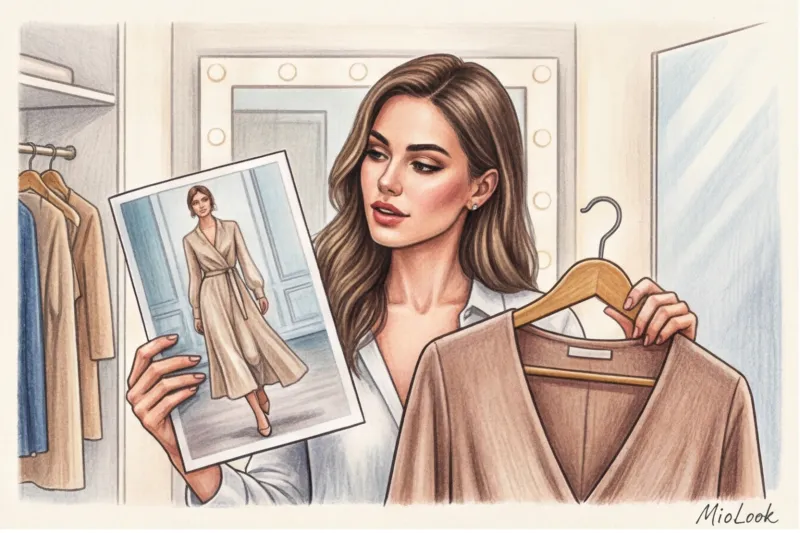
Open your smartphone's gallery. I bet there's a dedicated folder (or just a random collection) of screenshots filled with Pinterest looks, saved fashion blogger reels, and street style reports. We save these images thinking, "I want that!" But when it comes to shopping, the magic breaks. You type "oversized beige trench coat" into an online store's search bar, get three thousand bland options, order one, try it on—and realize you look not like a Copenhagen influencer, but like Inspector Gadget.
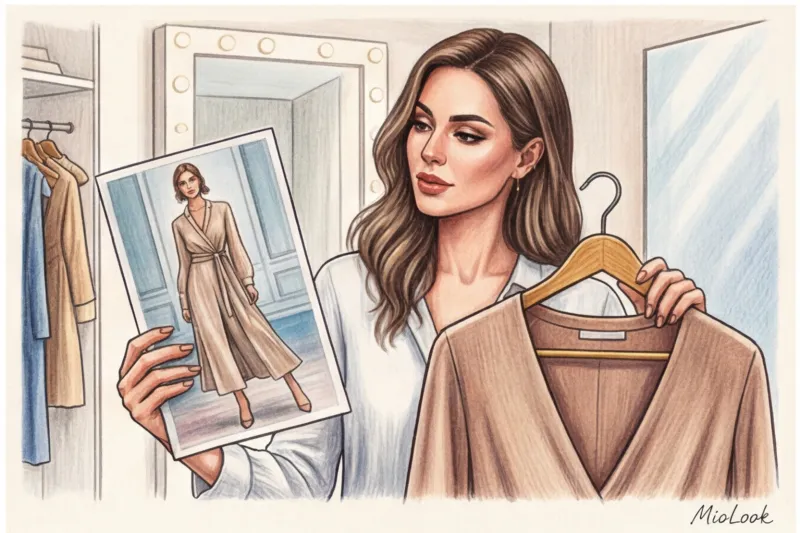
In my 12 years as an image consultant, I've seen this scenario hundreds of times. The problem isn't your figure or the stores. The problem is how we search for clothes. Translating visual aesthetics into text is like trying to dance architecture. That's why virtual fitting room using photos has become a major revolution in personal styling. We discussed the basic mechanics of this technology in more detail in our The complete guide to finding clothes by photo , but today I want to talk about something else: the psychology of color, the architecture of cuts, and why an exact copy of a thing from a picture is the worst thing you can buy.
Why Text Search Is Killing Your Style: A Colorist's Perspective
Let's be honest: the language of fashion retail is incredibly poor. You search for a complex shade of "dusty rose" with a cool lilac undertone, but the store's algorithm only knows the tags "pink" and "fuchsia." You search for a "man-sized jacket," but you simply get a jacket two sizes too big, with the armholes treacherously sagging toward your elbows.
I worked with a client, Anna, who spent three months searching for "that same blue-gray" jacket she'd seen at Milan Fashion Week. She typed in every possible text variation, ordered items, and always filed returns. Either the fabric had a cheap polyester sheen, or the color made her look tired. When we loaded her reference image into a visual search system, the perfect match was found in seconds—but in the store, it was labeled with the boring tag "graphite melange." A text search would have rejected the item outright.
According to a large-scale e-commerce study by WGSN for 2024, implementing visual search increases the accuracy of meeting customer expectations by 37%. Why? Because our brains process the entire image: the silhouette, the way the fabric drapes in movement, the balance of volumes. Algorithms have learned to do the same.
Access to MioLook for €0.99 — one-time payment
A smart AI stylist will select the perfect look based on your references.
Get access — €0.99 onceHow a virtual fitting room works using photos (and why it's math, not magic)
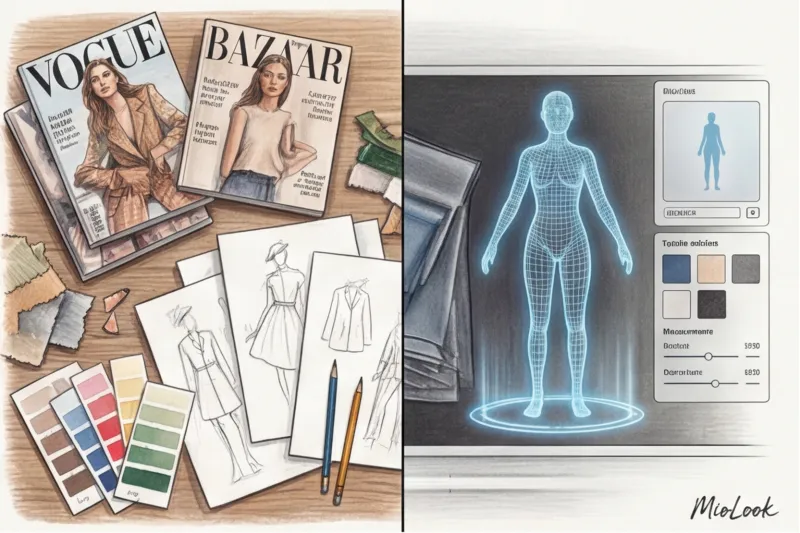
Many people think that image search is simply a pixel-by-pixel comparison. If that were the case, we'd be left with mountains of unwearable junk. A modern virtual photo fitting room works like a skilled tailor.
When you upload a photo, the AI instantly breaks it down into over 100 cut and fit parameters. It analyzes the architecture: where does the shoulder seam end? How rigid is the collar? What is the fabric density—is it a shape-stabilizing cotton with a weight of 180 g/m² or a flowing viscose with added elastane?
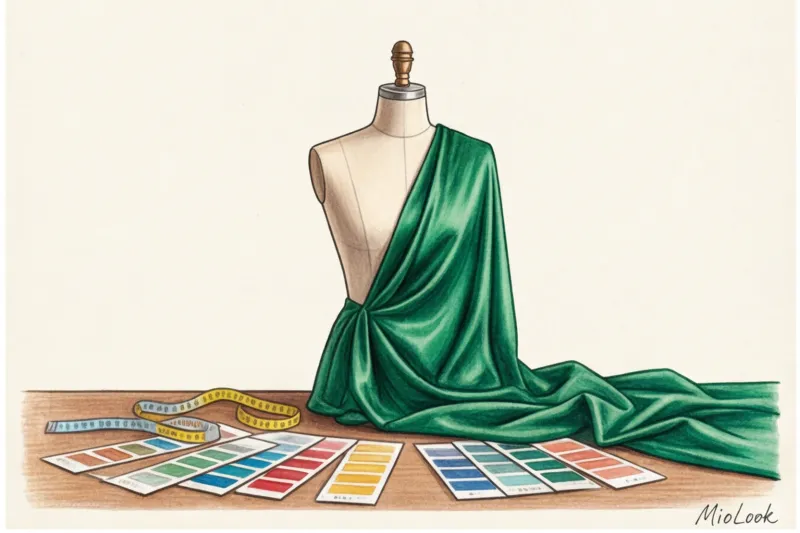
Unlike the crude superimposition of a 2D model of clothing onto your photo (recall those cardboard dolls from childhood), a smart fitting room creates a 3D model of how fabric interacts with your body. It solves the biggest pain point of online shopping—the gap between the "expectation" of a retouched model and the "reality" of a real person with their own body shape. Retail statistics confirm that using fully functional virtual fitting rooms reduces clothing returns by a significant 40%.
The Art of Reference: How to Choose the Right Images for Visual Search
The algorithm is smart, but it needs to be fed the right data. Uploading a blurry TikTok screenshot of a girl twirling around is a bad idea. Fabric in motion distorts proportions, and the AI might mistake a straight cut for an A-line silhouette.
"The quality of the neural network's output directly depends on the quality of the uploaded reference image. Look for static images, frontal angles, and clear textures."
As a colorist, I always remind my clients of the principles of Johannes Itten's color theory. Studio lighting in influencer photos dramatically alters the actual undertone of fabric. Cool LEDs make warm beige appear grayish, and the setting sun turns neutral white into a peach.
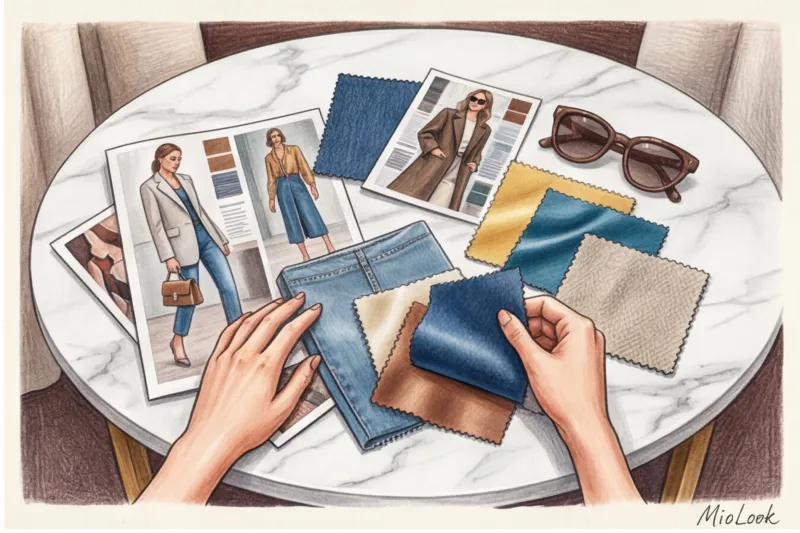
Life hack from a stylist: Before uploading a photo to the search engine, crop it. Cut out the model's face, a complex background, and a bag (if you're looking for a coat). Include only the garment itself. The more texture (the weave of the tweed, the grain of the leather) the algorithm "sees," the more accurate the suggested replacement will be.
Your perfect look starts here
Join thousands of users who look flawless every day with MioLook.
Get access — €0.99 onceThe Trap of Exact Copying: Why Something in a Picture Can Ruin You
And now the most interesting part—my favorite myth, which I happily debunk at every consultation. It goes like this: "Finding an exact copy of something from a Pinterest picture is an incredible success.".
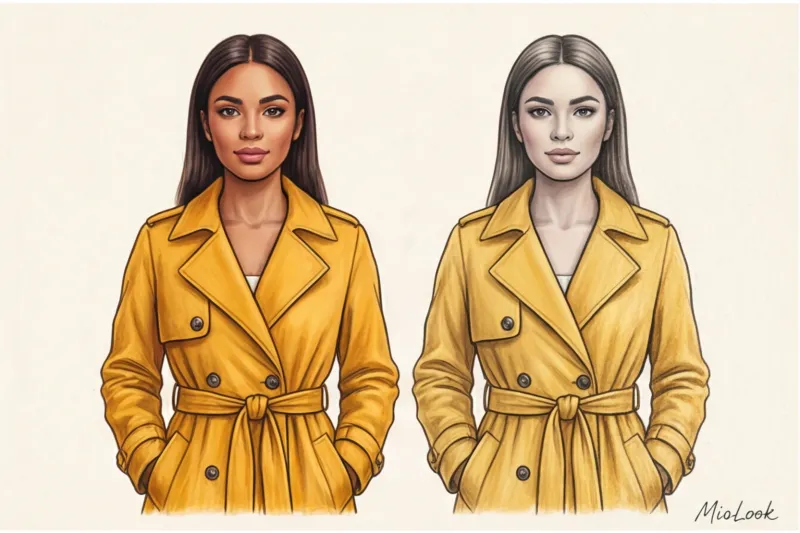
The truth is, an exact replica probably won't work for you. Here's why. You see a gorgeous mustard trench coat on an Italian blogger. She looks stunning in it because she has a warm olive undertone (Deep Autumn or Dark Spring). You buy the exact same trench coat, put it on... and your face turns a sickly green, and the circles under your eyes look like you haven't slept in a week. Why? Because your undertone is cool, Light Summer.
Or take texture: a voluminous, bright fuchsia blouse made of stiff taffeta looks organic on the contrasting appearance of the "Winter" type, but literally "eats up" a girl with soft, low-contrast facial features.
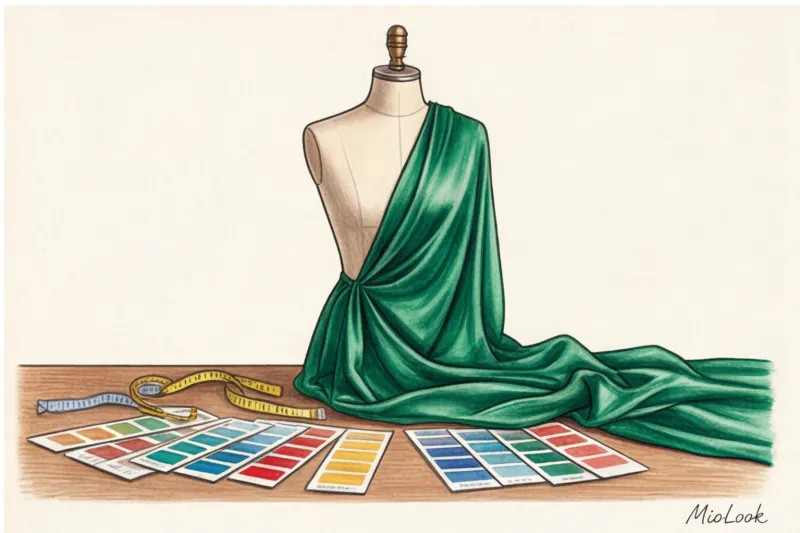
You don't need to look for an exact copy. You need to look for form and architecture, and adapt the color to suit yourself. This is where virtual fitting saves your budget from impulsive spending. By uploading a reference image to MioLook , you can find an item with an identical cut, but in the right, complementary shade for you.
From screenshot to perfect fit: a step-by-step guide to smart shopping
When I go online shopping with clients, we follow a strict algorithm. No mindless scrolling. The process takes about 15-20 minutes if you know what to do.
- Image decomposition. Let's break down a complex, layered look from Pinterest into its basic elements. Don't look for "the whole look in old money style." Look for the perfect pair of pleated palazzo pants and the perfect cashmere jumper.
- Loading and filtering. Upload a reference image, cleared of unnecessary background information. Set a price filter (for example, a comfortable mid-range price of €100–€250) and exclude brands whose patterns are clearly unsuitable for your needs.
- Virtual test drive. Place the found item on your avatar. Assess how the collar's shape complements (or complements) the shape of your face.
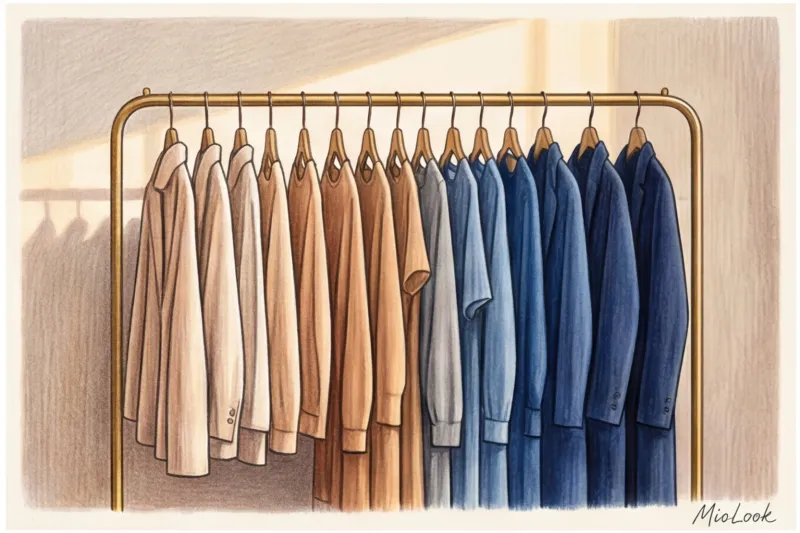
Setting up a color palette when searching for analogs
Found the perfect style, but the color isn't your thing? Use AI tools to find similar options in other colors. If the reference is a black slip dress (and black flatters only 15% of European women), look for the same cut in dark chocolate, deep emerald, or dark sapphire. You'll maintain the dramatic look while giving your skin a healthy glow.
Ready to get started?
Try the free plan—no commitment. Find the perfect shades for your complexion.
Get access — €0.99 onceImage consultant checklist: 5 signs that an item is worth buying after an online try-on
To avoid multiple returns, I developed a strict checklist. If an item doesn't meet even one criterion during a virtual try-on, we move on.
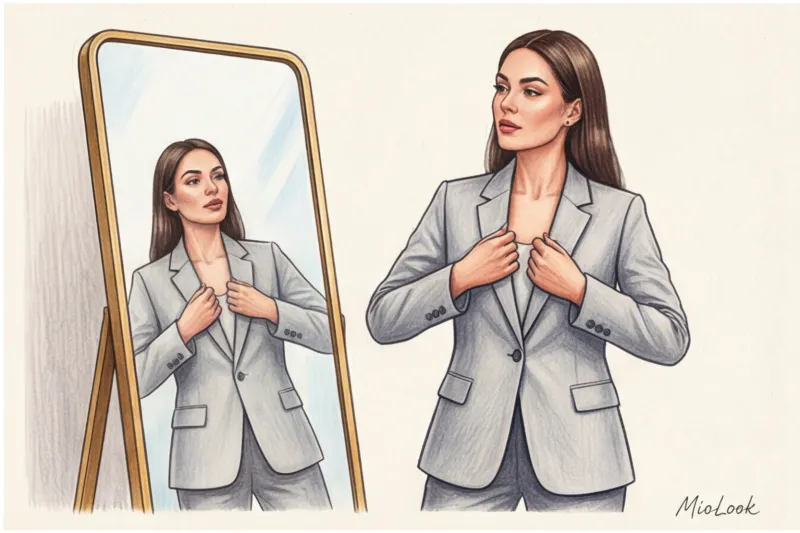
- The shoulder line is in place. Unless it's an oversized jacket, the shoulder seam should strictly follow your anatomical line. A slouched shoulder on a classic jacket makes you look bulky.
- The color in the portrait area works as a concealer. The right shade visually evens out skin tone and brightens the whites of the eyes. The wrong shade emphasizes the nasolabial folds.
- The length of the product is complementary to the height. A midi skirt should end at the narrowest part of your calf, not cut off at the widest part of your leg.
- The rule of three combinations. You can mentally (or directly in the app) create at least 3 looks with this item, using clothes that ALREADY hang in your closet.
- The texture is appropriate to the lifestyle. These luxurious 100% linen trousers will wrinkle exactly three minutes after you get into a taxi. Are you ready for that?
But I promised to be honest, so I'll add a fly in the ointment: when it does NOT work The virtual fitting room currently struggles to cope with extremely complex, asymmetrical avant-garde cuts (in the spirit of Yohji Yamamoto or Comme des Garçons), where the shape is created by random draping directly on the body. For 95% of everyday, business, and evening wear, this works flawlessly.
Results: How AI is bringing mindfulness back to our wardrobes
The paradox of modern technology is that artificial intelligence is returning us to a very human, conscious consumption. Instead of wandering around shopping malls, buying random items at a discount, we begin to plan our wardrobes strategically.
A virtual photo try-on is your personal filter for forced trends, unsuitable colors, and unsuccessful styles. It's a way to test out your wildest dreams without risking your wallet (especially when it comes to outerwear that costs €300 or more).
I have a quick task for you today. Open that folder with your screenshots. Choose the look you love most, but which you've always considered "too complicated" or "not my body type." Run it through a visual search, adjust the color to suit your personality, and try it on virtually. You'll be surprised how easily your Pinterest dream can become a reality if you approach it with the right tools.