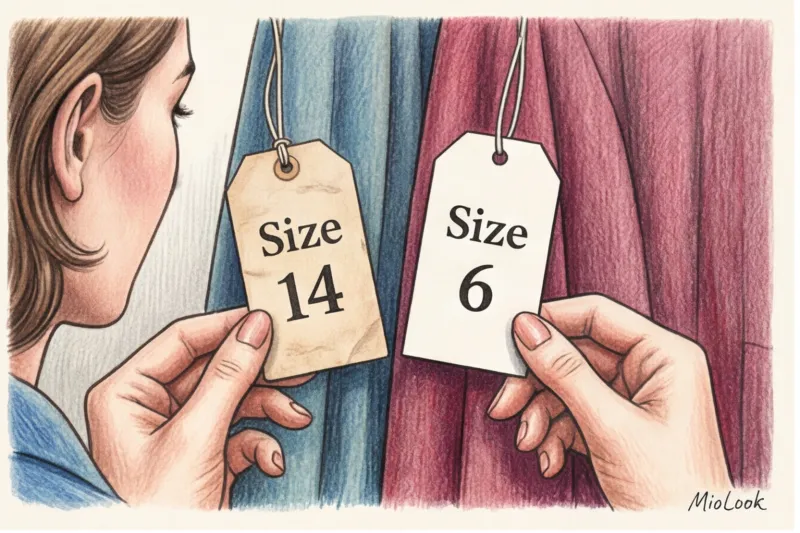
Three months ago, a client of mine—a confident executive, marathon runner, and a consistent size M (UK 8)—burst into tears right in the fitting room of a vintage boutique. The reason? A stunning 1960s Dior wool pencil skirt, labeled "Size 14," had treacherously refused to fasten at her hips. "Have I gained so much weight without even realizing it?" she asked in panic.
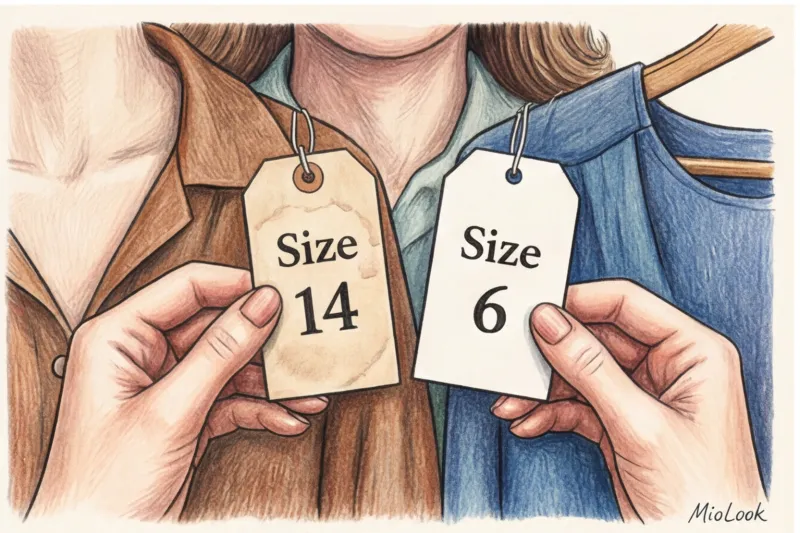
I hastened to reassure her: the problem wasn't her body, but a tiny piece of fabric with the number 14 on it. This incident perfectly illustrates the main pitfall newbies fall into when buying vintage items. Trying to rely on the familiar S, M, and L sizes on old tags is a sure path to disappointment and returns.
We've covered more details on how to find unique items with a story in our complete guide. How to shop thrift stores: finding gems Today, I suggest we put emotions aside and approach shopping like engineers. We'll figure it out. vintage clothing sizes through the prism of flat measurements, cut architecture and historical fit standards.
Why are vintage clothing sizes so different from modern ones?
I had another telling case in my practice. We were putting together a capsule collection for a client and found a stunning Yves Saint Laurent jacket from the '80s. The tag said a daunting size XL. The woman, who wears a size SM, flatly refused to try it on: "I'll drown in it!" I persuaded her to wear the jacket. It fit perfectly—a little roomy in the shoulders, just as Yves Saint Laurent intended, but with the perfect sleeve length and back.
Why is this happening? Before the 1970s, clothing was created using completely different patterns. Mass production was just gaining momentum, and factories relied on standardized body measurements that today seem unrealistic. The modern fast fashion industry, however, has optimized patterns, making them more "square" and universal, so that a single garment would suit as many body types as possible.
The Vanity Sizing Illusion: How Brands Have Shrunk Our Sizes
Did you know that modern brands deliberately flatter us? This phenomenon is called Vanity Sizing (size vanity). Since the 1980s, marketers have realized that a woman is more likely to buy a dress if it's labeled a smaller size. It's pure psychology.
"If a vintage item in your size doesn't fit, it doesn't mean you've gained weight. It means the fashion industry has been distorting reality for the last 40 years to make you buy more."
Let's look at the raw numbers. According to ASTM International (American Society for Testing and Materials), standards have changed dramatically every few decades. In 1958, a standard US size 12 meant a waist of 28 inches (approximately 71 cm) and a chest of 34 inches. Today, these measurements correspond to a size 6 or even a size 4 in mass-market size charts like Zara or H&M. In other words, modern brands have artificially "shaved off" three or four sizes to make their customers feel slimmer.
Access to MioLook for €0.99 — one-time payment
A smart AI stylist will select the perfect look and help you seamlessly integrate vintage finds into your modern wardrobe.
Get access — €0.99 onceThe Anatomy of Cut: How a Decade of Creation Dictates Fit
Physically measuring a garment with a tape measure is only half the battle. The silhouette architecture of a particular decade determines how a garment will fit a modern figure.
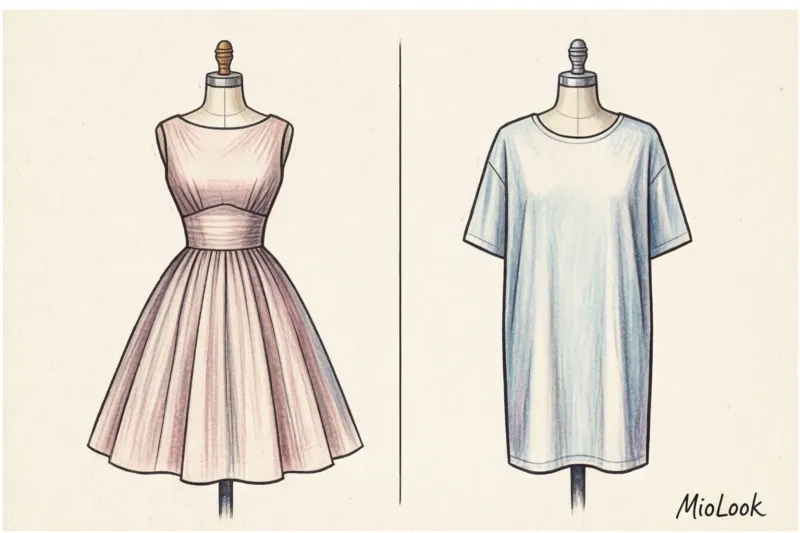
1950s and 1960s: The era of Christian Dior and the New Look silhouette. The main emphasis is on a wasp waist and a rather narrow chest. A stylist's expert insight: modern women have a wider chest and a developed back due to the rejection of rigid corsets, the wearing of soft sports bras, and lifestyle changes (we spend more time at the computer and actively exercise). Therefore, dresses from the 1950s often require alterations or insertion of gussets around the ribs, even if they meet perfectly at the waist.
1970s: The era of turtlenecks and skinny button-down shirts. The main problem with buying tops from the '70s is the tiny armholes and very tight sleeves. If you're buying a blouse from this era, be sure to ask the seller for the sleeve width at the biceps. Otherwise, you risk the item simply not fitting your arms.
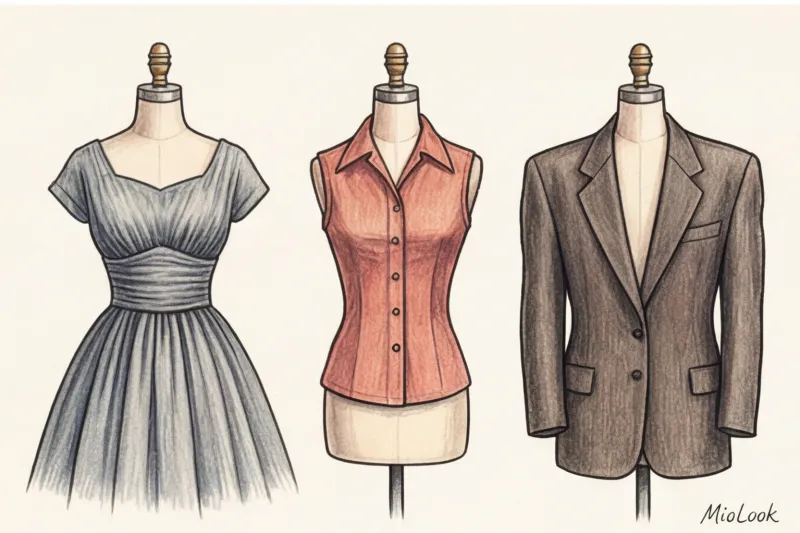
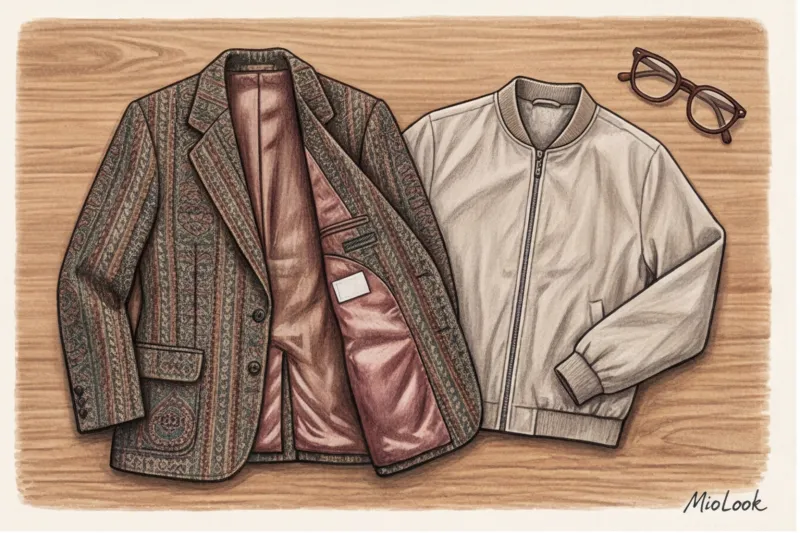
1980s and 1990s: Powerful shoulders and a loose fit. How to wear vintage '80s oversized clothes without looking like a closet? Look for pieces with a soft shoulder line or be prepared to take your jacket to a tailor to remove the massive shoulder pads and slightly tape the sleeves, leaving the volume on the body.
How to Take Measurements: A Guide to Buying Vintage Online
Forget about measuring yourself. This is the most popular advice online, and it's fundamentally wrong when it comes to vintage clothing. Why? Because measuring your body doesn't take into account the fabric, lining thickness, or ease of fit.
Measure not yourself, but your best clothes.
In professional circles, this is called flat measurements. Here's a clear guide that eliminates 90% of returns in my practice:
- Take a piece from your closet that fits you perfectly (made from non-stretchy fabric!).
- Place it on the floor or a large table, fasten all buttons and zippers.
- Smooth the fabric thoroughly with your hands to avoid creases, but do not stretch it.
- Use a stiff tape measure or a new tailor's tape measure (old tape measures stretch over time).
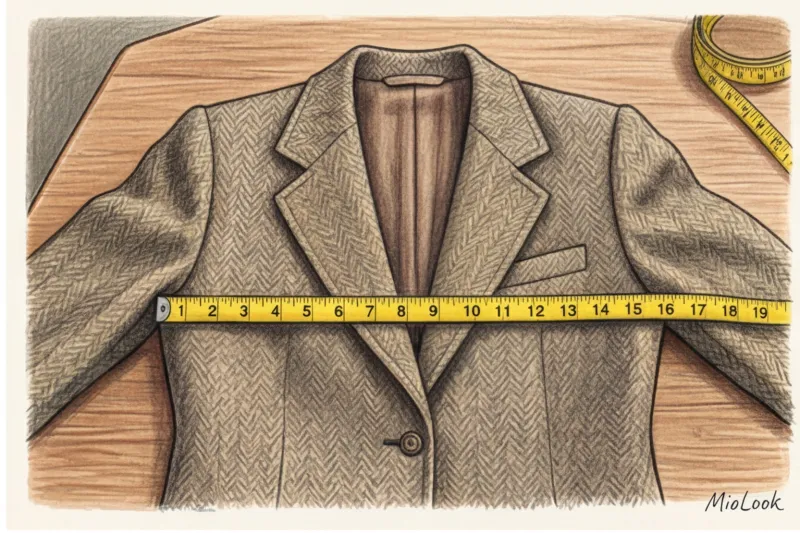
There are three key points you need to know for tops and jackets:
— Pit-to-pit (from armpit to armpit along the seam). Multiply by two to get the actual half-girth of the chest.
— Shoulder-to-shoulder (from shoulder seam to shoulder seam along the back).
— Sleeve length (from the shoulder seam to the edge of the cuff).
By the way, in order not to keep all these numbers in their heads or in scattered notes on their phones, my clients simply save the parameters of their ideal things in MioLook When they digitize their wardrobe, they open the app at a vintage store and immediately check the numbers.
The Ease Allowance
Vintage clothing almost never contains elastane. Heavy cotton, 100% wool, or stiff silk are unforgiving when it comes to tight fitting.
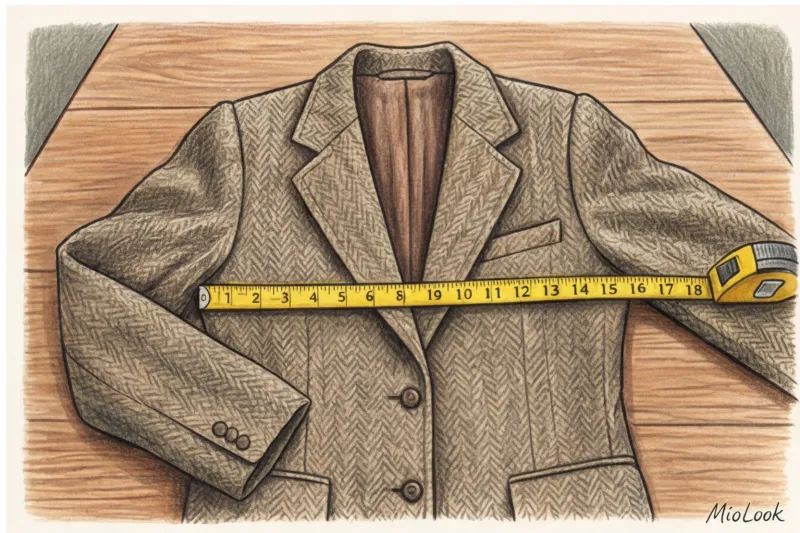
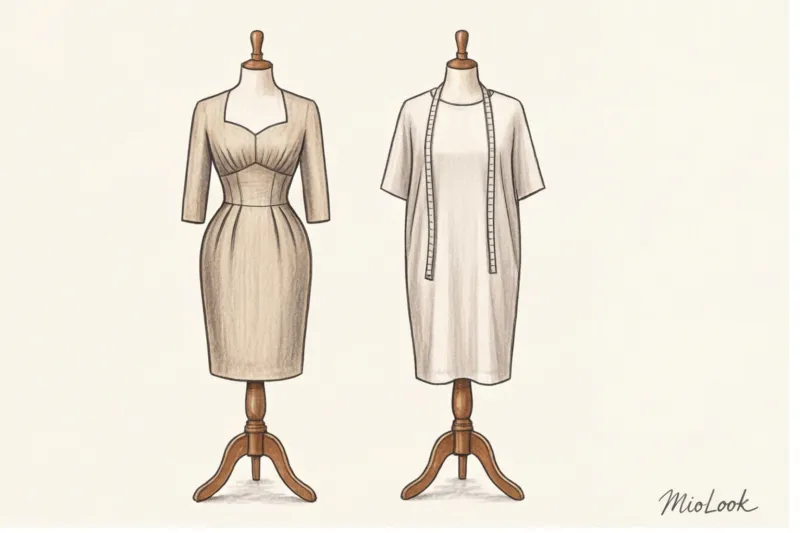
This is where the historical concept comes into play. ease allowance — allowance for ease. The formula for a perfect fit is simple: your flat body measurements (or the garment's measurements when butted against) + 2-3 cm of room for breathing and movement. But there is an exception to this rule. It does NOT apply to knitwear from the 1970s (for example, ribbed nylon turtlenecks). These were cut with a negative ease to hug the body like a second skin, and they should be sized exactly to your measurements.
Vintage Denim: Why Jean Sizing Is an Art Form in Its Own Right Now
Finding the perfect vintage Levi's 501 or 505 is the Holy Grail for many fashionistas. But when I first tried ordering them for a client, using the popular "modern plus-two" formula, we were met with failure.
The fact is, iconic vintage denim (especially those labeled "Shrink-to-Fit") was designed to shrink to the original owner's body shape. This means the size stamped on the leather patch (tag) no longer has any meaning. A pair of W30 jeans, after numerous hot washes in the 1990s, might now measure as large as a W27.
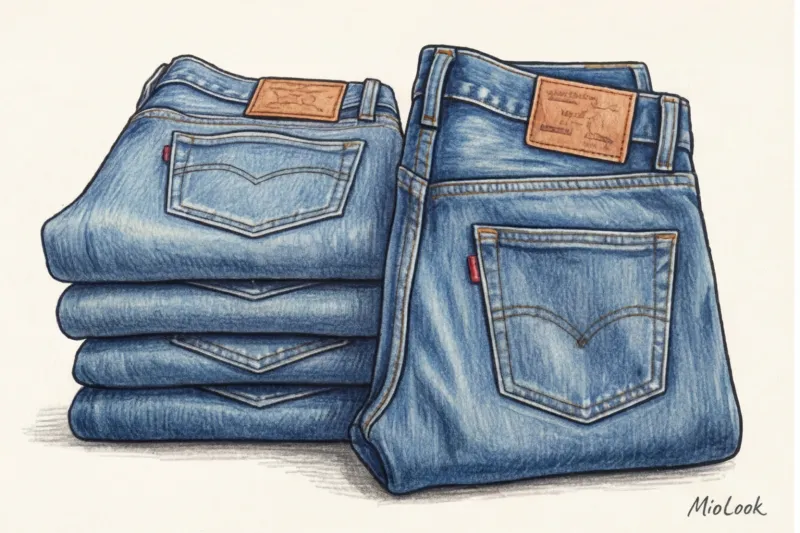
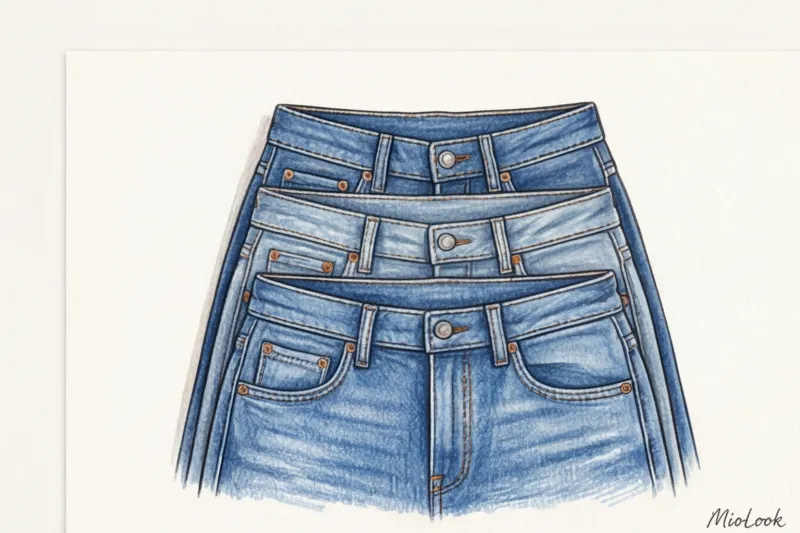
Vintage jeans from before 1990 contain 0% elastane. It's a stiff, "dry" cotton that fits tightly and takes some getting used to. To find the perfect fit, measure the waist of your non-stretch jeans, then be sure to ask the seller about two critical measurements: Rise (the height of the waist from the inguinal seam to the top edge of the waistband) and Thigh (width of the leg at the hip).
The 80s and 90s patterns assumed a fairly flat thigh, so jeans might be tight at the waist but stick out mid-thigh if you have a more feminine shape.
Your perfect look starts here
Join thousands of users who look flawless every day with MioLook, combining vintage and modern trends.
Get access — €0.99 onceShoes from the past: the nuances of width and length
Buying vintage shoes is a risk, but if you know your size in centimeters (insole length) and pay attention to the width markings, you can find unique examples from Italian craftsmen whose quality would cost thousands of euros today.
Have you ever noticed that vintage shoes often seem hopelessly small? It's because of the changing shape of the foot. Orthopedic research shows that modern feet have become wider due to the frequent wearing of sneakers and soft shoes.
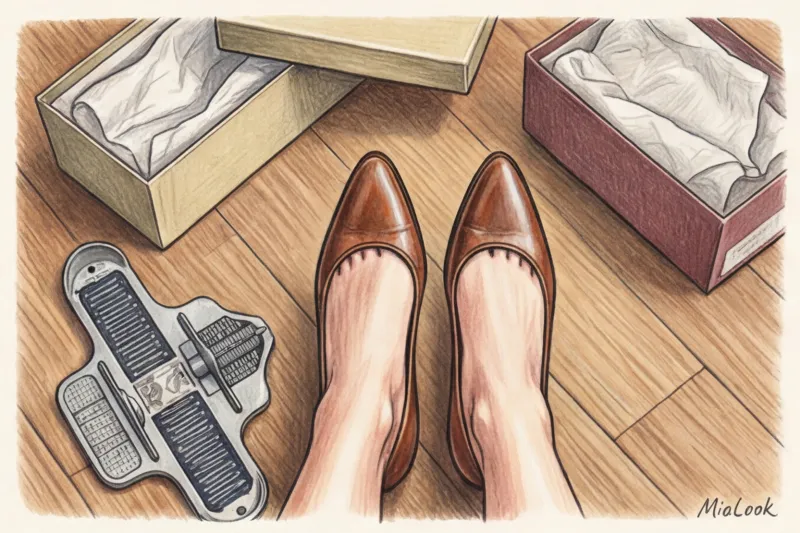
In vintage shoemaking, width (the width of the last) was designated by letters. If you see A, AA, or AAA on the inside of a shoe, it's an extremely narrow shoe (Super Narrow), which a modern foot simply won't fit into. Look for the letters B (standard for the last century, too narrow for today) or C and D (wide last) to ensure a comfortable fit.
Checklist: 5 Steps to Buying Vintage
So, you've found your dream dress on a resale platform. What next?
- Ask the seller for a photo of the measurements with a tape measure attached. Don't rely on the description. Ask for a photo: the tape should be straight, without any sagging.
- Compare your measurements with a similar non-stretchy item in your closet. Compare coat to coat, and silk blouse to silk blouse.
- Please clarify the fabric composition. Does the composition contain at least 1% elastane or lycra? If not, remember the golden rule of "plus two centimeters."
- Check out the silhouette of the decade. Remember the armholes of the '70s and the shoulders of the '80s? Request additional measurements of these areas.
- Budget for fit.
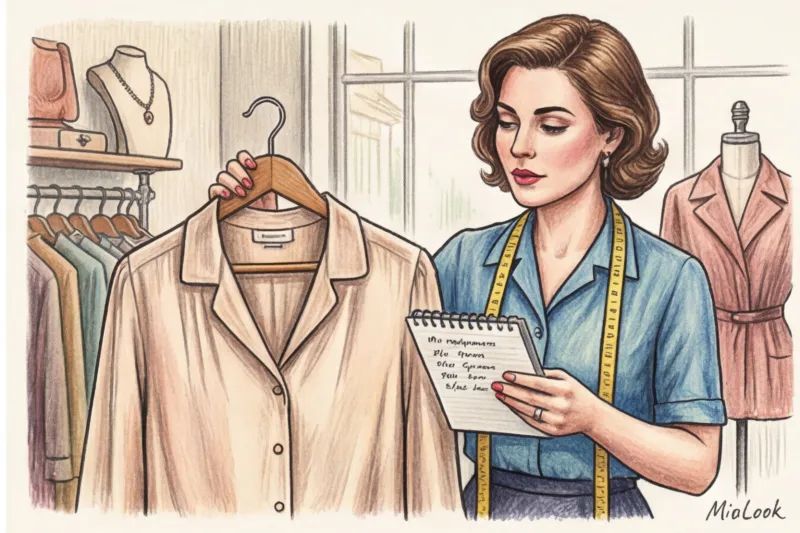
I want to conclude this guide with an important thought I always convey to my clients: Vintage clothing almost never fits perfectly right out of the box. The fact that a garment requires tailoring—taking in darts in the back, shortening a sleeve, or re-sewing buttons—isn't a flaw in the garment or a problem with your figure.
Custom tailoring is a sign of a truly luxury approach to your style. You're investing in the architecture of your wardrobe. And when that perfectly tailored vintage jacket finds its place in your closet (and, of course, in your profile) MioLook ), it will fit you like no other stamped item from the modern mass market.