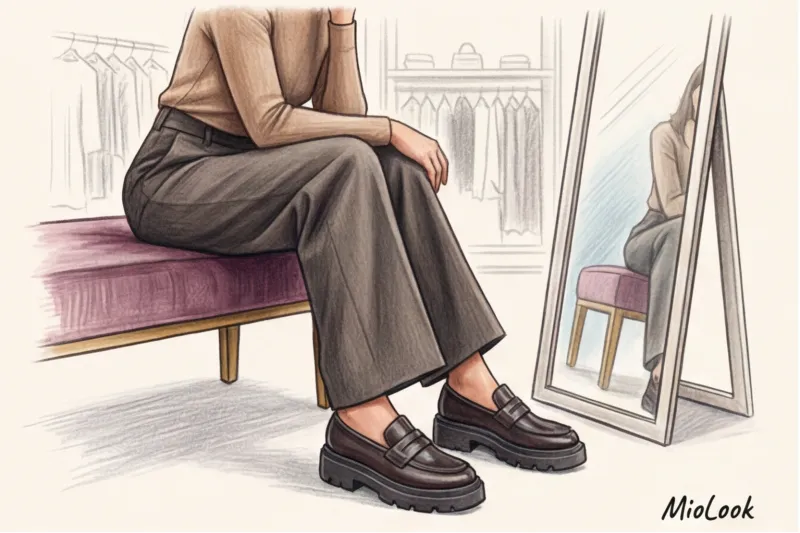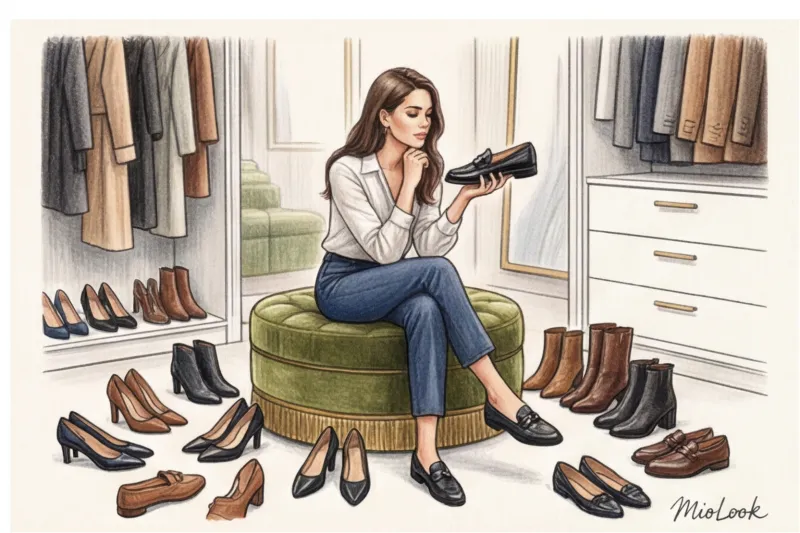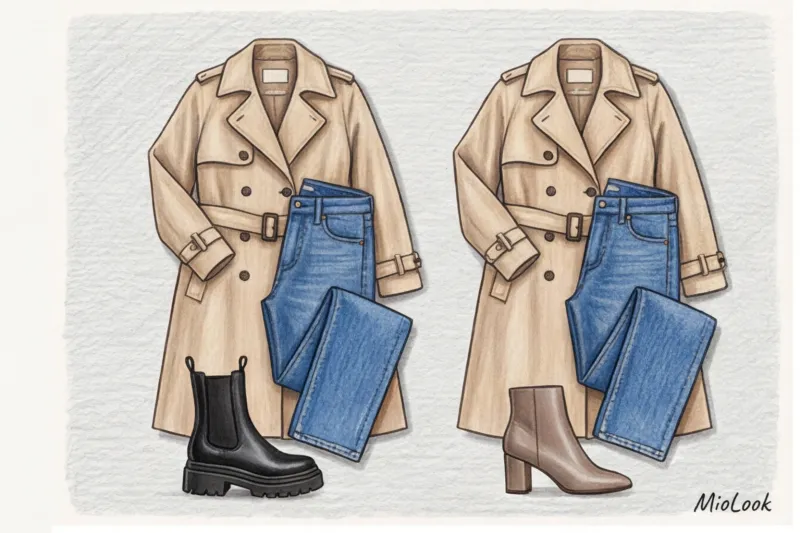
Do you know what I hear from 9 out of 10 new clients during their first consultation? "Olena, I bought black ankle boots because they go with everything." And every time, I have to shatter this myth. In 14 years of working as a personal stylist, I've come to realize that the habit of buying exclusively black shoes "for every day" is the main reason why your closet is overflowing with clothes and you have nothing to wear.
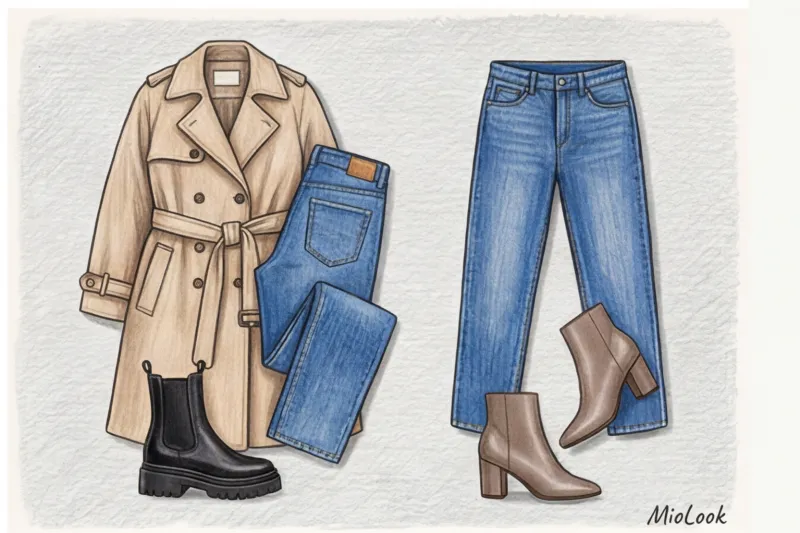
We have already discussed the architecture of a functional wardrobe in more detail in our The complete guide to a basic shoe wardrobe Today we will look at a specific problem: how to find that very one universal shoe color that will tie together your favorite jeans, office trousers and flowy dresses without shortening your legs.
The biggest style myth: why black isn't the most versatile shoe color
Let's be honest: black is great for evening dress codes, tuxedos, and all-black grunge capsule collections. But for daytime casual wear, it's the least versatile choice of all.
According to Johannes Itten's classic color theory, dark shades possess the greatest "visual weight." When you wear chunky black boots with light blue jeans or a pastel dress, you're literally tying weights to your feet. The shoes take on a life of their own, drawing all the attention.
Moreover, black shoes paired with light-colored bottoms create a sharp, contrasting horizontal line at the ankle. This line mercilessly cuts into your silhouette, stealing those precious inches of height we strive for.
The vertical color rule
There's a golden rule in style: shoes shouldn't clash with the hem of your skirt or the edge of your trousers. The perfect look is built on a color gradient from the bottom up. Dark shoes require dark tights or trousers, otherwise the harmony is ruined. That's why we need chameleon-like shades that can softly follow the line of your legs.
Nude and beige: the perfect versatile shoe color for the warm season
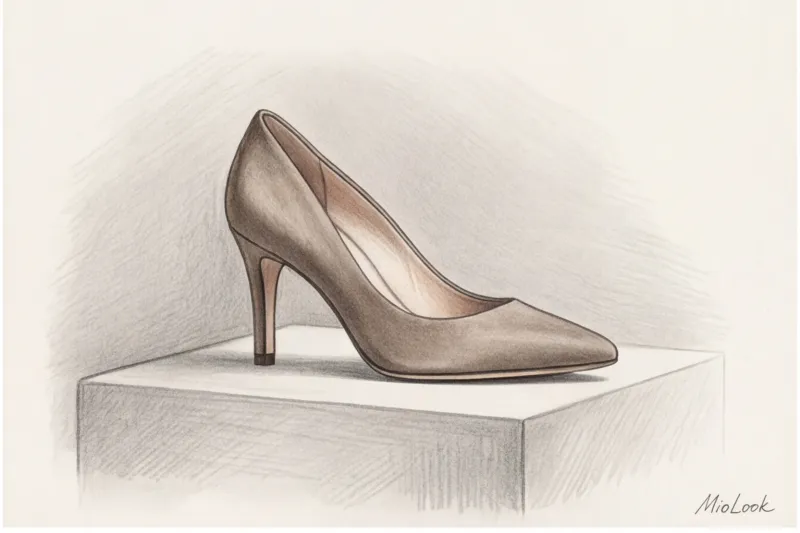
If I were asked to stick to just one pair of shoes for the entire spring/summer season, it would be classic pumps or slingbacks in nude shades. The "bare leg" effect works wonders for the figure's proportions.
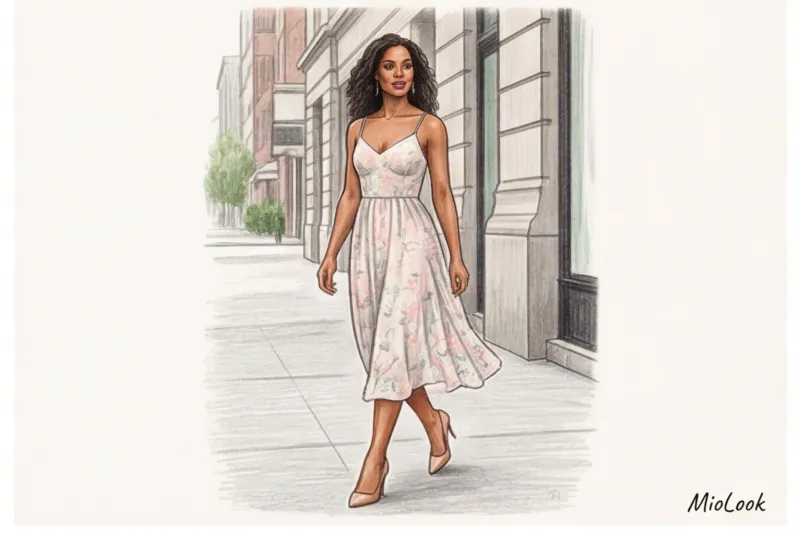
Shoes that match your skin tone work as an optical illusion: the line between your foot and the shoe blurs, visually lengthening your legs by 5-7 centimeters. Moreover, nude is completely print-neutral. A floral sundress, a leopard skirt, or a formal gray suit—beige shoes don't clash with any pattern.
How to choose your nude color
You can't just go to the store and buy "some beige shoes." Each of us has our own nude:
- For porcelain skin with cool undertones, look for pinkish-powdery shades.
- For skin with warm undertones, peachy beige is ideal.
- Dark or tanned skin needs a camel or dark caramel color.
"A rule for the fall/winter season: if you wear thick, colored tights, your nude color changes. In this case, the universal shoe color should match the shade of your tights, not your skin."
Access to MioLook for €0.99 — one-time payment
A smart AI stylist will select the perfect look for you and help you incorporate new shades into your existing wardrobe.
Get access — €0.99 onceWine and Burgundy (Oxblood): The New Black in Fall Wardrobe
Many people are afraid of color, considering it difficult to style. But the deep burgundy (also known as Marsala, Burgundy, or Oxblood) in the fall/winter capsule works as a true achromat. It's dark enough to be practical, yet still contains a pop of color that adds a touch of luxury to the look.
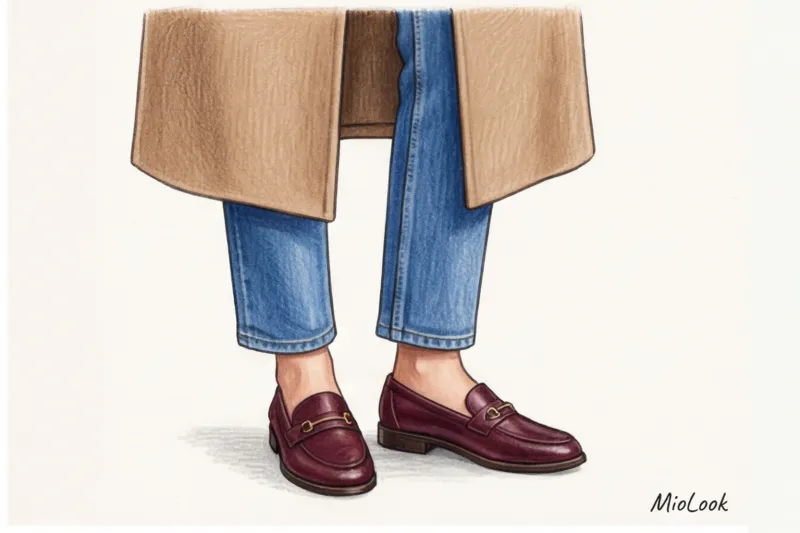
I'd like to share a story from my own practice. One of my clients, a corporate lawyer with a strict dress code, came to me with a request to "freshen up" her wardrobe. Her status prevented her from buying brightly colored items. We took a simpler approach: we replaced her formal black pumps and ankle boots with loafers and Chelsea boots in a deep burgundy shade. The result? 10 boring gray and dark blue business suits sparkled with new colors. The number of harmonious looks increased by 40%, and her colleagues started asking if she'd changed her stylist.
Burgundy pairs perfectly with gray, navy, deep emerald, classic beige, and any denim. Unlike black, wine-colored shoes always look more classy and textured.
Taupe: A grey-brown chameleon for complex looks
If you're looking for a truly versatile shoe color for the fall/winter season, try taupe. It's a magical blend of cool gray and warm brown. Thanks to this duality, taupe adapts to the tone of your outfit.
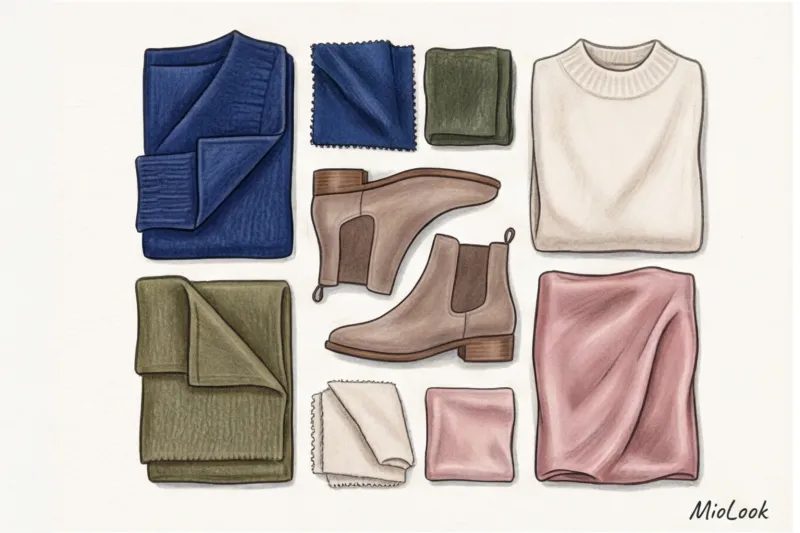
Wearing a cool gray coat? Taupe will highlight its gray undertone. Opting for a warm camel sweater? A brown base will complement your shoes. This color looks especially luxurious in suede—whether it's ankle boots, Cossack boots, or comfortable Chelsea boots.
According to app analytics MioLook By 2024, 68% of users who replaced their black basic shoes with taupe or burgundy reported that getting ready in the mornings had become twice as fast. The algorithms of our built-in AI stylist regularly award looks featuring taupe shoes the highest scores for coherence.
Metallic (silver and gold): when a versatile shoe color works as an accessory
Metallic shoes were long considered strictly formal wear. Today, they're one of stylists' top secrets for creating trendy everyday looks. Why? Because metal is inherently neutral—it literally acts like a mirror, reflecting the colors of your clothes.
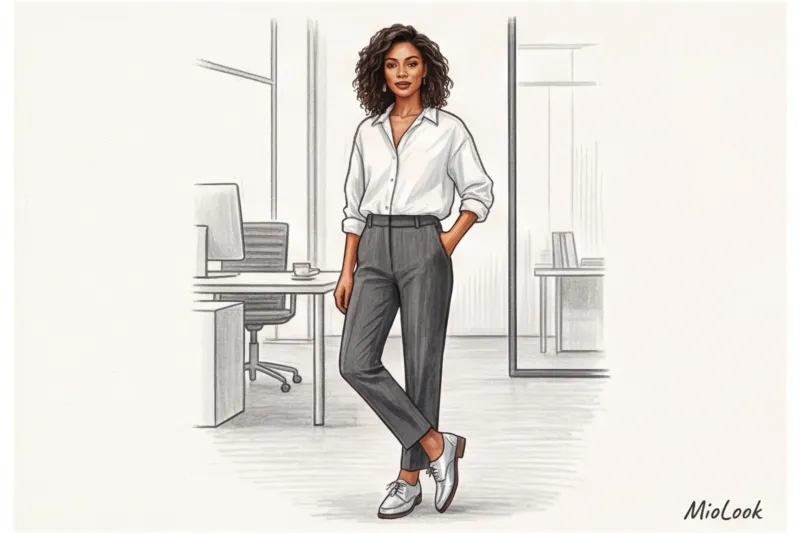
Imagine a formal office look: straight-leg dark gray trousers and a white shirt. Pair it with black shoes and it's a complete uniform. Pair it with silver Mary Jane flats or leather sneakers and you've got a polished smart casual look, perfect for heading to a fashion exhibition after work.
Stylist's Warning: When it comes to metallics, texture is everything. Cheap, shiny, foil-like materials will ruin any look. Opt for semi-matte finishes, aged silver effects, or subtle bronze sheens without obvious glitter.
Your perfect look starts here
Join thousands of users who look flawless every day with MioLook. Digitize your wardrobe now.
Get access — €0.99 onceA practical guide: how to choose your universal shoe color
To figure out which shade will be your ideal base, you need to calculate the "temperature index" of your wardrobe. Open your closet and look at the shelf of trousers, skirts, and jeans.
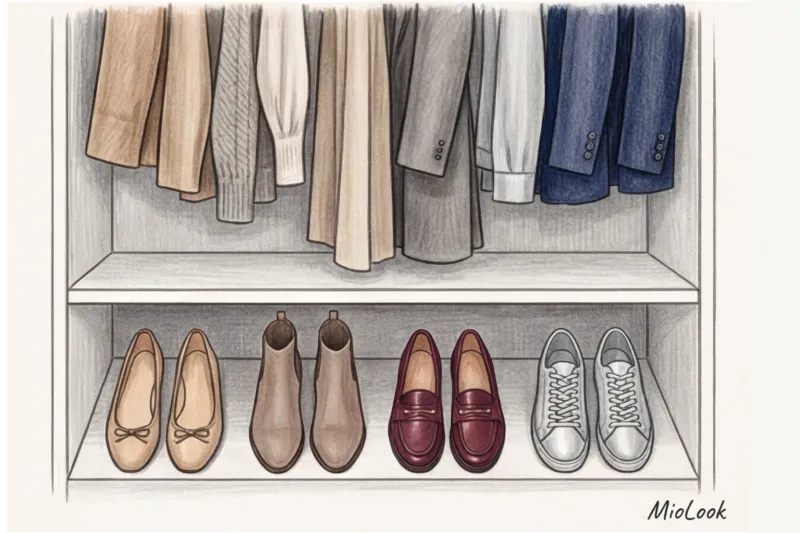
- If there is a predominance there warm tones (sand, brown, olive, warm beige) - your universal color will be cognac, caramel or warm taupe.
- If the wardrobe goes into cold range (gray, graphite, cool blue, black) - choose cool taupe, silver or deep burgundy.
Don't forget the "sandwich" rule or color rhyme. A look looks complete when the color of your shoes is subtly echoed in the portrait area—this could be the frame of your glasses, your scarf, your hair color, or your bag strap.
Checklist before purchase
- Step 1: Analyze your bottoms. Which pants or jeans do you reach for most often?
- Step 2: Decide on a primary outerwear color for the season. Your shoes shouldn't clash with it.
- Step 3: Choose a "bridge color." If your coat is gray and your jeans are blue, wine-colored ankle boots will tie them together perfectly.
Common mistakes when switching to a color base
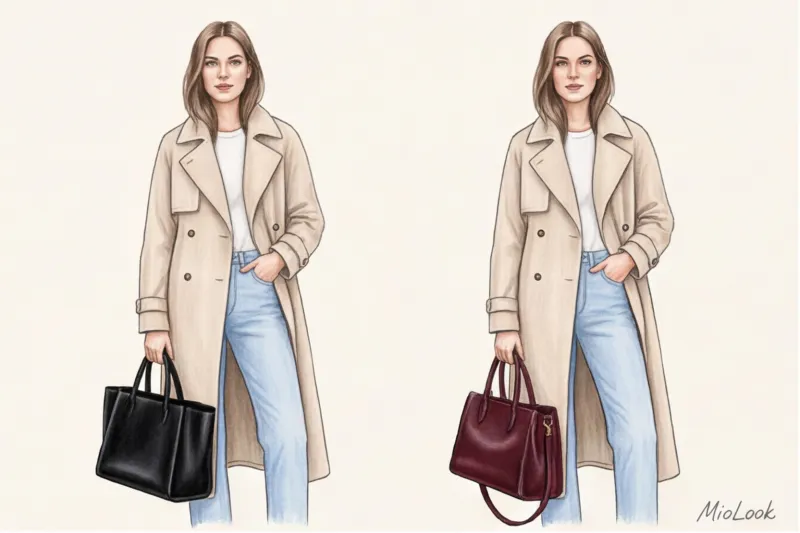
The first and foremost mistake is blindly following the rule "bag and shoes must match." This is an outdated protocol from the 1950s. Today, such matching can make a look seem overly overdone. It's better if the bag and shoes match in temperature (cool to cool) or texture (smooth leather to smooth leather), but not in exact color.
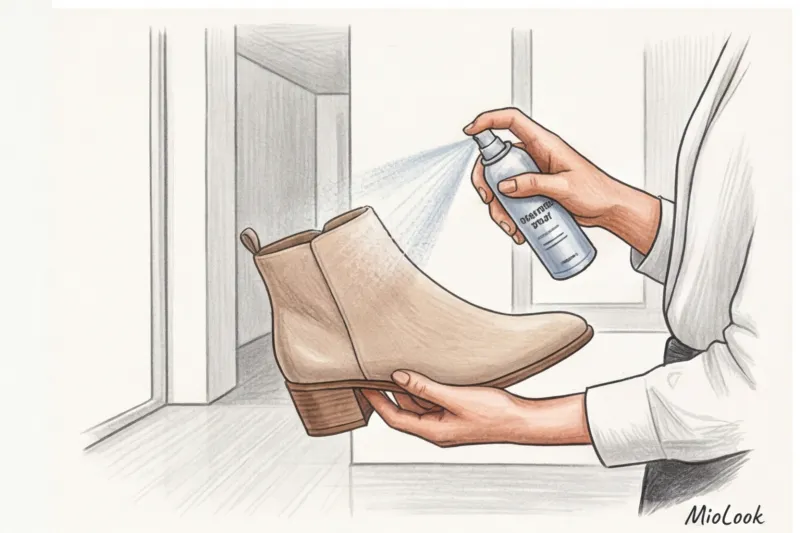
The second mistake is ignoring the climate. Light taupe suede is stunningly beautiful, but let's be realistic. This advice absolutely does NOT work if your daily commute involves riding public transportation in the November slush. For harsh weather, choose smooth burgundy leather with a thick sole.
If you do buy light-colored suede shoes, rule number one: before you go outside for the first time, treat them with a water-repellent nano-impregnation. Apply three coats, spaced 12 hours apart. This is the only way they'll survive the city.
Results: Your Personal Shoe Formula
Modern wardrobe essentials no longer rely solely on black. They rely on complex, deep, chameleon-like shades: taupe, wine, the perfect nude, and muted metallic. These colors work to your advantage—they elongate your silhouette, intensify the color scheme, and make your look appear more luxurious.

Instead of buying yet another pair of "safe" black shoes, take stock. Put away the pairs that cut you off and simplify your looks. I always tell my clients: it's better to have four truly functional, workable pairs of shoes in your closet than 15 black ones that don't go with any light-colored dress.
To avoid making a mistake with your choice, take a photo of the pair you want in the fitting room before purchasing. Upload the photo to MioLook app and see how it integrates into your current looks on a virtual mannequin. A smart wardrobe isn't about the quantity of items, it's about the precision of your decisions.