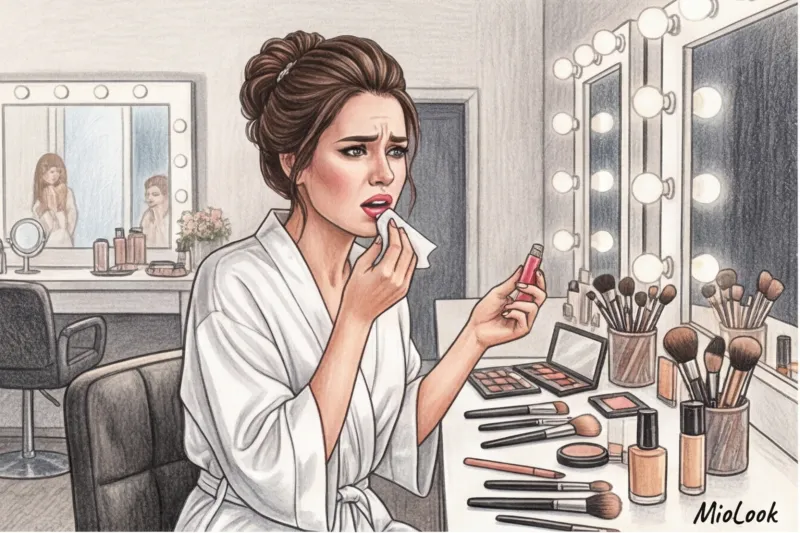
Did you know that on average a bride spends between €150 and €300 just to figure out what look she wants? Not Is it appropriate? The beauty industry has conditioned us to think that long, grueling (and expensive!) rehearsals with a makeup artist are a mandatory part of the pre-wedding routine. But as a practicing colorist and image consultant, I can say bluntly: the classic approach is hopelessly outdated.
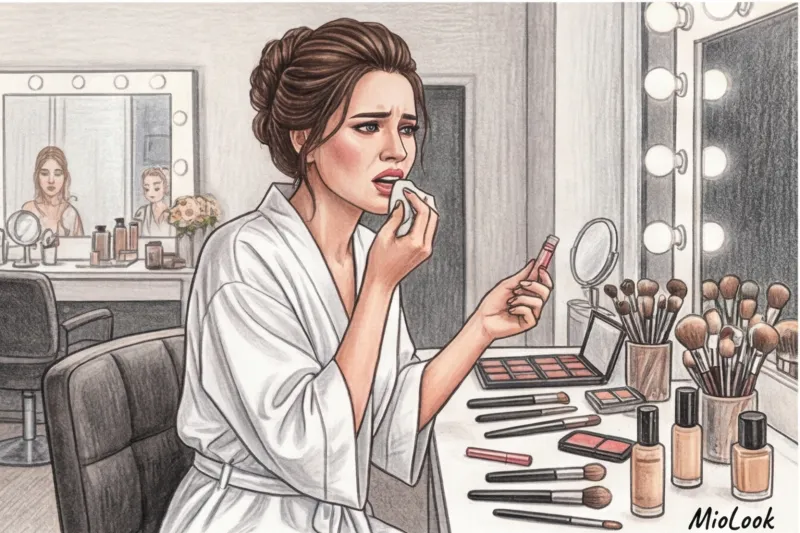
You no longer have to play beauty roulette in the master's chair. Today, the opportunity Try on wedding makeup online — it's not just entertainment, but a professional tool for working with color and contrast. We've already discussed the evolution of these algorithms in more detail in our The complete guide to virtual makeup try-ons with AI , and today I'll show you how to use these technologies to create the perfect bridal look.
The Illusion of a Perfect Makeup Trial: Why Brides Are Disappointed
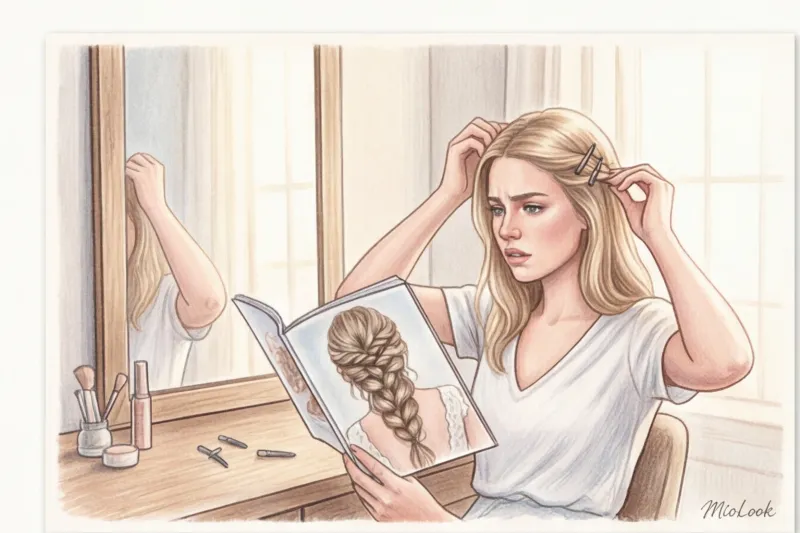
About a year ago, a client named Anna came to see me. She was literally crying in the car after her third makeup trial. She'd spent almost €350 on trials at top salons, but every time she looked in the mirror, she saw a different face. The stylists were giving her a "trendy peach" look and trendy, feathered eyeliner, which looked great in their portfolios but clashed completely with her cool, contrasting complexion.
What's the main problem with classic makeup trials? There are three, and they're all systematic.
- Pinterest trap. You bring a reference photo of a model with flawless makeup. But the image only works if you and the model have identical skull structure, eye position, eyelid volume, and, most importantly, skin tone. By transferring someone else's makeup onto your face, the artist often ruins your natural architecture.
- Lighting distortion. You're sitting in front of a mirror surrounded by professional ring lights. The color temperature of this light is typically 3200-4000 Kelvin (warm spectrum), which makes skin glow and smooths out gradations. But your wedding will be held outdoors during the day or in a restaurant with large windows (around 5500 Kelvin—harsh daylight). Makeup that looks perfect under a makeup artist's lamp often looks like a heavy mask or a smudge in outdoor photos.
- Stress in the moment. When you're sitting in a chair while a professional works their magic on you for two hours, it's psychologically very difficult to say, "I don't like it, wash it off." Most brides agree, pay the money, and then, in a panic, look for a new specialist.
How technology has changed the rules: try on wedding makeup online
Let's get this out of the way: when I talk about AI try-on, I'm not talking about the smoothing filters from social media in 2017 that erased noses and added plastic eyelashes.
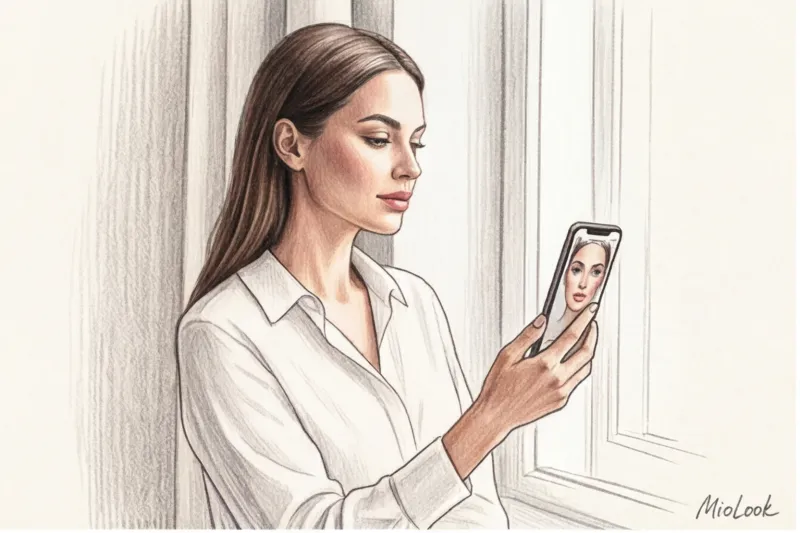
Modern algorithms work like a virtual color lab. When you decide to try on your wedding makeup online, for example, through the "smart wardrobe" feature and beauty try-on in MioLook , the neural network analyzes your face with micropixel accuracy.
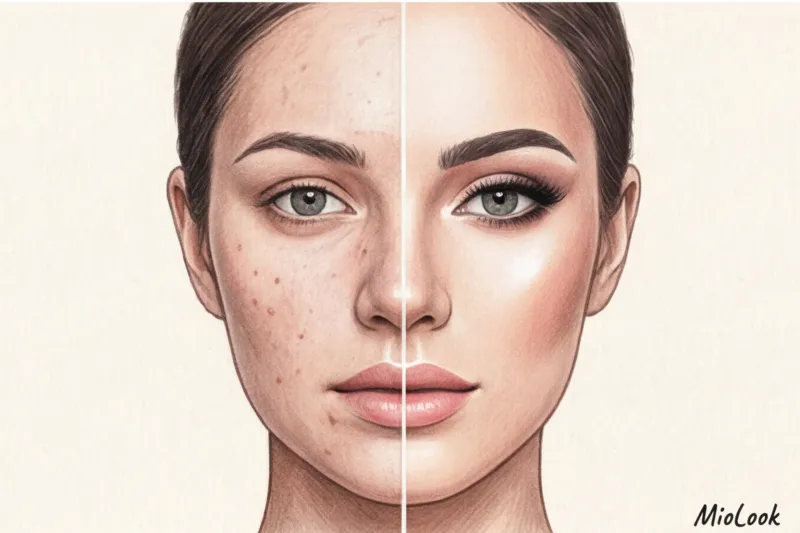
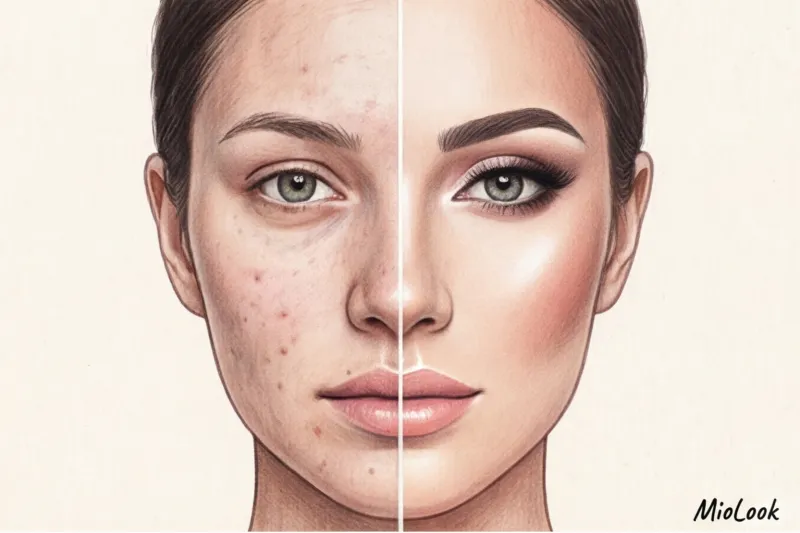
It reads your skin texture, captures your pores, moles, and facial expressions, but applies pigment based on your facial volume. It's not a flat image, but a 3D model. You can turn your head, smile, move toward a window, or turn on the overhead light in the bathroom—and see how your chosen shades react dynamically. This is exactly how professional stylists work: we evaluate a look not statically, but in motion.
Your perfect look starts here
Join thousands of users who look flawless every day with MioLook. Try on makeup without spending money on cosmetics.
Get access — €0.99 onceColor Theory for the Bride: Choosing a Palette to Match Your Dress
Now, let's talk about something that 90% of brides and even some makeup artists forget. Wedding makeup doesn't exist in a vacuum. Its main partner is your dress. And this is where the strict physics of color comes into play.
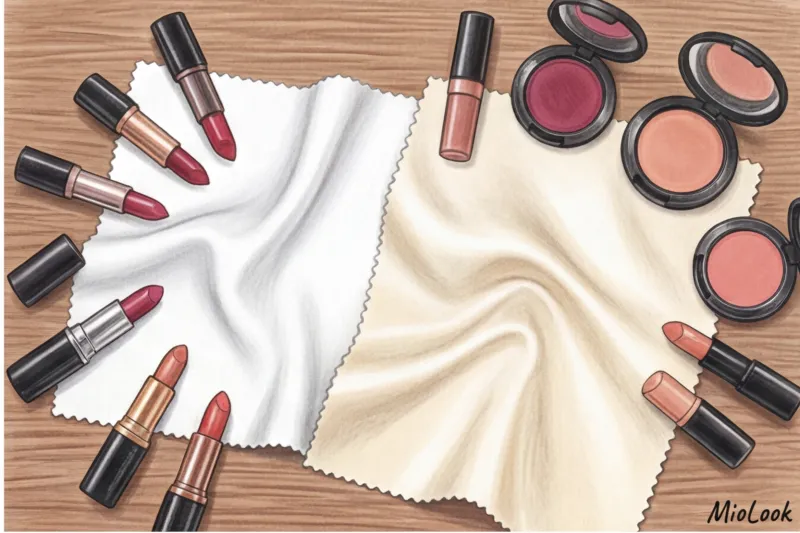
The "white dress" is a myth. According to the Pantone Color Institute, there are over 40 commercial shades of white used in wedding fashion. And each one dictates its own makeup tone.
Let's look at the main rules of temperature contrast:
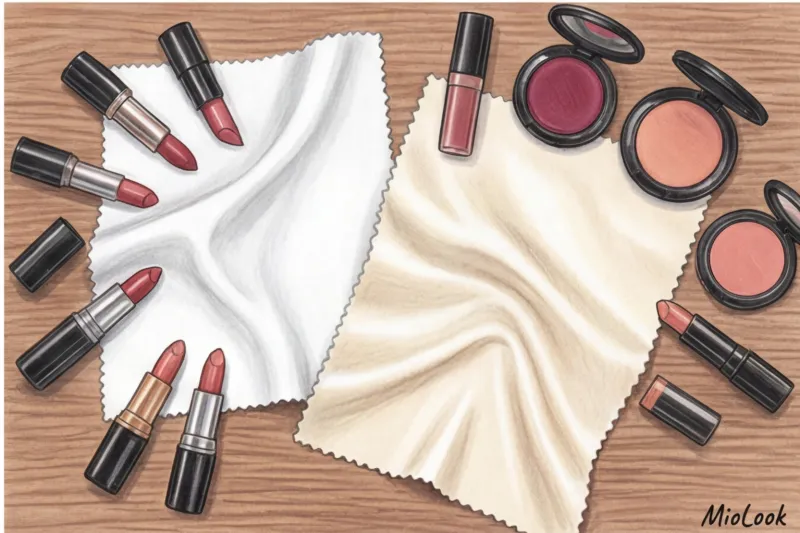
- Snow-white (brilliant white). This is a completely cool shade with a slight bluish undertone. If you wear it with a warm, golden-peach makeup look (so beloved by many makeup artists), your face will appear tired, reddish, or even "dirty" against the dress. Cool pinks, berry, or neutral taupe shades are essential here.
- Ivory (ivory). A warm shade with a subtle hint of yellow. Here, the rules change 180 degrees. Cool Barbie pink lipstick or gray-black smoky eyes will make the dress look washed out and aged. Warm peach, coral, bronze, and soft brown tones complement ivory perfectly.
- Champagne. Requires complex highlighter work. The dress's hue has a delicate shimmer, and the matte, dull skin on her face will clash with it. Satin finishes and a warm sheen are needed.
According to 2023 data from the analytics agency Mintel, 68% of women regularly make the wrong choice of makeup shade simply because they don't understand their skin undertone. On your wedding day, this mistake is multiplied by the amount of white fabric on your dress.
That's why I insist on trying out your wedding makeup online first. You can put on a white T-shirt (or a piece of fabric that closely matches your dress), open the app, and switch between palettes, watching how your complexion changes.
Fine-tuning: A Virtual Wedding Look Try-On Checklist
For AI fitting to produce an objective result, and not just a pretty picture, the rules for preparing the "canvas" must be followed. Over 12 years of practice, I've developed the perfect testing algorithm.
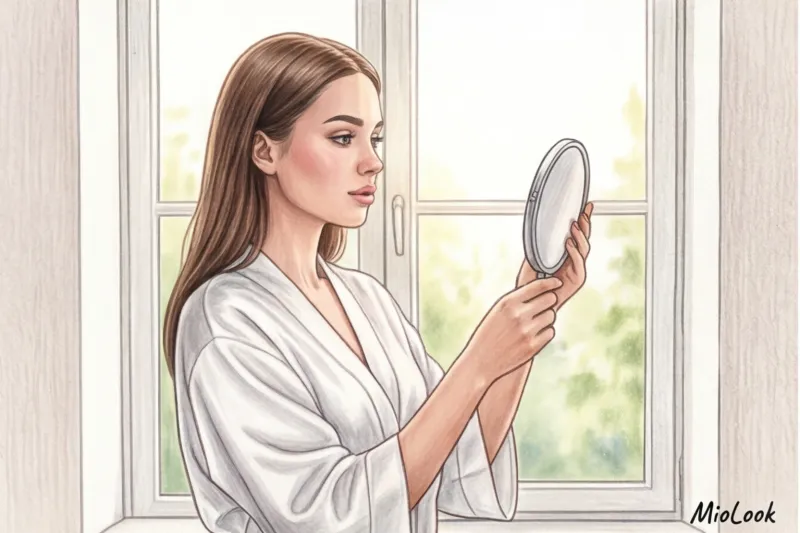
- Lighting rule. No lamps in the bathroom! Stand facing a window during daylight hours (ideally between 10:00 AM and 2:00 PM). The light should fall directly on you, evenly illuminating both sides of your face. This is the most honest, unforgiving light, revealing any color mismatches.
- Blank canvas. Be sure to remove all makeup. Even remove any traces of mascara from between your lashes. Apply only a light moisturizer without SPF (sunscreens often cast a white glare on camera). Comb your hair back smoothly to prevent shadows from your bangs or strands from distorting your face.
- Checking the time of day. Found the perfect daylight look? Great. Save it in the app. Now wait until evening, turn on warm room lighting (like at a restaurant banquet), and try on the same saved look again. It shouldn't look washed out or, conversely, too theatrical.
Access to MioLook for €0.99 — one-time payment
A smart AI stylist will create the perfect look for you. Experiment with contrast and finishes without risking your skin.
Get access — €0.99 onceTop 3 Mistakes Brides Make When Choosing a Beauty Look (and How AI Can Help You Avoid Them)
The industry is full of myths. The most popular one is: "Wedding makeup must be very thick and bright, otherwise the camera will eat it up." Because of this myth, hundreds of girls look 10 years older on their big day. Let's look at the main mistakes that are easy to prevent.
Ignoring your contrast level
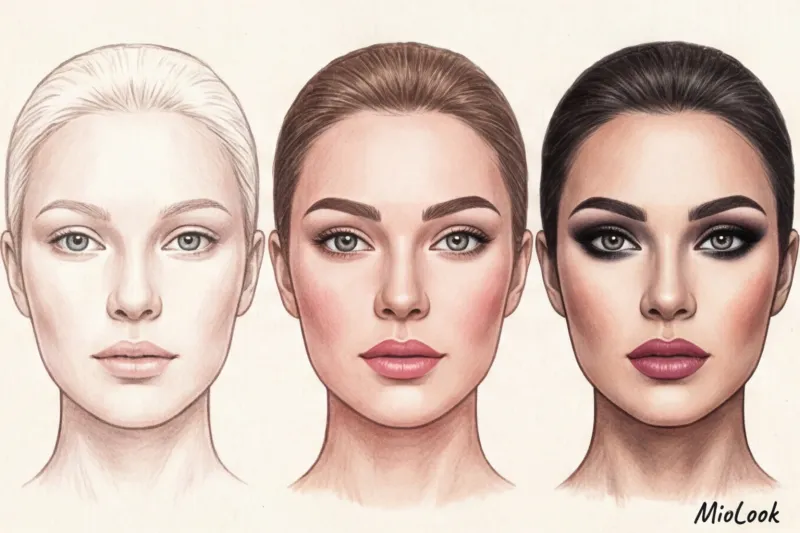
Every face has its own natural level of contrast—the difference between skin, eye, and hair color. If you're a soft ash blonde with translucent skin (low contrast), trendy graphic black eyeliner and dark burgundy lips will literally "eat up" your face. People will see your makeup, not you.
Conversely, if you're a striking brunette with dark eyes and snow-white skin (high contrast), the ever-popular nude makeup will make your face look flat and featureless in photos. The virtual try-on allows you to "run" your look through the contrast scale in just two minutes: from a subtle tint effect to dramatic evening contouring.
Choosing the wrong finish: matte vs. shimmer
Beauty trend research (such as WGSN reports) has been pushing dewy skin—dewy, radiant skin—in recent years. But I always warn my clients: what looks amazing on the runway or on TikTok will turn into a greasy, sweaty face in a flash-lit wedding photo.
Going to the other extreme—using a completely mattifying foundation with a thick texture—is also a no-no. It will apply like plaster and highlight every wrinkle when you laugh. Look for balance in satin textures. When trying on your makeup virtually, pay attention to how the app places highlighter highlights: they should be only on your cheekbones, the lip line, and under your brow bone, but never on the center of your forehead or the sides of your nose.
How to Bring Virtual Makeup to Reality: A Guide for Working with a Makeup Artist
A logical question arises: does this mean a makeup artist is no longer needed? Of course, it is! Here I must mention an important limitation: Virtual try-ons work brilliantly for choosing shades, contrast, and geometry of makeup, but they won't test the physical durability of cosmetics on your skin.
You'll still need a professional for this. But your approach to them will change dramatically. You're no longer coming for an "idea." You're coming with a ready-made technical specification.
How it works in practice:
- Assemble a shade map. Take screenshots of your best look in the app under different types of lighting.
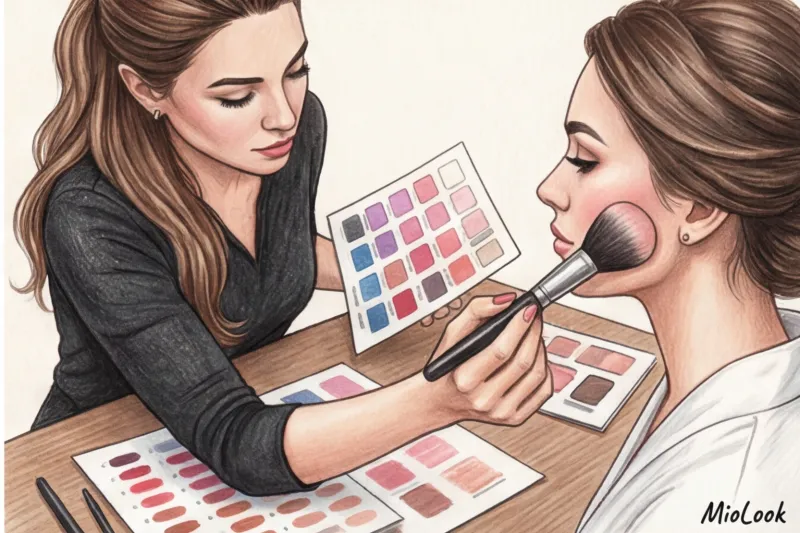
- Use professional language. When showing a photo to your stylist, don't just say something abstract like, "Make me look pretty." Say, "We're using a cool pink undertone, blending the eyeshadow toward the temples (not a round shape), and applying blush high on the cheekbones using a draping technique, without using a hard highlighter underneath the cheekbone."
- Focus on technique. Since you already know WHAT suits you, the only purpose of a makeup trial (if you decide to do one) is to check how the foundation holds up on your T-zone after 8 hours, and whether the eyeshadow is creasing in the crease.
My client Anya, whom I wrote about at the beginning, ultimately found her perfect cool berry look through a 15-minute online try-on. She came to the new artist with clear screenshots, her makeup was done in an hour, and at the wedding, she looked like herself—only rested and radiant.
Technology has freed us from the need to spend our own money on fortune-telling in front of a mirror. Hand over your routine to artificial intelligence, find your perfect color scheme in the comfort of your own home, and only visit a makeup artist for a high-quality technical implementation of your personal vision.