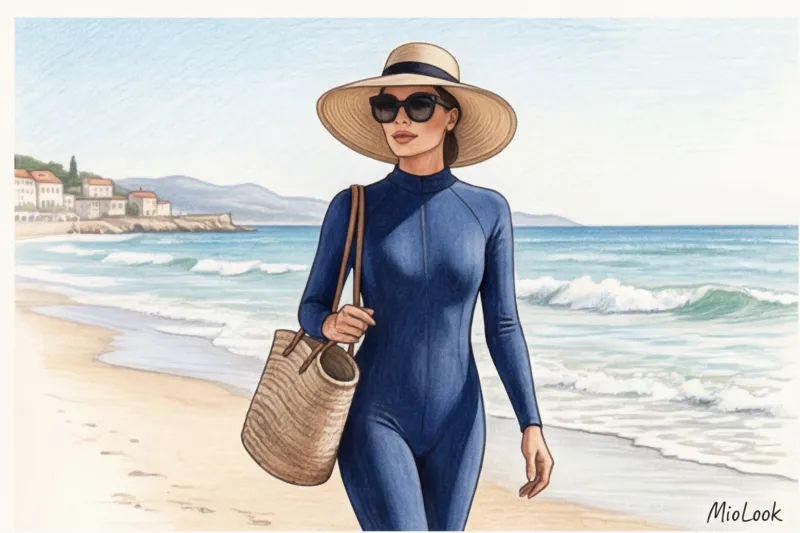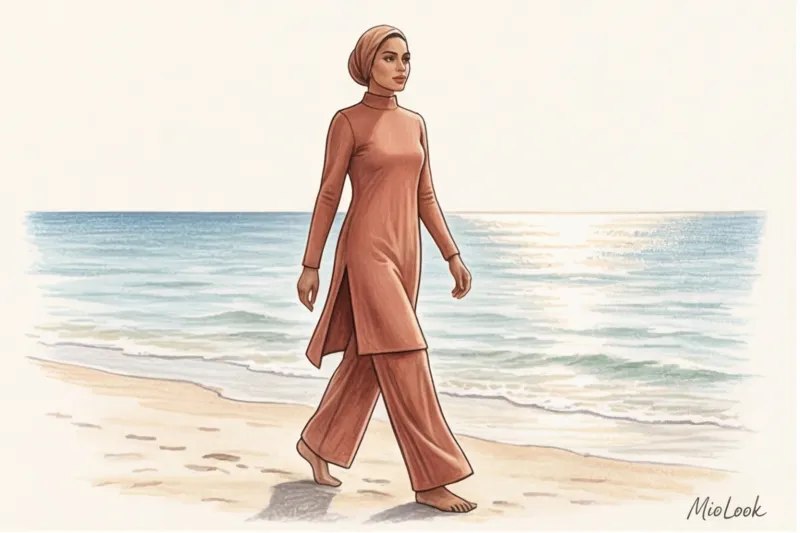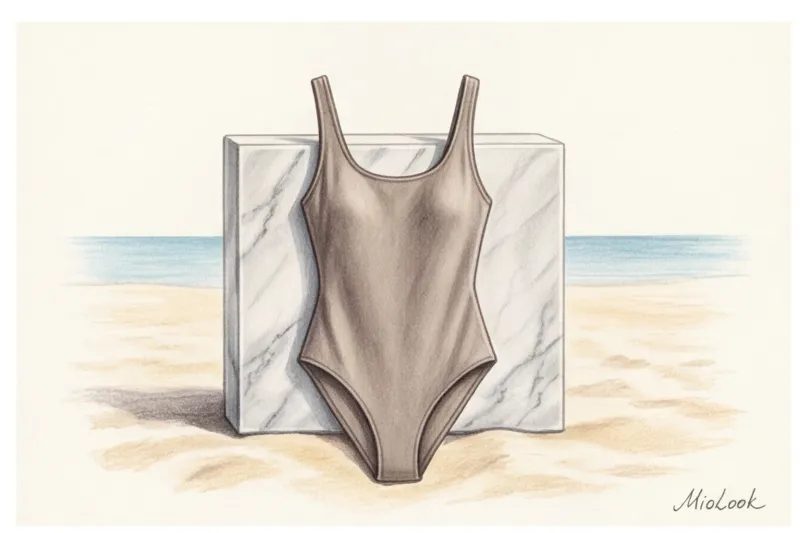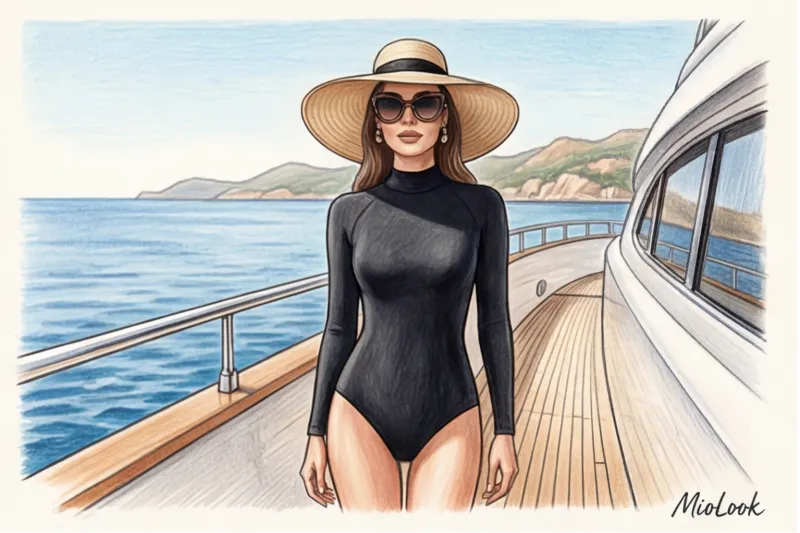
Три года назад моя клиентка Лена позвонила мне с Мальдив в слезах. Вместо романтических ужинов на берегу океана она проводила долгожданный медовый месяц в номере под кондиционером — тяжелейший солнечный ожог в первый же день превратил отпуск в кошмар. Когда мы собирали капсулу для ее следующей поездки в Дубай, она категорически отказалась от бикини. Именно тогда я впервые собрала для нее гардероб, где главным героем стал закрытый купальник от солнца. С тех пор она больше никогда не возвращалась к открытым моделям.
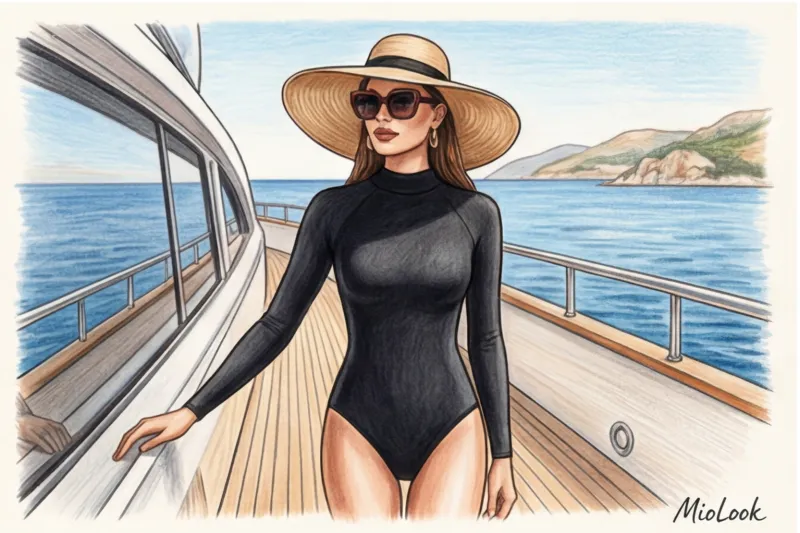
В сознании многих женщин максимально закрытая одежда для плавания все еще ассоциируется либо с профессиональным серфингом, либо со строгими религиозными нормами. Однако сегодня это глубокое заблуждение. Подробнее об эволюции этого предмета гардероба мы рассказали в нашем полном гиде по закрытым купальникам буркини, но сегодня я хочу поговорить о другом: о том, как закрытое тело стало вершиной современной эстетики курортного люкса.
Закрытый купальник от солнца как символ нового пляжного люкса
За 12 лет работы персональным стилистом я заметила радикальный сдвиг. Если раньше девушки просили найти «самое крошечное бикини, чтобы не осталось следов от лямок», то за последние два сезона каждая третья клиентка целенаправленно просит добавить в круизный чемодан закрытую модель с длинным рукавом. И дело не только в эстетике скромности.
Согласно официальным данным The Skin Cancer Foundation, регулярное использование солнцезащитных кремов не всегда спасает от фотостарения и рисков для здоровья, особенно если вы забываете обновлять слой после каждого купания. Ткань же обеспечивает постоянную, не смываемую защиту.
«Мода на оголенность уходит в прошлое. Современная роскошь — это забота о себе. Женщина в элегантном свим-дрессе с идеальной осанкой выглядит гораздо статуснее, чем та, что судорожно прячется под зонтиком от палящих лучей», — это наблюдение из моей практики подтверждается коллекциями последних лет.
Люксовые Дома моды и концептуальные марки вроде Cynthia Rowley, Lanuuk и Marysia сделали закрытые купальники объектом желания. Это уже не «вынужденная мера», а осознанный выбор успешных женщин, которые хотят сохранить молодость кожи и при этом выглядеть так, словно они только что сошли с палубы яхты на Французской Ривьере.
Миф о жаре: как ткани UPF 50+ спасают от зноя
«Изабелла, я же сварюсь в этом костюме!» — это первая реакция, которую я слышу, когда предлагаю рашгард или сплошной купальник с длинным рукавом для поездки в Эмираты или Таиланд. Давайте разберем этот контринтуитивный момент.
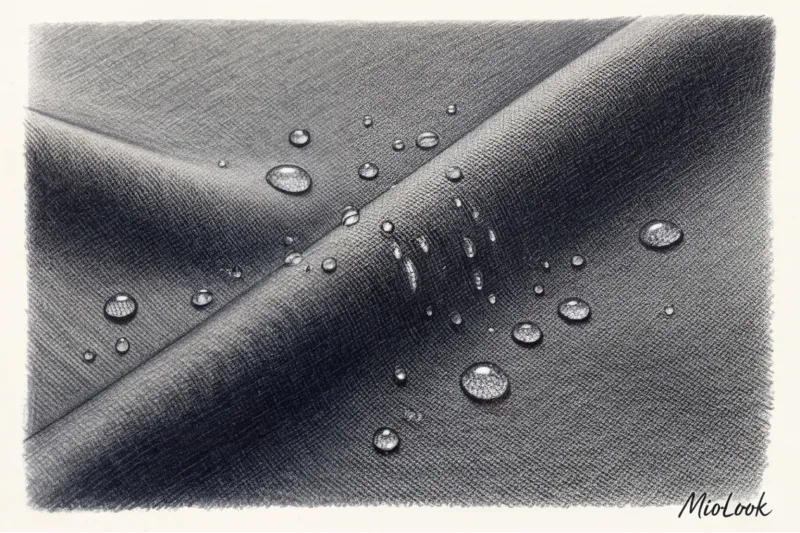
Миф гласит: больше ткани — больше пота. Факт: высокотехнологичные ткани охлаждают ваше тело лучше, чем открытая кожа под прямыми лучами. Это эффект бедуинских одеяний, адаптированный под современную спортивную моду. Прямое инфракрасное излучение нагревает обнаженную кожу моментально, в то время как правильная ткань принимает удар на себя.
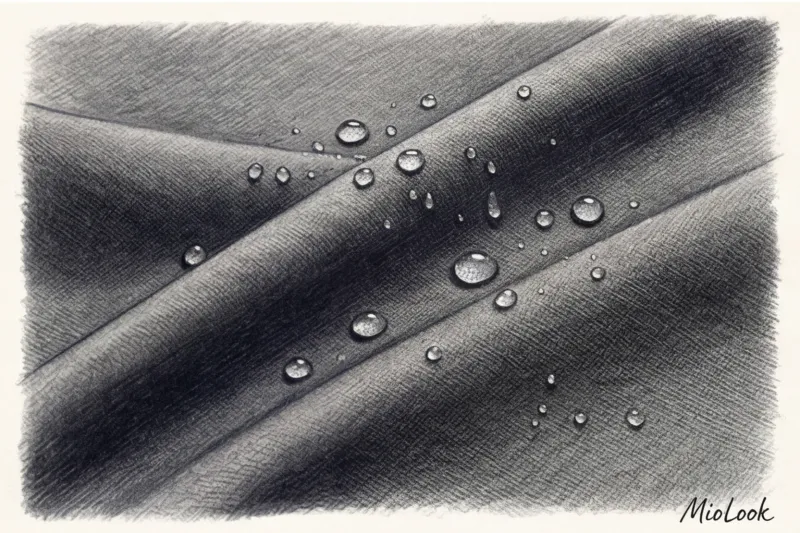
Но здесь есть важнейшее ограничение. Это НЕ работает, если вы покупаете дешевый масс-маркет из обычного недышащего полиэстера за 15 €. Такой купальник действительно превратится в парник.
Настоящий закрытый купальник от солнца работает иначе:
- Показатель UPF (Ultraviolet Protection Factor): В отличие от косметики (SPF), которая защищает только от UVB-лучей (вызывающих ожоги), индекс UPF 50+ блокирует 98% лучей обоих типов (UVA и UVB). Для сравнения: ваша любимая летняя белая хлопковая футболка имеет UPF всего около 5. То есть она пропускает 20% опасного излучения.
- Терморегуляция: Премиальные бренды используют микроволокна, которые моментально отводят влагу от тела. Когда легкий бриз касается влажной ткани, происходит эффект микроохлаждения.
Доступ к MioLook за €0,99 — разовый платёж
Умный AI-стилист подберёт идеальный образ для вашего следующего отпуска, учитывая особенности фигуры и климат.
Открыть доступ — €0,99 разовоВиды закрытых купальников: от рашгардов до свим-дрессов
Современный рынок скромной пляжной моды (modest swimwear) предлагает решения для любого типа отдыха. Забудьте о бесформенных гидрокостюмах водолазов — сегодня архитектура кроя позволяет подчеркнуть достоинства фигуры даже при полной закрытости.
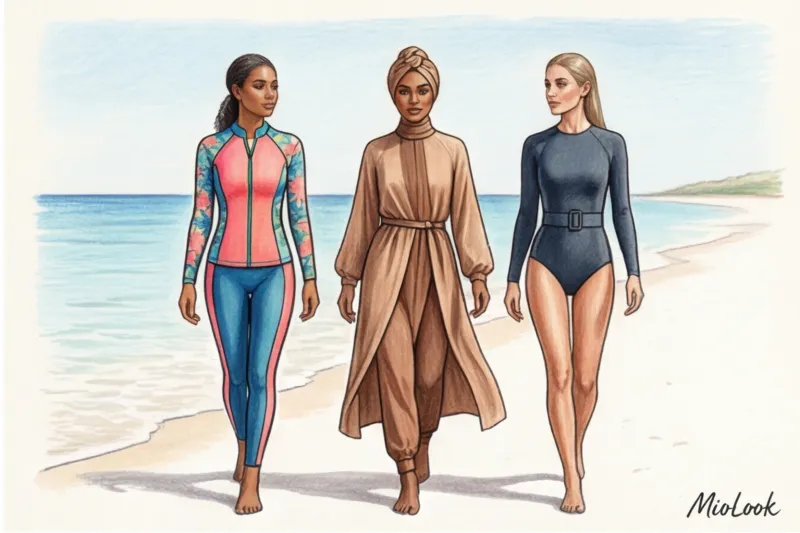
Спортивный шик: серф-эстетика и рашгарды
Если ваш отпуск предполагает сапбординг, кайтсерфинг или активные игры на пляже, выбирайте комплекты из кроп-рашгардов и плавательных легинсов (или шорт). Характерная деталь таких моделей — плотная молния спереди. Она позволяет контролировать глубину выреза: застегнули до подбородка во время заплыва, расстегнули на берегу для легкой небрежности.
Элегантная классика: слитные модели с длинным рукавом
Мой любимый вариант для расслабленного отдыха у бассейна. Визуально такие купальники напоминают роскошные вечерние боди. Бренды часто добавляют акцентные пояса на талии, подчеркивающие силуэт, или делают глубокий, но защищенный полупрозрачной сеткой вырез на спине.
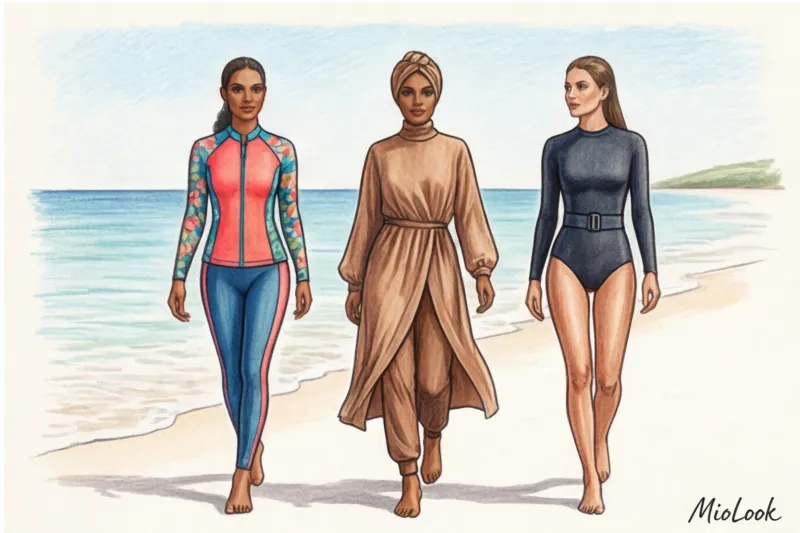
Буркини нового поколения: архитектура ткани
Бренды уровня Lyra Swimwear полностью переосмыслили концепцию буркини. Сегодня это изысканные многослойные комплекты, состоящие из туник асимметричного кроя и свободных брюк-палаццо. Важнейшая инновация кроется в деталях: скрытые петли и фиксаторы соединяют тунику с брюками, поэтому ткань не задирается во время плавания.
Как выбрать идеальный закрытый купальник от солнца: гид по крою
Покупка солнцезащитного купальника — это инвестиция. Ценовой диапазон за качественный комплект от проверенных марок обычно составляет 100–350 €. Чтобы вещь отработала каждый вложенный цент, перед покупкой проверьте ее по моему личному чек-листу.
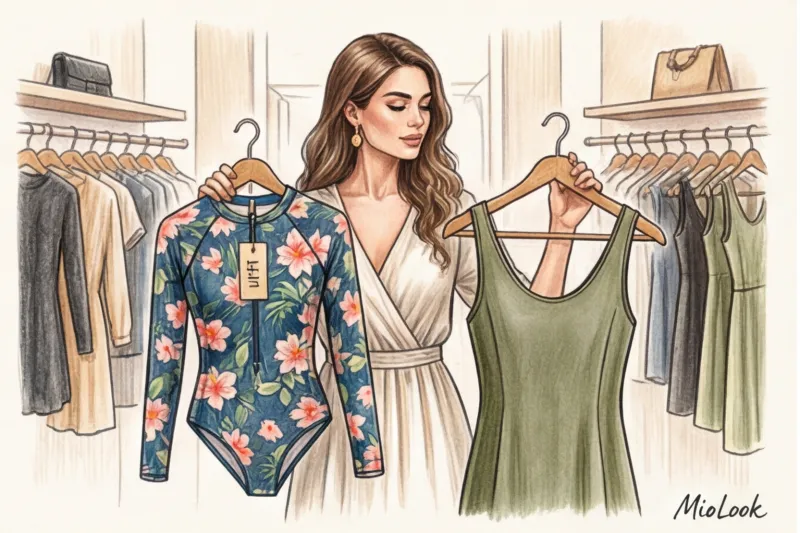
- Ищите маркировку волокна: Качественный купальник шьется из технологичных материалов. Идеально, если на бирке указано использование экологичных тканей, таких как ECONYL® (регенерированный нейлон из выловленных в океане сетей) или Xtra Life LYCRA® (материал, который служит в 10 раз дольше обычного эластана при контакте с хлоркой).
- Проверьте швы: Закрытый купальник должен плотно прилегать к телу. Убедитесь, что швы плоские (flatlock) — обычные выпуклые швы неминуемо натрут влажную кожу под мышками или на внутренней стороне бедра.
- Сертификат UPF: Надпись «sun protection» не значит ничего, если рядом нет конкретной цифры UPF 50+.
Совет стилиста по типу фигуры: Если вы выбираете полностью закрытую модель (например, рашгард и легинсы), старайтесь избегать сплошного черного цвета сверху донизу — это может визуально утяжелить силуэт, сделав его похожим на монолит. Используйте колорблокинг: темный низ для стройности бедер и акцентный, светлый или принтованный верх для привлечения внимания к лицу.
Ваш идеальный образ начинается здесь
Присоединяйтесь к тысячам пользователей, которые каждый день собирают стильные капсулы в отпуск вместе с MioLook.
Открыть доступ — €0,99 разовоФормулы стиля: как носить закрытый купальник от солнца вне пляжа
Главная суперспособность закрытого купальника, за которую его обожают мои клиентки — абсолютная мультифункциональность. Вам больше не нужно возвращаться в номер, чтобы переодеться перед обедом.
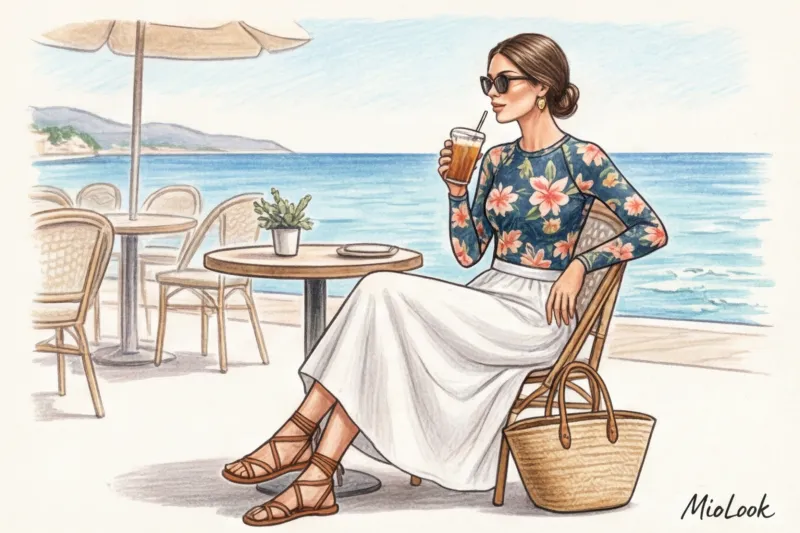
Вот три беспроигрышные формулы, которые работают безотказно:
- Для обеда на набережной: Слитный купальник с длинным рукавом + широкие шелковые или льняные брюки палаццо + соломенная шляпа канотье + массивные солнцезащитные очки = образ в духе старого Голливуда.
- Для экскурсии по жаркому городу: Кроп-рашгард + льняная юбка миди с высокой посадкой + сандалии на плоском ходу + плетеная сумка-тоут.
- Для вечернего коктейля: Свим-дресс (купальник-платье) + крупный жемчуг (о том, как носить жемчуг современно, мы писали ранее) + босоножки на тонких ремешках.
Кстати, чтобы не брать в отпуск лишних вещей, я рекомендую своим клиентам использовать MioLook. Вы просто загружаете фото купальника, а AI-помощник собирает для вас готовые капсулы с вашими же юбками и шортами. Это экономит место в чемодане и нервы при сборах.
Уход за солнцезащитными тканями: как не смыть UPF-защиту
Я видела, как клиентки убивали роскошные свим-дрессы за 250 € в первый же отпуск. Защита UPF в качественных тканях достигается за счет плотности плетения волокон (в дешевых — за счет химической пропитки). Если плетение нарушается, лучи начинают проникать сквозь ткань.
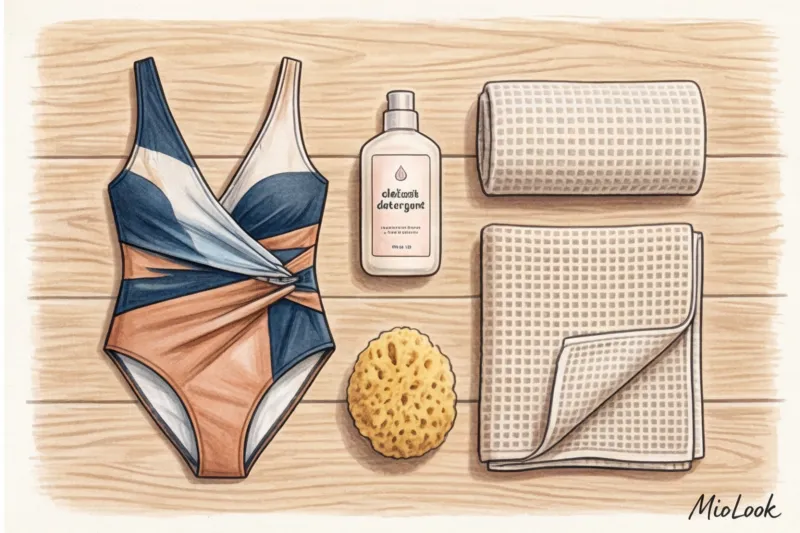
Запомните правило пресной воды: как только вы вышли из океана или бассейна, немедленно примите душ в купальнике. Соль и хлор — главные враги эластана, они разрушают волокна в течение нескольких часов, делая ткань рыхлой.
- Никакой горячей воды: Стирать только в прохладной воде (не выше 30°C).
- Табу на агрессивные порошки и кондиционеры: Кондиционеры для белья оставляют на ткани пленку, которая полностью уничтожает отводящие влагу свойства (тот самый охлаждающий эффект исчезнет).
- Сушка в тени: Никогда не выжимайте купальник выкручиванием и не сушите его под прямыми солнечными лучами или на батарее.
При правильном уходе хороший закрытый купальник от солнца прослужит вам 2-3 сезона активного отдыха. Если ткань начала провисать, потеряла эластичность или стала тоньше на ощупь — защита UPF снизилась, и купальник пора менять.
Стиль больше не требует жертв, а безопасность не должна быть скучной. Выбирая высокотехнологичный закрытый купальник, вы получаете ультимативный комфорт, безупречный силуэт и роскошную кожу без пигментных пятен. Инвестируйте в правильные ткани, интегрируйте пляжные боди в повседневные образы и наслаждайтесь солнцем без страха.