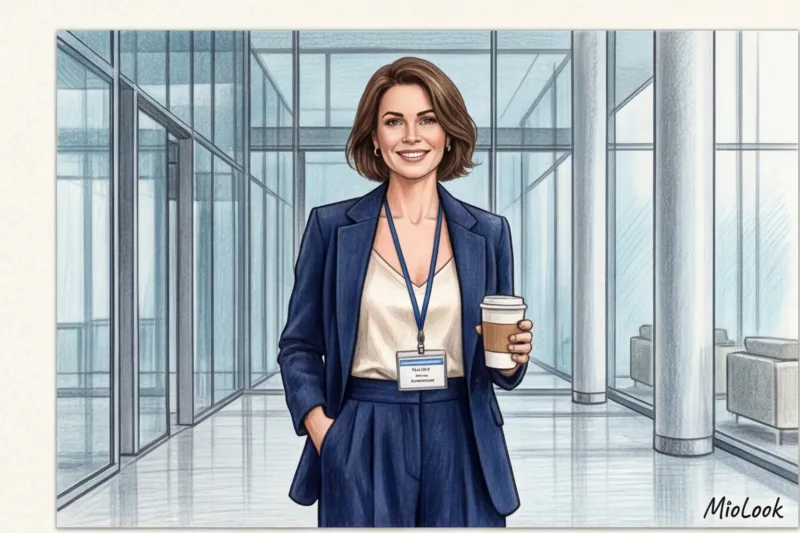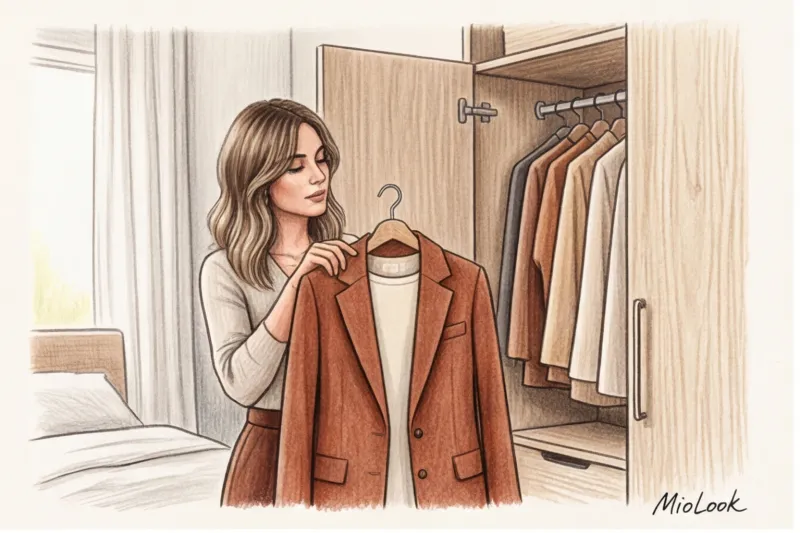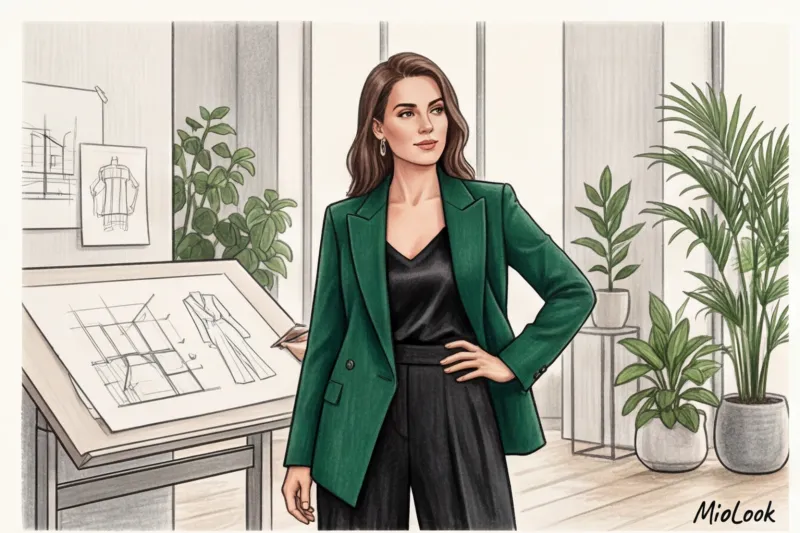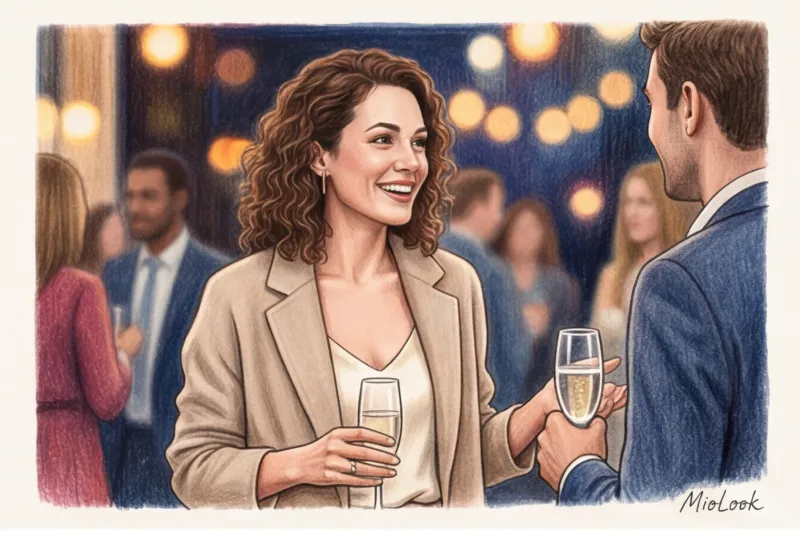
Have you ever wondered why, at industry conferences or private dinners, some people have lines of people wanting to meet them, while others, dressed in impeccable and incredibly expensive three-piece suits, stand alone all evening with a glass of water? In 12 years of working as a personal stylist and wardrobe investment consultant, I've learned one paradoxical lesson: the perfect tailored suit builds walls. It conveys dominance, distance, and power, not a willingness to collaborate. True clothes that inspire confidence — is the art of visual vulnerability, soft lines and tactile textures.
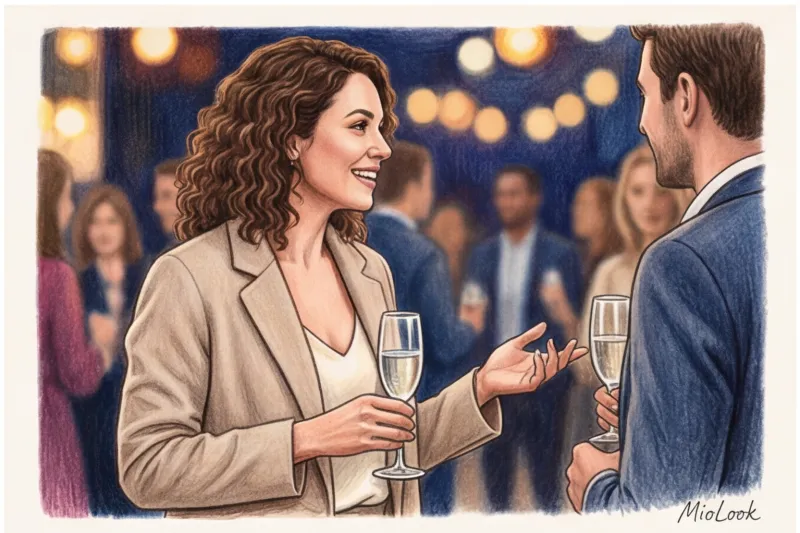
We discussed the basic mechanisms of this phenomenon in more detail in our a complete guide to the psychology of first impressions Today, we'll explore the practical side: how to dress so that your conversation partner subconsciously wants to become your partner, client, or friend even before you utter a single word.
The End of Power Dressing: Why Confidence-Inspiring Clothing Isn't a Suit
A famous study by Princeton University psychologist Alexander Todorov (2006) demonstrated that our brain needs only 100 milliseconds to evaluate a stranger's face and appearance, labeling them as "threat" or "friend." And in the context of modern networking, classic power dressing (stiff shoulder pads, buttoned collars, contrasting ties) is often perceived as a potential threat.
One of my clients, the founder of a Silicon Valley fintech startup, had been struggling to close a funding round. She showed up to investor meetings wearing tailored, sharp Tom Ford suits. They were a veritable armor. We changed our tactics: we removed the peak lapels and replaced them with deconstructed, soft cardigan jackets in the style of Brunello Cucinelli, adding silk tops. The result? At the very next meeting, the investors quickly became more familiar with each other, started sharing insights, and the deal was sealed. The softness of the cut eased their unconscious tension.
"Italians call it sprezzatura "The art of effortless, deliberate nonchalance. It's about looking like you threw on your clothes just before you went out, yet still looking flawless. It's this nonchalance that inspires more confidence than millimeter-perfect perfection."
Architecture of a welcoming image: lines that bring people together
Body language accounts for up to 55% of first impressions. But how can you display open, relaxed gestures if your jacket's armholes dig into your armpits and the fabric doesn't stretch? This is called kinetic congruence—clothing should allow you to breathe and gesture.
From a tailoring perspective, I always recommend for networking Neapolitan shoulder (spalla camicia). Unlike the rigid English shoulder with its thick shoulder pad, the Neapolitan shoulder fits softly, following the body's natural anatomy. You look distinguished yet relaxed.
Soft Tailoring: Avoiding Sharp Angles
The classic suit jacket should be replaced with unstructured blazer (a deconstructed jacket without rigid overlap) or a dense, structured-knit cardigan. The oval and flowing lines of the cut convey your flexibility and willingness to compromise. Even if your budget doesn't yet stretch to luxury, brands like Massimo Dutti or COS offer excellent wool-blend blazers without rigid overlap in the €150-€250 range.
Open portrait zone: a zone of vulnerability and empathy
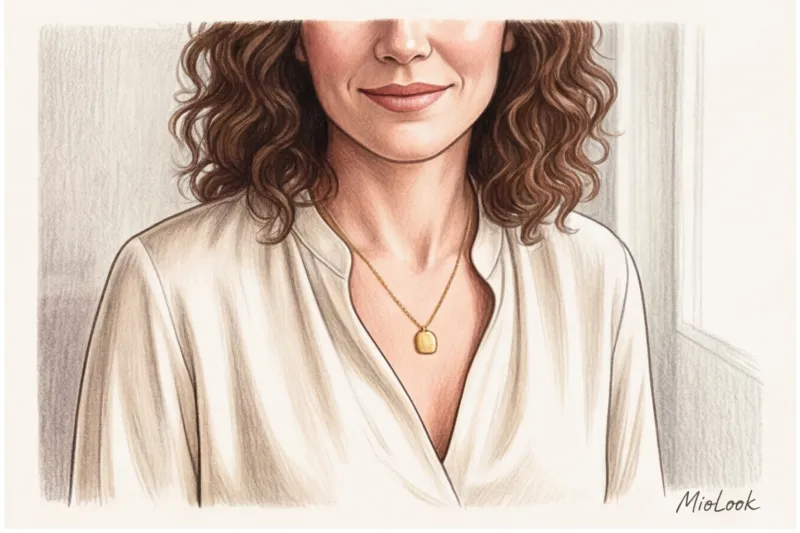
Tight turtlenecks and buttoned-up shirts create the "man in a case" effect. They say, "I'm protecting myself." A V-neck, a slightly unbuttoned shirt collar, or a softly draped top reveal the collarbone and neck—our most vulnerable zone. Evolutionarily, exposing your neck is interpreted as the highest level of trust in others, and the other person begins to trust you in return.
Your perfect look starts here
Join thousands of users who look flawless every day with MioLook. A smart AI stylist will help you create a flattering wardrobe.
Get access — €0.99 onceTactile magnetism: textures you want to touch
In 2012, researchers Adam and Galinsky introduced the term Enclothed Cognition (embodied cognition) is how clothing influences the wearer's psychology. But there's another side to the coin: through mirror neurons, the other person can visually "touch" your clothing. If you're wearing something scratchy, hard, or cold, the person opposite you will subconsciously feel uncomfortable.
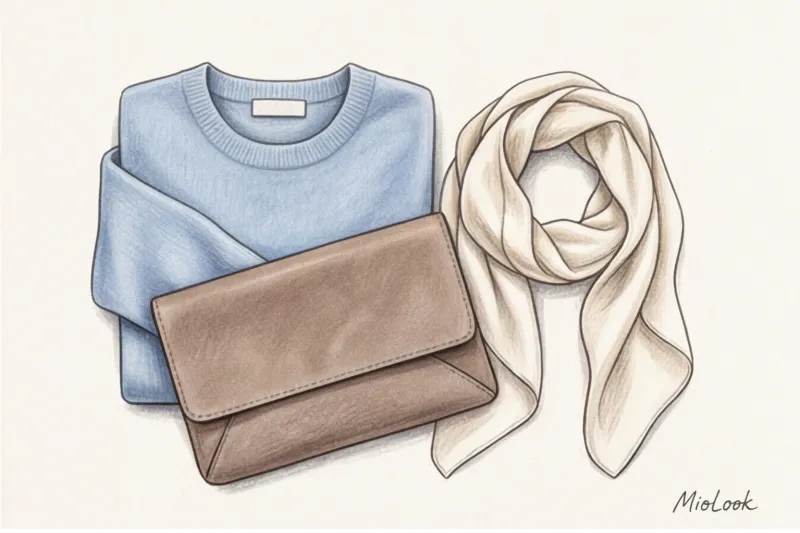
It is precisely this tactile superiority that underlies Loro Piana's philosophy of quiet luxury. Clothes that inspire confidence should look like a cozy hug. Invest in the right textures:
- Matte cashmere: An absolute champion at creating an aura of trust. A basic cashmere jumper is best found in the €150 to €500 range.
- Thick silk: Choose matte sandwashed silk, it doesn't shine but flows.
- Natural suede: adds earthiness and reliability to the image.
What should you absolutely avoid? Shiny, slippery fabrics. Cheap satin, stiff polyester, or lurex are associated with insincerity, coldness, and a desire to show off. They exude distance.
Networking Color Palette: More Than Just Blue
We've all read the basic advice from '90s business literature: "Wear blue, it inspires confidence." Classic navy blue certainly works, but at evening events or creative meetings, it can seem stiff and overly formal.
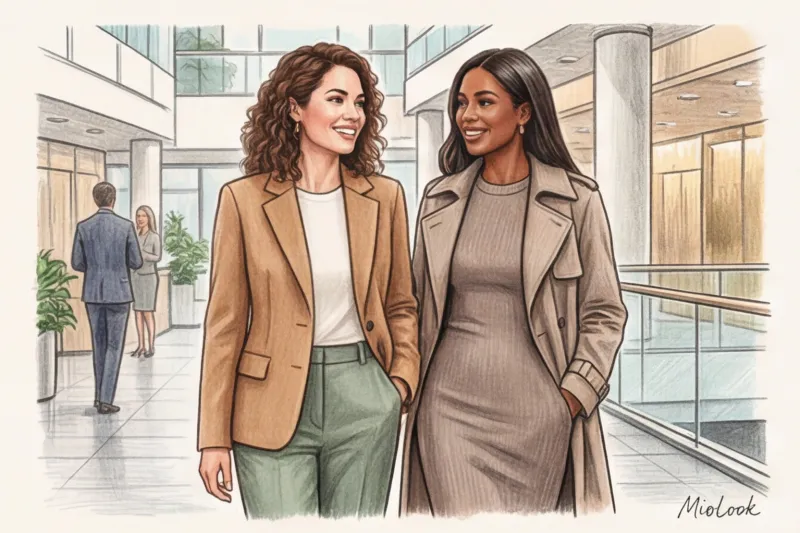
According to Pantone Institute social surveys, soft, warm colors increase the "approachability" rating by 40% compared to a contrasting black and white combination. The ideal natural trust palette includes:
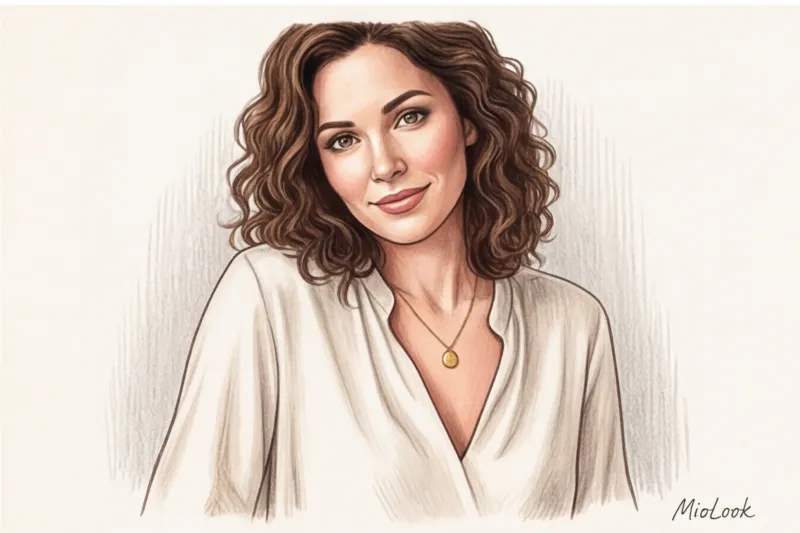
- Camel and sand: convey warmth and stability.
- Taupe (gray-brown): a complex, intelligent shade that doesn't distract from your face.
- Muted sage: calms the interlocutor's nervous system.
My personal advice as a stylist: if you put together a monochrome look in light colors, you're subconsciously declaring your status. Light-colored clothing is impractical; it's worn by those who take taxis and aren't afraid of getting dirty. Besides, light colors say, "I have nothing to hide."
Why Total Black Is Your Dating Enemy
Black is great for the fashion industry, nightclubs, or situations where you need to overpower an opponent. But at networking events, black absorbs light and creates an impenetrable wall. If you can't resist a dark palette, swap out black for deep chocolate, graphite, or burgundy. You'll retain elegance but add a vibrant warmth to your look.
Conversation Starters: Status Accessories
True luxury and confidence never scream. Clothing shouldn't steal the show, but your accessories can "whisper." Choose one unique detail that will catch your interlocutor's eye—it's the perfect opening for small talk.
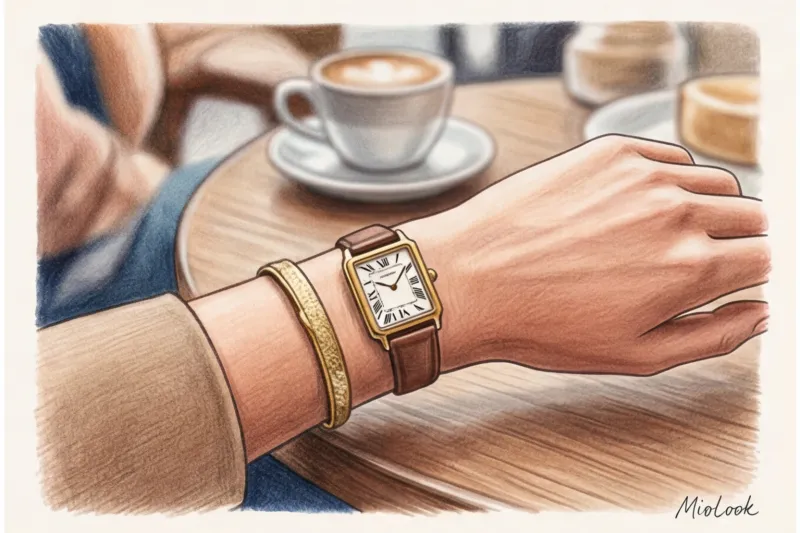
At a networking dinner in Milan, I witnessed a vintage Cartier Tank watch on a distressed leather strap (market value: around €3,500) spark a conversation that culminated in a major contract. The man turned out to be a collector. Great conversation starters include:
- An unusual handmade brooch made of textured metal.
- Textured woven leather bag without any logo.
- Horn-rimmed glasses with interesting geometry.
Chunky, aggressive jewelry or bags covered in monograms of famous brands scream not about your status, but about your need for attention and approval. And neediness is the biggest killer of trust.
Access to MioLook for €0.99 — one-time payment
A smart AI stylist will select the perfect look for your next important meeting, taking into account the rules of color and shape psychology.
Get access — €0.99 onceStylist checklist: putting together a look for a successful meeting
Before your next networking event, go through this checklist. The formula for engaging style consists of four steps:
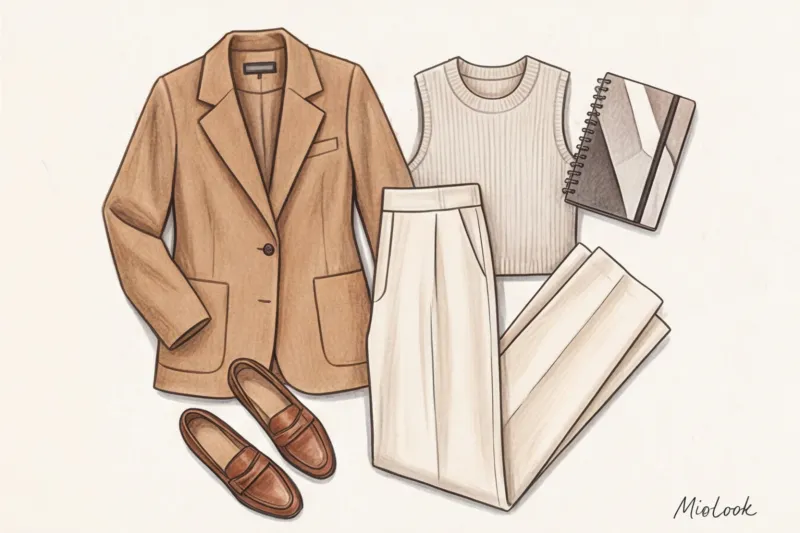
- Select base: Start with a matte, soft fabric. This could be wide-leg trousers made of thick viscose or a flowing midi skirt.
- Light accent near the face: Add a warm shade (milky, creamy, dusty rose) to the portrait area. This will illuminate the face and conceal signs of fatigue.
- Test for the "shell effect": Put on a jacket or cardigan and raise your hands up, mimicking a handshake. Does it pull? Press? Take it off. You need freedom of movement.
- Shoes without compromise: An insider stylist tip: never wear new shoes or stilettos to a networking event that you can't stand in for more than an hour. Opt for soft suede loafers or kitten heels. Why is this important? Foot pain instantly reflects on your face as a micro-expression of tension, which your interviewer unconsciously interprets as aggression or personal dislike.
Congruence: When the outside matches the inside
I must make an important disclaimer here: none of these rules apply if you're trying to play someone else's role. Even the most expensive and soft Loro Piana cashmere won't inspire trust if you're constantly tugging at their waist, adjusting their collar, and feeling out of place.
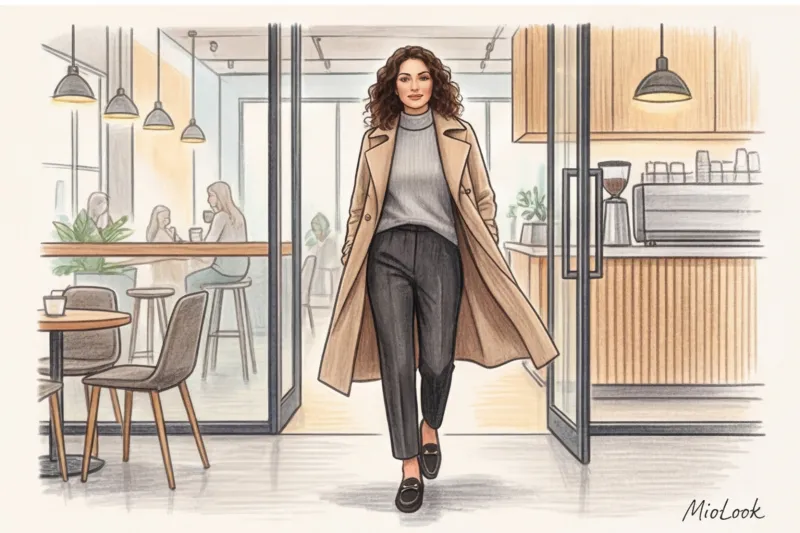
If you're naturally a strict and structured person, suddenly switching to flowing silks will be jarring. In that case, simply soften your usual formal look: keep the suit, but swap the shirt for a quality basic T-shirt or turtleneck (think Steve Jobs).
To avoid making a mistake in your choice and find that perfect balance between your inner self and external impression, you can use the app MioLook — Your personal AI stylist will help you digitize your wardrobe and suggest combinations that will work specifically for your goals.
To summarize my experience, I'd say this: the best wardrobe for networking is one you forget about within five minutes of leaving the house. Clothes should serve you, not you. Rethink your business wardrobe through the lens of softness, and you'll be surprised how much faster people will say "yes" to you.