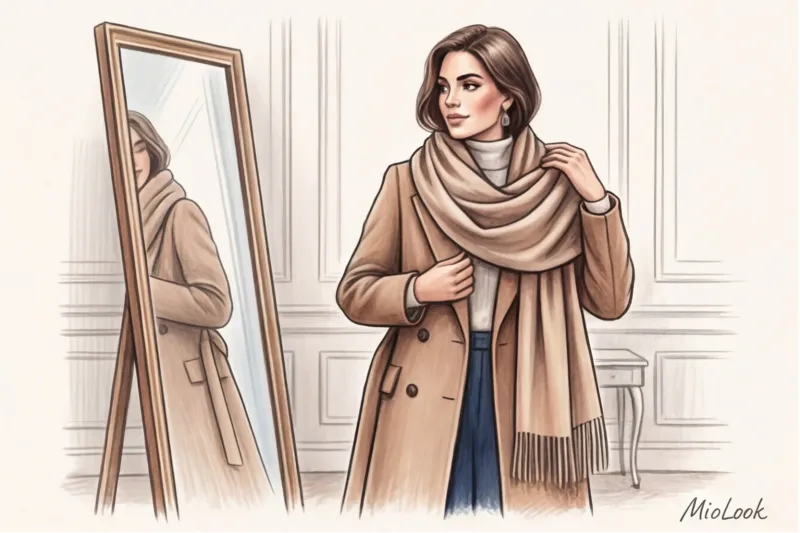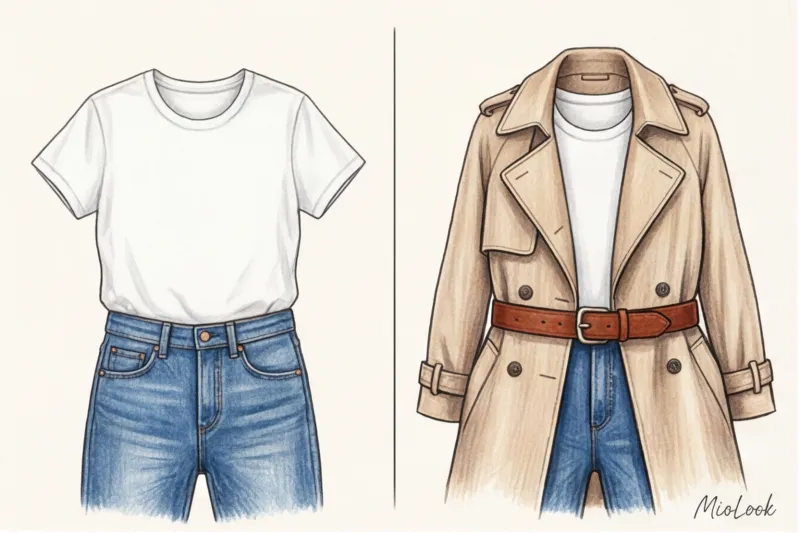
Over 14 years as a stylist, I've reviewed hundreds of wardrobes. You know what the most common complaint is? "Olena, I have a closet full of expensive basics, but when I put them on, I look boring. Like a department store mannequin." My clients invest in the perfect white T-shirts made of thick cotton, buy perfectly fitted trousers, but their reflection in the mirror still looks flat.
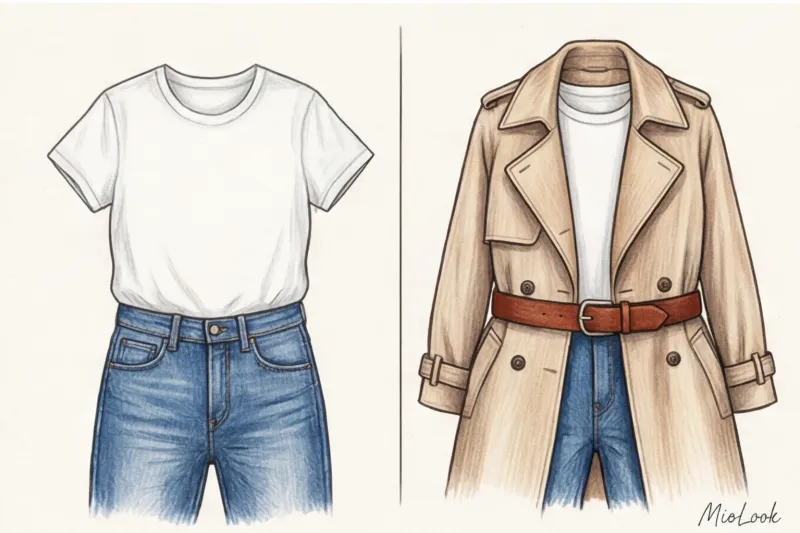
It is at this point that I introduce them to how it works the rule of third thing in clothing This isn't just the banal advice to "throw on a jacket," as often written in glossy magazines. It's a fully-fledged tool for managing visual weight and focus. We've already discussed in detail how details change everything in our Guide: How to choose the right accessories for your clothes Today we'll go further and explore the architecture of multilayering.
According to statistics I compile from wardrobe audits, 80% of women use only two items in their daily lives: tops and bottoms. By stopping at this point, they're using barely 40% of their closet's potential.
What is the "rule of thirds" and why does it work so well?
The mathematics of style operates according to its own laws. Trousers and a shirt are simply clothing. They're a functional set that covers the body. But trousers, a shirt, and a textured belt (or a jumper slung over the shoulders)—that's something else entirely. outfit , a complete image with character.
Why does this work? The human brain thrives on visual complexity within reasonable limits. When we look at someone wearing simple jeans and a turtleneck, our gaze has nothing to catch on. Three details force the eye to "skim," examining textures and calculating proportions. Behavioral psychology researchers have proven that adding a structured third element (for example, a jacket with a distinct shoulder line) increases the perception of your professionalism within the first seven seconds of meeting them.
The main insider secret I share during shopping sessions: the third piece should always be more complex or interesting than the first two. If you have a plain basic T-shirt and simple trousers, the third layer should add texture (leather, suede, chunky knit) or architecture (a rigid shape).
Access to MioLook for €0.99 — one-time payment
A smart AI stylist will select the perfect look.
Get access — €0.99 onceImage architecture: how the third detail controls impressions
The so-called "Halo Effect" is actively used in styling. According to the WGSN research agency's 2023 reports on retail psychology, one premium or intricately tailored detail automatically elevates the status of the entire outfit. You can wear the simplest white T-shirt from a mass-market store for €15, but if you layer it with an impeccable Massimo Dutti jacket or carry a rugged leather bag, others will perceive the entire look as expensive.
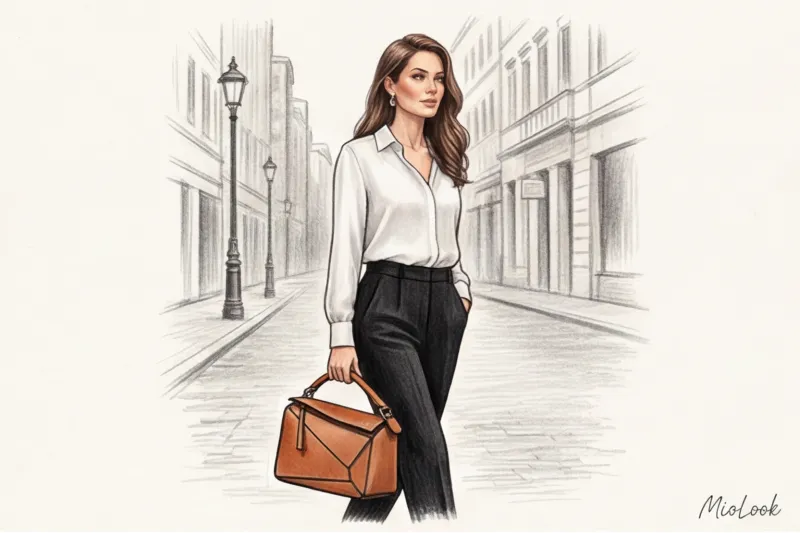
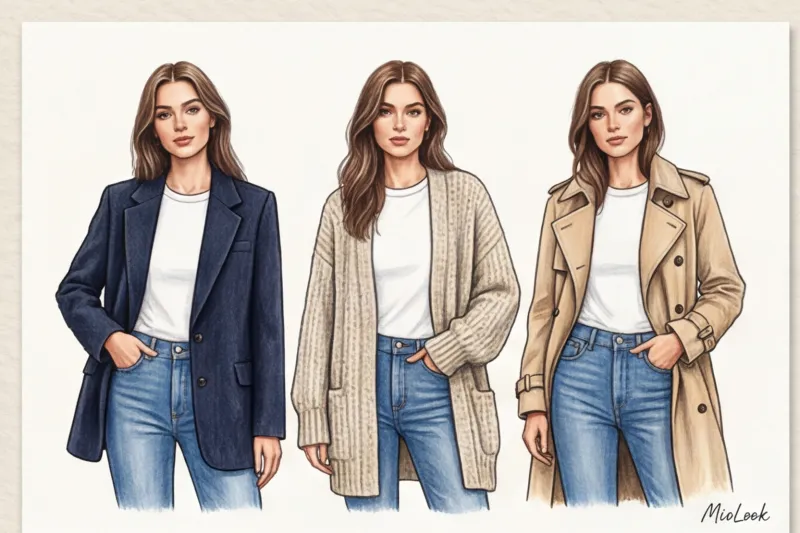
This is where the crucial difference lies between structured and soft layers. A shapeless, thin viscose cardigan will cheapen the look. It clings to the figure, highlights folds, and looks sloppy. A jacket with a stiff shoulder band or a thick cotton trench coat, on the other hand, creates a frame. They literally "gather" the figure.
"The third thing is your visual shield. It allows you to hide what you don't want to show (for example, details around your waist) and direct your interlocutor's gaze exactly where you want it."
Major Mistakes: When the Rule of Third Things Breaks the Silhouette
Like any powerful tool, this rule has its drawbacks. There are situations when adding a layer only ruins the look. Here are the top anti-cases from my experience:
- Error 1: Violation of proportions. Imagine low-rise jeans, a long untucked shirt, and a long cardigan. This combination visually shortens your legs by half. The third piece should either end above the hip (a crop top) or fall below the knee, creating a continuous vertical line.
- Error 2: Invoice conflict. Wearing a thin third layer over a heavy fabric is an absolute no-no. A thin 120g/m² knit vest pulled over a heavy office shirt will create bulges and wrinkles. The top layer should always be heavier than the bottom layer.
- Mistake 3: Redundancy or the “cabbage effect”. This is a fair limitation of the rule: if your base is already overly accentuated (for example, a sequin dress or a blouse with intricate ruffles), a third piece will ruin the look. The rule works. only to calm down simple basic combinations.
How to apply the rule of thirds in the summer when it's hot
The most common myth I combat every May is: "Olena, layering doesn't work in summer; you'll go crazy in a jacket." The truth is, in summer, the third piece isn't clothing, but accessories. Throwing on a jacket in 30°C is a mistake that makes your look unnatural.
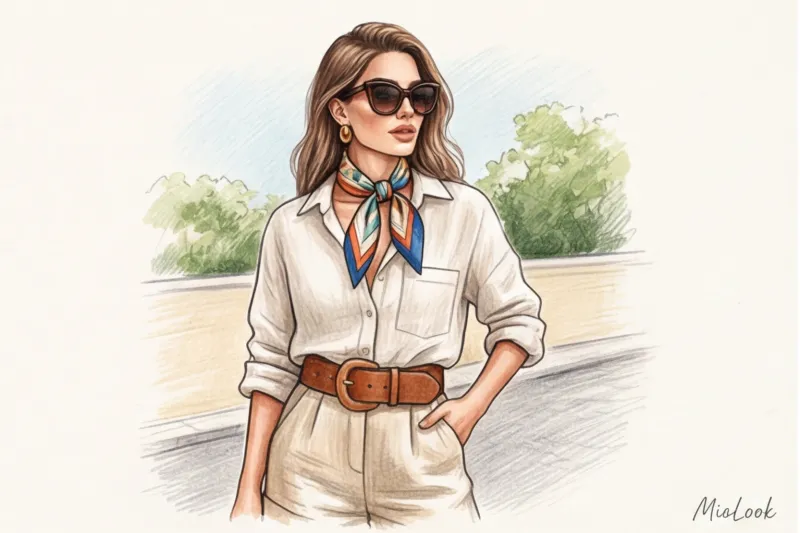
Use the micro-layering technique. In hot weather, the role of the structuring element is taken over by basic women's watch With a metal bracelet or a rigid frame bag, it becomes an architectural centerpiece, gathering flowing summer fabrics (linen, muslin, silk).
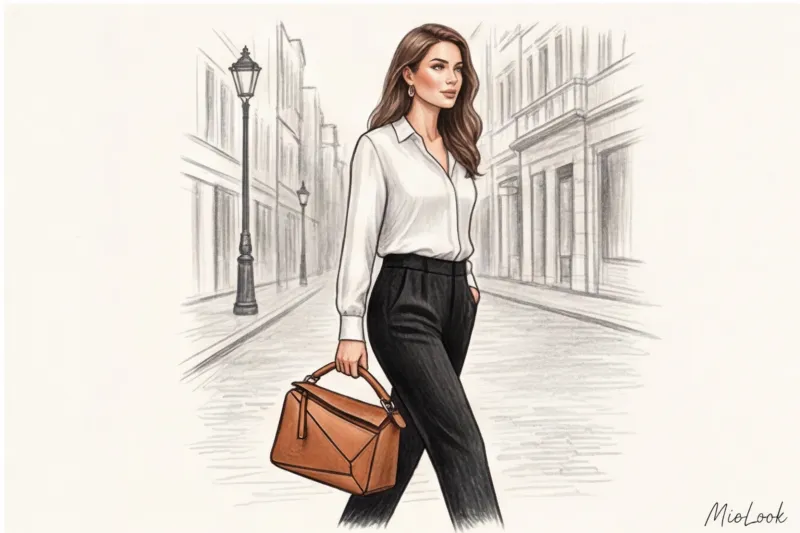
A silk scarf is a great summer accessory. Tie it around your wrist, tie it into your hair, or casually wrap it around your bag handle. Also, don't forget about perfect basic bracelets — a few hard metal rings on the wrist instantly complicate a linen shirt and shorts.
Access to MioLook for €0.99 — one-time payment
Start creating perfect images with the help of artificial intelligence
Get access — €0.99 once5 fail-safe "third piece" options for your basic wardrobe
If you're just starting out with a functional capsule collection, don't buy out half the store. Invest in the right accents. I recommend budgeting €50–€150 for a quality third piece, as it's the one that will earn its keep every day.
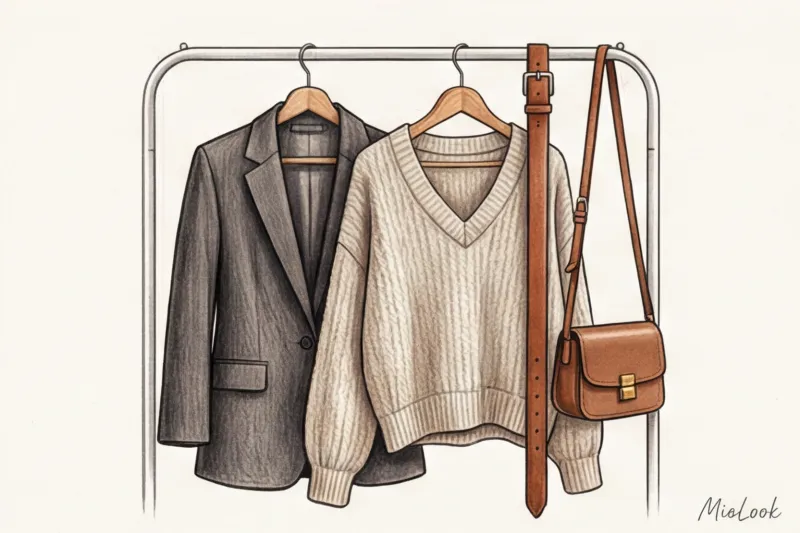
Structured jacket or blazer
A straight-cut or slightly fitted men's jacket is a basic essential. A shoulder pad automatically sets the tone. You can wear it with jeans and sneakers for brunch in the morning, or throw it over a silk slip dress for a dinner date in the evening.
A sweater thrown casually over the shoulders
My favorite styling trick for the "Old Money" aesthetic: Instead of wearing a thin cardigan, take a chunky cashmere sweater or cotton jumper and simply tie it over your shoulders over a T-shirt or trench coat. This adds just the right amount of volume and a touch of luxurious casualness to the portrait area. It's a hundred times more effective than a simple scarf.
A wide belt or statement shoes
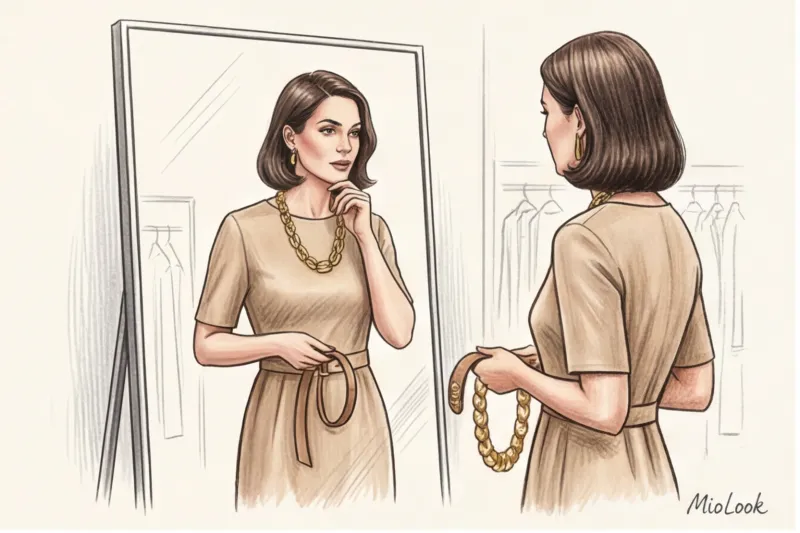
A high-quality, thick leather belt, 3.5–4 cm wide, is a golden ratio tool. It divides the figure into ideal proportions of 1/3 (torso) to 2/3 (legs) when worn high-waisted. This is especially useful for a Friday office dress code: jeans and a white shirt look casual, but an expensive belt for €60–€80 pulls it all together.
How to adapt the rule to different body types: stylist secrets
No trend makes sense if it ignores your body morphology. The rule of thirds is a powerful corrective tool if you understand the nuances.
- For short girls (Petite): Avoid long, oversized jackets, as they will make you look shorter and wider. Your ideal third piece is a cropped jacket or a belt that matches your trousers. This will visually lengthen your legs.
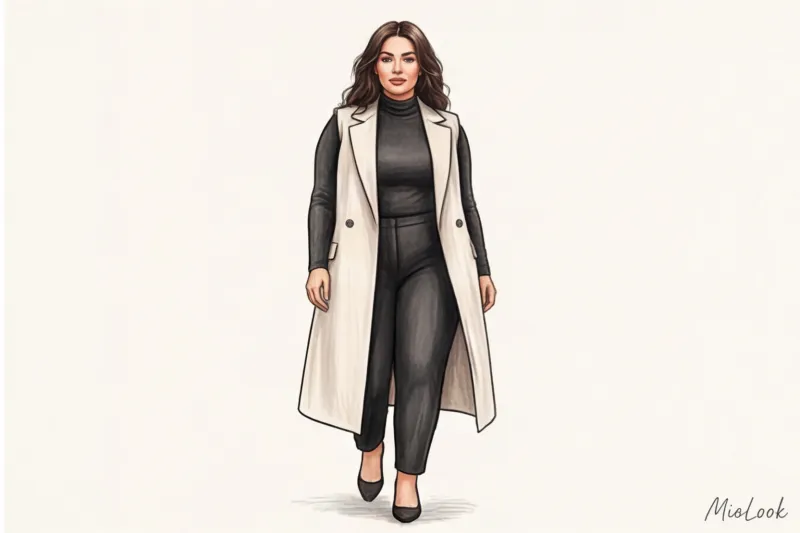
- For plus-size figures: The key is creating a vertical line. Wear a basic top and trousers in the same color (monochrome), then layer a contrasting long vest or trench coat over it, leaving it unbuttoned. The two vertical lines of the unbuttoned front visually cut off the sides and elongate the silhouette by 5-7 centimeters.
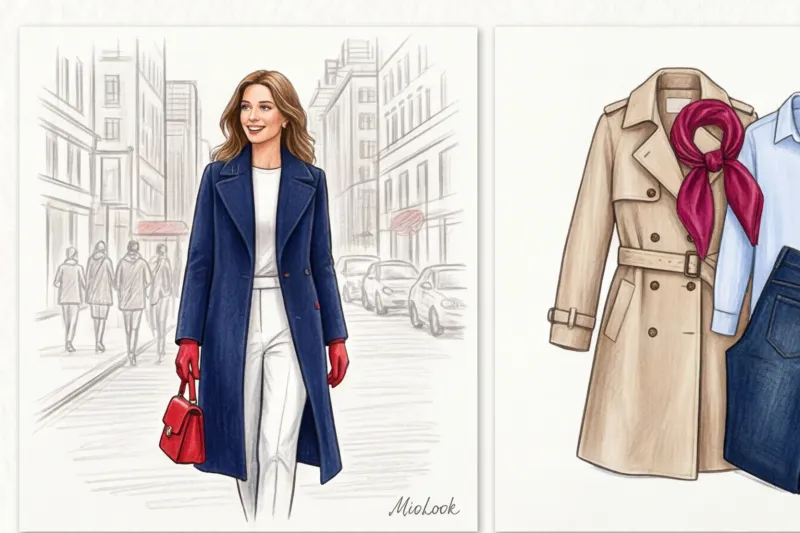
- For figures with pronounced hips: If volume is concentrated in the lower half, our goal is to shift the focus to the upper third of the body. Use a bright silk scarf around your neck, a statement brooch on the lapel of a simple jacket, or large earrings. This will keep your interlocutor's gaze focused on your face.
Your perfect look starts here
Join thousands of users who look flawless every day with MioLook.
Get access — €0.99 onceChecklist: 3-second mirror test
In conclusion, I'd like to share a signature algorithm I give to all my clients after a wardrobe review. It takes exactly three seconds before leaving the house.
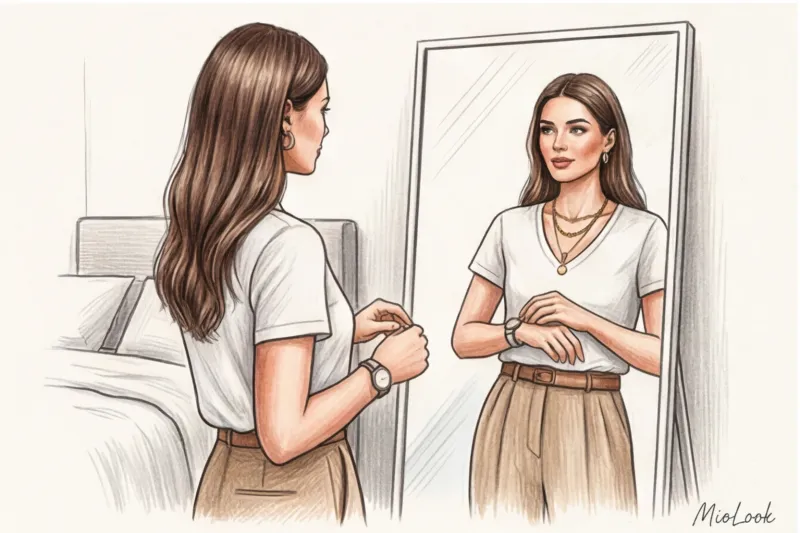
Get dressed, take two steps away from the mirror and ask yourself three questions:
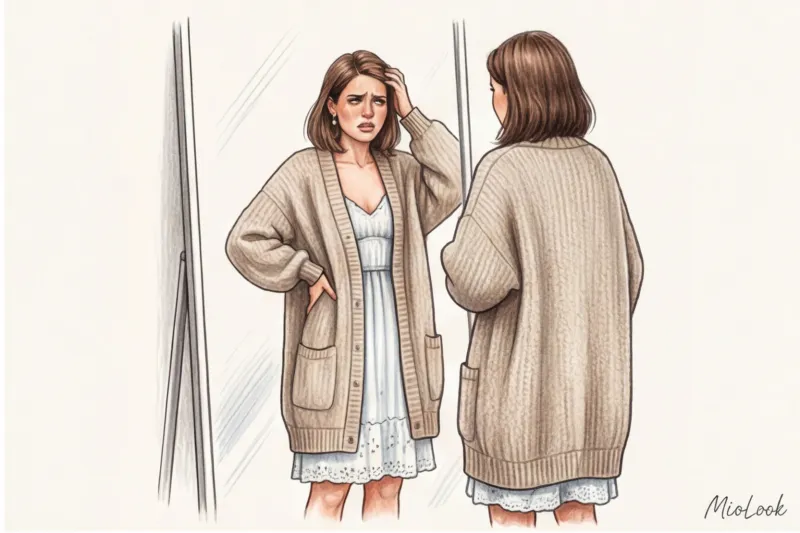
- Does the image look too "flat"? If you see only two pieces of fabric without a difference in volume or texture, add texture (belt, watch, glasses, jacket).
- Where is the focal point? Where does your eye fall first? If it wanders or, worse, stops at a problem area, shift the focus to the portrait area with a third detail.
- Model the situation: If I take off this third piece now, will the look still be stylish, or will it fall apart into a boring top and bottom?
Style isn't an innate gift, but a trained muscle. Start consciously applying the rule of thirds tomorrow. Pull out your favorite, yet ordinary, shirt, put on your usual jeans, then throw on a contrasting sweater or add an architectural, hard-shell bag. You'll be surprised how much your self-image will change.