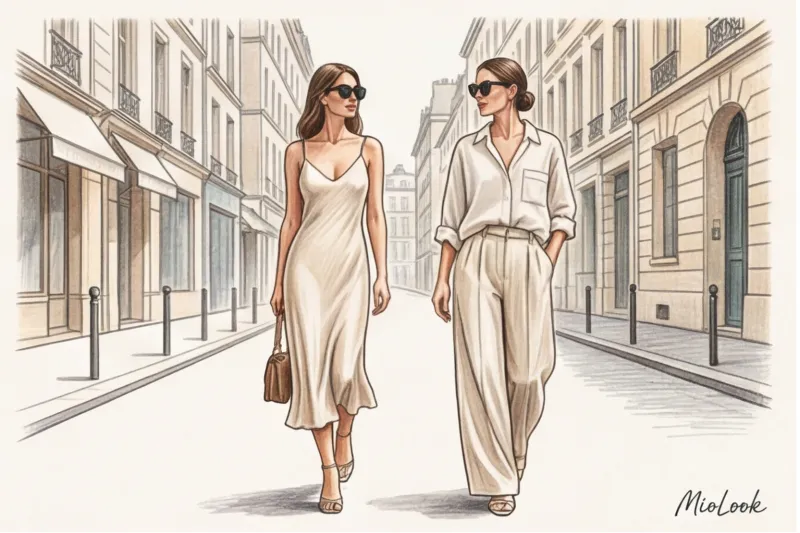
August, Milan, 32°C in the shade. I'm sitting on a café's outdoor terrace, watching the people passing by. Nine out of ten tourists are dressed in breathable 100% cotton—and they look like they've just stepped out of a sauna: damp patches on their backs, shirts clinging to their bodies, a rumpled appearance. And then local Italian women stroll by in flowing, impeccably smooth palazzo pants that look cool and fresh even in this scorching heat. Their secret? The tag on these pants says "lyocell" or "tencel" rather than "cotton."
As a practicing stylist and colorist, I constantly encounter the same question from clients when putting together a summer capsule: Tencel or cotton - which is better? Choose something that looks expensive, doesn't wrinkle after five minutes, and protects you from the heat? Spoiler: the blind belief that "only cotton saves you in summer" is long outdated. We've already covered the evolution of materials in more detail in our The complete guide to sustainable fabrics (including Tencel, modal, and lyocell) , but today I suggest looking at these two textures through the eyes of a practicing stylist.
Let's forget dry table specifications and analyze how exactly these fabrics change your figure, color perception, and overall image status.
Tencel or cotton: which is better and what is the fundamental difference?
To understand how a fabric will feel on your body, you need to understand what it's made of. Cotton is a classic, a natural fiber from the cotton plant. Tencel, however, causes many to panic in the fitting room.
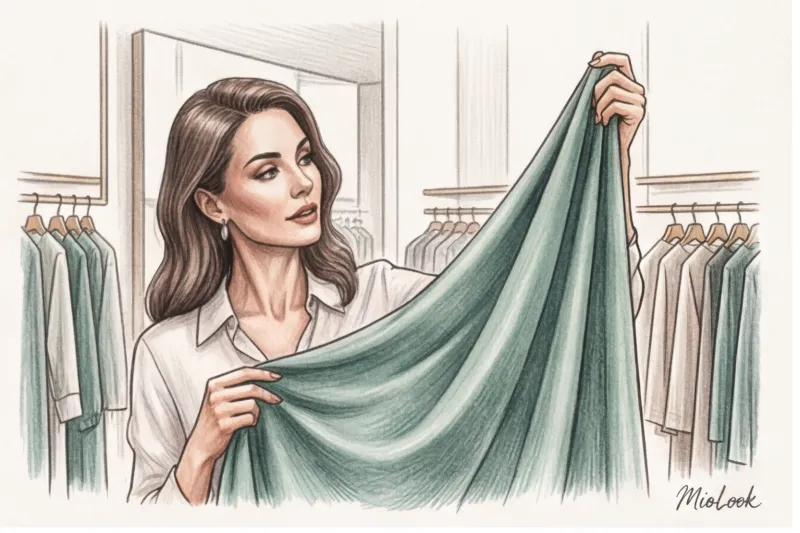
Just last week, a customer at Massimo Dutti told me indignantly: "Darina, they're asking €80 for this blouse! And it's made of some kind of lyocell. Why would I want synthetics at the price of silk?".
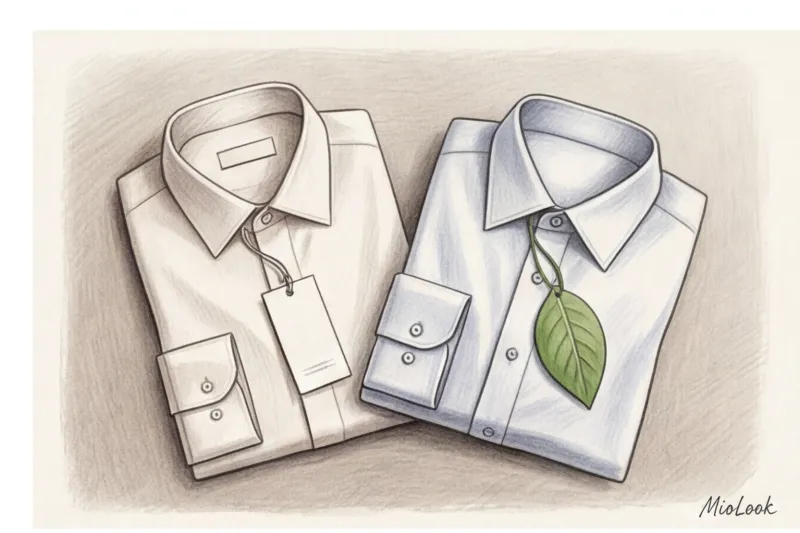
This is a major misconception. Tencel™ is a patented trade name for premium lyocell. It is not synthetic, but a man-made fiber. natural Tencel is a natural fiber made from Austrian eucalyptus wood. According to Lenzing (the creators of the original Tencel), producing 1 kg of this material requires 20 times less water than growing 1 kg of cotton.
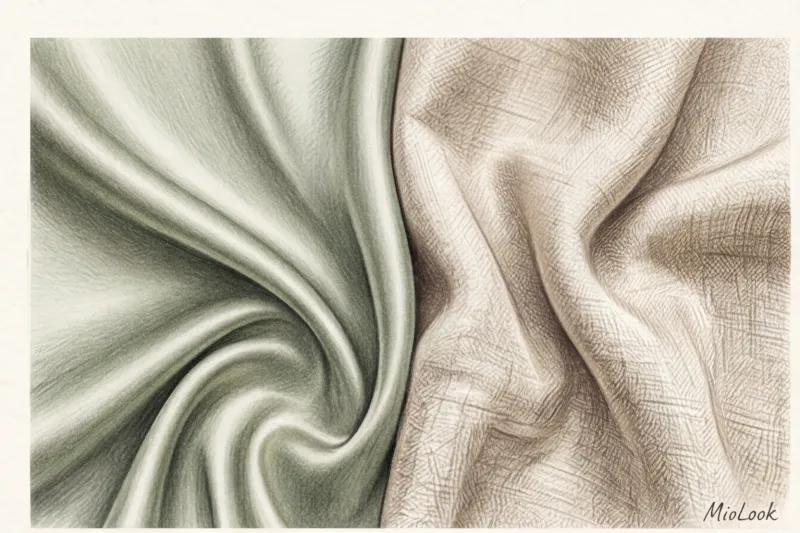
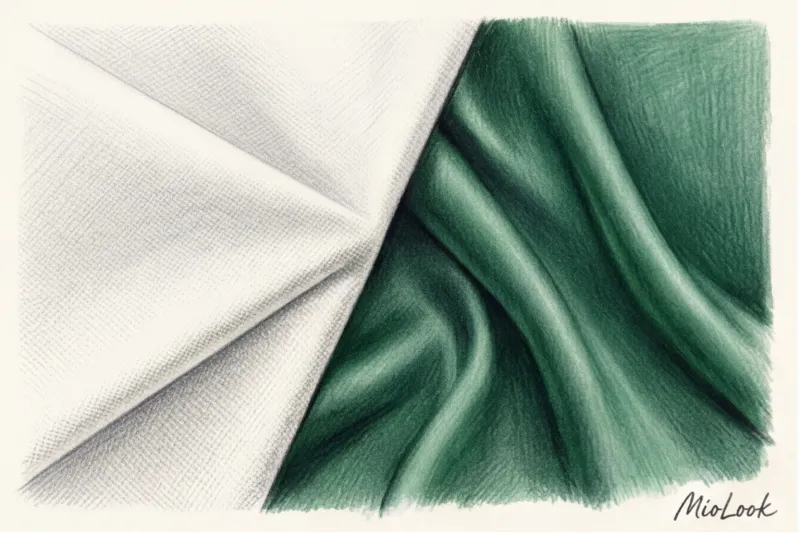
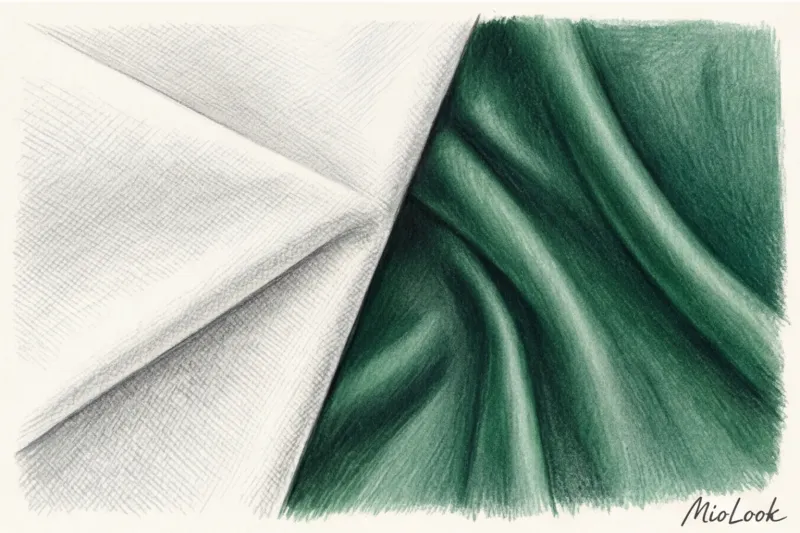
Tactilely, these are completely different worlds. Cotton is rough, matte, and "dry." Tencel is smooth, with a delicate "peach" effect and a silky sheen. It's the complex, closed-loop production process that makes high-quality Tencel a more expensive option: a basic Tencel T-shirt will cost €40-€60, while a cotton one can be found for as little as €15.
How Fabric Changes Silhouette: The Geometry of Cotton vs. the Fluidity of Tencel
The same shirt dress pattern, made from poplin (cotton) and lyocell, will create two completely different silhouettes on your figure. And this is what trips up 90% of women when shopping online.
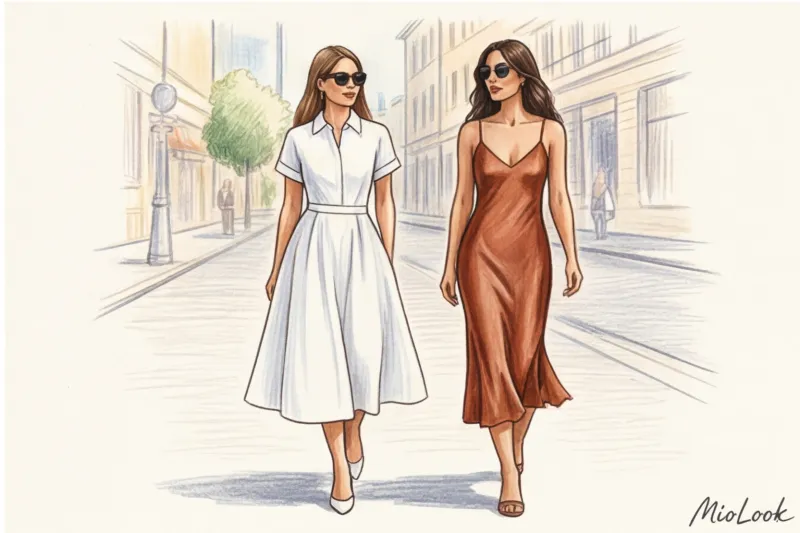
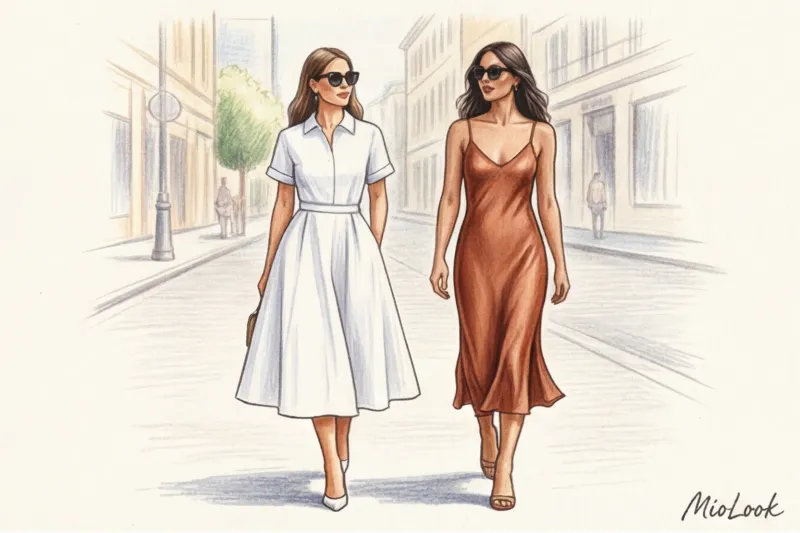
Cotton has an architectural quality. It creates a rigid frame and stands up like a house. If you have a belly or large hips, thick cotton won't cling to them but will instead create a tent, visually adding a few extra pounds. Tencel, on the other hand, has a phenomenal fluidity. It's heavy and flowing, falling downwards under its own weight, creating vertical lines.
"I had a telling case: a client with a pear-shaped figure (voluminous bottom) brought in a stiff 100% cotton safari dress for a wardrobe review. It was too tight on her hips, making her look twice as wide. We replaced it with a similarly cut Tencel dress. The fabric gently curved around her curves, flowing down. The visual effect was an instant 5 kg loss."
When Cotton Wins Outright
- Office shirts: If your dress code calls for a stiff collar and cuffs, Tencel will let you down (it's too relaxed).
- A-line silhouette bottoms: A-line skirts and Bermuda shorts need to hold their shape, and thick cotton is essential here.
- Basic T-shirts to wear with a jacket: Thick cotton (from 180 g/m²) is not see-through and does not cling to the texture of the underwear.
When Tencel is indispensable
- Slip dresses: What's important here is a beautiful diagonal cut without the cheap sheen of polyester, and Tencel does the job perfectly.
- Wide summer palazzo pants: They will sway elegantly as you walk, creating a status dynamic.
- Relaxed Blouses: Swing collars and bishop sleeves are revealed only in flowing fabrics.
Your perfect look starts here
Tired of wondering which fabric and style will suit you? MioLook's smart AI stylist will analyze your appearance and select the perfect capsule wardrobe.
Get access — €0.99 onceBattling the Heat: Why 100% Cotton Isn't Always the Ideal Summer Choice
Now let's debunk the biggest fashion myth: "In hot weather, you should only wear linen and cotton." That's not entirely true. If you wear a thick cotton shirt in 35°C (95°F), you'll get a greenhouse effect.
The problem with cotton is that it absorbs sweat well, but it takes a very long time to dry When wet, it becomes heavy, sticks to the skin, darkens (hello, those telltale armpit stains), and becomes unbreathable.

Tencel has exceptional hydrophilic properties. Textile industry research shows that the lyocell fiber structure absorbs moisture 50% more effectively than cotton and wicks it away, where it evaporates instantly. Furthermore, thanks to the completely smooth surface of the cellulose fibers, Tencel has a tactile "cooling" effect. When in contact with the skin, it actually feels a couple of degrees cooler than body temperature. For speakers presenting at stuffy conferences, I always create outfits using Tencel blends—they make sweat stains less noticeable and dry in minutes.
Colour and shine: a colourist's view of fabrics
As a certified colorist, I can say that fabric is not only a texture but also a filter for color. The same dye on cotton and Tencel will produce completely different shades.
Cotton has a porous, fleecy structure. absorbs light. That's why colors on cotton always look slightly matte, muted, and sometimes "dusty." Tencel has a smooth surface that reflects light. reflects Therefore, the shades in this fabric always appear deeper, richer, and more “expensive.”
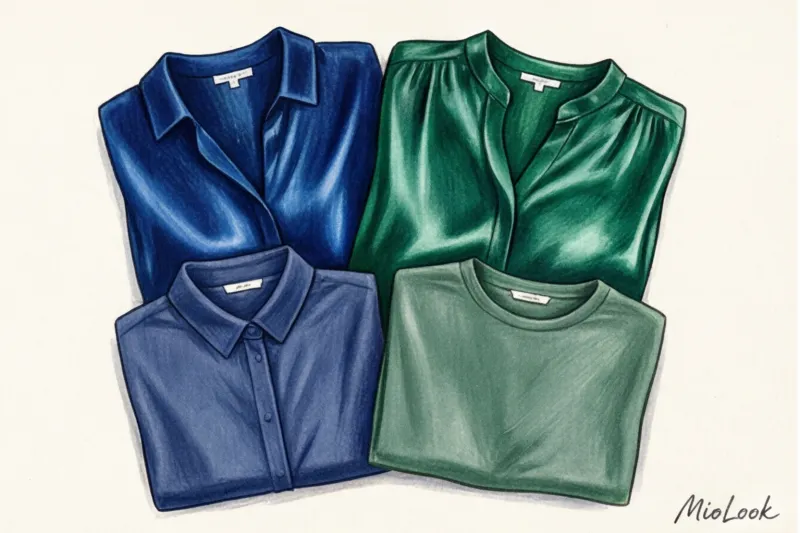
"My main advice to clients: never buy basic black or navy t-shirts made from 100% mass-market cotton. After 10-15 washes, the cotton will begin to bleed pigment, leaving you with a dull graphite gray. Tencel, on the other hand, locks the dye within the fiber and maintains a deep, jet-black color even after 50 washes."
If you have a radiant Spring or deep Autumn complexion, matte cotton will often flatter your appearance. The soft, satin sheen of Tencel (especially in shades of emerald, terracotta, or mustard) will instantly illuminate your complexion.
Organize your closet like a pro
Digitize your wardrobe with MioLook and stop forgetting about those cool Tencel blouses hanging in the back of your closet.
Get access — €0.99 onceCare and durability: what will survive in your everyday wardrobe?
Buying clothes is only half the battle; you still have to live with them. And every material has its own skeletons in the closet.
Wrinkling. Cotton (especially poplin) wrinkles with sharp, harsh creases. If you sit in a cotton dress at the office, your stomach will be creased. Tencel also wrinkles, but in a different way—it forms soft, smooth folds. Furthermore, high-quality Tencel often sags on a hanger under its own weight, and the small creases smooth out on their own.
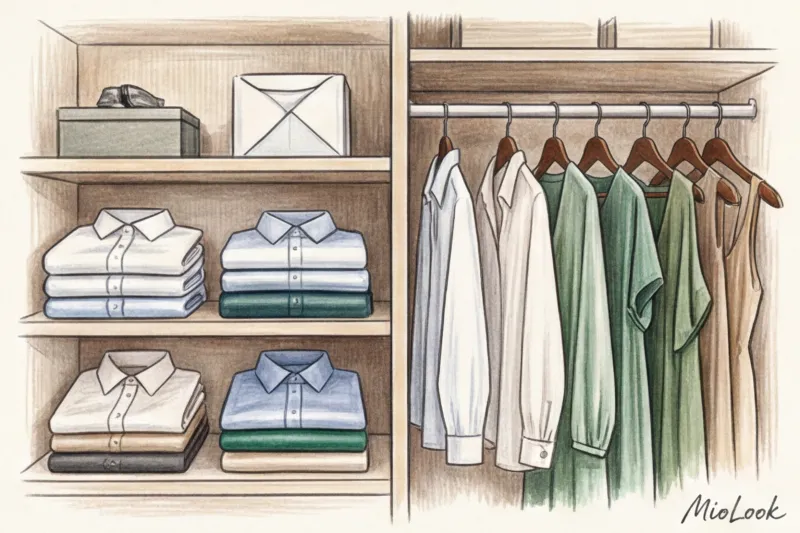
Dangerous care zone. This is where I must warn you. This is a limitation that brands are keeping quiet about: When wet, Tencel becomes extremely vulnerable. Unlike cotton, which can be boiled and spun as much as you like, wet lyocell stiffens. If you throw Tencel pants in the washing machine at 1000-1200 rpm, the friction from the drum will cause whitish streaks and micro-lint (pilling) to form on the fabric. No dry cleaner will remove these creases. Wash Tencel only on a delicate cycle (400-600 rpm) and iron only with a steam iron, not a hot iron, which can leave shiny marks.
A stylist's checklist: what to buy made of cotton and what of tencel
To help you navigate your shopping journey, I've compiled a specific investment list for each material. When you visit, say, 12Storeez, COS, or Lichi (where dress prices range from €80–€150), you'll know exactly what to look for.
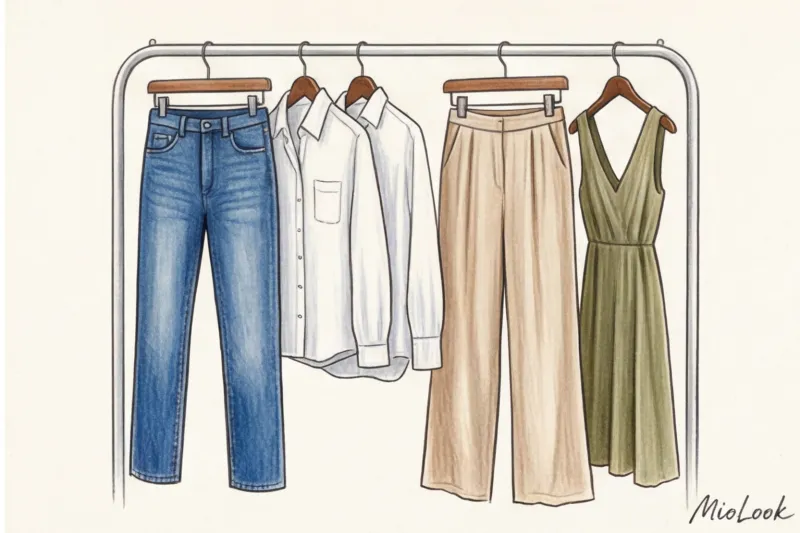
- Investments in cotton: Classic oversized men's shirts, heavy denim without elastane, chinos, trench coats (gabardine), and basic white tight-knit T-shirts are the foundation of a wardrobe.
- Tencel Investments: Summer palazzo pants and culottes, bias-cut midi dresses, lingerie tops worn under jackets, and lightweight summer capes (dust coats)—these are the pieces that exude femininity and dynamism.
- Secret Weapon (Blends): The ideal compromise for shorts, casual dresses, and safari shirts is a blended fabric (e.g., 50% cotton/50% Tencel). Cotton provides strength and shape, while Tencel adds softness and prevents excessive wrinkling. According to McKinsey (2024), blended fabrics with cellulose fibers are currently showing the greatest sales growth in the smart casual segment.
Conclusion: So what should you choose for the perfect capsule?
To summarize our research: there is no such thing as a "bad" or "perfect" fabric. There is a fabric that solves your specific stylistic needs.
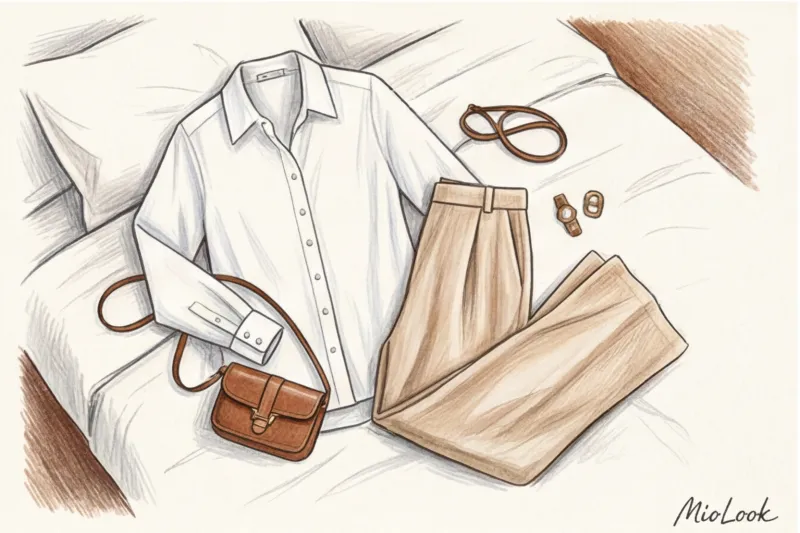
The key takeaway I want you to take away from this article is that the secret to truly "expensive" and classy looks lies in a mix of textures. If you wear a matte cotton shirt that holds its shape and tuck it into flowing, delicately shimmering Tencel pants, you'll get that very clash of materials that begs to be explored. Read the labels, don't be afraid of the word "lyocell" in the ingredients, and remember: your summer comfort depends not on the thickness of the fabric, but on its ability to effectively manage moisture and air.