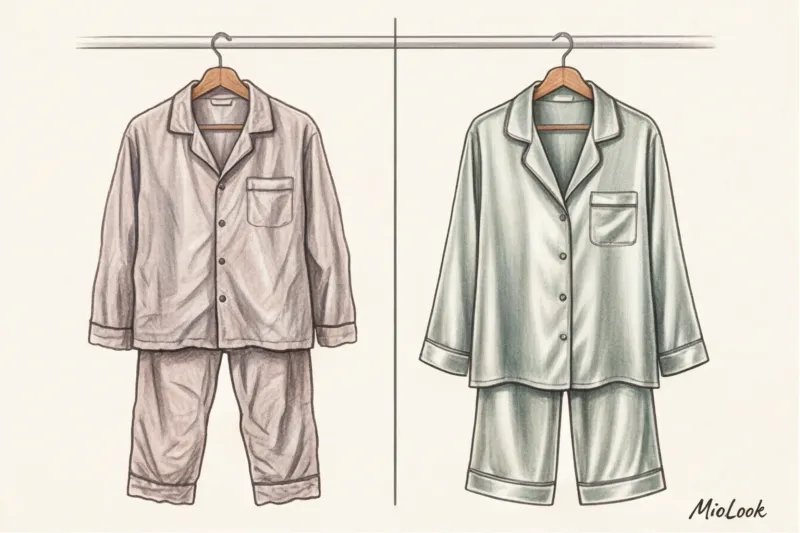
Have you ever noticed how you sometimes wake up in the middle of the night with a slight chill, even though you fell asleep in a comfortable, warm bed? Your first thought might be a draft or a thin blanket. But as a textile expert and stylist, I can tell you another, far more common cause: your favorite, time-tested 100% cotton pajamas.
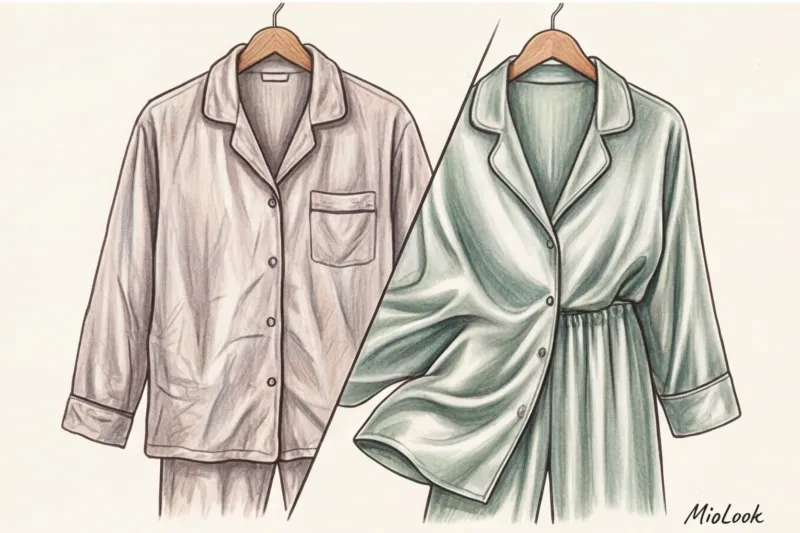
For decades, we've been told that cotton fabrics are the best for sleeping. However, materials science has come a long way. Today, outdated classics have been replaced by Tencel pajamas (and his brother, Modal). We've already covered how clothing affects nighttime biorhythms in our A complete guide to choosing pajamas for healthy sleep In this article, I'll explore the physics of tissue and explain why investing in next-generation cellulose fibers is the best thing you can do for your skin.
The Myth of Perfect Cotton: Why Good Old Classics Are Losing
According to data National Sleep Foundation (2023 study) shows that to enter deep sleep, our body temperature must drop by approximately 1–1.5°C. The body initiates thermoregulation by releasing moisture. And this is where the most interesting part begins—how the fabric that lies next to the body behaves.
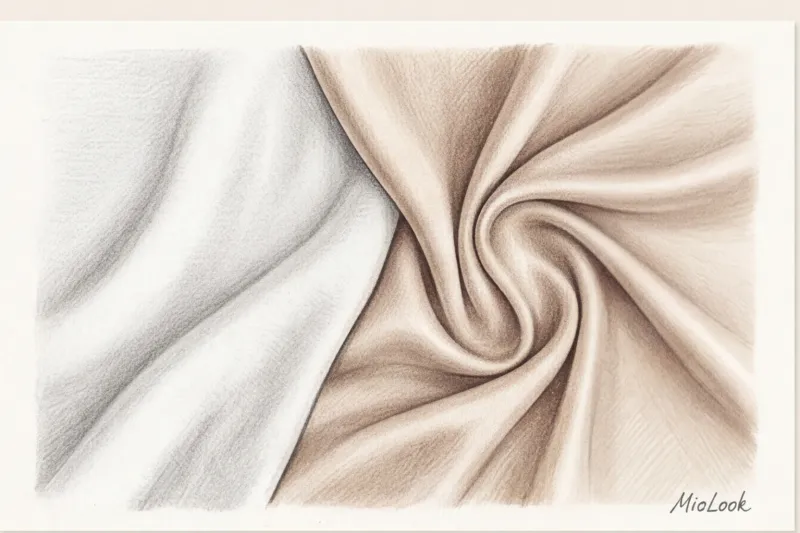
Cotton is highly hydrophilic. It absorbs sweat perfectly. But it has a major drawback: its fibers swell and trap moisture. Cotton dries extremely slowly. As a result, after a couple of hours of sleep, your T-shirt turns into a cold, damp compress. That's what makes you shiver in the morning.
Beyond physiology, there's also the harsh aesthetic reality. In my practice as a stylist, when I audit my clients' home wardrobes (by the way, for easy digitization of items, I always recommend using MioLook ), I constantly stumble upon a veritable "graveyard" of cotton items. Faded, with stretched knees and elbows, stiffened after a dozen washes.
"Cotton thread contains microscopic scales that are destroyed over time by friction and washing powder. Even a premium cotton set costing €100–€120 will lose its original luster after six months of heavy wear."
Access to MioLook for €0.99 — one-time payment
A smart AI stylist will create the perfect home and everyday look for you.
Get access — €0.99 onceWhat are Tencel and Modal in the Language of Textile Science?
Many people are still intimidated by unfamiliar names on labels, assuming that anything other than cotton or silk is "synthetic." This is a grave mistake. Tencel and modal are artificial fibers. natural origin. They are obtained from wood cellulose: Tencel is made from eucalyptus, and Modal is made from beech.
The main innovator and monopolist in this field is an Austrian company Lenzing AG They developed a revolutionary closed-loop system. The organic solvent that turns wood chips into yarn is 99% recycled. For comparison, growing cotton for a single T-shirt requires about 2,700 liters of water. Tencel production consumes 10-20 times less water. This isn't just marketing; it's a real step toward sustainable fashion.
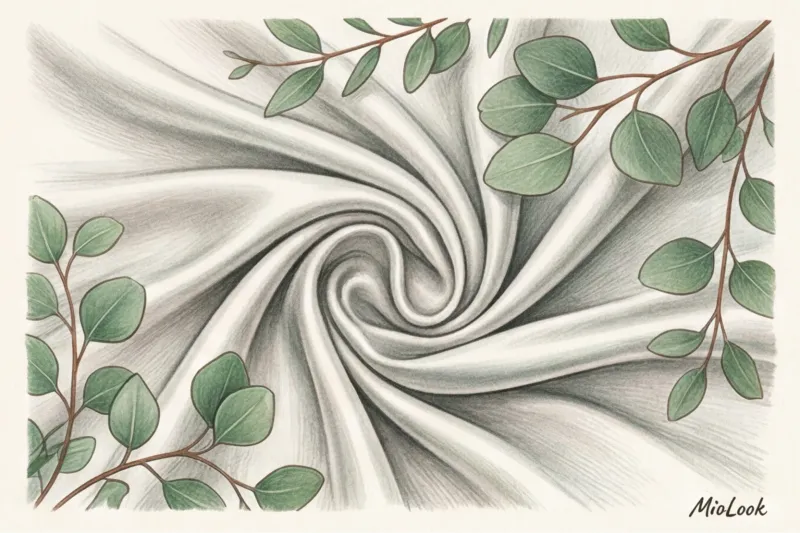
Lyocell, Tencel and Modal – What’s the Difference?
You may encounter all three terms in stores. Let's clarify the differences once and for all:
- Lyocell — is the general name for a type of fiber (like a xerox machine is a copying machine).
- Tencel™ Tencel is a patented, commercial brand of the highest-quality lyocell from Lenzing. If the label says Tencel, the fabric has passed the strictest quality control.
- Modal — a fiber made from beechwood. It's thinner and incredibly soft to the touch. It's ideal for fitted nightgowns and basic tops. Tencel, on the other hand, is slightly silkier and holds its shape better, making it ideal for classic pajama sets and shirts.
Tencel Pajamas: Top Reasons to Invest in the Innovative Fabric
Why are Tencel pajamas worth the money (and a quality set will cost you between €80 and €200)? The secret lies in the fiber's nanofibrillar structure. Nanofibrils are microscopic channels within the thread.
Unlike cotton, Tencel doesn't just absorb moisture. It instantly wicks sweat away from the skin's surface and into the core of the thread, leaving the outer surface of the fabric completely dry. According to official testing data, Tencel absorbs moisture by 50% more efficient than cotton.
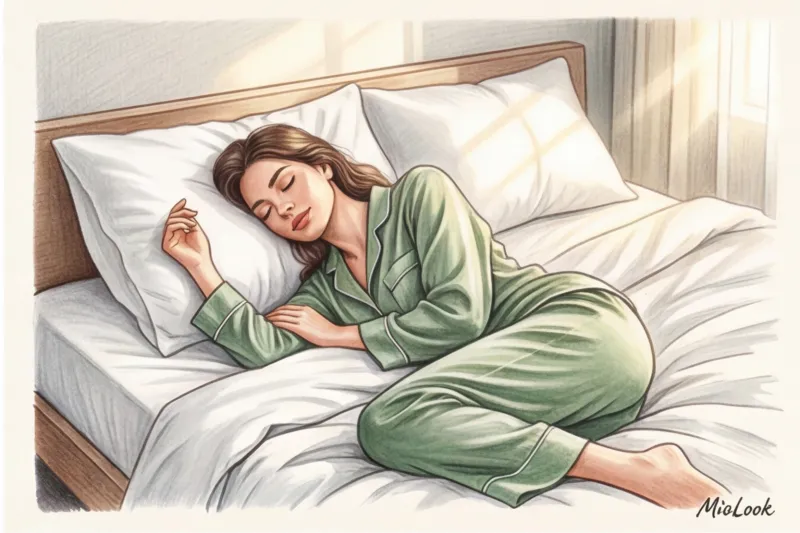
But the most important advantage is that it's a boon for sensitive skin. If you look at wool or cotton under a microscope, their fibers resemble scaly tree trunks. These scales create microfriction. Tencel's surface is completely smooth. Dermatologists often recommend this fabric to patients with back acne, eczema, or a tendency toward irritation.
Moreover, simple biology is at work here: no moisture on the fabric surface means no breeding ground for bacteria. Laboratory tests show that bacterial growth on lyocell fabric is 2,000 times slower than on synthetics. Your pajamas stay fresher longer.
Your perfect look starts here
Join thousands of users who look flawless every day with MioLook, choosing the right fabrics and styles.
Get access — €0.99 onceHow Tencel and Modal Wear: A Stylist's Perspective
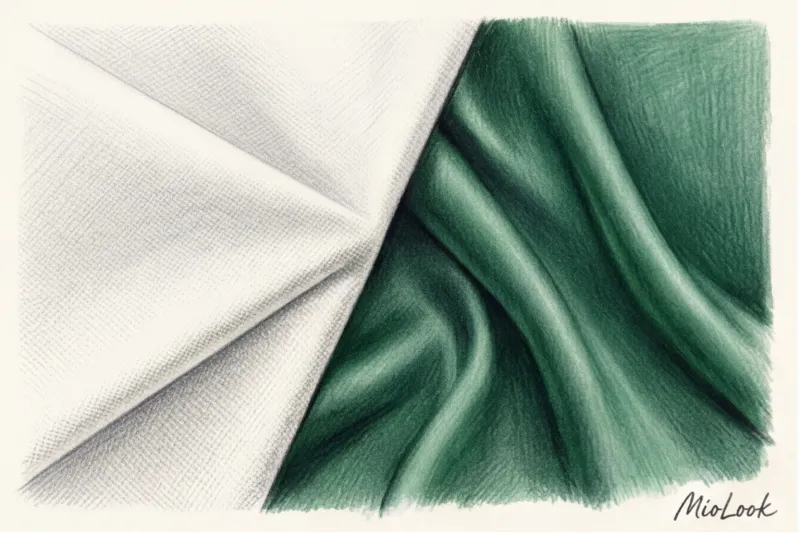
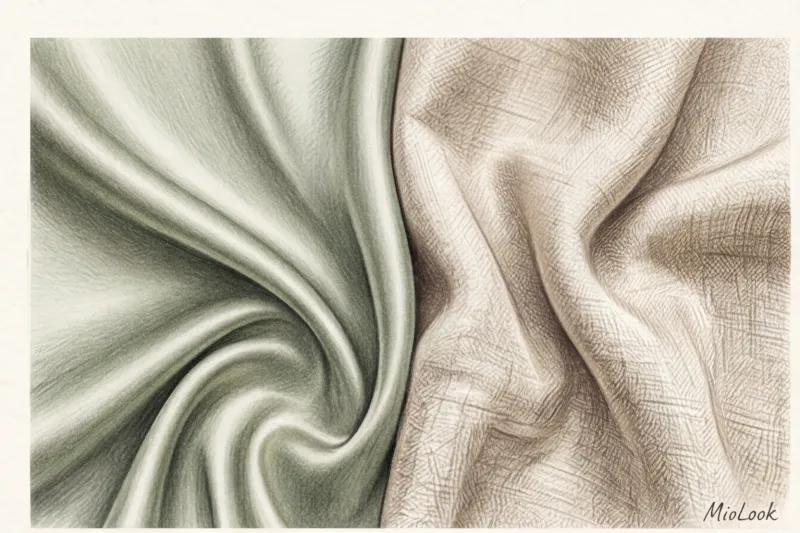
As a stylist, I evaluate items not only for their usefulness but also for their visual appeal. Tencel pajamas look expensive. The fabric has a refined, muted matte sheen, very reminiscent of washed silk. It drapes beautifully: it flows over the figure, softly enveloping the curves without creating those hard, standing creases that often make you look fat.
One of my clients, who works remotely in IT, once told me: "Sofia, in these pajamas I feel like I'm ready to Zoom right now to a board meeting, not just go to the kitchen." And it's true. In a high-quality shirt-style pajama set, there's no shame in meeting the delivery guy or having morning coffee with unexpected relatives.

Another bonus is color durability. The color pigment penetrates deep into the cellulose structure. Black pajamas made of Tencel will remain a deep black even after a year of weekly washing. And thanks to the long, smooth fibers, the fabric almost never pills, which is often a problem. the main problem of low-quality knitwear.
Fair Limit: When does Tencel NOT work? If you sleep in a country house with poor heating, and the bedroom temperature drops to 15–16°C, Tencel provides a slight coolness (a "chill" effect). For extremely cold nights, it's better to choose thick flannel.
Beware of greenwashing: how to choose the right pajamas and avoid buying a fake
Mass marketers quickly realized that the word "eco" sells. Today, the label "eco-friendly" on packaging means absolutely nothing. Don't buy a fake and avoid returns , you need to be able to read the ingredients.
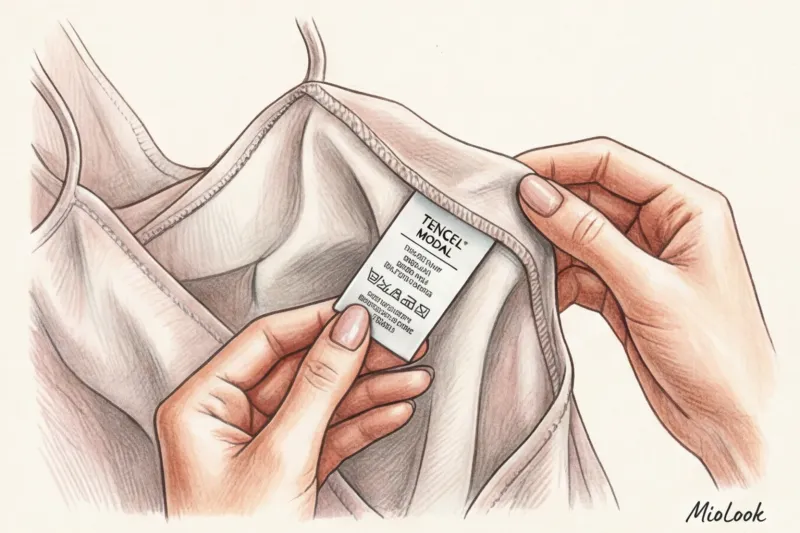
How a stylist reads a tag:
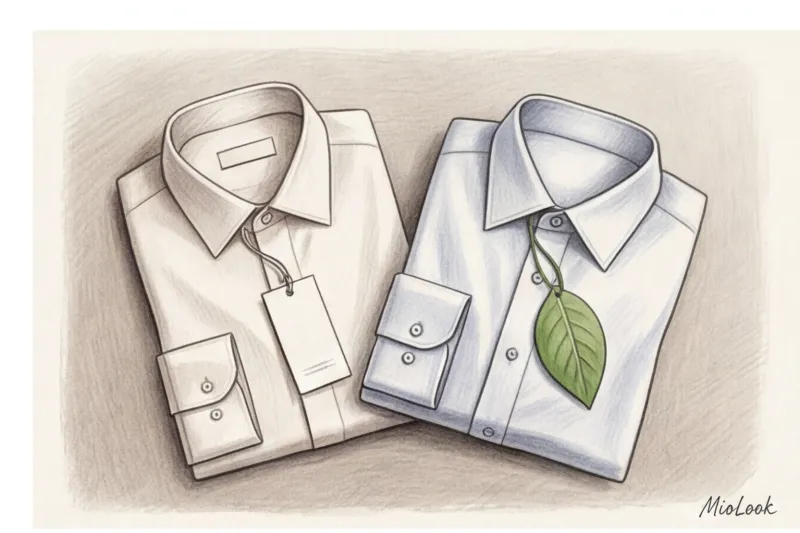
- Look for the right lens hoods. The ideal composition for pajamas is 95% Tencel (lyocell) and 5% elastane (for comfortable movement while sleeping). 50% Tencel and 50% cotton is an acceptable compromise. But if you see 50% Tencel and 50% polyester, hang it up. It's a waste of money; the polyester will kill any breathability.
- Don't trust cheap viscose. Unscrupulous brands disguise cheap viscose as Tencel. However, regular viscose shrinks significantly after the first wash and wrinkles terribly.
- Conduct a tactile test. Real Tencel is heavy, fluid, and cool to the touch. Squeeze the edge of the fabric in your fist for 5 seconds. Cheap viscose will remain in deep creases, while high-quality lyocell will quickly straighten out.
Checklist: How to care for wood fiber pajamas
Tencel is a premium material and demands respect. If you wash it with jeans on a harsh cycle, it will quickly lose its silkiness.
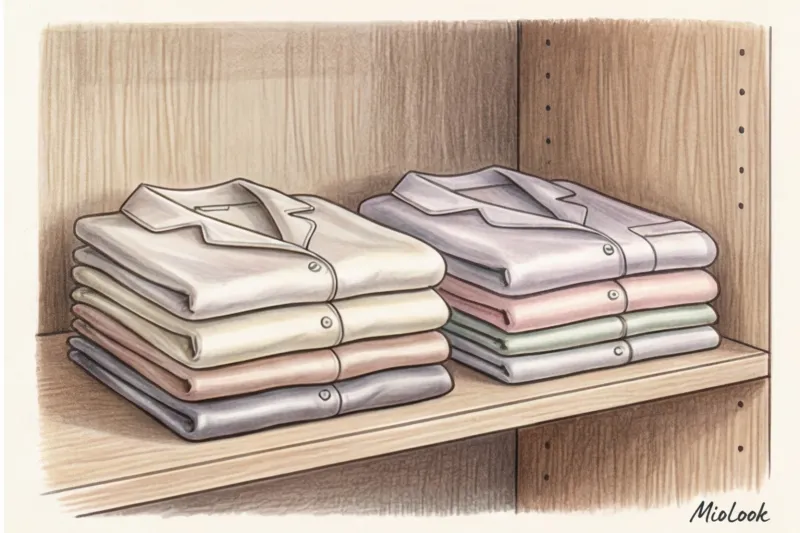
Here are 4 ironclad rules for caring for your new favorite pajamas:
- Temperature conditions: Strict 30°C. Delicate wash. Cellulose fiber shrinks significantly at high temperatures.
- Avoiding air conditioners (CRITICAL): This is the most common mistake! Surfactants in fabric softeners create an invisible waterproof film on the fabric. They clog the nanofibrils, depriving Tencel of its main property—hygroscopicity.
- Drying: Lay flat on a surface or neatly on a hanger. Keep away from direct sunlight and hot radiators.
- Ironing: Forget about a hot iron. It's best to steam fabric directly on a hanger with a handheld steamer. The steam instantly removes light creases and additionally disinfects the item.
Home Wardrobe as a Part of Lifestyle (Conclusion)
We're used to spending hours choosing the perfect jacket for the office or dress for a date, but for some reason we continue to wear things around the house that have lost their shape. This is a fundamentally wrong approach to self-care.
Tencel pajamas aren't just a passing trend on Instagram. They're a scientifically proven choice that directly impacts the quality of your sleep, body temperature regulation, and skin health. When you open your closet at night, you should see items that delight and relax you just by looking at them.
My advice: take stock of your loungewear this weekend. Ruthlessly get rid of tired, stretched cotton and itchy synthetics. Invest in one, but truly high-quality lyocell set. Self-respect begins with the clothes no one sees you in. Sleep beautifully and comfortably!