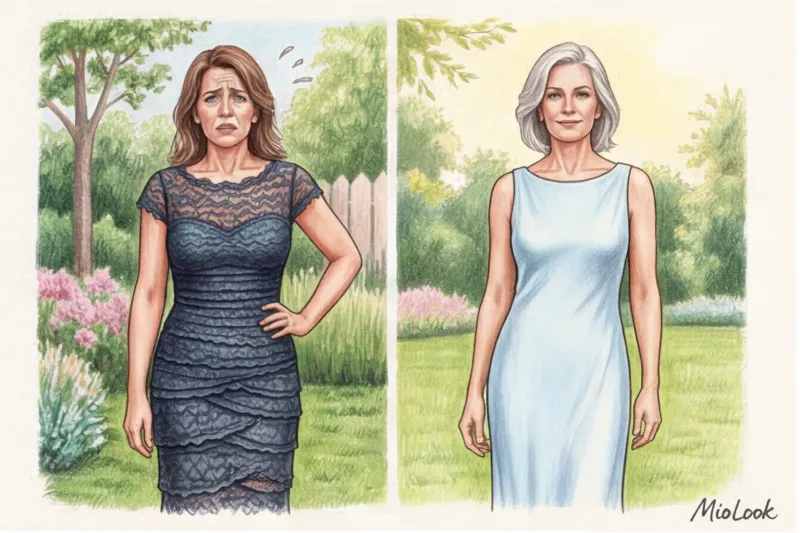
August, Tuscany, 32°C in the shade. My client, Alina, stands at the altar in a stunning, open, bustier dress with a full skirt. In the photos, it looked like a fairytale, but in reality, 20 minutes into the ceremony, she nearly fainted from overheating. And it wasn't the scorching Italian sun that was the problem, but what was hiding beneath the magnificent silk of her gown.
Hi, I'm Darina Marchenko. As a stylist and colorist, I often see brides choosing their outfits based solely on visual aesthetics. But the ideal summer wedding dress It's not just beautiful design; it's pure heat transfer physics. We've already covered the basic principles of preparation and finding your own style in detail in our The Complete Guide: How to Choose a Wedding Dress: Stylist Tips However, the summer heat dictates its own, very strict rules.
Today, we'll explore the anatomy of wedding dresses from a comfort perspective. I'll explain why off-the-shoulder looks often work against you, how one mass-market detail can ruin a €3,000 dress, and which fabrics will leave sweat stains gleaming in every photo.
Why a classic summer wedding dress can turn your wedding into torture
Let's bust the biggest wedding myth right away: "The more exposed the body, the cooler it is" It's completely counterintuitive, but a strapless, open bustier dress is perhaps the worst choice for a wedding in +30°C.
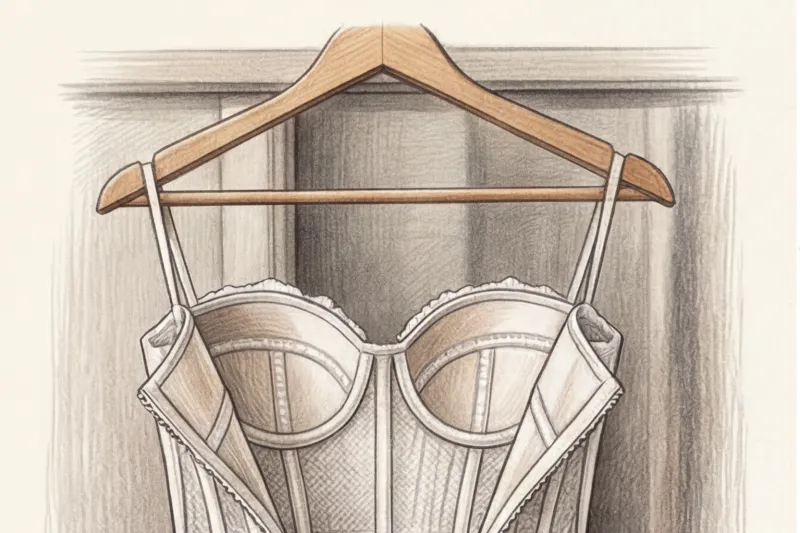
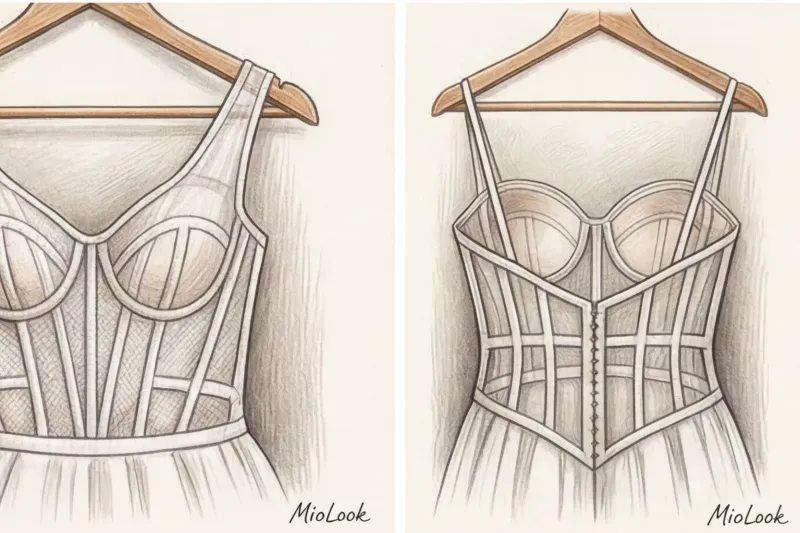
To keep a heavy skirt at the waist and prevent the bodice from sliding down onto the stomach with every movement, a bustier dress requires a rigid structure. A true armored bra is concealed within: dense plastic or metal underwire, multi-layered interlining for rigidity, synthetic corset mesh, and push-up cups. This entire structure must fit you as snugly as possible.
As a result, a "thermos effect" is created in the most sweat-prone areas (chest, ribs, back). According to a 2024 study by the WGSN textile division, multi-layered tulle combined with a rigid corset traps up to 70% of the body's heat. You literally lock yourself in a portable sauna.
Don't forget about hidden weight. A classic crinoline dress with a train weighs between 5 and 8 kilograms. Carrying a dumbbell of that weight in 90-degree heat is a challenge for marathon runners. By comparison, modern summer alternatives made of silk chiffon weigh less than 1.5 kilograms. A lightweight A-line dress with off-the-shoulders and cap sleeves, but without a rigid corset, will be ten times cooler than a completely open bustier.
Access to MioLook for €0.99 — one-time payment
A smart AI stylist will select the perfect look for your body type and season.
Get access — €0.99 onceThe Anatomy of Cool: The Best Fabrics for a Hot Wedding
The key to surviving the summer heat is the "air gap" principle. Fabric should flow along the body, creating microcirculation with every step, rather than clinging to it like a second skin.
The difference between fibers in terms of heat transfer is colossal. Synthetics (polyester, acrylic) act like a plastic bag—they don't absorb moisture and don't allow air to pass through. Natural fibers (silk, cotton) and high-quality artificial fibers (viscose, cupro) conduct heat away from the body.
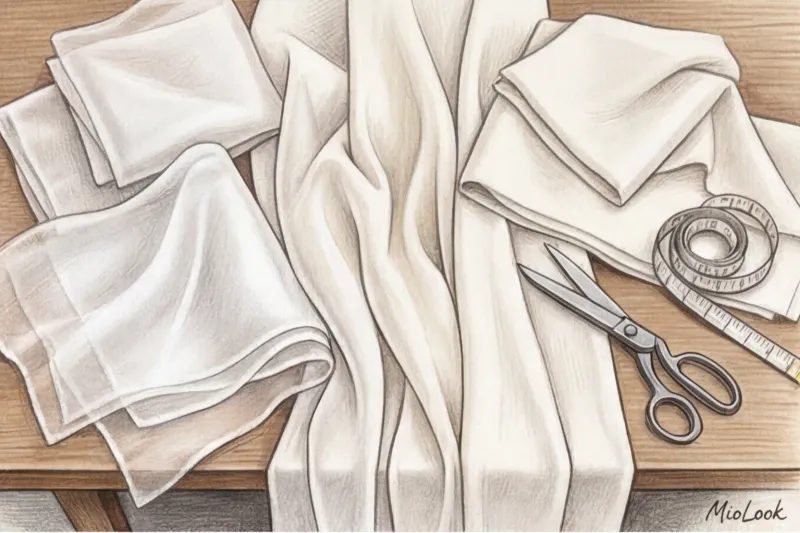
Natural silk: friend or foe?
There's a dangerous misconception that any natural silk is ideal for summer. As a colorist, I often conduct fabric tests in the studio. And here's what you need to know: smooth, glossy silk (satin or satin) is a high-risk fabric.
Due to the way the threads are woven and how they reflect light, smooth silk reacts instantly to moisture. The slightest drop of sweat alters the refractive index of light, causing a dark gray stain to appear on a crisp white or cream dress. This is the physics of color, and it's impossible to fool.
Safe silk alternatives:
- Silk crepe: It has a rough, matte surface. It breathes beautifully, drapes beautifully, and, most importantly, visually conceals traces of moisture.
- Silk organza: It holds its shape perfectly (suitable for puffy sleeves or voluminous skirts), but at the same time remains translucent and breathable.
Chiffon, Tencel and Batiste: The Ideal Microclimate
If you dream of a flowing, weightless silhouette, silk chiffon is your choice. It creates that perfect airy layer and provides ideal ventilation.
For weddings in relaxed rustic, eco, or boho styles, I always recommend cotton batiste and embroidery (proshva). This is the finest cotton that feels like a gentle breeze in the heat. Yes, it wrinkles, but in the boho aesthetic, this slight casualness looks organic and expensive.
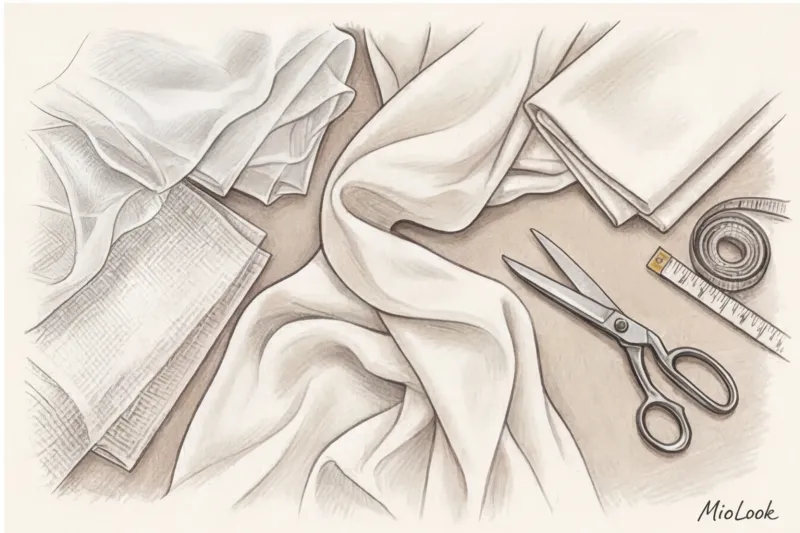
Tencel (lyocell) deserves special mention. This modern, eco-friendly fiber is made from eucalyptus wood. According to textile tests, Tencel absorbs moisture 50% more effectively than cotton and has a natural cooling effect. If you find a dress made of dense Tencel, don't hesitate to buy it.
Beware of the lining! The hidden enemy of the summer wedding dress.
Over 12 years of working in the fashion industry, I've learned the biggest dirty secret of many bridal brands. You can buy a stunning 100% Italian silk dress for a pretty penny, only to find yourself suffocating in it during the first fitting. The reason? The cheap polyester lining.
Brands often skimp on the invisible part of a garment. But the paradox is that it's the lining that comes into direct contact with your skin. If the top layer is breathable cambric and the bottom layer is 100% polyester, all the properties of the expensive fabric are negated. Polyester blocks air circulation, resulting in that "sauna effect."
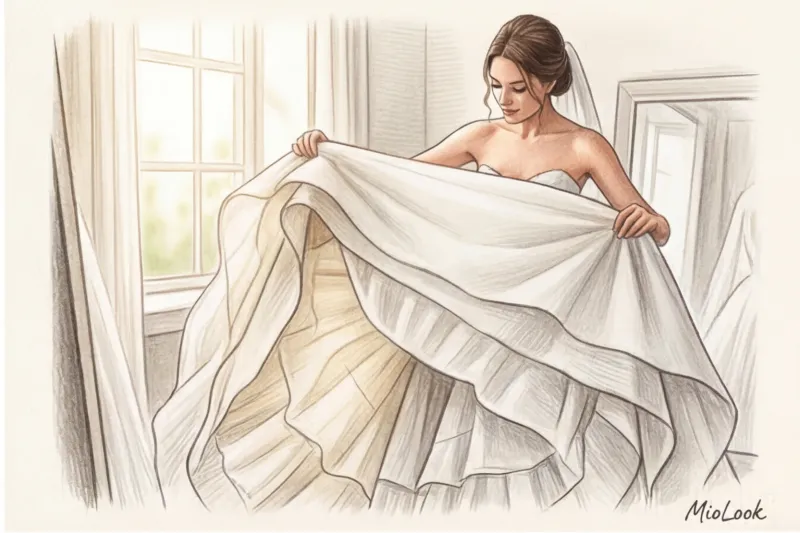
What to do? Always turn your dress inside out before purchasing. Read the labels. Look for viscose, cupro, cotton, or natural silk in the lining. If you've found the dress of your dreams, but it's made of synthetic fibers, don't despair. A good seamstress at a salon can completely replace the lining with breathable cambric or thin viscose in a couple of days.
Your perfect look starts here
Join thousands of users who look flawless every day with MioLook by digitizing their wardrobe.
Get access — €0.99 onceComfortable Summer Wedding Dress Styles: Freedom of Movement
A summer wedding dress should give you freedom. The first things to avoid are multi-layered crinolines and heavy, non-detachable trains. If a train is essential for beautiful photos at the registry office, choose a style that detaches or elegantly attaches to your wrist with a special loop.
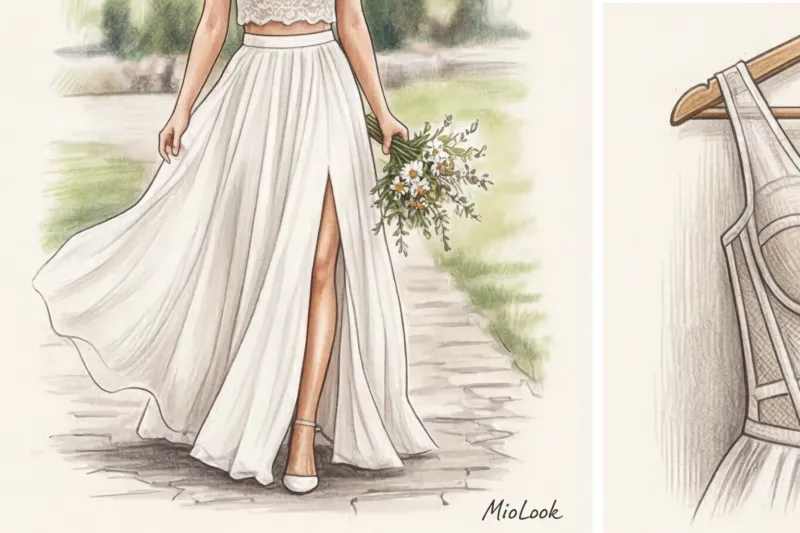
A crop top and flowy skirt are a great solution for hot weather. The exposed waistband provides natural ventilation. Plus, this outfit is much easier to integrate into your everyday wardrobe after the event.
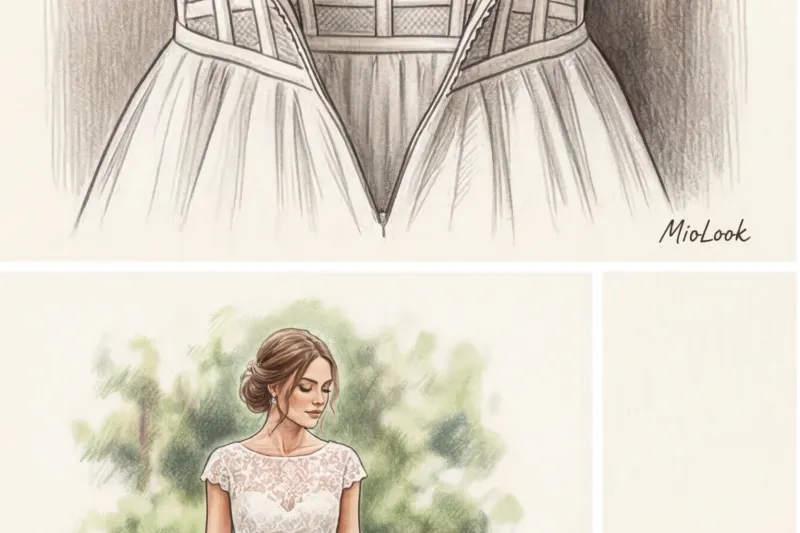
Many brides choose bias-cut slip dresses. They're a truly lightweight and beautiful option, but I must add a caveat. This advice does not work for everyone: Fine bias-cut silk requires absolutely smooth, often seamless underwear and accentuates even the slightest nuances of the figure. If you're prone to swelling in the heat, such a dress may cause psychological discomfort.
A versatile and extremely comfortable style—an A-line silhouette with a deep leg slit. The slit here serves not only as a piquant detail but also as a powerful temperature regulator: with every step, the skirt opens up, letting in fresh air. To avoid making a mistake, I recommend taking photos of yourself during fittings and uploading them to the app. MioLook A smart algorithm will help you objectively evaluate how different silhouettes work with your proportions.
Sweat Stains in Photos: How to Choose Color and Texture
Let's get back to the physics of color. As a colorist, I always warn my clients: snow-white is the most insidious color in hot weather. Because of its extreme lightness, any wet area on it looks like a dirty, contrasting gray spot.
As leading wedding photographers note (including in the WPPI 2024 guidelines), harsh, direct summer light greatly enhances this contrast in photographs. Retouching dozens of shots with armpit stains is time-consuming and expensive.
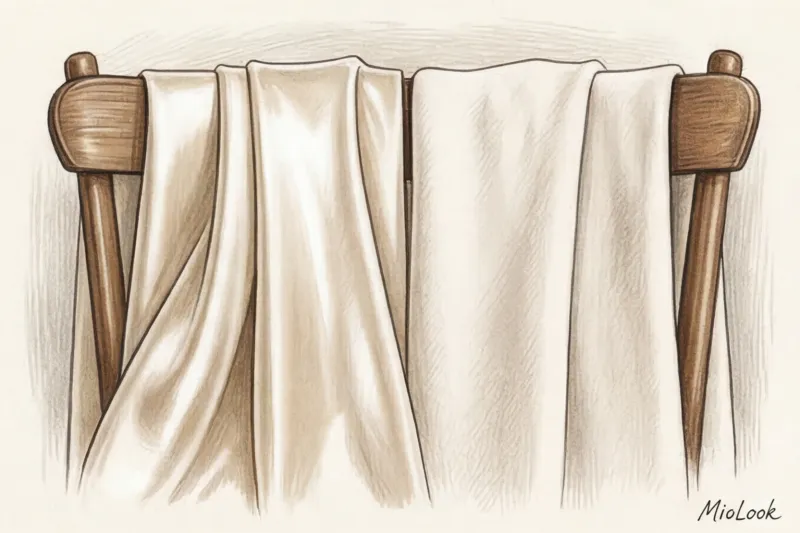
Warm, slightly muted shades like ivory, champagne, ecru, or light powder are much safer for a summer wedding. Moisture doesn't create such a dramatic shift in light and shadow.
But your main ally is texture. If you know you sweat a lot, choose dresses with draped detailing in the neckline and underarms, 3D appliqués, or thick matte lace. The voluminous texture diffuses light, and even if the fabric gets wet, it will be virtually invisible. We discussed the properties of materials in more detail in the article. Fabrics that don't show sweat stains: A guide for speakers.
Ready to get started?
Try the MioLook free plan—no commitments required. Create mood boards and plan looks in one click.
Get access — €0.99 onceBridal Checklist: Testing Out Your Dress Before Buying
Don't buy a dress just by standing in front of a mirror on the runway. On your wedding day, you'll be getting into a low car, hugging guests, and dancing. Here's my essential fitting checklist:
- Crease test: Squeeze the hem of your skirt in your fist and hold it there for 10 seconds. If the fabric is still crumpled, imagine what it will look like after an hour-long limo ride.
- Weight test: Take the dress off the hanger and hold it at arm's length. If your arm gets tired after 30 seconds, it will be difficult to walk in.
- Movement test: Be sure to sit on a chair (not a ottoman, but a regular chair with a back). Raise your arms up, mimicking a dance. The corset shouldn't dig into your ribs.
- Checking layers: Check the composition of the base, lining, and inner mesh. No 100% polyester on the body.
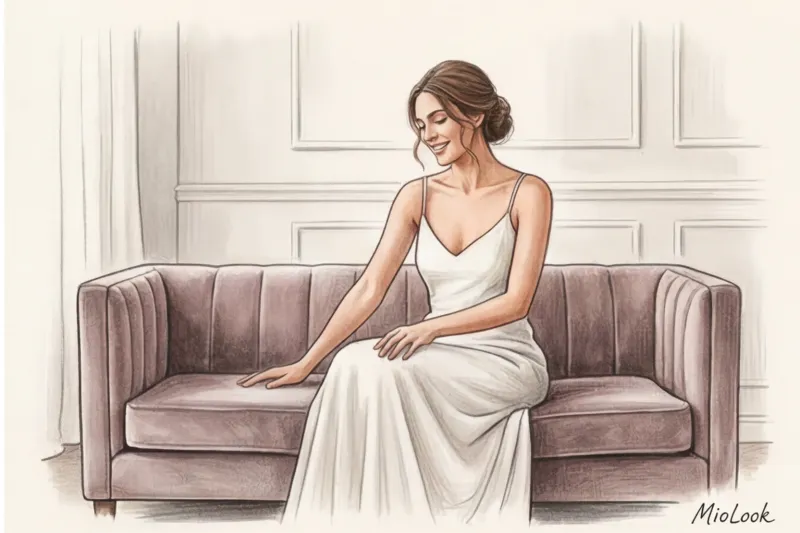
And a little life hack: ask the sales assistant to turn off the air conditioning in the fitting room for 10 minutes. You'll immediately get a good idea of how the dress will perform outdoors.
Summary: Your Perfect Summer Look
To summarize, the perfect summer wedding dress is built on three pillars: natural or high-quality synthetic fabrics (crepe, chiffon, Tencel), a breathable lining (viscose or cambric), and a loose silhouette without suffocating, rigid corsets. Save the heavy, luxe, multi-layered tulle for chilly November.
Remember the most important thing: your physical comfort directly translates into your emotions. A bride who breathes easily and moves comfortably glows from within, and no amount of retouching can replace this natural radiance in photographs. Trust your instincts, and entrust the technical part of choosing silhouettes to a smart assistant. MioLook.
", "tags": [ "wedding dress", "summer wedding", "stylist tips", "fabrics for summer", "wedding fashion", "choice