Remember that feeling when you put on a seemingly beautiful dress, step outside into the sun at 30°C, and within fifteen minutes it turns into a damp, clinging fabric? Or when you look at your summer photos and can't understand why your outfit looks somehow... unkempt? As a practicing stylist and colorist, I constantly encounter the fact that it's the summer wardrobe that gives away all the styling mistakes. And it's not about your figure, but the simple physics of fabrics and colors.
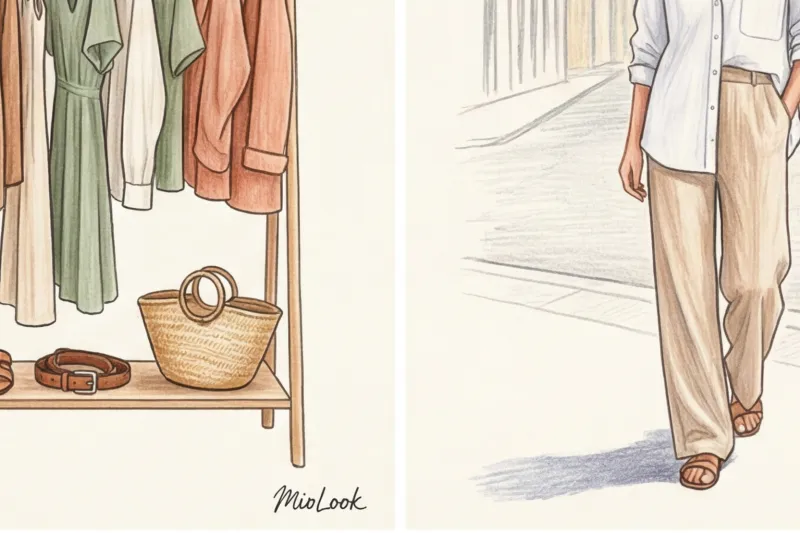
When we discuss summer's anti-trends, we're not talking about "Vogue banning pink." We're talking about items that physically can't handle the heat, distort proportions, and cheapen your appearance. We've already covered the mechanics of clothing becoming obsolete in our a complete guide to anti-trends in clothing , and today we will look at the summer specifics.
The Anatomy of a Summer Anti-Trend: Why Things Become Irrelevant in the Heat
The heat doesn't forgive stylistic blunders. In winter, we can hide a poorly cut outfit under a voluminous coat or distract attention with complex layering. In summer, however, the architecture of the silhouette and the quality of a single layer come to the fore.
According to the latest reports from the authoritative trend bureau WGSN (2024–2025), the macro trend in summer fashion has finally shifted toward structured, loose volumes. The era of total tightness in the summer heat has been officially recognized as not only unfashionable but also unhygienic.
The key to a luxurious summer look is to have some air between your body and the fabric. Once a garment digs into your skin, it stops working for you.
From a color physics perspective, the bright summer sun acts like a merciless spotlight. It brings out cheap chemical dyes and delicate textures. What looked passable in a dimly lit fitting room becomes a disaster outside at midday.
Summer 2024-2025 Anti-Trends: Top 4 Items That Cheapen Your Look and Their Alternatives
Let's take a look at the biggest summer wardrobe saboteurs. Over 12 years of working with clients, I've come up with a formula: one wrong summer item ruins the entire look. Here's what you should get rid of right now.
Flimsy, thin, clinging knitwear
Thin knit tops and cardigans that let your underwear show through are the absolute top of my anti-fashion list. They highlight every little detail of your figure (even the ones that aren't there), instantly show sweat stains, and lose their shape after just one wash.
What is the technical problem? The Textile Institute clearly defines this: fabrics with a density below 120 GSM (grams per square meter) always look cheap, especially in plain knits. They are unable to hold their shape.
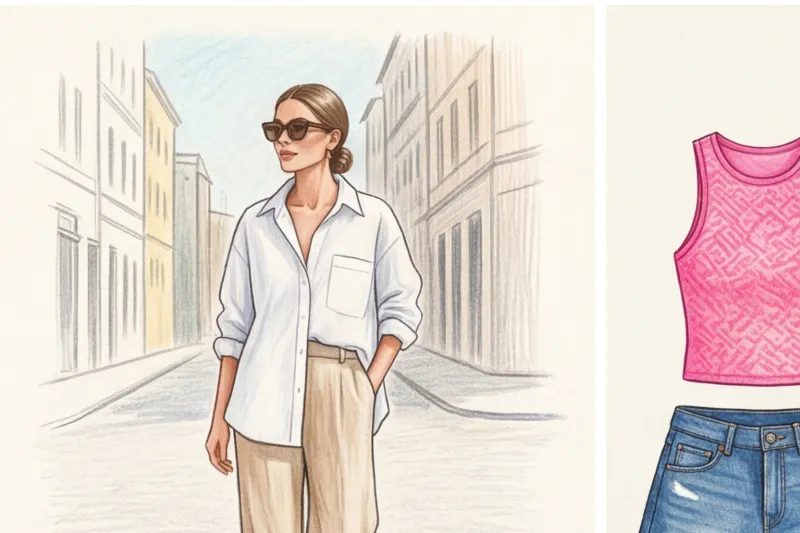
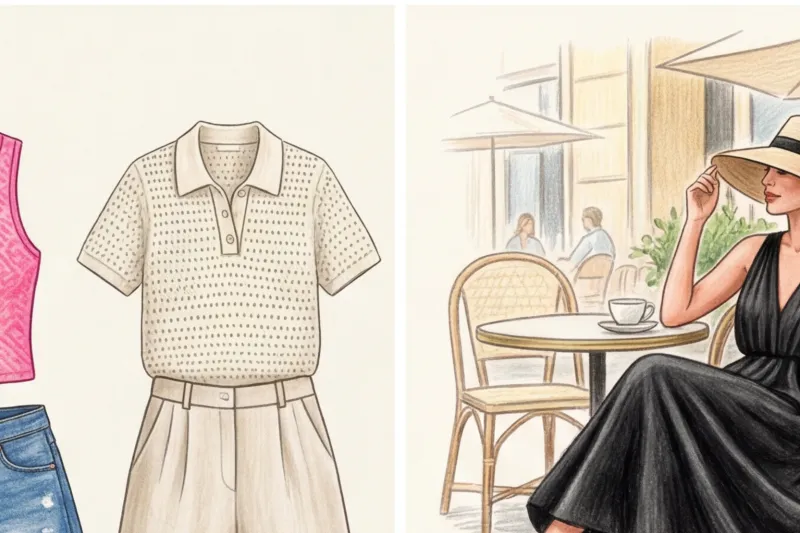
What to replace: Textured knit crochet made from thick cotton threads, structured polos or basic oversized T-shirts made from thick cotton (from 160 GSM).
Ultra-short denim shorts
Micro shorts with visible pockets are only suitable for a beach party (and even then, with reservations). In an urban environment, they distort body proportions and create discomfort—sitting in them on sun-warmed benches or in cafes is simply unpleasant.
Balance rule: If we're showing off our legs, we need to add volume on top. But it's better to replace micro shorts with pleated Bermuda shorts or A-line shorts made of thick cotton. They create a beautiful hip line and are appropriate even in fashion trends spring-summer for the city.
Shapeless tank dresses made of thin viscose
You know those soft, comfortable dresses with thin straps that you can find in every high-street store? Save them for the house. Outdoors, this viscose material instantly clings to your body with the slightest sweat, highlighting your stomach and hips in a most unflattering way.
What to replace: Shirt dresses in crisp poplin or A-line sundresses with wide straps. The fabric's structure should act as a framework.
Neon and acid colors
As a colorist, I can talk for hours about how light affects color. Neon shades (highlighter yellow, bright pink) cast a powerful reflection on your face in bright summer sunlight. As a result, your skin takes on a sickly greenish or yellowish undertone.
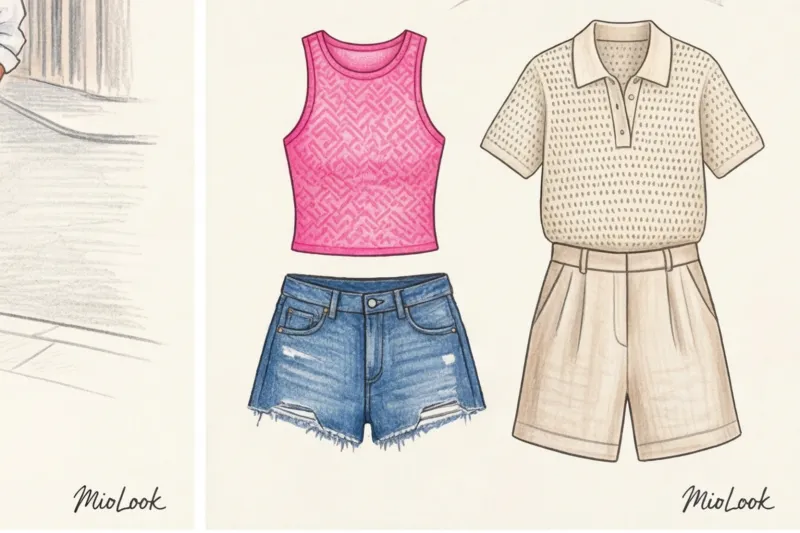
What to replace: Go for complex, natural shades: butter, chardonnay, terracotta, sage. For a pop of color, choose pure, jewel tones like sapphire, emerald, and ruby.
Access to MioLook for €0.99 — one-time payment
A smart AI stylist will select the perfect look based on your color type and body shape.
Get access — €0.99 onceBreaking stereotypes: summer anti-trends that were forced upon you
And now comes my favorite part: debunking myths. There are some established dogmas in the fashion industry that are long overdue for a rethink.
Myth 1: “You can’t wear black in summer.”
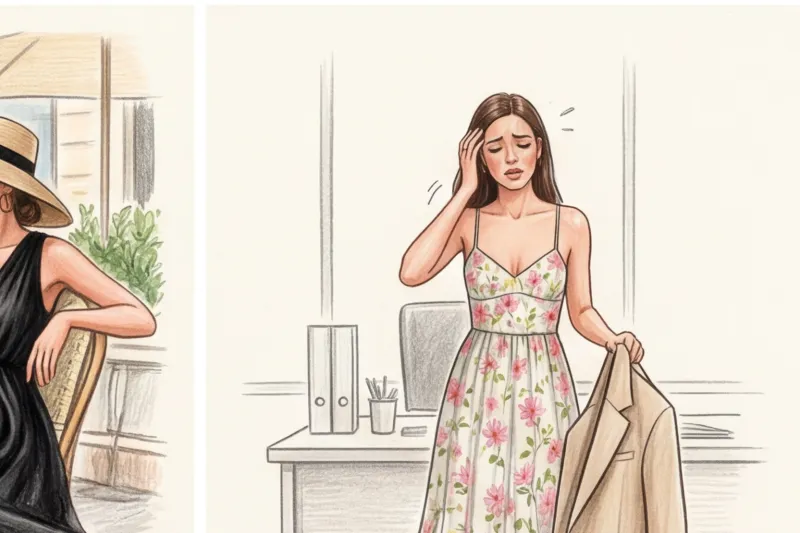
How many times have you heard that black attracts the sun? In fact, the physics are more complex. Bedouins in the desert often wear black clothing. Why? A voluminous black dress made of natural silk or cotton heats up on the surface, but the loose fit creates air convection, which cools the body. Moreover, black absorbs UV rays better than white, protecting your skin. A black maxi dress looks incredibly classy and expensive in the summer.
Myth 2: “You should only wear 100% linen.”
I'll be honest: when I first started working as a stylist, I firmly believed this myth. I bought a 100% linen capsule. The result? By lunchtime, I looked like chewed-up paper, and the hard folds in the crotch area of my pants created a very unkempt appearance.
Insider secret: The ideal summer fabric is a blend. Linen combined with Tencel (lyocell) or viscose retains its breathable texture but becomes soft, flows beautifully, and wrinkles significantly less. If you look at the labels of summer collections from premium brands like Massimo Dutti or COS, you'll rarely find pure linen—the brands' technologists know this secret.
Office Taboos: What You Shouldn't Wear to Work in the Heat
One of my clients, a top manager at an IT company, once ruined an important networking lunch. She showed up wearing a fashionable but completely informal linen sundress with an open back. In the air-conditioned office, she had to wrap herself in someone else's cardigan, and at the lunch itself, she felt underdressed among her colleagues in light suits. This cost her confidence in the crucial negotiations.
The biggest mistake in summer office wardrobe is swapping structured business attire for beachwear. Even if you don't have a strict dress code, off-the-shoulder dresses, thin spaghetti straps, and plunging necklines ruin your professional image.
Footwear is no less of a problem. Mules, flip-flops, and open sandals are appropriate on the embankment, but not in a meeting room. If you find it difficult to integrate bright colors in office style or choose a summer base, remember about the materials.
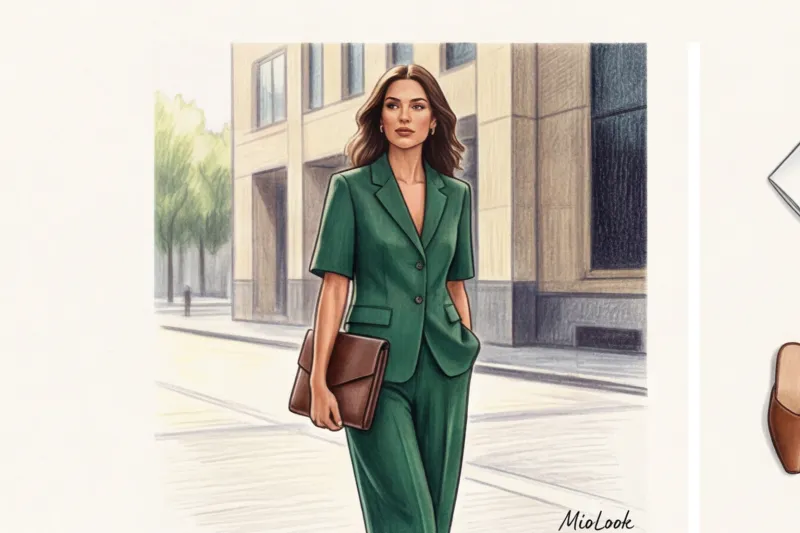
What to wear? Your savior is "tropical wool." This ultra-fine wool thread is specially spun, which paradoxically cools the body and perfectly holds the suit's shape. Thick silk and cotton poplin also work well.
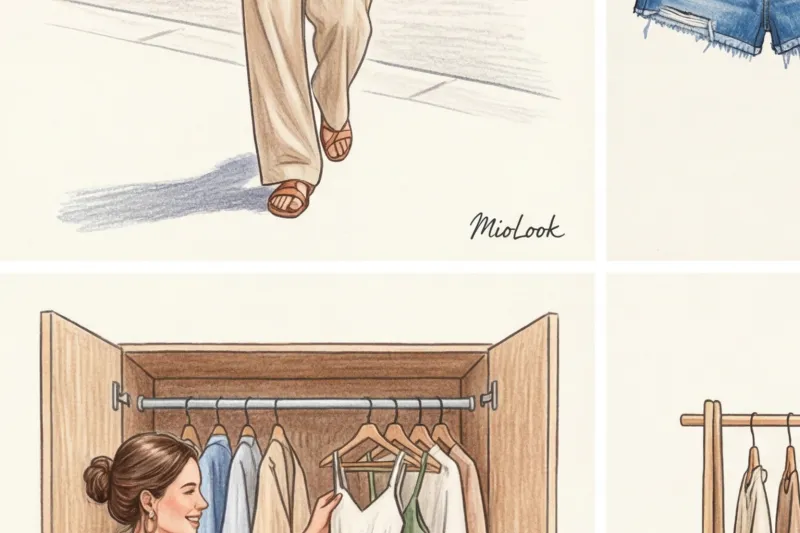
Your perfect look starts here
Join thousands of users who look flawless every day with MioLook. Organize your summer work wardrobe in one click.
Get access — €0.99 onceShoes and accessories: details that reveal an anti-trend
Even a flawless dress made of premium cotton can be ruined by the wrong details. Accessories in the summer often suffer from an overabundance of "creativity."
- Anti-trend 1: Chunky “dad” sneakers with light dresses.
This technique was popular five years ago. Today, heavy, ugly shoes paired with flowing fabric look like a stylistic flaw. They break the line of the leg, weighing down the bottom and detracting from the elegance of the look. - Anti-trend 2: An abundance of rhinestones, shells and complex decoration on city shoes.
Save this decor for the resort. It looks out of place and cheap in the city.
If you want to project aesthetics and status, choose minimalist sandals with thin leather straps, perforated leather loafers (a great choice for the office) and accessories in the style of quiet luxury — for example, woven bags with a rigid geometric shape instead of shapeless totes.
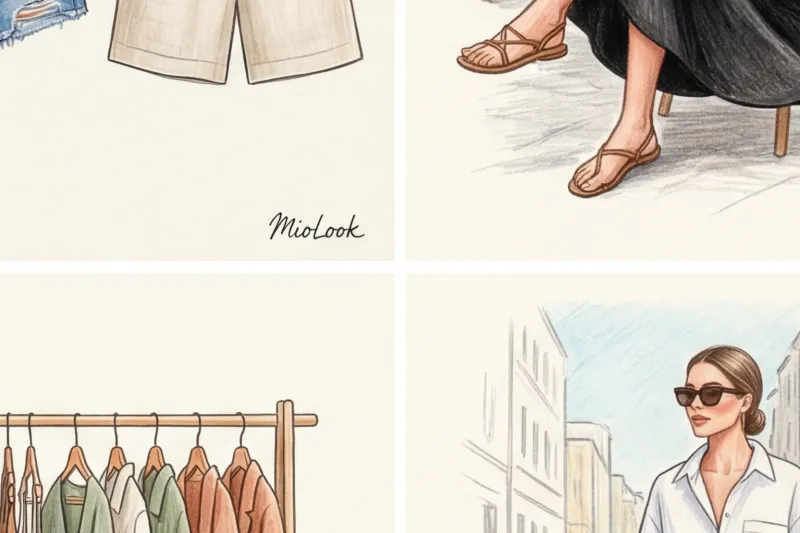
A stylist's checklist: how to review your wardrobe before vacation
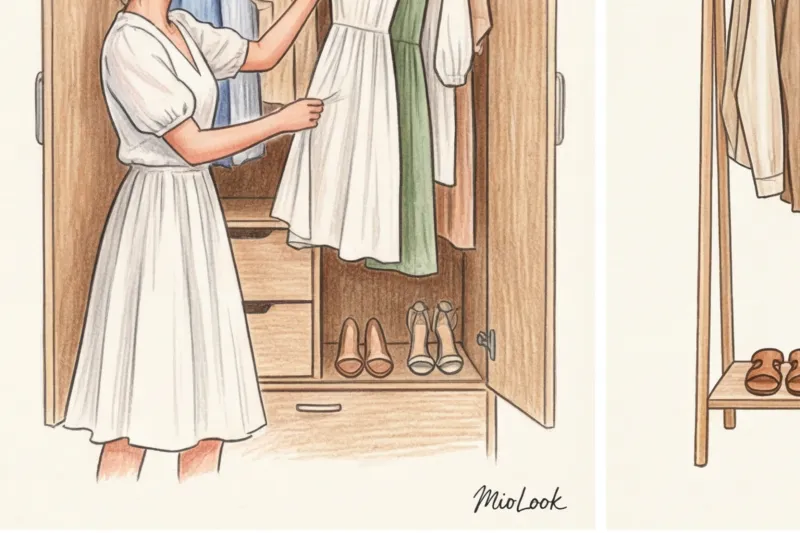
Before buying new items, I always make my clients do a thorough inventory of what they already own. This is a step-by-step method we use when sorting through their wardrobes, and you can easily replicate it at home (and then upload the items that passed the inspection to MioLook smart wardrobe feature , so that the program itself will create capsules).
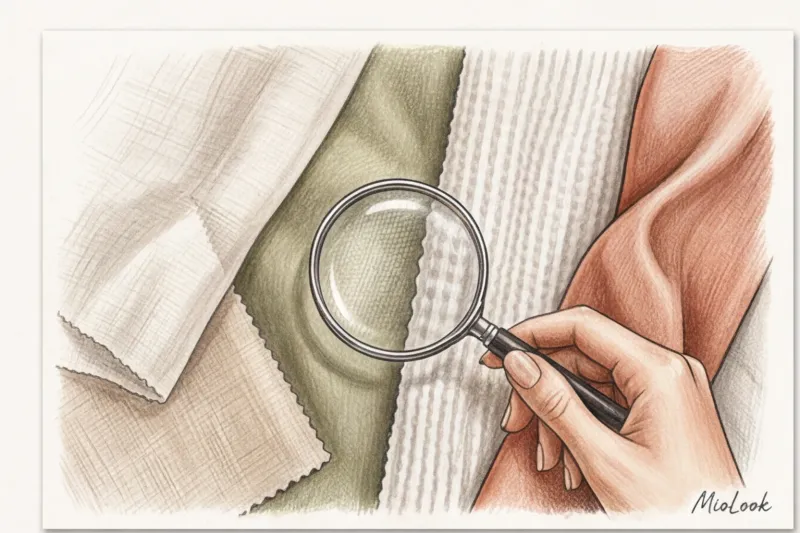
- Translucent test. Go to a window on a sunny day and look through the fabric. If the item is see-through where it shouldn't be (like the outline of your underwear on a skirt or pants), remove it ruthlessly. There's no fixing it.
- Silhouette analysis. Put the item on. Ask yourself: is there at least a couple of centimeters of air between the fabric and my skin? If the fabric is tight across the hips or chest, you'll feel hot and uncomfortable in it in the summer.
- Checking the fittings. Mass-market manufacturers often skimp on buttons in their summer collections. Cheap, shiny plastic buttons on a good cotton dress ruin the whole look. Spend 15 minutes buying horn or mother-of-pearl buttons at a fabric store and resew them—the dress will look three times more expensive.
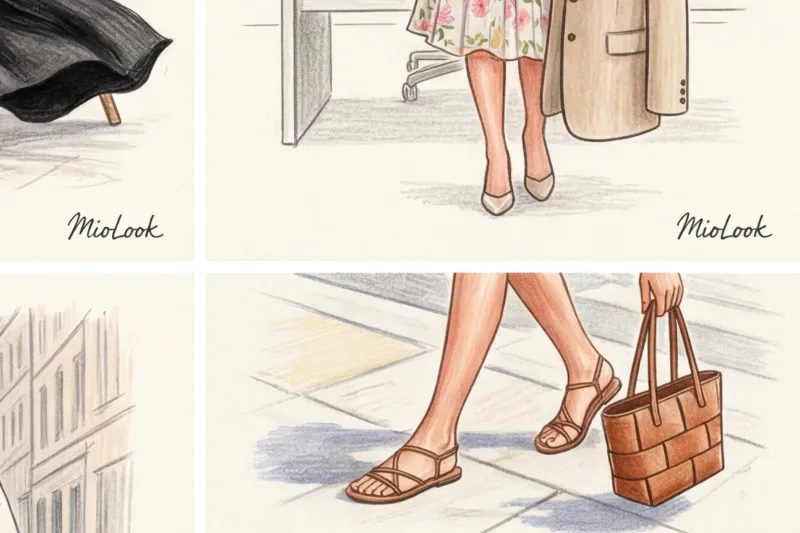
Summary: Invest in coolness and status
Summer anti-trends aren't strict bans from evil stylists. They're simply indicators that a particular item isn't functionally working for you. In hot weather, clothing should protect, cool, and preserve your dignity, not make you constantly tug at your skirt or feel self-conscious about sweat stains.
The main rule to remember: The simpler the cut of a summer garment, the better the quality of its fabric should be Forgo short-term micro-trends in favor of macro silhouettes that will last for 5-7 years.
To avoid confusion about which silhouettes and shades suit you, I recommend digitizing your summer base. With the help of MioLook applications You'll be able to see your wardrobe from a different perspective, and the AI stylist will suggest fresh combinations from the items already in your closet. Summer is too short to waste it worrying about a bad outfit!