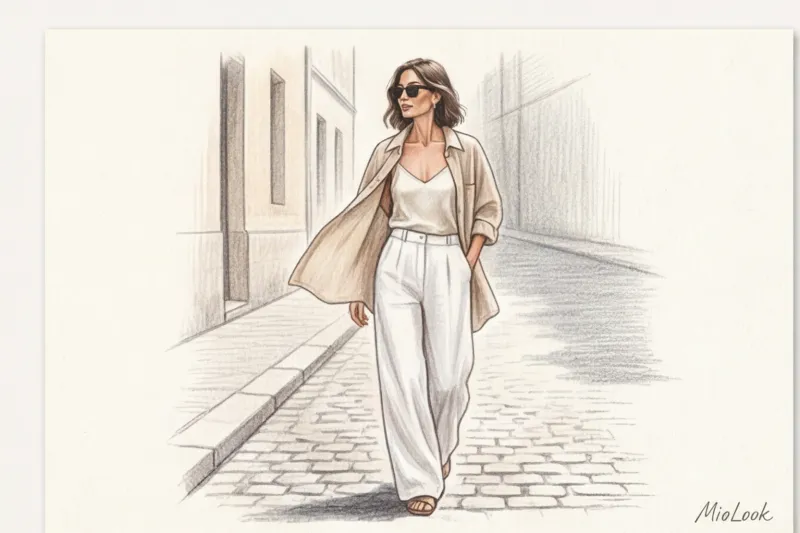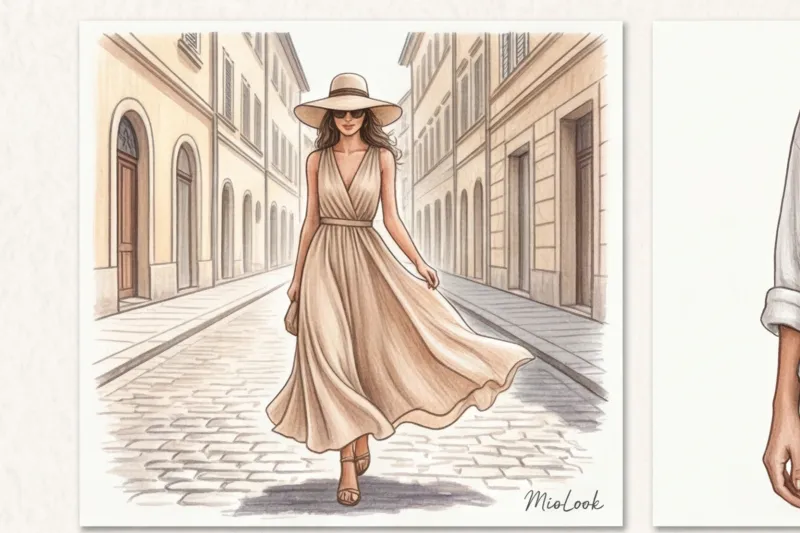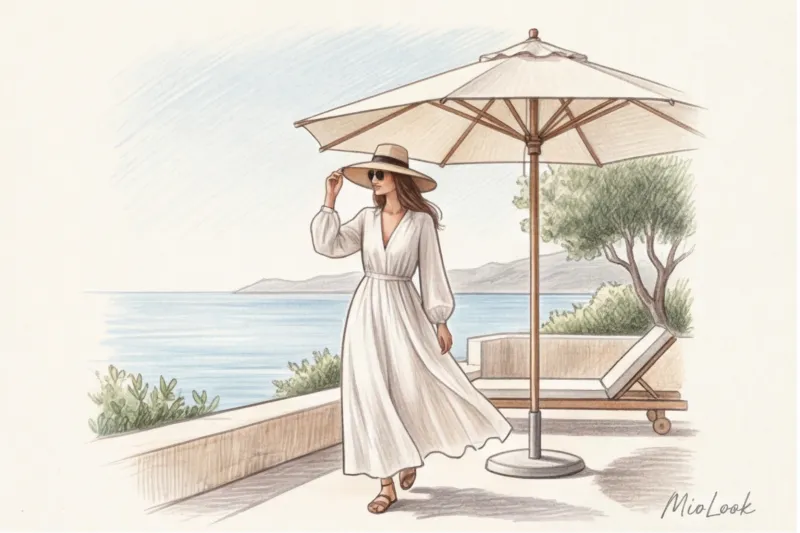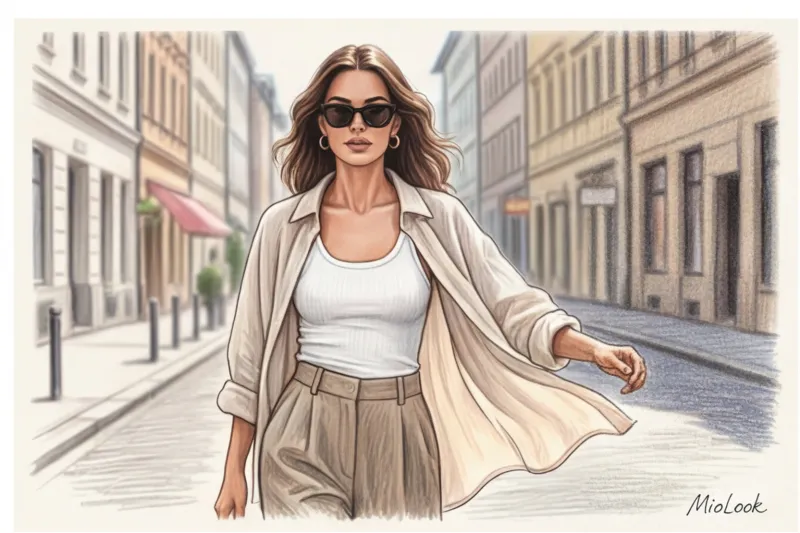
Every summer, as soon as the thermometer hits 30°C, I see the same strategic mistake on the streets. Girls try to strip down to the bare minimum: micro-shorts, tight tank tops with thin straps, bare shoulders. And you know what? They swelter in the heat, while women in loose trousers and linen shirts thrown over their tops look fresh and relaxed.
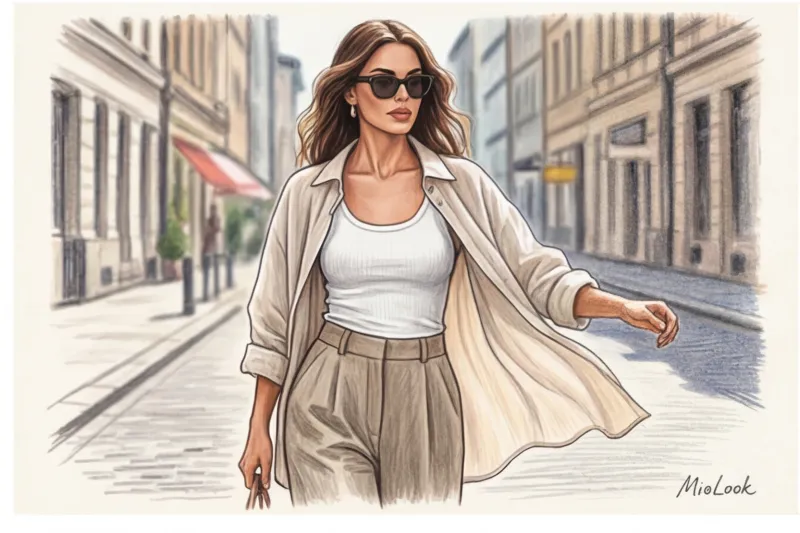
As a practicing stylist and colorist with 12 years of experience, I often encounter the stereotype: "the less you wear, the cooler you are." But the physics of fabrics suggests otherwise. Layering in summer isn't an attempt to stay warm, but rather to create your own portable air conditioner. We discussed the basic principles of creating complex looks in more detail in our the complete guide to layering , however, the hot season requires a completely different, almost engineering approach.
In this article, I'll show you how to use fabrics, air gaps, and even optical color mixing to look incredibly stylish and feel cool when the asphalt melts.
Layering in Summer: Why Covering Up Is the Best Way to Cool Down
Did you know that exposed skin exposed to direct sunlight heats up much faster than skin covered with loose, breathable fabric? This goes against our intuition, but is entirely consistent with the laws of thermoregulation.
Remember the traditional clothing of desert dwellers? A study published back in 1980 in a prestigious scientific journal Nature (Nature 283, 373–375) demonstrated the so-called "Bedouin effect." The scientists discovered that the Bedouins' multilayered, loose black clothing absorbs heat on the surface of the outer layer of fabric, but due to convective airflow (the gap between the clothing and the skin), this heat does not reach the body. The air circulates like an exhaust pipe, naturally cooling the skin.
When you wear a thin, tight top in the blazing sun, the UV rays hit your skin directly, and sweat evaporates instantly, leaving a sticky feeling. If you wear a cotton bralette and a loose ramie shirt over it, the outer layer absorbs the sun's rays, and that "Bedouin" microcirculation is created between your body and the shirt. You're literally carrying your shadow with you.
Summer Layer Architecture: How Air Microcirculation Works
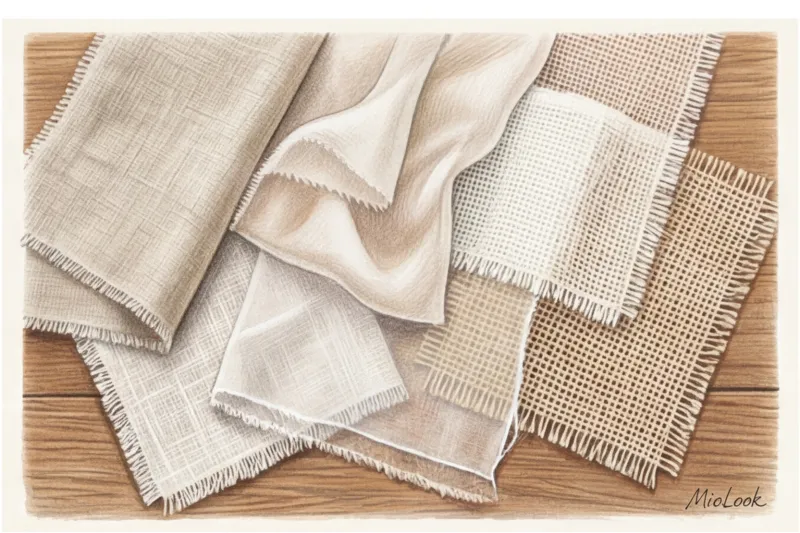
The main rule of summer layering is: let the air move. If you wear two pieces, they shouldn't be too tight against each other or your body at the same time.
"The ideal formula for a summer look: fit and looseness. If the bottom layer is close to the body (a crop top, a ribbed tank top), the top layer should flow and leave at least 3-5 centimeters of space from the skin."
I recently had a consultation with a client who complained that she was constantly sweating in the office during the summer (where the air conditioning is often turned off). She was wearing basic straight-cut silk tops that clinged to her back. We replaced them with thin, basic micromodal tank tops, layered with structured linen vests and unbuttoned shirts. By creating space between the layers, the problem disappeared within the first day.
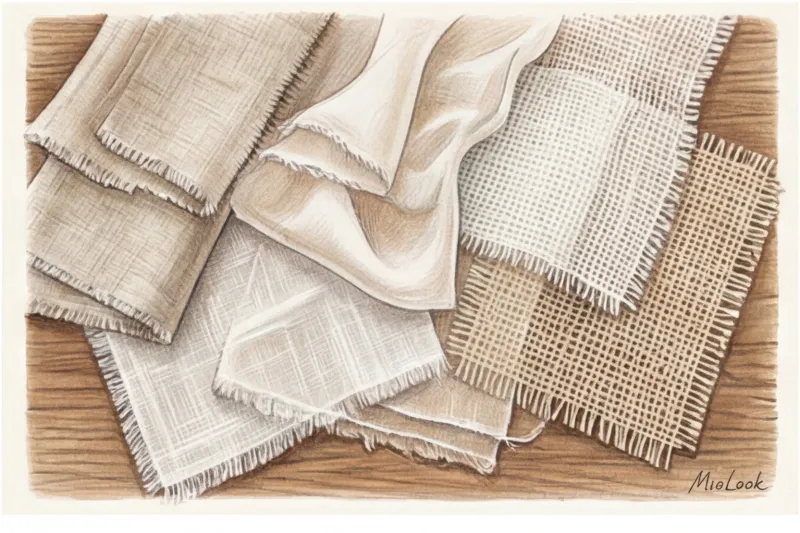
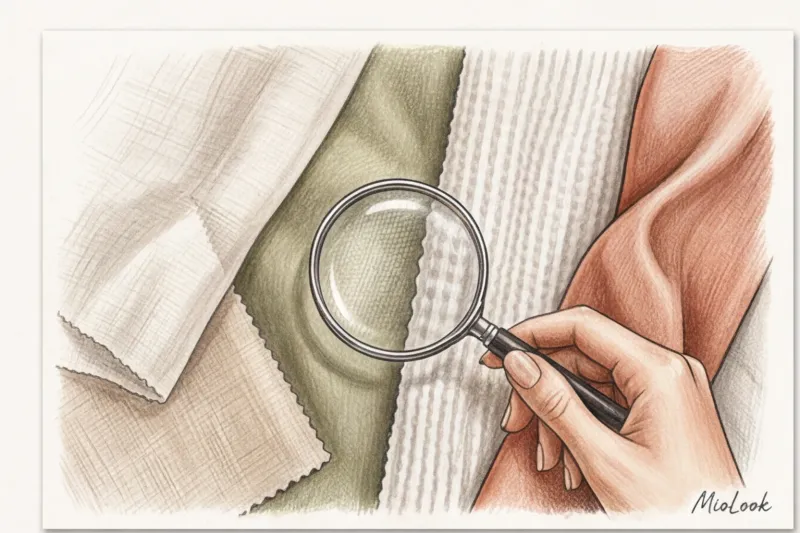
Breathable fabrics: linen, ramie, cupra and nettle
For the system to work, you need to understand the physics of fibers. According to the International Textile Institute, linen has phenomenal hygroscopic properties—it can absorb up to 20% of its own weight in moisture while remaining completely dry to the touch. This means it wicks away sweat before you feel discomfort.
- Flax: Choose fabrics with a weight of 120–150 g/m² (medium weight). Linen that's too thin will wrinkle, while linen that's too thick will stand up straight.
- Rami (Chinese nettle): My personal favorite. Ramie holds its shape better than linen, has a beautiful, elegant sheen, and is ideal for layering. Excellent ramie shirts in the €50–€80 range can often be found at Massimo Dutti or COS.
- Cupra: A fabric made from cotton fluff. It flows like silk but breathes like cotton. Perfect for summer dusters and kimonos.
- Muslin: A loose, multi-layered cotton weave that literally shines through in the sun, muslin shirts are a must-have for both vacation and the city.
Anti-rating: which materials will turn you into a greenhouse
Layering is a must in summer doesn't work If you've got the composition wrong, throwing a lightweight polyester jacket over a cotton top is like putting on a greenhouse.
What to avoid:
- Tightly woven silk satin. Yes, silk is a natural material. But the tight weave of satin (where the threads are pressed together without gaps) prevents heat from escaping. Save satin for the evening. For the day, choose silk chiffon or crepe de chine.
- Thin polyester. Don't be fooled by the transparency of polyester chiffon. It's not breathable. Period.
- High density viscose. Viscose itself breathes very well, but if it is a dense fabric (for example, suiting, with a density higher than 200 g/m²), it will be uncomfortable to wear it in two layers in hot weather.
Your perfect look starts here
Tired of wondering if your clothes go together? Upload your wardrobe to MioLook and let AI create flawless layering looks for any weather.
Get access — €0.99 onceThe Magic of Color: How Color and Translucency Work in Translucent Light
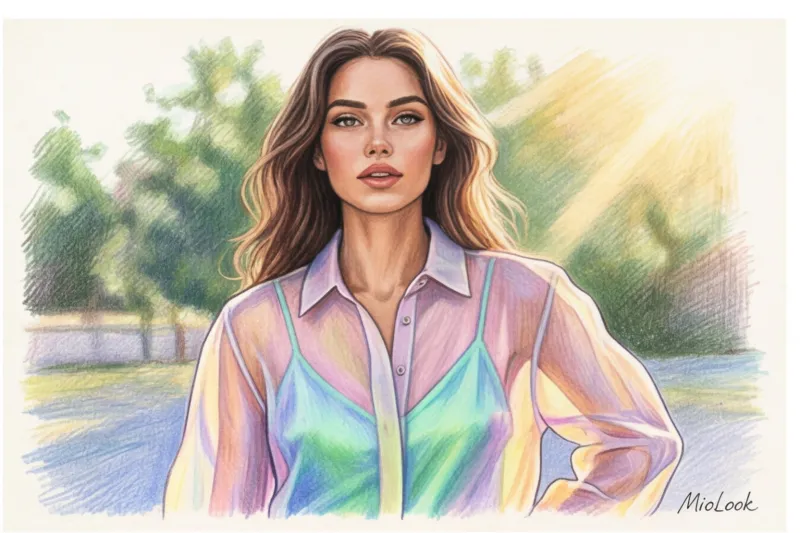
This is where my favorite theme as a colorist comes in. Sheer and translucent layers in summer allow for the application of the law of optical color mixing. Unlike winter, where we see dense color blocks (red sweater + black coat), in summer we can layer translucent blue organza over a lemon silk top.
What happens? The fabrics act as light filters. When moved and held up to the light, they create a complex, luminous mint-green hue that's impossible to achieve by simply buying a piece of that color. It looks expensive and complicated.
In my practice, layering is also a life hack for those who want to wear colors that aren't their own. One of my clients with cool undertones adored a warm terracotta shade, which gave her complexion a sickly yellow undertone. We found a solution: she started wearing a terracotta top as a base layer, and then an unbuttoned cool beige linen shirt over it. The shirt created the perfect color barrier around her face, and the terracotta just served as an accent.
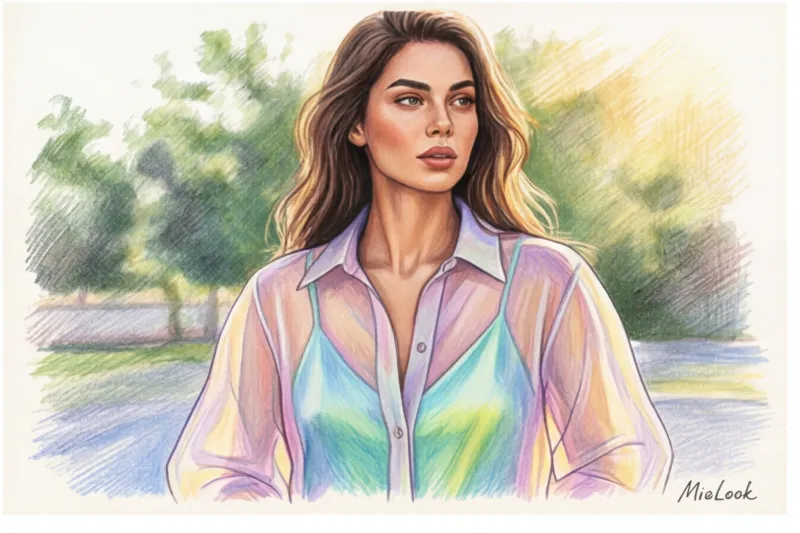
Important limitation: Keep albedo (the reflectivity of a surface) in mind. In summer, light shades of the top layer perform better than dark ones because they reflect heat. Layering sheer black chiffon over a black T-shirt on a 35°C (95°F) day is a bad idea. You'll ruin the reflectivity, and you'll get hot.
Top 5 Lightweight Capes: Stylish Layering for Every Day
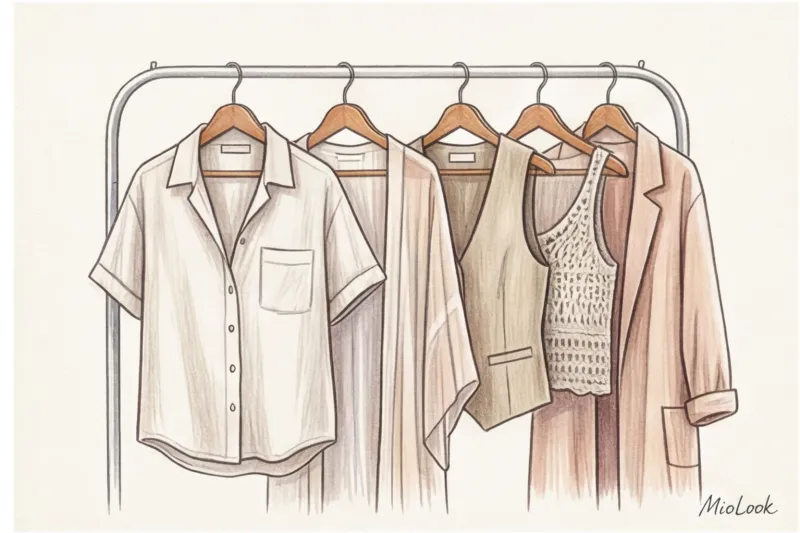
If you want to implement this technique tomorrow, here are 5 things I regularly add to my clients' capsules (all of which are easy to combine into wardrobe designer MioLook ):
- Loose shirt. The most versatile investment piece. It can be worn completely unbuttoned, tied at the waist, slung over one shoulder, or fastened with the single middle button. At stores like Zara or Mango, good linen and viscose options cost around €35–€50.
- Kimono and summer dusters. A long, lightweight cape, worn below the knee over shorts and a crop top, creates a stunning play of lengths. Furthermore, the two long vertical lines of the open kimono visually elongate the silhouette and slim the figure, trimming off excess inches on the sides.
- Linen suit vest. An absolute hit of recent seasons, it instantly adds structure to any relaxed look. Wear it unbuttoned over a basic T-shirt and jeans, and your look goes from "just popping out for bread" to stylish casual.
- Knitted openwork top (crochet technique). A trend that has become a classic. Mesh or crochet knitting offers little warmth but creates stunning texture. The smooth bottom layer shows through the loose pattern of the top layer, creating volume.
- Semi-transparent mesh long sleeve. The perfect base layer for slip dresses. The finest mesh with a "second skin" print will protect your shoulders from chafing and make an evening silk dress suitable for a daytime stroll. High-quality basic mesh dresses cost €25–€45.
Ready to get started?
Add your lightweight capes to your MioLook digital wardrobe, and the app will suggest dozens of new ways to style them.
Get access — €0.99 onceSummer Office Layering: Dress Code Without Heat Stroke
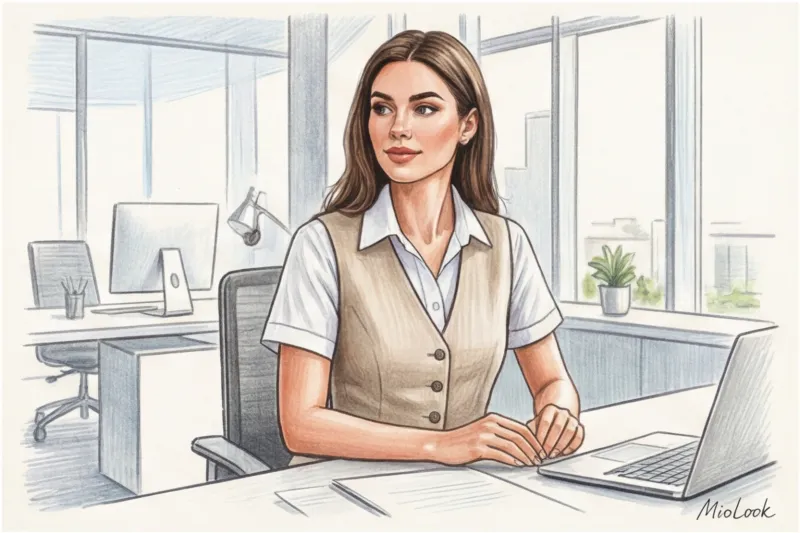
Adapting layering to a formal business environment is more challenging, but not impossible. The challenge of a summer office is that protocol dictates that shoulders be covered and the silhouette be composed.
For one of our clients, a senior partner at a law firm, we created a special capsule collection. We completely eliminated the classic wool jackets with polyester linings. They were replaced with summer blazers made from a linen-cotton blend. unlined (unlined construction). This is key: it's the lining that usually creates the sauna effect in a jacket.
I recommend wearing slim-fitting, smooth, nude micromodal invisible tops under thin business shirts (made of cotton poplin). Firstly, this completely solves the delicate problem of visible sweat stains on the shirt during important presentations. Secondly, it prevents underwear from showing through the thin fabric of the blouse.
Stylist Checklist: 5 Rules for a Summer Layered Look
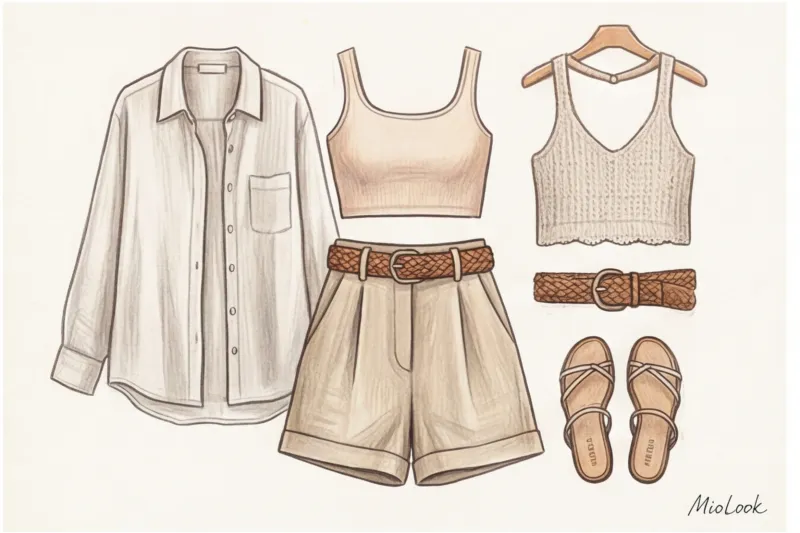
If you're standing in front of the mirror and wondering if your layered look is working, check this checklist:
- Rule 1: Exposed ankles and wrists. Since we're adding volume through fabric, we want to highlight the slimmest parts of the body. These are visual markers of slimness. Roll up your shirt sleeves to the elbows, and choose pants that show just below the ankle.
- Rule 2: Difference in textures. Layering is only apparent when textures clash. Don't layer smooth cotton on top of smooth cotton. Combine: a smooth silky top with loose linen; basic cotton with openwork crochet; denim with sheer muslin.
- Rule 3: Play the long game. Layers should end at different heights. A crop top, high-waisted palazzo pants, and a long, mid-calf kimono are the perfect geometric combination.
- Rule 4: Minimum fittings. To keep the look visually "light," avoid heavy metal buttons, bulky zippers, and thick, layered collars. The more flexible the fabric, the better.
- Rule 5: Underwear as an equal layer. In summer, the line between underwear and clothing blurs. Sporty bandeau tops and bralettes made of thick lace or smooth microfiber work perfectly as a standalone base layer under an unbuttoned shirt.
True style is always about appropriateness and comfort. When you understand the mechanics of fabrics and the laws of color, layering ceases to be a winter trick and becomes your best friend in the heat. Start small: throw your favorite linen shirt over a basic top tomorrow, straighten your shoulders, and enjoy your personal microclimate.