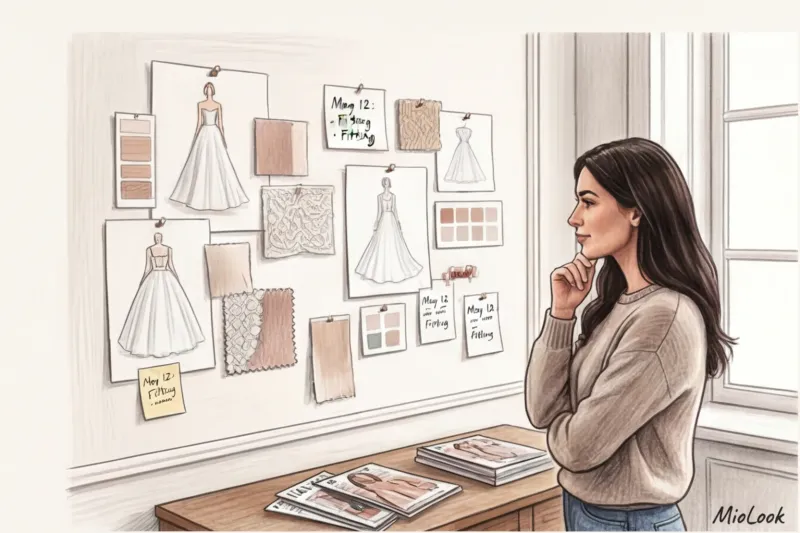
Where to start: How to choose a wedding dress and avoid major mistakes
Forget those Hollywood scenes where the heroine puts on the first dress she sees, her bridesmaids gasp in unison, champagne flows, and everyone cries with joy. Over 12 years of working in premium styling, I've seen hundreds of brides, and I can tell you for sure: reality is different. If you're wondering, How to choose a wedding dress To avoid going crazy from stress, the first thing you need to do is take off your rose-colored glasses. Finding the perfect outfit isn't magic. It's pure project management.
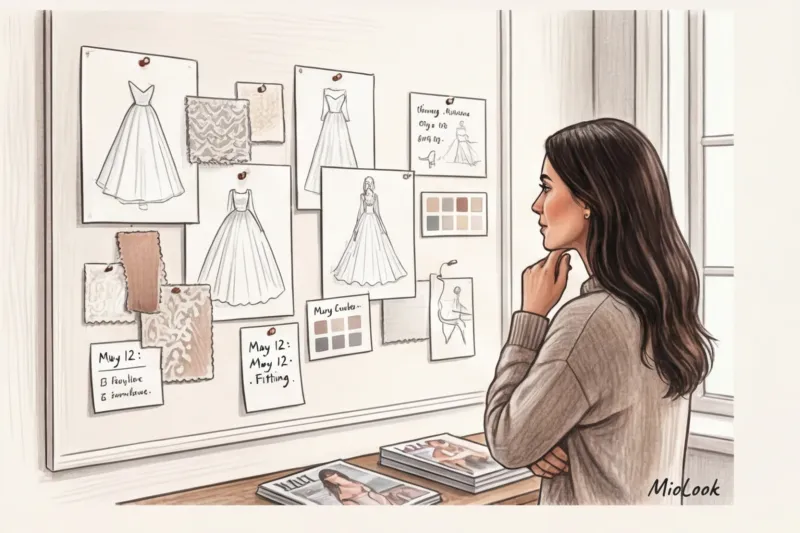
Treat this process like launching a major product. You have a tight deadline, a fixed budget, complex supply chain logistics, and a team of stakeholders (you, your mom, the tailor, the stylist). Emotions at the start often become your biggest enemy: making decisions purely on the euphoria of the moment, women buy things that are physically impossible to sit in at the reception or breathe in during the ceremony.
The main pitfall for the modern bride is so-called "social media overindulgence." Clients regularly come to me with mood boards consisting entirely of retouched photos from Pinterest. Expectation: flowing, weightless silk, a perfect, wrinkle-free fit, and a train like royalty. Reality: these photos often feature couture pieces costing between €15,000 and €50,000, shot on 180cm-tall models using professional studio lighting and wind turbines.
When a bride tries on a similarly styled dress from a mass-market or mid-range retailer for €1,500, she's bitterly disappointed. Rigid synthetic guipure will never lay as softly as French Chantilly lace, and polyester won't provide the elegant matte sheen of natural Mikado silk. Use online images only to find a general outline, but be prepared for the fabric to behave differently on your body shape and within your budget—and that's perfectly normal.
The next critical step is the math. I always insist on a strict budget before you even step foot in your first salon.
My golden rule for setting a wedding budget is 70/30. Only 70% of the allocated amount should go toward the dress itself. The remaining 30% should be reserved for the veil, shoes, the right lingerie, and, most importantly, a professional fitting.
According to statistics from European wedding agencies (data from 2023), over 80% of brides don't even include tailoring in their budget. Meanwhile, in the premium segment, working with complex fabrics and multi-layered structures will cost you 15-20% of the original cost of the gown. If your dress costs €3,000, be prepared to pay €450 to €600 for a perfect fit. A dress costing thousands of euros that bulges at the armholes looks cheaper than a simple €500 dress tailored to your measurements.
To avoid losing control over details and expenses, I highly recommend digitizing the process. You can use an app MioLook — upload photos from fittings, add planned accessories, and analyze the entire look. It's just like jewelry dress code in business style , a wedding look does not tolerate random, stylistically disrupted details.
Timing: Why You Need to Start 6–9 Months in Advance
"I have another six months to spare, I'll definitely make it" is the most dangerous misconception I hear from brides. If you're aiming for a dress from a European or American brand, you should start searching 6-9 months before the big day. Why so long? Most premium salons don't stock dresses in every size. You try on a sample dress, and after you make a deposit, your order is sent to the factory. The production cycle for a dress at a reputable atelier takes 3-5 months.
To this time, you need to add logistics, customs clearance (which is always unpredictable), and mandatory visits to the tailor. Professional fitting requires strict discipline:
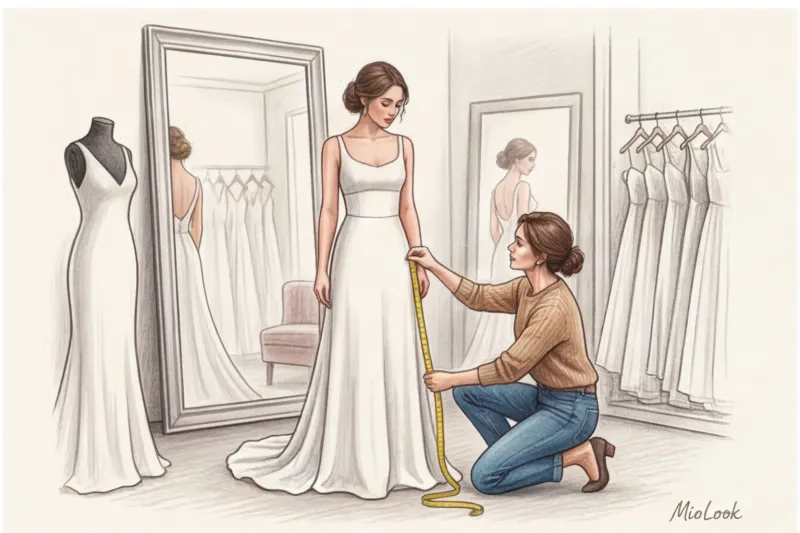
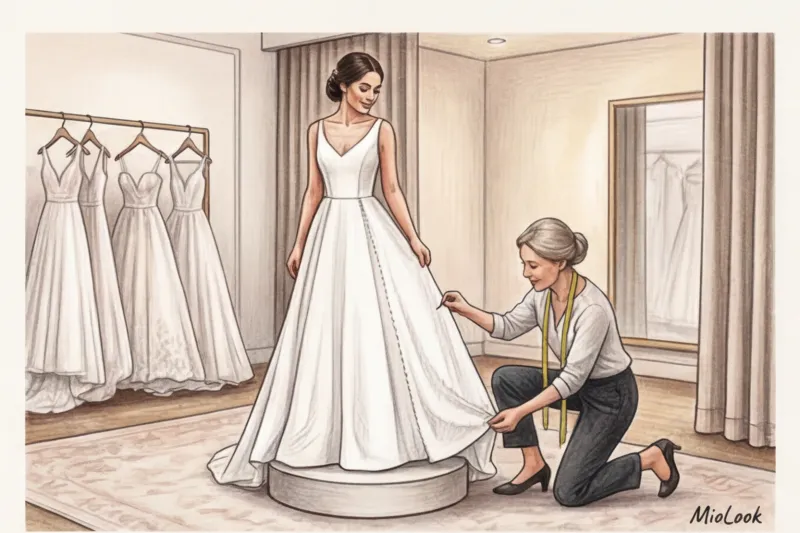
- First fitting: Pinning to fit your figure and determining the hem length (this is done strictly in the shoes you will be wearing at the wedding!).
- Second fitting: rough assessment with basted seams, comfort check in motion.
- Third fitting: final inspection, fittings check and professional steaming.
You need to allow another 6-8 weeks for the fitting stage. But what if there's only a month left until the wedding? Take a deep breath and change your strategy. Forget about ordering from a catalog. Your only option is to buy a ready-made dress from the rail (the so-called sample-size ) or search for minimalist options in eveningwear boutiques. Your choice will be limited by available sizes, but a skilled tailor can alter your dress by 1-2 sizes without compromising the design.
Cut Architecture: How to Choose a Wedding Dress Based on Your Body Type
When clients ask me during their first consultation how to choose a wedding dress if they have an apple or pear shape, I always ask them to abandon this outdated fruit-based classification. In premium styling and professional clothing design, we have long since shifted to analyzing proportions, body vectors, and bone structure. We evaluate the length of the neck, the width of the shoulder girdle relative to the pelvis, the natural geometry of the body, and the center of gravity of the figure. A dress is a true architectural project. The fabric and cut should work intelligently with your unique natural frame, not try to squeeze it into artificial standards.
The main rule of any high-end look is a strict balance of volumes. If we create a strong accent in one area, we must balance it in another. Recently, one of my clients brought me a reference: a plunging neckline, a completely open back, and an extreme thigh slit all at once. I had to explain the basic principle of elegance: in high style, we always leave a mystery. If you reveal shoulders and choose a sleek strapless corset, the hem should be more subdued and structured. And vice versa: a closed, closed bodice with a stand-up collar in the spirit of Grace Kelly is stunningly offset by an intriguing V-back or a complex asymmetrical skirt.
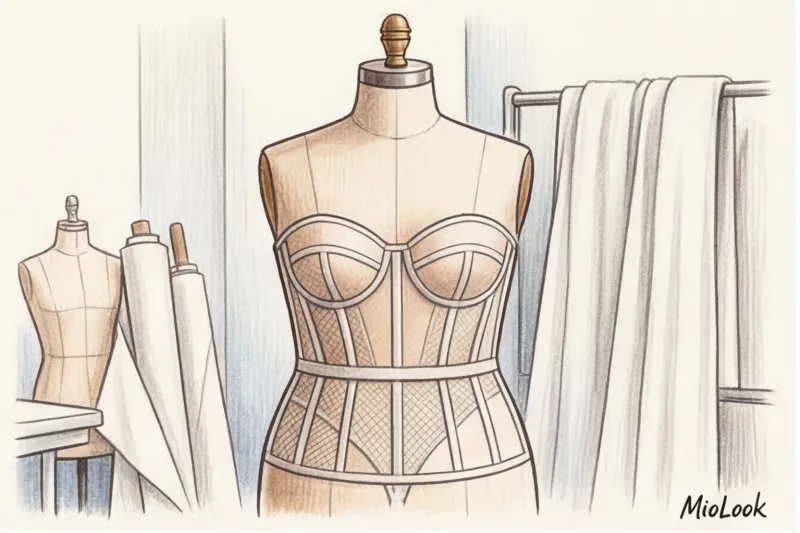
Here we come to the most technically complex element of a wedding gown—the corset. Trust me: a properly tailored design replaces any grueling pre-wedding diet. A truly premium corset doesn't constrict you to the point of collapse; it anatomically redistributes volume and creates a regal posture. The difference between mass-market and luxury corsets lies within, in the hidden details.
True luxury is what's hidden from view. The back of a dress speaks volumes about its status, far more than the number of rhinestones on the hem.
In budget dresses (in the €500–€700 range), manufacturers use cheap plastic "whalebone." When heated by body temperature, it deforms within a couple of hours, digging into the ribs and ruining the smooth waistline. In high-end dresses crafted according to couture standards, designers exclusively use spiral metal hardware. It's incredibly flexible, adapts to your every movement, reliably supports your bust without the need for additional underwear, and maintains its pristine silhouette even after ten hours of vigorous dancing.
Timeless silhouettes
Micro-detail trends change every season, but the overall geometry remains consistent. Let's explore three essential silhouettes that guarantee a flawless finish.
The first one is A-line silhouette It's an absolute, unshakable classic, which, according to fashion house statistics, is complimentary to 90% of women. The secret to its phenomenal success lies in the pure mathematics of cut, established by Christian Dior during the era. New Look The snug-fitting bodice and skirt, which flares gently from the natural waistline, create a perfect triangle. This shape visually narrows the waist, smooths out any hip imperfections, and elongates the overall height.
Silhouette "Gode" (or "Mermaid") — a choice for brides who want to accentuate their curves and create a dramatic look. However, this cut is incredibly demanding when it comes to materials. Cheap, thin satin or stretch tulle are absolutely unacceptable here—they will act like a magnifying glass, highlighting even the slightest imperfections in the skin and seams from lingerie. For the perfect mermaid, you need thick crepe, mikado silk, or heavy, textured macramé lace, which will act as a sculpting bandage.
Finally, minimalism and slip-dress (slip dress). The paradox of lingerie style is that "less" always means "more." When a dress lacks distracting elements like lace, embroidery, or voluminous draping, the quality of the fabric and the architectural precision of the seams come to the fore. A truly premium slip dress is cut exclusively on the bias ( bias cut )—a brilliant technique invented by Madeleine Vionnet in the 1920s. Only heavy, 100% silk of the right density will flow over the body like liquid metal. Budget polyester, cut this way, instantly gathers into unsightly folds and becomes staticky, revealing its true cost.
Not sure which silhouette to choose?
Try MioLook for free: A smart AI stylist will analyze your proportions and select the perfect look for any occasion, tailored to your body type.
Get access — €0.99 onceFabrics and Textures: The DNA of a Luxury Wedding Look
Did you know that a professional camera lens acts like a merciless X-ray on wedding fabrics? What appears to be "sparkling splendor" in the dimly lit fitting room often turns into a cheap, plasticky glow in photographs. As a stylist, I always ask brides to do one mandatory test before purchasing: photograph the fabric with flash and shoot a short video of it in motion.
Let's talk about light reflection, because it's this factor that determines how "expensive" you appear in photos. In natural light, soft synthetic satin can look acceptable. But as soon as the artificial lights at a reception or the photographer's flash come on, cheap tulle produces harsh, flat glare. In photos, it begins to look uncannily like plastic wrap.
Matte textures always look more prestigious in photographs—this is an axiom that any fashion photographer will confirm. They absorb light, creating deep shadows and a refined volume associated with the "old money" style.
If you want to add sparkle, consider delicate hand-embroidered glass beads or clear sequins rather than the synthetic sheen of the fabric itself.
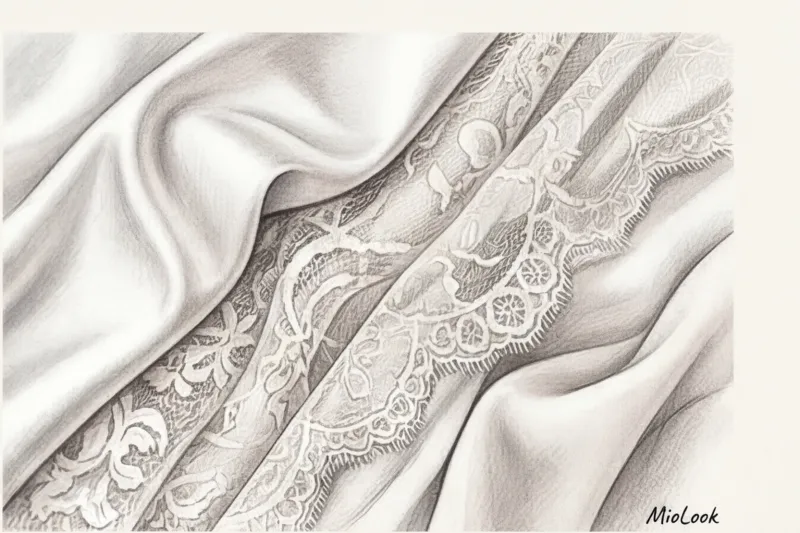
Material isn't just a visual shell; it's the engineering foundation of the cut. Fabric literally dictates form. Take mikado silk, for example. It's an incredibly dense, heavy material with a refined pearlescent sheen, created through a special weave. It maintains a strict, architectural silhouette even without a rigid inner corset. If you're looking for pure, sculptural minimalism that elongates the figure, flowing crepe is your choice. It falls in heavy, matte folds without creating excess volume, but it requires perfect seamless underwear.
For creating airiness without the "meringue cake" effect, weightless silk organza is ideal—it's sheer yet holds its shape perfectly. And taffeta, with its characteristic dry rustle when walking, perfectly holds the intricate asymmetrical draping that's so popular in couture collections right now.
Lace is a particular pet peeve of the perfectionist. The difference between a €900 dress and a €4,500 one often lies in the quality of the lace. The finest French Chantilly lace is created on antique looms. It has a distinctive eyelash-like edge, is soft as a gossamer, and drapes over the shoulders or back like a second skin, creating the illusion of natural shadows.
Contrast this with the stiff polyester guipure often found in mass-market brands. This type of guipure is stiff, scratches the skin mercilessly, and has a completely flat, stamped pattern with no halftones. Real lace should be a tactile pleasure. Try this simple test: squeeze the edge of the lace in your fist. French Chantilly will instantly straighten out without wrinkling, while stiff polyester will retain its wrinkles.
Many brides mistakenly believe that an abundance of lace automatically makes a dress luxurious. In fact, a minimalist dress made of premium crepe will always outshine one completely covered in cheap guipure. When getting ready for a fitting, I strongly recommend creating a mood board of not only silhouettes but also textures. You can use visualization function in the MioLook app To analyze in advance how matte crepe or dense silk will complement your appearance and chosen accessories. Remember the main rule of premium styling: it's better to choose a dress with the most minimalist cut, but made from impeccable, expensive fabric, than a complex, multi-layered design made from a compromised material.
Context is everything: Choosing a dress to suit the occasion
According to a 2023 survey of European wedding agencies, approximately 40% of brides complain of severe physical discomfort on their wedding day. And the reason lies not in the tightness of their corset, but in the colossal dissonance between the design of their gown and the chosen location. We often fall in love with a static image on a runway or mannequin, forgetting to ask ourselves the most important question: where exactly and in what conditions will I spend the next 12 hours?
The scale of the venue literally dictates the volume of your silhouette. A wedding in a historic cathedral with high vaults, frescoes, and a long aisle calls for a correspondingly monumental setting. Royal trains, thick, form-fitting mikado silk, and off-the-shoulder weddings are perfectly appropriate (the rules of appropriateness remain). In the vast stone space, a simple, lingerie-style slip dress would simply be lost, depriving the look of solemnity.
A completely different situation would be an intimate wedding ceremony at City Hall followed by a brunch for 20 people at a restaurant. In such a setting, a full crinoline would look comical and out of place. For an urban setting, I always suggest my clients consider impeccably tailored crisp white tuxedos, midi dresses made of thick crepe, or vintage sheath silhouettes. Elegance here is built on clean lines and premium fabrics, not on volume.
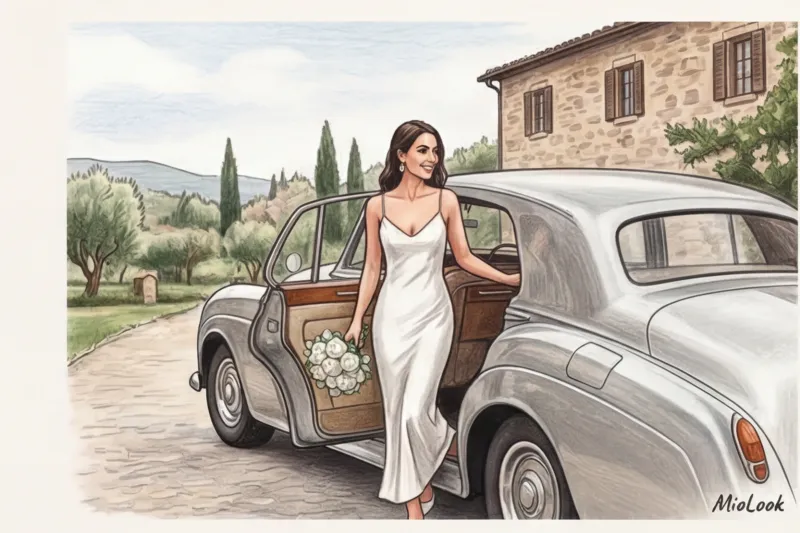
Climate and flooring are two merciless factors that can't be ignored. A wedding at an Italian villa, on a lakeside terrace, or on the seashore involves heat, humidity, and unconventional terrain. Heavy duchesse silk or multi-layered taffeta will turn a summer fairytale into a heatstroke.
One of the most revealing stories in my practice occurred three years ago. A client, against my better judgment, ordered a couture dress with a three-meter-long train of dense cord lace weighing almost 8 kilograms for an outdoor ceremony in the woods. The result was predictable: during the first half hour of the outdoor photo shoot, the train worked like a brush, collecting every pine needle, small branches, and damp earth. The dress gained another couple of kilograms. The bride literally couldn't move without the help of assistants, and the luxurious hem was hopelessly ruined before the reception even began.
For open, natural settings, choose weightless silk organza, flowing chiffon, and lengths that barely touch the ground. Save trains for the marble floors of hotels and palaces.
The Second Dress Concept: Luxury or Necessity?
It's during the banquet planning stage that the concept of a change of look comes into play. Many consider buying a second dress an unnecessary waste of money, but let's be pragmatic. If your main outfit has a complex design, a stiff bodice, or a long train (even if it's buttoned at the back), it will be physically impossible to dance properly in it.
Changing your look before a cake-cutting ceremony or a lively dance routine isn't a whim, but an investment in your comfort and the evening's excitement. Moreover, your second dress doesn't have to cost as much as your first. Excellent party options can be found in the premium and mid-up segments for €300–€500. These could be a daring mini with marabou feathers, a sparkling chainmail dress with sequins, or a stylish silk jumpsuit. The main requirement for this outfit is complete freedom of movement and the ability to wear comfortable shoes without compromising your proportions.
Access to MioLook for €0.99 — one-time payment
Start creating perfect images with the help of artificial intelligence and assemble a honeymoon capsule
Get access — €0.99 onceTry-On: Instructions and Secrets from a Stylist
The owner of one of the oldest bridal boutiques in Milan once shared a professional observation with me: "The worst dresses are bought to the applause of a large entourage." Over the years of working as a personal stylist, I've learned this lesson time and again. The fitting process isn't a champagne party, but an analytical process that requires focus and proper preparation.
Who to take with you to the salon
Skip the idea of inviting your mom, your future mother-in-law, and five girlfriends. The more people in the dressing room, the more polarized opinions will inevitably drown out your own voice. My strict rule for clients: bring a maximum of two people with similar tastes. These should be people who understand your aesthetic and can separate their personal preferences from your goals. If your friend adores puffy ball gowns with rhinestones, she'll subconsciously reject your perfect minimalist silk slip dress simply because "she wouldn't wear that."
Technical base: underwear and footwear
The foundation for a flawless silhouette is laid before you even touch your wedding dress. The most common mistake is showing up to a fitting in contrasting lace lingerie, which shows through delicate fabrics and ruins the visual perception of the cut.
The right lingerie for the salon includes smooth, nude-colored, seamless briefs (ideally laser-cut and a size larger than your usual size to prevent the elastic from pulling on your skin) and high-quality silicone breast pads. Most modern luxury dresses are designed with built-in corset cups or are backless, so your favorite push-up bra will only hinder your ability to appreciate the true fit of the bra.
When it comes to shoes for trying on, the heel height, not the design, is crucial. If you haven't yet bought those €800 shoes, choose any pair with a last identical to the one you'll be wearing at the wedding. The proportions of the dress, the waistline, and especially the hem length are calculated down to the millimeter. Trying on a dress barefoot or in sneakers completely distorts the overall design.
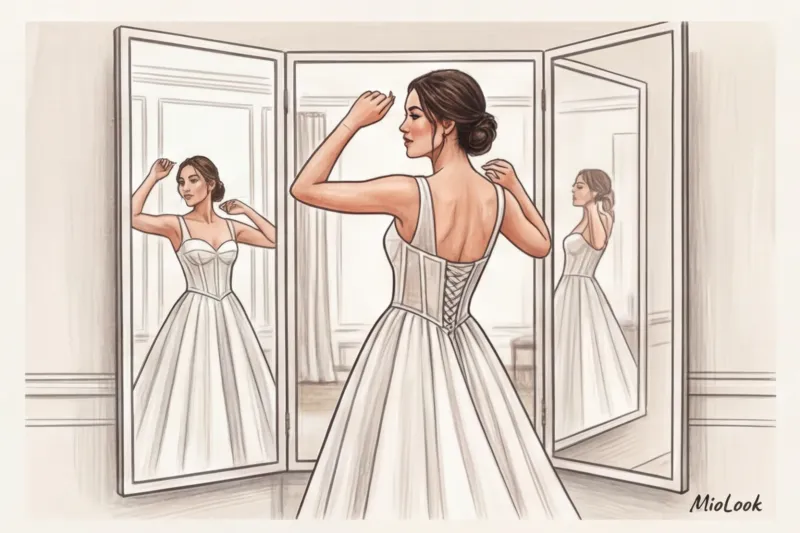
A tough test drive in the fitting room
Never judge a dress only in front of a mirror. You won't be standing at attention for the entire ten-hour ceremony. I always make brides go through a strict inspection process right in the salon:
- Sit on a chair. Preferably on hard furniture that imitates standard banquet furniture.
- Raise your arms as if for a hug. You will have to hug dozens of guests and relatives.
- Try dancing. Take a few active steps, swing from side to side, lift your hem.
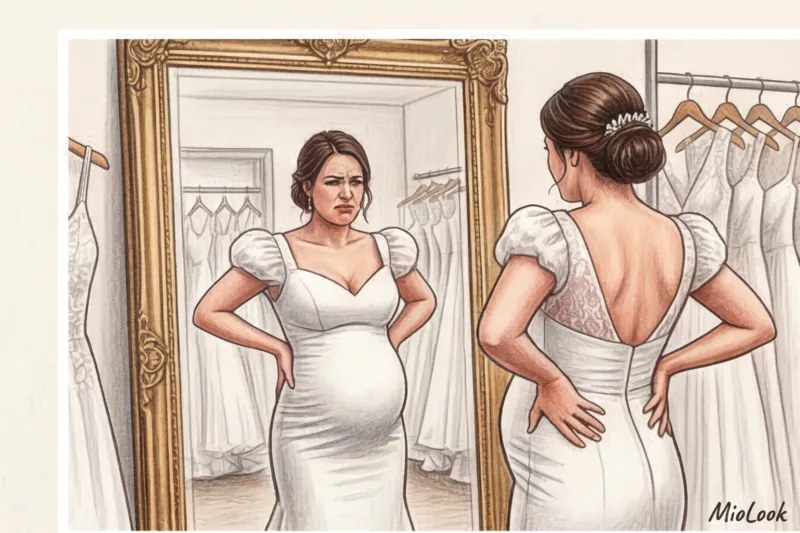
If your corset digs into your ribs when you sit down, cutting off your breathing, or the hard boning digs into your armpits, it's not your dress. No matter how beautiful it is, take it off without a second thought. No amount of aesthetics is worth a holiday ruined by physical pain.
To avoid getting confused by dozens of options after a marathon of salon visits, I recommend taking a photo of each look (be sure to ask to take a photo of you from the back and in motion) and save it in MioLook Using the smart wardrobe feature, you can compare all your favorites with a fresh mind, free from emotions and pressure from consultants. This helps you make an informed decision you won't regret.
Wedding Dress Myths You Should Stop Believing
The most destructive factor in the search for the perfect look isn't a limited budget or the lack of the right size, but ingrained stereotypes. The reality TV and glossy magazine cover industry has created a number of illusions that make women doubt their own choices. Let's examine the main ones from the perspective of common sense and professional styling.
Myth 1: “I’ll buy a size smaller to definitely lose weight for the wedding.”
This is perhaps the most dangerous trap women fall into when they try to use an expensive purchase as a drastic motivator to diet. From the perspective of high sartorial art, the design of a corset and the fit of a bodice are based on strict mathematical calculations.
A skilled tailor can almost always take a finished garment in by one or even two sizes—we simply add the excess volume to the darts and side seams. However, arranging a dress without losing its structural integrity is virtually impossible. Premium brands have minimal seam allowance (usually no more than 1–1.5 cm), and on delicate materials like silk mikado, satin, or crepe, unpicking the factory seams leaves permanent microscopic needle holes.
Buy a dress in your actual size Today If you lose weight, the tailor will carefully adjust it. If your measurements remain the same, you'll avoid panic attacks a week before the ceremony and emergency expenses for complex alterations, which in European ateliers can reach €500–€800.
Myth 2: "If I don't cry in front of the mirror, it's not the right dress."
Television shows have conditioned us to believe that shopping should be accompanied by tears of joy, trembling hands, and moms fainting in the background. In reality, when we're faced with the task of choosing a wedding dress, emotion often gives way to analysis.

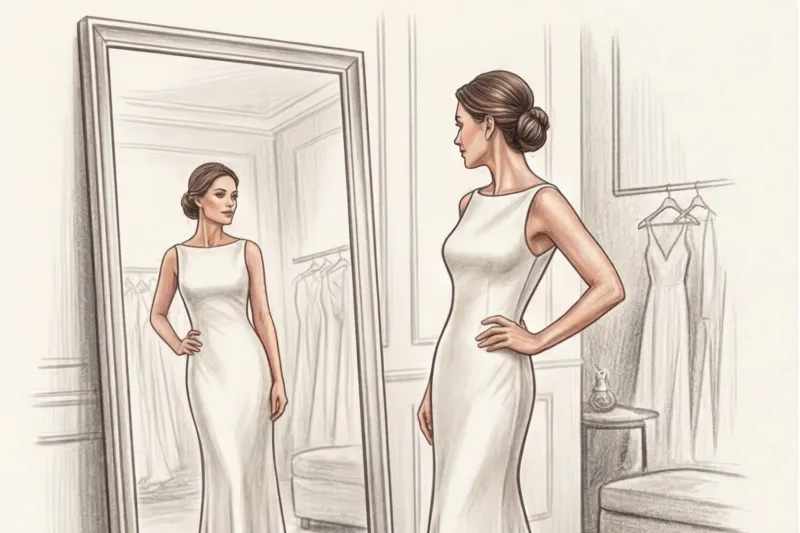
My most discerning clients rarely cry during fittings. More often, they experience a deep, calm satisfaction and confidence: "Yes, this is me, and I look flawless." The absence of tears doesn't mean the outfit doesn't suit you. It simply means your nervous system responds to beauty without theatrical drama. Focus on physical comfort and how your posture changes, not on the moisture in your eyes.
Myth 3: "Dazzling white suits absolutely everyone."
Optically pure white (with a cool bluish undertone) is one of the most insidious shades in coloristics. It's extremely rare in nature, and against its backdrop, even the slightest skin imperfections, redness, or signs of fatigue become more pronounced.
The Pantone Color Institute has repeatedly emphasized in its research that pure optical white absorbs light, while complex, slightly warm shades reflect it, creating the effect of an inner glow on the skin.
This is why global design houses work with a complex palette:
- Ivory: A warm undertone that blends perfectly with most European complexions. It softens facial features and appears in photographs like that "noble white" without being overtly yellow.
- Champagne: It has a subtle golden hue. It looks luxurious on tanned or dark skin, especially when paired with textured lace or beaded embroidery.
- Ecru: The color of unbleached silk or linen with a subtle gray-beige undertone. A choice for intellectuals and fans of vintage aesthetics, it looks stunning in simple silhouettes and dense matte fabrics.
Your ideal image begins Here
Join thousands of users who look flawless every day with MioLook. A smart wardrobe and personalized stylist recommendations are always at your fingertips.
Get access — €0.99 onceBride's Checklist: From Shopping to Day X
The check is stamped, the contract with the boutique is signed, and most women breathe a sigh of relief, considering their mission accomplished. But as a premium styling consultant, I must warn you: the purchase is only the halfway point of your journey. Even if you've thoroughly researched how to choose a wedding dress and found the perfect option, the final result depends on meticulous fitting and expert styling. To ensure you don't miss any crucial details in the pre-wedding rush, I've developed a strict preparation timeline.
Tailor fitting schedule: the three-appointment rule
In the couture ateliers of Paris and Milan, the process of tailoring a garment to your figure is strictly regulated. I recommend adhering to this same standard, no matter where you are:
- First fitting (8-10 weeks): Forming the base. The tailor pins the hem and adjusts the length. Critical condition: You must arrive wearing the same shoes you'll wear on your wedding day, along with the right seamless underwear. Even a 1-centimeter difference in heel height will ruin the silhouette's aesthetic.
- Second fitting (in 3-4 weeks): Working with the corset and bodice. During this period, the bride's weight often fluctuates due to stress. The stylist removes any looseness in the neckline or, conversely, releases millimeters of fabric to allow for greater breathing.
- Final control (7-10 days): Dress rehearsal. The dress should fit like a second skin, without requiring any tugging while walking.
Choosing a veil, jewelry, and hair accessories
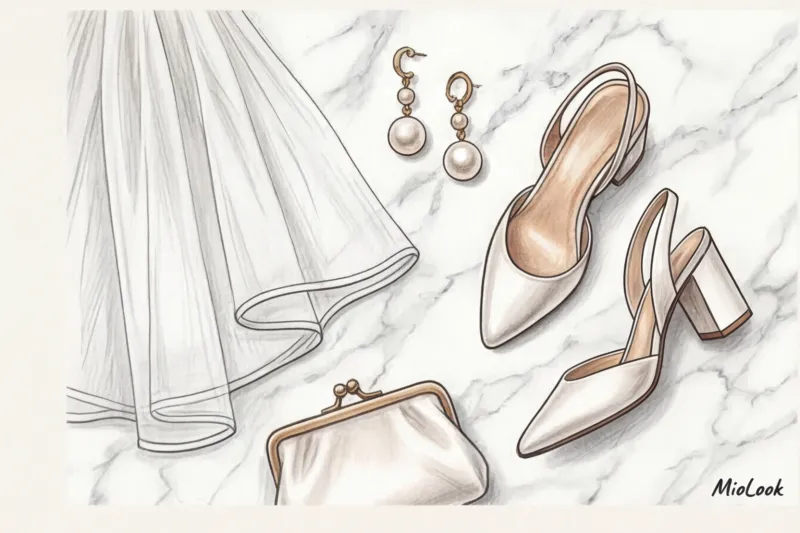
The style of accessories follows the rule of visual balance. If your dress is richly embellished with French lace or beaded, the veil should be completely invisible—made of the finest silk tulle with a raw edge. Conversely, a minimalist slip dress made of thick crepe makes a perfect canvas for a statement Spanish veil or an intricate pearl tiara.
To avoid buying dozens of hairpins and earrings blindly, I advise my clients to digitalize the process. Upload a photo of the final fitting to MioLook — The app lets you visually assemble a complete look by layering different jewelry options to assess proportions before making an actual purchase.
Preparing the dress the day before: steaming and transporting
You should pick up your dress from the salon only in a tight, breathable case (fabric, never plastic, as it could suffocate and turn yellow). But the biggest test awaits you on the morning of the big day.
My top tip, which has saved dozens of brides' nerves (and dresses), is to budget €100-€150 for a professional steamer to come to your hotel.
Different textures require radically different temperature settings. Fine mikado silk and heavy satin absolutely cannot stand the wet drops from handheld steamers—the water leaves permanent marks on them. These fabrics should be ironed dry, inside out, on a special ironing block. Multilayered tulle, organza, and chiffon, on the other hand, require a powerful, targeted stream of steam to create the desired airiness. Entrust this fabric chemistry to a specialist so the bride's morning begins with a glass of champagne, not panic over a ruined hem.
The Life of a Dress After the Wedding: An Investment Approach
Buying a €3,000 or €5,000 dress for ten hours of wear is a concept that seems hopelessly outdated in the age of sustainable consumption. As an investment wardrobe expert, I encourage my clients to view their wedding attire not as a disposable accessory, but as a valuable asset. Your task is not just to understand how to choose a wedding dress, but also to consider its lifespan after the final toasts have been sung.
The first and most critical stage of this cycle occurs the morning after the celebration. Professional dry cleaning must be performed strictly within the first 48 hours. Why is this timing so important? It's because of the organic chemistry of fabrics. Invisible splashes of champagne, microscopic drops of sweat, or perfume particles contain sugars and proteins. They remain on the surface for two days, but then a process of crystallization and deep oxidation begins. Within a week, a clear drop of prosecco will turn into a persistent yellow stain on French silk, which no gentle solvent will remove. My strong advice: arrange in advance for a premium dry cleaner to pick up the trunk directly from your hotel while you enjoy your first breakfast together.
The second aspect concerns the physics of materials. Storing a heavy embroidered dress or a gown with a voluminous train on regular hangers is a fatal mistake that will ruin the cut's design. Under the constant influence of gravity, the fabric (especially heavy crepe or satin cut on the bias) will inevitably begin to stretch. Corset seams will become deformed, and thin straps can stretch several centimeters in just a year. Such garments should be stored horizontally only. Invest 50–70 euros in a special museum-grade preservation box and interleave each fold with acid-free tissue paper—this is the only way to prevent the silk threads from yellowing and losing their pristine strength.
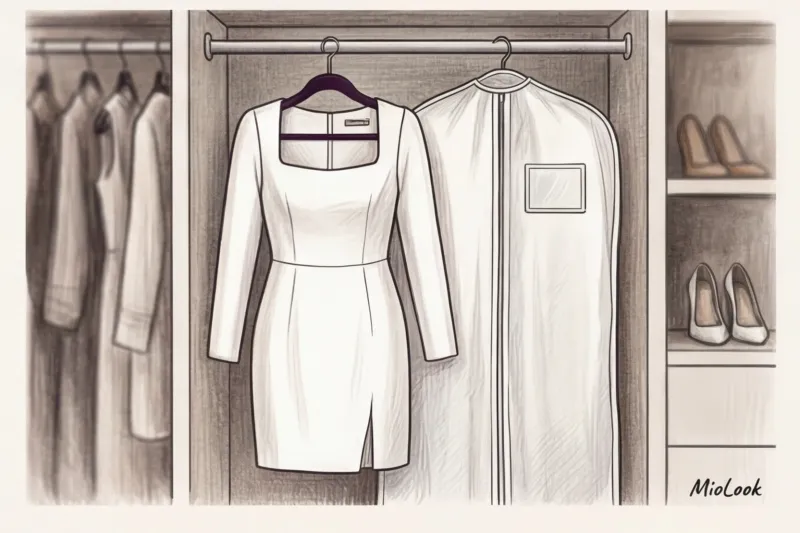
But the pinnacle of a conscious approach is transformation. If you initially opt for a minimalist design and premium fabrics, dozens of scenarios open up. Think of a classic, premium slip dress in thick silk charmeuse. On your wedding day, it pairs flawlessly with a long veil and statement jewelry, and a year later, it becomes the perfect choice for an anniversary celebration—just throw on a voluminous, menswear-inspired cashmere blazer or a textured sweater.
More complex architectural designs can also be reimagined. An experienced tailor can easily remove a heavy train and shorten an A-line skirt to an elegant midi length. For example, dense mikado silk retains its shape perfectly even after a radical length change, transforming a formal gown into a luxurious cocktail dress for social events or the opera. Some of my clients go even further and have their silk garments professionally dyed in deep black, emerald, or burgundy shades.
When you give things a second life, be sure to digitize it. By uploading the updated outfit to MioLook , you can easily integrate it into everyday capsule collections, track your cost-per-wear, and create fresh combinations with your existing jackets, shoes, and accessories.
Ultimately, the perfect wedding dress isn't one that becomes a museum piece for just one day. It's an impeccably tailored piece that gives you absolute confidence at the altar and continues to enhance your personal style for years to come.
Ready to get started?
Try the free plan—no strings attached. Create your perfect wardrobe today.
Get access — €0.99 onceGuide Chapters
What to Bring to a Wedding Dress Try-On: A Checklist
The first dress fitting isn't a Hollywood movie, but an important strategic meeting. We'll tell you how to prepare properly and avoid common mistakes brides make.
How to Choose a Maternity Wedding Dress: A Guide
A changing figure isn't a problem, but a beautiful challenge. Learn how to find the perfect balance between style and comfort for a pregnant bride.
Minimalist Wedding Dress: Quiet Luxury
Why is true minimalism in wedding fashion rarely cheap? We explore the "quiet luxury" style and the main mistakes when choosing a minimalist dress.
Women's pantsuit for the bride at a wedding: how to choose
A white pantsuit is a bold and stylish alternative to a wedding dress. Learn how to avoid the "office worker" look and find the perfect cut for your wedding.
Wedding Dress Rental: Is It Worth It? Pros and Cons
Buy cheap or rent luxury? We explore the pros, cons, and pitfalls of wedding dress rental with a professional stylist.
How to choose the color of a wedding dress based on your color type
A crisp white dress can highlight skin imperfections and make your face look tired. Learn how to choose the perfect wedding dress shade that will make you glow.
Boho Wedding Dress: How to Choose the Perfect Outfit
True boho style isn't about trying to save money, but rather intricate design and premium fabrics. Learn how to choose the perfect bohemian outfit and avoid disappointment.
Short wedding dresses: who suits them and how to style them
A short wedding dress isn't just a backup option for the registry office; it's truly couture. Learn how to choose and style the perfect mini.
Winter wedding dress: fabrics, styles, and insulation
Choosing a winter wedding dress requires a special approach to fabrics and layering. We'll tell you how to look flawless and stay warm on your big day.
Summer Wedding Dress: How to Choose an Outfit for the Heat
The perfect bridal outfit for the hot season isn't just about beauty, it's also about proper heat management. Learn how to choose a dress that will keep you comfortable even at 30°C.
Wedding dresses for women over 40: status looks
The perfect wedding look for those over 40 is a manifestation of impeccable taste and classy minimalism. Forget about voluminous tulle and learn how to highlight your elegance.
Who suits a mermaid wedding dress: stylist advice
Glossy magazines convince you that the mermaid silhouette is only for the perfect figure. We'll debunk this myth and tell you how to choose a truly comfortable dress.
Wedding Dresses: Selection Guidelines and Closed Styles
How to choose a church attire that's beautiful, comfortable, and ceremonial? We explore a smart approach to a wedding look without buying boring, high-necked dresses.
Try on a wedding dress online: choose a style with AI
AI-powered virtual fittings are the new standard for wedding preparation. Learn how to save time and stress by eliminating unsuitable styles before you even get to the salon.
Plus-size wedding dresses: how to choose the perfect style
Choosing a plus-size dress is a matter of the right fabric, not the magic of shapewear. Learn how to find your perfect wedding dress without tears and disappointment.
Wedding Dresses: Stylish Alternatives
A classic wedding dress for one day or a stylish outfit you can wear for years? We'll explain how to choose the perfect look for an intimate wedding.
Wedding dresses for petite women: stylist's secrets
Forget the stereotypes of wedding fashion for petite brides. Learn how to use proportional engineering to choose a dress that will visually elongate your silhouette.