Every May, it's like Groundhog Day in my work messenger. Clients send photos of tags proudly labeled "100% cotton" and complain, "Katarzyna, why am I sweating in this shirt like I'm in a sauna? It's natural fabric!"
We are used to blindly trusting the composition. When choosing breathable fabrics for summer clothing , most women search for the coveted word "cotton" or "linen," ignoring the physics of the materials. I wrote more about how marketers confuse us in The complete guide to reading clothing composition , but today we will talk exclusively about summer wardrobe.
In 12 years of working as a personal stylist, I've learned one thing: thick, natural cotton can be your worst enemy in July, while modern synthetics can be your best friend. Let's figure out how to avoid getting caught up in your own stylish look.
Why 100% cotton can be hot: the main myth of summer wardrobes
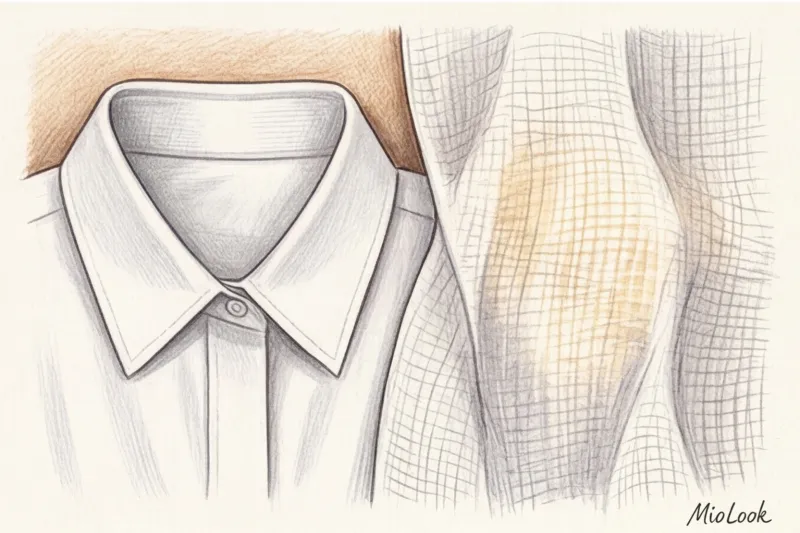
Let's start with my pet peeve: men's shirts. Many women (myself included) love buying men's shirts from Zara or Massimo Dutti to create the perfect, architecturally oversized look. They hold their shape perfectly. But have you ever wondered why?
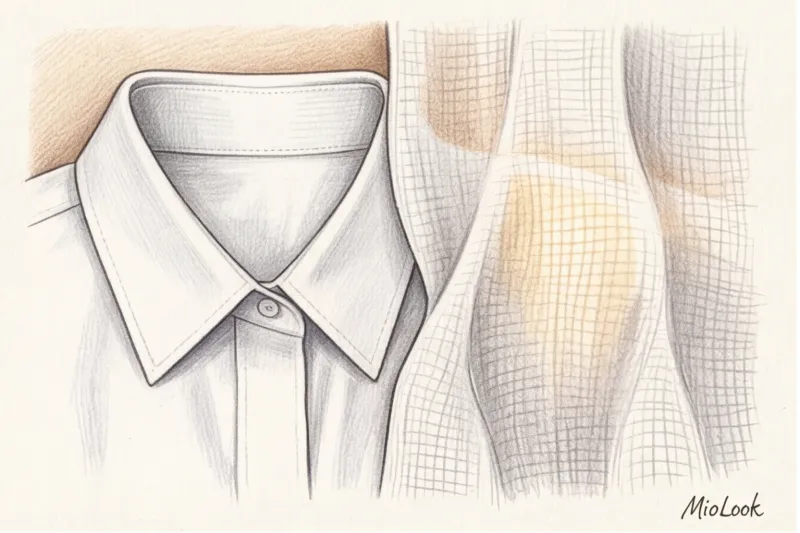
Because of its density and tight weave. Cotton is just the raw material. But poplin, denim, cambric, or gauze are the way the threads are woven together. If you wear a shirt made of dense poplin, the threads are so tightly packed together that there are no micro-gaps for air to circulate. The fabric absorbs sweat but doesn't release it. It gets wet, becomes heavy, clings to your back, and begins to act like a greenhouse.
In the textile industry, there's an important metric called GSM (grams per square meter). The ideal fabric weight for hot summers should be between 80 and 150 g/m². Anything above 180 g/m² (classic basic t-shirts, heavy shirts) should be left for September.
Weave is more important than composition: what to look for on hangers
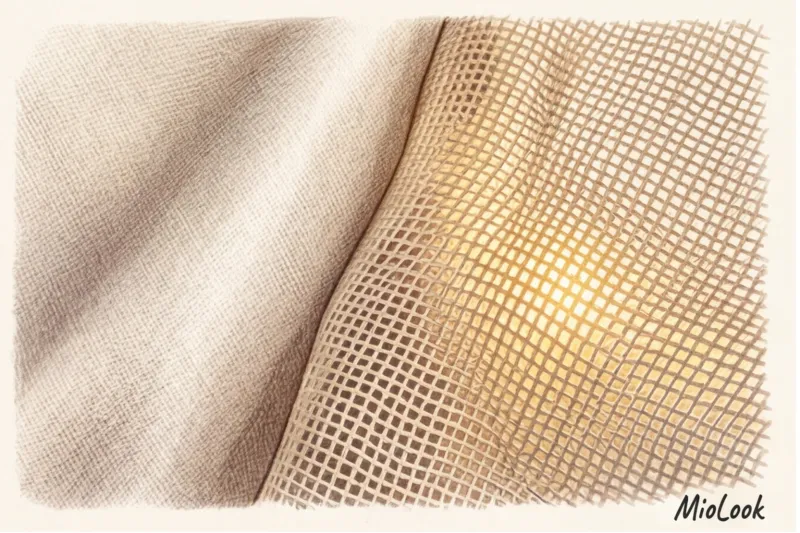
How can you visually distinguish breathable cotton from dull cotton if you don't carry a fabric scale? Look for a loose weave. In summer, your best friends are muslin (a crinkled double-layer fabric), seersucker (a finely striped fabric with a crinkled texture), and fine batiste. If you look at such a garment, you'll literally see the microscopic holes between the threads. This is how hot air escapes from your body.
Access to MioLook for €0.99 — one-time payment
A smart AI stylist will select the perfect look for a hot day from your clothes.
Get access — €0.99 onceNatural Breathable Fabrics for Summer Clothing: My Top 3
If you need to be careful with cotton, which natural materials should you choose? Here are my top three tried-and-true favorites.
1. Flax: the king of summer. I know what's stopping you. "But it wrinkles as soon as I get in the car!" Yes, it does. And that's part of its bourgeois chic. A slight wrinkle in high-quality linen isn't sloppiness; it's a sign of status. It tells you you're wearing an expensive, natural item, not a plastic imitation. To make linen less itchy and flow better, look for blends: linen with 10-15% viscose or silk will perform perfectly.

2. Ramie (Chinese nettle). This is my secret favorite, and I've converted a good half of my clients to it. Brands like &OtherStories and COS adore ramie. Visually, the fabric resembles linen, but has a subtle, refined sheen and holds its shape much better. Furthermore, nettle fibers have natural antibacterial properties, meaning sweat odor develops much more slowly in these garments.
3. Silk. Beautiful, flowing, luxurious... but tricky. I highly recommend saving silk slip dresses for evening wear. In the daytime heat, natural silk is a traitor. One spot of sweat under the arms or on the back, and the fabric instantly darkens, revealing everything. Silk is not suitable for the daytime heat.

Artificial but not synthetic: viscose, lyocell, cupro
This is where the biggest misconception lies. Many women see "viscose" or "lyocell" on the label and cringe in disgust: "Synthetics!" No. These are artificial fabrics made from natural materials (wood pulp, eucalyptus, cotton). They breathe just as well, and sometimes even better, than natural ones.
Let's look at the numbers. According to research by the textile company Lenzing (a leader in innovative fiber production), Tencel fibers (commercially known as lyocell) absorb moisture 50% more effectively than cotton. Moreover, lyocell has an incredible cooling effect—when you put on a lyocell shirt, you literally feel a drop in skin temperature.
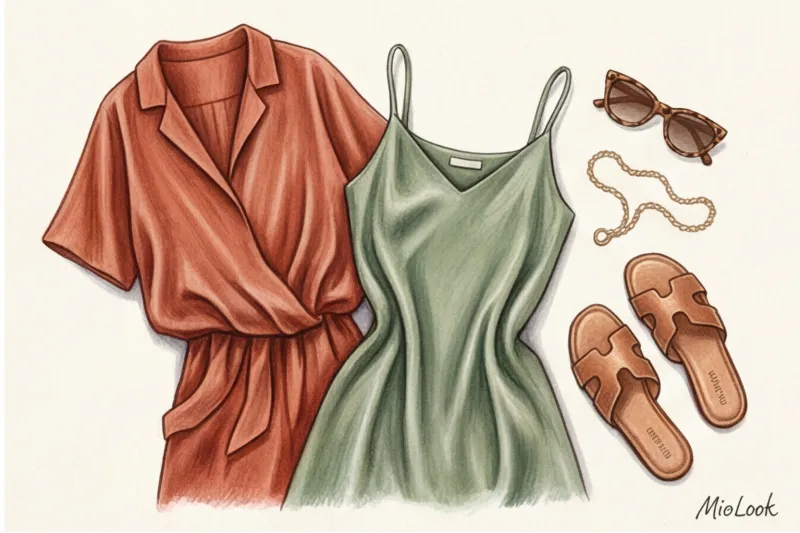
Cupro — another gem. It's called "vegan silk." It's made from cotton fluff and has a stunning, flowing texture. Compare a basic summer dress from H&M (made of cheap viscose that shrinks a size after the first wash and wrinkles horribly when wet) with a cupro dress from Massimo Dutti. The price difference is 40-50 euros, but you can wear the cupro dress for five seasons without losing its luster.
"The main rule for caring for viscose and lyocell: they lose up to 30% of their strength when wet. Never wring them out after washing, otherwise they will become permanently misshapen."
Your perfect wardrobe starts here.
Join thousands of users who look flawless every day with MioLook. Upload your summer items and create capsule collections in one click.
Get access — €0.99 onceHigh-tech synthetics: when polyester is good
And now for a counterintuitive fact that often sparks debate in my workshops. Synthetics aren't always a bad thing in the summer. If polyester is an absolute evil, why don't professional tennis players and marathon runners compete in 100% cotton?
The answer lies in technology. Cheap, mass-market polyester simply blocks moisture. But high-tech polyester (for example, the Japanese fabrics used by modern, minimalist brands) works by wicking moisture. The fibers contain microchannels that instantly draw sweat away from the skin and transport it to the surface of the fabric, where it evaporates.

As the McKinsey State of Fashion (2024) report notes, the line between sportswear and casual wear is blurring. Modern blouses made from "smart" polyester are wrinkle-resistant, breathable, and indispensable for summer business trips. How can you tell them apart? Purely by touch. Smart synthetics feel dry, silky, or slightly powdery. Cheaper ones are slippery, squeaky, and "glassy."
Sauna Fabrics: What to Put Out of Your Closet Before September
To make room for the right things, you need to ruthlessly eliminate the pests. During a recent wardrobe review, a client and I threw out five chiffon dresses from the summer sales. They were impossible to wear outside for more than ten minutes. Here's your stop list for temperatures above 25°C:
- Acrylic. Even if it's a trendy bohemian crochet top with huge holes, acrylic is plastic. Knitted plastic is still plastic. You'll sweat where the yarn touches your skin.
- Cheap polyester and nylon. Those flowing dresses for 15 euros. They create a greenhouse-like microclimate.
- Thick elastane. Save tight synthetic cycling shorts and crop tops for the air-conditioned gym. In the city, they interfere with body heat.
A stylist's checklist: how to check fabric right in the fitting room
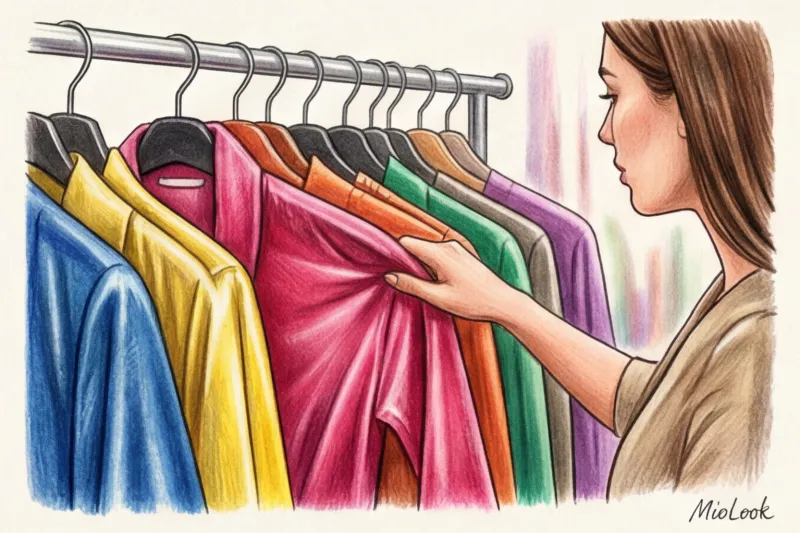
Theory is great, but how do you put it into practice? I teach my clients to take three quick tests right in the store, before they go to the checkout.
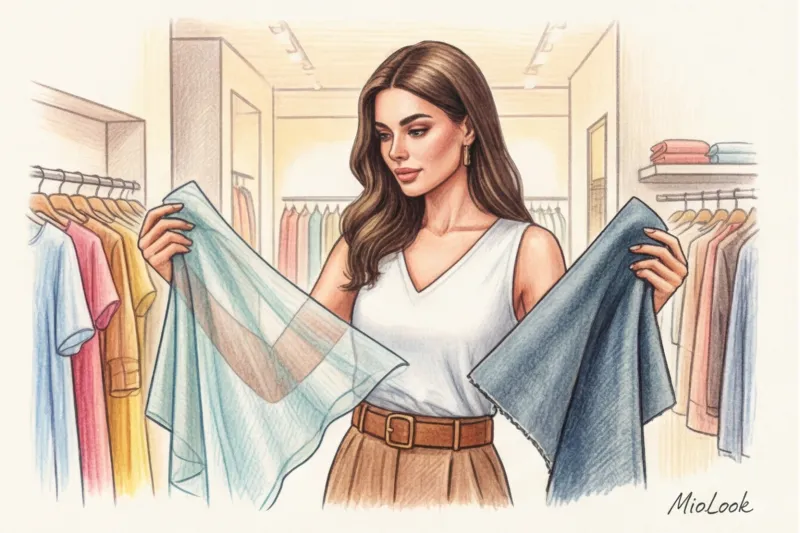
- Translucent test (my favorite). Take the item and look through it at the fitting room lamp (or turn on the flashlight on your phone). If the light passes through easily and you can see the structure of the threads, the fabric will breathe. If the light is blocked, you'll be hot.
- Fist crumple test. Squeeze the edge of the fabric in your fist for 10 seconds, then release. If the fabric remains crumpled and papery (like cheap viscose), consider whether you're ready to iron it constantly. If the creases come back smoothly, the item is fine.
- Tactile test on the wrist. Place the cloth on the inside of your wrist (the skin there is most sensitive). If you feel a slight coolness, take it. If the cloth immediately feels warm or prickly, leave it in the store.
- The 20% rule. When reading the label of a basic summer item, make sure there are no more than 20% synthetic additives (polyester, acrylic). These are needed for durability, but any higher percentage will impair breathability.
Summary: Putting together the perfect summer capsule
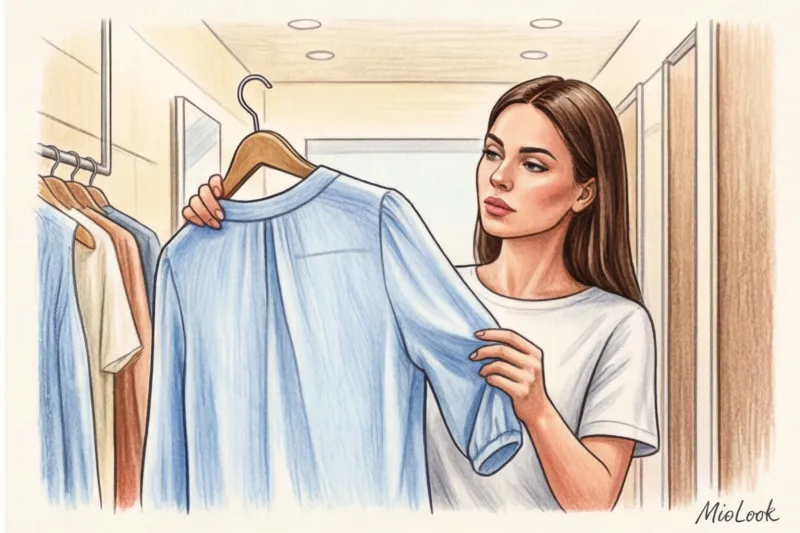
The perfect summer wardrobe isn't 50 cheap T-shirts, but 15-20 pieces made from the right materials that coordinate perfectly. My formula for balance looks like this:
- 40% - linen and the right cotton (muslin, seersucker) for relaxed looks.
- 40% lyocell, cupro and high-quality viscose for flowing silhouettes and a cool effect.
- 20% - high-tech blended fabrics for structured items (jackets, trousers) that need to hold their shape in the office.
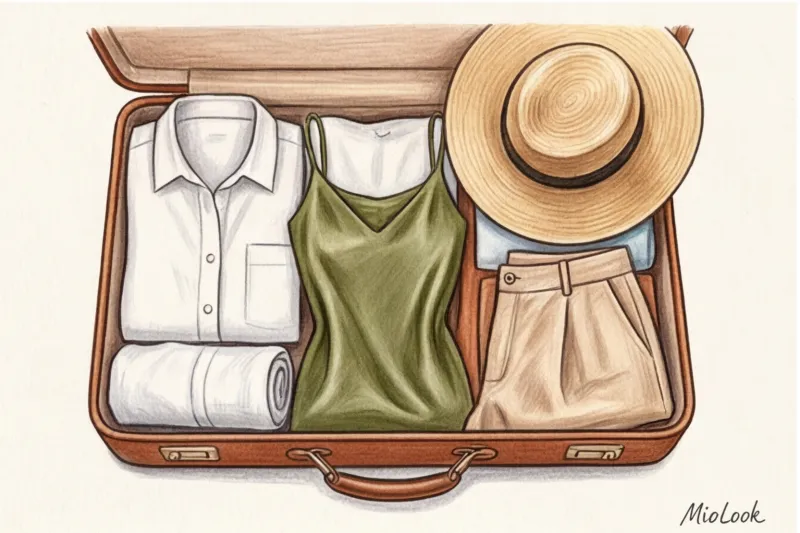
Invest in quality fabrics, not in the quantity of fleeting trends. Managing such a wardrobe is much easier, especially if you digitize it. I always recommend uploading your summer finds to MioLook The app will help you create dozens of fresh combinations from what you already own, and you'll definitely never forget that perfect cupro dress hanging in the back of your closet. Choose wisely, hold it up to the light, and enjoy summer without any discomfort!