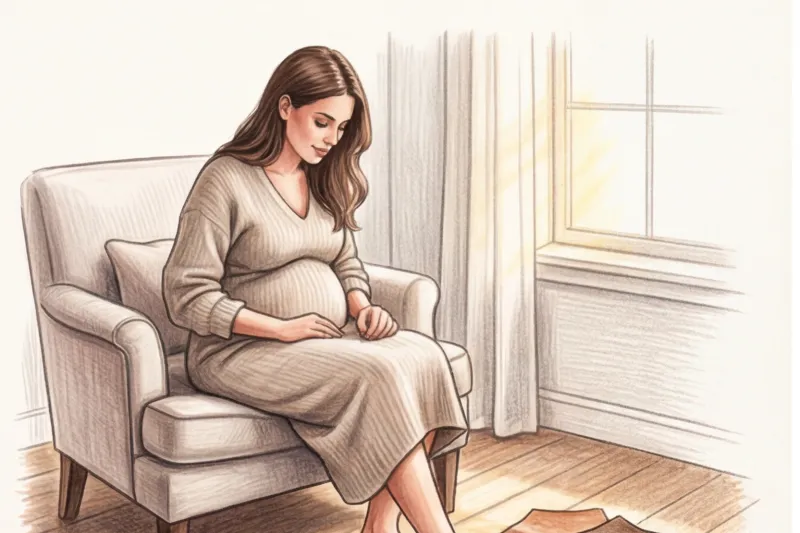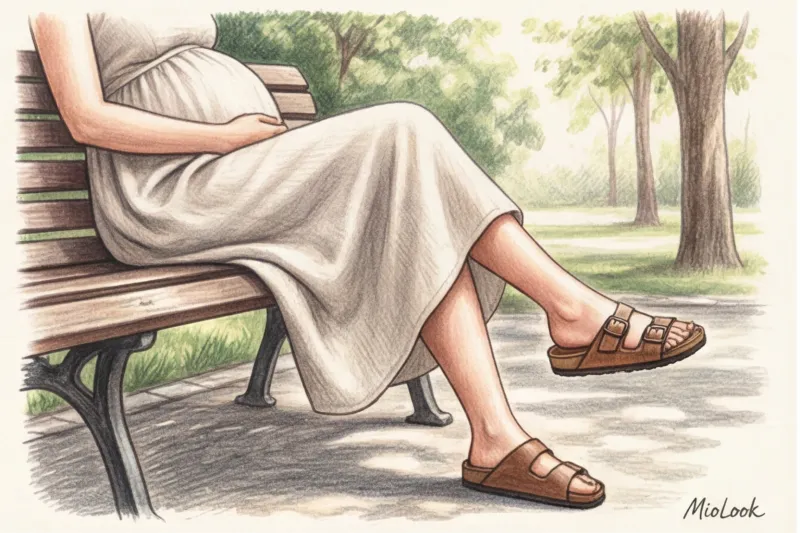
It's July, the asphalt is scorching hot, and it's 30°C in the shade. My client Anna, seven months pregnant, sits down on a park bench and tearfully confesses, "I'm ready to go home barefoot. My favorite sandals have turned into Spanish boots." They fit perfectly in the morning, but by three o'clock in the afternoon, the straps have dug into her skin, leaving deep red grooves. Sound familiar? Choosing a wardrobe during this period is a real challenge, but choosing the right ones is key. summer shoes for pregnant women determines whether you end the day with an easy walk or with heaviness and pain in your lower back.
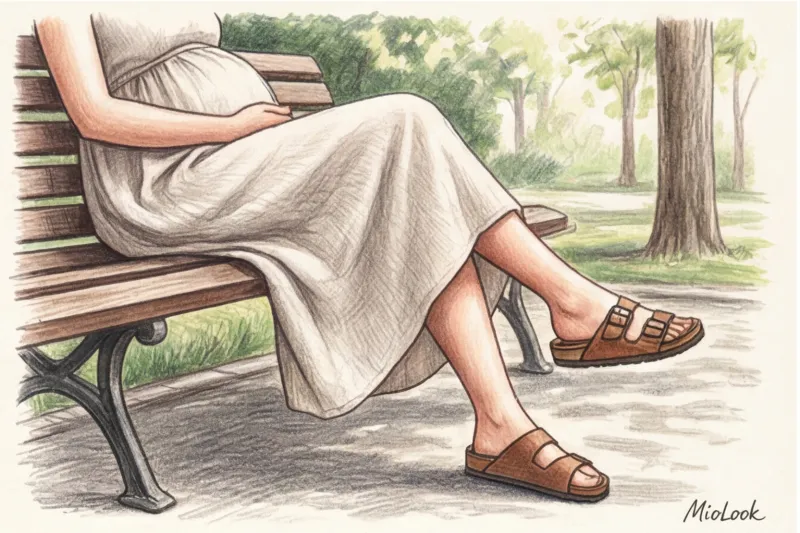
We discussed the basic medical aspects in more detail in our The complete guide to comfortable shoes during pregnancy Here, we'll focus specifically on the hot season: how the textile, insole, and biomechanics of the shoe last react to the combination of high temperatures and hormonal changes. Forget the advice to "just wear flat flip-flops"—we'll now examine why they can become your worst enemy.
The Anatomy of Summer Puffiness: Why "Just Buying a Size Up" Doesn't Work
In my experience, eight out of ten expectant mothers make the same mistake before summer starts—they simply go to the store and buy their usual style, but a size or two too big. Spoiler alert: this ends with sore heels and the risk of falling.
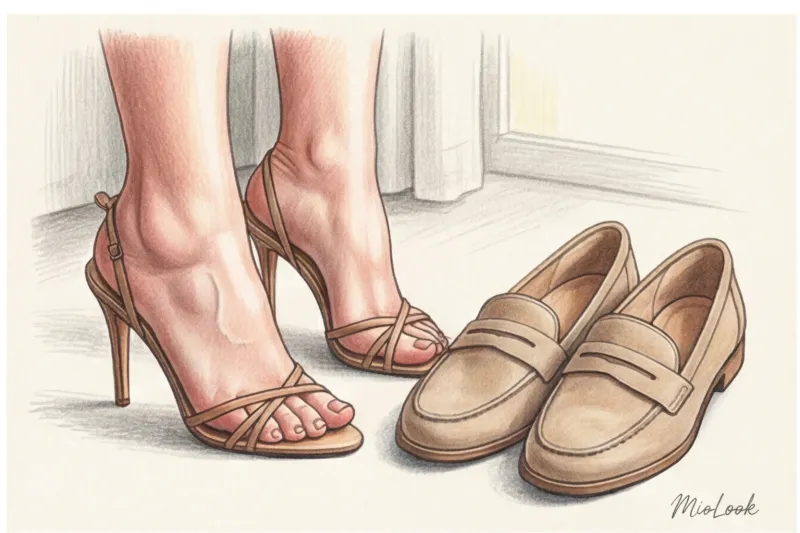
Let's look at the physiology. According to the American College of Foot and Ankle Surgeons (ACFAS, 2023), during pregnancy, the body actively produces the hormone relaxin. Its purpose is to relax the pelvic ligaments in preparation for childbirth. But relaxin doesn't act selectively. It relaxes completely. All Ligaments in the body, including the ligamentous apparatus of the foot. The arch of the foot flattens ("sags"), causing the foot to become wider. Add to this the summer heat, which causes blood vessels to dilate (vasodilation), and by the third trimester, the foot's volume can increase by 5-8% by evening.
Why are shoes with room for space a bad idea? The foot lengthens slightly, spreading outward. Buying a size 39 instead of a size 38 gives you an extra centimeter at the toe. With your center of gravity shifted due to your stomach, this extra centimeter is the perfect opportunity to trip on level ground. You don't need shoes that are longer, but rather ones with adjustable width.
Maternity Sandals: Orthopedics Disguised as Trends
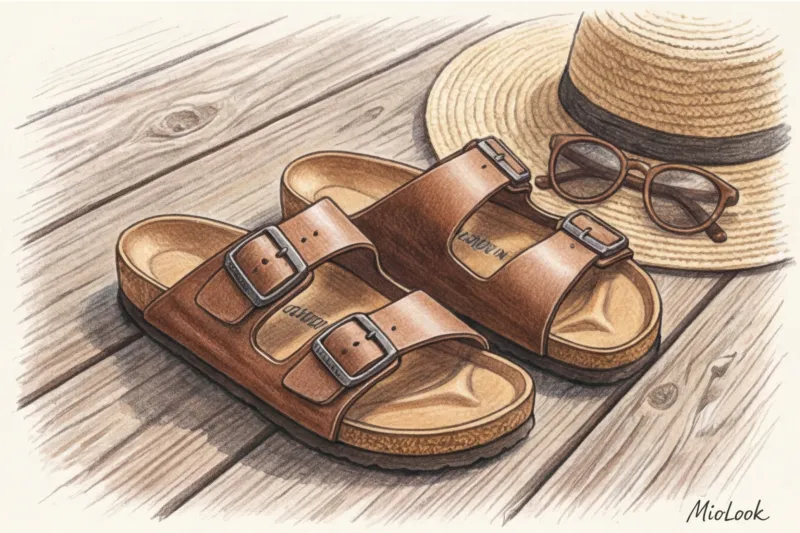
The ideal summer footwear for pregnant women should adapt to you, not the other way around. A staple of any summer wardrobe is a cork footbed sandal. Unlike cheap polyurethane foam, which simply collapses under your weight within a couple of weeks, natural cork works like a smart material.
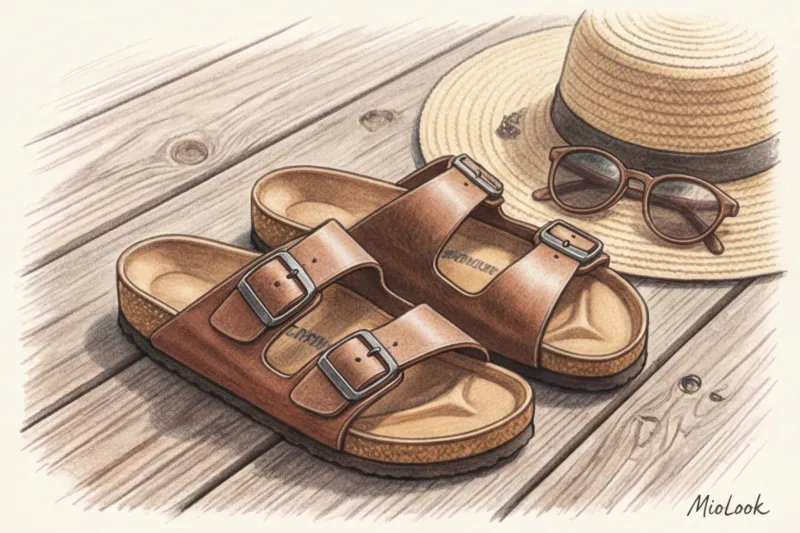
Under the influence of your body heat (and the pressure of your weight), the cork gradually compresses, forming a precise 3D mold of your foot. It supports the arch, loosened by relaxin, preventing it from collapsing. The lifespan of high-quality shoes with a cork insole (in the €80–€150 price range) is measured in years—they adapt to you within 1–2 weeks of wear and serve you well after childbirth.
The second critical factor is adjustable upper elements. Velcro or metal buckles allow you to loosen the tension precisely at 4:00 PM, when your feet begin to swell. Solid leather straps without elastic are strictly contraindicated during this period.
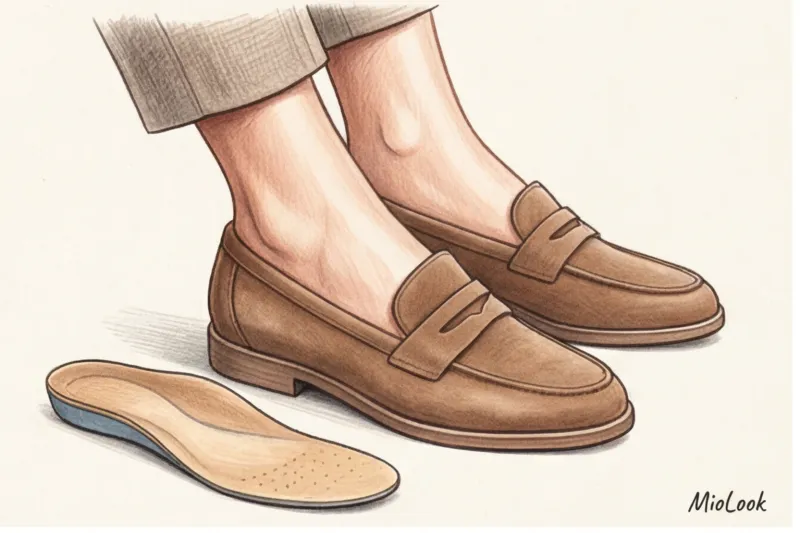
Anatomical insole versus a completely flat sole
"The worst thing you can do for your feet in the summer of your third trimester is to wear flat ballet flats with cardboard soles or thin rubber flip-flops."
This is the most common misconception: since heels are forbidden, a completely flat sole (zero drop) is required. In fact, shoes without a minimal drop cause tremendous strain on the Achilles tendon and trigger plantar fasciitis. A micro heel (1.5–2.5 cm) or a light wedge in an anatomical sandal relieves this strain by transferring some of the weight off the heels, which are already under pressure from the changed center of gravity.
Access to MioLook for €0.99 — one-time payment
A smart AI stylist will choose the perfect look for you and suggest what to wear with anatomical sandals.
Get access — €0.99 onceFlip-flops and mules: how to avoid the "flop" effect and injuries
Classic flip-flops with a bridge between the toes are dangerous for expectant mothers. Let me explain from a biomechanical perspective: in flip-flops, your toes reflexively curl with each step, trying to grip the sole. This micro-motion, repeated thousands of times during a walk, causes calf muscle spasms and aggravates night cramps.
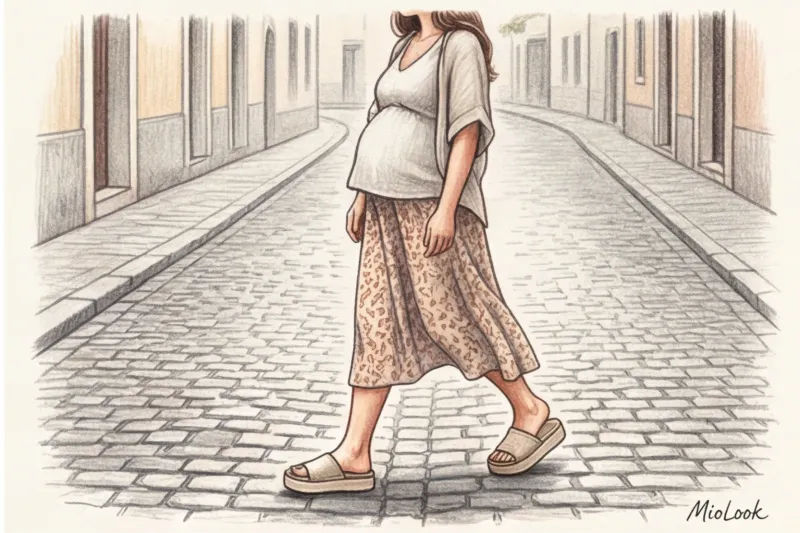
Does this mean giving up on mules? No. An alternative is recovery slides. Originally designed for marathon runners after races, they feature a deep heel cup. The heel sinks into the sole, providing support at the sides, so your toes don't have to dig into the shoe. Yes, they have some stylistic limitations (they're NOT suitable for evening wear or a strict office dress code), but for city walks and trips to the clinic, they're unrivaled.
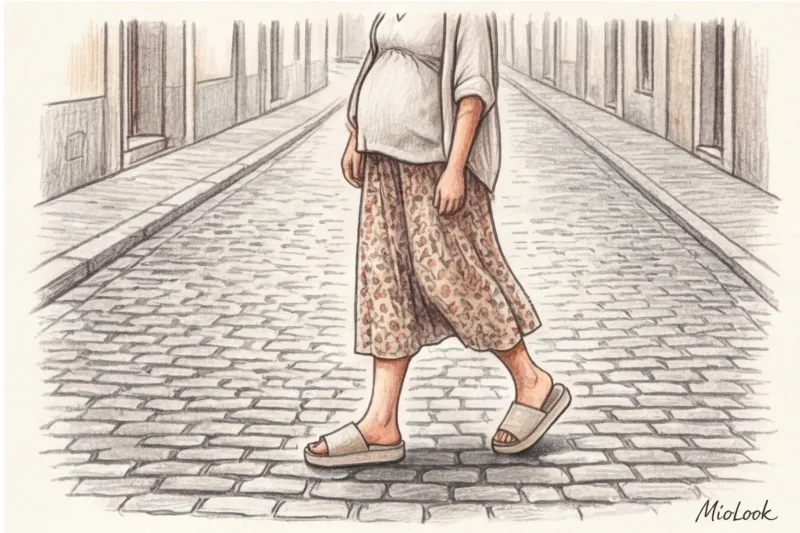
If you prefer leather mules, always check the instep area. Look for models with hidden elastic inserts (small bands at the base of the vamp) – these will provide that vital 5-7 millimeters of freedom to avoid evening swelling.
Espadrilles: Breathable jute or a foot trap?
As a fabric expert, I adore espadrilles. The natural cotton canvas (approximately 200 g/m²) combined with the jute sole provides excellent temperature regulation. They keep your feet from sweating. However, for pregnant women, classic espadrilles pose a hidden danger.
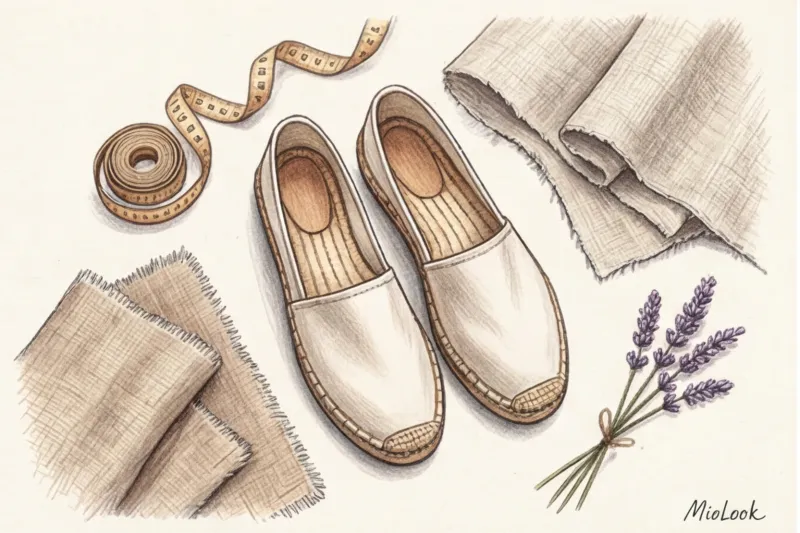
A stiff, closed toe made of thick fabric has absolutely no stretch. When your toes swell, the tight toe cap feels like a squeeze. What to do? Choose open-toe shoes (with ties around the ankle if they're soft) or espadrille mules.
My professional test: Always check the insole and the sole joint. Cheap mass-market alternatives (under €40) often imitate jute by simply gluing a straw strip along the edge of the rubber sole with a thick layer of synthetic glue. This glue completely blocks the micropores of the fabric, creating a greenhouse effect. Real espadrilles are stitched with strong thread, and the jute comes into direct contact with the foot or a thin leather half-insole.
Your perfect wardrobe starts here.
Join thousands of users who create stylish capsule collections in one click with MioLook.
Get access — €0.99 onceA Stylist's Checklist: How to Test Summer Shoes in the Store
I always give my pregnant clients a clear procedure for testing summer shoes. Don't rely solely on trying them on in front of a mirror. Use this three-step test:
- Time rule: Never buy shoes in the morning. Try them on after 4:00 PM, when your feet reach their maximum daily volume.
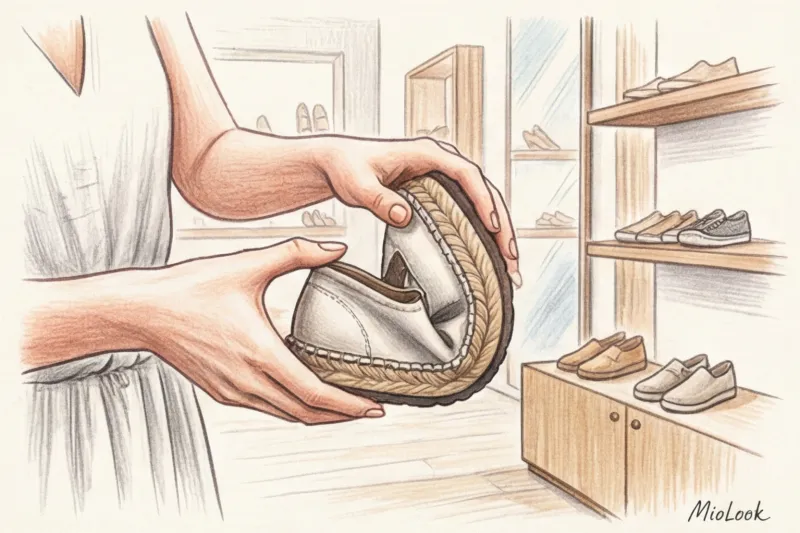
- Twist test: Take the sandal with both hands and try to bend it. The correct sole is flexible. only in the toe part (where your toes naturally bend as you step). If the shoe easily twists in half right down the center, like a sponge, it won't provide any support for the relaxed arch of your foot.
- Friction test: Run your fingers along all the internal seams. Look for any stiff nylon threads, protruding leather edges, or glue spots. What seems like a slight roughness when trying on the garment will, after an hour of walking in the heat, be worn away by the swollen skin and blood.
How to incorporate the right summer shoes into a stylish wardrobe
Many people fear that orthopedic sandals will make them look like a "tired summer resident." This is a myth. Today, chunky sandals like Birkenstocks and Suicokes are the foundation of trendy urban style. Their rugged shape contrasts beautifully with feminine textures.
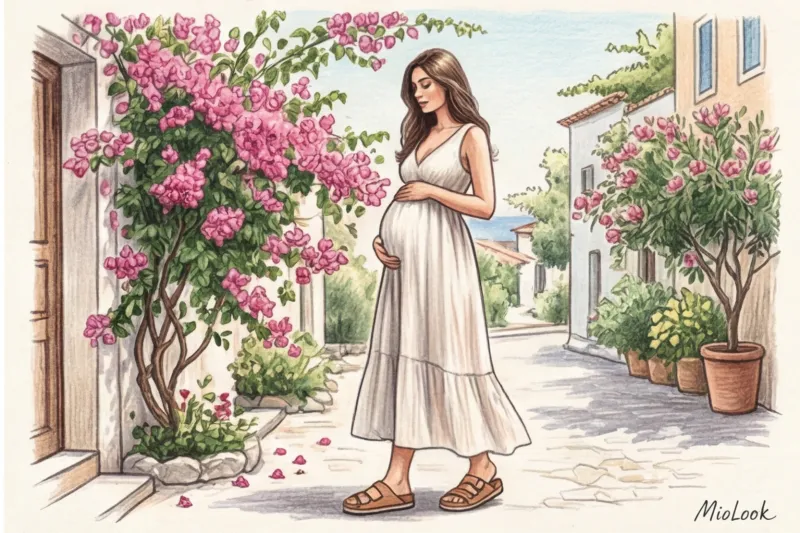
Wear them with silk midi slip dresses or roomy two-piece suits in softened linen. The contrast between the delicate, flowing fabric and chunky shoes accentuates the fragility of your ankles. By the way, if you're unsure how to pair your pre-pregnancy clothes with your new shoes, upload a photo of your wardrobe to MioLook — the app will help you create stylish outfits from what's already hanging in your closet.
A little secret of visual correction: If your feet swell significantly, avoid shoes with black or contrasting thin straps. They visually "cut" your feet like sausage, accentuating the swelling. Choose metallic shades (gold, silver) or nude tones that blend with your skin. They act as a highlighter, visually lightening your lower body.
Summer comfort during pregnancy doesn't require sacrificing style. Forgo flat elastics for anatomical cork, pay attention to the chemical composition of the adhesive in fabric shoes, and don't forget to try them on in the evening. Your shoes should work for you, absorbing the strain so you can enjoy this wonderful, albeit challenging, time of life.