How many times have you blamed your figure while standing in front of the fitting room mirror? Your coat doesn't fit at the chest, but hangs treacherously loosely on your shoulders. The sleeves cut into your forearms, and your back looks like you're wearing a camping tent. As a personal stylist, I see these tears of despair on a regular basis. And every time, I tell my clients the same thing: there's absolutely nothing wrong with your body. The problem isn't you; the problem is the lazy patterns of mass-market fashion.
Properly chosen outerwear for plus-size women isn't a sheath designed to hide "imperfections." It's an architectural framework. Over 12 years of working with luxury brands, I've learned that the right cut can visually drop a few sizes more effectively than any diet. We've covered where to find such brands and how they build their lines in detail in our article. A complete guide to the best plus-size, petite, and tall clothing brands.
Today, we'll forget the banal advice from glossy magazines of the 2000s, like "wear only black." We'll explore the geometry of silhouettes, the density of fabrics, and those secrets of Italian tailors that transform an ordinary coat into a luxurious investment.
The Illusion of the "Wrong" Figure: Why Mass-Market Food Makes You Look Fat
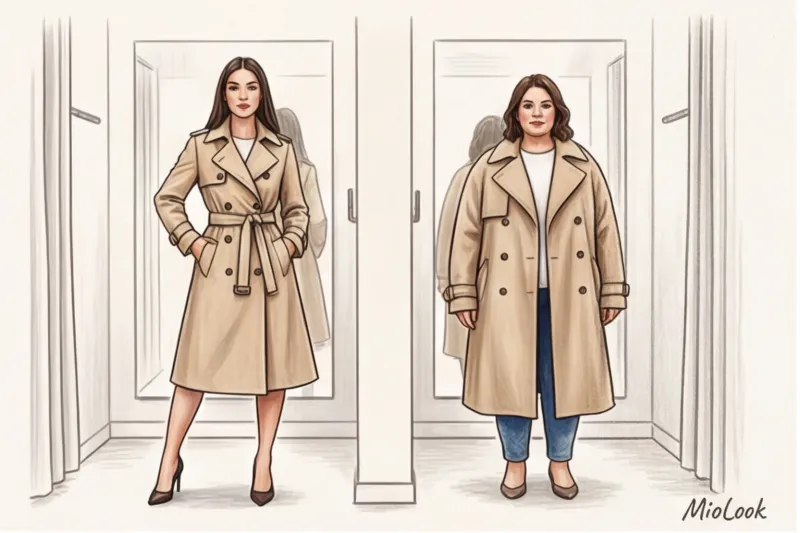
Let's be honest. Most mass-market brands don't create clothes for sizes XL and above from scratch. They use a method linear grading This means that they take a basic size M pattern and simply mechanically increase it in all directions: in width, in length, in armholes.
According to a recent McKinsey report (2024) on size chart issues, nearly 80% of fit complaints in the plus-size segment are related to linear scaling, not to the individual body types of consumers. What's happening in practice?
- The departing shoulder: The shoulder line slopes downwards, making the upper body sloping and massive.
- Huge armhole: The sleeve opening becomes so wide that when you raise your arm, you pull the entire coat along with you.
- Loss of proportions: The thing turns into a shapeless square.
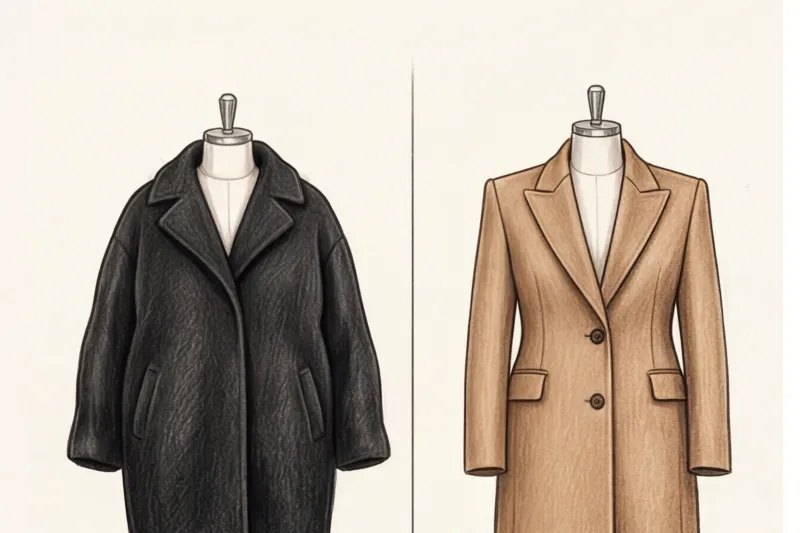
One of my clients said at her first consultation, "I'm simply too big for elegant pieces; oversized down jackets are my thing." This is the biggest and most dangerous misconception. Oversized clothing doesn't hide weight—it adds bulk to the very item you're wearing. The larger your size, the more defined, rigid, and structured the cut should be.
Silhouette Architecture: How Fabric and Cut Replace Photoshop
The foundation of any quality piece is its material. Thin, flimsy fabrics (cheap, squeaky polyester, loose wool blends) are traitors. They cling to every fold, break at the creases, and create a cheap, sloppy look.
When I was interning in Milan and studying the principles of design at Istituto Marangoni, the old Italian masters in the ateliers (of brands like Marina Rinaldi and Elena Miro) always repeated: the fabric should support the figure, and not the figure the fabric. This is the principle "light corset".
What is really worth investing in?
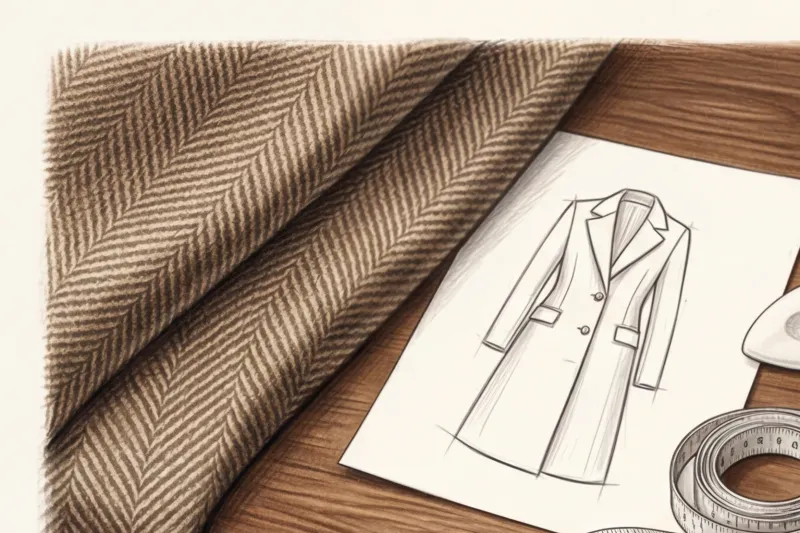
- Cashmere double-face: A double-layer fabric, the layers are sewn together with invisible stitches. It holds its shape incredibly well, requires no heavy lining, and looks exceptionally expensive.
- Thick drape and felted wool: They create a smooth, continuous silhouette line without falling into problem areas.
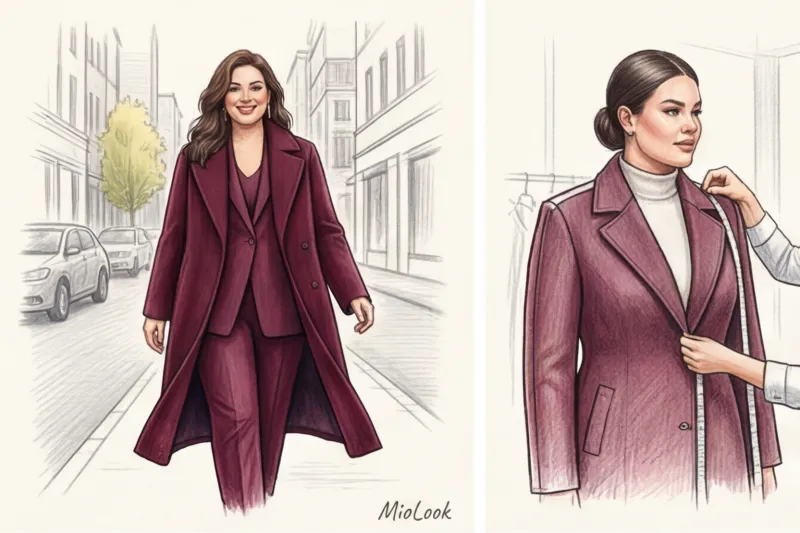
- Hard shoulder: Small, well-fitting shoulder pads are essential! They create a clear frame for the figure and balance the proportions between the hips and the top.
When choosing a coat in the €150–€300 price range, always do a tactile test. Crinkle the edge of the lapel in your fist for a couple of seconds. If the fabric remains wrinkled, leave the item in the store. If it straightens out immediately, it's an excellent candidate for a base coat.
Length Math: Where the Right Jacket Should End
There is a golden rule of stylistics: never cut a silhouette along the widest horizontal line If your problem area is your hips, a jacket that ends right in the middle will add 5-7 kilograms to your appearance.
Ideal lengths for curvy girls:
- For cropped jackets: just below the waist or to the beginning of the hip (above the widest point).
- For coats and raincoats: a confident midi (a hand's breadth below the knee) or maxi. This creates a long vertical column that dramatically elongates the figure.
Your perfect look starts here
Join thousands of users who look flawless every day. Upload your photos, and a smart algorithm will create a capsule that perfectly suits your proportions.
Get access — €0.99 oncePlus-size coats: an investment in status and slimness
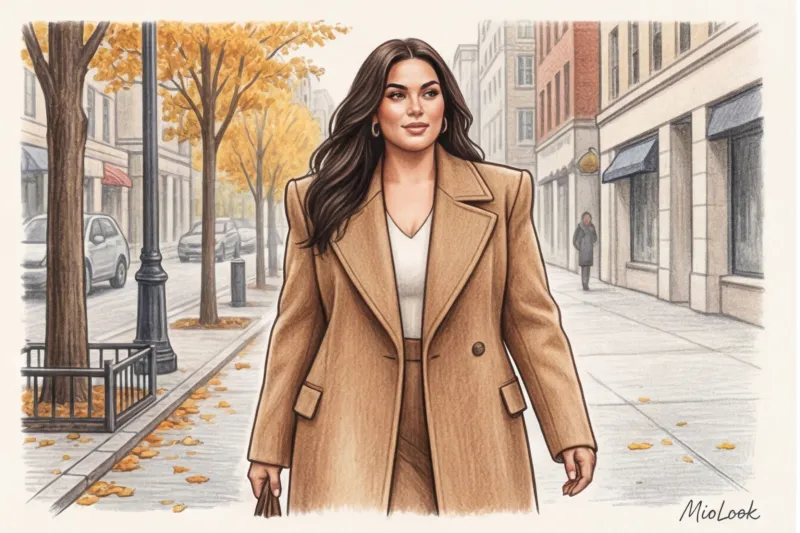
I once had a client, a top manager at a large IT company, contact me. For five years, she'd been attending board meetings in shapeless down jackets because she couldn't find a "comfortable" coat. We replaced her cardigans and down jackets with a single-breasted, structured camel coat with stiff shoulders. The visual effect was as if she'd dropped two sizes. Her confidence in meetings skyrocketed.
This is where wardrobe math (the cost-per-wear formula) comes into play. One luxurious, well-cut coat for €350 will last you 5-7 years and add class to hundreds of outfits. Three cheap jackets for €80 each, bought during seasonal sales, will lose their shape within a year and will never bring you joy when you look in the mirror.
Single-breasted or double-breasted?
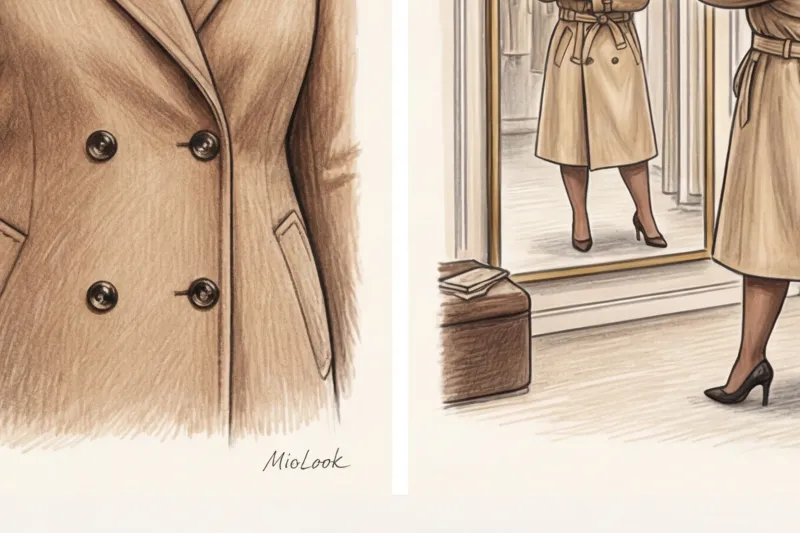
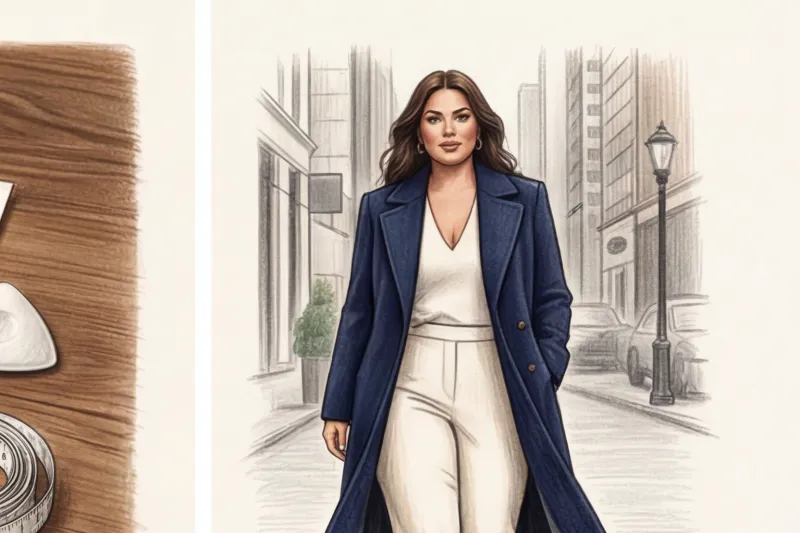
Double-breasted coats (with two rows of buttons) visually expand the chest due to the horizontal space between the buttons. If you have a full chest, a double-breasted style will almost always add volume. Your choice is a single-breasted coat With a deep V-neck, this neckline acts as a downward arrow, elongating the neck and elongating the silhouette.
Beware of the robe coat
A wrap coat is often recommended for plus-size women. But there's a dangerous nuance. If the fabric isn't thick enough and you tie the belt too tight, it will create a "tied sheaf" effect. How to wear it correctly? Don't tighten the belt in front. Tie it in an elegant knot at the back, leaving the hem open. This will create two vertical lines at the waist, which will visually "cut off" your curves at the sides.
Down jackets and down jackets: destroying the myth of the “caterpillar”
Winter outerwear for plus-size women is usually a source of dread. It seems like a warm down jacket will inevitably turn you into the Michelin Man. But modern technology has long since solved this problem.
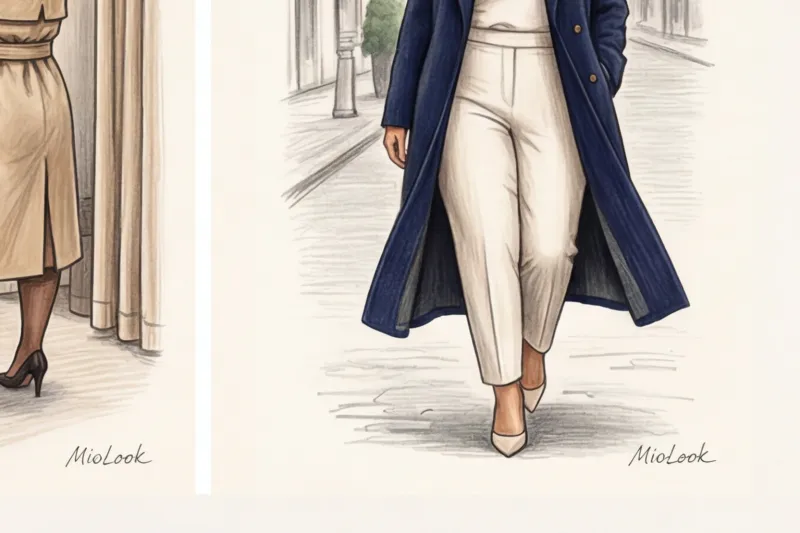
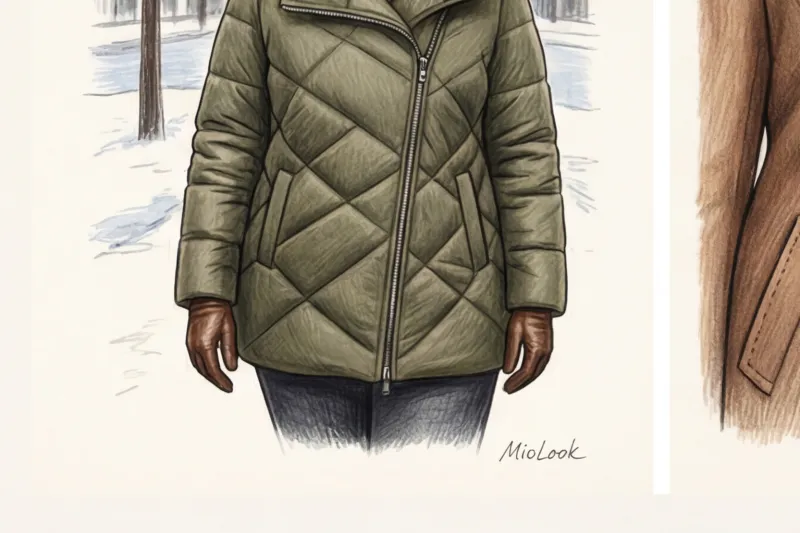
The first rule of winter: no gloss Shiny fabrics (sheen nylon, patent leather) reflect light in different directions, instantly adding volume. Matte textures, on the other hand, absorb light and create a more defined and defined contour.
Stitch geometry
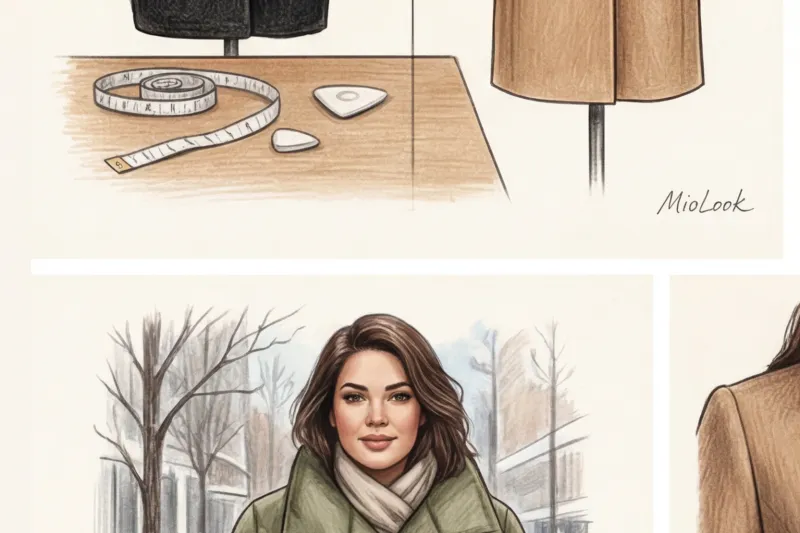
Horizontal stitching 10-15 centimeters wide is the worst thing you can imagine for a plus-size figure. The eye perceives these stripes as steps, widening the figure. Look for:
- Diagonal stitch (herringbone).
- Diamond stitch (small or medium diamond).
- Combined: more frequent stitching in the waist area and less frequent stitching on the hips.
Don't forget about insulation. You no longer need a five-centimeter layer of goose down to stay warm at -20°C. Thinsulate, Isosoft, or modern membrane technologies retain warmth with minimal bulk. Yes, these jackets cost between €150 and €400, but they offer a sleek silhouette without compromising comfort.
Anatomy of details: fittings, pockets and hoods
Style lies in the micro-details. In styling, there's a law of scale: the size of clothing details should be proportionate to your features and figure. If a larger woman wears a coat with tiny buttons and narrow lapels 3 centimeters wide, the contrast will make her appear even larger.
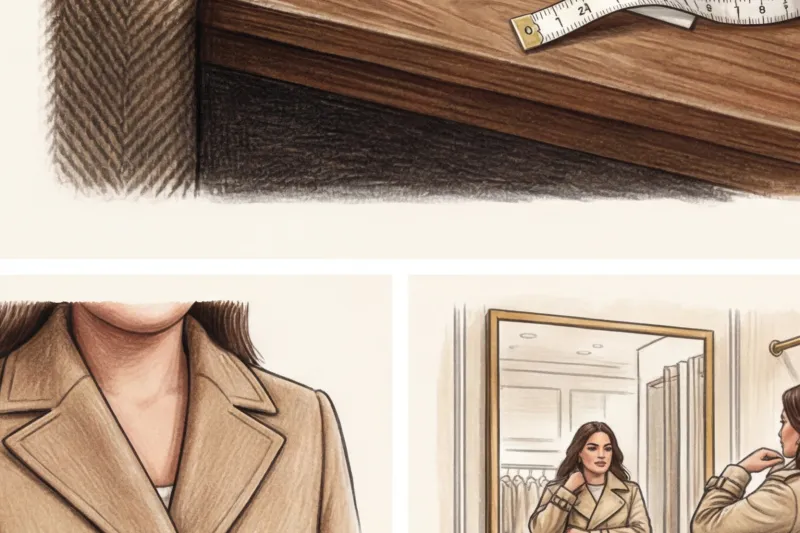
Opt for wide, confident lapels. Look for large, accent buttons.
Insider Hack: You can buy a basic coat at a good mass-market store (such as Massimo Dutti or COS) for €150–€200 and take it to a tailor to replace the cheap plastic buttons with high-quality horn, metal, or leather-covered ones. This €20 detail will visually elevate your coat to the luxury segment.
Pockets and hoods
No more patch pockets at the hips! They add 5 centimeters of volume on each side. Diagonal slit pockets are the ideal choice. They direct the eye in the right direction (from top to bottom and toward the center).
As for the hood, a voluminous hood perfectly balances a heavy bottom (like a pear-shaped figure). However, if you have a short neck and a full chest, a hood will create a "hump" effect at the back. In this case, it's best to choose a simple stand-up collar and pair it with a classy cashmere scarf.
Ready to get started?
Try MioLook's smart wardrobe. The app will analyze your items, suggest ideal combinations, and help you create a shopping list without spending too much.
Get access — €0.99 onceStylist's Checklist: How to Choose Outerwear in the Fitting Room
Finally, you're in the store. You've found the perfect coat, with the perfect stitching or the perfect drape. How can you be sure it will fit perfectly in real life, not just in front of a static mirror?
I always make clients do three tests in the fitting room:
- Loose fit test. A thick jacket or chunky knit sweater should fit comfortably under your coat. There should be at least 3-4 centimeters of air space between your body (in the sweater) and the coat. This air space, not the tension in the fabric, is what retains warmth and creates the illusion of fragility.
- Closed doors test. Button up your coat and take a wide step. The back vent shouldn't flare out, exposing your buttocks. The front hem shouldn't flare outward, creating an L-shape. If this happens, the coat is too tight in the hips, even if it fits perfectly in the shoulders.
- Checking the armhole. Raise your arms parallel to the floor. Has your coat risen up with you, hitting your neck? Take it off immediately. This means the armholes are cut too low (that lazy mass-market thing). A proper coat has a high armhole, allowing your arm to move independently of your body.
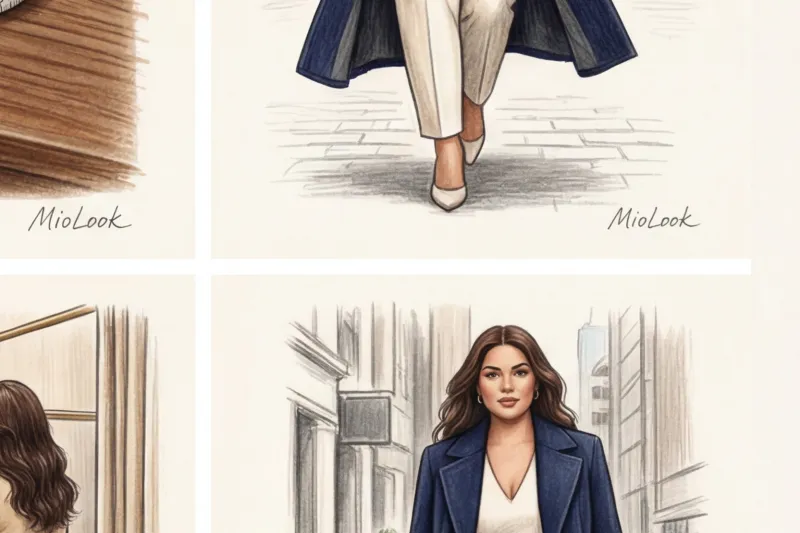
I'll be honest: these rules work almost always, but there are exceptions. For example, for those with a pronounced apple-shaped figure (most of the volume is in the abdominal area with narrow hips and slender legs), a straight coat can look too heavy. In this case, a cocoon (O-line) cut with a tapered hem, which minimizes the volume in the center, would be better.
Stop hiding behind bland, baggy clothes. Your size is no reason to give up premium aesthetics, clean lines, and a classy look. Invest in the right cut, and you'll see how it changes not only your reflection but also your posture.