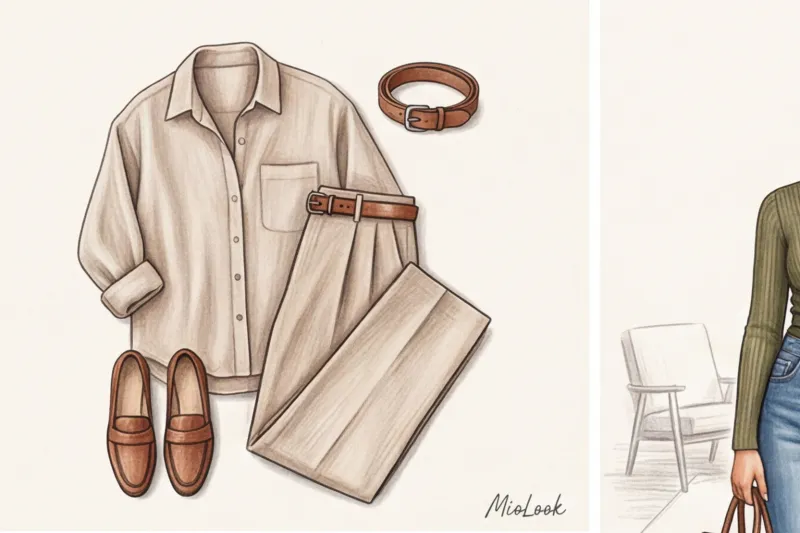
Nursing Clothes: Why They're Often a Waste of Money
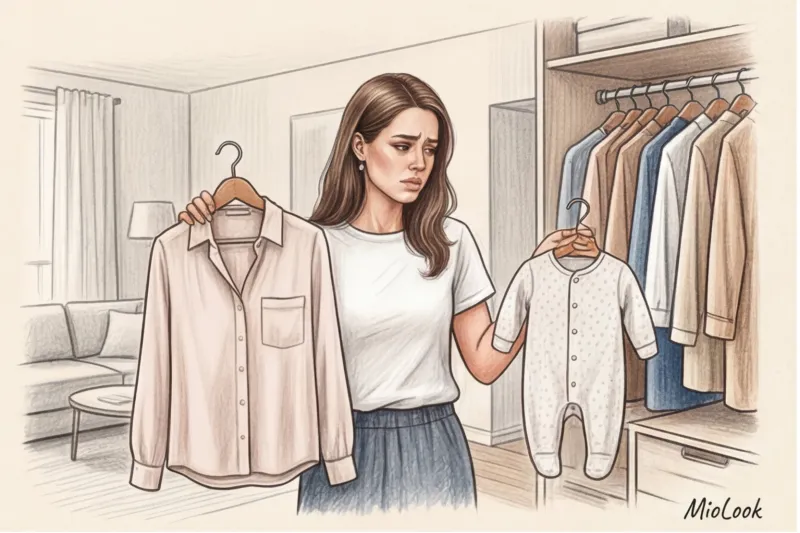
Remember that moment after leaving the hospital when you open your closet and realize you have literally nothing to wear out of fifty hangers? It's tempting to order a ready-made capsule collection from the first online maternity and nursing store you come across. But wait until you click "pay." As a digital stylist and minimalist, I constantly see the same mistake: new moms spend hundreds of dollars on items they'll hate within a month. The right way clothes for nursing mothers — this isn't what you'd find in specialized departments labeled "nursing-friendly." For years, we've been fed the myth that we need to completely change our wardrobe after giving birth, but today I'll show you how to avoid this marketing trap.
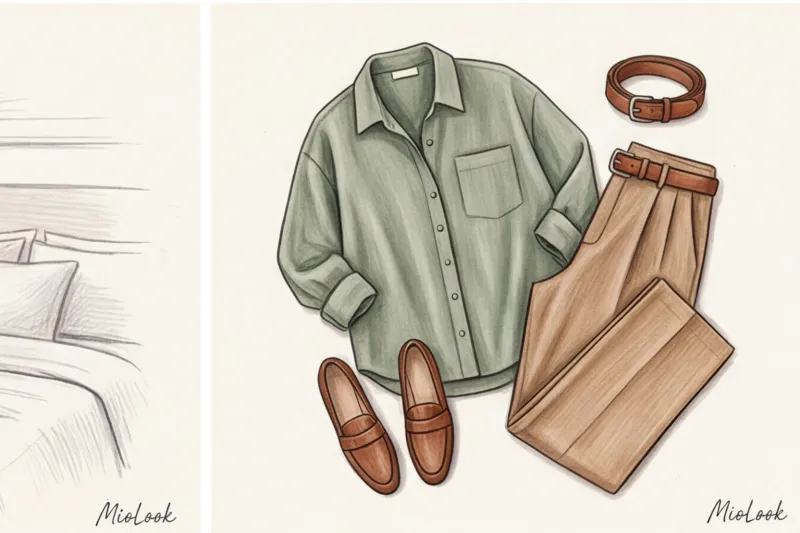
Nursing clothing is an entire industry built on our temporary vulnerability. Let's be honest: 90% of these items are frankly outdated in design. For some reason, manufacturers believe that once a woman becomes a mother, she automatically starts dreaming of shapeless tunics with vague floral prints or T-shirts with childish slogans.
But the main problem with these items lies in their strange design. Those bulky, hidden zippers across the chest that inevitably ripple and scratch baby's delicate skin, or those complex, multi-layered flaps that you'll get tangled up in half-asleep. Furthermore, mass-market maternity brands understand perfectly well that you're buying this item for a very short period of time. So they skimp on materials. They use cheap, thin knits with a low cotton content, which pill and hopelessly lose their shape after just three washes at 40 degrees.
In my practice (and over 12 years of work, I've analyzed hundreds of wardrobes), I see a clear pattern. My clients wear specialized hoodies with "nursing" zippers for a maximum of three months—they fade quickly, stretch out at the elbows, and look sloppy. But they wear a good oversized linen shirt, bought from a regular line in the men's or women's department, for years: first, unbuttoning it for nursing, and later, casually tucked into jeans or thrown over a swimsuit on vacation.
This is where my favorite smart wardrobe metric—the concept of "Cost per Wear"—comes into play. The mathematics of style is ruthless and always reveals the true picture of consumption:
- Special dress for nursing: It costs $70. You'll wear it maybe 15 times while you're actively breastfeeding, and then put it away because the specific cut with hidden slits looks weird without a baby in your arms. Bottom line: $4.60 per wear.
- A quality wrap dress from a regular store (like Arket or & Other Stories): It costs $120. You wear it on maternity leave, then to the office, and then on trips. You'll wear it at least 100 times. Total: $1.20 per wear.
The conclusion is clear: investing in high-quality basic clothing from regular collections is always more financially beneficial than buying temporary maternity items.
Ordinary clothes with hidden functionality: what to look for in stores
Ditching the maternity and nursing sections is the first step to reclaiming your personal style. All you really need is regular clothes with hidden functionality. When choosing new pieces at your favorite stores (be it Zara, COS, Uniqlo, or local brands), just keep three golden rules of tailoring in mind.
First, look for easy access from above These are absolute timeless classics: anything with buttons, snaps, or deep lacing. Boyfriend shirts (cotton, linen, flannel), shirtdresses, oversized cardigans, and classic henleys (thick, long sleeves with a row of buttons down the chest) are your best friends for the coming months.
Secondly, pay attention to stretchable neckline A V-neck works perfectly on high-quality ribbed knit tops with 5-10% elastane. Simply pull the elastic down—it takes a split second, doesn't require unbuttoning, and allows for discreet breastfeeding.
Third, use the ability to raise the bottom edge A brilliant styling trick is to layer cropped, oversized sweaters or loose crop tops over fitted, basic tank tops with thin straps. If needed, you lift the thick top layer and pull the soft bottom layer down under the bust. This keeps the stomach and back completely covered (critical in cool weather or in an air-conditioned room), while still allowing easy access to the chest.
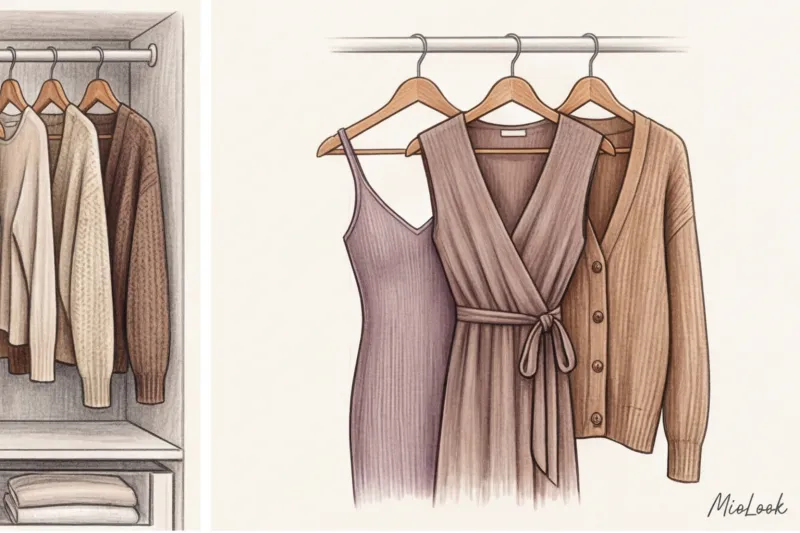
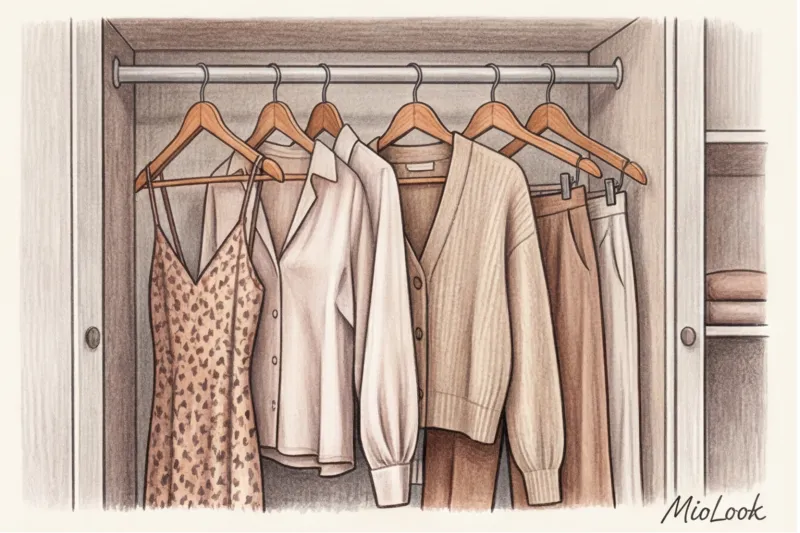
Before you go shopping for new shirts, take a hard look at what's already hanging in your closet. Spoiler: you already have stylish "nursing" items; you've just never looked at them this way.
Get everything out of your closet. Try on your favorite oversized hoodies and sweaters—is a stretchy tank enough to create a double layer? Find all your wrap dresses, loose-fitting shirts, and cardigans. Put all your turtlenecks, button-down sweatshirts, and sheath dresses with back closures in a separate wardrobe—you definitely won't need them yet, and there's no point in going through them every morning, frustrated that you can't wear them.
To avoid forgetting your finds in the morning rush, I highly recommend digitizing this process. Take photos of the relevant items and upload them to MioLook app and tag them #nursing_friendly This way, you can generate ready-made, stylish, and 100% comfortable looks in a couple of clicks while drinking your morning coffee.
And remember: even if your current base consists of the most basic straight-leg jeans and loose shirts, you can always take your look to the next level with details. Here's how Accent accessories help you express yourself , or How to choose a perfume to suit your style , we said earlier - these tools work flawlessly, allowing you to feel not only like a mother, but also like a stylish woman.
A Nursing Mom's Capsule Wardrobe: A Smart 12-Item Formula
Statistics are merciless: according to time management studies of young parents, during the first six months of a baby's life, a woman has, on average, about four minutes a day to choose clothes and get ready. If you stand in front of an open closet for more than thirty seconds, transfixed, your storage system has failed miserably. Under these circumstances, a chaotic collection of incompatible items becomes your biggest enemy.
This is where a rigid but saving structure comes to the rescue. A properly chosen stylish clothes for nursing mothers It doesn't require a huge wardrobe or complicated styling decisions early in the morning. The main principle of creating a functional capsule wardrobe during lactation is 100% combination and intuitive cut. Every item should fit together seamlessly, literally, with your eyes closed.
Forget about overcrowded shelves and the "too many pieces, too many looks" mentality. The perfect smart formula for one season consists of just 12 carefully selected elements. The math behind the capsule looks like this:
- 3 bottoms: Basic pieces that don't constrict the waist. For example, wide-leg jeans with an elastic back panel (pull-on jeans), flowing straight-leg knit palazzo pants, and a bias-cut, heavyweight viscose slip skirt.
- 5 tops: Shoulder garments that provide quick access to the chest from above or below without complicated manipulations (we will discuss these in detail below).
- 2 dresses: independent units, ready-made looks for days when you don’t have the moral strength to match your top and bottom.
- 2 layers: A structured men's-style jacket (will take the edge off the relaxed knitwear) and a voluminous textured cardigan.
This compact 12-piece formula offers over 60 unique style combinations. You'll dramatically save precious time getting ready in the morning, because it's mathematically impossible to make a mistake when putting together an outfit. Simply pick any bottom, any top, and layer it up.
To make the process even more predictable, I always recommend incorporating technology. Smart wardrobe management apps help you create and test these capsule wardrobes in 5 minutes. Simply take a photo of your items and upload them to your virtual closet. You can even assign tags to the items you need. #breastfeeding_friendly , and the algorithm will automatically generate a ready-made image for the day, taking into account the weather outside, while you drink your morning (and, most likely, already cold) coffee.
Simplify your morning routine with a smart wardrobe
Digitize your items, create a nutrition capsule, and get ready-made looks every day.
Set up a capsule in MioLookThe Perfect Top: From Boyfriend Shirts to Wrap Tops
When it comes to shoulder pieces, as a stylist, I'm categorically against buying those specific T-shirts with hidden horizontal zippers across the chest. Firstly, the hardware often gets caught, especially when you try to unzip the zipper with one hand. Secondly, this overtly utilitarian design instantly makes the look irrelevant. Instead, invest in three basic categories of pieces that will stay in your closet for years to come.
Men's and oversized shirts
This is an absolute stylistic must-have. A quality boyfriend shirt made of thick, smooth cotton (poplin), relaxed linen for summer, or soft flannel for winter is your new uniform. Rule of thumb: buy 1-2 sizes up or confidently head to the men's department at brands like COS or Zara (a basic men's shirt will cost you around $40-60). The top three buttons come undone in a second. The fabric is relaxed, and the crisp collar brings the look together, adding a neat touch. To avoid a boxy silhouette, try the French tuck technique—tuck only the front of the shirt into the trousers, defining the waistline.
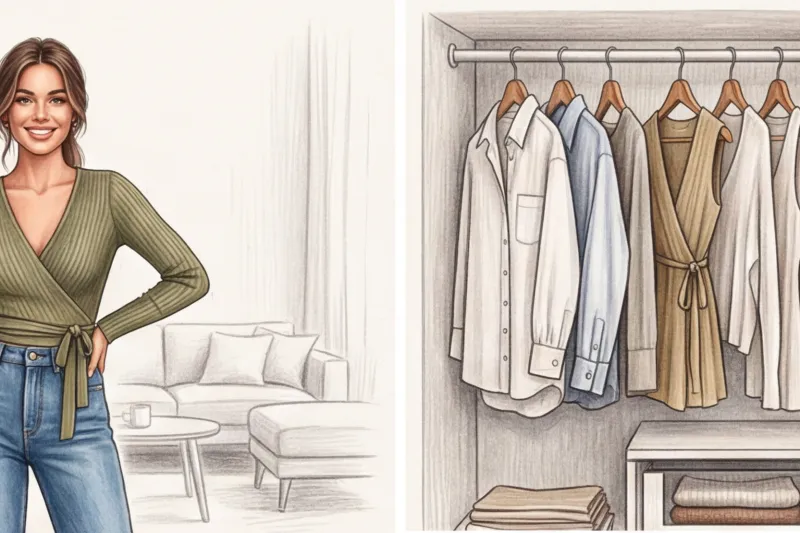
Wrap tops and cardigans
A unique aspect of breastfeeding is the constant fluctuation in breast size throughout the day (from let-down to feeding, the difference can be as much as a full cup size). Rigidly constructed blouses are useless in this situation. Wrap-style tops ingeniously adapt to your changing measurements. A deep diagonal V-neck allows you to easily and delicately pull back the edge of the fabric. Choose styles made of dense viscose blends, silk, or fine cashmere.
Henley Shirts
Henleys are long sleeves or tops with a distinctive crew or V-neck with 3-5 buttons (historically, a feature of the British rowing uniform). Look for styles made of finely ribbed knit. The ribbed texture offers excellent return and elasticity: you can pull the neckline dozens of times a day, and after machine washing, the garment will perfectly return to its original shape, without turning into a stretched-out cowl neck.
Nursing Dresses You'll Want to Wear After Maternity Leave
In my practice, many women completely abandon dresses after giving birth, believing that they and breastfeeding are incompatible. This is a huge misconception. The right dress is a 100% complete outfit, a lifesaver during the classic "closet full, nothing to wear" crisis.
Shirt-dress
This is the perfect balance between understated elegance and utilitarian comfort. Choose voluminous midi-length styles with buttons that reach at least to the waist, or better yet, all the way to the hem. This dress offers maximum versatility. Buttoned up with a leather belt and loafers, it creates a classy urban look. And completely unbuttoned, it can be worn as a lightweight cape or summer raincoat over jeans and a basic T-shirt.
Wrap dress
In 1974, designer Diane von Furstenberg created the iconic wrap dress, forever changing the history of women's fashion. In keeping with DVF's legacy, this dress creates a flawless hourglass silhouette, expertly conceals a postpartum bump with a soft drape at the waist, and, most importantly, provides the most comfortable access to the breasts. Investing in a quality wrap dress (good silk or cupra options can be found in the $150-$300 range) will pay for itself many times over. It will remain in your wardrobe even after breastfeeding is complete, as its fit isn't dependent on strict patterns.
Sundresses with wide straps
This is a great trick for layering enthusiasts. Thick, straight-cut sundresses (made of denim, chunky corduroy, or classic suiting) paired with basic t-shirts or thin turtlenecks work like a construction kit. To feed your baby, simply pull down one wide strap of the sundress and lift up the t-shirt underneath. It's warm, stylish, covers your stomach and back in cool weather, and looks much more interesting than a regular sweater.
The Secret Layer: The Double Layer Technique and the Right Underwear
According to a 2023 survey by the Institute of Motherhood, over 65% of women experience anxiety when breastfeeding in public. And it's often not the process itself, but the fear of exposing their stomach and back by lifting their clothes. Marketers are well aware of this vulnerability, offering us bulky cover-ups, synthetic milk snoods, and sweaters with absurd hidden zippers. But the most stylish and practical solution to this problem is already hanging in your closet.
Meet the "Two Layers" technique. This fundamental styling trick transforms 80% of your pre-pregnancy fall/winter wardrobe into perfectly functional pieces. The mechanics are simple: as your first (base) layer, wear a fitted top with thin straps, and as your second, any loose, open-front top. This could be your favorite chunky cashmere sweater, an oversized hoodie, or a trendy cropped jumper.
When baby needs to feed, the top layer (sweater) is simply lifted up, and the elastic neckline of the undershirt is pulled down. The end result? The chest is delicately covered by the thick fabric of the sweater, while the stomach and lower back are securely hidden under the tank top. Only baby is visible. No visual noise and maximum physical comfort. To prevent the undershirt from becoming deformed from constant tension, I always recommend checking the tag: it should contain at least 5-8% elastane (spandex).
"Traditional layering in fashion is all about complex aesthetics and textures. But for a new mother, layering becomes the ultimate privacy tool, allowing her to feel secure anywhere in the city."
Last winter, Lena, an architect from Berlin, approached me for styling help. Her personal style had always been based on relaxed sporty chic: heavy Balenciaga hoodies, minimalist oversized sweatshirts, joggers, and chunky sneakers. After giving birth, she was certain she'd have to say goodbye to her favorite pieces, as the hoodie was impossible to unzip, and lifting it up in a café would expose her postpartum belly. Lena was already planning to spend around €500 on specialized sweatshirts with unsightly horizontal zippers.
We didn't compromise her style. I simply integrated six seamless microfiber tees (averaging €15 each) into her base—in black, white, and graphite. This simple step allowed Lena to wear her usual sweatshirts every day. Stylish and comfortable nursing clothes don't require sacrifice—sometimes the secret lies in a well-chosen invisible base.
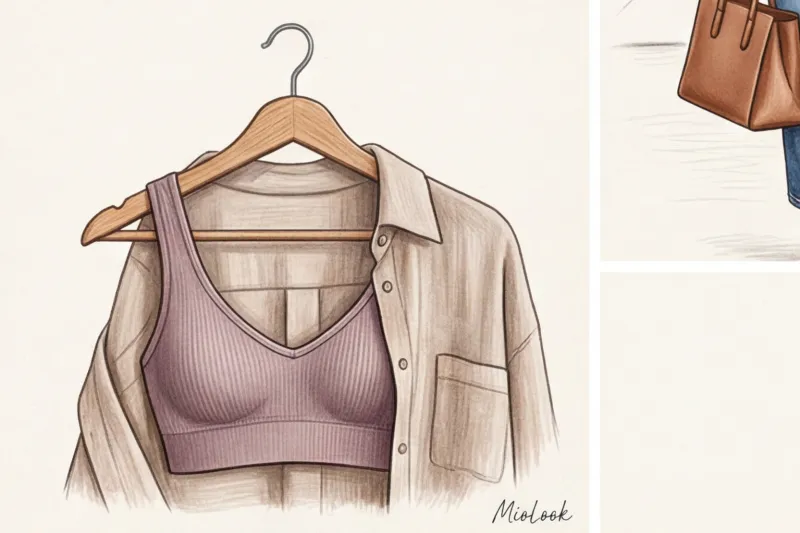
The evolution of the nursing bra
Any layered look starts with a snug fit. If you think you absolutely need a classic nursing bra with detachable plastic clips on the straps, I have good news: the lingerie industry has come a long way. Those notorious clips often break, get caught at the most inopportune moments, and the stiff seams and cheap lace only irritate sensitive skin.
My categorical recommendation for my clients is to completely abandon outdated designs in favor of modern seamless bra tops. Brands like Oysho, Skims, and the basic line of Uniqlo bras offer tops made of high-tech microfiber. They stretch so well that you only need to pull the edge of the cup down with one movement. At the same time, the smart fabric instantly returns to its original shape thanks to the material's "memory" effect.
Another brilliant alternative is front-zip sports bras. Originally designed for high-intensity workouts, models from sports giants like Nike and Lululemon have proven to be ideal for lactation. Why does this item work 100%?
- Instant access: The front zipper (be sure to look for one with a locking closure) can be easily unzipped with one hand.
- Stylish accent: If a sports bra peeks out slightly from under an unbuttoned oversized shirt or a jumper with a deep V-neck, it looks like a deliberate stylistic move in the spirit of athleisure, and not like utilitarian underwear that has accidentally appeared.
- Physiological support: Wide straps and a thick band under the chest relieve strain on the back without the use of hard metal underwires, which mammologists often blame for causing lactostasis.
Of course, there are always important limitations in style. Seamless bras and tops with medium support work great for women with cup sizes A to D. If you're an E or larger, soft microfiber simply won't provide the necessary support for a heavier bust. In this case, you'll have to compromise and turn to brands that specialize in sophisticated plus-size designs, such as Anita or Elomi.
To avoid wasting your morning hours worrying about which top to wear with a particular sweater, I recommend delegating this process to technology. In the app MioLook You can group all your stretchy tops and bras into a separate "Hidden Base" tag. When the smart algorithm generates an outfit for you with your favorite full-length hoodie, it automatically pulls the right base layer into the capsule, creating the perfect two-layer formula in a split second.
Textile Intelligence: Fabrics that Work for You
Have you ever counted how many hours a day your baby's face is literally "imprinted" on your top or shirt? According to pediatricians, in the first months of life, this close physical contact lasts between 6 and 10 hours daily. That's why the choice of material is no longer just a matter of aesthetics but a matter of basic safety.
Cheap synthetics and fabrics dyed with harsh chemicals are a time bomb for a baby's sensitive skin. My strict rule: we ruthlessly discard items of questionable origin. Look for the markings on the labels. OEKO-TEX Standard 100 This international certificate guarantees that textiles have been tested for the absence of harmful substances, ranging from formaldehyde to heavy metals. A good basic T-shirt made from certified organic cotton currently costs €20-35, which is comparable to mass-market prices, but the difference in quality is enormous. If the tag doesn't have the coveted symbol, but the new item has a strong chemical smell, don't even try to air it out; simply return it.
The second most important aspect of smart textiles is your personal comfort. Around 70% of women experience postpartum hyperhidrosis (excessive sweating) due to the sharp drop in estrogen levels. Under these conditions, standard polyester becomes a stuffy greenhouse. Your best ally here are modern synthetic fabrics made from natural materials: Tencel (lyocell), viscose and cupra Laboratory studies show that Tencel absorbs moisture 50% more effectively than regular cotton, has a natural antibacterial effect, and feels pleasantly cool on the skin.
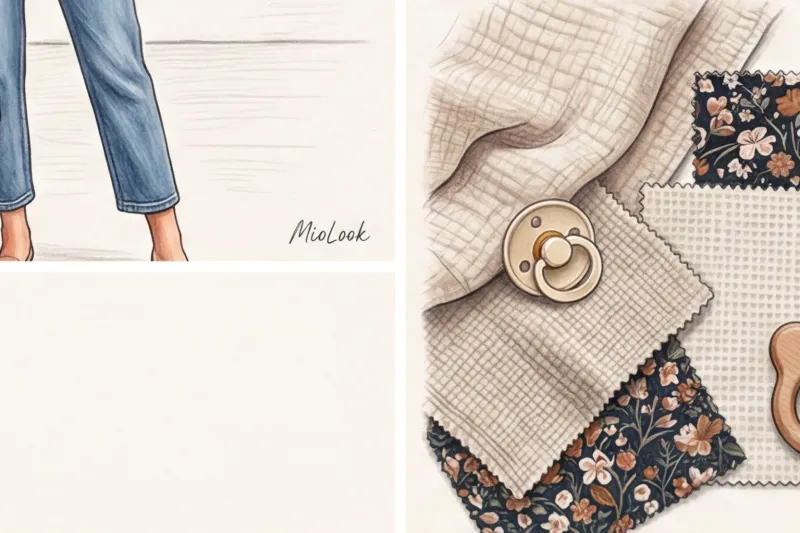
But let's be realistic: nursing clothes are subjected to a rigorous daily crash test of spit-up, leaking milk, and, a little later, broccoli stains. This is where "vandal-resistant" fabrics come into play.
Why does a drop of water or milk look like a disaster on some items, while on others it goes unnoticed? The answer lies in materials science and the laws of optics. Smooth fabrics, such as silk or polyester satin, reflect light evenly. Any damp spot on them instantly changes the reflectivity and stands out as a dark contrast. At the same time, dense cotton pique (the same one used to make classic polo shirts) has a textured, honeycombed structure. The micro-shadows from the weave of the threads visually "melt down" small spots and unevenness.
To disguise the inevitable signs of motherhood, rely on three visual techniques:
- Small print (ripples, small polka dots, floral abstraction) - an optical illusion against which local contamination is lost.
- Melange — a yarn in which fibers of different but similar shades are woven, creating a natural variegation.
- Textured materials Muslin, linen, and crinkle cotton are excellent options. They not only hide wet marks perfectly but also eliminate the need to stand at the ironing board.
"Spending 20 minutes ironing a shirt that will be stained with milk an hour later is an unaffordable luxury. Textured fabrics give mothers back their most valuable resource—time," notes time management expert Laura Vanderkam.
As you begin incorporating this textile intelligence into your closet, it's helpful to digitize the results. File away your best muslin shirts and Tencel tops in MioLook app , adding the tags #wrinkle-free and #breathes. On those days when you've been up all night and have exactly one minute to get ready, the algorithm will suggest a ready-made look that will withstand any test and stay neat until the evening.
Access to MioLook for €0.99 — one-time payment
Start creating perfect images with the help of artificial intelligence
Get access — €0.99 onceStylish clothes for nursing mothers for going out and to the office
There's a harmful stereotype: if a woman is breastfeeding, her social uniform is reduced to knitted joggers and a shapeless sweatshirt. But what if you have a meeting, a client, or an evening event to attend? Motherhood shouldn't put your professional and social life on hold.
Last year, I put together a wardrobe for the founder of an IT startup. She had to juggle tough pitches to investors with feeding her four-month-old baby in between. Her starting request was: "Emily, I want to look classy again, but I need to be able to feed my baby or pump in a minute without having to strip naked in a business center bathroom." Before we met, her closet was filled with specialized long-sleeved T-shirts with hidden zippers, which, by her own admission, made her feel completely out of place at a board meeting.
We completely shattered the stereotype of a conflict between business dress code and motherhood. The core of her business capsule collection was a classic menswear-style pantsuit. The secret was in the base layer: instead of stiff shirts, we used silk wrap tops and blouses made of thick viscose (in the optimal range of $80–$150) with a deep V-neck.
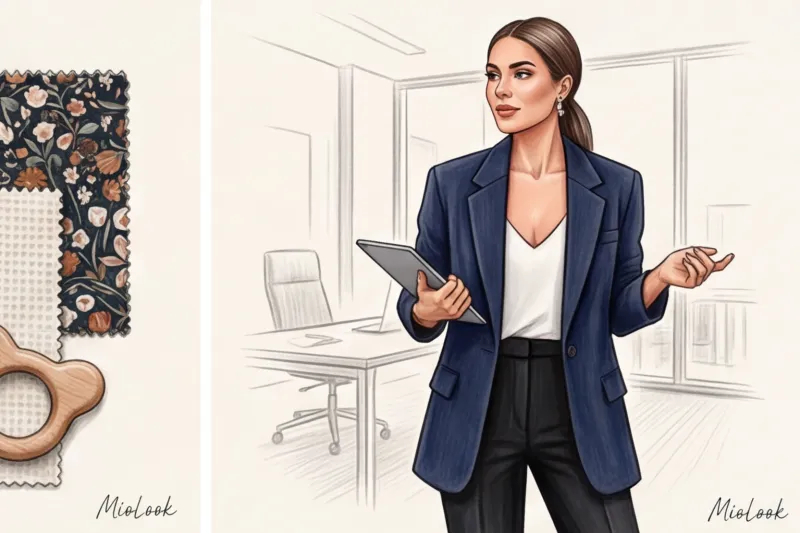
Why does this technique work so well? A structured jacket with a sharp shoulder line (think Saint Laurent silhouettes or basic COS jackets) creates a rigid visual frame. It instantly sculpts the figure and conveys authority. And the soft inner layer takes care of all the functional work. If you're breastfeeding or pumping in the office, you won't have to take off your jacket and get cold—just open the front of your blouse or pull back the hem of your wrap top.
Elegant looks without compromise
The same look architecture is also a lifesaver when getting ready for evening outings, weddings, or corporate events. Forget sheath dresses with back closures. The most ingenious invention in the fashion industry, perfectly adapted to the needs of new mothers, is the classic bias-cut slip dress.
The formula for a dressy look is simple: put on a silk midi or maxi slip, then throw on the same structured jacket or voluminous tuxedo over it. When the moment is right, simply lower the jacket slightly from one shoulder and slip the thin strap of the dress down. The stomach, back, and waist remain aesthetically covered by the fabric, and the process looks incredibly delicate. Incidentally, according to data from the analytics platform Lyst for 2023, demand for slip dresses remains consistently high, largely due to their phenomenal utility at any stage of life.
"To prevent silk from revealing the texture of your underwear, use smooth, seamless plunge bras instead of classic nursing bras with thick seams and clips. They won't show through the thin fabric of a slip dress and are just as easy to pull down."
To avoid standing in a panic in front of your closet the morning before an important meeting, I always recommend that clients digitize their working formulas. Take a photo of your pantsuit with three different wrap tops, upload them to MioLook and assign a tag #office_nursing On days when time is critically short, generating a perfect and functional outfit takes just two clicks.
Wardrobe Management: How AI and Apps Save You the Stress
Decision fatigue is a real cognitive phenomenon, and for women, it reaches its absolute peak in the first months of motherhood. You're making hundreds of micro-decisions before nine in the morning: feeding, changing, checking the nap schedule, rocking. That's why the daily process of choosing nursing clothes from your closet often evokes not inspiration but quiet panic. The familiar problem of "a full closet, but nothing to wear" only worsens during this period: your visual memory habitually clings to your favorite pre-maternity clothes, which are now functionally unusable.
In conditions of fragmented sleep, we physically cannot keep in mind which shirt out of twenty hanging on a rail has convenient buttons, and which bulky sweater can be discreetly lifted with one hand. Eventually, you give up and put on that same gray T-shirt again. This is where technology comes to the rescue. Digitizing your database isn't a pastime for influencers, but your personal tool for reducing mental strain.
"A young mother's brain operates in emergency energy-saving mode. Delegating wardrobe selection to algorithms directly frees up resources for more important things: an extra 20 minutes of sleep or the opportunity to drink hot coffee," according to my presentation at the Digital Style Conference (2023).
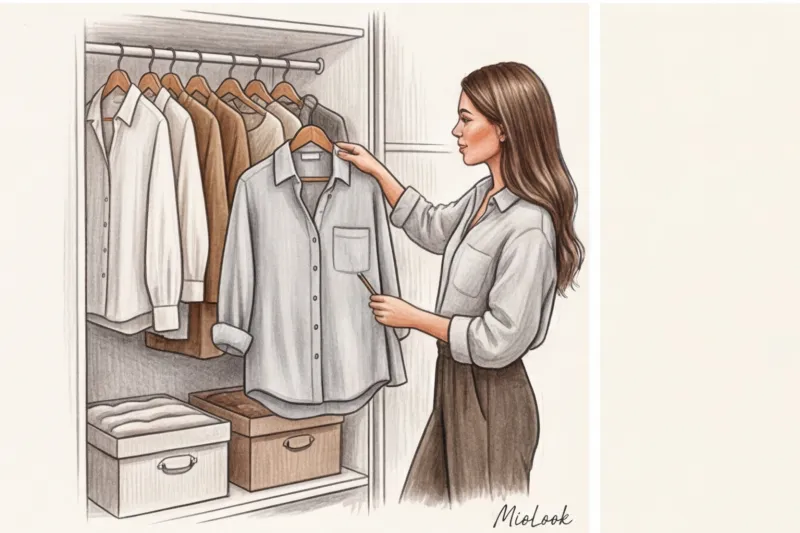
As a proponent of smart minimalism, I insist on digitizing your belongings. The secret to efficiency lies in strict categorization. Take photos of those 12-15 functional elements we discussed above. When using the virtual closet function in MioLook , be sure to assign a custom tag to the items you need - for example, #breastfeeding_friendly Now, to create your morning look, you only need one free hand. AI will instantly put together a stylish outfit exclusively from items that provide comfortable access to the chest, automatically filtering out dresses with back closures.
Your ideal image
it begins Here
Join thousands of users who look flawless every day with MioLook.
Get access — €0.99 onceBut the real magic of this technology is revealed through tracking how often you wear it. When you tag your looks in the app with one click, the system collects objective statistics. After a month of use, you might check your analytics and suddenly discover that you wear a basic $35 long-sleeved Henley shirt five times more often than that special dress you bought on a whim.
This data is incredibly sobering. Tracking clearly shows what's truly missing from your wardrobe and what's just taking up space. If the algorithm highlights that you're constantly pairing the same cardigan with different wrap tops, it means you don't need more leggings the next time you shop—you desperately need another high-quality top layer. You stop making haphazard purchases, start managing your style based on solid numbers, and regain a sense of control over your wardrobe.
Checklist: Wardrobe audit before buying new clothes
Shopping for clothes in the first weeks of motherhood is like going to the supermarket on an empty stomach. You're guaranteed to gain weight, giving in to the "I have absolutely nothing to wear" panic. Consumer behavior research from the Global Fashion Agenda (2024) shows that up to 40% of items purchased by women specifically for maternity leave are worn less than three times before ending up in a landfill or a charity bin.
Before your credit card gets shaved off by $300-$500 in the departments of specialized maternity brands, let's stop. Stylish clothes for nursing mothers , is likely already hanging in your closet—you just need to take a proper inventory and look at your usual things from a different perspective. An organized closet is one less source of stress per day. Here's a clear step-by-step guide on how to do it in just one free hour.
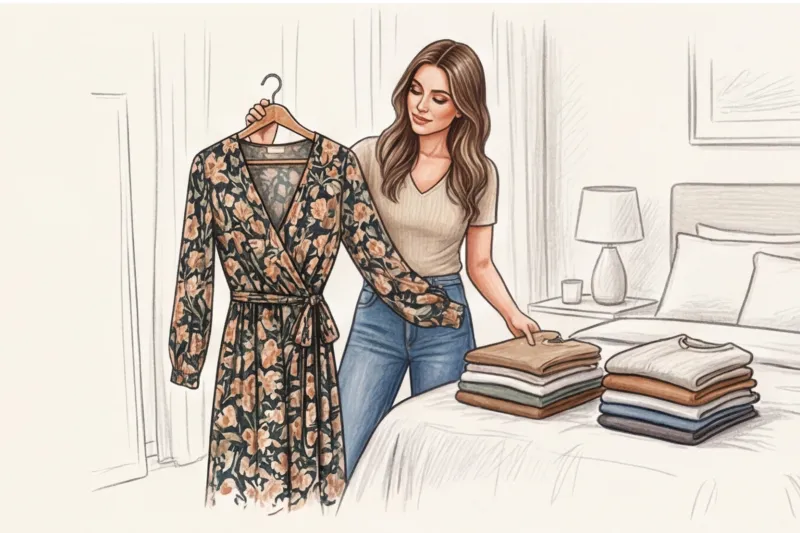
Step 1: Digitize your current wardrobe and put your collared items on the back shelf.
I call this stage a "visual detox." Turtlenecks, sheath dresses with stand-up collars, and thick, button-down sweatshirts—they're now only causing morning frustration. When your brain is constantly sleep-deprived, the visual noise from objectively inappropriate items literally steals your cognitive resources. Put these items away in drawers or vacuum-sealed bags for at least six months.
I strongly recommend that you take pictures of the remaining relevant items and upload them to MioLook Once your wardrobe is in the palm of your hand on your smartphone, you stop frantically rummaging through hangers while your baby cries. You simply open the app while feeding and, with a couple of taps, put together your outfit for tomorrow's outing.
Step 2: Find all items with buttons, snaps, zippers, and deep V-necks
Now we're in scanner mode and looking for functionality. Conduct a thorough inspection of your inventory: cotton, linen, heavy flannel, denim. Anything that opens at least halfway to the chest will do. Separately sort chunky knit cardigans with buttons, silk wrap dresses, and polo shirts.
In one recent project, a client and I found the perfect loose-fitting men's blazer in her closet, which she'd bought at COS for office Fridays, and three vintage button-down shirts that had been forgotten for years. These finds formed the core of her new, elegant capsule wardrobe. It turned out she didn't need to buy anything at all for her basic looks.
Step 3: Check base layers (tank tops, t-shirts) for stretch
A base layer is your foundation for the comfortable "two-layer" technique we discussed in the previous sections. Pull out all your tank tops, crop tops, and basic tees. Perform a rigorous physical test: forcefully pull the neckline down.
If the fabric is resistant (for example, 100% dense cotton), the top will cut into the skin and interfere with the baby's latch. We only allow active access to tops containing lycra, spandex, or elastane (at least 5%), or ribbed knit fabrics. These stretch easily and instantly return to their original shape without creating stretched "bubbles" at the neckline.
Step 4: Make a shopping list of only those missing items that you will wear after breastfeeding is finished
Only after completing the inventory do we grab a notepad (or notes on our phone) and write down a bulleted list of what's missing. The main rule I share in every smart shopping workshop is: before you click "Pay," ask yourself: "Would I buy this item right now if I weren't breastfeeding?".
If the answer is "no," feel free to close the tab. It's better to invest in one high-quality cashmere cardigan for €150 that will last you ten years and fit into your office wardrobe than to buy three cheap synthetic sweaters with weird hidden zippers for the same price, which will turn into dust rags in a year.
Breastfeeding isn't a pause in your stylish life or a reason to compromise. Treat it as an interesting technical challenge. Every time you wear your favorite, high-quality pre-pregnancy item, adapting it to the new realities of motherhood, you win twice: you save on your family budget and, more importantly, you stay in touch with your true self.
Guide Chapters
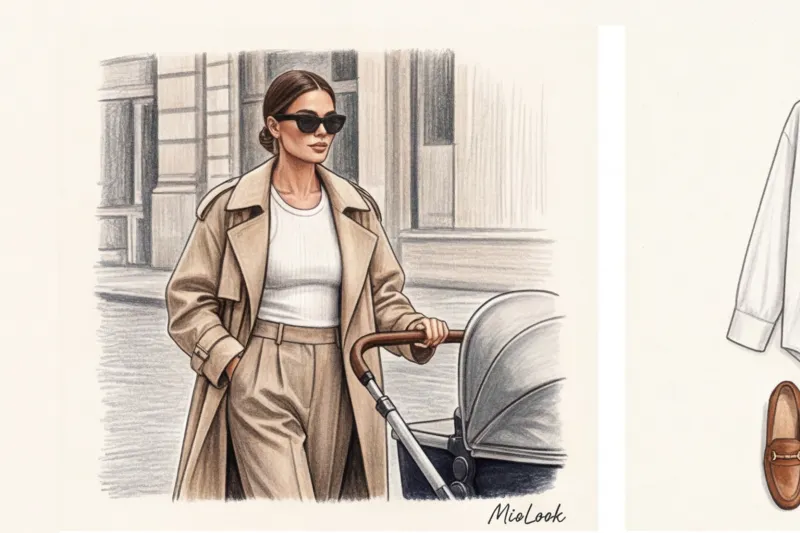
Stylish Stroller Outfits: Looks for Moms
Forget about shapeless clothes with "secrets" for nursing. A stylist explains how the right basics will help you look stylish while out and about with your baby.
How to choose a nursing bra for any outfit
Maternity bras shouldn't ruin your favorite pieces. Learn a stylist's secrets for choosing the perfect nursing bra that will preserve your silhouette.
Business attire for nursing mothers: how to dress for the office
Returning to the office after maternity leave? We'll show you how to put together a stylish work wardrobe for comfortable pumping without boring "mom" clothes.
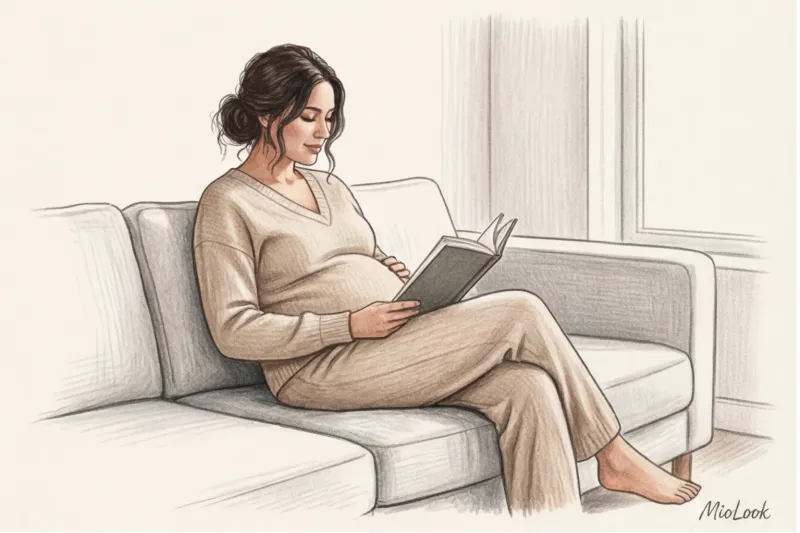
Homewear for nursing mothers: stylish and comfortable
How to stop wearing shapeless nursing clothes and reclaim your femininity? A stylist's secrets for choosing a beautiful and comfortable home wardrobe.
Dressy clothes for nursing mothers: holiday looks
Special dressy clothes for nursing mothers are often just a marketing ploy. We'll tell you how to dress stylishly for a special occasion using regular brands.
Clothes to conceal your belly after childbirth: stylist tips
Forget the shapeless maternity wear. Learn how to create a stylish postpartum wardrobe using everyday brands and the right fit.
Winter Nursing Clothes: Stylist Tips
Forget about shapeless fleece sweatshirts and awkward zippers. We'll show you how to create a stylish and warm breastfeeding capsule wardrobe using everyday clothing.
Summer clothes for nursing mothers: stylish looks
Specialized clothing for nursing is often just a marketing ploy. We'll tell you how to create a smart and breathable summer wardrobe without sacrificing your personal style.
Dresses for nursing mothers: stylish styles for every day
Marketers insist that breastfeeding requires a special wardrobe, but this is a myth. Learn how to choose stylish, basic dresses that will be comfortable for feeding your baby and still feel like yourself.
A Basic Wardrobe for a Nursing Mom: A Stylish Checklist
The fashion industry pushes specialized postpartum clothing, but you really don't need it. Learn how to put together the perfect, stylish essentials.
Breastfeeding in Regular Clothes: Tips for Moms
Don't rush to spend money on special nursing clothes! Learn how to easily adapt your regular wardrobe for comfortable nursing.