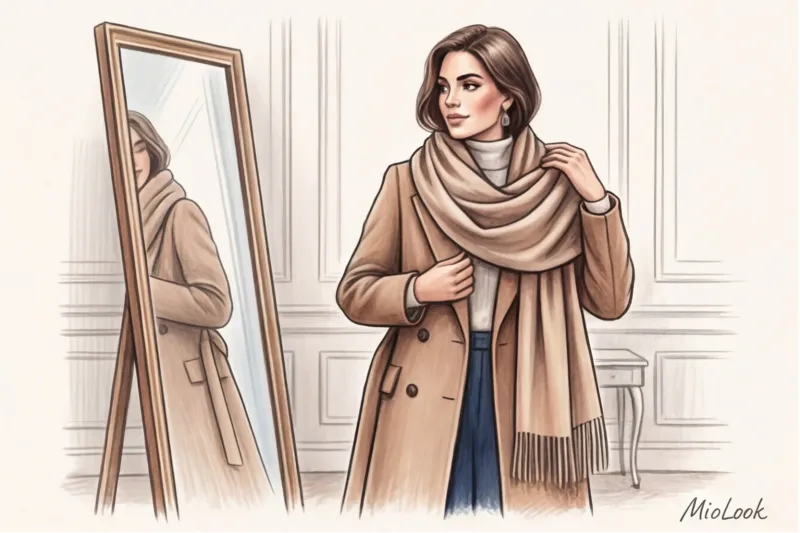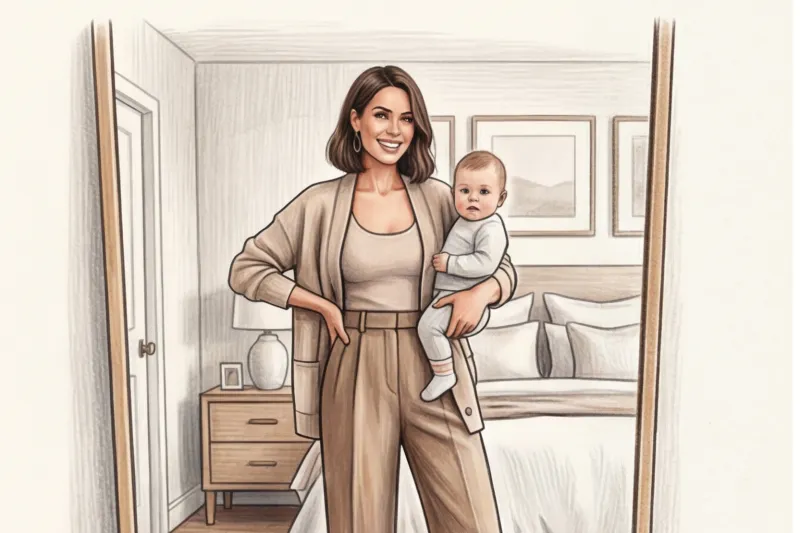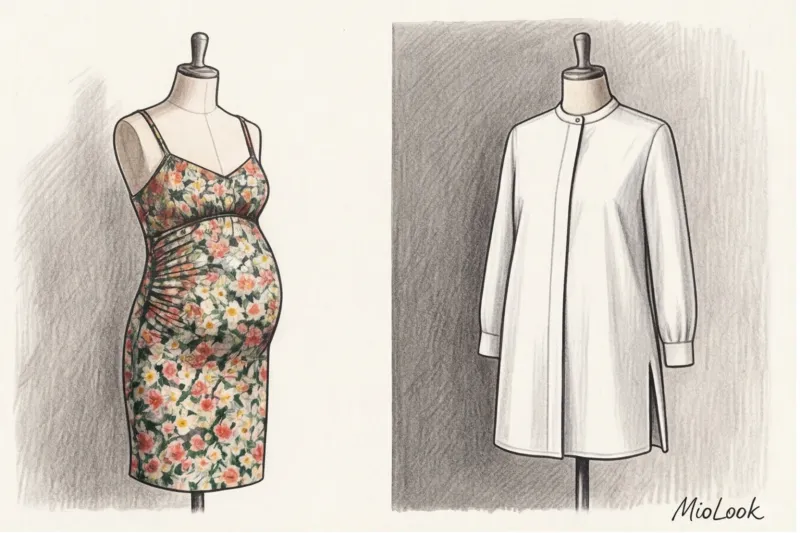
We stood in front of the huge mirror in the fitting room, and my client, Anna, was crying. She was wearing a specialized "nursing dress" for 500 euros, bought in a fit of panic before leaving the hospital. The problem was, four months had already passed, and in this high-waisted dress with its odd ruffles, just yesterday someone gave her a seat on the subway, mistaking her for being heavily pregnant. And this is the most common story I encounter in my practice.
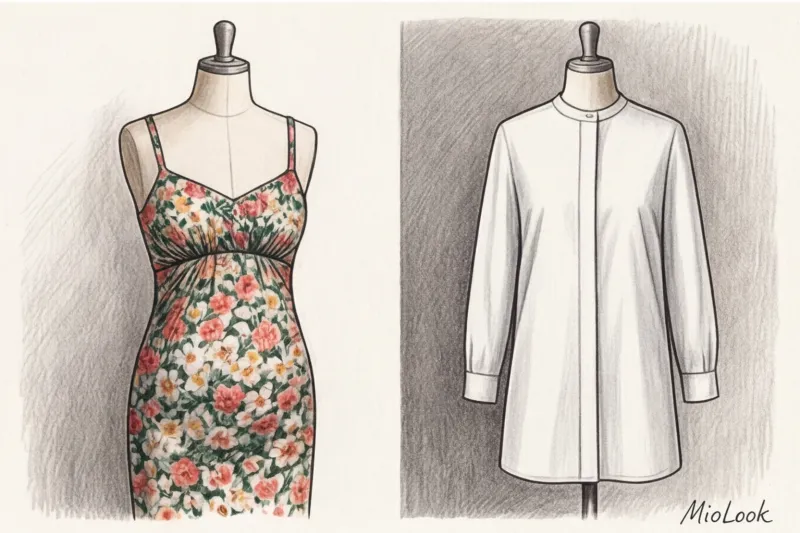
Over 12 years of working as a personal stylist, I've come up with a strict rule: your style shouldn't be affected by maternity leave. clothes that hide the belly after childbirth It's rarely sold in maternity departments. Shapeless robes, cheap knitwear, and depressing prints rule the roost there. We've covered the basic principles in more detail in our The complete wardrobe guide for new mothers , but today I want to show you a completely different approach: using architectural cuts and clever layering from everyday mass-market and middle-market brands.
The Empire Style Myth: Why Wearing Clothes That Hide Your Postpartum Belly Shouldn't Make You Look "Pregnant" Again
The main marketing ploy of maternity and nursing clothing brands is to sell you an empire waist (cut just below the bust) or a thin knit wrap dress. Marketers claim that the folds under the bust will subtly conceal your changing figure. In practice, it works just the opposite.
As Vogue Business analysts rightly point out in their 2024 reports, the maternity wear segment is still stuck in the outdated patterns of the 2000s. High-waisted dresses hug the fullest part of your belly and drape downward, visually increasing your size by two orders of magnitude. And if the fabric is thin, it will treacherously highlight even those features (belly button, underwear seams, natural folds) you might not have noticed.
“To hide volume, we don’t need draperies, but straight, rigid vertical lines that create a new contour independent of the body.”
That day, Anna and I collected all her dresses with elastic bands and sent them off to be recycled. Instead, we bought three pieces with a proper, structured cut. And that changed everything.
Access to MioLook for €0.99 — one-time payment
A smart AI stylist will select the perfect look based on your body shape.
Get access — €0.99 onceArchitecture over Drapery: 3 Rules for Choosing Fabrics
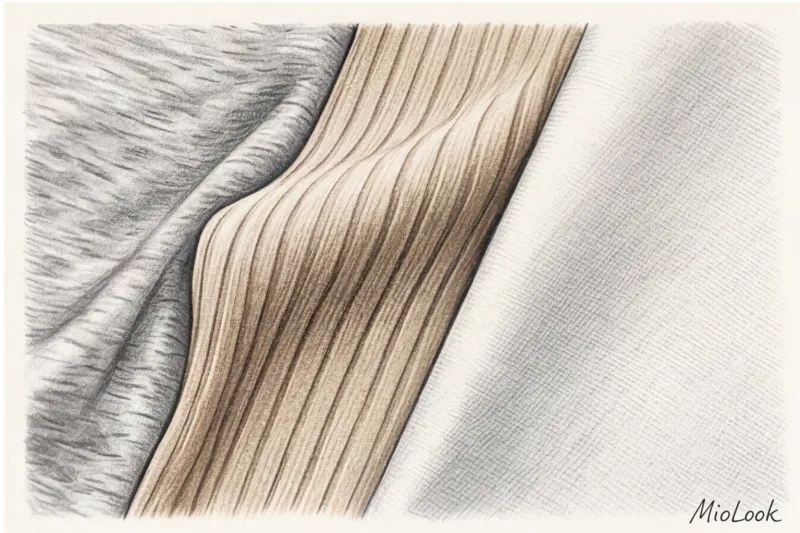
The main secret to postpartum figure correction lies not in the size of the clothes, but in the density of the fabric. I conducted my own experiment: I weighed a standard nursing t-shirt from H&M Mama and a basic t-shirt from the main COS line. The first weighed 130 g/m², the second 240 g/m². Therein lies the answer to all your questions.
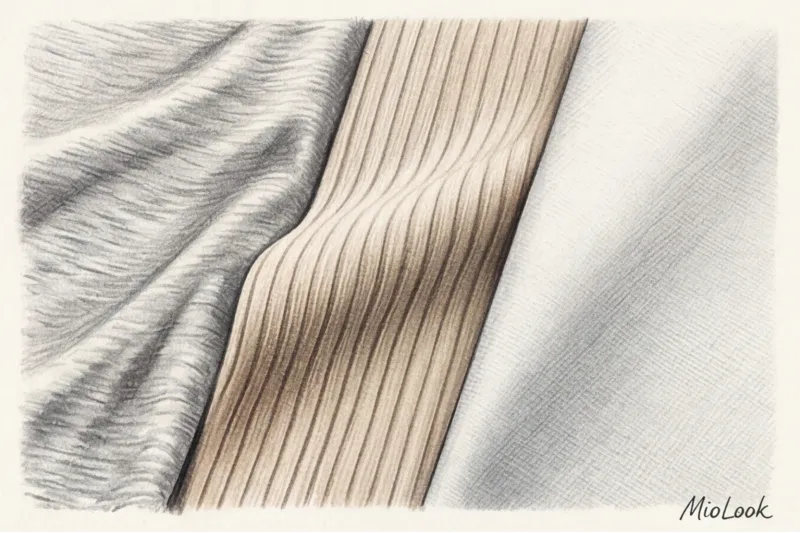
- Density rule: The fabric shouldn't cling to the figure under its own weight. Look for heavyweight cotton (200 g/m² and above), stiff denim without elastane, suiting wool, or heavyweight linen.
- Skipping the glitter: Satin, silk, and glossy viscose are your enemies for the coming months. The shine creates highlights that act as a magnifying glass for any volume in the abdominal area. Choose only matte textures.
- Structure: A garment should stand on its own. A thick, straight-cut shirt from Massimo Dutti will conceal your belly 100 times better than a soft cardigan from a specialty store.
Limitation: This rule doesn't apply to underwear. There, we need maximum elasticity, which we'll discuss below.
The Two-Layer Principle: Ideal Nursing Clothes Without Zippers
According to clothing market research (2023), 90% of specialized nursing clothes lose their shape after 3-5 washes due to cheap blended fabrics, and hidden zippers often distort the silhouette. My favorite styling trick solves the problem of nursing in public without buying weird clothes with hidden secrets.
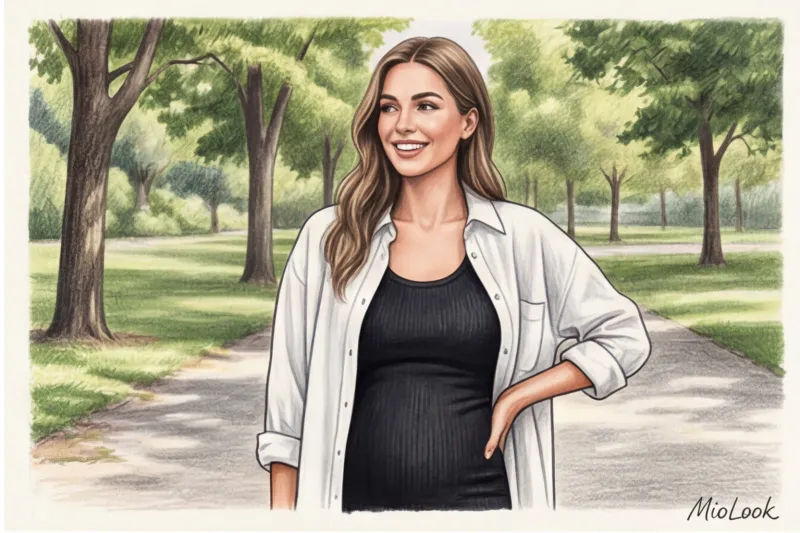
The "two-layer" method is ingeniously simple. You put on a stretchy base layer with wide straps, then layer a voluminous top (shirt, sweater, or crop top) over it. When you're ready to feed your baby, the bottom layer (the tank top) is easily pulled down under your chest, and the top layer is pulled up or unbuttoned. As a result, your breasts are hidden by your baby's head, while your stomach and lower back are completely covered by the bottom layer. No cold metal zippers coming into contact with your baby's skin, no awkward exposure in a cafe.
Formula 1: Loose Shirt + Basic Ribbed Tank
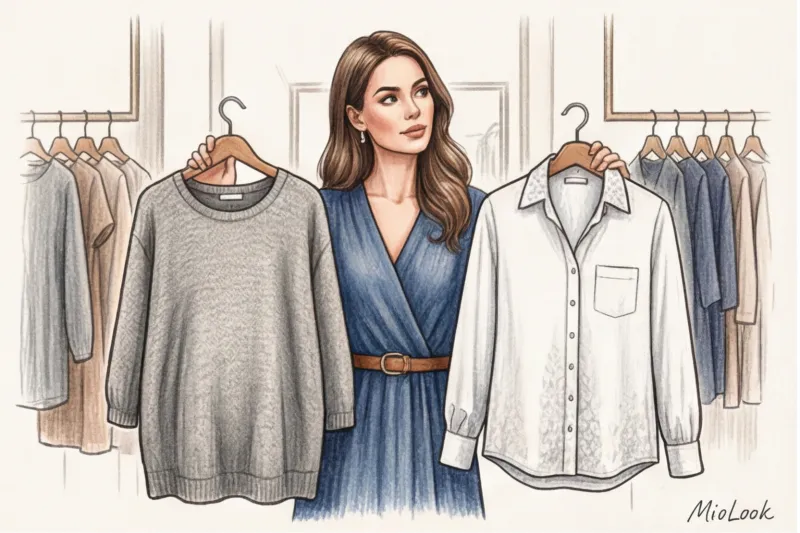
This is a smart-casual classic. Take a men's shirt made of thick poplin (dropped shoulders are a must) and wear it over a stretchy tank top. The secret here is to leave the bottom buttons unbuttoned. If you leave the shirt open from the waist down, the tight hem will create a sharp vertical line that literally "cuts" your midsection in half. You'll look two sizes slimmer.
Formula 2: Loose crop top + long, fitted tank top
Many people are wary of crop tops after giving birth, and they shouldn't be. A short but very loose sweatshirt (waist-length) worn over a long, hip-hugging tank top creates the perfect optical illusion. It creates a contrast in volume: the wide, structured top conceals the true contours of the waist, while the fitted, smooth bottom elongates the silhouette. It's the perfect option for cool weather and endless strolls with the stroller.
Your perfect look starts here
Join thousands of users who look flawless every day with MioLook. Digitize your wardrobe in just a few clicks.
Get access — €0.99 onceTrousers and jeans: how to maintain proportions before your belly disappears
Did you know that the average difference in waist size in the first six months after giving birth is 10 to 15 cm? That's why buying tight jeans in the first few months is a bad investment. Wearing maternity jeans with a huge knit belly insert is also a stylistic crime. Without the support of a real pregnant belly, this insert will slip down, bunch up, and distort the entire silhouette.
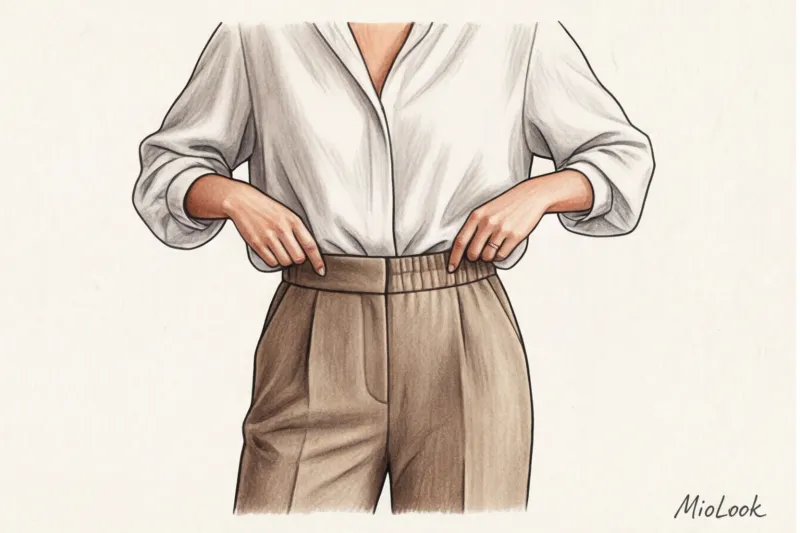
What to look for instead? Drawstring trousers. Forget sweatpants. I'm talking joggers or palazzo pants made of high-quality suiting fabric, wool, or heavy linen.
A perfect find from Zara or & Other Stories is a pair of trousers with a perfectly flat waistband (yoke) that doesn't create excess bulk around the stomach, and an elastic band at the back. They fit elegantly, don't put pressure on the seams (especially important after a C-section), and "slim down" as you do. Also, consider pleated trousers—these folds of fabric under the waistband are designed specifically to provide freedom around the waist, camouflaging any physiological changes.
Dresses: Stylish Styles for Nursing and Body Shaping
While choosing pants is straightforward, choosing a dress often leaves new mothers stumped. We need a dress that's easy to breastfeed in, doesn't make us look like a teapot on a woman, and can be worn a year from now.
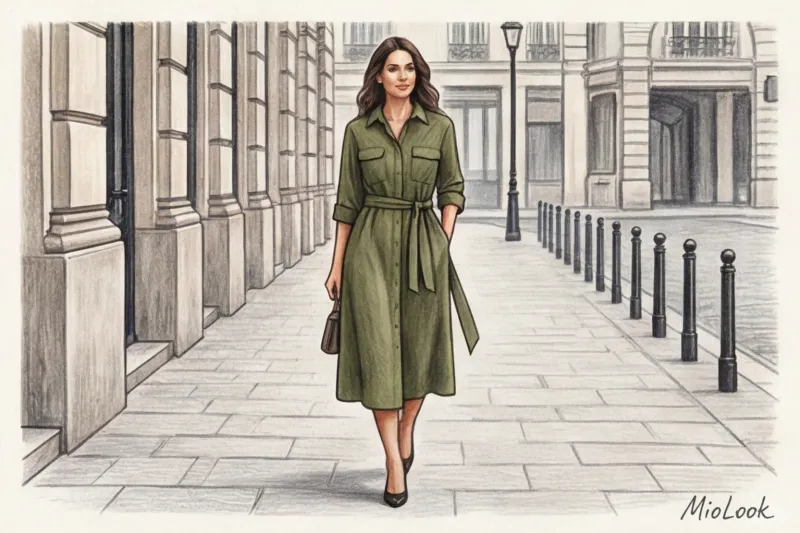
The best investment is a sturdy midi shirt dress. It's easy to unbutton at the top for nursing (again, wear a top underneath), and the stiff fabric (linen, poplin, cotton satin) holds its shape. Now, here's an insider trick I show all my clients: Don't tie the waistband of a shirt dress in the front! Pull it around the sides and tie it in a knot. on the back What happens? The fabric stretches in the front, creating a clean, even A-line silhouette that conceals any belly, while the waist is accentuated in the back.
As for wrap dresses, be careful. It's counterintuitive, but a classic, thin viscose dress in the style of Diane von Furstenberg will add even a millimeter of extra volume. The right wrap dress should be made of a very dense fabric (heavy linen, tight knit) and without the slightest ruffle at the hem.
Ready to get started?
Try MioLook's free plan—no commitments required. Upload your items and let the AI assemble the capsule.
Get access — €0.99 onceChecklist: Putting together a smart capsule for the first 6 months after birth
I'm against over-consumption. You don't need a separate closet full of temporary items. To feel stylish and comfortable every day, all you need is a well-designed mini capsule wardrobe. With the "smart wardrobe" feature, MioLook app You can easily mix these things together.
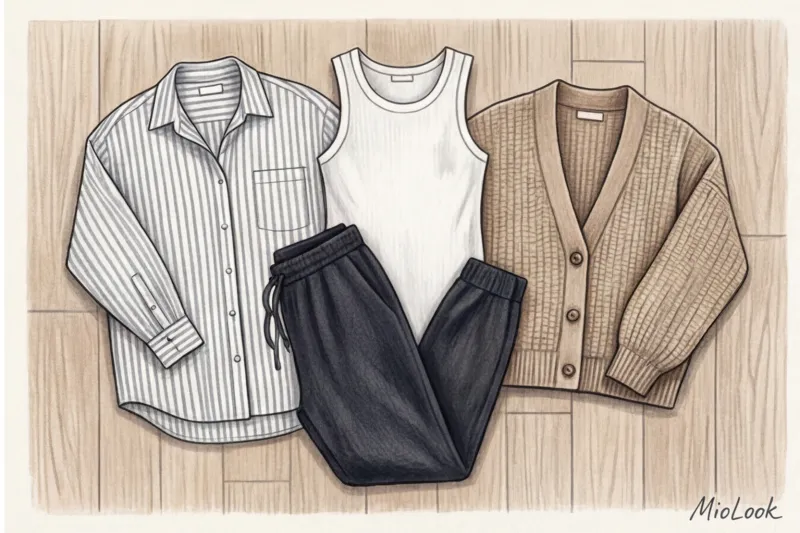
Here's a tried-and-true basic, every item of which will remain in your wardrobe a year from now:
- 2 thick ribbed tank tops (white and black, with a deep neckline or straps, with the addition of 5-8% elastane).
- 2 oversized cotton shirts (pure white and classic blue stripes - the stripes create an additional slimming vertical line).
- 1 midi shirt dress made of thick fabric (olive, dark blue or beige).
- 1 pair of suit trousers relaxed fit with elastic back (smart casual).
- 1 loose sweater or a crop hoodie with dropped shoulder seams and wide sleeves.
You can easily create more than 10 looks from these six items. An unbuttoned shirt over a tank and trousers is for a doctor's appointment. A sweater over a shirtdress is for a walk in the park. A half-buttoned shirt and trousers is for a meeting with friends. Everything ingenious is structured.
Conclusion: Your style changes, and that's okay.
Postpartum isn't a reason to put yourself and your style on hold, wearing your husband's old, stretched-out T-shirts. But it's also no excuse to buy disposable clothes with questionable zippers. Your wardrobe should serve you: give you confidence when you're sleep-deprived and provide comfort when you need to feed your baby on a park bench.
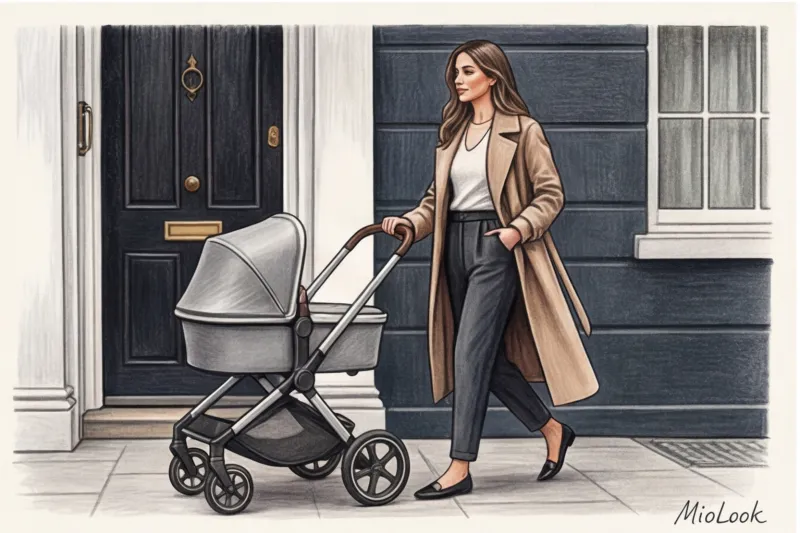
Body changes are a natural process that deserves respect, not concealment in baggy fabrics. Instead of rushing to the store for yet another batch of temporary clothing, take stock of what you own right now. Get out your thickest oversized shirts, buy a couple of quality ribbed tank tops, and try the "two-layer" approach tomorrow. Trust me, you'll look at your reflection in the mirror with completely different eyes.