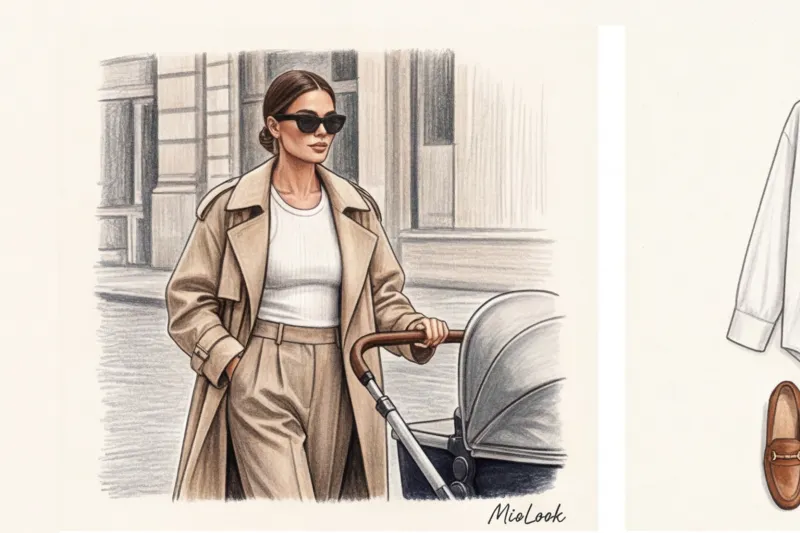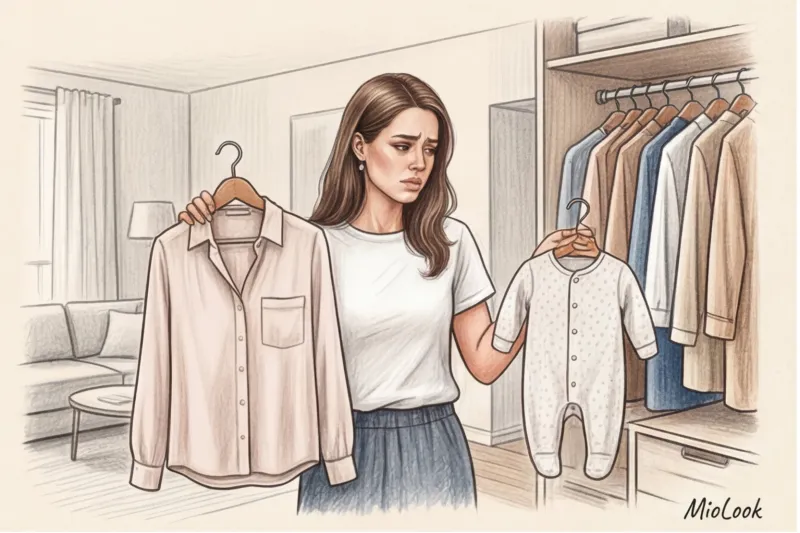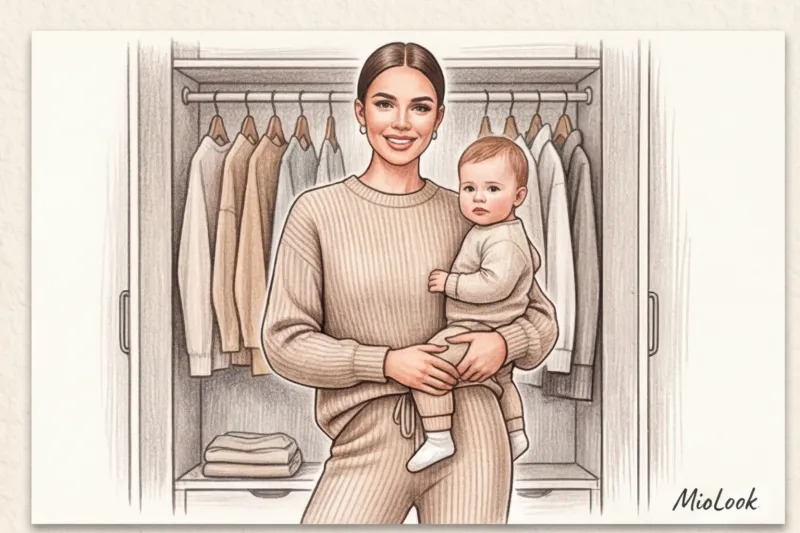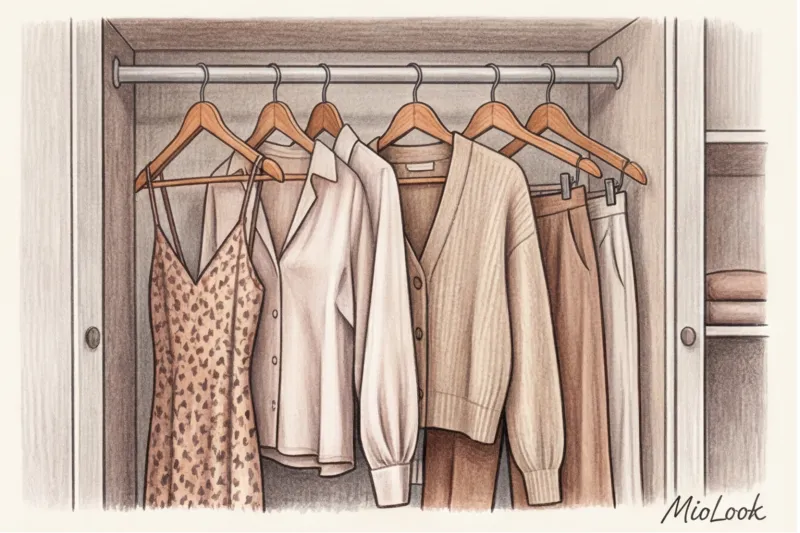
Just last week, a client came to me with a request: "Darina, I've set aside 50,000 € for special nursing clothes. Help me choose something that doesn't look like a shapeless sack." Do you know how much of that money we spent on specialized nursing clothes? Zero. We bought exactly three basic tops from the mass market, and the rest of the time I spent showing her... How to breastfeed in regular clothes , which was already hanging in her closet. Many young mothers don't even realize that their pre-pregnancy wardrobe hides enormous functionality if they know how to use it. I've already discussed the basic principles of maternal style in more detail in our The complete guide to nursing clothes , and today we will engage in pure practice.
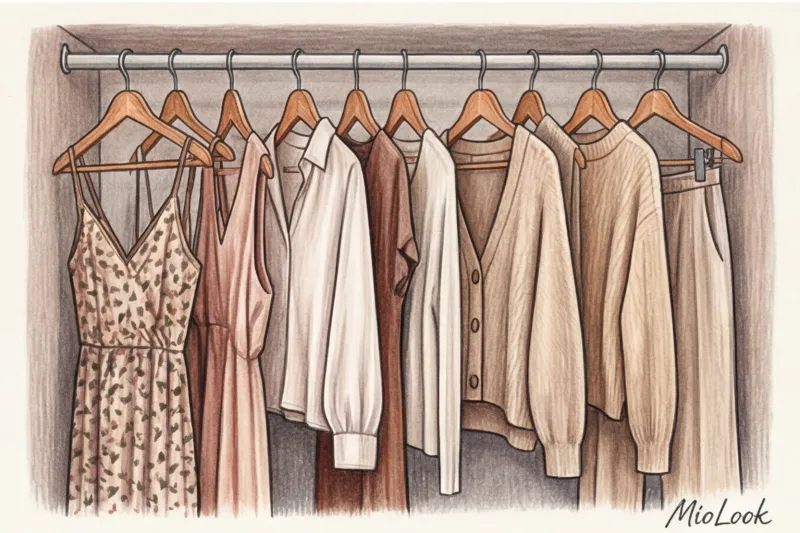
Why You Don't Need to Completely Change Your Wardrobe
The maternity and nursing clothing industry relies on a hidden "maternity tax." Clothes with hidden zippers in the seams cost 30-40% more than their standard counterparts, yet are often made from cheap fabrics. According to statistics from mass-market manufacturers, approximately 80% of specialized maternity clothing is made from low-quality jersey. You've probably seen this effect: after five washes, a T-shirt starts to sag at the side seam, and hidden zippers start to ripple across the chest.
As a stylist, I always encourage considering Cost Per Wear. Compare this: you buy a special nursing hoodie for 6,000 €. You'll wear it for a maximum of 6-9 months, wearing it, say, 30 times. The cost per wear is 200 €. Alternatively, you buy a luxurious deep-V cashmere-blend jumper for the same price, wear it while nursing (with the right base layer), and then continue wearing it for another three years. The benefits are clear.
But there's also a more important, psychological aspect. I had a client, Marina, a corporate lawyer. During the first month of maternity leave, she fell into a real slump because she was forced to change into floral "nursing sweatshirts." Wearing your usual clothes, reflecting your true personal style, is the fastest way to psychologically return to yourself after giving birth.
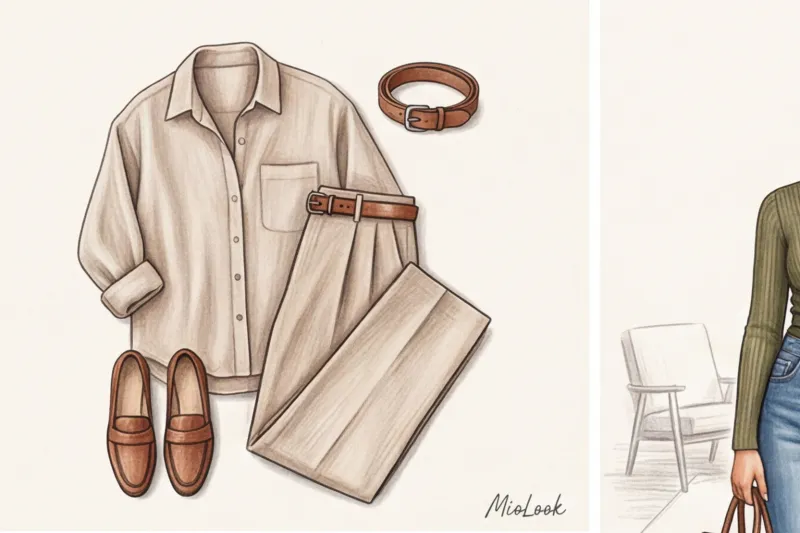
The Biggest Myth: "Just wear button-down shirts."
Open any mommy blog, and the first piece of advice you'll see is: "Buy a basic oversized cotton button-down shirt." As an image consultant, I can officially say this is one of the worst pieces of advice for comfortable breastfeeding in the first few months.
Let's break down the mechanics. Stiff cotton (like poplin) has no stretch at all. Imagine this: your baby is crying in the stroller or in your arms, and you need to breastfeed quickly. You're holding the baby with one hand, and with the other, trying to undo the tiny buttons on the non-stretchy fabric. It's time-consuming and awkward.

The second problem is psychological. When you unbutton your shirt from top to bottom, your breasts are completely exposed at the top (the cleavage). For many women, this creates significant discomfort when breastfeeding in public. Furthermore, a straight-cut or oversized shirt made of thick fabric creates a "tent" effect, adding massive visual volume where it's completely unnecessary. The alternative? Stretch fabrics with shape memory.
Your perfect look starts here
Join thousands of users who look flawless every day. Upload your items, and AI will create comfortable capsules for you.
Get access — €0.99 onceNeckline architecture: how to breastfeed in regular clothes without zippers
In styling, there's a concept called "neckline architecture." A properly chosen neckline eliminates the need for complex hardware while still providing perfect access. The key here lies in the fabric composition. I always make my clients read the labels: to ensure the neckline can be pulled back and stays in place without becoming a stretched-out rag by evening, the composition must include strictly from 3% to 5% elastane (spandex).
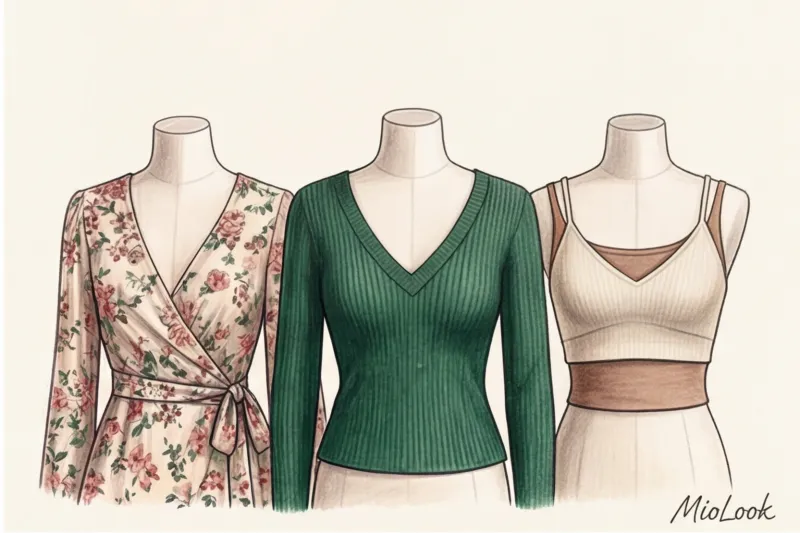
The cowl neckline and soft draping are a brilliant solution. Not only do they allow you to easily pull the fabric down, but the volume also helps disguise changes in breast size throughout the day as your milk comes in.
Wrap Dresses: Elegance and Functionality
The wrap dress, popularized by Diane von Furstenberg in 1974, is the perfect ally for nursing mothers. You simply pull one side of the fabric aside. In summer, this could be a viscose or silk-blend dress, and in winter, a fine wool (with the same added elastane).
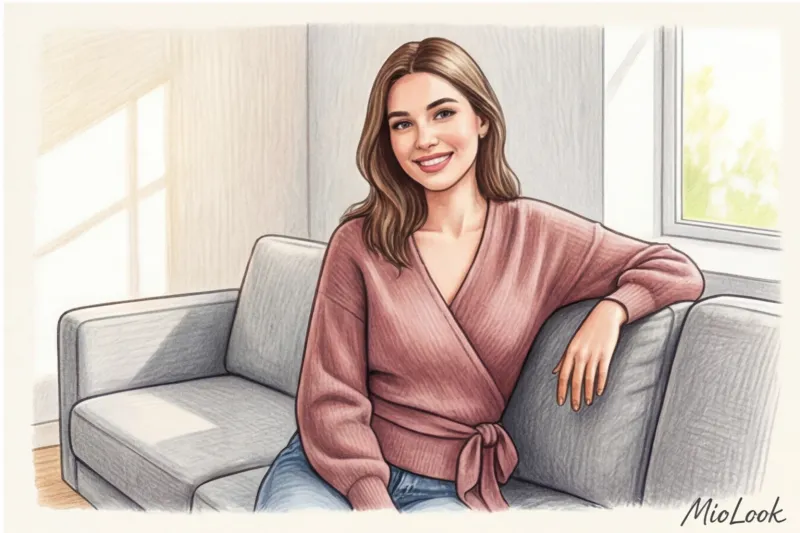
Square necklines and corset tops in knitwear
The trend for square necklines and corset-style knit tops is playing to our advantage. The wide straps of these tops perfectly conceal the wide and often unflattering straps of nursing bras. To feed your baby, simply pull the elastic square neckline down. Limitation: This technique won't work with real whalebone corsets - the fabric needs to be elastic.
The Double Layer Formula: The Secret of Hollywood Moms
If I were asked to share just one style tip for new mothers, it would be the double-layer formula. It's simple: pull the bottom layer down (under the bust), and lift the top layer up. As a result, the chest, stomach, and back remain completely covered. Only a narrow strip of skin, covered by the baby itself, is visible.
A basic top serves as the base layer. Personal life hack: instead of expensive nursing tops with detachable clips, buy simple seamless ribbed tanks from mass-market stores like Uniqlo, Tezenis, or Zara. The ribbed texture makes them incredibly stretchy and instantly spring back up.
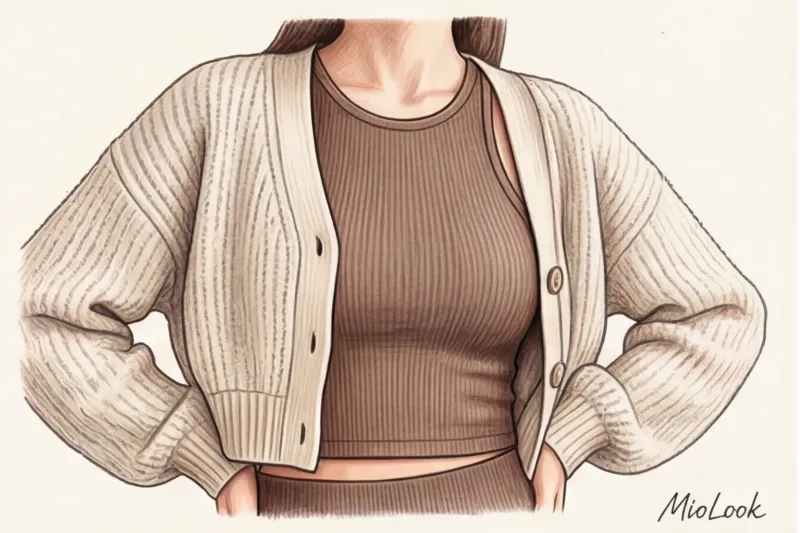
Now comes the fun part: the top layer. Who would have thought that crop tops and cropped sweaters would be a nursing mom's best friend? By layering a voluminous cropped sweater over a sleek, fitted top, you create a stylish play of textures. To avoid racking your brain over combinations in the morning, you can digitize your pieces through MioLook , and a smart wardrobe will offer you dozens of stylish layered outfits from what's already on the shelves.
Color and prints: disguising the consequences
As a colorist, I often encounter the same misconception: "I'm a mom, so I'll wear black because it won't stain." Remember: black and navy blue are the worst colors for new mothers. Smooth black knits show everything—from lint from a blanket to the tiniest drop of water.
Breast milk stains have a whitish or yellowish undertone. Spit-up stains are also light. Against a dark background, they create maximum, vibrant contrast. If you want to use color as optical camouflage, consider the following solutions:
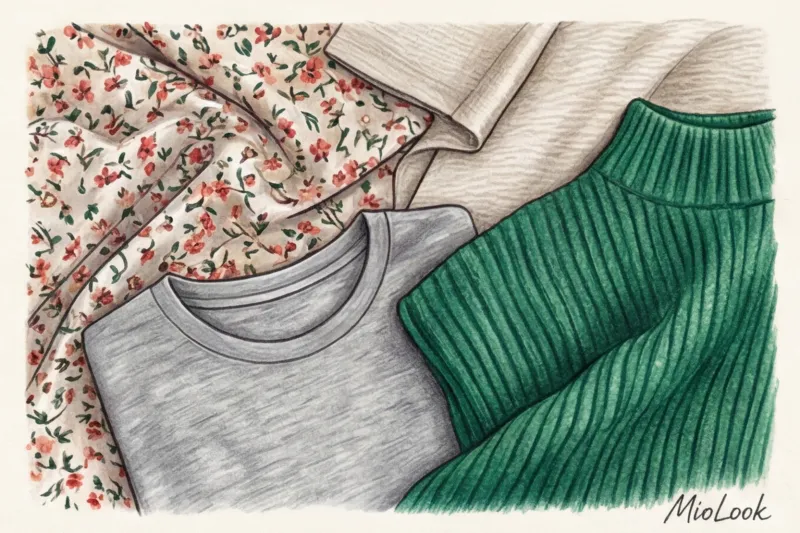
- Melange yarn. This is a thread woven from fibers of varying shades (usually gray or beige melange). Due to its visual "noise" and color unevenness, melange can hide up to 90% of minor stains before you reach the washing machine.
- Light natural palette. Shades of oatmeal, ecru, sand, and dusty rose are in the same lightness range as potential stains, reducing the stain's contrast.
- Speckled small prints. Millefleur (small floral), leopard, abstract geometry. The pattern encourages the human eye to glide over the surface, without focusing on local imperfections.
Access to MioLook for €0.99 — one-time payment
A smart AI stylist will select the perfect look based on your body shape, color type, and lifestyle.
Get access — €0.99 onceChecklist: How to check an ordinary item before buying
Now that you know the theory, here's the step-by-step cheat sheet I give my clients. Apply it right in the fitting room of a brick-and-mortar store:
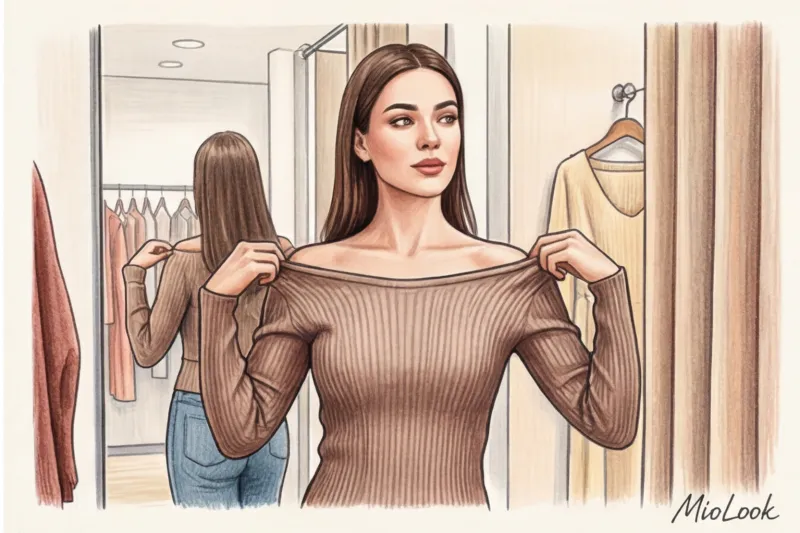
- Test for stretchability and "memory effect". With one hand, firmly pull the neckline down, simulating access to the chest. Release. If the fabric doesn't return to its original position within 3 seconds and starts to ripple, the garment doesn't fit.
- Fist test (for crumpling). Feeding always involves close contact. Firmly squeeze the hem of the garment in your fist for 10 seconds and release. If the fabric is covered in hard creases, after 20 minutes of holding your baby, you'll look like you've been sleeping in it. Look for fabrics with synthetic or artificial fibers (viscose, tencel, high-quality polyester).
- Armhole assessment. If you're buying an oversized sweater, check the armhole width. A wide dolman armhole allows you to skip the neckline entirely, allowing access to the chest from the side.
Accessories: Divert attention and enhance status
Style is in the details. When your outfit becomes as practical as possible (basic tops, soft cardigans), accessories take on the task of elevating the look. Our goal is to draw attention away from the chest and stomach and onto the face (the portrait area).
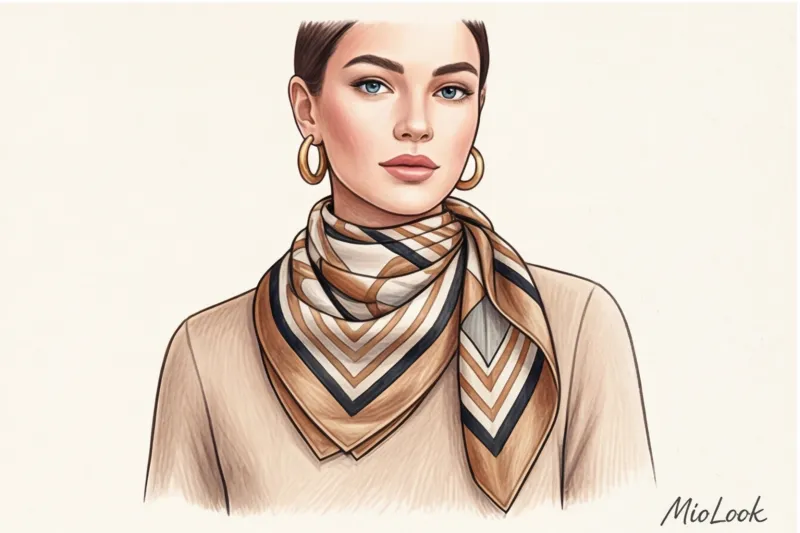
Large, statement earrings (smooth hoops, baroque pearls, geometric shapes) work flawlessly. They're safe (the child won't be able to reach them during the process) and instantly make the face look more polished and expressive. However, long pendants, chains, and brooches should be avoided for now in the portrait area—it's a safety issue, as the child could snag their fingers or get scratched.
Silk scarves (bobble scarves) or viscose stoles are excellent work tools. They serve a dual purpose: they create a complex vertical line that slims the figure, and when needed, they can be easily draped over the shoulder as a stylish cape (milksnood), keeping you hidden from prying eyes.
"Your style doesn't go away on maternity leave. Motherhood isn't a reason to forgo aesthetics for function; it's a chance to learn how to masterfully combine the two."
Regular clothes give you freedom of choice, a flawless fit, and the joy of recognizing yourself in the mirror. Just pay attention to the right cut, the presence of elastane, and the art of layering. Don't buy new clothes just because they're labeled "for nursing"—buy clothes you'll still want to wear in three years.