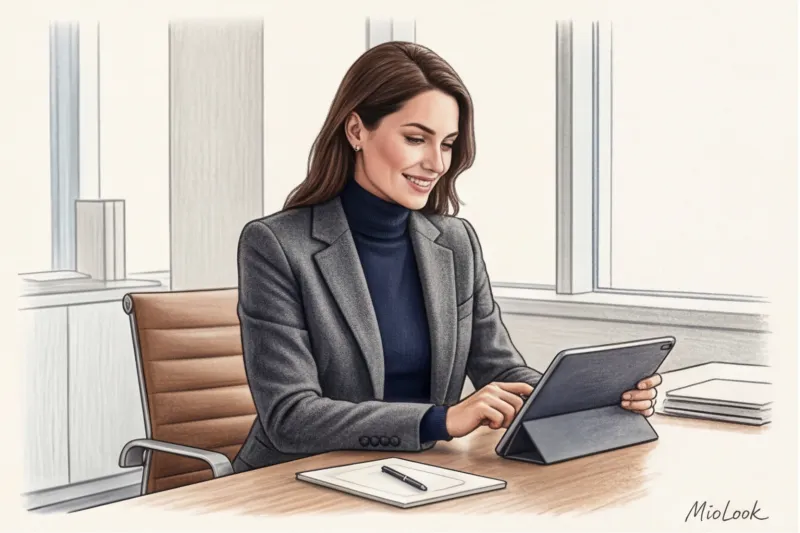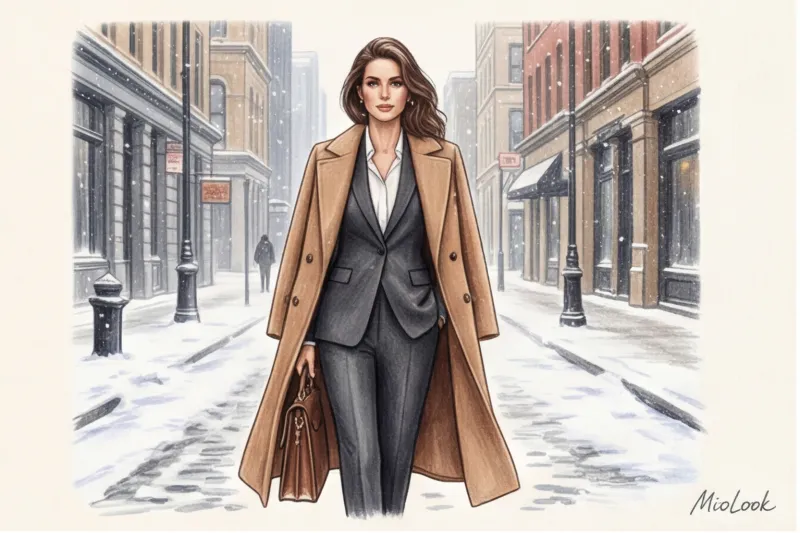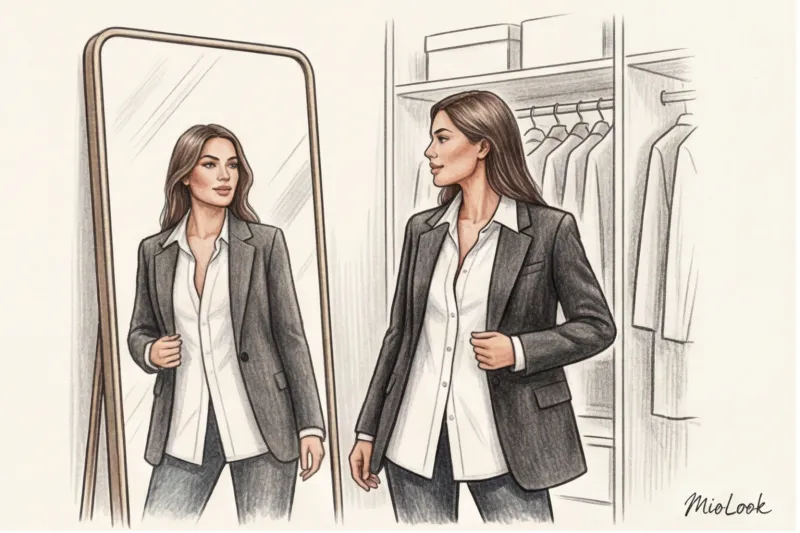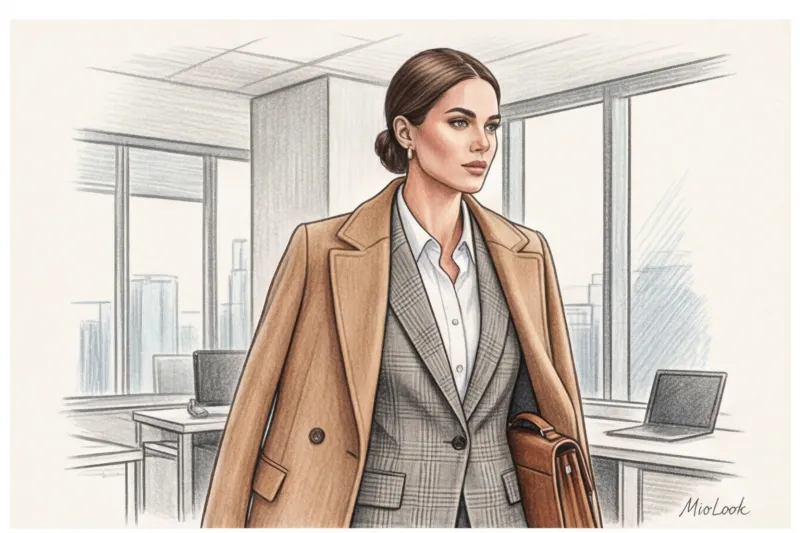
I vividly remember the day Anna, a top executive at a major investment bank, came to my Paris studio. She glanced at the racks of her boring gray two-piece suits and said with a heavy sigh, "I feel like a walking Excel spreadsheet. I want to look stylish, but corporate regulations forbid me even a plunging neckline or a bold print." We didn't break the strict dress code. Instead, we hacked it with the concept of architectural micro-layering.
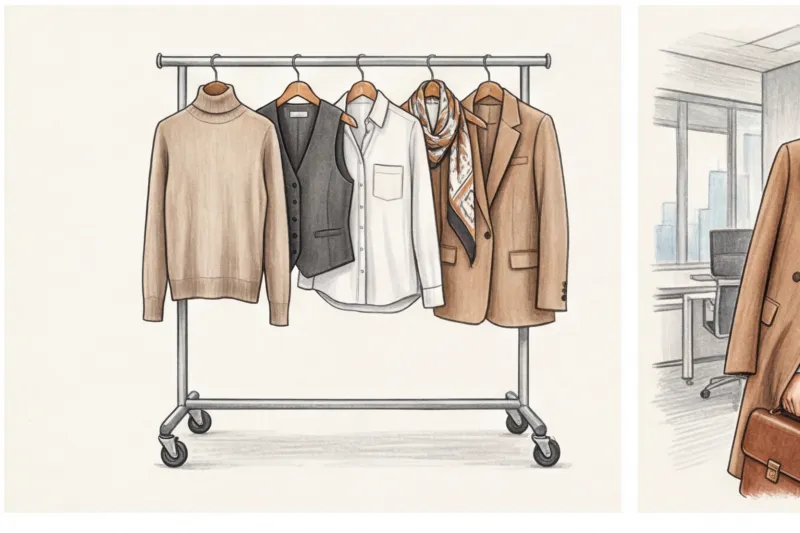
Most women make the same mistake: they try to make an office look interesting with an odd cut or chunky jewelry. But the real secret to a luxurious look is layering. Creating layered looks for the office , we can use ultra-fine fabrics—silk, mesh, delicate wool—to add complexity and sophistication to the silhouette. We've already written about the basics of this technique in our complete guide to Layering: How to Create Stylish Looks , and today we will look at the business segment.
The Anatomy of Business Layering: Why Office Wardrobe Is No Longer Boring
For a long time, office attire was considered a uniform, designed to depersonalize employees. But after the pandemic, the rules of the game changed. According to a major report by the analytical agency WGSN (2024), the corporate suit has been replaced by the global trend of "Corporate Core" ("intelligent office fashion"). Its essence is to demonstrate status through complex attire.
Stylists often rely on the "Rule of Three." The psychology of perception works like this: trousers and a shirt are simply clothing. But add a third element (a vest, a structured cardigan, or even a silk scarf woven into the collar), and the brains of others perceive the look as "complete" and "expensive." Experience shows that this technique visually increases the value of an outfit by at least 60%.
Beyond aesthetics, it's also a matter of survival. Have you ever noticed how difficult it is to dress for the office in winter? It's below freezing outside, the subway is hot, and the air conditioning in the open-plan office is blowing directly at your back. Layering is your personal climate control, which you can adjust with a single movement, simply by unbuttoning the middle layer.
Access to MioLook for €0.99 — one-time payment
A smart AI stylist will select the perfect look based on your office dress code.
Get access — €0.99 onceMicro-layers: The secret weapon for a strict dress code
The biggest myth I've been fighting for the past 10 years is: "Layers are just for warmth and make me look bigger." Girls are afraid of looking like a cabbage. And that's true if you layer bulky items on the outside. Intelligent, business-like layering is built on inside.
For inner layers, there's a gold standard: we select fabrics with a weight of no more than 150 g/m² (GSM). These include micro-modal, the finest merino wool, or silk. They hug the body like a second skin and add absolutely no bulk under a structured base.
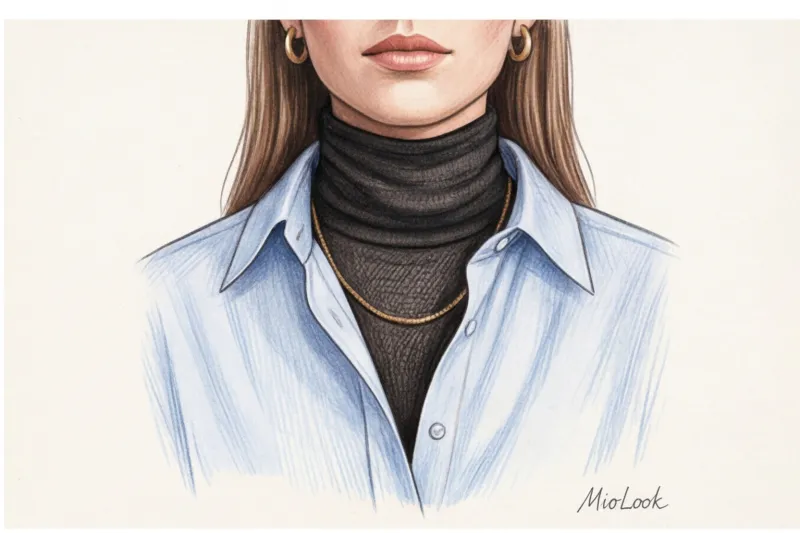
All the magic lies in the micro-protrusions. The ideal proportions, which I verify during fittings, are: the bottom layer should extend exactly 1.5–2 centimeters beyond the top layer. The thin cuff of a turtleneck peeking out from under the sleeve of a shirt, or the hem of a silk top at the neckline of a blazer—these are the details you'll want to admire.
"Even translucent fabrics like mesh or organza are perfectly acceptable in a formal office setting, as long as they function solely as a micro-layer underneath, protruding a few millimeters, and not as a standalone element," I share my rule with my clients.
Turtleneck, shirt, jacket: deconstructing the classic formula
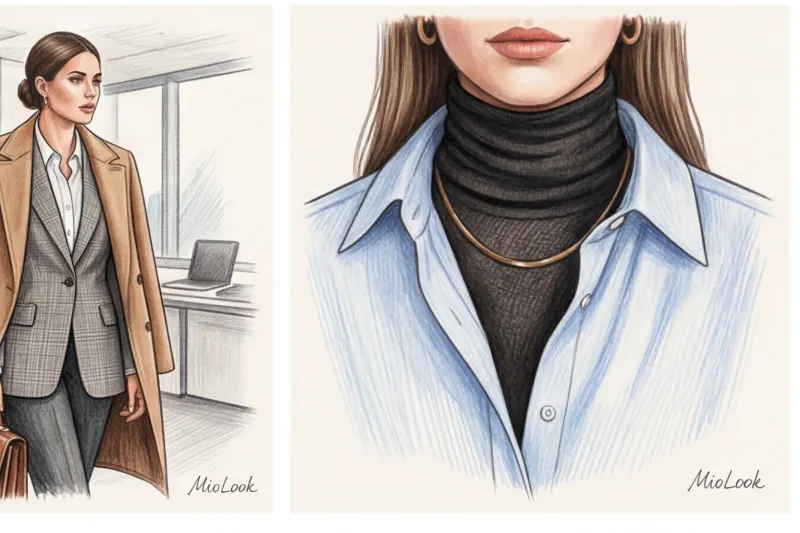
Backstage at The Row and Prada shows in Milan, I often saw this formula: a thin turtleneck, a men's shirt over it, and a loose jacket on top. It's the most reliable style formula for the cold season.
But for the formula to work, the shirt for the middle layer needs to be just right. Forget fitted blouses with darts—they'll ruin the silhouette. We need a straight cut made of thick cotton (poplin) that will hold the shape over the soft base layer.
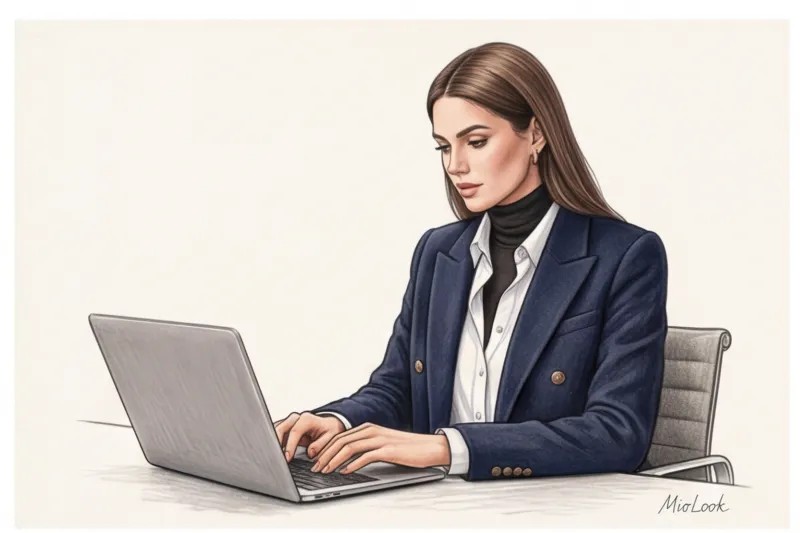
I recently styled a wardrobe for the CEO of an IT company. We replaced her usual white tank top, which she wore under her shirt, with a thin burgundy turtleneck (costing around €80). She wore a classic loose-fitting light blue shirt on top. This contrast of burgundy and icy blue instantly elevated the look from "boring clerk" to "decision maker."
Life hack: You can control the geometry of your face. If you have a round face or a short neck, unbutton your shirt three buttons at a time, creating a deep V-shape against a dark turtleneck. This will visually elongate your silhouette.
Your perfect look starts here
Join thousands of users who look flawless every day with MioLook. Digitize your wardrobe and get ready-made formulas!
Get access — €0.99 onceVest Architecture: The Return of the Three-Piece Suit in a New Light
While a suit vest used to be simply an accessory to a jacket, today it's become a standalone, architectural layer. Wearing one to the office with nothing on is a bad idea (let's save that trend for street style). But layering a structured suit vest over a flowing midi dress or silk blouse is a masterstroke.
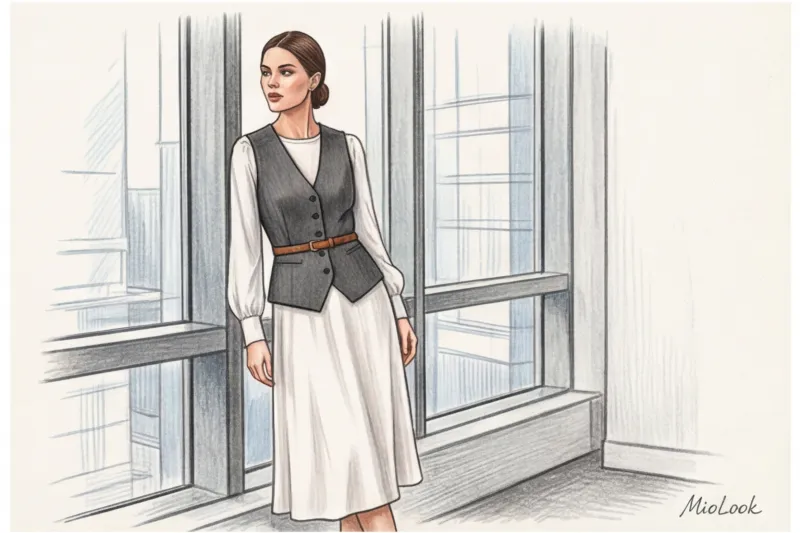
It's important to understand the difference: a knit vest gives a relaxed preppy vibe, while a suit vest made of thick wool creates a rigid frame, pulling the figure together. Longer styles (reaching mid-thigh), worn over an untucked shirt, create perfect vertical lines, concealing any nuances around the waist.
Fitting room technical tip: When buying a vest for layering, always check the armhole. It should be deep enough (3-4 cm below the armpit). If the armhole is too narrow, it will inevitably create unsightly creases in the sleeves of your shirt.
Texture Play: How to Add Deepness to Monochromatic Layered Office Looks
The most elegant layering is monochrome. A look entirely in camel or navy blue looks luxurious. But if all three layers are the same smooth fabric, you'll end up looking like a flat blob of color.
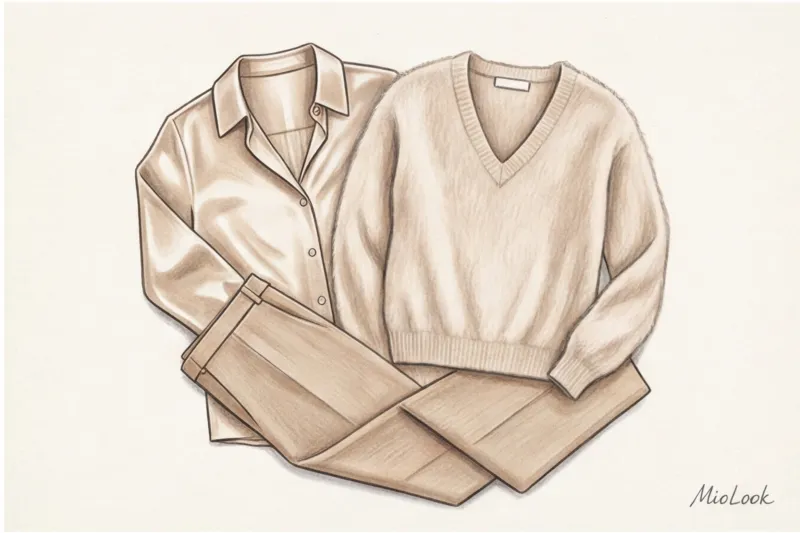
The stylists' secret lies in the formula of textures: "matte + smooth + fluffy" For example: matte wool suit trousers, a smooth silk shirt (reflective surface), and a fluffy mohair cardigan (light-absorbing texture). Light falls on these materials differently, causing black silk and black wool to produce completely different shades of black.
Even a conservative dress code will tolerate complex textures like smooth leather or loose tweed, as long as they're used sparingly. A leather vest under a classic wool blazer is the perfect detail to elevate the look.
Common Mistakes: How to Avoid the "Cabbage" Effect in Business
I have to be honest: layering doesn't work in every situation. If your office is super-heated (25°C) and you tend to sweat, stick to two layers of natural silk and the finest wool. Don't torture yourself with three layers for the sake of a look. But if you're willing to experiment, avoid these mistakes:
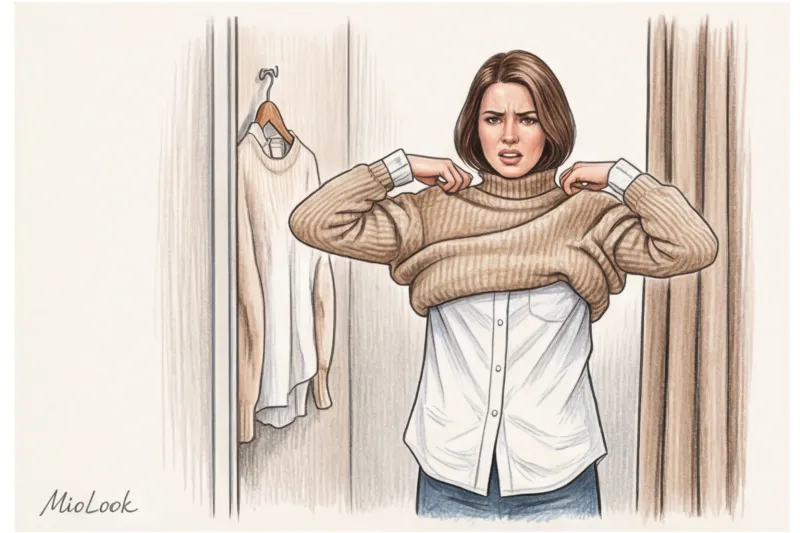
- Volume conflict. Trying to pull a skinny cardigan over a stiff, oversized shirt is a style crime. Remember: each successive top layer should be thicker and looser than the one before.
- Synthetic electricity. The combination of an acrylic sweater and a polyester blouse will turn you into a sparkling ball that will attract all the office dust. Use an antistatic agent and try to ensure that at least the bottom "slippery layer" is made of viscose or silk.
- Excessive detail. Three layers is already a statement piece. If the shirt has ruffles, the vest is plaid, and the jacket has gold buttons, the look will fall apart. Choose a simple cut.
Stylist Checklist: 5 Transformable Items for Your Office Capsule
You don't need to buy half a store to start crafting complex bows. Investing in this basic arsenal is enough:
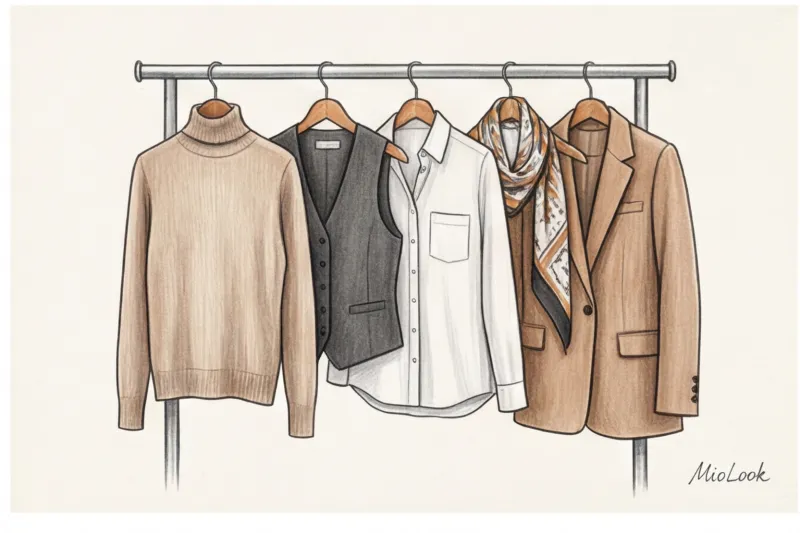
- Thin turtleneck (micro-modal, merino, or silk blend). Ideal options can be found in the €60–€100 range.
- Straight poplin shirt (better from the men's department, around 50-80 €).
- Suit vest the correct length (below the waist line).
- Loose blazer with a clear shoulder line.
- Silk bob or stole - use it as an internal micro-layer on the face.
Don't buy "interesting" stand-alone tops. Buy structured pieces. Layering isn't about how much you wear, but how those layers interact with each other. Try adding a thin turtleneck in a contrasting color under your usual office shirt tomorrow morning, and you'll see how your reflection in the mirror and your coworkers' reactions change.