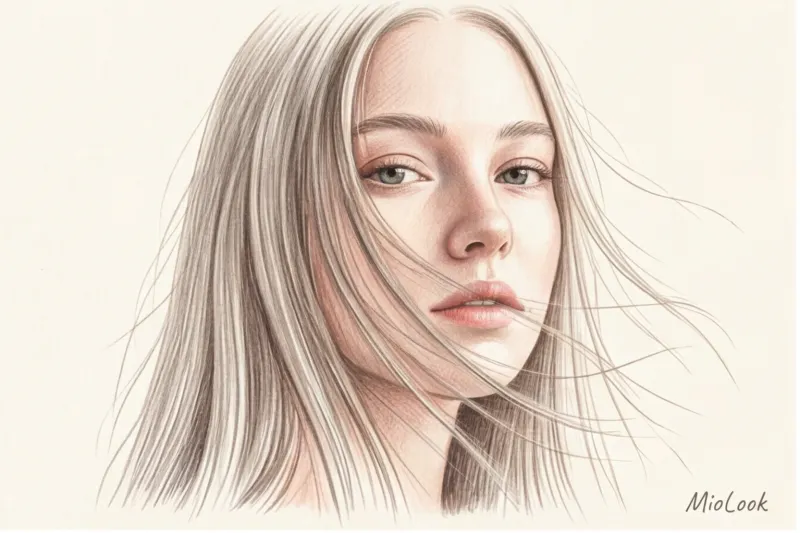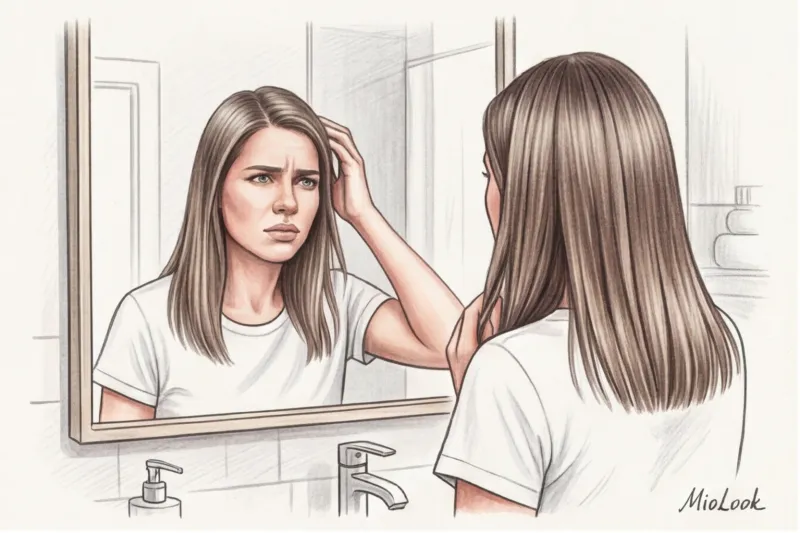
Every morning, my client Elena woke up at 6:30 AM, armed with a round brush, a hefty bottle of strong-hold mousse, and hairspray that looked like it could hold a concrete slab. She'd spend 40 minutes straightening her hair. But by 10:00 AM, when she sat down at her desk, her hair looked like it had just been caught in a light London rain. Her hair had fallen into dismal, thin strands, and the volume at the roots was just a memory. Sound familiar?
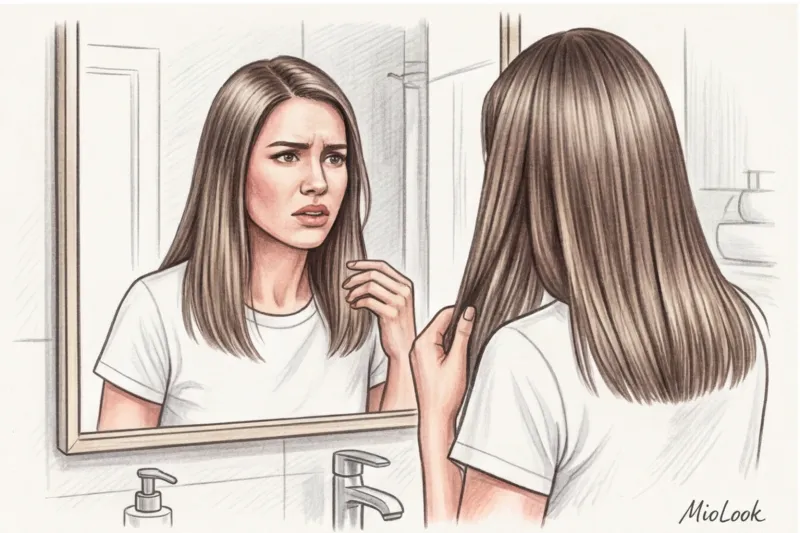
Ideal styling for fine hair lacking volume It's not voodoo magic or gallons of styling product poured on tightly. It's the right haircut, an understanding of hair physics, and the proper integration of the hairstyle into your overall silhouette. We discussed the evolution of the morning routine in more detail in our the complete guide to quick, everyday styling , but today I want to talk specifically about fine hair and look at the method that professional stylists use.
The illusion of thickness: why styling for thin, volume-deprived hair disappears by lunchtime
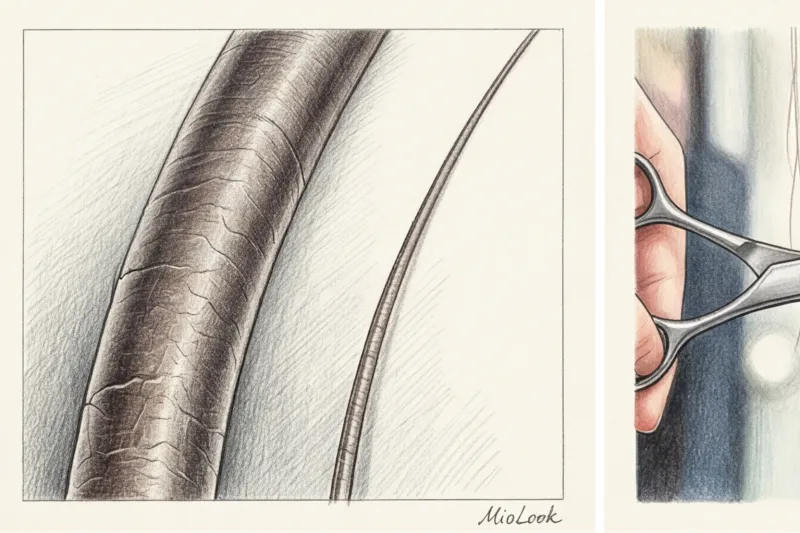
First, let's separate the wheat from the chaff: fine hair and thin hair are two different things. Hair density is determined by the number of hair follicles per square centimeter of scalp, while thickness is the diameter of the hair shaft itself.
According to trichologists, the diameter of a normal hair is approximately 0.08–0.1 mm. Fine hair, however, is half that—only 0.04–0.06 mm. It practically lacks the core (medulla), which is responsible for its rigidity. Imagine trying to build a skyscraper out of spaghetti. That's why Instagram tutorials where girls skillfully curl their hair with a giant brush and achieve a Cindy Crawford-style hairstyle often end in disaster with fine hair in real life. Spaghetti simply can't support the weight.
A 2023 study by the beauty industry research agency WGSN revealed a startling figure: 80% of women with fine hair use conditioners that are too heavy and moisturizing. They overfeed their hair in the shower. If the hair shaft is already weak, an overload of silicones and nourishing oils will crush it to the scalp, making it impossible for any hair dryer to save the situation.
Form architecture: the foundation without which styling is powerless
As a stylist and image consultant, I often see women spend hundreds of euros on luxury texturizers, trying to pump up volume where the geometry of their haircuts is pulling it down. Even the most masterful hairstyle will fall apart if you have a poor or overgrown base.
The rule of tight cutting and the taboo on thinning
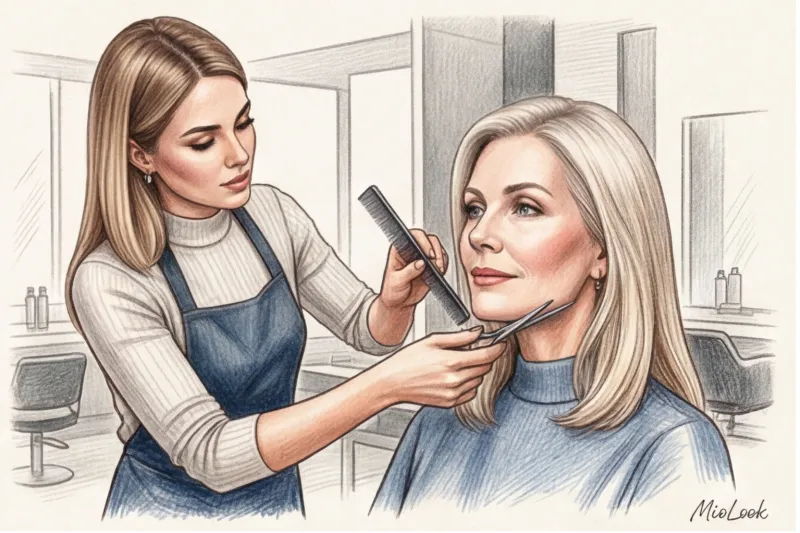
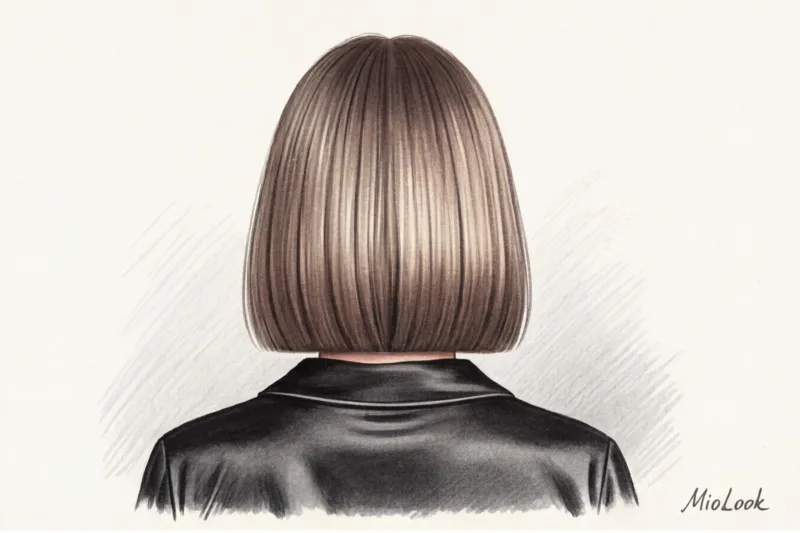
The biggest mistake a stylist can make on fine hair is using thinning shears. Jagged ends instantly cheapen the look, making the lower third of the hair appear thinner and less vibrant. The hair appears even thinner than it actually is.
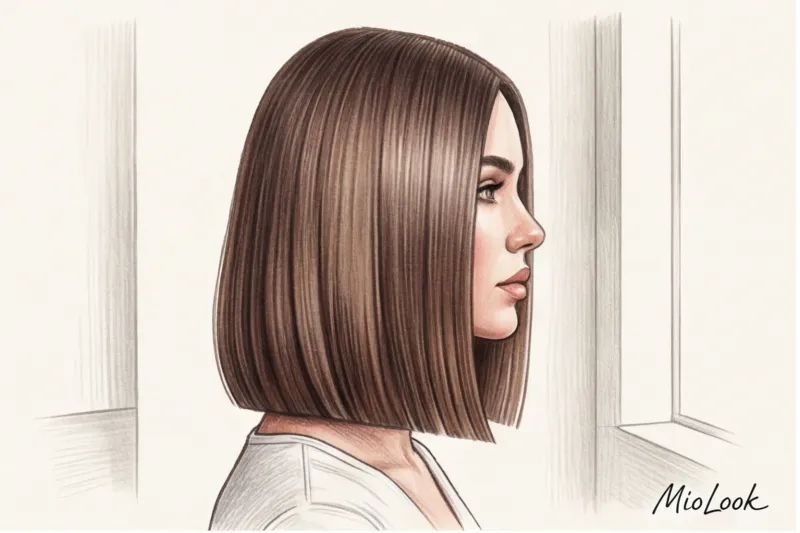
One of my clients had been wearing a heavily layered bob for years because someone once told her that "layers add volume." Once we ruthlessly chopped off those sheer ends and created a blunt bob, her hair visually tripled in thickness. The thick edge creates the illusion of weight.
"The secret to the perfect shape for fine hair is a tight outer cut and, if necessary, hidden (invisible) layers within the cut. They act as a support frame for the top strands without thinning the overall mass."
Access to MioLook for €0.99 — one-time payment
A smart AI stylist will analyze your appearance and select the perfect look based on your hair texture.
Get access — €0.99 onceLong-Lasting Volume Formulas: A Modern Stylist's Arsenal
And now for the main counterintuitive rule that shatters many women's expectations. The main myth is that to make fine hair appear thicker, you need a powerful mousse or foam to boost volume at the roots. Forget it.
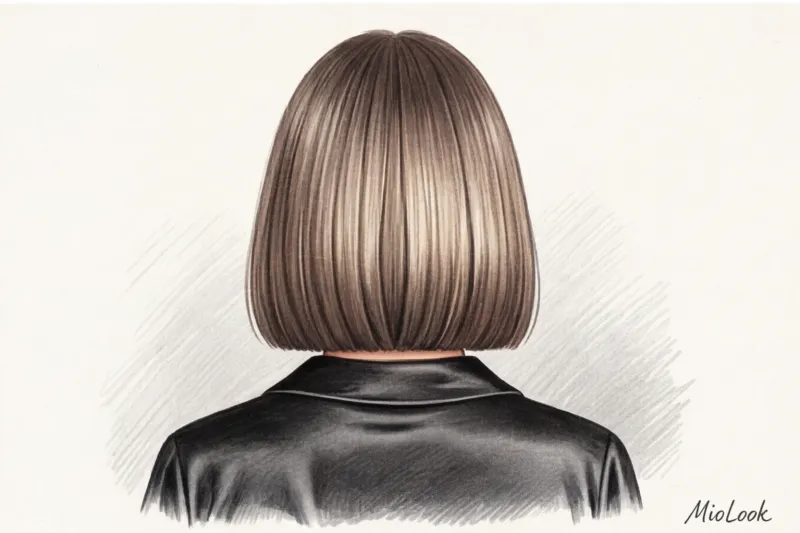
Backstage on fashion shoots, where I often have to work with models whose hair is depleted by constant coloring and hot tools, we never We don't use classic wet mousses. Why? Mousses contain water and heavy polymers. After a couple of hours, these polymers begin to attract moisture from the air. A classic hairspray or mousse weighs approximately three times more than modern dry texturizers. This weight inevitably causes fine hair to collapse.
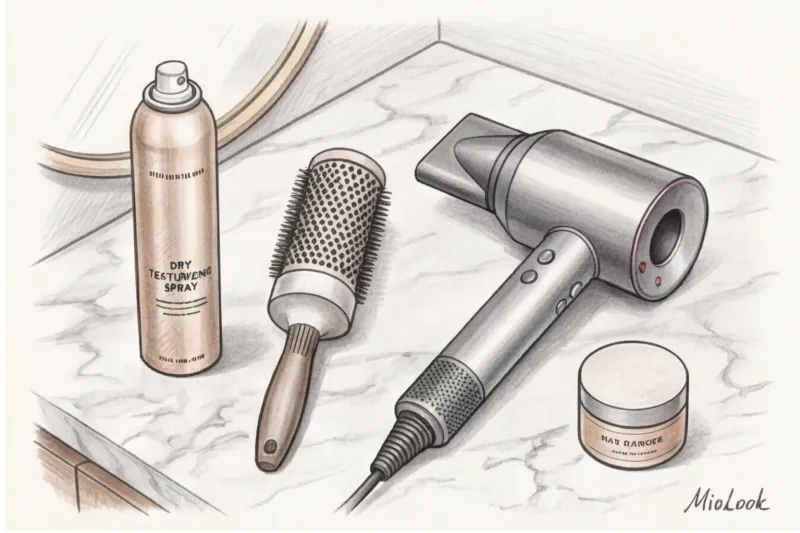
The secret to long-lasting volume lies in dryness. Your arsenal should consist of:
- Dry texturizing spray: It creates micro-gaps between hairs using absorbent particles. Hairs stop sliding over each other and begin to "cling" together, creating an air cushion.
- Styling powders for roots: Applied locally, it provides phenomenal root volume without a sticky feeling.
- Correct temperature conditions: Never dry fine hair on the highest setting. The cuticle of fine hair melts easily. Use a medium or low heat setting, and use a cold shot to set volume.
The Perfect Marriage: How to Pair Fine Hair with Your Clothing Lines
A hairstyle doesn't exist in a vacuum. Hair is the pinnacle of your silhouette. As a personal stylist, I always evaluate the entire look.
Imagine you're wearing an impeccably tailored heavy wool jacket costing around €300. It has defined shoulders and crisp lapels. If you pair this jacket with a fluffy, slightly tousled hairstyle with too much texturizing spray, the look instantly falls apart. The outfit requires structure, but the hair projects chaos. Conversely, a sleek, low ponytail with a center parting paired with a tailored jacket elevates the entire look to the level of "old money."
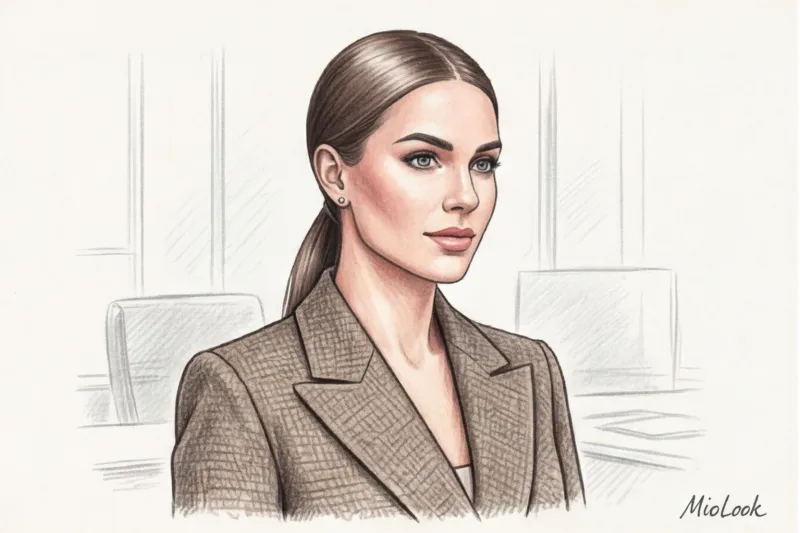
Work on the contrast of textures:
- For structured, dense fabrics (tweed, wool, heavy cotton), choose sleek, polished styles. If loose hair lacks volume, tie it back. A low ponytail or bun will do the trick better than trying to create artificial volume.
- Textured, loose waves (beach waves) are ideal for flowing, soft fabrics (silk, viscose, fine knits). Here, a dry texturizer will reveal its full potential.
Your perfect look starts here
Join thousands of users who look flawless every day with MioLook. Artificial intelligence will help you create a harmonious look, from your hairstyle to your shoes.
Get access — €0.99 onceThe main taboos in daily styling of hair without volume
Even if you have a great haircut and the right dry spray, there are a few habits that are guaranteed to ruin your volume. And I never tire of repeating them to my clients.
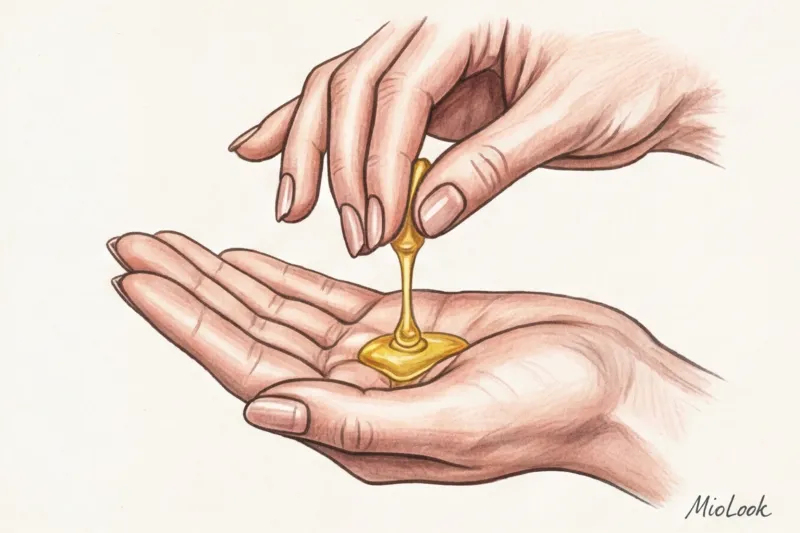
Firstly, oils for the ends Especially argan or macadamia oil. These are fantastic products for thick, porous hair, but for fine hair, they're a guillotine. A single heavy drop of oil, rubbed between your palms and applied to the ends, will weigh down the entire hair shaft. Replace them with weightless serum-sprays or leave-in creams with a light texture.
Secondly, backcombing at the roots Leave this technique in the 90s. Aggressive brushing against the cuticle damages fragile, fine hair, causing it to break right at the root. Furthermore, backcombing, laced with hairspray, creates a rigid "helmet" effect, which looks incredibly outdated. Modern luxury is effortless chic.
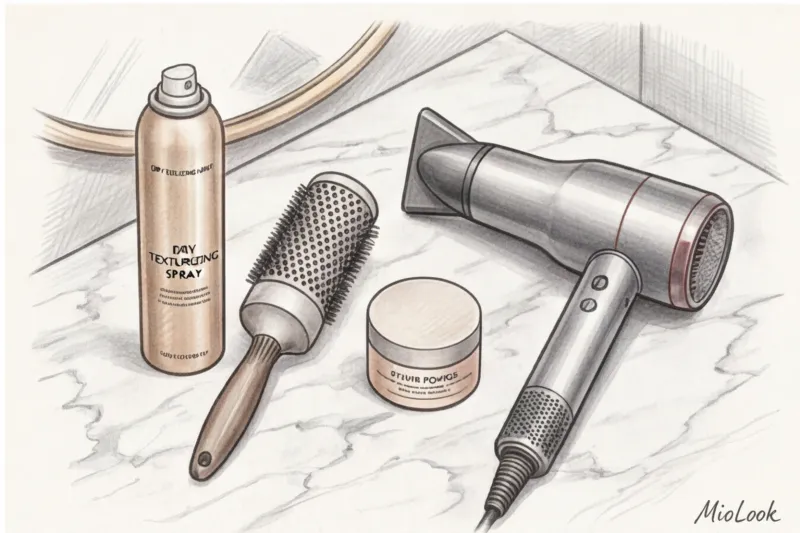
Thirdly, tight tension and metal clips Fine hair is incredibly fragile. Wearing a ponytail too tightly every day will lead to thinning of the hairline (traction alopecia).
Action plan: 10 minutes for a morning hairstyle that will last until evening
Let's put theory into practice. Here's a step-by-step plan that takes my clients no more than 10 minutes in the morning.
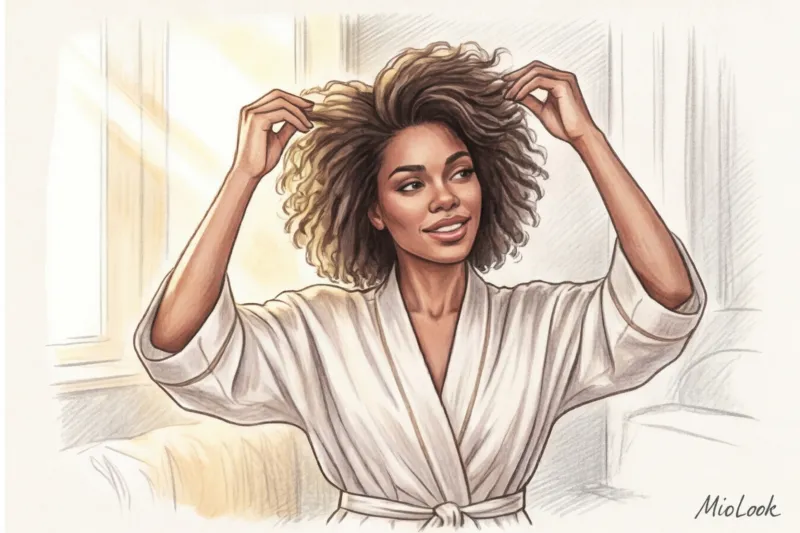
Step 1: Proper preparation. Use a volumizing shampoo (without heavy silicones), and apply conditioner only to the bottom 5-7 centimeters of the hair. The roots should remain squeaky clean.
Step 2: Drying against the rules. Turn your head upside down or part your hair to the opposite side of your usual part. Blow dry your hair, directing the warm (not hot!) air directly against the roots. When your hair is 90% dry, flip your parting back to achieve natural, non-sticky volume.
Step 3: Dry fixation. Spray dry texturizing spray through the lengths, lightly fluffing strands with your fingers. For extra volume at the crown, apply a small amount of styling powder directly to the roots and work it in with your fingertips.
Step 4: Integration into the silhouette. This is the step 99% of women skip. Never judge your finished hairstyle by looking only in the small mirror above the sink. Get dressed. Stand in front of a full-length mirror. Only then will you see how the proportions of your head relate to the width of your shoulders and the neckline of your top. If your hair appears too thin against a bulky sweater, simply pull it into a sleek bun.
Taming fine hair doesn't require a fight. It requires strategy. Stop trying to fix it with mousses and hairsprays. Focus on tight cuts, dry textures, and styling that complements your outfit, and you'll see your hair gain that precious lightness and body.