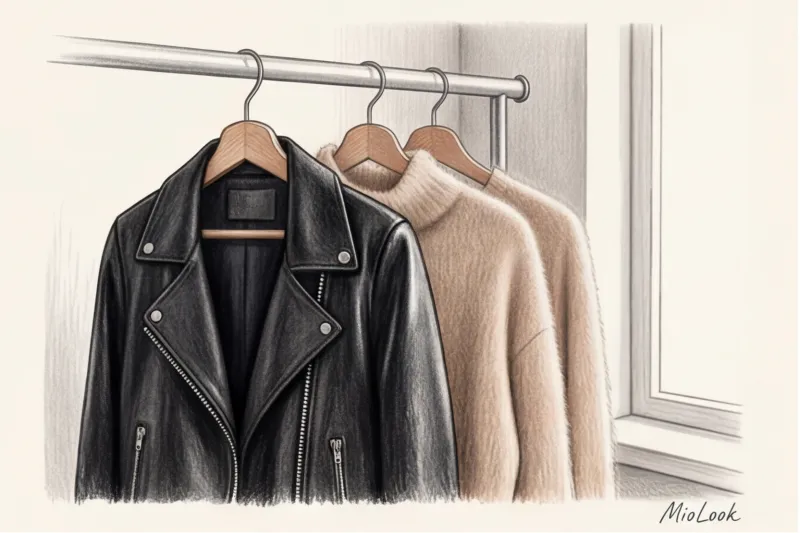
Do you know what I most often find on the back shelves during wardrobe audits? Leather items with the tags still attached. According to my personal statistics, about 60% of clients buy a striking skirt or trousers on impulse, only to never wear them. The reason is always the same: "I feel too aggressive in it" or "It looks too tacky for the office."
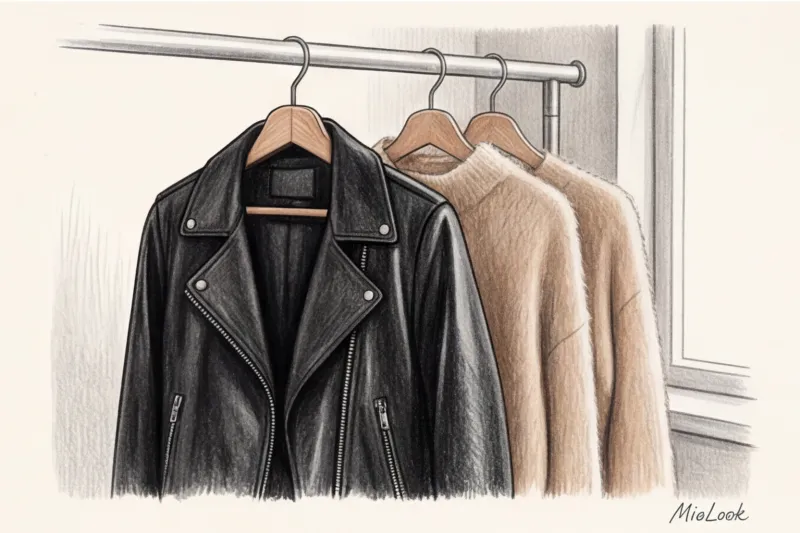
The problem isn't you or the garment itself. It's physics. As a colorist and image consultant, I always explain: leather is a material with a complex reflectivity coefficient. If you don't know how to "dampen" this shine, the look falls apart. We discussed the basic principles of working with light and materials in more detail in our a complete guide to combining textures in clothing And today I'll show you how to tame even the most unruly features so that they work for your status, not against it.
Why Leather Scares Your Basic Wardrobe: The Physics of Fabrics vs. Stereotypes
As fashion historian Valerie Steele notes in her work (2022), leather has historically carried a strong semiotic code: from military uniforms to biker rebellion and overt sexuality. Our subconscious reads this fabric as "armor" or a challenge. This is why trying to wear leather leggings with a regular office blouse creates a visual dissonance.
The secret to luxurious, high-status looks lies in the proper distribution of fabric weight. In image consulting, we divide all materials into two categories: reflective (leather, silk, satin, viscose) and light-absorbing (wool, cashmere, matte cotton, suede).
Leather elements can visually "increase the price" of a basic mass-market look by 300% due to the complex reflection of light, but only if there is a powerful textured "grounding" element nearby.
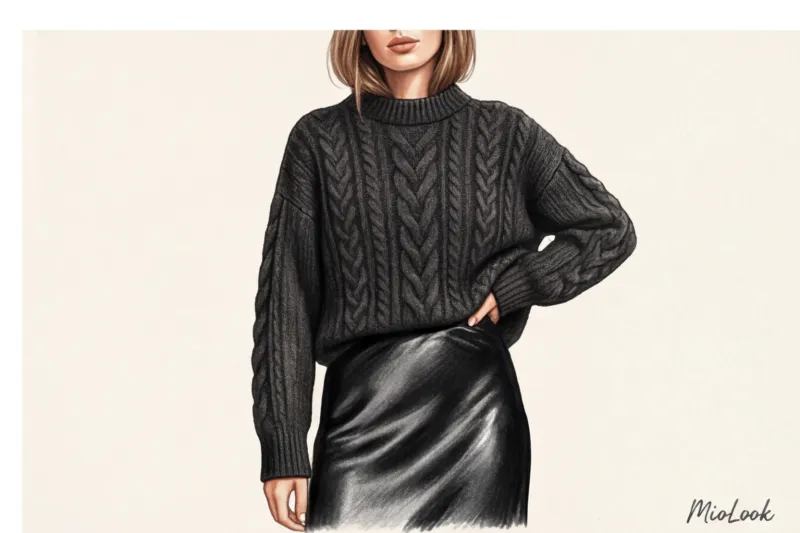
The biggest mistake when incorporating leather into a base is leaving it without a matte finish. A leather skirt with a smooth, thin viscose turtleneck will create a spacesuit effect, highlighting every nuance of your figure. But swap the turtleneck for a rough sweater, and the magic of texture really comes into play.
Access to MioLook for €0.99 — one-time payment
A smart AI stylist will select the perfect look based on your leather items.
Get access — €0.99 onceThe perfect stylist formula: a win-win combination of leather and knitwear
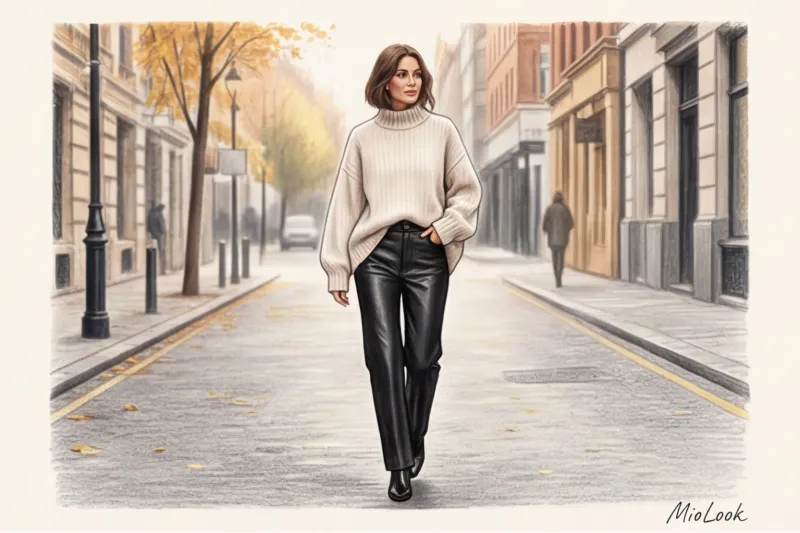
According to a report by the analytical agency WGSN (2024), the trend towards “tactile minimalism” has finally replaced smooth, flat images. And it is precisely a combination of leather and knitwear has become the gold standard of "quiet luxury" aesthetics. Why does it work so well?
This is where the Rule of Tactile Contrast comes into play. A loose, shaggy knit literally absorbs the excess light cast by smooth leather. Moreover, it's a matter of temperature balance. Leather is visually and tactilely cold. It vitally needs compensation—the visual warmth of cashmere, mohair, or dense merino wool.
Playing with Volumes: How to Balance Hard and Soft
Textured contrast is unthinkable without working with volumes. You can't just pick any sweater and wear it with any pants. Remember the simple rule of scale:
- If the skin is tough and holds its shape (Tube trousers, a thick A-line skirt, a structured coat): knitwear should be fluid, flexible, or oversized. A voluminous jumper with a dropped shoulder is ideal.
- If the skin is soft and tight (leggings, thin shirt): Choose a thick, supportive knit. For example, a long, tightly knit cardigan that holds the shoulders well.
If you're unsure how to properly balance proportions for your specific body type, check out our guide on how to: How to choose trousers according to your body type — there we discussed in detail the specifics of fitting dense fabrics.
Taming the Bottom: Leather Pants and Skirt Looks
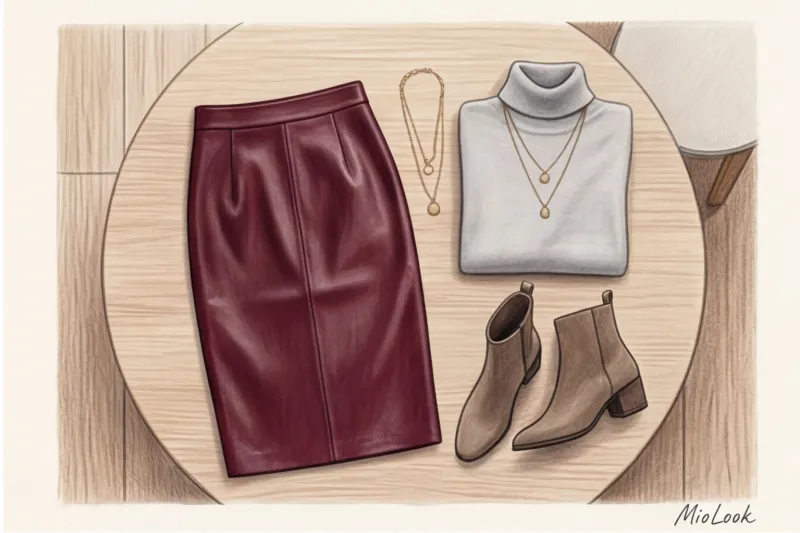
One of my clients, top manager Irina, bought a luxurious leather pencil skirt for €250 but never wore it to the office. "It makes me look like a femme fatale," she complained. The skirt hung in her closet for six months until we experimented: instead of wearing a silk blouse, as Irina had planned, we paired it with a voluminous men's cashmere jumper two sizes too big, tucked in only at the front. The aggressiveness instantly vanished, leaving only a confident, relaxed elegance.
Here are three ready-made formulas for introducing leather bottoms:
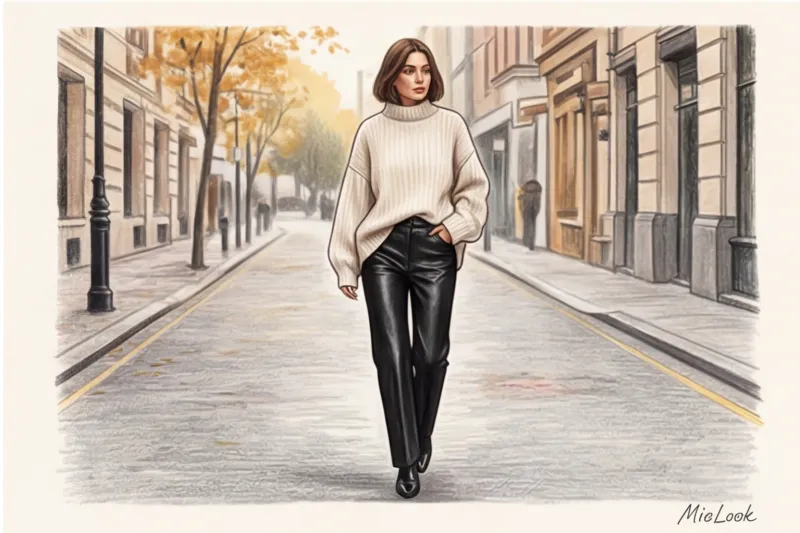
- Business Casual Uniform: Straight-leg leather trousers + a basic merino turtleneck + suede loafers. The suede on the shoes is crucial here—it adds the finishing touch of matte finish.
- Complex femininity: A leather midi skirt + a voluminous, minimalist hoodie made of thick cotton + thigh-high boots. The hoodie instantly takes the edge off the pretentiousness.
- Coloristic trick: As a colorist, I strongly recommend avoiding black leather if you're just starting out. Black leather produces the harshest, most contrasting highlights. Opt for shades of dark chocolate, rich burgundy (Oxblood), or deep khaki. They look twice as expensive and are easier to incorporate into your wardrobe.
Your perfect look starts here
Join thousands of users who look flawless every day with MioLook. Digitize your wardrobe in just a few clicks.
Get access — €0.99 onceLeather "tops": introducing jackets and shirts without the "Matrix" effect
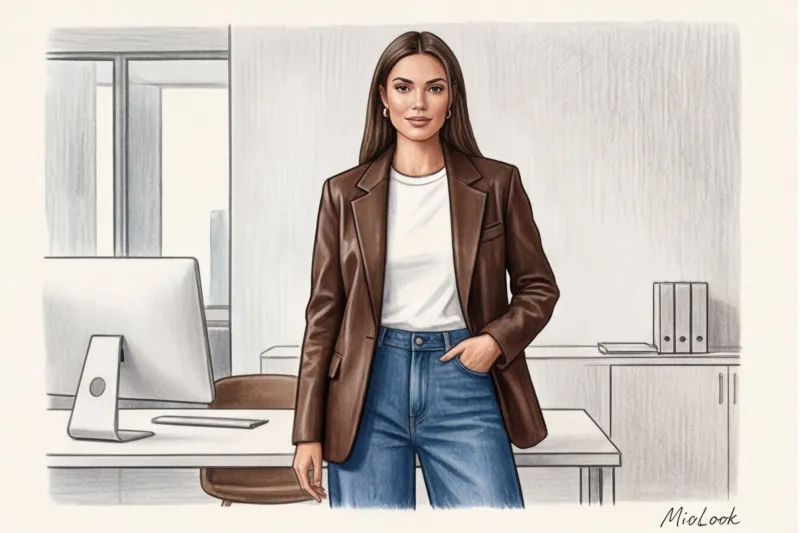
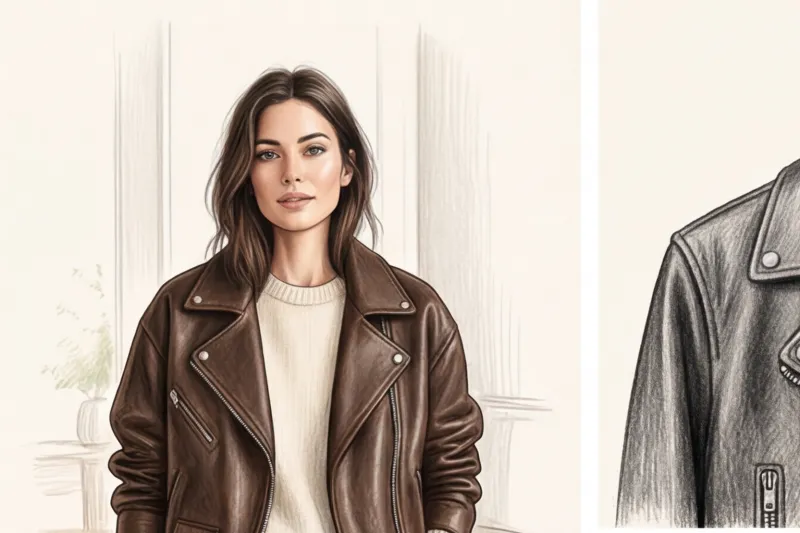
If you're looking to freshen up your smart-casual look, a leather jacket is a brilliant investment. It's more stylish than a traditional blazer, but it requires strict adherence to the "first layer rule."
Under a leather jacket, we only wear matte textures. A white T-shirt made of heavy cotton is ideal (look for a weight of at least 180 g/m²—thin T-shirts will look like underwear against heavy leather). An alternative is fine matte wool. The main rule: a leather top always appears heavier than the bottom. To avoid looking like an "inverted triangle," offset this weight with chunky shoes: thick-soled boots or retro-style sneakers.
The same goes for a leather shirt. Wear it as an overshirt, layering it over a basic ribbed turtleneck and pairing it with heavyweight, non-spandex jeans (100% cotton). More ideas for creating similar business capsule outfits can be found in the article about business capsule wardrobe.
Textured Taboos: What You Should Never Mix with Smooth Leather
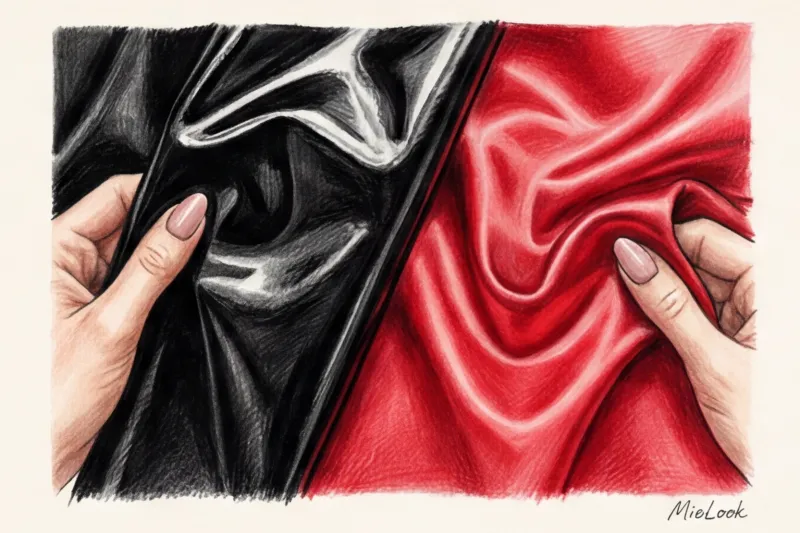
Now it's time to debunk one of the most persistent glossy myths. Open any magazine and you'll read: "Leather plus silk is the pinnacle of luxury and sexuality." In practice, this is a disaster.
Smooth leather and smooth silk (or satin) are two reflective textures. When you wear them together in real life (as opposed to in a studio with studio lighting), they begin to compete. The result is a cheap "Christmas tree" effect: you're all shiny, and the look loses depth.
3 Hard No-Nos When Styling Smooth Leather:
- Leather + satin/silk/lurex. I mentioned this above. If you want luxury, replace silk with the finest cashmere. Exception: if the leather is suede (matte), then silk is acceptable.
- Leather + patent leather shoes. Overdoing the shine. If you're wearing leather pants, your shoes should be suede, nubuck, or fabric.
- Leather + thin, skin-tight viscose jersey. This betrays a lack of modern tailoring. Thin viscose clings to the body, while stiff leather protrudes, creating disproportion. Knitwear should always have air between the body and the fabric.
These rules may seem strict, but they're what separates a curated style from a haphazard collection of items. If you want these rules applied to your wardrobe automatically, try uploading your items to the app. MioLook — its algorithms are trained to recognize textures and won't suggest you wear leather leggings with patent leather shoes.
Ready to get started?
Try the MioLook free plan—no strings attached. Perfect texture combinations are now available on your smartphone.
Get access — €0.99 onceAn image consultant's checklist: how to choose the right leather item
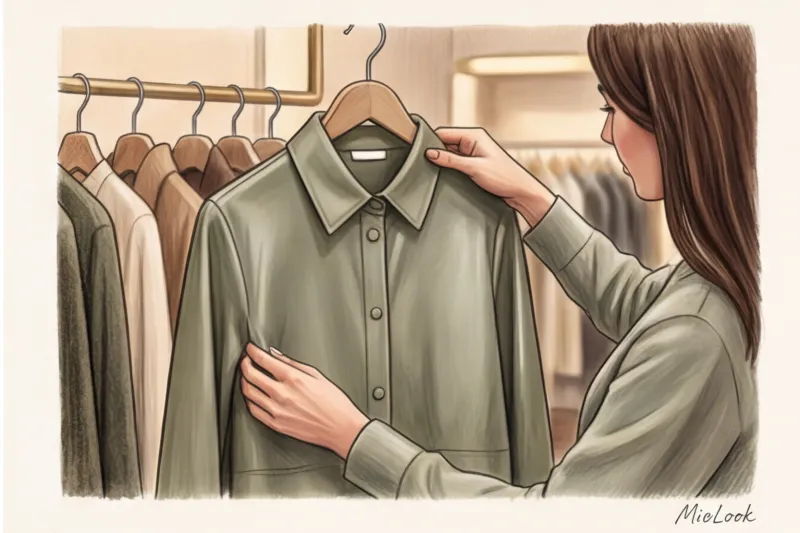
Over the years of shopping with clients, I've developed an automatic filter for distinguishing between "expensive" and "cheap" leather. In the mass-market segment (Zara, Mango, €40-€80 range), you can find excellent faux leather options, but you have to be extremely careful.
- Matte vs. gloss. Cheap polyurethane leather always has a glassy, unnatural sheen. Look for something with the most matte, muted finish possible (brands often label it as "nappa-effect").
- Refusal of unnecessary decoration. No decorative zippers on pockets, epaulettes, rivets, or contrast stitching. Leather is a 100% accent material. The more complex the texture, the simpler the cut should be.
- Temperature of fittings. The color of the metal on the buttons or zipper of a leather jacket can subtly ruin your complexion. Cool skin tones call for silver hardware, while warm skin tones prefer brass or aged gold. Bright, yellow gold on leather always cheapens the garment.
From Rebellion to Status: A Stylist's Resume
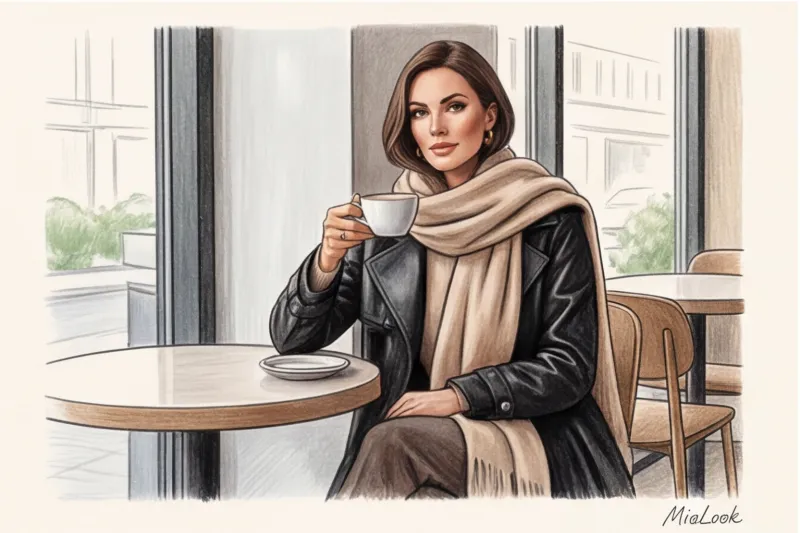
Leather in a basic wardrobe today isn't about challenging society or biker aesthetics. It's about subtle, deliberate work with texture and light. If you remember just one rule from this article, let it be formula 1:2 For every smooth leather item in your look, there should be two matte or rough ones.
I suggest you try an experiment today. Get out that leather item you're afraid to wear. Find the coziest, most oversized, slightly chunky, matte, chunky knit sweater in your closet. Put them on together, add suede shoes, and look in the mirror. You'll see a whole new level of style.
And to avoid forgetting about such unobvious combinations in the morning rush, entrust your routine to technology. Download your basics and leather accents to MioLook — and let artificial intelligence suggest textured combinations worthy of Fashion Week street style every morning.