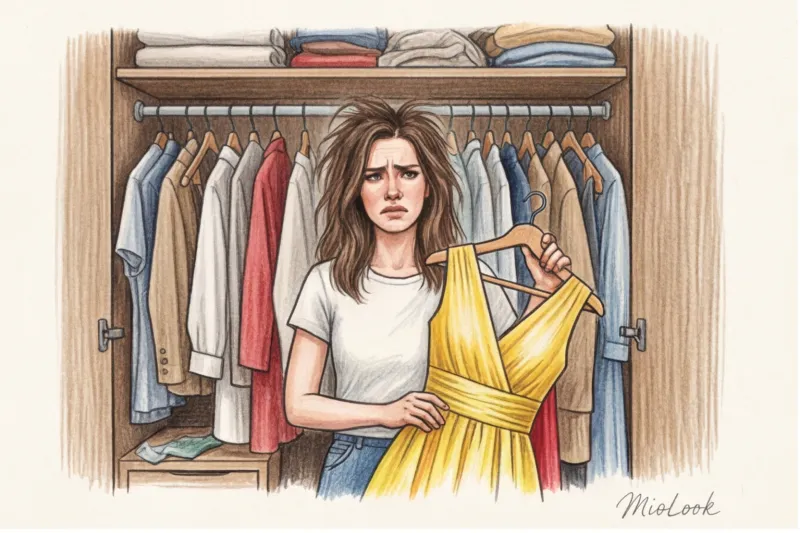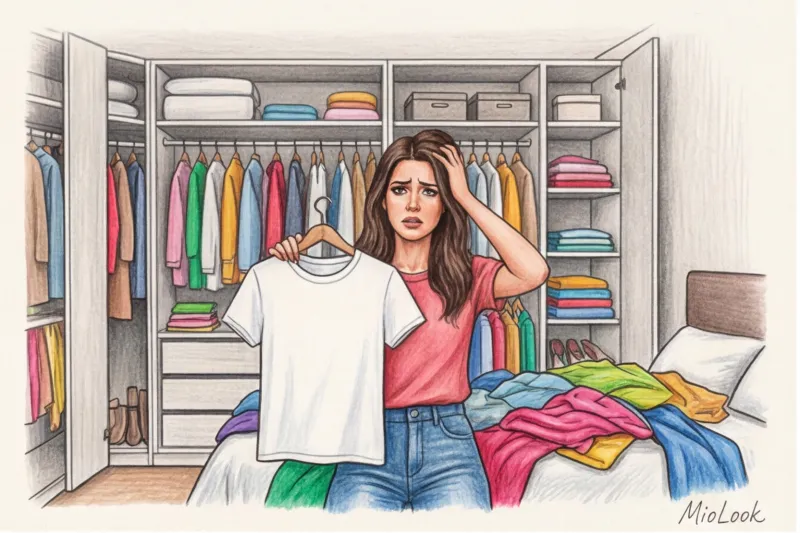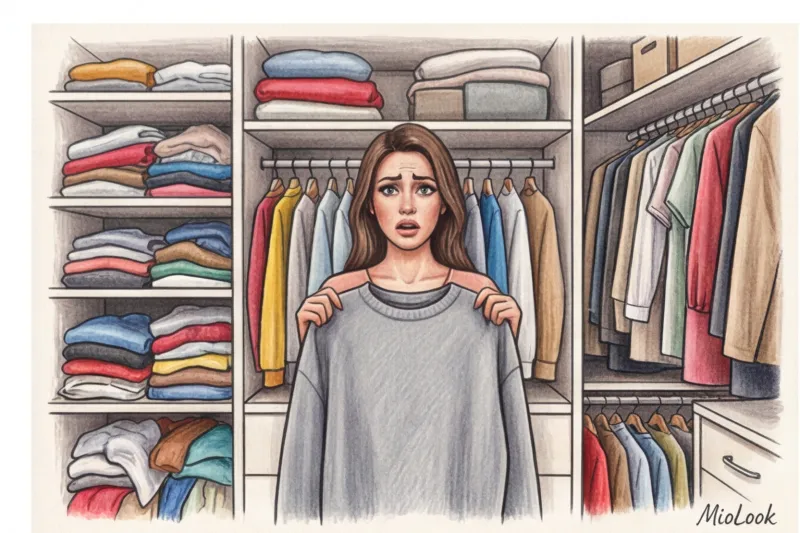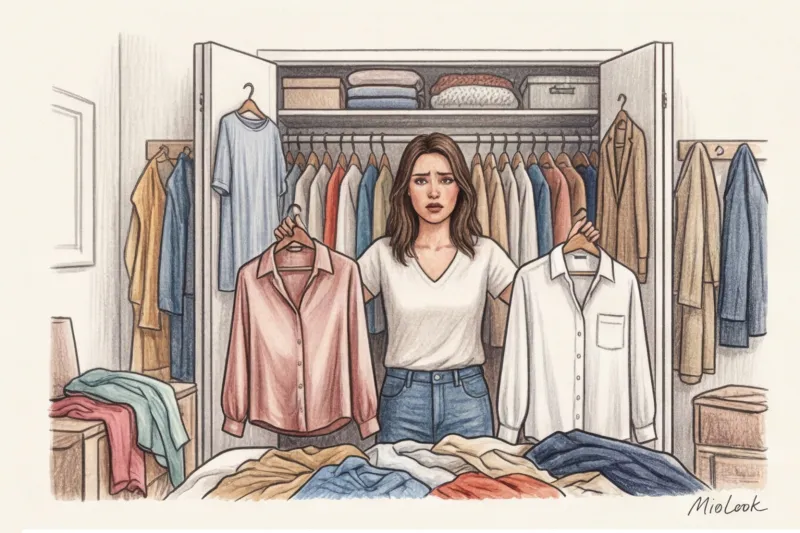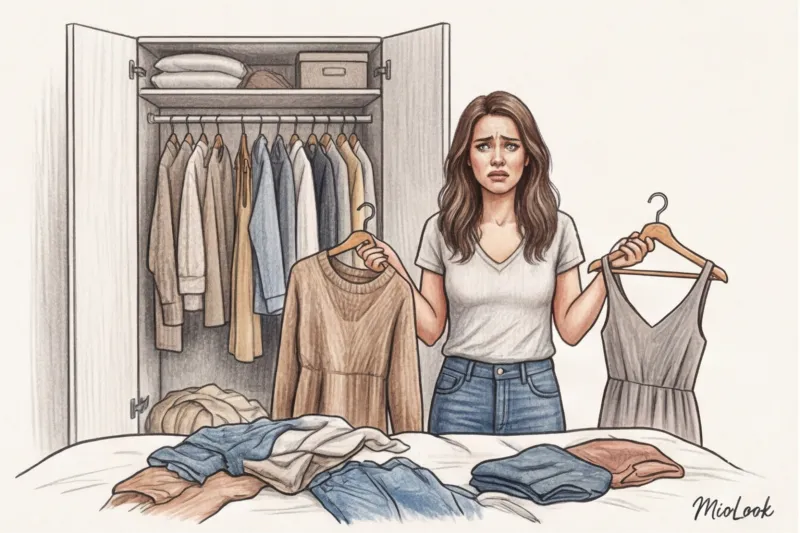
Three months ago, Anna, a marketing director at an IT company, came to me for an online consultation. She turned the camera to her enormous closet, filled to the brim with excellent pieces from Massimo Dutti, COS, and Zara, and said calmly, "Emily, I want to douse this whole thing in gasoline and burn it. I have absolutely nothing to wear." If you're currently Googling "style crisis what to do," know that you're not alone, and you're okay.
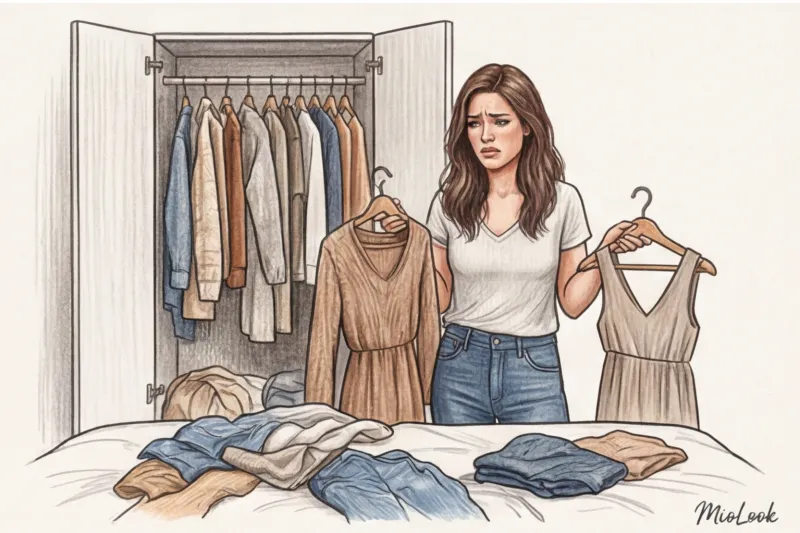
We discussed the psychological reasons for this phenomenon in more detail in our the complete guide to finding your style The problem is never in the clothes themselves. A style crisis isn't a lack of clothes. It's a loss of connection between your closet and your current identity. And the typical glossy magazine advice of "just throw out everything old and buy new essentials" doesn't work here. In fact, it's dangerous.
Style Crisis: What to Do First (and What Absolutely Shouldn't)
When our reflection in the mirror is irritating, our brain demands an immediate dopamine reward. This leads to two extremes: impulsive closet cleaning or therapeutic shopping.
Counterintuitive Rule #1: Don't throw anything away or buy anything for the next 14 days. Absolutely nothing. Not even that "perfect basic white shirt for €80" that's supposed to save your wardrobe.
From a behavioral psychology perspective, you are in a state that social psychologist Roy Baumeister called back in 2003 decision fatigue (Decision fatigue). Your brain is overloaded with choices. When you stand in front of an overflowing closet full of mismatched items, you're expending cognitive resources even before you've had your morning coffee.
If you go to the mall in this state, you'll buy clones (more black pants because the old ones just don't feel right) or fantasy items (a sequin dress for a life you're not currently living). And a radical, emotional purge like Marie Kondo's will backfire: statistics show that 60% of women who impulsively declutter regret throwing out basic items and buy them again a month later.
Why Does Wardrobe Burnout Happen? 3 Unexplained Reasons
In my experience, nine out of ten clients experience wardrobe block for the same reasons. And it's not because they lack taste.
- A dramatic shift in lifestyle. Your wardrobe is a thing of the past, but you've changed. You've gone remote, returned from maternity leave, gotten a promotion, or moved to a different climate. Your closet still serves the old you.
- The toxic influence of fast fashion and micro-trends. The research agency WGSN (2024) notes the unprecedented speed of change in aesthetics: from office siren to mob wife in a single season. Trying to keep up with them leads to visual saturation. You look at your trendy cargo pants and feel nauseous because TikTok's algorithms have overfed you with this image.
- The trap of rigid typologies. I had a client, a top manager, who, after consulting with a classic stylist, tried to dress strictly according to her "soft autumn" color type. She bought clothes in mustard, terracotta, and marsh green tones—and hated them. Every morning she started in a stupor, because these colors clashed with her contrasting, dynamic personality.
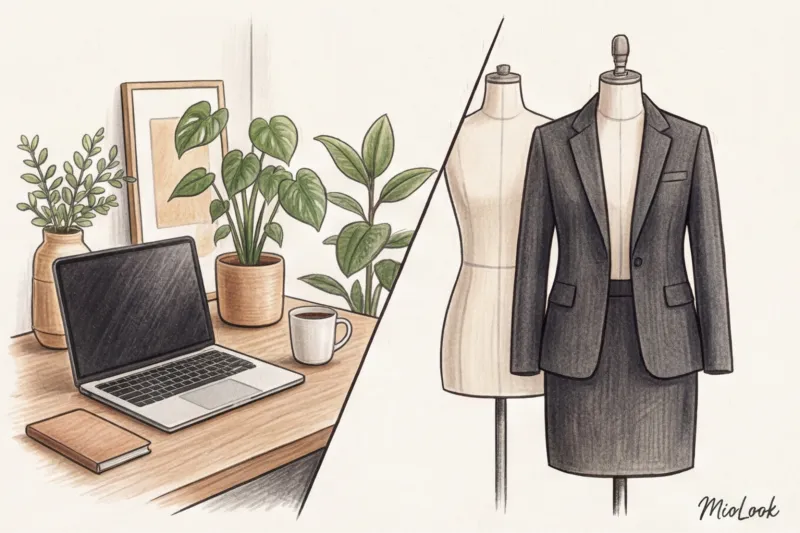
The 80/20 Rule in Real Life: What the Data Says
The Pareto principle works flawlessly in the wardrobe. According to McKinsey's global consumer habits report, on average, we wear 20% of our wardrobe 80% of the time. The remaining 80% is visual noise, which creates the illusion of choice but, in reality, only robs you of your energy in the morning.
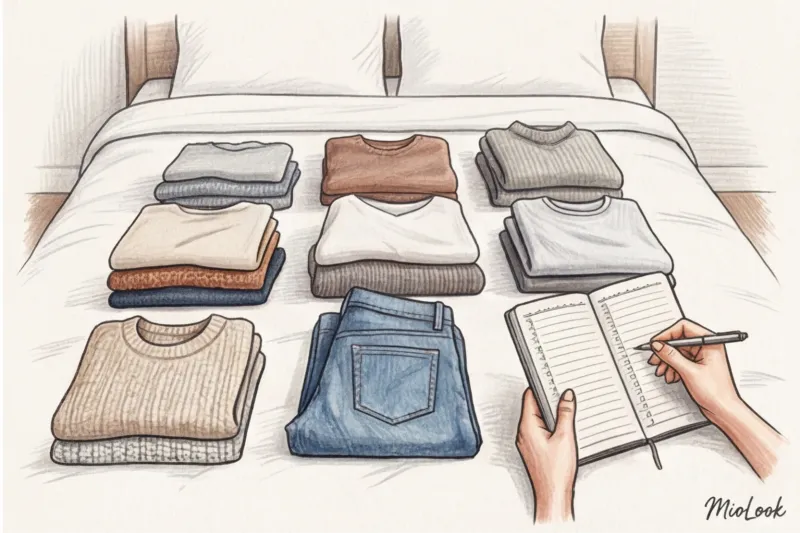
I once conducted a personal experiment: I tracked everything I wore for six months using spreadsheets. The numbers were sobering: I was only wearing 18% of my closet regularly. My favorite silk blouses, which I considered the foundation of my style, were worn once or twice a quarter, and I spent 90% of my time in thick cotton T-shirts and wool cardigans.
Access to MioLook for €0.99 — one-time payment
A smart AI stylist will create the perfect look based on what you actually wear, eliminating your morning routine.
Get access — €0.99 onceProblem Diagnosis: A Stylist-Analyst's Approach
Before changing anything, divide the problem into two categories: "I'm physically uncomfortable wearing this" and "I don't like the way it looks." These are fundamentally different issues.
Landing audit. Be honest with yourself: have you changed size? If you're trying to squeeze into jeans that are half a size too small, your brain will sabotage your entire wardrobe. No amount of style magic will work if the fabric is digging into your body.
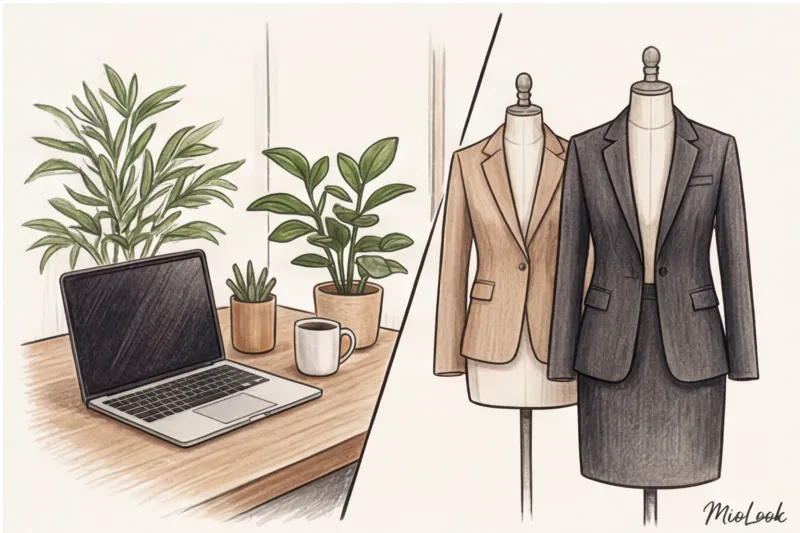
Lifestyle Audit (Employment Chart). This is my favorite exercise for new clients. Draw a circle and divide it into sectors based on how you spend your time in real life (not ideal!). For example: 60% – working on your laptop at home, 20% – walking the dog/kids, 10% – meeting friends at a cafe, 10% – exercising. Now look at your closet: if 50% of your hangers are taken up by tailored jackets and sheath dresses, a style crisis is inevitable. Your wardrobe simply doesn't align with your diagram.
The "Quarantine" Method: How to Safely Clear Out a Closet
During a crisis, I forbid my clients from throwing things away. Instead, we use "wardrobe quarantine." This is the physical removal from view of anything that raises doubts.
How to do it right:
- Buy opaque canvas cases or cardboard boxes. Important: they must be exactly opaque so that the brain stops visually scanning for hidden patterns and colors.
- Take everything out. Leave on the hangers only what you've worn in the last two weeks and what you feel comfortable in.
- Everything else (things that require weight loss, that you “feel sorry to throw away,” that itch, that creep up, or that just irritate you) — put them in boxes.
- Place the boxes on top shelves or under the bed for exactly 3 months.
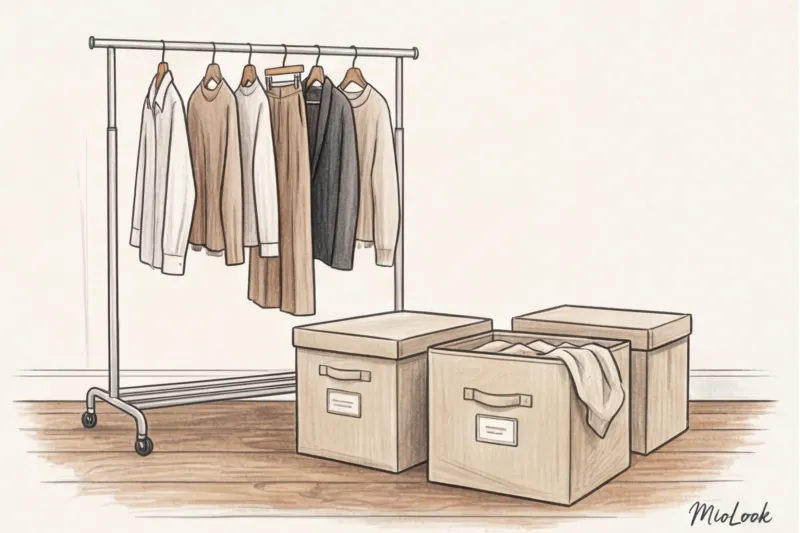
Reducing visual noise works wonders. A half-empty closet filled only with comfortable clothes resets your perception. And when you open the quarantine boxes three months later, the emotional attachment to these items will disappear. You'll recycle 90% of the contents without regret.
Important exception: This advice does NOT work if your body has physically changed by two or more sizes (for example, after childbirth). In this case, you can't try to "quarantine" your old clothes—you'll have to at least pack a micro-capsule for your new size, otherwise your discomfort will turn into self-hatred.
The Clean Slate Formula: Building a Survival Time Capsule
While your main wardrobe is in quarantine, you need a "safe uniform." Don't try to be a style icon right now. Your goal is to combine decision fatigue to zero.
Create a micro-capsule of 10-12 items, based on Steve Jobs's concept, but adapted for the modern woman. These should be neutralizing pieces. Avoid complex prints, complicated cuts, and layering for two weeks. Choose smooth textures: heavy cotton (from 180 g/m²), smooth viscose with elastane, and fine merino wool.
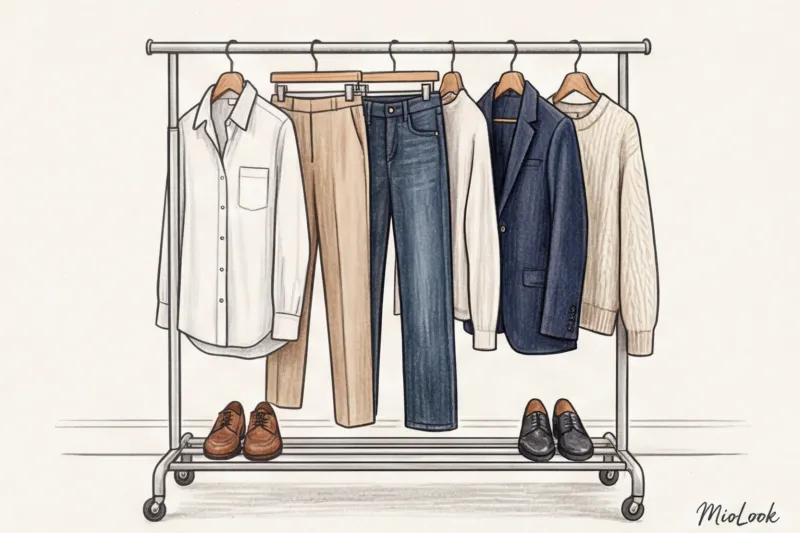
An example of a survival capsule (the budget is conditionally 0 €, since we are assembling it from your closet):
- 2 bottoms: straight blue jeans and comfortable loose trousers with an elastic band at the back.
- 4 tops: 2 basic tees (white/black), a loose textured knit sweater, a loose shirt (that can be worn unbuttoned).
- 1 second layer: a voluminous jacket or a thick cardigan.
- 2 pairs of shoes: comfortable loafers and basic white sneakers.
These items go together with your eyes closed. You put them on and forget about them until evening. It's this feeling of "I'm dressed normally, I don't feel tight anywhere" that cures a style crisis better than any shopping spree.
Ready to get started?
Try the MioLook free plan—no commitments required. Upload 10 items to the app and see how many looks you can create with them.
Get access — €0.99 onceHow technology and tracking can help break the deadlock
Relying on memory when managing your wardrobe is a failing strategy. We tend to overestimate how often we wear statement pieces and underestimate our everyday workhorses.
When I realized that my sheath dresses had been worn exactly 0 times in six months, I stopped fooling myself. The CPW (Cost Per Wear) metric mercilessly puts everything in its place. A pair of €150 trousers worn 50 times (CPW = €3) turns out to be a better deal than a €40 sale dress worn once to a corporate event (CPW = €40).
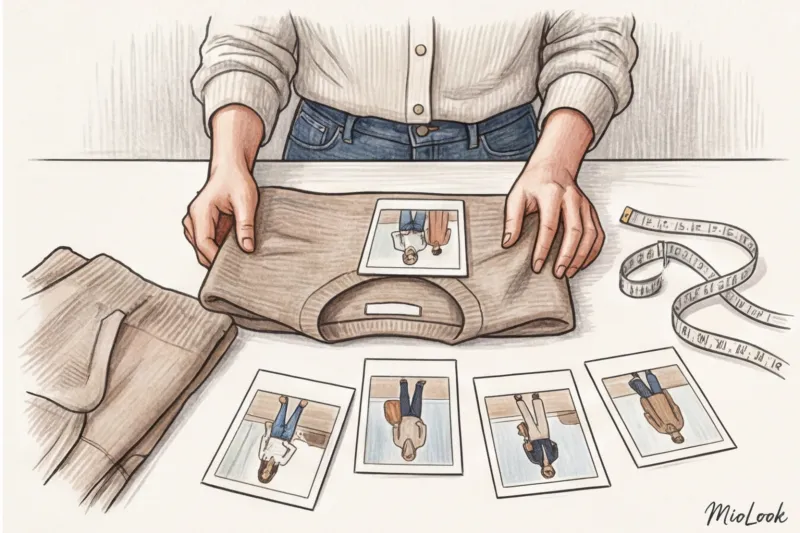
That's why I recommend digitizing that very "survival capsule." In the app MioLook You can photograph these 10 items and let the AI generate new combinations from them. Often, the algorithm suggests unobvious combinations of layers or textures that your tired brain simply ignored. You see your old clothes on your phone screen with a fresh, detached look, like in an online store catalog. This instantly removes any internal resistance.
Checklist: A 7-Day Plan to Break Out of a Stylistic Impasse
Don't try to solve the problem overnight. Follow a step-by-step process.
- Day 1-2: Freeze and Accept. Acknowledge the problem. Promise yourself not to open your favorite brands' websites or go into stores. No shopping.
- Day 3: Honest diagnosis. Draw a "Busy Chart." Write down 3 adjectives that describe how you want to feel (for example: relaxed, confident, dynamic ), and not how you want to look (not “expensive” or “fashionable”).
- Day 4-5: Quarantine. Buy some boxes. Ruthlessly stuff them with anything that's tight, itchy, requires a perfect press, or has a special occasion. Hide it out of sight.
- Day 6: Formation of the capsule. Leave 10-12 of the most comfortable, faceless, but reliable things on the rail.
- Day 7: Digitization and tracking. Upload the remaining items to your wardrobe tracker. Start recording your feelings about your outfits every evening.
Your perfect look starts here
Join thousands of users who look flawless every day with MioLook. Digitize your wardrobe in minutes.
Get access — €0.99 onceA style crisis isn't a diagnosis of your fashion incompetence. It's a sign that you've outgrown your old self. Treat this period like downloading a system update on your smartphone: you can't use the screen while it's installing. Leave your wardrobe alone, give yourself some time to "quarantine," put together a 10-piece uniform, and let your new style emerge naturally, based on your true comfort level, not on imposed trends.