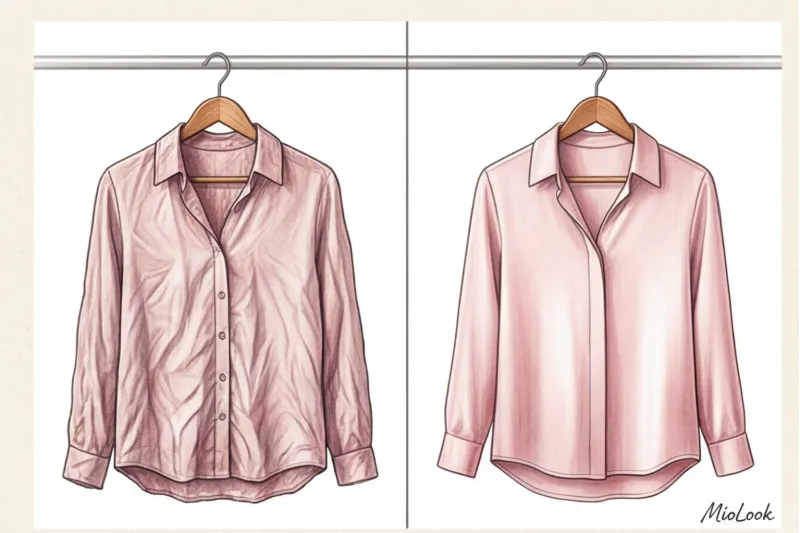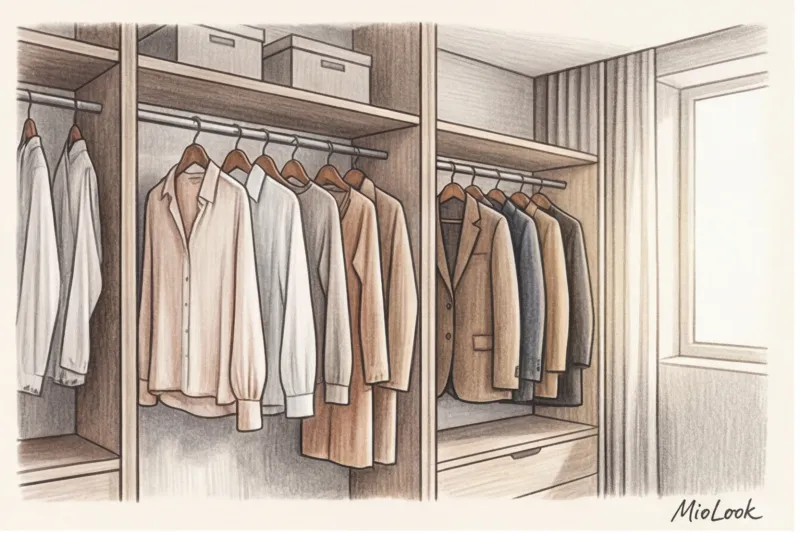
It's 8:15 a.m. on Tuesday morning. My client, Anna, is desperately trying to smooth out the creases on her new viscose blouse, nervously glancing at her watch. One wrong move with the hot iron, and a shiny seam mark will be permanently imprinted on the delicate fabric. The €120 blouse is ruined, along with her mood, and Anna ends up putting on her usual (and now rather tired) cotton hoodie because it "doesn't need ironing."
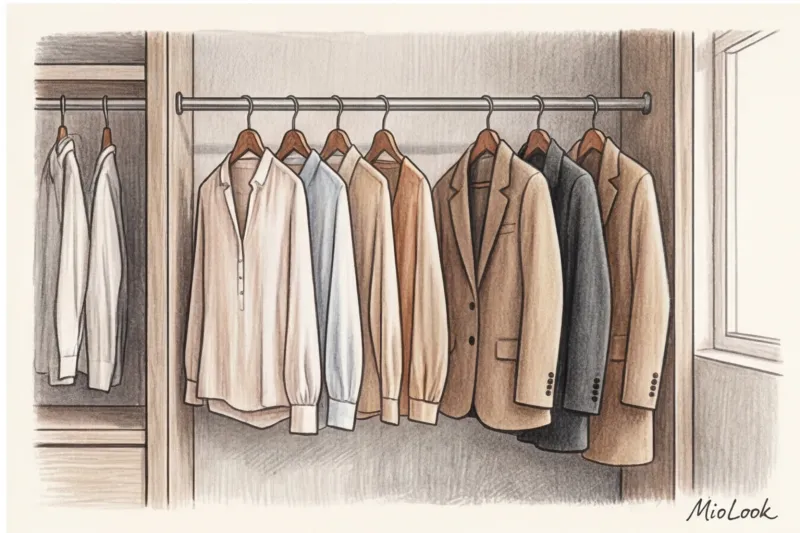
Sound familiar? Over 12 years of working as a personal stylist and capsule wardrobe evangelist, I see this all the time. We continue to buy clothes made from sophisticated modern fabrics, but we care for them according to strict rules from the '90s. Spoiler alert: most of us are deliberately cutting the lifespan of our clothes in half.
When clients ask me whether a steamer or an iron is better for a modern wardrobe, I suggest forgetting the marketing promises of appliance brands. Let's calculate real time and analyze your closet like a database. Spoiler: you probably don't need half the features you're overpaying for. We've covered the basic principles of handling delicate fabrics in more detail in our the complete clothing care guide , and today we'll examine the main battle in the world of household routine: steam versus metal.
Wardrobe Evolution: Why Old Grooming Rules No Longer Work
To figure out what tool you need, just open your closet door. Think about the typical office wardrobe twenty years ago: stiff 100% cotton shirts, heavy wool suits, and thick denim. The iron was king, as these materials required physical pressure and high temperatures.
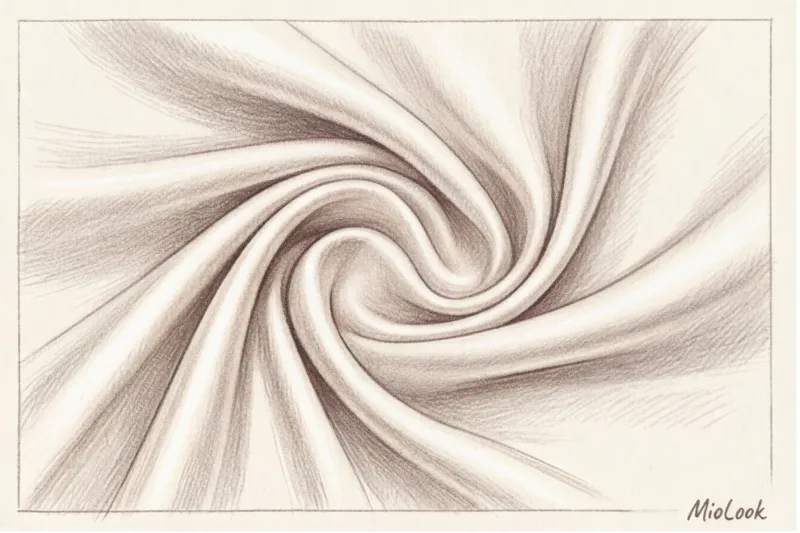
But the industry has changed. Look at the popular silhouettes today at mid-market brands like COS, & Other Stories, Massimo Dutti, and local labels. They feature flowing textures, voluminous sleeves, tucks, and draping. The compositions have become more complex: wool is blended with tencel, viscose with polyamide, and elastane is added to every other item for a comfortable fit.
"The biggest mistake I see when auditing wardrobes is trying to iron architectural cuts on a flat board. You can't flatten a 3D garment without losing its original design. Steam is the only way to keep air between the fibers of the fabric."
Your choice of appliances should be dictated solely by the composition of your wardrobe. If your smart casual wardrobe consists of flowing slip dresses, oversized sweaters, and palazzo pants, forget about the ironing board.
The Hidden Threat: How Irons Age Our Clothes
There's a persistent myth that ironing clothes makes them look neater. In fact, ironing often makes clothes look cheap and old. Here's why.
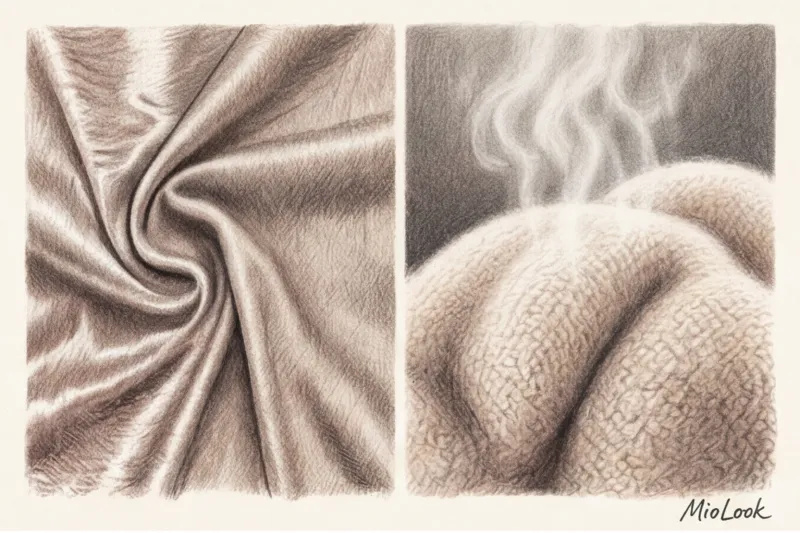
The physics of the process are simple: the heavy soleplate of the iron combined with direct heat (often up to 150–200°C) flattens the threads. This is especially noticeable on dark garments. Ever noticed a cheap, shiny sheen on the seams of dark blue trousers or a black jacket? In professional terms, this is called "glaze." This isn't dirt or abrasion—it's the microfibers of the fabric melted and imprinted into each other. Restoring their volume is impossible.
According to research by the Hohenstein Institute textile laboratory (2023), direct contact of elastane with temperatures above 130°C leads to irreversible deformation of the yarns. And elastane is found almost everywhere these days, from your favorite jeans to basic turtlenecks. Every time you iron them with a hot iron, you literally "burn out" the fabric's ability to hold its shape. Your jeans begin to stretch at the knees, and your turtleneck sags like a rag.
Access to MioLook for €0.99 — one-time payment
A smart AI stylist will select the perfect look for every day and help you optimize your wardrobe.
Get access — €0.99 onceFabric Anatomy: Which is Better for Your Wardrobe: A Steamer or an Iron?
As a stylist, I don't believe in one-size-fits-all advice. When deciding whether a steamer or an iron is better, you need to take a systematic approach—that's how it works. Smart wardrobe feature in the MioLook app , where every item is analyzed as part of a larger database. There's no universal winner; there's always the right tool for the right task.
When steam is your only choice
During fashion shoots, stylists never touch garments with hot metal. We use only powerful steam. The steam temperature is a safe 98–100°C, suitable for 95% of fabrics.
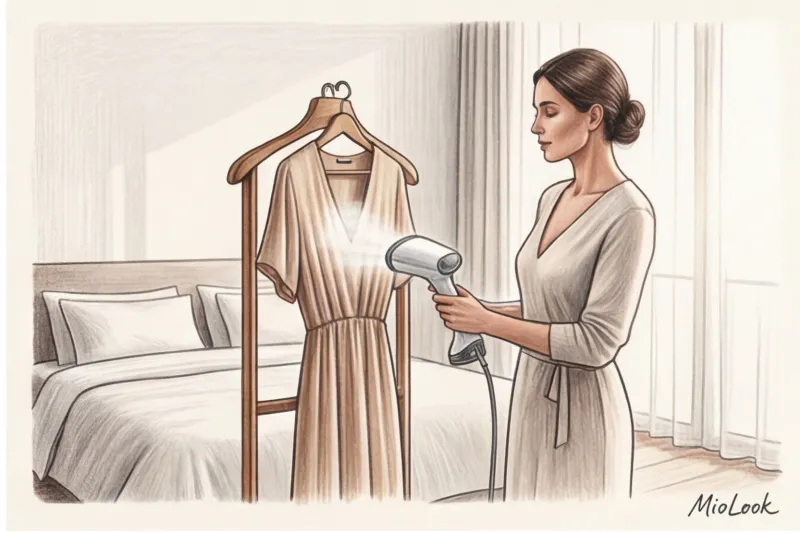
You definitely need a steamer if your closet is dominated by:
- Delicate fabrics: silk, chiffon, viscose, cupra, lyocell.
- Complex architectural cut: Ruffles, flounces, pleated skirts, voluminous puff sleeves. Physically laying them out on a board is a quest you'll fail.
- Knitwear and wool: Steam lifts the nap on cashmere sweaters and coats, restoring their salon-fresh look.
- Eco-leather clothing: It can be quickly brought back to life by steaming it from the inside out (it is strictly forbidden to do this with an iron).
A bonus that few people know about: Steam works like home dry cleaning. A WGSN study (2024) found that two minutes of steam treatment kills up to 99% of bacteria that cause sweat and urban dust odor. You can wear a jacket 5-7 times simply by refreshing it with steam, instead of taking it to an expensive dry cleaner.
Why an iron is still indispensable
I promised to be objective: there are scenarios where a steamer will prove useless. Don't believe the advertising that promises a compact, hand-held device will replace a heavy base.
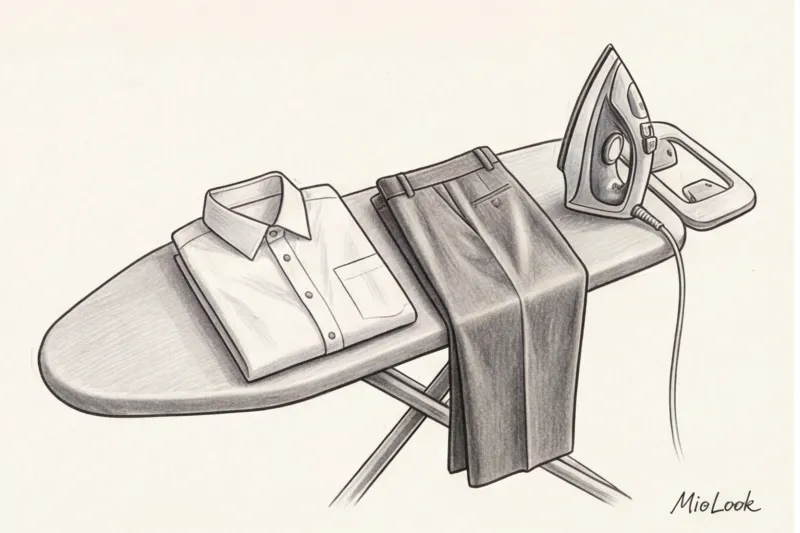
This is when you have to get out the board:
- Men's shirts (poplin): Heavy cotton shirting requires firm pressure to achieve perfect smoothness. Steam will only soften creases slightly, but won't provide a crisp, fresh finish.
- Linen suits: Linen is a stubborn material. It requires extreme temperatures (up to 220°C) and intense pressure.
- Arrows on trousers: Steam will never form a clear, hard crease on classic wool trousers.
Fair Limit: If your work dress code is strict, formal two-piece suits and crisp white shirts, a steamer will only be a supplementary tool. You need a good iron or a steam generator.
Your perfect look starts here
Join thousands of users who look flawless every day with MioLook. Upload your items, and AI will create looks for you.
Get access — €0.99 onceTime Wars: Time-Tracking a Busy Woman's Morning Routine
Let's talk numbers. I conducted a personal experiment: over the course of a month, I tracked my morning routine in two scenarios.
Scenario 1: Iron. Take out the ironing board, lay it out, add water, and wait for it to heat up. Carefully lay out the blouse, iron the back and front, and then fiddle with the sleeves and collar. Let it cool (otherwise it will wrinkle right away). Put the ironing board away. Total: 7-10 minutes for one complex item.
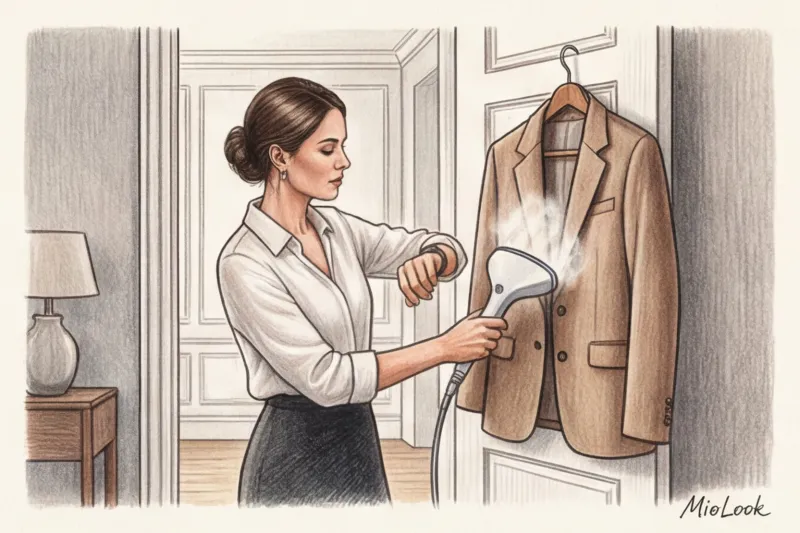
Scenario 2: Steamer. Remove the item from the hanger (without removing it from the hanger) and hang it on the door. Turn on the appliance (heat for 30-40 seconds). Run a stream of steam from top to bottom. Total time: 2-3 minutes.
A stylist's math is simple: saving 5 minutes each morning translates into more than 2 hours of free time per month. But it's not just a matter of time, it's a matter of psychology. In my experience, 8 out of 10 women stop wearing up to 30% of their wardrobe simply because they're too lazy to iron it. Perfect dresses and shirts sit idle in the closet, giving way to knitwear. As soon as a steamer appears in the home, these "forgotten" items are brought back into active rotation.
Handheld or stationary: how to choose the right steamer
If you've decided to invest in steam, the market offers hundreds of options. How can you avoid buying a useless toy?
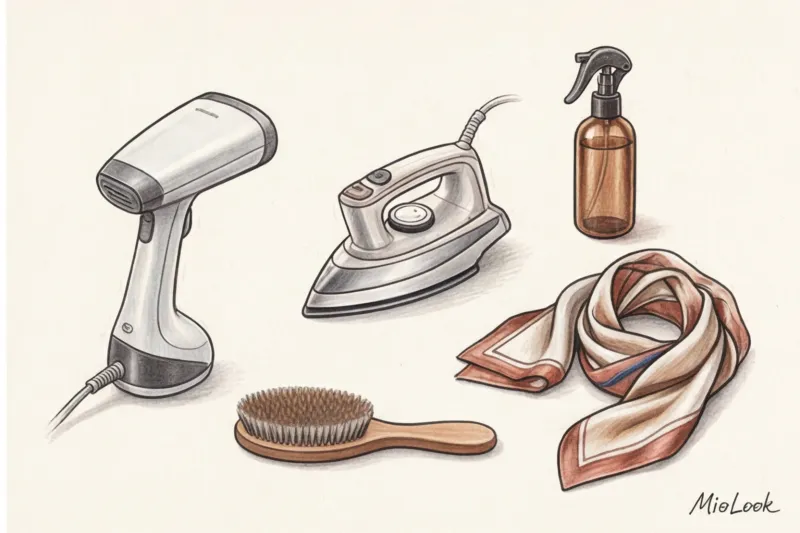
- Handheld steamers: Ideal for minimalist capsules, solo travelers, and frequent business trips. The main rule: look at the power—it should be at least 1500 W, with a steam output of 25-30 g/min. Weaker devices are only suitable for thin T-shirts. A good handheld device will cost €50-€90.
- Stationary (vertical) systems: This steam iron is ideal for families and large wardrobes with heavy winter items (coats, heavy jackets). The large water tank allows you to steam 5-7 items at a time. Price range: €100–€250.
- Steam generators: This is a compromise. It looks like an iron with a bulky base, but it delivers a powerful jet of pressurized steam. If you have an equal number of formal shirts and silk dresses, this is your choice. It allows you to iron faster thanks to its high steam pressure (from 5 bar).
Ready to get started?
Try the MioLook plan for free—no commitments required. Digitize your wardrobe in minutes.
Get access — €0.99 onceChecklist: Wardrobe audit before buying technology
Before adding an item to your cart, do a quick inventory. I call it the "ten-thing test."
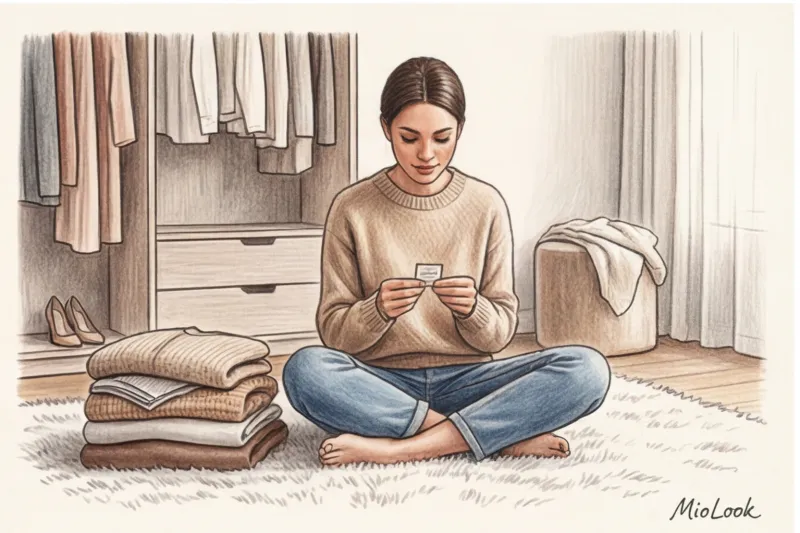
- Get your 10 most frequently worn items your current season (not the ones that hang for beauty, but the ones you wear every week).
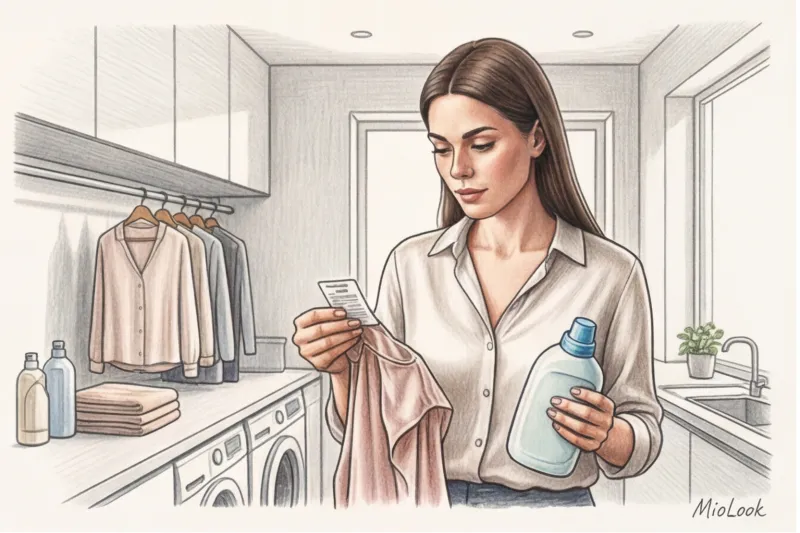
- Check the ingredients on the labels. If you have 7-10 items made of blended fabrics, viscose, silk, or fine wool, you'll need a steamer. If you have mostly 100% cotton and linen, an iron is best.
- Evaluate the cut. Count the number of stiff collars, cuffs, and creases. Too many? You'll need a board.
- Calculate your dry cleaning budget. If you regularly wear suit jackets and coats, a stationary steamer will pay for itself in just 3-4 months just from the savings on laundry services (one jacket cleaning costs an average of €15-20).
Try MioLook
Upload photos of your items, and a smart AI stylist will select the perfect look based on the season and style.
Get access — €0.99 onceSummary: A smart approach to caring for your clothes
Care technologies must evolve along with fabric production technologies. Ironing a modern slip dress with an old iron is like trying to charge a modern smartphone from a 110-volt outlet: it's possible, but the results will be disappointing.
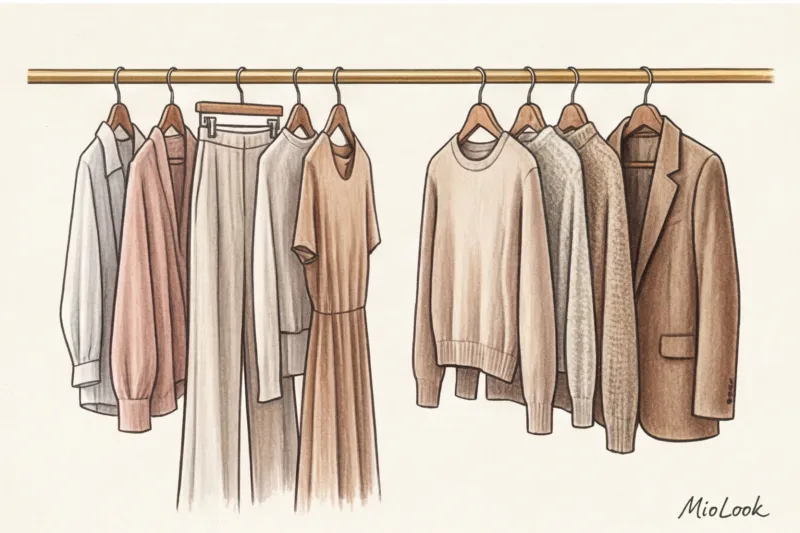
The ideal combination for the modern home, which 90% of my clients choose, is a powerful handheld steamer for the daily routine (covers 80% of tasks) and a basic compact iron for the remaining 20% (linen trousers and shirts).
Treat care not as a chore, but as a way to protect your investment. A properly chosen temperature regime reduces the Cost Per Wear (the cost of each time you wear an item), because a sweater lasts not just one season, but five years. By digitizing your closet, MioLook , you'll begin to notice what items you wear most often, and you'll be able to optimize not only your morning routine but also your time spent on wardrobe maintenance.
Choose the right tool, delegate your chores, and free up those two hours a month for a quiet morning coffee. You deserve it.