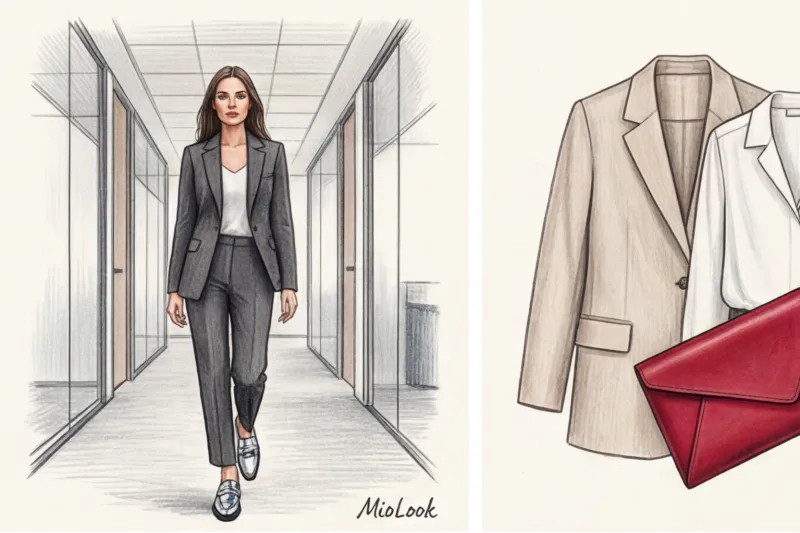
Office Style Accessories: Why Being "Correct" Is No Longer Beneficial
Have you ever noticed this paradox: at important corporate meetings, the woman most often remembered and listened to is not the one whose suit is meticulously tailored to the millimeter, but the one whose formal two-piece suit has just one slightly off-kilter detail? A perfectly polished, "safe" image works against you these days—it makes you invisible among dozens of equally neat professionals.
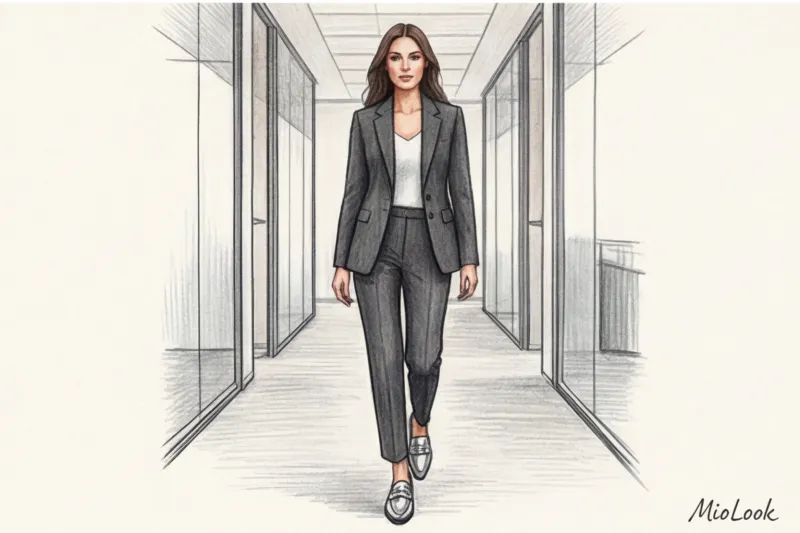
When we discuss accessories for office style , it's no longer just a matter of "adding a bright scarf to a gray jacket." It's about building your personal brand and impression management. We discussed the basic principles of this approach in more detail in our the complete guide to creative business style , but it is the details that determine who you will be considered: a rank-and-file performer or a strategist.
In 2014, Harvard Business School professor Francesca Gino published a study dubbed "The Red Sneakers Effect." The data proved that a subtle, deliberate violation of dress code makes others perceive a person as more prestigious and competent. The logic is simple: if she can afford to break the rules, it means her expertise is so high that she doesn't fear judgment.
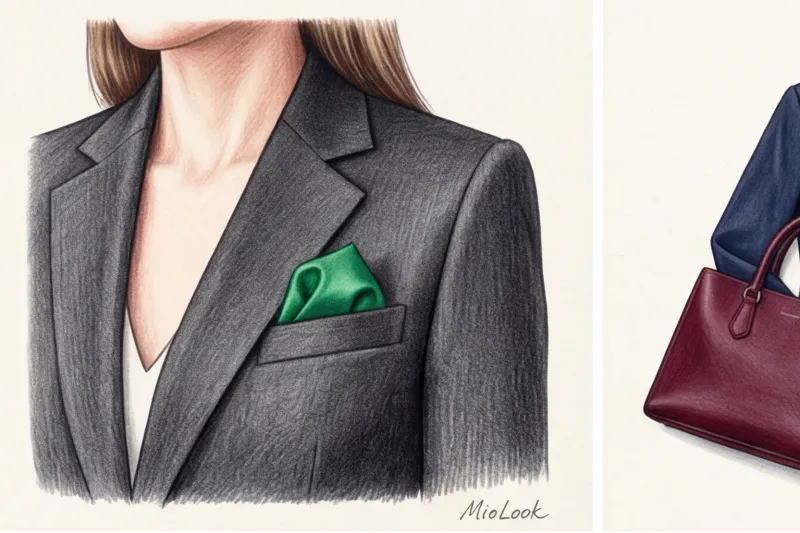
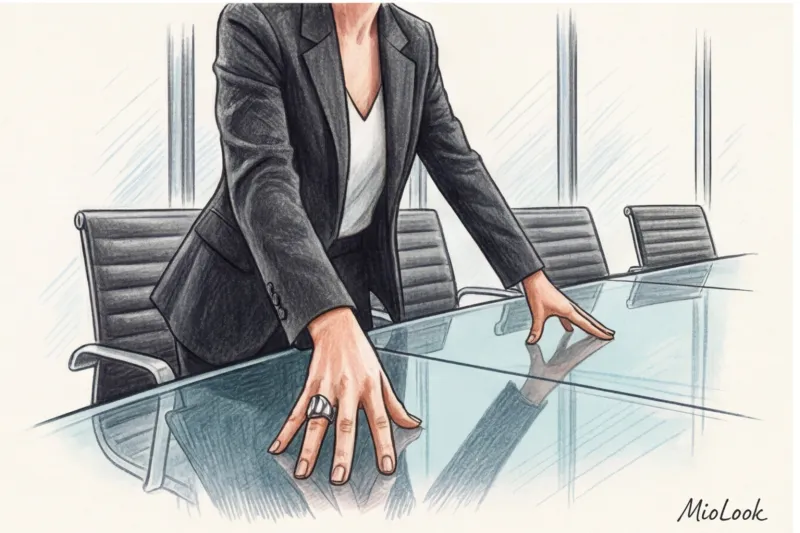
The difference between sloppiness and conscious creativity lies in the accessories. By wearing a classic heavy wool suit but adding a sculpted ring or unusually textured shoes, you're communicating, "I know the rules, but I'm playing by my own rules."
Access to MioLook for €0.99 — one-time payment
A smart AI stylist will select the perfect look with the right accents for your workday.
Get access — €0.99 onceThe 90/10 Formula: A Balance Between Corporate Reliability and Freedom
Over 12 years of practice, I've audited the wardrobes of over 50 female executives. Analyzing their looks, I discovered a clear pattern: those who were tacitly considered "innovators" within the company and whose ideas were adopted more quickly intuitively used the 90/10 rule.
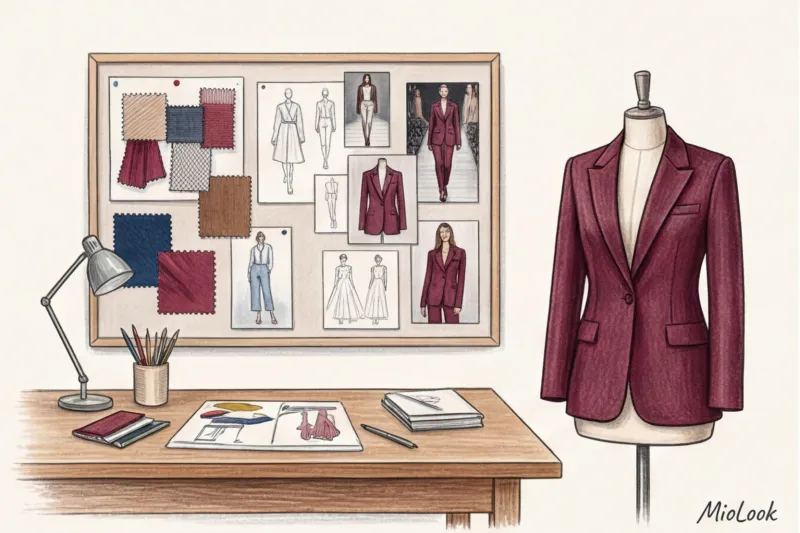
The mathematics of style here are extremely precise. 90% of your look is a fundamental, strict base. This could be a well-tailored jacket, palazzo pants made of at least 250 g/m² fabric, or a high-quality cotton shirt. The remaining 10% is the accent detail that breaks the pattern.
One of my clients, a CFO at a large IT company, complained that male colleagues constantly interrupted her on boards, perceiving her more as a chief accountant than a visionary. Her wardrobe consisted of impeccable blue suits and tiny, almost invisible pearl studs. We made just one change: we removed the pearls and added large, architectural, asymmetrical earrings in matte silver. This single detail transformed her nonverbal clout—she appeared tougher, more modern, and more confident. A month later, she noted that the dynamics of meetings had changed dramatically.
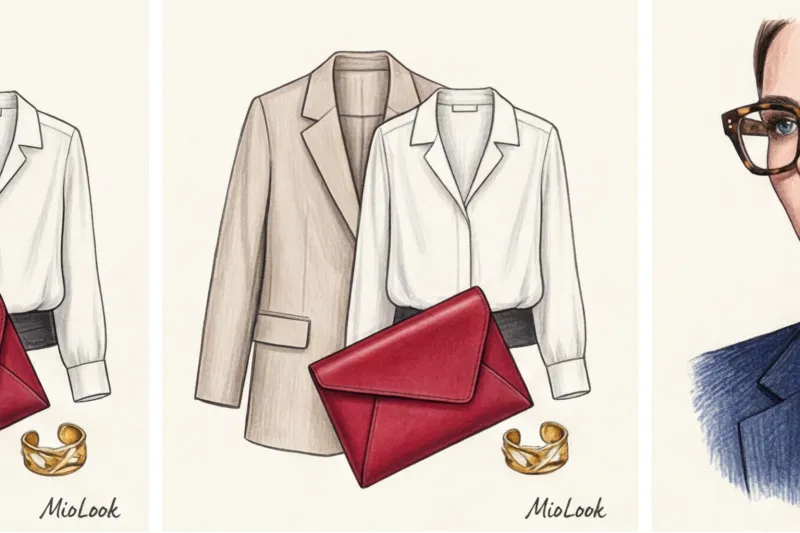
But there's a strict hierarchy of accents here. Why can't you use more than two bold accessories at a time? Because the focus is scattered. If you have statement glasses, a chunky brooch, and leopard-print shoes, you're no longer a strategist, you're a city madwoman. One strong accent is a statement. Three is a fuss.
Top 5 Accent Details for a Creative Business Wardrobe
Not all office accessories are created equal. To ensure a statement piece looks classy rather than flashy, I always recommend clients choose matte finishes over glossy ones, and strict geometric patterns over floral motifs (flowers, butterflies). Let's explore the most effective stylist tools.
Architectural decorations instead of boring classics
Avoid small pendants on thin chains—they'll get lost against the thick fabrics of business attire and will dull the look. Your weapons of choice should be creased metal, asymmetry, sculptural signet rings, and monochromatic earrings.
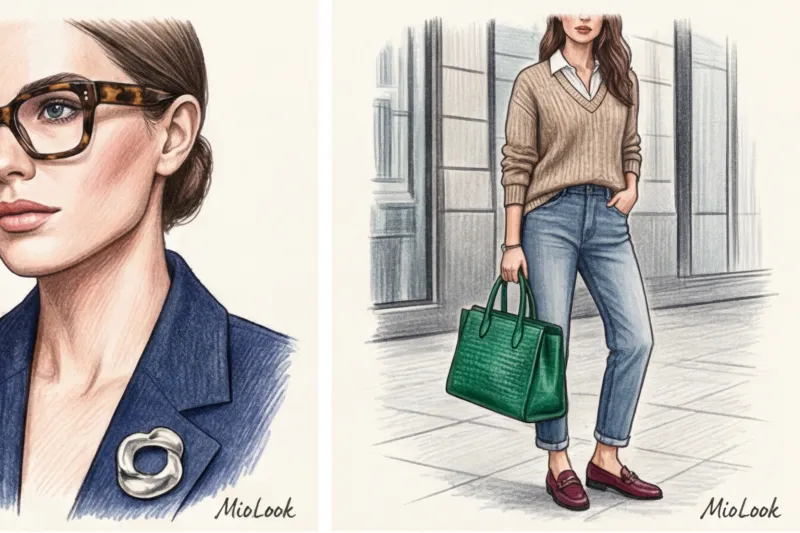
The portrait zone rule is especially important. In the era of endless Zoom calls and online pitches (which we wrote about in detail in the article about style for online performances ), everything below the collarbone ceases to exist. A massive, intricately woven chain or an abstract silver brooch on the lapel of a jacket is what keeps the other person's attention on your face.
Shoes as a Statement: Textures, Toes, and Heels
Classic black pumps are a missed style opportunity. Yes, they're safe, but they don't say much about you. Try replacing them with square-toe loafers or embossed leather shoes (crocodile or python in muted shades).
Colorful shoes—deep wine, emerald, dark chocolate—work as the perfect yet safe accent. Imagine a completely monochrome gray pantsuit with a pair of burgundy loafers with chunky soles. It instantly elevates the look from "uniform" to "personal style."
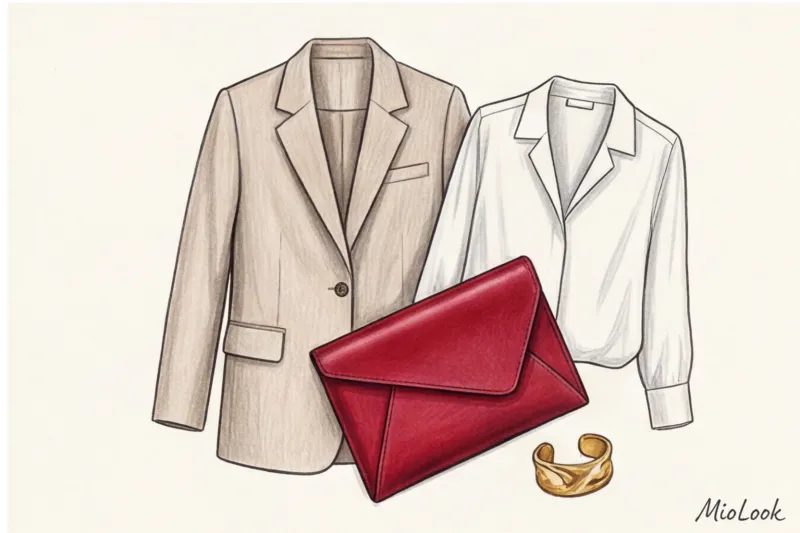
Eyeglass frames: a detail that reveals a visionary
Glasses are the most powerful tool of intellectual style because they literally change the architecture of your face. Discreet metal frames are designed to hide the fact that you're wearing glasses. But modern business style demands the opposite.
Switch to statement frames: thick acetate, tortoiseshell, or unusual geometric shapes (like a soft hexagon). A chunky frame conveys confidence and adds weight and substance to the look, which is crucial during difficult negotiations.
Your perfect look starts here
Join thousands of users who look flawless every day with MioLook. Digitize your accessories in minutes.
Get access — €0.99 onceThe Biggest Mistake: Why "Sets" Are Killing Your Style
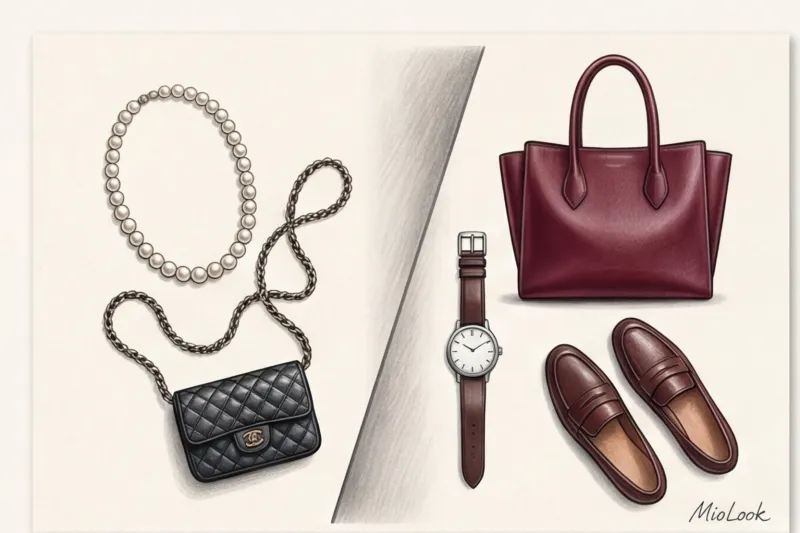
If you want to look outdated, simply choose a bag, shoes, and belt in the same color and texture. This myth—"everything must match perfectly"—is hopelessly outdated. Moreover, in a business environment, perfect, precise combinations subconsciously signal rigidity. You show that you're strictly following a template and are afraid to take a step outside the box.
Contemporary styling demands deliberate dissonance. We combine textures and warm tones rather than copying colors. Smooth leather on a bag calls for suede on shoes. A glossy belt calls for matte loafers.
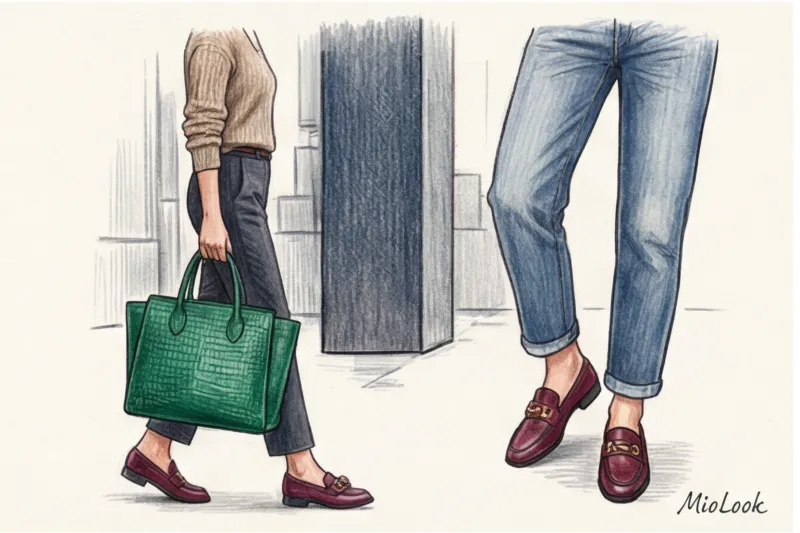
Real-life example: you don't need burgundy shoes to match a burgundy bag. Try leopard-print loafers (with a warm brown undertone), a burgundy tote bag, and a black leather belt. Team it with a beige trench coat or a gray suit. This kind of complex ensemble demonstrates a high level of creative intelligence.
Digitizing Your Wardrobe: How to Manage Accents with Technology
Why do we so often slip into boring basics, forgetting to wear our best statement accessories? Because in the morning, we have exactly three minutes to get ready, and our brains choose the path of least resistance. Accessories often end up in boxes or drawers, and the rule of style is, "What I don't see, I don't have."
This is where technology comes to the rescue. App users MioLook They know that as soon as you digitize your jewelry, belts, and scarves, the algorithm begins suggesting dozens of new combinations with your favorite outfits. The app's internal data reveals astonishing statistics: looks that include at least one statement accessory receive a 40% higher confidence rating from users at the end of the workday.
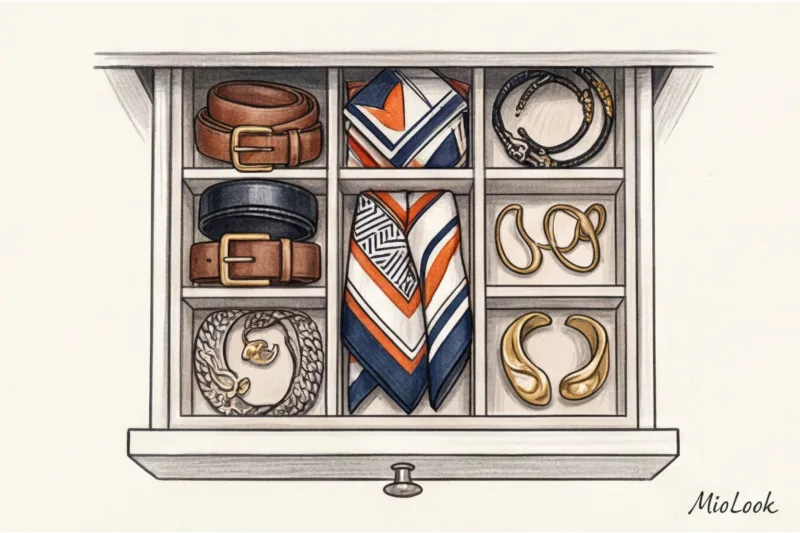
Tracking also helps calculate cost-per-wear. WGSN's consumer behavior research (2024) confirms that investing 30% of your wardrobe budget in quality accessories yields the highest ROI for a personal brand. An expensive $400 statement bag worn 150 days a year (CPW = $2.6) pays for itself much faster than a basic $50 blouse worn twice.
Checklist: Audit your accessories before an important meeting
I always tell my clients: your style should work for you, not you for it. It's important to understand the limitations. If you work in the protocol department of a government agency with a strict white-tie dress code, the "red sneaker effect" could work against you. For all other occasions—before an important pitch or presentation (which we discussed in the article about clothing for public speaking ), run your image through this checklist:
- Relevance check: Does the accessory interrupt your speech? If people only look at your brooch and don't listen to what you're saying about your quarterly report, the accessory is too aggressive.
- Test for "Red Sneakers Effect": Is there at least one detail in your outfit that catches the eye? If you mentally removed yourself from the room, would your colleagues be able to describe what you were wearing? If the answer is "just a gray suit," you blend into the wallpaper.
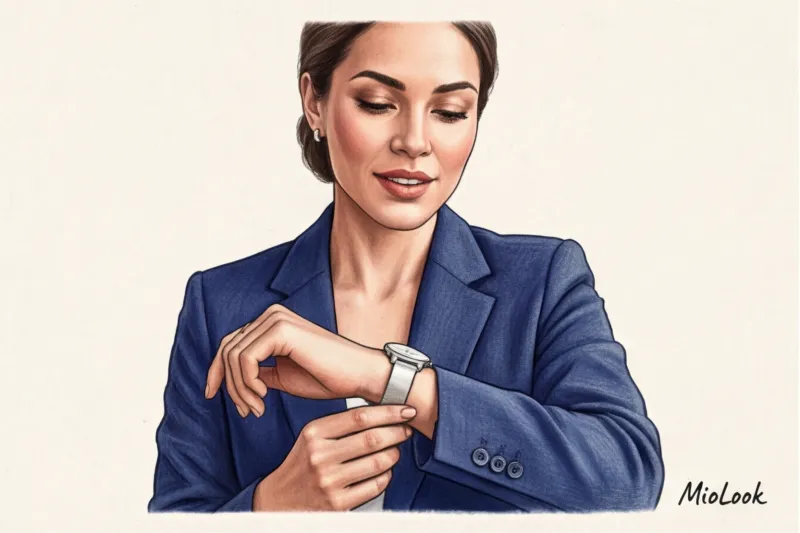
- Comfort check: Does your chunky bracelet jingle on the glass conference table? Are your heavy glasses slipping down your nose? Nonverbal confidence is undermined when you're constantly adjusting your clothes.
Ready to get started?
Try the MioLook plan for free—no commitments required. Upload your accessories and get new look ideas today.
Get access — €0.99 onceSummary: From performer to strategist in one piece
Accessories in a business dress code aren't frivolous embellishments. They're a cool, calculated tool for impression management. They demonstrate your ability to think outside the box, your confidence, and your attention to detail.
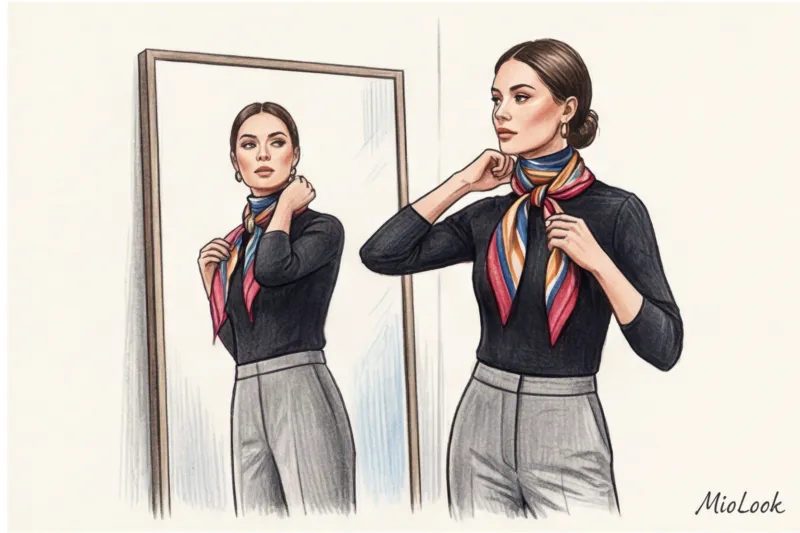
Transforming your style takes practice, so I'm offering you a micro-step. Tomorrow morning, take your most ordinary, most boring office outfit and add one unique detail. It could be a silk scarf with a geometric print tied around your wrist, or deep wine-colored loafers. Just notice how it changes how you feel and how your colleagues react. You'll be surprised how powerful a difference one well-chosen detail can make.