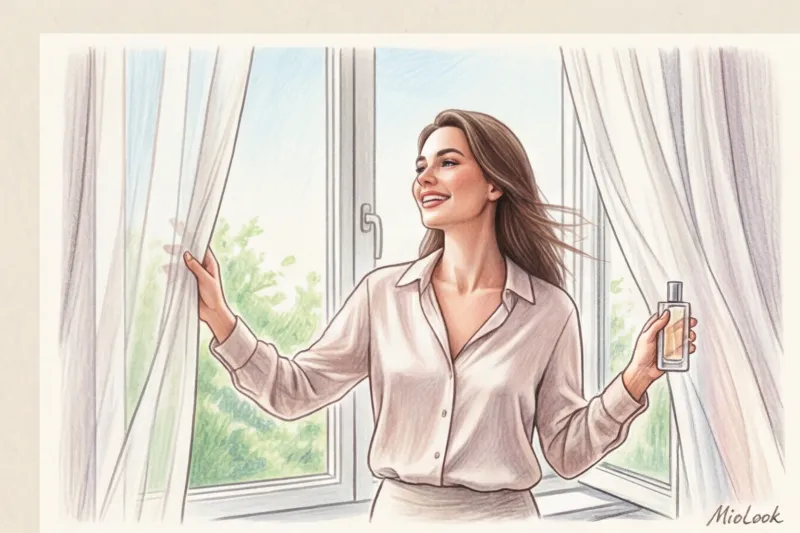
Imagine this: it's mid-April, and you're at an important morning meeting. The sun is already noticeably warming the conference room's panoramic windows. You take off your light trench coat, sit down at the table, and suddenly the perfume you applied at 8 a.m. begins to suffocate everyone in the room with a heavy, sticky vanilla-oud cloud. That's exactly how my client Anna, an IT manager, nearly ruined a contract signing last year. Her favorite winter scent had become an olfactory weapon of mass destruction.
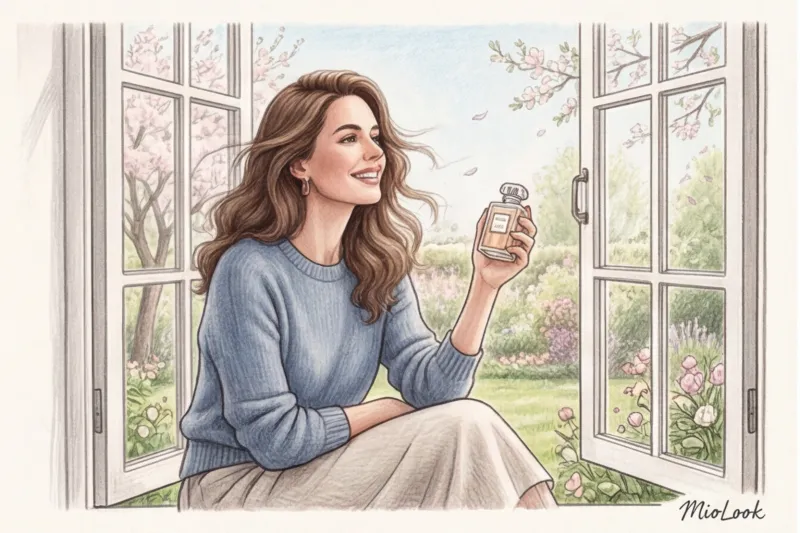
This story perfectly illustrates the most important rule of styling: spring fragrances for women aren't just a seasonal homage, they're a physical necessity. Just as we put away heavy wool coats, we need to take stock of our dressing table. I discussed the basic principles of this process in more detail in our complete guide to perfume wardrobe and assembly of a basic collection.
Today we'll talk about spring perfumes not in the language of glossy clichés about "nature's awakening," but in the language of physics, skin chemistry, and visual illusions. Over 12 years of working as an image consultant, I've learned that a well-chosen fragrance acts as an invisible framework for your style. Let's figure out how to build it.

Why is spring time to change your perfume? The physics and psychology of fragrances
Our brains are surprisingly conservative. After long months of grayness and cold, they require a powerful sensory reboot. But it's not just a matter of psychology and the desire for "something new." The merciless laws of thermodynamics come into play.
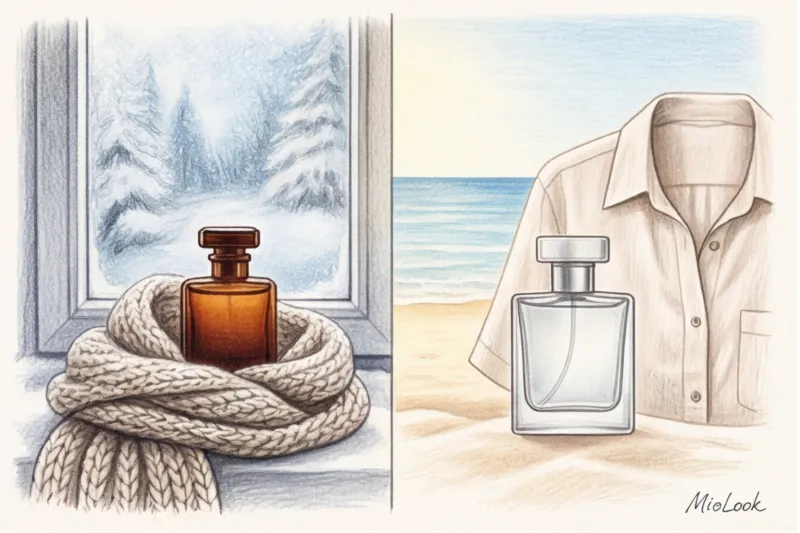
According to research by The Fragrance Foundation, raising the ambient temperature from just 0°C to 15°C accelerates the evaporation of perfume molecules from the skin by 30–40%. In winter, dense, heavy resins, gourmand notes (praline, chocolate), and woody accords (oud, patchouli) unfold slowly, warming us like a cashmere scarf. In spring, this slow melody turns into a scream.
How Temperature and Humidity Are Distorting Your Favorite Winter Perfumes
Have you noticed how the sound changes in an empty room versus a furnished one? The same thing happens with fragrances when the seasons change. In spring, humidity typically increases. In a humid, warm environment, the heavier base molecules begin to evaporate more aggressively, overtaking the lighter citrus top notes.
As a result, the sillage (diffusion) of your winter perfume becomes shorter but much denser. It no longer trails behind you like a beautiful ribbon, but hangs around you like a dense cocoon. This is what creates that suffocating effect on public transport or in the office. Switching to spring perfume is not only a matter of style, but also a basic respect for the personal space of others.
Access to MioLook for €0.99 — one-time payment
A smart AI stylist will select the perfect look for your spring capsule collection and suggest how to pair your favorite items.
Get access — €0.99 onceSpring Fragrances for Women: Discarding Stereotypes About "Compotes"
If you ask a salesperson at a chain store what to buy for spring, nine times out of ten they'll offer you a cloying pink peony, candied strawberries, or tropical fruits. In professional circles, we call such arrangements "compotes." And this is the main trap for a business woman.
As a colorist, I often work with synesthesia—the brain's ability to associate scents with colors and textures. Overly sweet, straightforward fruity-floral compositions are perceived by the brain as something infantile, pink-neon. I had a telling case: a client bought a luxurious Massimo Dutti pantsuit in a sophisticated olive shade (around €250), but she kept dousing herself liberally with cotton candy-scented spray. The suit instantly "depreciated" in the eyes of those around her. The scent destroyed the image's status.
"The true elegance of a spring perfume lies in the air between the notes, not in their density. Choose compositions that allow for breathing space."

Intelligent Spring: Green, Mineral and Tea Notes
What else to wear if not sweet flowers? The WGSN trend bureau's 2024 report clearly highlights the demand for "natural authenticity." So-called intellectual notes convey a sense of status and luxury.
- Green chords: Freshly cut grass, crushed tomato leaf, basil, and galbanum add dynamism and composure to the look.
- Minerality and petrichor: The smell of wet asphalt after rain, damp earth, and sea salt. Perfectly balanced with formal business outfits.
- Tea notes and fig: Matcha, white tea, and fig leaf greens create an aura of calm, relaxed confidence.
These notes are considered a sign of good taste in a work environment. They don't overstep the mark, but they leave an intriguing aftertaste.
Stylist's secret: combining spring perfume and fabric textures
Now let's move on to the next level. Most women choose perfume based on their mood. I offer you a different, more effective tool: match your scent to the texture of your clothing. The scent should become an invisible extension of the fabric.
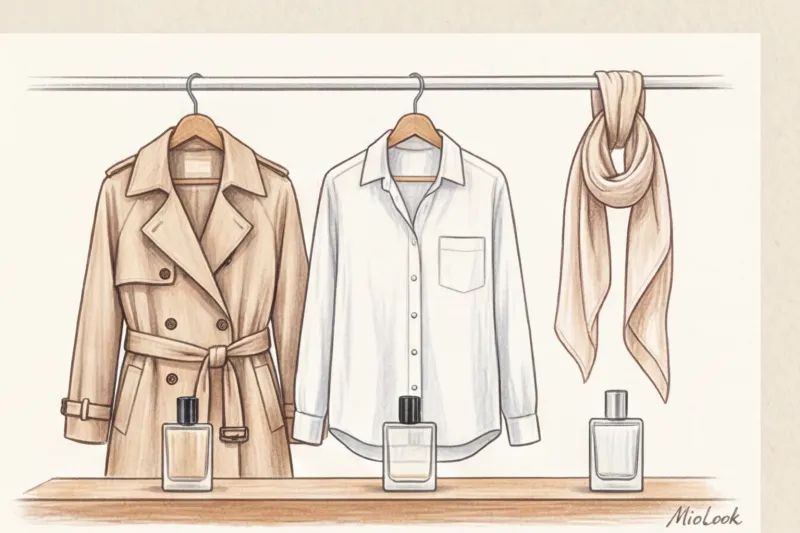
Here's my tried-and-true cheat sheet for pairing olfactory notes with spring materials:
- Smooth silk and flowing viscose. Light, tactilely cool fabrics call for equally gliding fragrances. Watercolor flowers (iris, white freesia) with a base of white musk are ideal here. They create the illusion of a clean body after a shower.
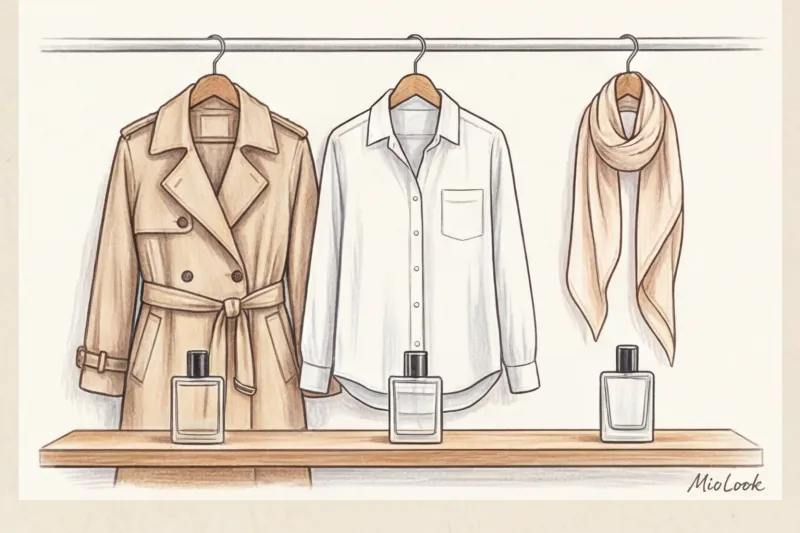
- Classic gabardine (beige trench coat). A dense, shapely fabric with a rich history. The trench coat pairs beautifully with modern, light chypres (where moss is replaced by clean patchouli) or tart Calabrian bergamot. This combination reveals a woman with impeccable taste.
- Denim and leather jackets. Rigid textures contrast beautifully with woody, spicy fresh notes – vetiver, pink pepper, cedar.
A scent to wear with a white shirt and a basic t-shirt
For a crisp, heavy cotton office shirt (180 g/m² and above), there's nothing better than aldehydes and neroli. Aldehydes in perfumes create that "freshly washed, hot-ironed" effect, while neroli adds a subtle, soapy cleanliness. If you're wearing a white T-shirt and jacket to the office on a smart-casual Friday, apply a petitgrain-infused fragrance. The look will instantly come together.
Your perfect look starts here
Wondering what to wear with white cotton and silk this spring? Join the thousands of users who look flawless every day with MioLook.
Get access — €0.99 onceChecklist: Putting together a spring capsule for your perfume wardrobe
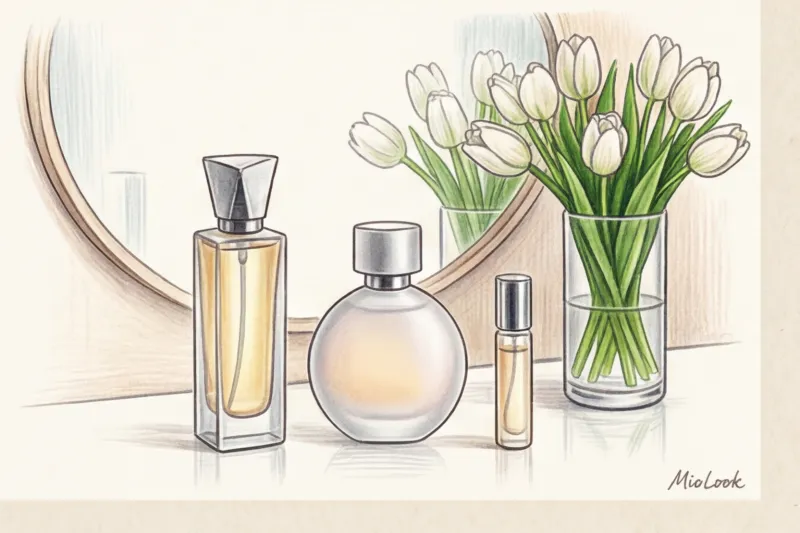
You don't need 20 bottles on your shelf to cover all your spring needs. A minimalist wardrobe is all about smart consumption. A minimal capsule of three fragrances (with a total budget of €150 to €300, in the mid-range segment) will solve 90% of your needs.
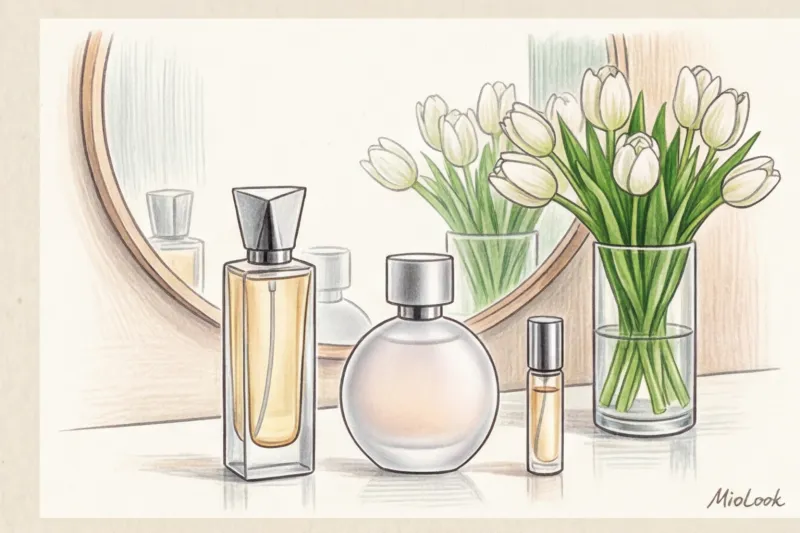
- Position 1: "Office armor". A politically correct, low-sillage, citrus-woody scent (like Molecular Stories with vetiver or grapefruit). It sits close to the skin. You wear it to important meetings, presentations, and job interviews. The price is usually in the range of €50–€120.
- Position 2: "Spring Wind". A green, fresh, and highly diffusive perfume for walks, Sunday brunches on the veranda, and get-togethers with friends. These are the very same notes of fig, tea, and herbs. Outdoors, it will be stunning in catching the spring breeze.
- Position 3: "Evening coolness". A transparent floral chypre or elegant suede. This is your companion for the theater, dates, or evening outings when the air has cooled but you still don't feel like wearing a heavy gourmand.
The main mistakes when choosing and applying spring perfume
Even the perfect scent can be ruined by improper use. Here are the three biggest mistakes I constantly see at the start of the warm season.
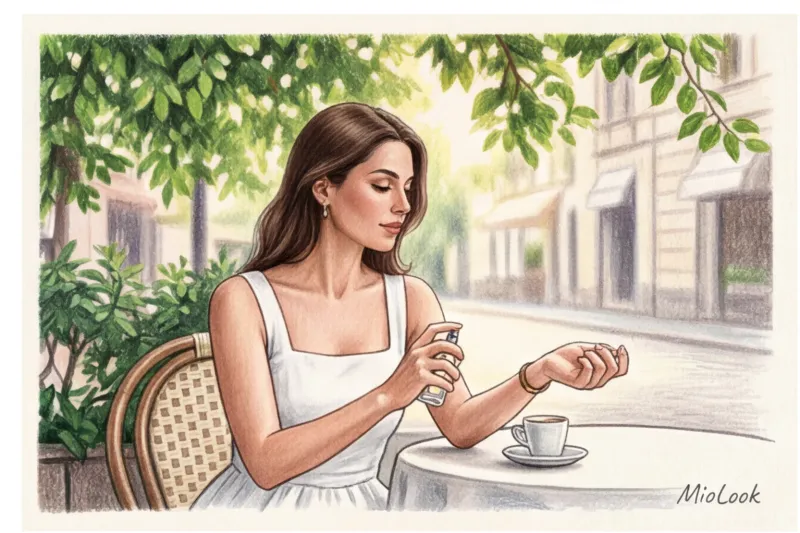
Mistake 1: In-store testing. Going to a large perfume store on a Saturday afternoon to try subtle, crisp spring scents is a bad idea. The air is so thick with odors that your senses simply won't detect the delicate green tea. Choose your perfume in the morning, spray it on your wrist, and be sure to go outside.
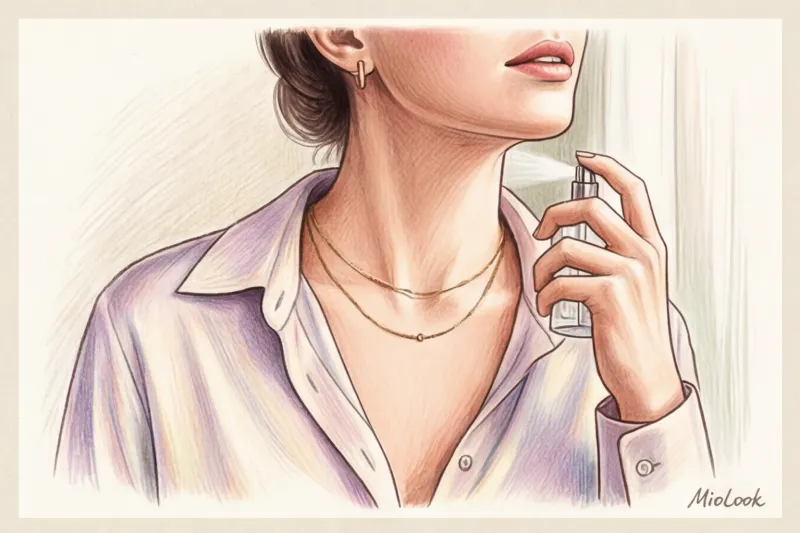
Mistake 2: Applying to clothing. In winter, we can wear the same sweater or scarf soaked in perfume for weeks. In spring, the weather is capricious: in the morning we wear a coat, in the afternoon a shirt, and in the evening we throw on a cardigan. By applying perfume to clothing, you risk creating a terrible mix of three or four different scents. In spring, perfume is applied exclusively on the skin and under the hair.
Mistake 3 (The Most Dangerous): Ignoring Phototoxicity. As an expert, I must warn you. Many spring fragrances contain natural citrus oils (especially bergamot). In dermatology, there's a term called "bergamot dermatitis"—a skin pigmentation that occurs when essential oils react with the intense spring sun. Never apply citrus perfume to your bare neck and décolleté before going out in the sun! Apply them to the back of your neck, under your hair.
Fair Limit: The advice to apply perfume to your hair doesn't work for everyone. If you have heavily bleached, dry, and porous blonde hair, the alcohol in perfume will dry it out even more. In this case, use special alcohol-free hair mists or apply perfume only to the crook of your elbow.
Choosing a spring perfume is your personal rite of passage into the new season. Don't be afraid to eschew the typical fruity sweetness in favor of complex, textured scents that highlight the intricacy of your style. Remember: clothes make you visible, but perfume makes you unforgettable.