The End of the Try-On Stress: How Technology is Saving Our Shopping Experience
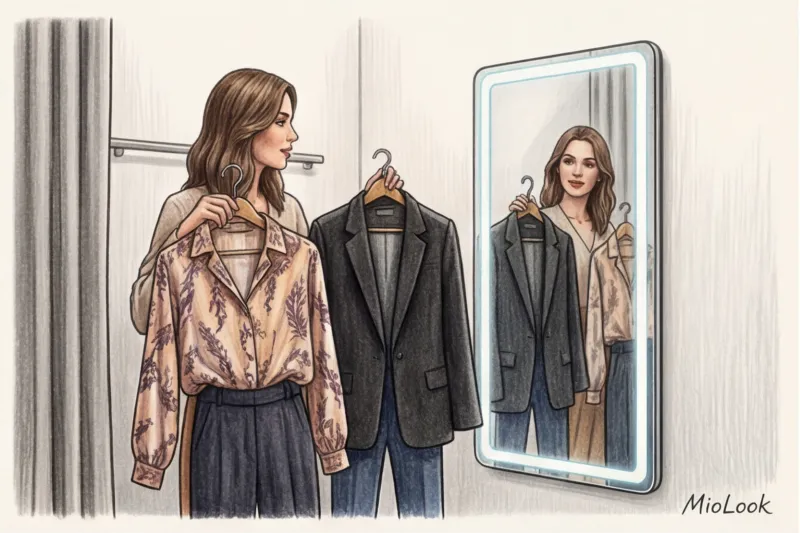
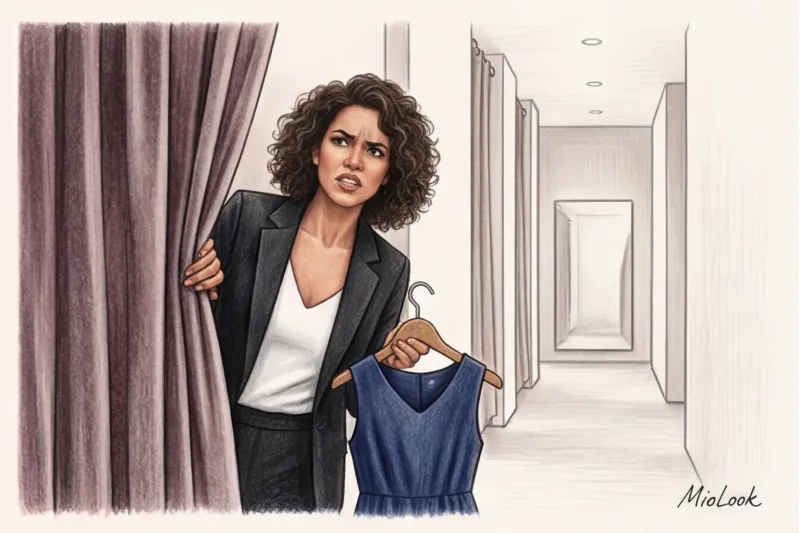
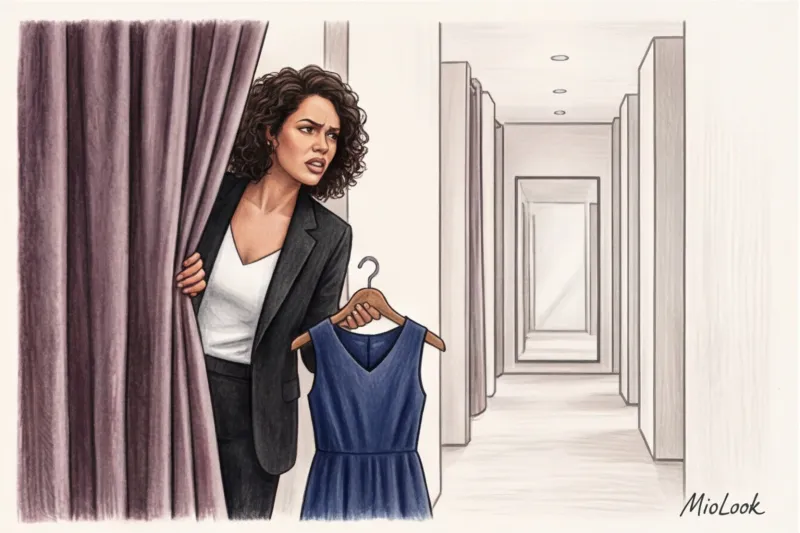
In my 14 years as a personal stylist, I've seen tears in fitting rooms more often than you might imagine. I remember one client literally bursting into tears in a fitting room at a popular high-street store. She'd brought a mountain of clothes, half of which didn't fit, and asking for another size meant peeking half-naked from behind a heavy velvet curtain, looking for the perpetually busy consultant. That day, she'd bought jeans that were obviously too tight, just to get out of the store as quickly as possible.
Have you ever noticed how draining shopping can be when the fitting process turns into a survival quest? This so-called "shopping burnout" is the main reason why our closets are filled with compromised items we never wear.
Fortunately, the industry has finally embraced our comfort. Today, retail is undergoing a quiet revolution, and smart fitting rooms are becoming the norm. I've already covered the technical side of this miracle in more detail in our A complete guide to smart mirrors in stores , and today we'll talk about the invisible heart of this system—the technology that allows the booth to "recognize" what exactly you brought.
Invisible Stylist: How RFID Tags Work in a Clothing Store
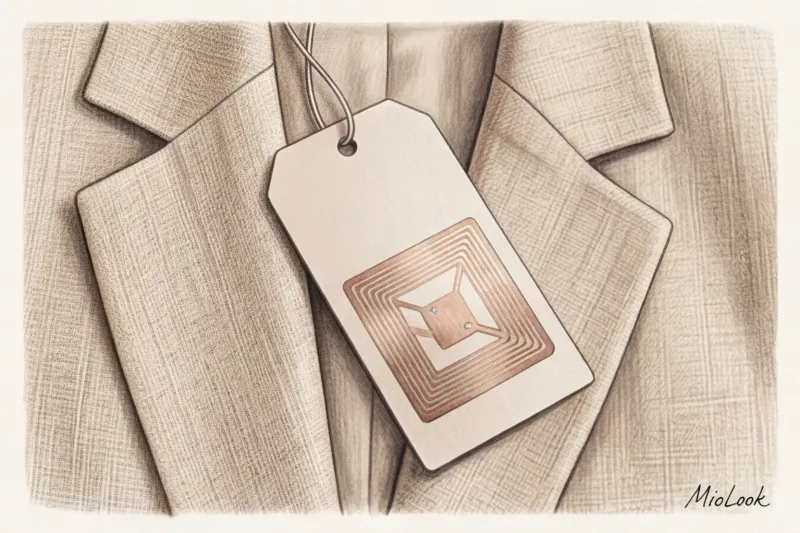
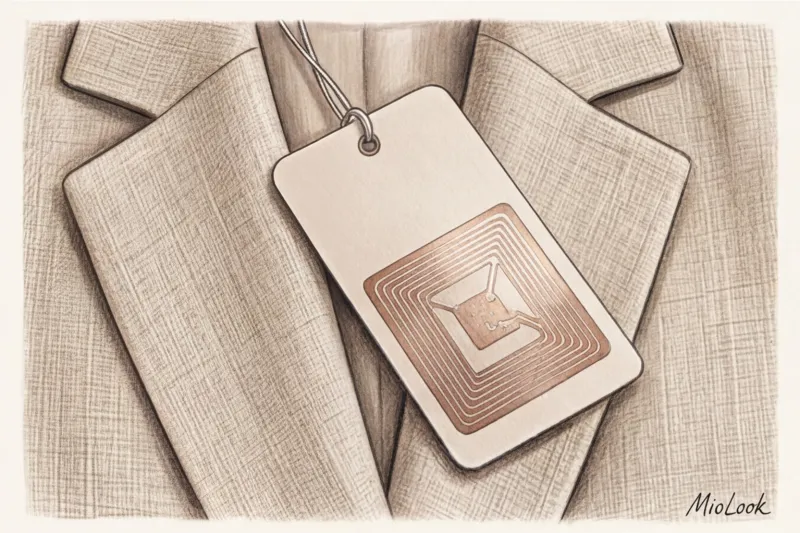
You probably remember those dreaded plastic anti-theft clips that cashiers snap off at the checkout with a loud click. How many beautiful silk blouses were hopelessly ruined by their harsh needles! Today, they've been replaced by RFID tags (Radio Frequency Identification) in clothing stores—an elegant and fabric-safe solution.
In simple terms, RFID is a tiny chip with an antenna, often embedded directly into a paper tag or fabric label. Unlike a barcode, which must be held close to a scanner, an RFID tag can be read remotely. It's a true digital passport for a dress. It encodes not just the item number, but the entire DNA of the garment: brand, collection, exact color, size, fit, and even composition (for example, "80% wool, 20% cashmere").
The large-scale transition of Inditex's flagship stores (owner of Zara, Massimo Dutti, and others) to soft RFID chips has proven that we can protect products without turning them into plastic pieces with sensors. Caring for delicate fabrics is the first step toward premium service.
Smart hangers: the magic of the first touch
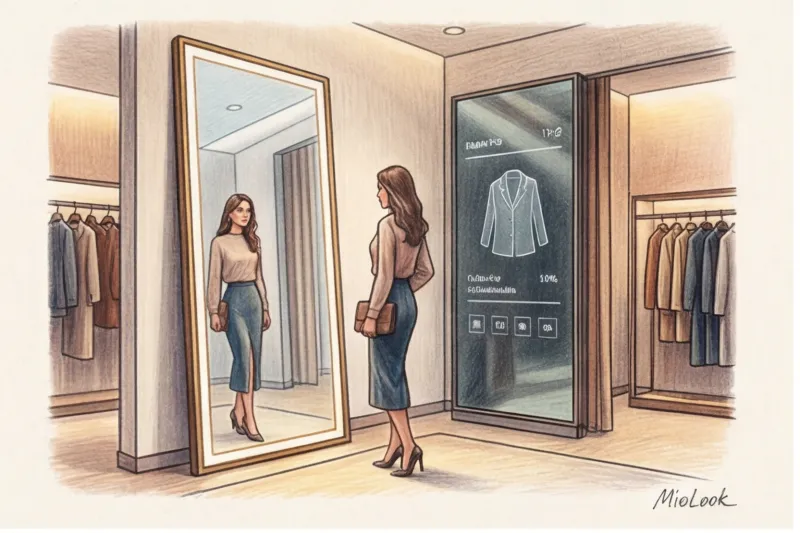
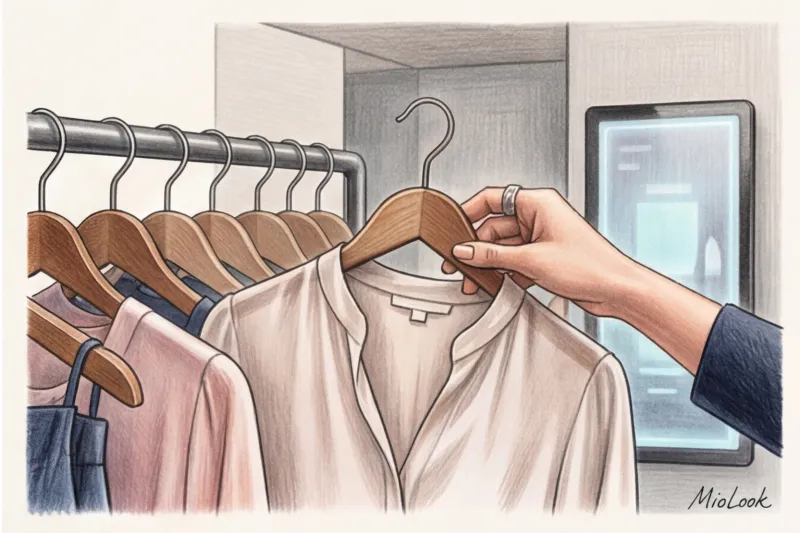
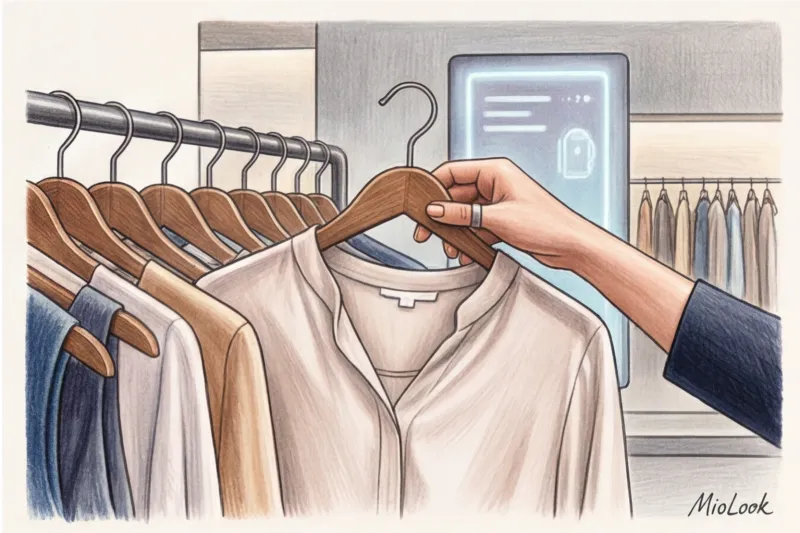
The magic begins right in the sales area. Imagine: you're picking up a luxurious silk shirt worth around €120 from the rack. At that very moment, a screen built into a nearby sales counter comes to life. The smart hanger, using microsensors and RFID readers, has recognized what you've touched.
A video from the runway immediately appears on the screen, showing a model wearing this very shirt, along with tips on which wool skirt and accessories to style it with. It's instant inspiration instead of the usual confusion in front of endless rows of clothes.
Access to MioLook for €0.99 — one-time payment
A smart AI stylist will select the perfect look based on your preferences.
Get access — €0.99 onceMoment X: What happens when you walk into a fitting room
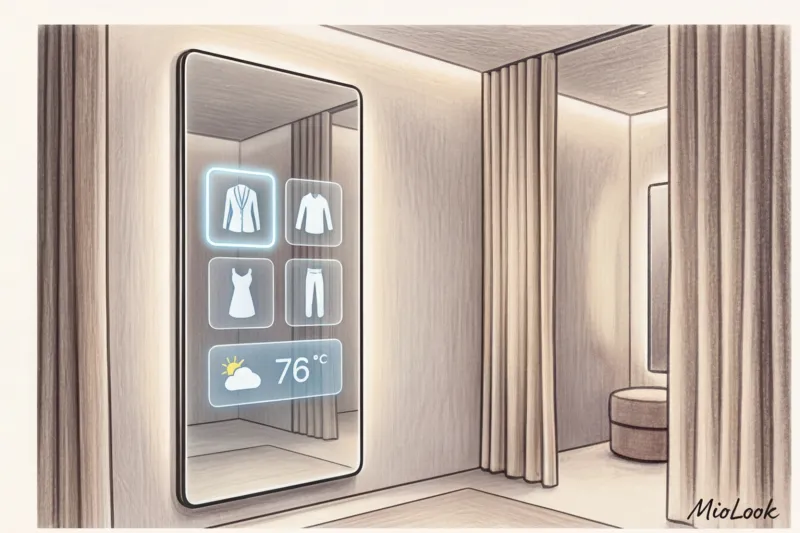
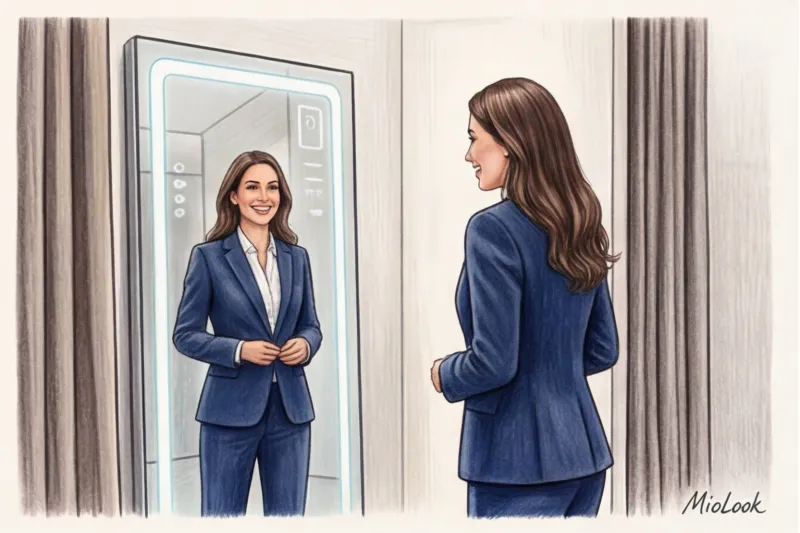
Last month, I was testing out new store formats and walked into the flagship boutique in Milan. I was holding a navy blue pantsuit. As soon as I stepped into the fitting room, the mirror softly glowed and greeted me, instantly displaying a list of my items on the glass.
How does it work? Invisible antennas are embedded in the walls and ceiling of the booth. They read all the RFID tags on the clothing you're holding in your hands in a split second. No scanners, no buttons. You simply step in, and the mirror transforms into an interactive screen.
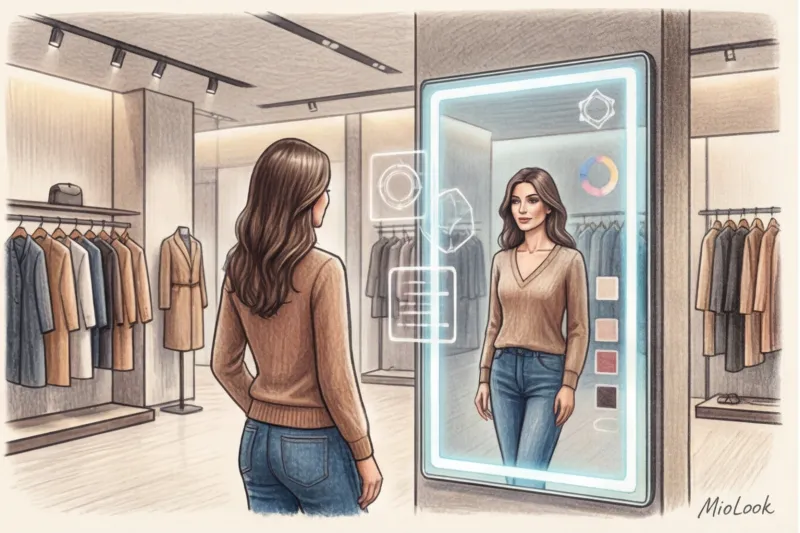
The system not only displays your items but also analyzes them. If you've brought a formal jacket, a pencil skirt, and a basic turtleneck, the algorithm instantly recognizes the business dress code and tailors its recommendations specifically to that aesthetic.
Rescue button: order a different size in one click
This is my favorite feature, a lifesaver for women everywhere. If your pants are too small, you no longer have to put them back on or scream through the curtain. You simply touch the mirror, select the desired size (or a different color), and click "Request."
At this point, the sales assistant in the store receives a notification on their smartwatch or tablet indicating your booth number and the item you need. You receive luxury boutique-level service while in a mass-market store with an average check of €50–€100.
Virtual capsule: how a mirror selects accessories
According to the extensive McKinsey State of Fashion (2024) report, the implementation of AI and cross-selling algorithms in offline retail increases the chances of a successful purchase by 40%. And I understand why. Artificial intelligence works like a perfect, never-tiring stylist.
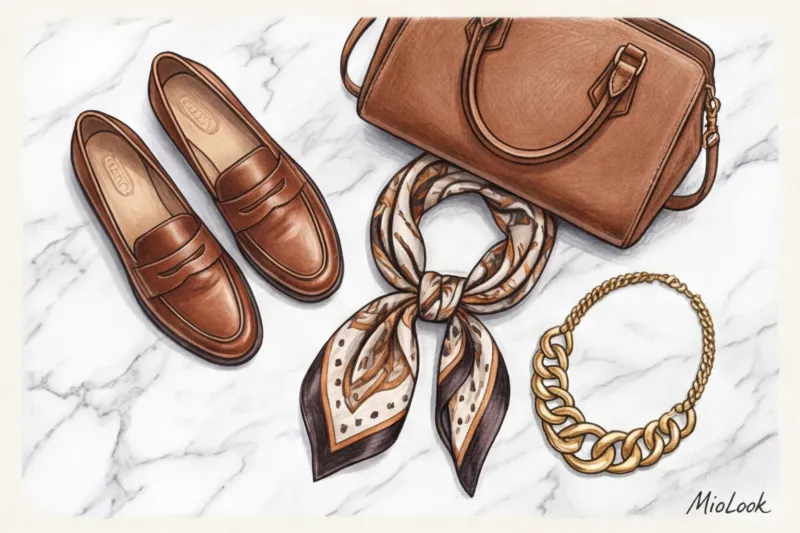
By the end of an eight-hour shift, a live salesperson might forget to offer you a belt. A smart mirror never will. It uses tried-and-true style formulas. Are you trying on a base? The screen will prompt: Blazer + midi + loafers = instant status And then he'll show you where these loafers are in the room.
Of course, this technology has its limitations. If you have a non-standard figure—for example, a narrow waist with wide hips—the algorithm won't yet be able to recommend specific trousers with darts the way an experienced stylist or tailor would. It relies on standard patterns. But for developing a basic eye for detail and an understanding of color combinations, it's an excellent training tool.
Your perfect look starts here
Join thousands of users who look flawless every day with MioLook. Create your virtual capsule now.
Get access — €0.99 onceMyths and Fears: Are Smart Tags Tracking Us?
Here I want to address a very common, yet absurd, fear. Many clients have whispered to me, "Isabella, I'm cutting off all these cardboard tags because I'm afraid this chip will track my movements at home."
Most people think of radio frequency tags in clothing as a tool for total surveillance or purely as anti-theft devices. In fact, today they are the primary means of customer care.
The range of a passive RFID tag used in retail is just a few meters. As soon as you scan an item at the checkout, the tag deactivates. No satellite is tracking your new T-shirt.
Moreover, the data collected by the fitting room system is completely anonymous. The store doesn't see "Anna, 35, lawyer," but rather "Black dress, item no. 5432, size M, was brought into the fitting room 120 times this month, but only sold 5 times." These statistics send alarm bells ringing for brands! They realize that the fit is poor or the fabric is itchy and discontinue the model. And implementing RFID reduces the likelihood of out-of-stock items by 80%. Everyone wins.
Checklist: How to Use Fashion Tech for the Perfect Shopping Experience
To get the most out of today's boutiques, I recommend my clients follow these rules:
- Don't be afraid of the screen: Please actively request other sizes, colors, and fits. It's your right to comfort.
- Allow yourself an experiment: If the mirror suggests a contrasting bag to go with your usual beige trench coat, ask them to bring it. Technology is a great way to safely step out of your style comfort zone.
- Save for future reference: Most smart mirrors allow you to scan a QR code with an image you like but haven't purchased and save it to your phone.
- Digitize your wardrobe: Add each new purchase immediately to MioLook app This way, your real-life shopping will seamlessly connect with your virtual closet, and you'll never buy a duplicate item.

Summary: When technology serves your confidence
Innovation in fashion isn't about soulless robots and cold algorithms. First and foremost, it's about bringing back the joy of choosing clothes. When smart hangers and mirrors take over the mundane tasks of searching for sizes and scurrying around the store, we conserve our most valuable resource—emotional energy.
Let technology do its work. Let invisible radio waves scan tags and mirrors find your loafers. And just enjoy your reflection, experiment with styles, and choose what makes you feel truly luxurious. After all, the best outfit is your confidence.