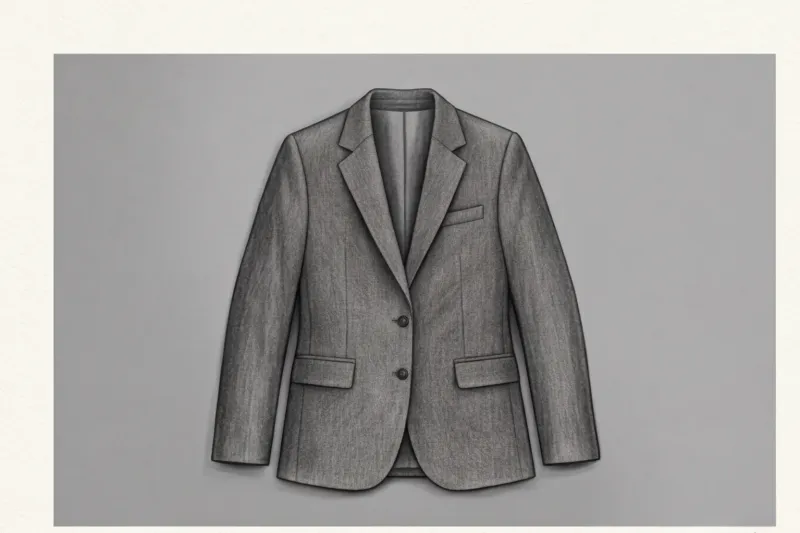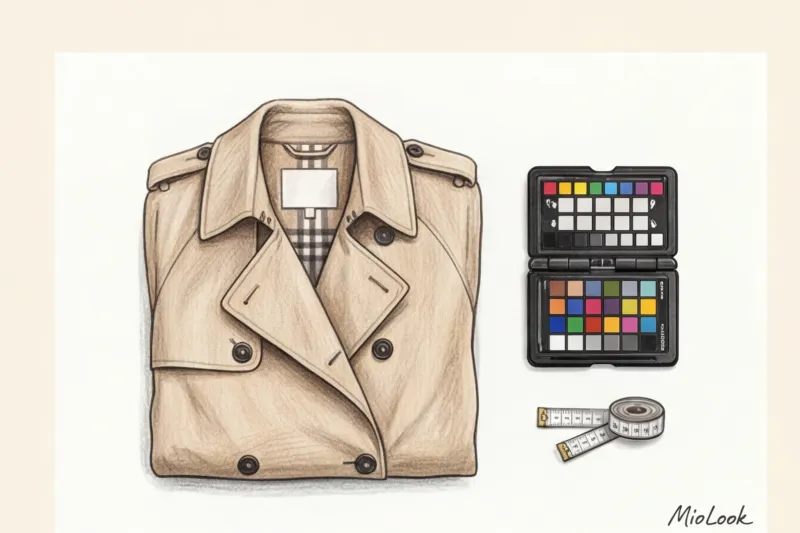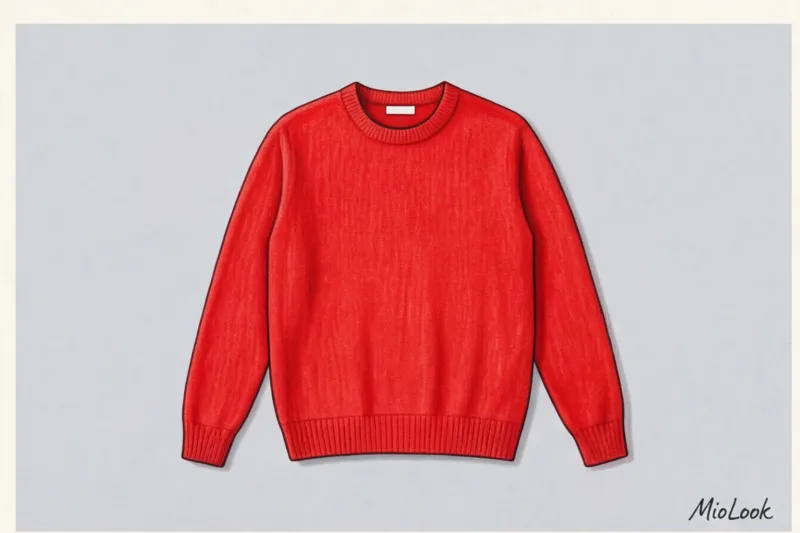
Picture this: you're looking at a photograph of your favorite silk skirt, hanging forlornly on a doorknob. Now try to mentally connect it with the voluminous cashmere sweater you photographed lying on a colorful sofa. Your brain literally refuses to put the pieces together. You see the door, the sofa, the shadows—anything but a stylish image.
That's why my most common advice to clients who want to declutter their closets is simple: isolate items. These days, searching for "cut clothes from a photo app" isn't just a search for a technical tool. It's the first step toward viewing your wardrobe as a professional stylist, not as the tired owner of an overcrowded closet.
Why Remove Backgrounds at All: The Secret to the Perfect Digital Wardrobe
Our brains are surprisingly lazy when it comes to visual noise. According to research in retail psychology (and, in particular, the latest data from the Institute of Visual Merchandising for 2024), isolating an object from its background increases its perceived value by 40%. Think of the display windows of luxury boutiques—they're clutter-free, just the item and the space around it.
One of my clients, Sofia, decided to digitize her own wardrobe. She spent an entire weekend photographing 80 items of clothing right on her bed. When we opened her photo folder, it looked less like a stylish collection and more like a flea market yard sale. Different backgrounds, crumpled sheets, random shadows from the chandelier. Assembling a capsule collection from it was physically impossible due to the "paradox of choice" coupled with the visual chaos.
"A clear image of a piece on a transparent or neutral background is a blank canvas. Only then can you begin to see the silhouette, proportions, and potential for combination, rather than being distracted by the interior."
Once we ran her photos through the algorithm and obtained neat cut-out silhouettes, Sofia created 15 new outfits from the same items in half an hour. We described this phenomenon and the step-by-step algorithm in more detail in our The complete guide to creating a digital wardrobe.
How to Cut Out Clothes from Photos: AI App vs. Manual Cutting
I remember 2016 vividly. To put together a beautiful digital lookbook for a client, I spent hours using professional photo editors. Magic wand tools, erasers, pixel-by-pixel tinkering. Perfectly cropping a single complex dress took up to 15 minutes. Preparing a wardrobe of 50 items took entire weekends of sleepless work.
Today, the evolution of fashion-tech tools has changed the rules of the game. According to a McKinsey report (2024) on the impact of generative AI on fashion, modern computer vision algorithms have reduced cataloging time by 95%.
Why does a specialized app perform better than general-purpose photo editors? The difference lies in the training set. Built-in AI stylist It's trained on millions of images of clothing. The neural network "understands" that it's looking at a jacket sleeve, not a piece of a chair, and can distinguish a cast shadow from the black hem of a dress. What used to take me 15 minutes now takes 3 seconds.
Access to MioLook for €0.99 — one-time payment
Start creating perfect images with the help of artificial intelligence
Get access — €0.99 onceAnatomy of an Algorithm: How Neural Networks Recognize Patterns and Fabrics
The magic happens under the hood. When you upload a photo, the algorithm doesn't just look for contrasting colors. It analyzes the depth map and texture.
Computer vision has learned to distinguish between hard and soft edges. If you're photographing a structured leather blazer or thick jeans, the AI looks for crisp, graphic lines. But if it's flowing silk or delicate chiffon, the algorithm applies soft feathering to the edges to prevent the garment from looking like it was cut out of paper with scissors.
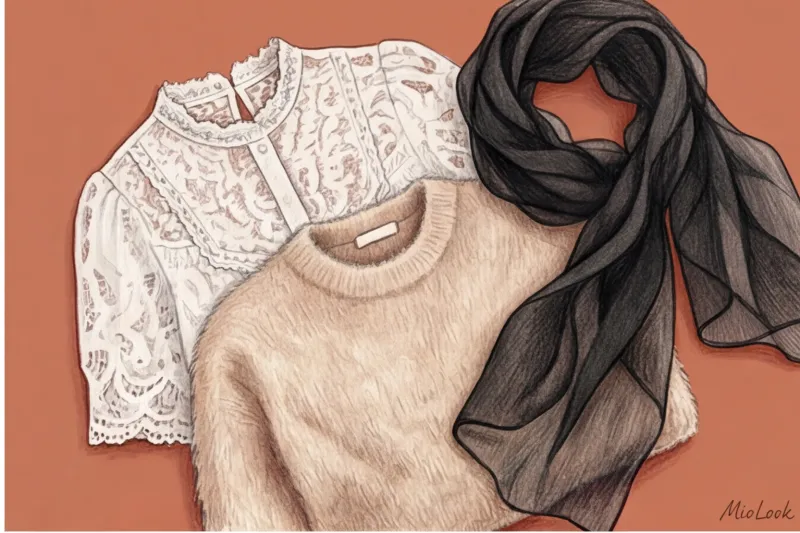
Complex textures: fur, lace and sheer fabrics
The main problem with older programs was "chopped" fur and completely stained lace. Modern neural networks use semantic segmentation, which allows them to preserve micro-details: the lint of a mohair sweater or the translucency of a chiffon blouse.
But I have to be honest with you here: AI is not omnipotent. When does this NOT work? If you place a sheer black mesh blouse on a black sofa, no artificial intelligence in the world will be able to figure out where the mesh ends and the upholstery begins. Such fabrics require minimal assistance from you.
5 shooting rules to ensure AI removes the background perfectly the first time
There is a huge myth that stops many from digitizing their closet: "I need a professional white cyclorama or a perfectly clean, light background." As a stylist who has digitized thousands of items, I can officially say this is a fallacy.
Modern algorithms rely on contrast. They'll cut out a white shirt thrown onto a dark, patterned carpet much better than the same shirt neatly laid out on a crisp white bed. Here are my 5 golden rules for flawless results:
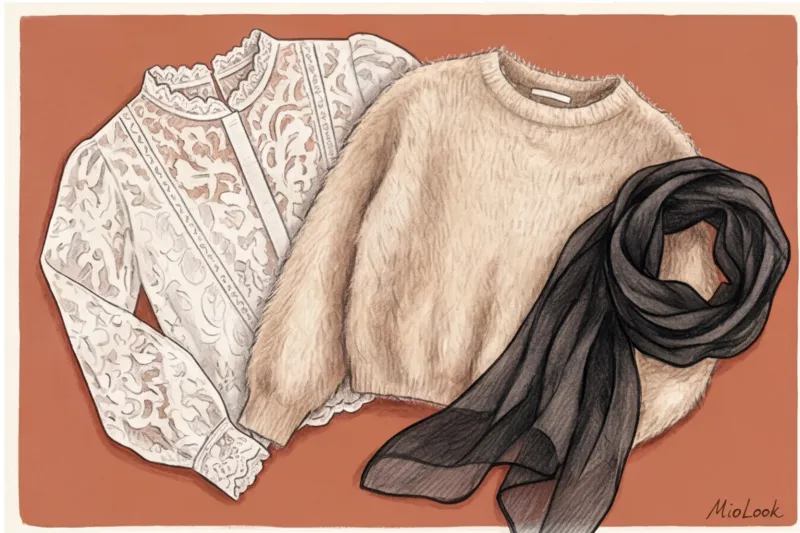
- Contrast rule: We photograph dark objects against light objects, and light objects against dark objects. If an item blends into the background, place a contrasting blanket underneath it. A colorful background pattern isn't a problem for the neural network, but the lack of a color boundary is a death sentence.
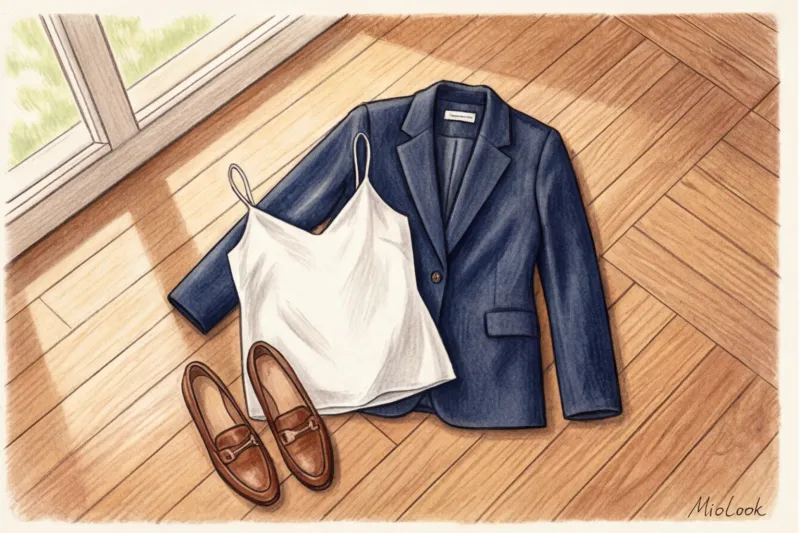
- Daylight diffused light: No harsh head-on flashes or yellow incandescent bulbs. The best shot is taken on the floor by the window on a cloudy day.
- Ideal Flat lay: Lay the garment flat on the floor. Adjust the sleeves at a slight angle away from the body to create a clear silhouette. The artificial intelligence should "understand" the garment's geometry.
- No overlaps: Sleeves should not be hidden behind the back, and pant legs should not be crossed, unless this is the design intention.
- Fasten the buttons: An unbuttoned cardigan with edges folded inward will look like an incomprehensible piece of fabric in the final picture without a background.
The main mistake: a merging background and harsh shadows
Harsh shadows from direct sunlight or a smartphone flash trick the algorithm. It mistakes a thick black shadow for an extension of the black dress. As a result, the garment appears distorted and out of proportion. If you see a harsh shadow, move away from the window and into the room.
Your perfect look starts here
Join thousands of users who look flawless every day with MioLook.
Get access — €0.99 onceFrom photos to a stylish capsule: what to do with cut-out items
Once you get rid of the background, the real magic of the designer begins. Your smart wardrobe It turns into a personal fitting room on your smartphone. No more emptying half your closet and scattering clothes across your bed to figure out if this jacket matches these trousers.
Clean images of the items allow you to apply professional styling formulas directly on the screen. My favorite Mediterranean chic formula works flawlessly: Oversized blazer + silk slip + loafers = instant status When you combine these items on a blank screen, you immediately see how the textures and colors interact. You begin to notice that a chunky gold chain begs for this look, while a delicate pendant would be lost.
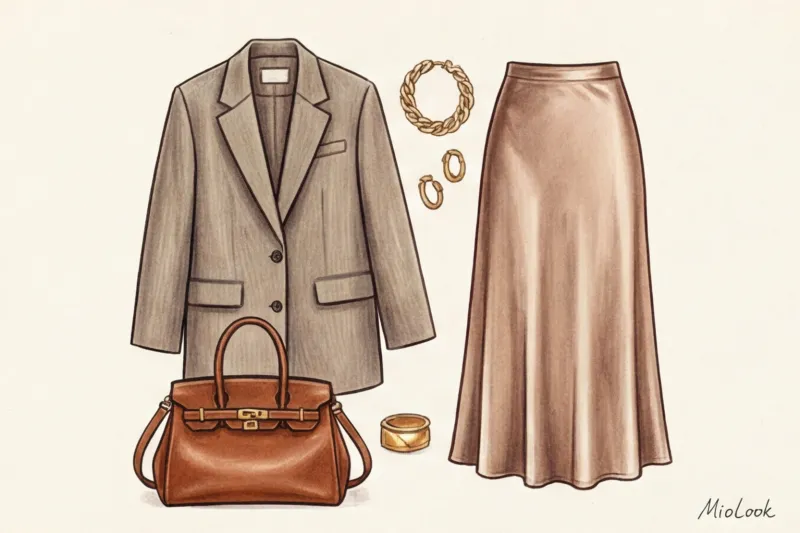
Planning your looks for the week ahead will help you avoid morning panic. visualization of images On Sunday evening, you free your mind for more important morning tasks.
How to cut out clothing from a photo: step-by-step instructions for the MioLook app
To put theory into practice right now, here's a concrete algorithm for digitizing an item in MioLook:
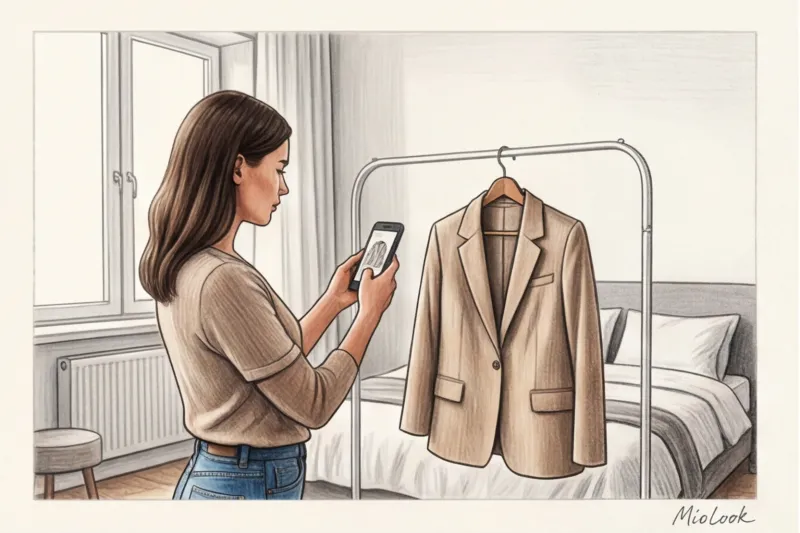
- Step 1: Preparation. Choose one item. Find a contrasting floor or a bed near a window. Arrange the item as discussed above and take a photo from above (make sure your silhouette doesn't cast a shadow on the item).
- Step 2: Download. Open the app and add a photo to your digital wardrobe. The MioLook algorithm automatically recognizes the item and instantly removes the background in a split second.
- Step 3: Micro-correction. If you photographed an item on a hanger, the AI might capture the hanger hook. The built-in eraser lets you remove this detail with a single tap.
- Step 4: Categorization. Save the item by selecting the correct category, season, and color. The more precise your parameters, the better the algorithm will suggest combinations for you in the future.
Background removal isn't just a technical trick. It's a paradigm shift. You stop seeing "things in a closet" and start viewing your wardrobe as a fashion boutique curator. Try digitizing at least 10 of your favorite items while respecting the contrast rule, and I guarantee you'll discover at least three new stylish combinations you never even considered before.