Do you know what eight out of ten of my clients have in common during their first wardrobe review? They're willing to spend €200 on an innovative night cream with peptides, but then go to bed in a washed-out cotton T-shirt. And in the morning, they're genuinely surprised why their skin feels tight, there's a scar on their cheek, and their hair resembles a bird's nest.
As a stylist and image consultant, I constantly repeat one rule: fabric that is in contact with your body for 7-8 hours every night affects your appearance more than the most expensive serum. Today, we'll explore the real secret. silk pajamas benefits , and why it's high time this wardrobe item moved from the "luxury boudoir" category to the "basic beauty routine" category. We've already covered the fundamental rules of nightwear in more detail in our A complete guide to choosing pajamas for healthy sleep , but now I want to show you the inside story of the process - at the level of physiology, trichology and tissue chemistry.
Cotton vs. Youth: Why Your Favorite T-Shirt Is Harming Your Skin
Let's be honest: we've been taught since childhood that cotton is the best fabric for the body because it "breathes." This is true, but cotton has one insidious property that bedding manufacturers prefer to keep quiet about. Cotton acts like a phenomenally greedy sponge.
According to textile science, cotton fibers can absorb up to 27% of their own weight in moisture. What does this mean in practice? When you apply your expensive skincare and lie down on a cotton pillowcase in cotton pajamas, the fabric literally sucks moisture out of your skin. Your €200 cream ends up on your T-shirt, not your face and décolleté.
I had a telling case in my practice. A client complained of abnormally dry skin on her body in the winter and breakouts on her shoulders. She tried different lotions and vitamins until I asked her to show me what she wore to bed. It was thick terrycloth cotton pajamas. Once we replaced them with a smooth silk nightgown, the problem went away within two weeks.
The second problem with cotton is microfriction. Under a microscope, cotton fibers look like twisted, rough ropes. During sleep, we toss and turn on average 20-30 times. The friction of the skin against the stiff fabric creates microtrauma and so-called "sleep wrinkles"—creases on the face, neck, and décolleté that, with age (due to decreased collagen synthesis), stop straightening out by morning.
Fabric Anatomy: Silk Pajamas and Their Cellular Benefits
So why silk? The secret lies not in its beautiful sheen, but in the thread's protein origin. Natural silk is an animal protein produced by silkworms. Its chemical composition is remarkably similar to that of human epidermis.
Silk fiber consists of two key elements: fibroin (a structural protein) and sericin (silk glue). Dermatological studies confirm that sericin contains 18 amino acids, which have the ability to retain moisture in the skin and stimulate collagen production. This is why silk is often called a "second skin."
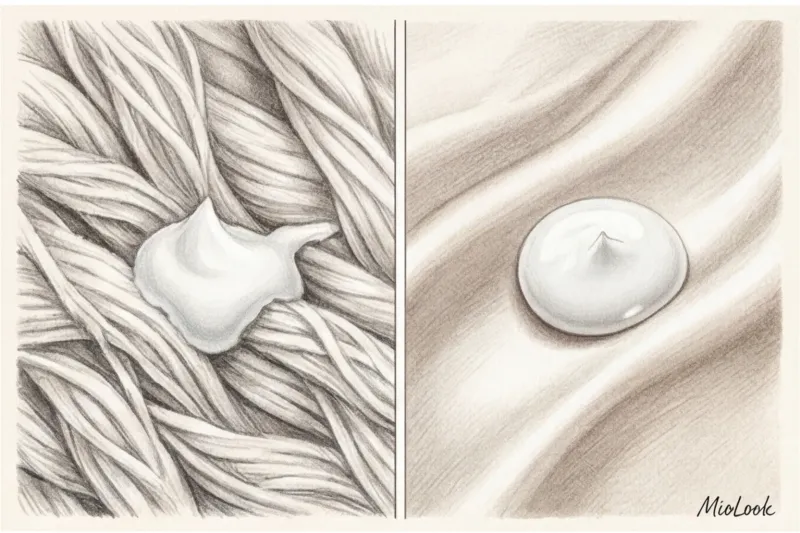
"Silk doesn't draw moisture from the skin, but maintains its natural hydrolipidic balance. Its completely smooth texture allows the active ingredients in your creams to work all night without being absorbed into the fabric," confirm cosmetic chemistry experts.
Another bonus: it's completely hypoallergenic. The tightly woven, smooth silk threads physically prevent dust mites, fungi, and bacteria from accumulating within the fabric. For those with back acne (bacterial folliculitis) or atopic dermatitis, replacing cotton or synthetic sleepwear with silk is often a lifesaver.
Your perfect look starts here
Join thousands of users who look flawless every day and organize their wardrobe with MioLook.
Get access — €0.99 onceSleep Microclimate: How Silk Manages Your Body Temperature
There is a very important term in somnology - Bedding Microclimate (bed microclimate). Research by the National Sleep Foundation proves that to enter deep sleep and trigger the production of melatonin (the main youth hormone), our body temperature must drop by approximately 1–1.5 degrees.
And here we again encounter the problem of the wrong fabrics. Synthetics (polyester, acrylic) create a greenhouse effect—the body overheats, we sweat, and wake up feeling groggy. Flannel or thick cotton can be too hot, and thin viscose, when damp with sweat, feels unpleasantly cool on the skin, creating a "wet back" effect.
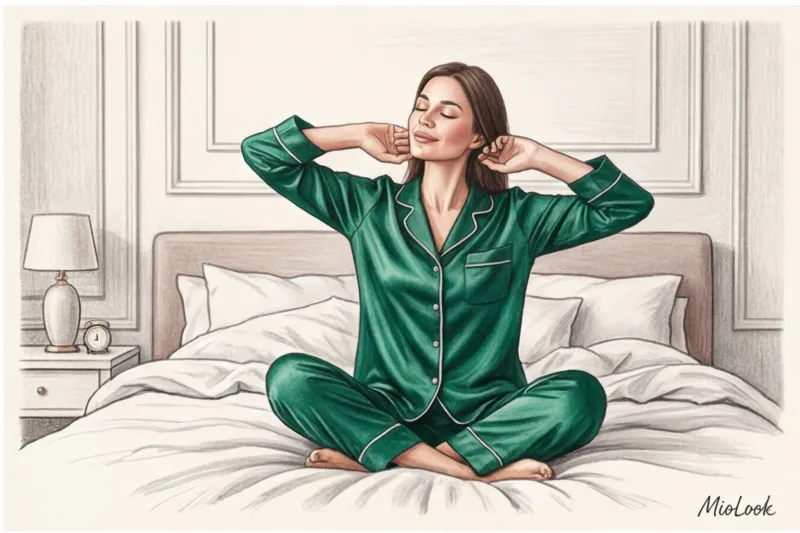
Natural silk has unique thermoregulation properties. Thanks to the fiber's porous structure, it instantly wicks away excess heat and moisture when you're hot, and maintains a layer of warmth when the room is cool. It's the only fabric that's comfortable to sleep in, whether it's a sweltering July summer or a chilly November.
Hair Salvation: The End of the Morning "Nest"
If you've ever spent €50 on a luxurious salon blowout only to find a tangled washcloth on your head the next morning, you know what I'm talking about. As a stylist, I often prepare clients for multi-day photo shoots or events. My main secret to keeping my hair looking its best for 2-3 days is a silk pillowcase and silk sleepwear.
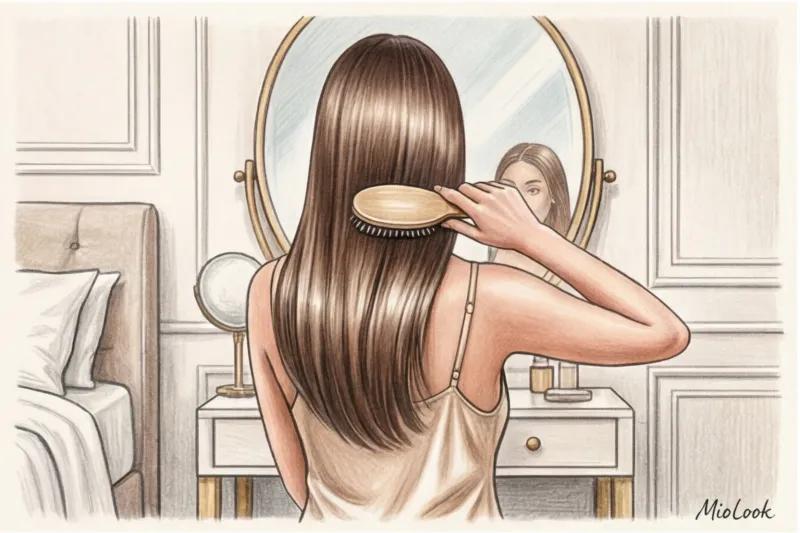
The cuticle of human hair resembles the scales of a pine cone. When you sleep in cotton or polyester, microfriction lifts these scales. Hair gets caught in the fabric and each other, tangles, breaks at the ends, and loses its shine. Silk, on the other hand, allows for seamless gliding. Your hair literally "glides" over your shoulders and back in silk pajamas, maintaining its smoothness and shine without the need for additional leave-in oils.
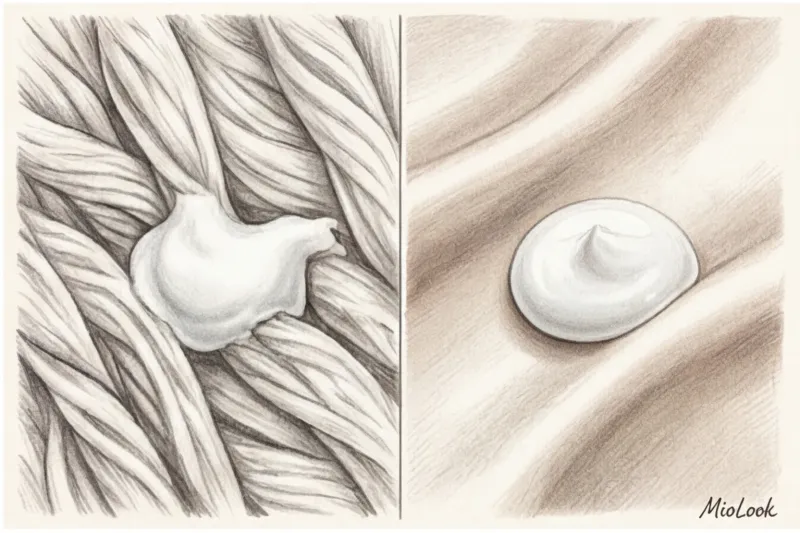
Silk vs. Satin: How to Avoid Buying Shiny Plastic Disguised as Luxury
Herein lies the main trap of the mass market, which 90% of buyers fall into. The term "satin" means type of thread weaving , not their composition. Satin weave makes the face of the fabric smooth and shiny, and the back matte.
The problem is that satin can be woven from 100% polyester. And budget brands readily exploit this terminological confusion, selling "luxury satin pajamas" for €30. Remember this: sleeping in polyester is like wrapping yourself in a plastic bag overnight. It offers no thermoregulation or skin benefits. On the contrary, you risk dehydration and breakouts from sweat.
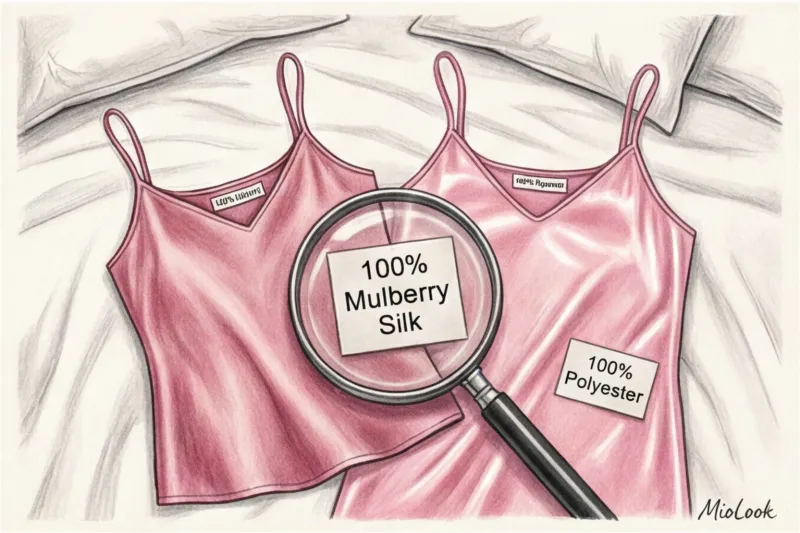
How to distinguish real silk (usually labeled as 100% Mulberry silk) from fake:
- Temperature: Natural silk feels cool to the touch at first, but within a few seconds it matches your body temperature. Polyester always feels slightly cool and lifeless.
- Wrinkle resistance: Squeeze the fabric in your fist. Natural silk will leave soft, smooth creases that will quickly straighten out. Polyester will either not wrinkle at all (if it's thick) or will leave sharp, papery folds.
- Price: Natural silk pajamas literally can't cost less than €100–€150. High-quality sets from trusted brands range from €200–€400. If you see a price tag of €40, you're looking at synthetics or viscose.
Ready to rethink your home wardrobe?
Upload your items to the MioLook smart wardrobe, and our AI stylist will help you create the perfect capsule wardrobe for home and leisure.
Get access — €0.99 onceThe Psychology of Home Style: Why You Deserve to Look Expensive Even in Your Sleep
Let's move from physiology to psychology. When sorting through wardrobes, I often see what's called "life-delay syndrome." A woman buys expensive suits for the office and luxurious dresses for rare occasions, but at home (where her closest friends and she herself see her), she wears old, stretched-out T-shirts and pilling sweatpants.
How we look at home directly conveys our self-esteem to our subconscious. The psychology of style is defined by archetypes. When you wear flowing silk in a deep emerald, sapphire, or pearl hue, you activate the Aesthete and Ruler archetypes. Your posture changes, your gestures become more fluid, and fussiness subsides.

Silk pajamas are the ultimate act of self-care. You buy them not to impress colleagues (like a business suit), but solely for your own tactile and visual pleasure. By the way, in the app MioLook We often create individual "home capsules" for our clients, where silk trousers or a camisole top form the basis of a relaxed yet luxurious look, easily complemented by a cashmere cardigan for morning coffee.
A Stylist's Checklist: How to Choose and Care for Silk Pajamas
If you've decided to make this investment in yourself, it's important to choose wisely. Here's my professional guide to buying the perfect set:
- Look for the Momme (mommy) marking. This is a unit of measurement for silk density. For nightwear, the ideal value is between 19 and 22 Momme. Anything below (12-16) is too thin, will be see-through, and will quickly unravel at the seams. Anything above (25-30) is too heavy and stiff, better suited for decorative pillowcases or heavy curtains.
- Size rule: +1. Natural silk doesn't stretch (it doesn't contain elastane). If your pajamas are too tight, you'll create tension while you sleep, and the seams will simply burst. Always buy silk sleepwear one size larger than your usual size. A loose fit is the key to longevity.
- Examine the seams. Turn your pajamas inside out. High-quality silk is always finished with a closed "French seam" (like a lingerie seam). Open edges, overlocked with a regular serger, are a sign of cheap manufacturing; such seams will begin to fray after the third wash.
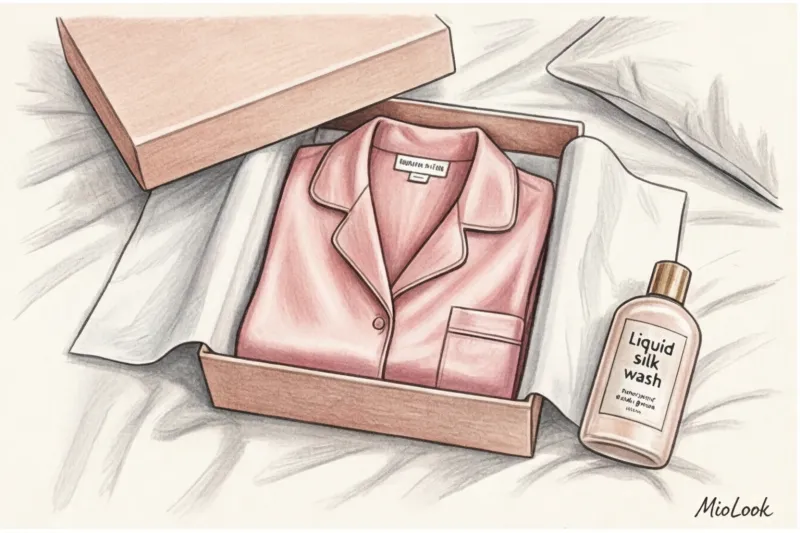
As for care, there are strict restrictions (this is where the "throw it in the machine and forget it" rule doesn't apply). Silk is a protein. If you wash it with a regular alkaline detergent with enzymes (which breaks down protein stains), the detergent will literally "eat" the fabric. It will become stiff, dull, and brittle.
Silk should only be washed with special pH-neutral liquid detergents (often labeled Silk & Wool) at a temperature no higher than 30 degrees, on a delicate cycle. strictly no wringing Dry in a straightened form away from radiators and direct sunlight.
Yes, purchasing and caring for natural silk requires a certain amount of effort and financial investment. But trust me, I'm telling you: no woman who wakes up in cool, soft silk with perfectly smooth skin and her hair styled will ever go back to cotton T-shirts. It's an investment that pays off with every minute of sleep.