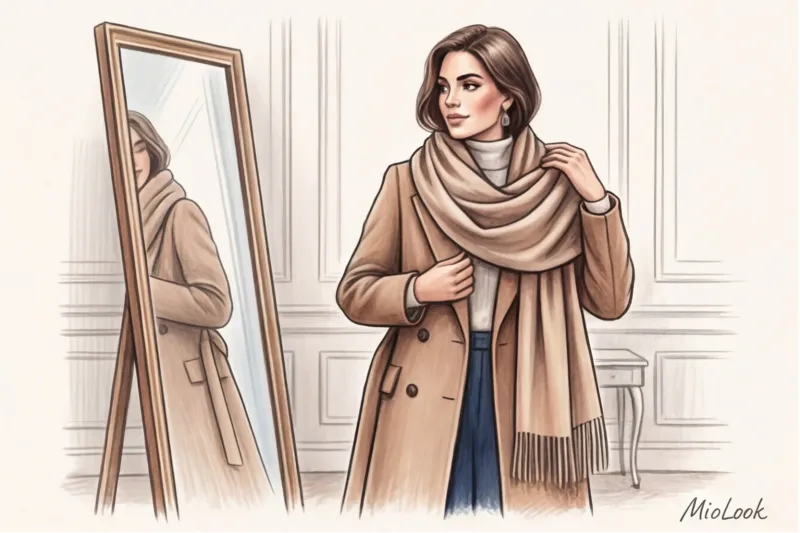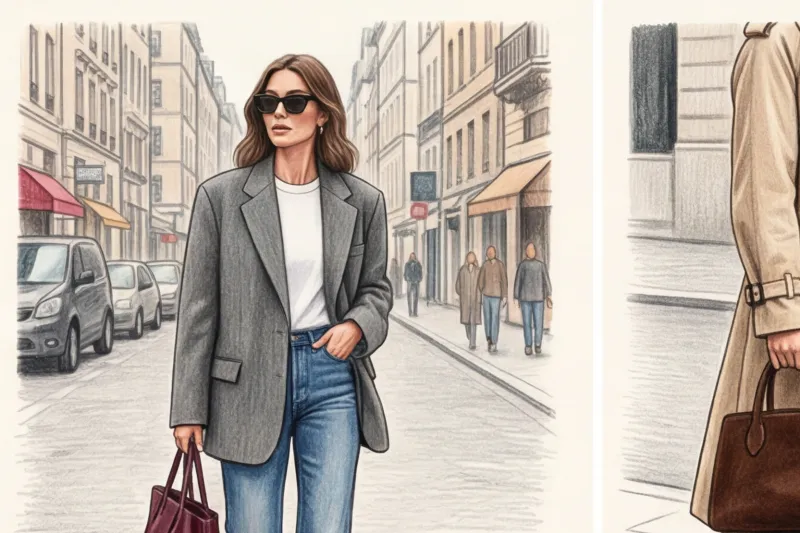
Imagine a familiar morning scene. You're standing in front of the mirror in an impeccably tailored beige trench coat. You pick up a sleek black leather bag, slip on some equally sleek black leather ankle boots, and suddenly realize: the look looks heavy, boring, and somehow... "grown-up." You feel like you tried too hard. Sound familiar?
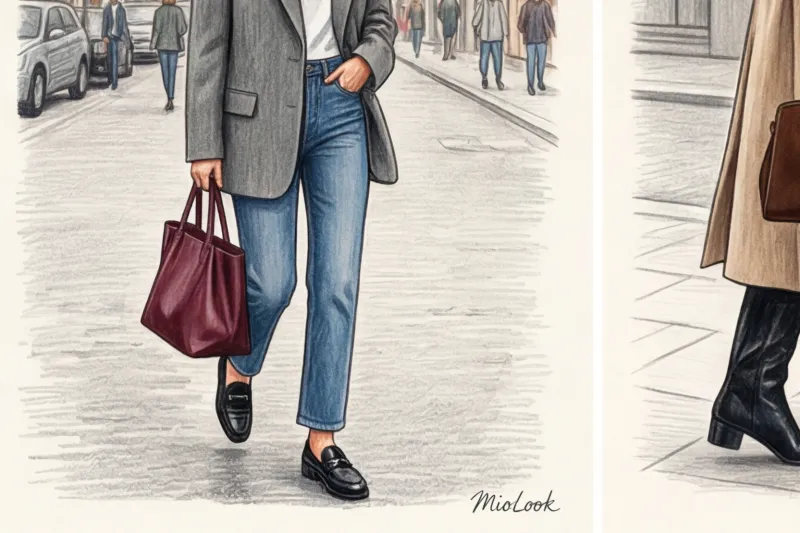
In my 14 years as a personal stylist, I've heard the same question hundreds of times: Should you match your bag to your shoes? Or is it a hopelessly outdated anti-trend? Spoiler: there's no longer a clear "yes" or "no" answer. The days of strict rules are gone, giving way to a subtle play with proportions and attention to detail. We've covered the basic principles of creating a harmonious look in more detail in our The complete guide to combining accessories without overloading , but today I want to analyze this “problematic” connection.
We'll discuss the new mathematics of style, where the rule of color has been replaced by the rule of texture. I'll show why a perfect tone match often cheapens an image today, and how a slight "desync" can help achieve that same quiet luxury.
Why the "match your bag to your shoes" rule died and then came back to life
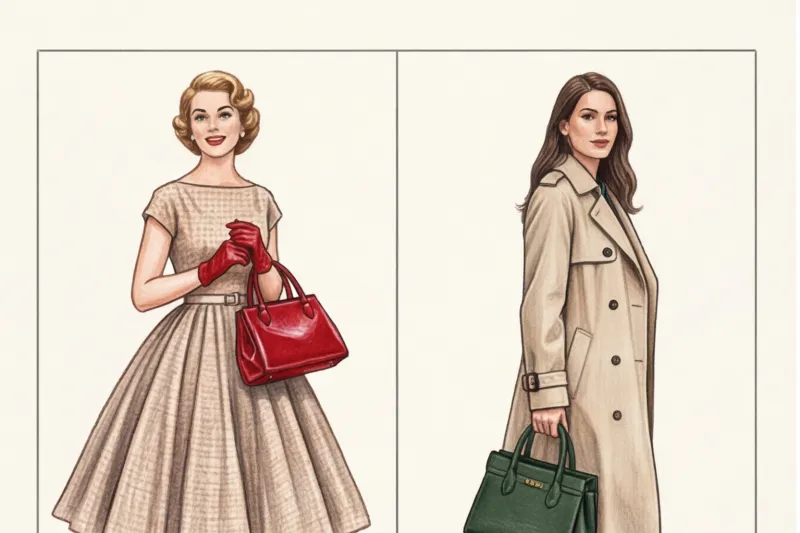
To understand what's happening with accessories today, let's take a quick look back. In the mid-20th century, during the era of Dior's New Look, matching handbags, shoes, and sometimes even gloves and hats were a potent social marker. They screamed, "This woman has the status and money to buy things in sets."
Then came the rebellious 2000s and 2010s. Fashion swung to the other extreme—total color blocking. Mixing accessories became considered bad form. Bags and shoes had to be from different, visually distinct worlds.
But when I first started my practice over ten years ago, clients still came to me with the classic request: "Olena, find me a handbag that matches these burgundy boots." Finding the perfect match took women hours and a lot of stress. Today, their request is different: "How can I make this outfit look expensive without being too boring?"
In 2024–2025, monochrome and matching outfits returned, but in a completely different interpretation. Designers reimagined this technique. Now, matching isn't blind copying, but a complex intellectual game.
Should you match your bag to your shoes in 2024-2025? We explore the nuances.
So Should you match your bag to your shoes? This season? The straightforward answer: there's no longer a hard and fast rule; there are your specific stylistic goals. To figure it out, let's differentiate two often-confused concepts: matching (perfect match) and coordinating (harmonious combination).
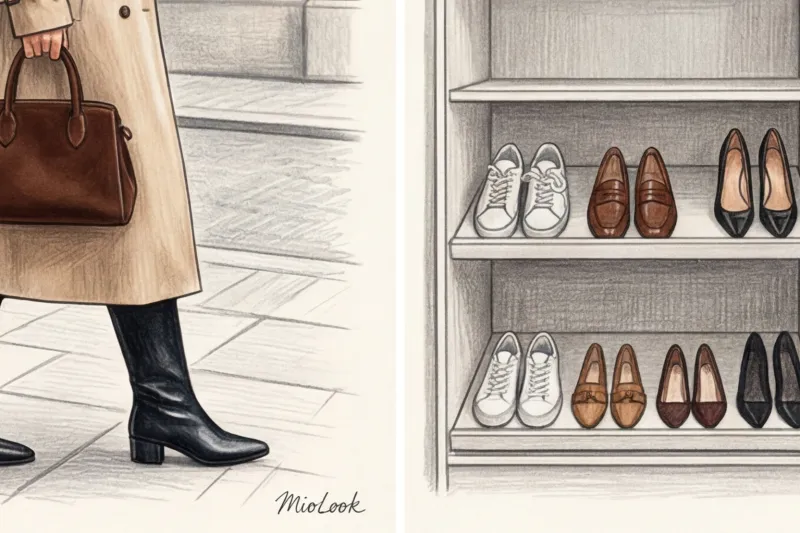
Matching is when items are made from the same material, tone-on-tone. Coordinating is when items echo each other in temperature, mood, or texture, but are not identical. Contemporary style demands the latter approach.
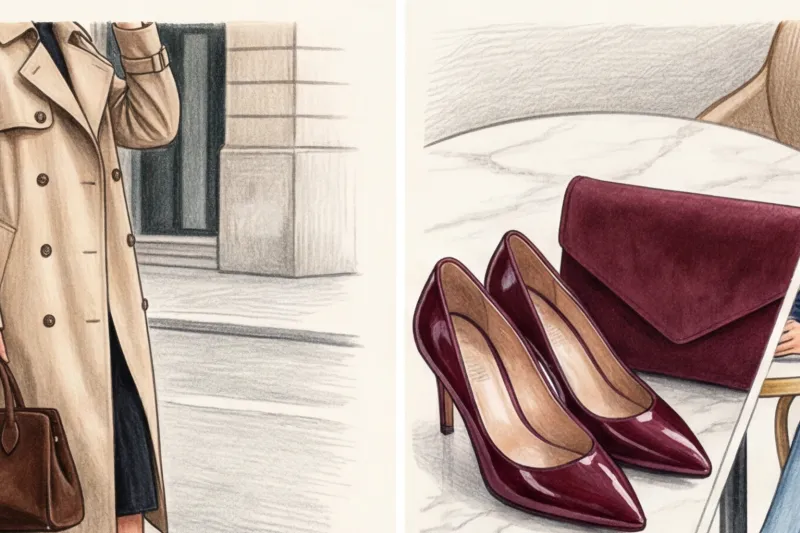
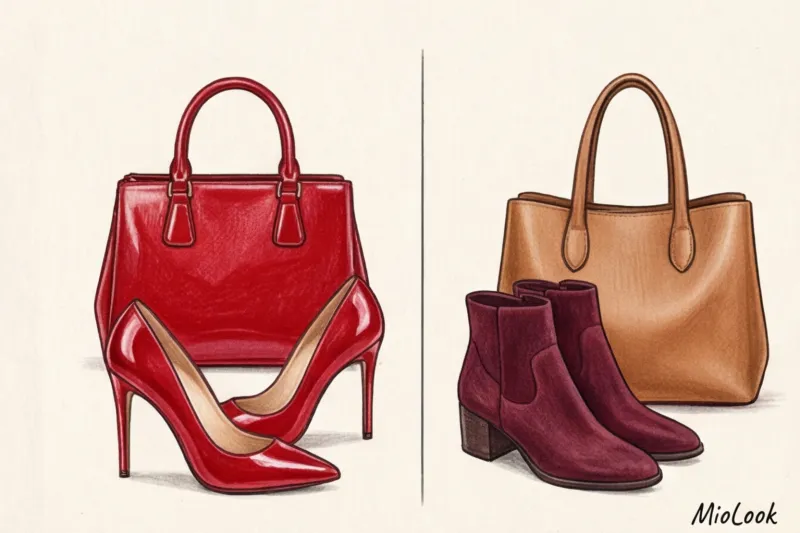
Let me tell you a story from my experience. One of my clients, a top manager at an IT company, bought a stunning red tote bag for €450. And then she made a classic mistake: she bought the exact same red patent leather pumps to go with it. She imagined this pairing would be a bright accent to her gray office suits. But in practice, this "duet" made her capsule wardrobe completely inflexible. Wearing them together, she looked less like a modern executive and more like a flight attendant on a retro airline. As a result, both pieces simply sat in the closet.
"The Cost Per Wear principle dictates its own rules today. Business of Fashion's 2024 analysis shows that bags that aren't strictly tied to a single pair of shoes are worn 60% more often. Investments in accessories require variety," the industry confirms.
Your perfect look starts here
Join thousands of users who look flawless every day with MioLook. Upload your items, and the AI will create dozens of new combinations.
Get access — €0.99 onceWhen color matching works for you and when it makes you look older
Every rule has exceptions. It's important to understand when the perfect match technique works in your favor, and when it mercilessly adds five years.
When it works great:
- In the Old Money aesthetic, if you use complex, deep shades, a bag and shoe set in dark chocolate, burgundy, or olive khaki always looks classy.
- For evening dress code, satin shoes and a matching satin clutch are timeless black tie classics.
- If you wear basic wardrobe in neutral light tones (milky, ecru, sand).
When it DOESN'T work (and frankly ages):
- In bright, open, flashy colours (fuchsia, electric blue, pure red).
- When basic, inexpensive textures match. Perfectly matching black smooth faux leather on ankle boots and a €30 mass-market bag will make the look look flat and cheap. This is when trying to look "sleek" works against you.
The New Mathematics of Style: The Rule of Textures Instead of the Rule of Color
If you watch the shows of trendsetting brands like Bottega Veneta or The Row, you'll notice their main stylistic secret. They often use a single color for accessories, but never do not use the same texture.

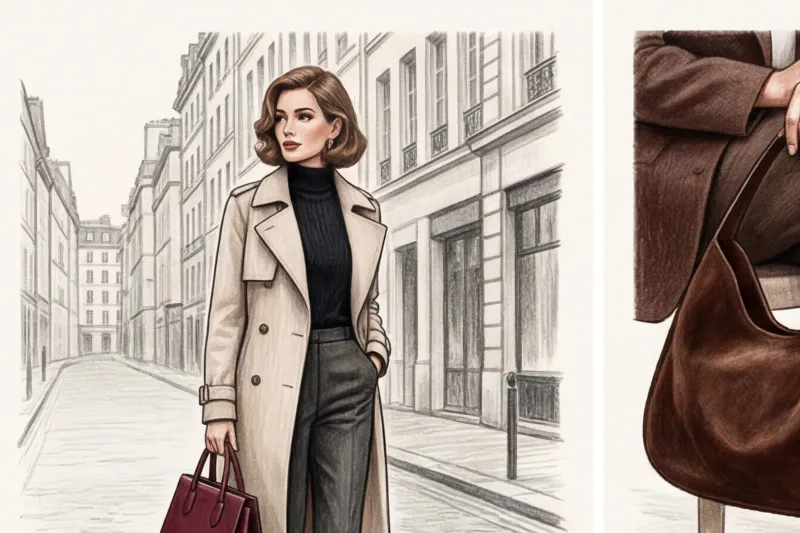
The rule of texture is what separates a professional stylist from a novice today. If you decide to wear black shoes and grab a black bag, let them be from different worlds. A brown suede shopper looks stunning next to glossy brown ankle boots. A thick fabric tote perfectly calms formal leather loafers.
Why does this work? The human eye loves to focus on contrasts. Smooth, identical skin blends into a single, dull blob. But the contrast between matte and shiny, soft and hard, creates that visual dynamic that saves the look from looking overdressed (I tried too hard).
4 modern formulas for combining bags and shoes
Instead of racking your brain every morning, use the proven formulas I give my clients. They work whether you prefer comfortable clothing style after 40 or a strict office dress code.
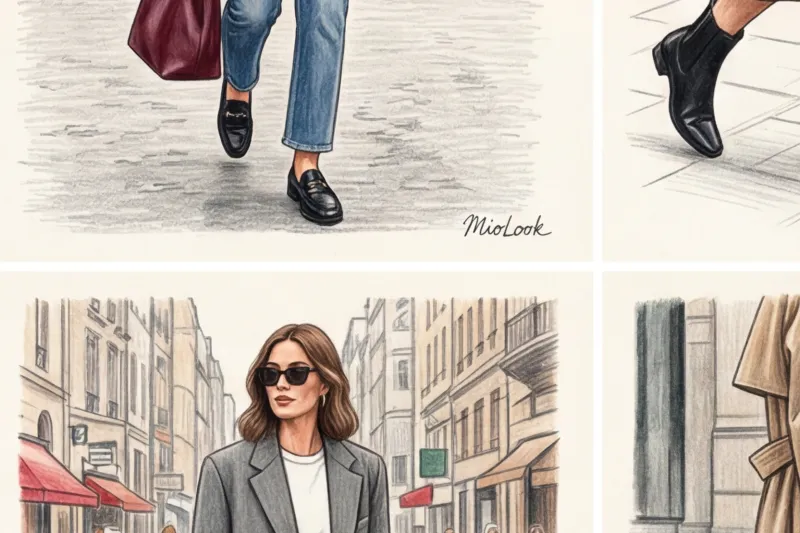
Formula 1: Temperature match.
You don't need the same color, you need a consistent "tone" in your look. Cool shades (gray, dusty blue, cool beige) pair with cool shades. Warm shades (caramel, terracotta, olive) pair with warm shades. Pay attention to the hardware: silver on a bag should logically be complemented by cool-toned shoes.
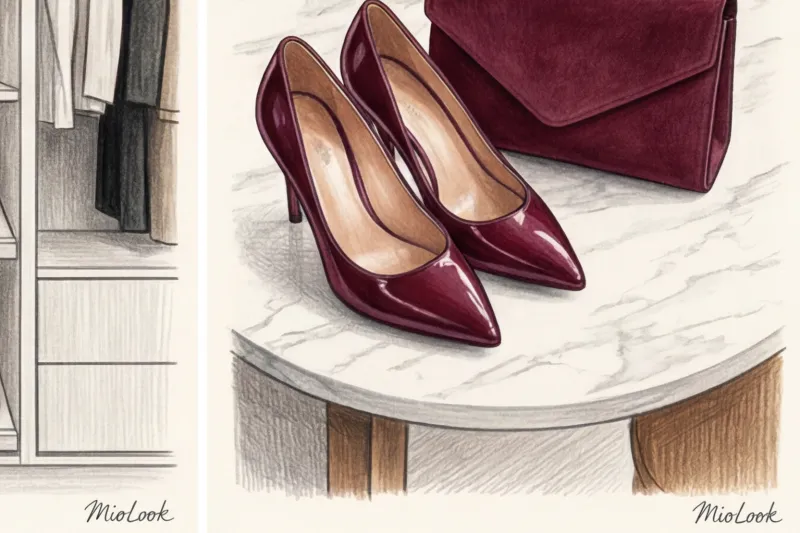
Formula 2: The principle of color echo.
My favorite trick: your bag shouldn't match the color of your shoes. Let it match the print on your silk blouse, and let your shoes match the shade of your trousers. Your gaze will drift over your outfit, capturing the complex harmony.
Formula 3: Accent and Neutralizer.
According to Lyst, a 2024 data analytics platform, searches for statement bags with complex shapes increased by 45%. If you bought a lime or fuchsia bag, don't look for matching shoes. Make the bag the sole statement piece. Pair it with a neutralizer: basic beige, gray, or black loafers.
Formula 4: Monochrome with a two-tone shift.
Want to stick to one color? Just adjust the brightness slider. Pair dark chocolate boots with a latte or taupe bag. Shoes should be slightly darker; this visually adds a more consistent look.
Access to MioLook for €0.99 — one-time payment
Tired of spending your mornings choosing accessories? Our smart AI stylist will analyze your wardrobe and suggest ready-made combinations.
Get access — €0.99 onceShoes and bag of the same color in a business wardrobe: strict etiquette or freedom?
But what about those who are bound by the framework of corporate rules? Should you match your bag to your shoes? lawyers, financiers and corporate executives?
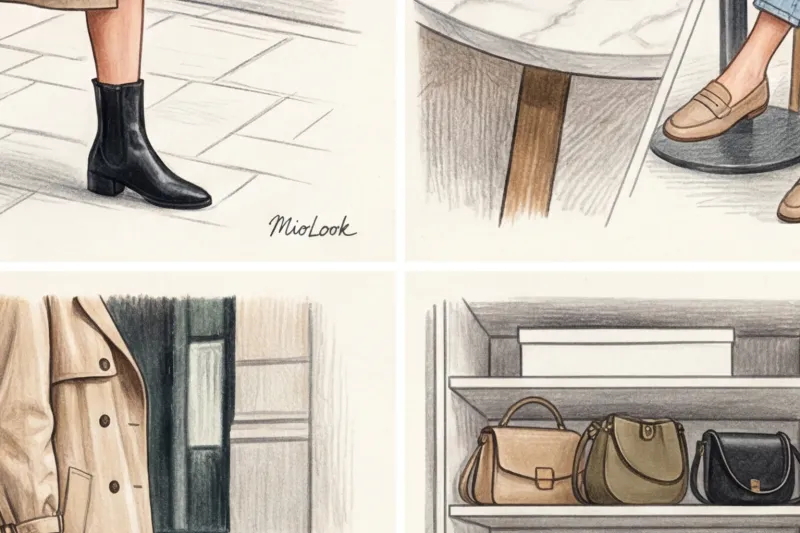
In classic Business Formal (the most strict dress code), conservatism is encouraged. But even here, etiquette no longer demands a perfect match. Moreover, the status of a successful expert is not revealed by the identical color of burgundy shoes and a burgundy briefcase, but by the shape and quality of the items.
A soft bucket bag, even if it perfectly matches the color of your pumps, will ruin a business look. But a rigid, structured satchel made of thick nappa leather in dark gray, priced at €300–€500, will look stunning with dark plum pumps. The shape, not the color, conveys composure and discipline.
If your company is business casual, you have complete freedom. For a Friday dress code in the office, where everyone wears jeans but you want to look a little more put-together than your colleagues, complement your relaxed look with statement suede shoes and a basic matte bag.
A stylist's checklist: how to tell if your bag matches your shoes
To finally settle this question for your wardrobe, ask yourself just three questions before leaving the house. I call it the "overload" assessment scale.
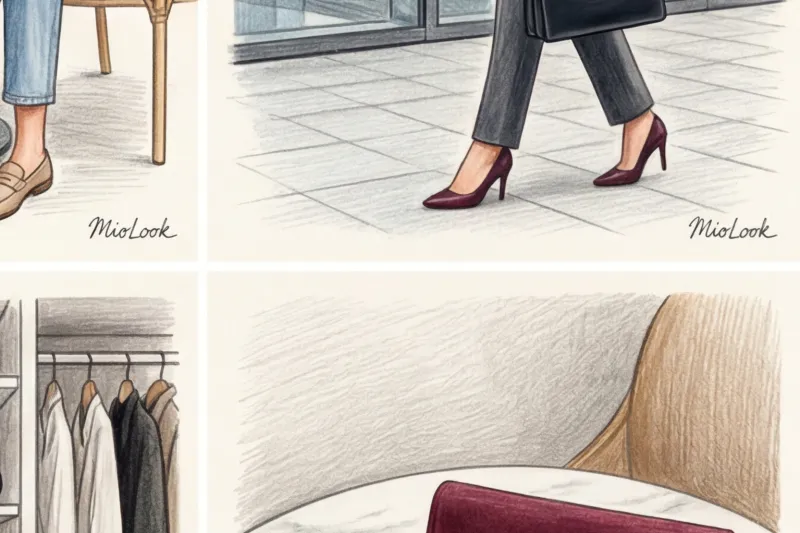
- Is there a balance of proportions in the image (80/20 rule)? Remember that 80% of your wardrobe should be quality basics, and only 20% should be used for accents. If you have leopard-print shoes, your bag should be basic. Leopard and leopard print equal a theatrical costume.
- Do the shade temperatures match? You can pair an emerald bag with graphite shoes because both shades are cool.
- If the color is the same, is the texture different? Suede and glossy finishes, canvas and matte leather, crocodile print and textile—yes. Smooth leather and smooth leather in the same bright color—no.
Assembling the perfect wardrobe where everything fits together can be challenging. To save time, I often advise my clients to digitize their accessories. You can simply take photos of your shoes and bags, upload them to an app, and use the "smart wardrobe" feature in MioLook to plan stylish combinations in advance.
Matching shoes and a bag is a timeless classic when worn consciously (through textures and deep hues), but it's an outdated anti-trend when worn thoughtlessly, buying ready-made, flashy sets from the mass market. Allow yourself a little casualness—that's where the secret to true elegance lies.