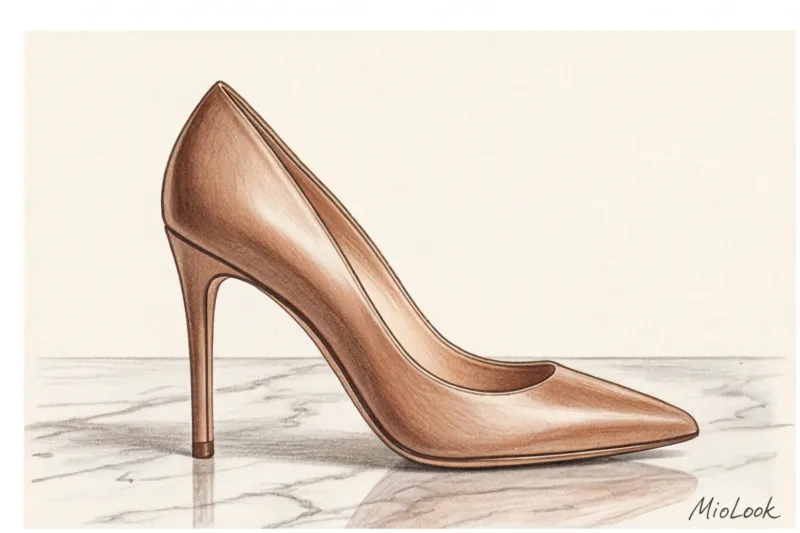
One day, a client came to see me wearing a luxurious, perfectly tailored wool Max Mara suit, costing around €1,500. The fabric flowed, the fit was impeccable, but the overall look somehow seemed... sloppy. I looked down and understood. The perfect suit was being ruined by shoes with a slightly upturned toe, an awkward heel angle, and cheaply shiny hardware.
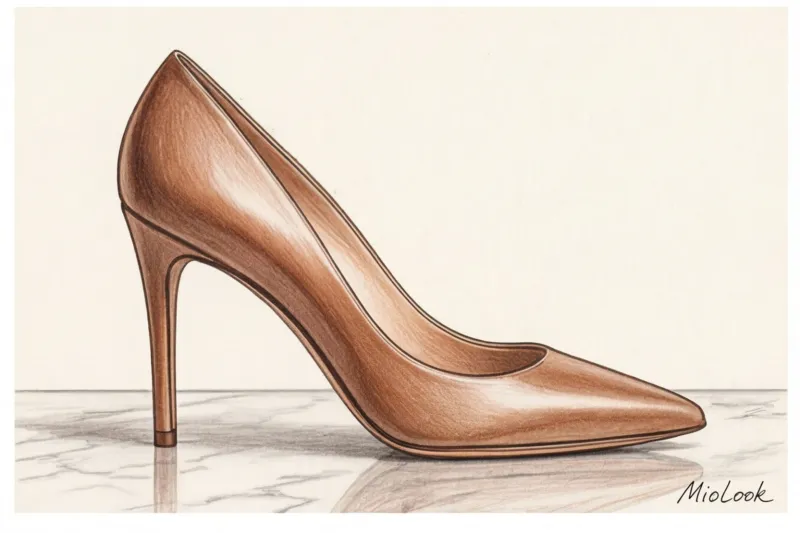
Let's be honest: you can wear cashmere, silk, and the perfect pair of trousers, but it's the shoes that really define your silhouette. If that definition is off, the whole thing becomes meaningless. Our comprehensive guide on... How to look expensive as you age: stylist tips I've already mentioned the concept of an "architectural wardrobe." Today we'll explore its foundation. Shoes that look expensive — it's not flashy brand logos or necessarily triple-digit price tags. It's pure geometry, clever color, and impeccable texture.
I'll show you how stylists evaluate shoes before buying them, and why some basic mass-market models look like a million bucks, while premium pairs sometimes make you want to take off and hide them immediately.
Last architecture: why some shoes look expensive and others don't
The concept of "visual tranquility" is key in the design of high-status accessories. According to the analytical agency WGSN (2024), the trend toward "quiet luxury" has finally shifted the focus from decoration to form. Expensive shoes don't shout about themselves; they stand firmly on the ground.
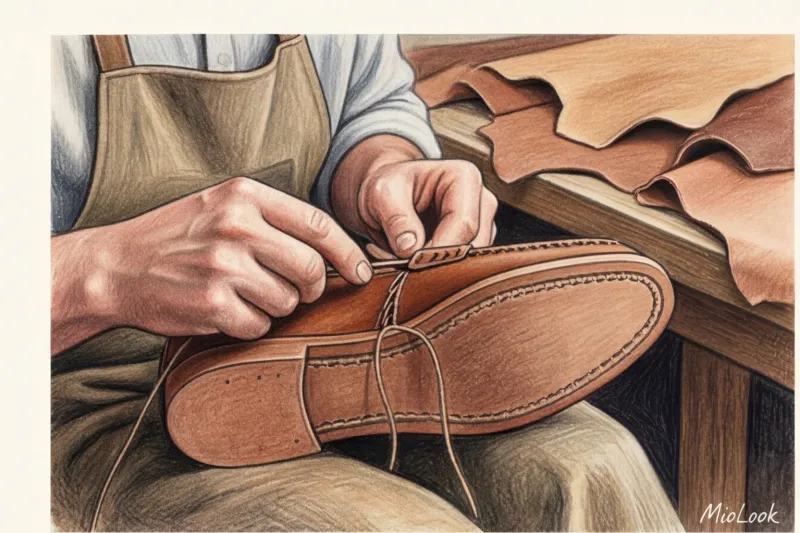
The main secret lies in the last. The Italian shoe design school Arsutoria teaches that proper heel positioning and balance require complex engineering calculations. Mass-market shoes often skimp on arch supports and heel centering. What does this look like? A woman in cheap shoes walks with bent knees, her heel falls back, and her center of gravity is off-center. In a proper, high-status last, the heel is positioned precisely in the center of the heel, ensuring absolute stability.
- Cape shape: An excessively raised toe (where you can fit a finger between the sole and the floor) instantly cheapens the look, turning elegant shoes into "elfin shoes." The toe should be flat or have a minimal, barely noticeable rise.
- Heel angle: In expensive shoes, the heel slopes downward at a slight angle toward the center of the foot, creating a graceful arch, rather than sticking out strictly perpendicular to the floor.
- Welt thickness (protruding part of the sole): Classic pumps or ankle boots should have a very thin sole at the toe. A thick rubber platform under the toes ruins any grace.
Stylist's advice: If you want to put together a capsule where every pair works for you, try the "smart wardrobe" feature in MioLook The app will help you evaluate how a new pair will match your current clothes before purchasing.
Your perfect look starts here
Join thousands of users who look flawless every day with MioLook.
Get access — €0.99 onceThe Myth of Black: Shades That Make Shoes Look Expensive
As a certified colorist, I often encounter the same misconception: "Black shoes go with everything." It's a myth. Basic black pumps in a daytime wardrobe often look harsh and cheap, especially if you're wearing light-colored clothing, denim, or medium-weight fabrics. The black creates a harsh contrast that visually cuts off the leg.
"Shoes that look truly expensive are rarely pure black. The status lies in the nuances and depth of color—the so-called value/chroma parameter, which makes the eye linger on the item longer."
If you want your look to look three times more expensive, swap out black for sophisticated, jewel-toned and neutral shades:
- Burgundy and ripe cherry. These colors work as basics but add a touch of luxury to the look. They pair luxuriously with gray, beige, navy blue, and emerald.
- Dark chocolate and espresso. The perfect alternative to black, brown always looks softer and creates a luxurious, luxurious glow on smooth skin.
- Taupe (grey-brown). A color that visually lengthens the leg if worn without tights or with light-colored trousers.
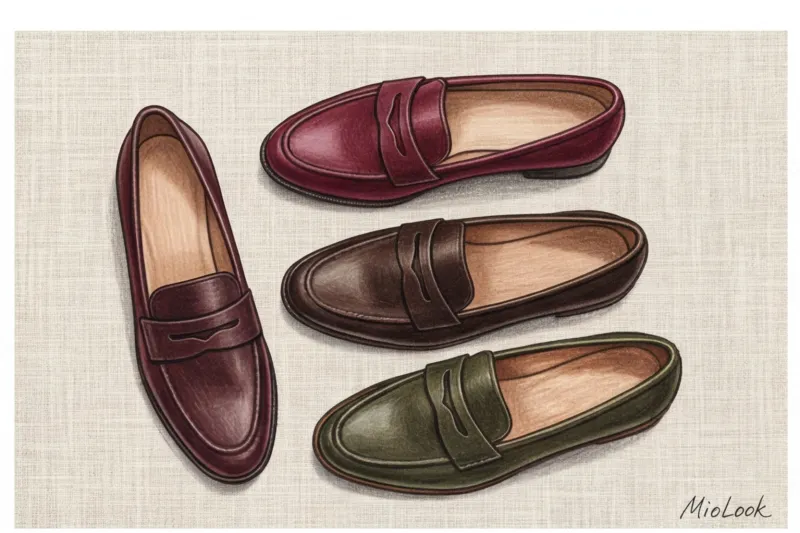
Of course, this doesn't mean black shoes are completely off-limits. They're indispensable for evening looks and paired with thick black tights in winter. But if we're talking about daytime luxury, opt for sophistication.
Texture and fittings: the devil is in the details
A couple of years ago, I was reviewing the wardrobe of a top manager at an IT company. Her problem was that her subordinates and partners didn't recognize her authority. When we got to shoes, I saw a cluster of grained leather pumps with giant, shiny buckles and gold logos. We replaced them with minimalist pumps in matte, smooth leather and suede—and her perception of status changed within a week.
The texture of the material is everything. Smooth leather with a delicate satin (not glossy!) sheen always looks more formal and expensive than grained leather. Grained leather (floater) is great for casual shoes, but in elegant footwear it often looks too plain.
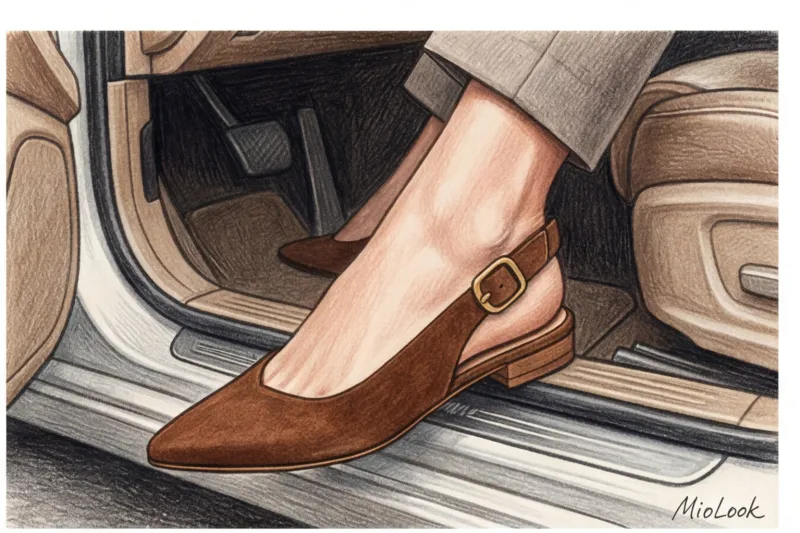
Suede — this is a stylist's cheat code. Because suede absorbs light, it makes any color, even the brightest, deep and refined. Suede shoes in a wine or emerald shade will look much more expensive than their smooth leather counterparts in the same price range (around €100–€150).
Be careful with nail polish, though. The fine line between evening chic and vulgarity is easily crossed. Nail polish is only acceptable on very simple shapes, without additional embellishments or straps.
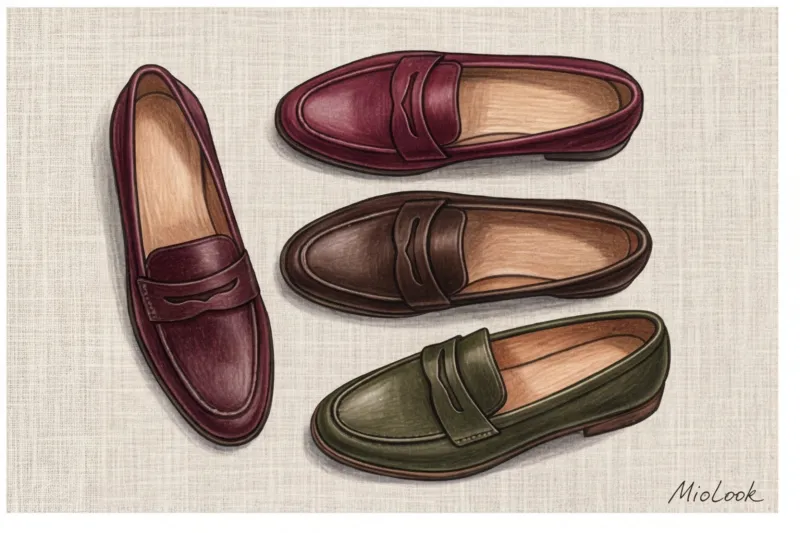
The hardware rule is unwavering: matte metal (antique gold, brass, nickel), minimalism, and a complete absence of flashy logos. Logomania cheapens things.
Statement footwear in different seasons: from loafers to boots
Creating an expensive look depends on the season. What works in the summer won't work in the slushy winter. Let's move from general rules to specific styles that will elevate any look.
Demi-season and winter: boots and shoes
The ultimate fashion investment for the cold season is riding boots. Why do they always look more expensive than tight-fitting or thigh-high boots? The loose shaft creates a contrast in volume: even under thick clothing, the foot appears fragile and graceful. Furthermore, they don't distort the calf's silhouette.
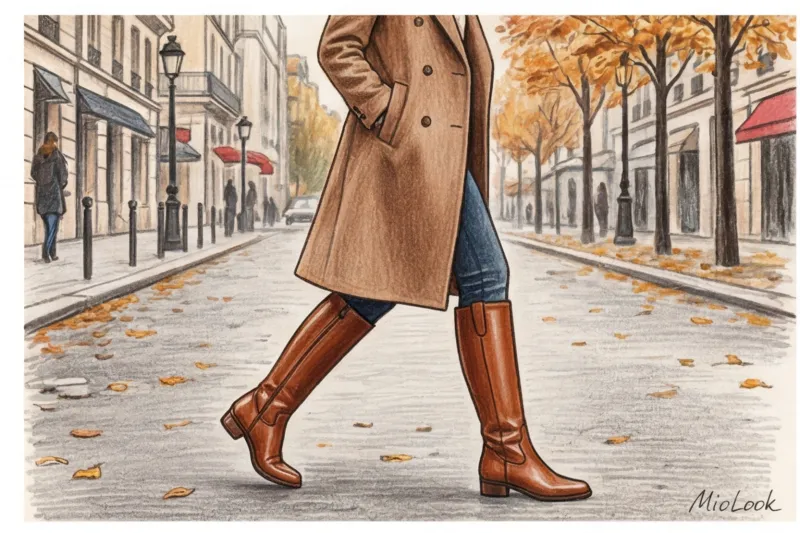
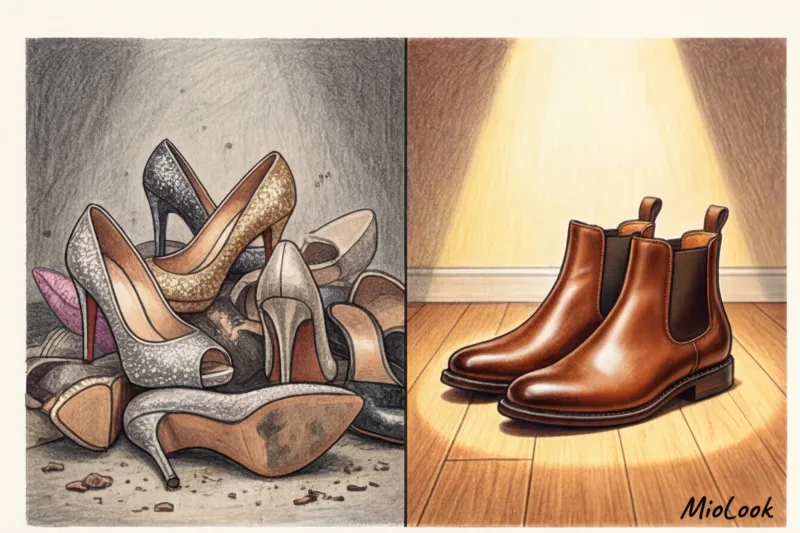
In the boot segment, pay attention to classics borrowed from the men's wardrobe: Chelsea boots with a narrow shaft and brogues. A sign of high-end manufacturing here is a minimal number of seams. The more pieces of leather used in the construction (to save material at the factory), the cheaper the shoe appears. On expensive Chelsea boots, the vamp (the front part) is often made from a single piece of leather.
Warm season: pumps, slingbacks and mules
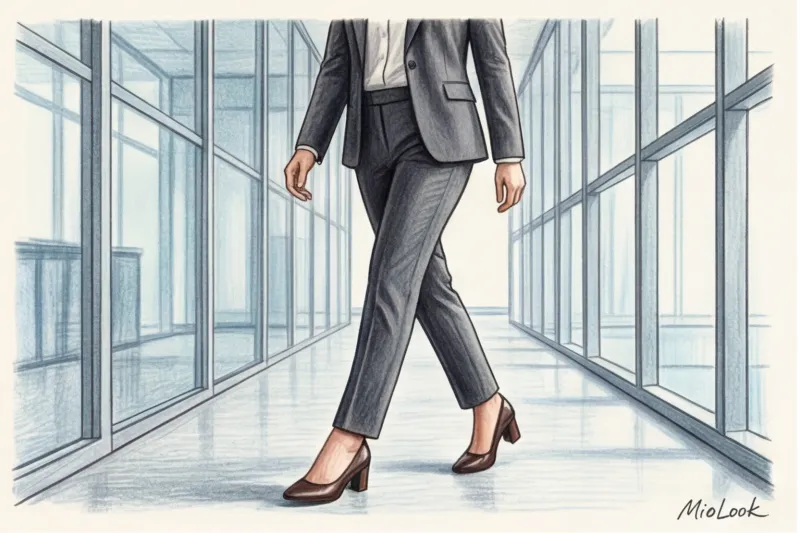
For the warm season, there's nothing more elegant than slingbacks (closed-toe, open-heeled shoes with a strap) at the office. They fit even the most formal business dress code, but don't look as heavy as classic pumps in the summer.
Pay attention to the depth of the cutout (neckline) of your shoes. Shoes that look expensive often have a slightly deeper cutout, revealing the base of the toes. This visually lengthens the foot and makes the leg look more graceful. If you choose sandals, remember: the thinner the straps, the more luxurious the look. Wide leather straps cut across the foot and make the gait heavier.
Ready to get started?
Try the MioLook plan for free—no commitments required. Upload your shoes and see what they look best with.
Get access — €0.99 onceTop 5 "Image Traitors": What Instantly Cheapens Any Pair
Over the years of working as an image consultant, I've developed a strict list of details that cause me to ruthlessly reject shoes, even in high-end boutiques. Check your shelves for these "traitors":
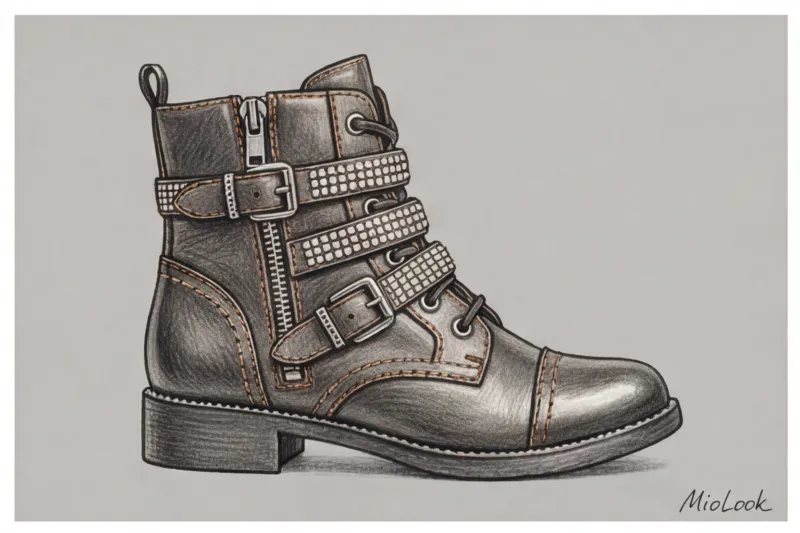
- Contrasting, crooked or too thick stitching. If the shoes are black and the thread is white (and this is not a design idea like Dr. Martens) - it is visual garbage.
- Wraparound heel with pleats. If the heel is covered in leather, there should be no wrinkles or creases on the inside of the heel. This is a sign of handcrafted production.
- Shiny "plastic" sole. Especially in beige or black, which make a loud thud on the pavement. A good polyurethane or leather sole is matte and flexible.
- Fake zippers and non-functional straps. Every design detail should have a function. A zipper that doesn't open anything screams mass-market, low-end.
- "Paper" suede. The split leather is too thin and does not hold the shape of the heel and toe, hanging on the foot like a shapeless bag.
Checklist: How to Choose Shoes for a Statement Wardrobe
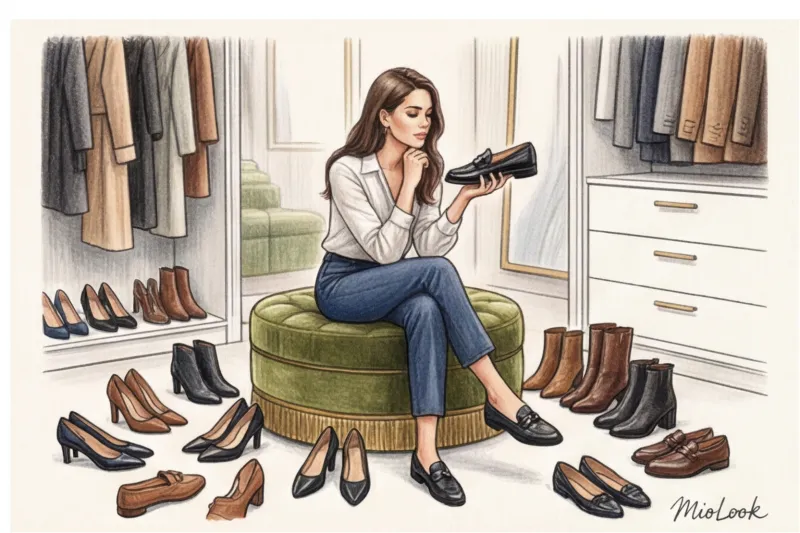
Don't buy shoes on the run. In the store, use this algorithm, which I personally use when shopping for clients:
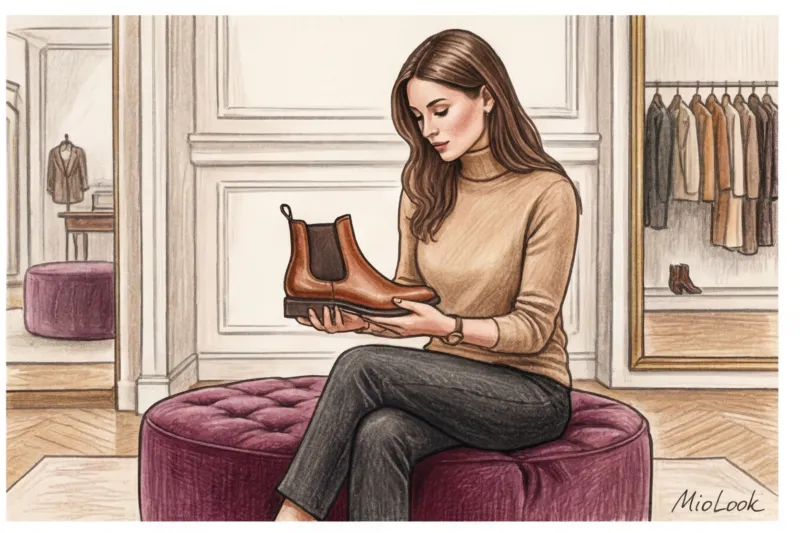
- Silhouette rating: Place the shoe on a level shelf at eye level and look at it from the side. The toe shouldn't be too high, and the heel should be perfectly perpendicular to the floor, not leaning back or forward.
- Twist test: Grasp the shoe by the toe and heel and try to twist it slightly along the axis. A good shoe with a strong arch support will resist twisting in the center (where the arch is), and will bend only in the toe area.
- Checking the lining: Take a look inside. The outside of the shoe may be made of fabric or premium eco-leather, but the inside of high-end shoes is always made of thin, genuine leather (usually chevrolet). Your feet need to breathe.
- Wardrobe analysis: Shoes don't exist in a vacuum. Before you spend €200–€300 at the checkout, mentally create at least four outfits from your collection.
If you have trouble keeping your wardrobe in mind, upload your items to MioLook — the app will literally show you whether you need this pair or whether it will gather dust in the box.
Care as an investment: "Expensive" shoes require discipline
I'll let you in on a secret: even €1,000 shoes will look like cheap rags after a month if they're not cared for properly. Status isn't about the brand, but the impeccable condition of the item.
It's important to remember the Cost Per Wear formula here. A quality, basic pair for €300 that you wear for three years with proper care is cheaper (about €0.50 per wear) than five pairs of mass-market shoes for €50 that fall apart within a single season.
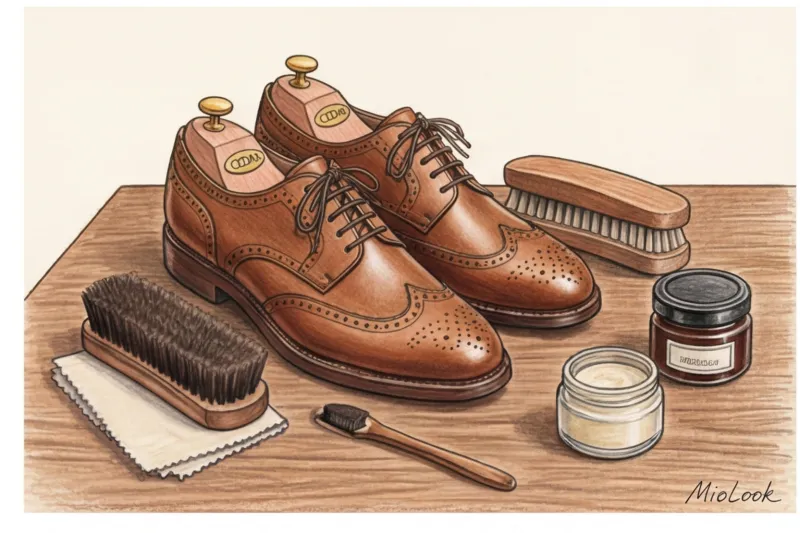
What should you definitely have in your arsenal?
- Wooden block-shapers (cedar). This is the most important rule! As soon as you take off your shoes, insert shoe trees. They straighten out creases in the leather and absorb moisture. Without them, any pair will lose its shape.
- Creams with pigment instead of silicone sponges. Forget about shiny sponges from the supermarket—silicone dries out your skin and clogs pores. Use professional creams in glass jars made with beeswax.
- Timely prevention. As soon as you buy expensive shoes with leather soles, take them to a specialist to have a thin rubber coating (preventative coating) installed, otherwise the first rain will destroy them.
Shoes that look expensive are the result of thoughtful selection and consistent discipline. You don't need 20 pairs of shoes. Four or five pairs with the perfect design, in the right deep shades, without unnecessary visual noise, are enough. Then even the simplest outfit of a white shirt and jeans will convey that "quiet luxury" that can't be bought, but can be created.