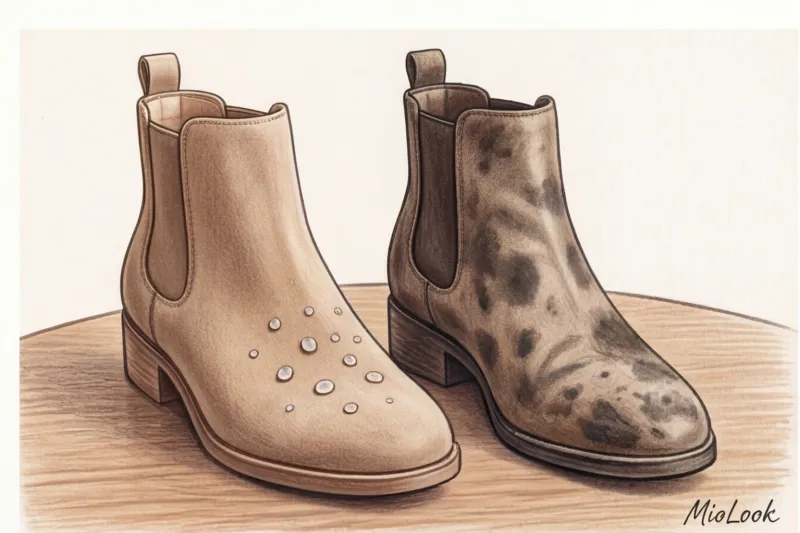
Last November, a client of mine, a top IT executive, called me in utter despair. She had just irreparably ruined her gorgeous $800 beige suede ankle boots. The reason? Before going out, she'd generously sprayed them with a cheap waterproofing spray from the local supermarket. The spray had caked the delicate nap, left indelible dark stains, and transformed the "quiet luxury" into a greasy disaster.
In 14 years of working as a personal stylist, I've learned one hard and fast rule: buying expensive shoes is only half the battle. The other half is properly maintaining this investment. We've already discussed the basic routine in more detail in our The Complete Guide: How to Care for Leather from a Stylist , but moisture protection requires a separate, almost scientific approach.
We're used to treating shoe care products like household cleaning products. But if you want your pieces to retain their class for years to come, it's time to change that paradigm. In this article, I'll explain how chemicals interact with textures and why the stuff you see on mass-market cans often does more harm than good.
Why expensive shoes die from cheap protection
Let's do the math. You buy the perfect leather Chelsea boots for 30,000 €. Then, to save money, you buy a water-repellent spray for 300 € at the discount shoe store checkout. This is the most expensive savings in your wardrobe.
The difference between cheap mass-market products and premium cosmetics lies in the basic active ingredient. Cheap sprays are made with silicone. What does silicone do? It simply clogs the pores of natural leather, creating a thick, impenetrable film on the surface—essentially, putting a plastic bag over your expensive shoe.
According to the Leather and Shoe Research Institute (PFI Germany, 2023), cheap silicone compounds reduce the breathability of genuine leather by 80%. This creates a greenhouse effect: the foot sweats, the moisture doesn't escape, the salts from the sweat destroy the leather from the inside, and the shoe last becomes deformed.
Premium protection works differently. High-quality fluorocarbon resins or nano-impregnations (such as those from brands like Saphir or Tarrago) don't create a continuous film. They envelop each individual fiber of leather or suede, leaving the micropores open. Water rolls off, and the material continues to "breathe."
That's why a 2,000-ruble can isn't an overpayment for a brand name, but an insurance policy for your shoes that pays for itself within the first rainy season.
Shoe waterproofing treatment: how to use it immediately after purchase
The most damaging fashion myth I constantly encounter during shoots and wardrobe reviews is: "You need to spray your shoes right before going outside." If you spray them 10 minutes before stepping into a puddle, you're simply wasting the product and ruining your shoes.
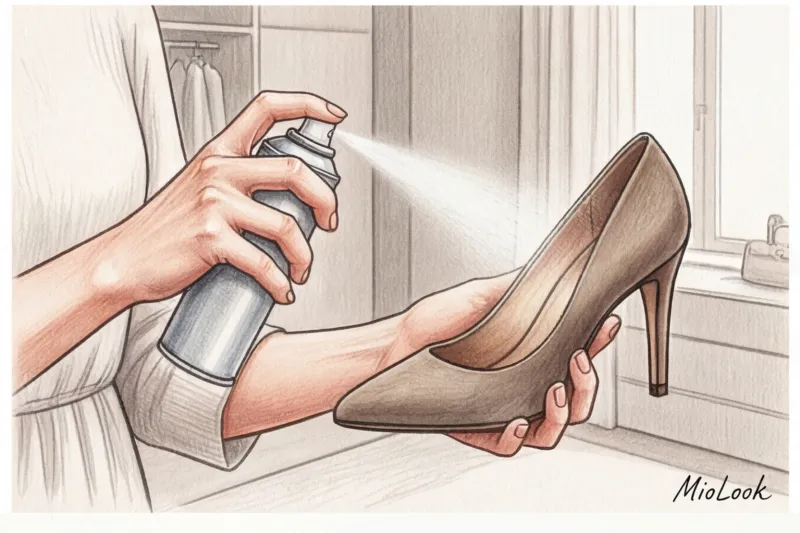
When clients ask me, How to use shoe polish to protect against water To achieve maximum results, I teach them the "24-hour rule." The protective layer needs time to fully cure. If the chemical composition doesn't have time to set and reacts with street dirt and chemicals, this explosive mixture will become permanently embedded in the skin's pores.
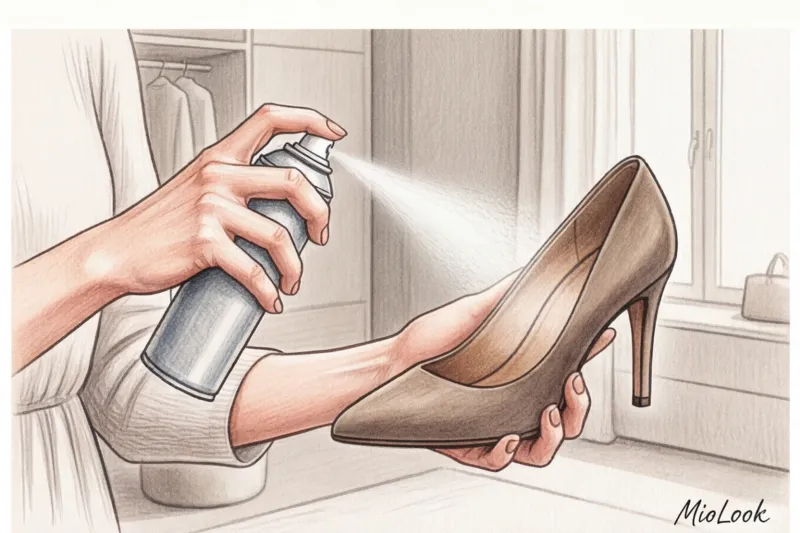
Here's a step-by-step guide for a brand new, never-worn pair (the golden "three layers" rule):
- Step 1: Dry cleaning. Even new shoes out of the box have some manufacturing dust. Brush it off with a soft brush.
- Step 2: First layer. Go to the balcony or a well-ventilated area. Hold the can at a distance of 20-30 cm. Spray the product in a light mist, not a direct stream. Your shoes should be slightly damp, but there should be no streaks or puddles.
- Step 3: Pause. Leave the steam for 20-30 minutes to allow the solvent to evaporate.
- Step 4: Repeat. Apply a second layer, and then (after a pause) a third. It is the multiple layers that create a reliable polymer network.
- Step 5: Fixation. Leave the shoes to dry at room temperature for exactly 24 hours. Do not dry on a radiator!
Ready to get started?
Try the free MioLook plan to organize your shoe wardrobe and plan your care without the hassle.
Get access — €0.99 onceSmooth leather, suede, or membrane: choosing chemicals to match the texture
There are no universal remedies. What might save your leather derby shoes will irreversibly ruin the velvety feel of nubuck. Texture dictates not only the style of the look but also the care instructions.
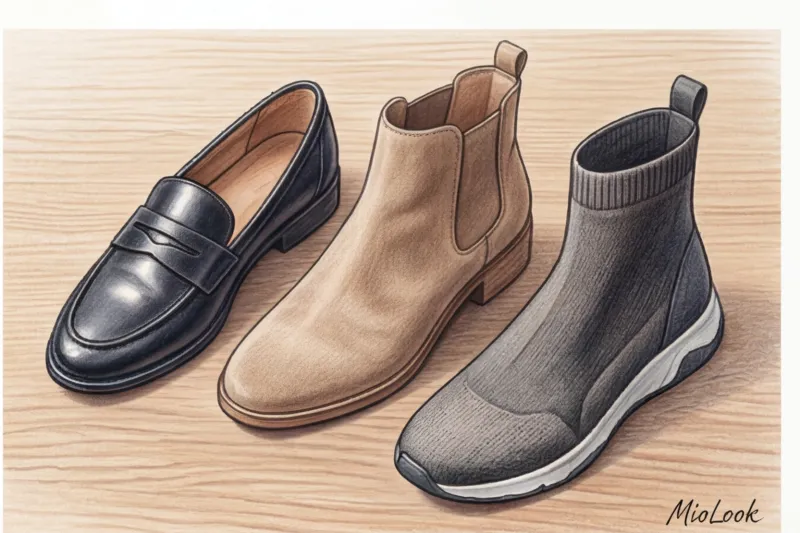
Suede and Nubuck: Maintaining "Quiet Luxury"
Suede is the most prestigious, but also the most vulnerable material. It's strictly forbidden to use products containing fats and waxes on it—they will instantly stick the nap together, leaving bare, shiny spots.
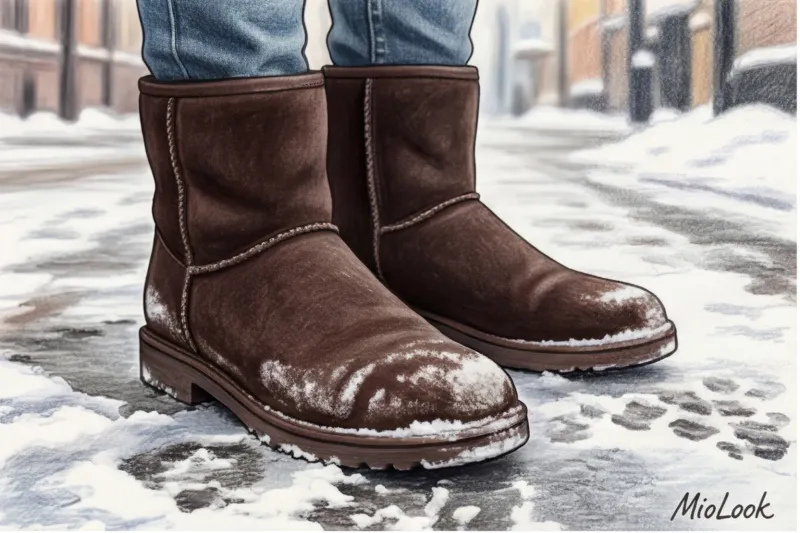
For napped surfaces, I recommend using only nano-sprays. Their particles are so small that they create a protective barrier on each individual nap. An important caveat: even the best nano-impregnation is useless if you step in an ankle-deep puddle. Suede is designed for urban conditions and drizzle, not for fording waterways.
Smooth skin: balanced nutrition and moisture protection
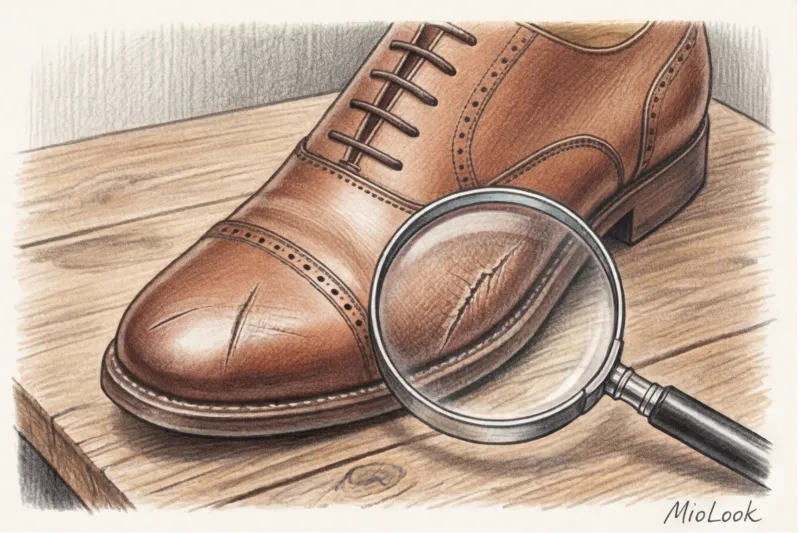
Caring for smooth, premium leather is similar to caring for your face: serum and moisturizer first, then SPF. If you apply a water-repellent spray to over-dried leather, it will soon crack at the folds.
First, nourish the leather with a high-quality cream (based on beeswax or macadamia oil), let it soak in, buff with a brush, and only the next day apply a water-protective spray. Avoid alcohol-based impregnations—they can be very drying to delicate leather (for example, on gloves or elegant Italian ankle boots).
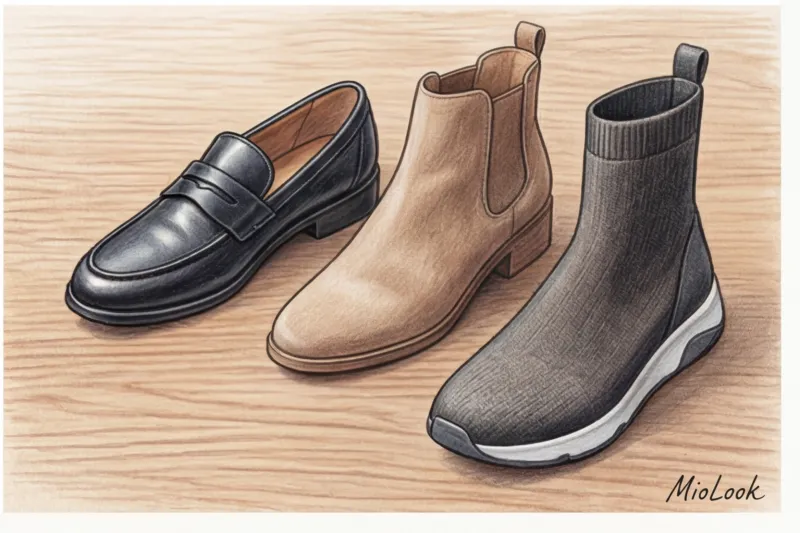
Eco-leather and membrane footwear: common mistakes
Impregnating eco-leather (polyurethane) is practically pointless. This material has closed pores, so the spray has nothing to adhere to, and the spray will simply dry as a sticky film on the surface, attracting all the street dust.
The situation with membrane footwear (Gore-Tex) is even more interesting. The membrane technology consists of micropores that allow vapor to pass through from the inside but prevent water droplets from leaking out. Treating such trekking or winter boots with a regular silicone spray will permanently seal these pores. Look for the special "Tex" or "Suitable for membrane materials" markings on the cans.
The Biggest Mistakes: What Will Ruin Your Favorite Pair Forever
As a discreet stylist, I've seen hundreds of pairs of shoes ruined. Here's my personal anti-rating of actions that only lead to throwing out shoes:
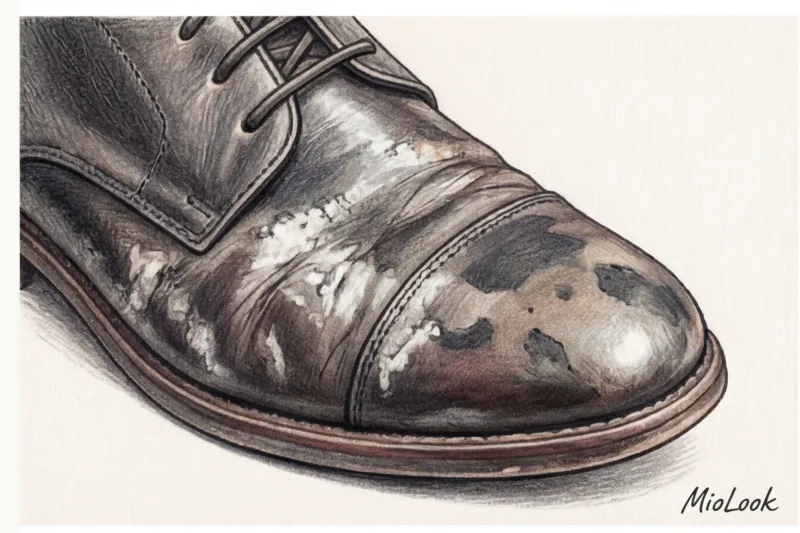
- Application on wet or dirty shoes. If you came in from outside, wiped your boots with a damp cloth, and immediately applied the spray, congratulations! You've trapped the dirt and chemical residue under a plastic film. The leather will begin to deteriorate from the inside.
- Drying on a radiator. Apply the sealant and place it near a heater to "speed up the setting"? Be prepared for the glue to melt, and the leather to dry out and become wavy.
- Ignoring patch test. Before using any new product for the first time, be sure to apply it to a hidden area (such as the inside of the heel or under the tongue). Wait 15 minutes. If the color hasn't changed, you can apply it to the entire pair.
- Spraying point blank. If spray stains form on your leather, removing them will be extremely difficult (especially on light-colored suede). Distance is key.
Your perfect look starts here
Join thousands of users who look flawless every day with MioLook, keeping their clothes in perfect condition.
Get access — €0.99 onceChecklist: Seasonal Routine for Updating Your Defenses
"How often should I reapply?" is the most common question during my consultations. Forget about the calendar. Frequency depends solely on how often you wear it and the weather. If you only walk from your driveway to your car, the protection will last for a month or a month and a half. If you enjoy long walks in slush, you'll need to reapply every six to eight weeks.
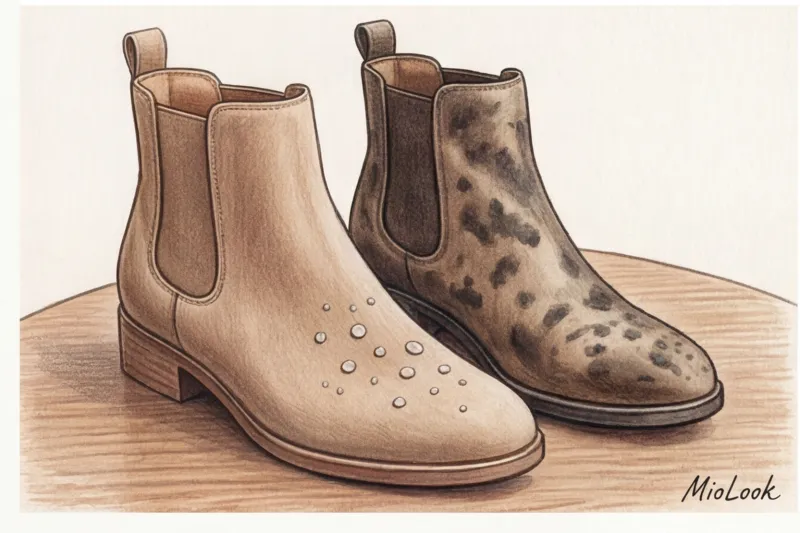
Main indicator: If water droplets stop rolling off your shoes in elastic balls and start leaving dark, wet marks, the protection has worn off.
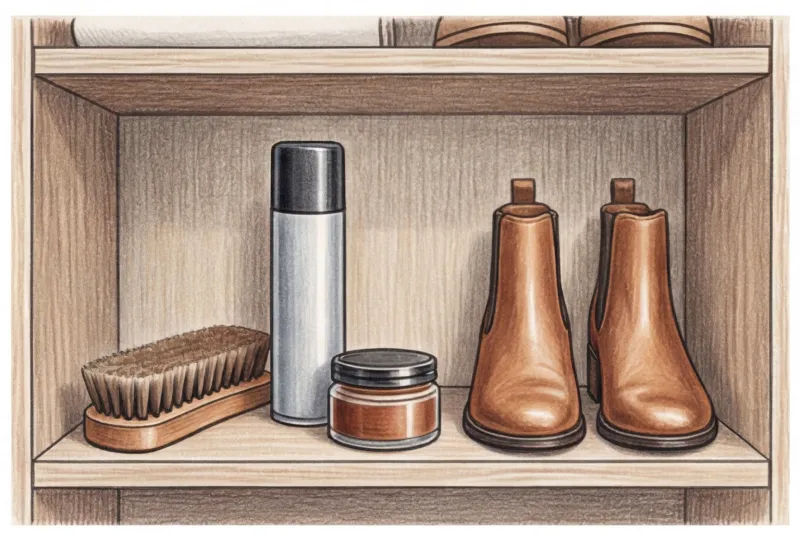
Here's a proper seasonal routine that my clients and I integrate into the smart wardrobe concept (prevention is always cheaper than buying new boots):
- Deep cleaning: Once a month, wash off old layers of impregnation, cream and street reagents with a special shoe shampoo (Saddle soap or special foam).
- Recovery: We dry the hair with a couple of cedar blocks (they absorb excess moisture from the inside) and restore the color with a pigmented cream.
- New protection: Apply 2-3 more coats of the correct water-repellent treatment and wait 24 hours.
By the way, to avoid having to keep all these graphs in your head, many of my clients use the inventory function in the app. MioLook It's a convenient place to mark when shoes have been put away for the season and whether they're ready for the first rains.
An Investment That Pays Off: Final Tips
Well-groomed shoes are the foundation of your personal brand. You can be wearing a flawless cashmere sweater and a perfectly tailored coat, but white salt stains or shiny suede on your shoes will instantly ruin all your efforts.
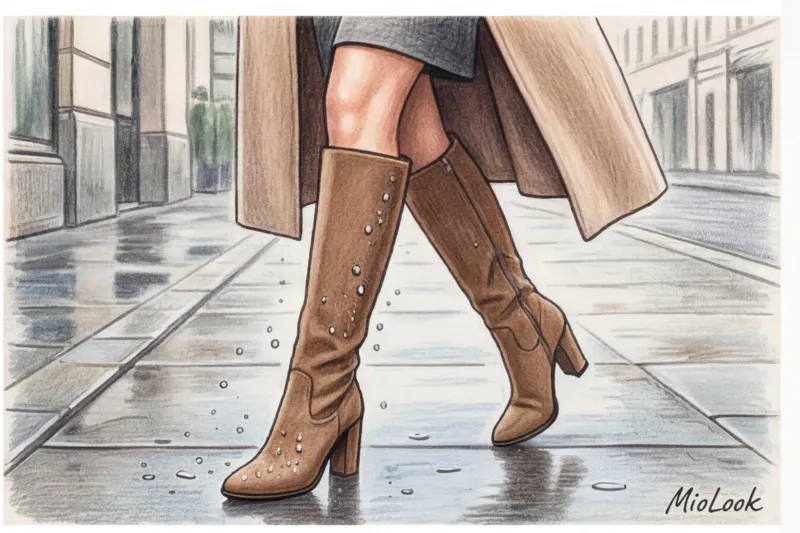
Be as meticulous about choosing shoe care products as you are about choosing face cream. Read the ingredients, avoid harsh silicones, and remember the 24-hour rule. Then even light suede ankle boots will delight you for seasons to come, not just until the first accidental puddle.