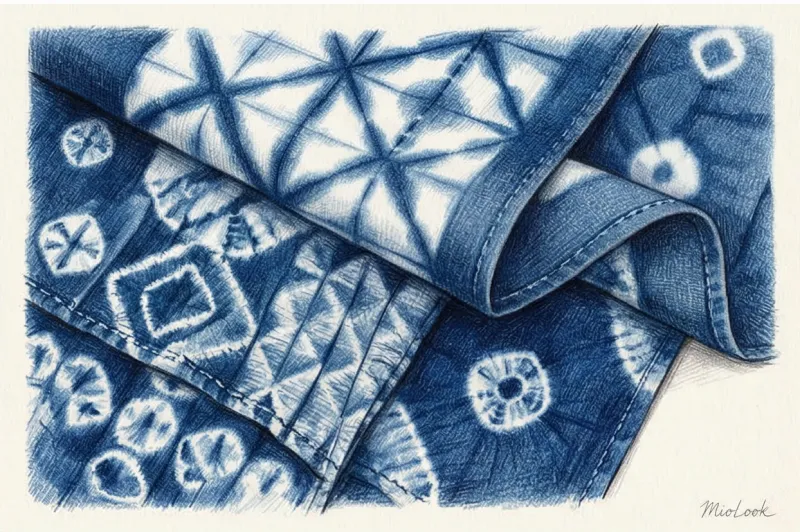
What is shibori print?
Shibori (from Japanese shiboru (to twist, to compress) is a traditional Japanese technique of knot dyeing fabric, which results in the formation of a characteristic pattern on the material.
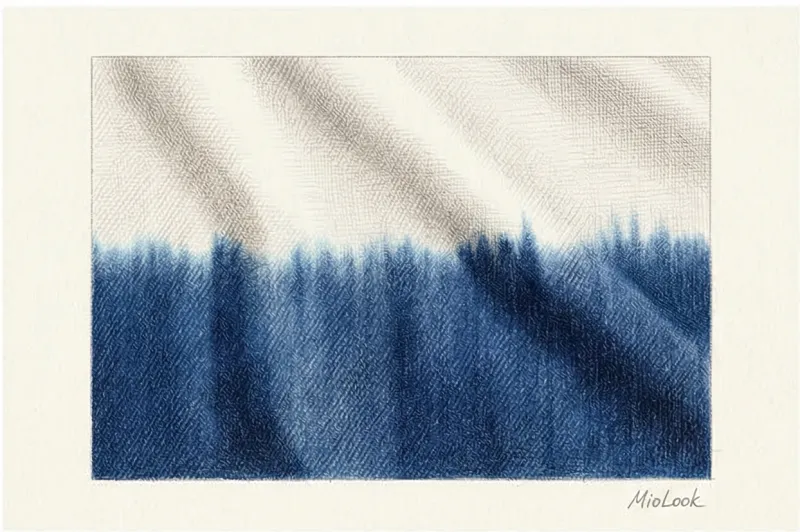
Historically, the technique originated in Japan in the 8th century. Initially, only natural indigo dye was used for dyeing, which is why classic shibori is a contrasting white and blue pattern.
The method involves mechanically preserving the fabric. Before immersing it in dye, the material is folded, twisted, stitched, or clamped. The dye does not penetrate these protected areas, creating a rhythmic pattern.
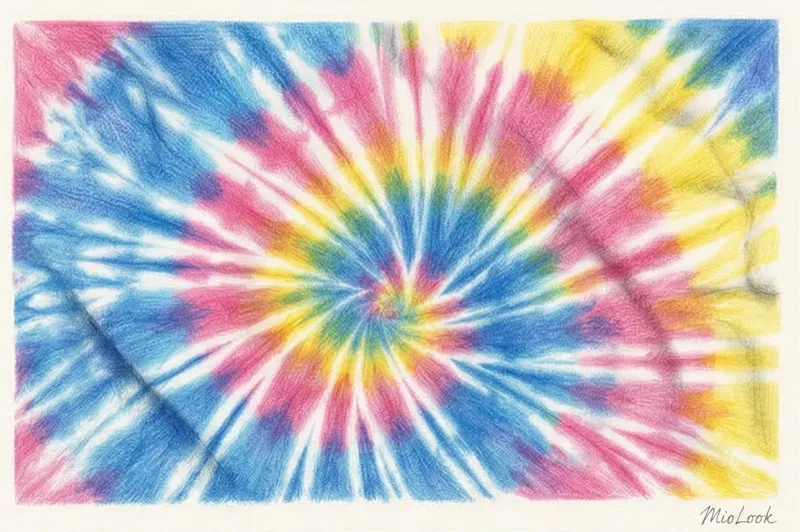
When explaining shibori print, art historians often compare it to the later American technique of tie-dye. The latter is characterized by its chaotic and multicolored nature, while the classic Japanese pattern is more graphic, rhythmic, and often monochrome.
Main types
Depending on the method of folding and fixing the fabric, several traditional patterns are distinguished.
- Kanoko — a classic dotted pattern created by tightly tying small sections of fabric with thread. The result is concentric circles or distinctive "eyes."
- Itajime — a geometric pattern consisting of squares, triangles, or grids. The fabric is folded accordion-style and clamped between wooden planks before dyeing.
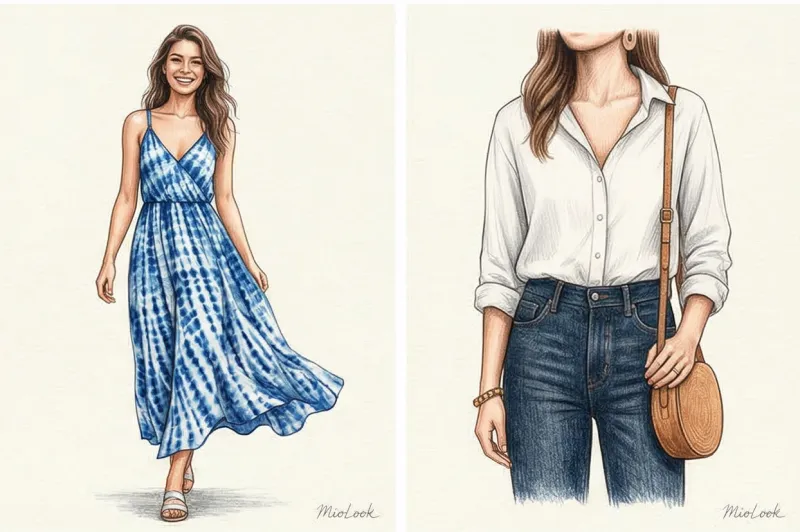
- Arashi — diagonal stripes reminiscent of slanting rain. The effect is achieved by wrapping the fabric around a cylinder or pole and then corrugating it.
- Kumo — a pattern reminiscent of a web or pleated fabric. The fabric is gathered into small folds and pulled evenly, creating radial lines with soft, blurred edges.
What to combine with
Shibori print is highly visually striking, so it's best balanced with solid colors in basic shades. White, beige, navy, or black are ideal backgrounds.
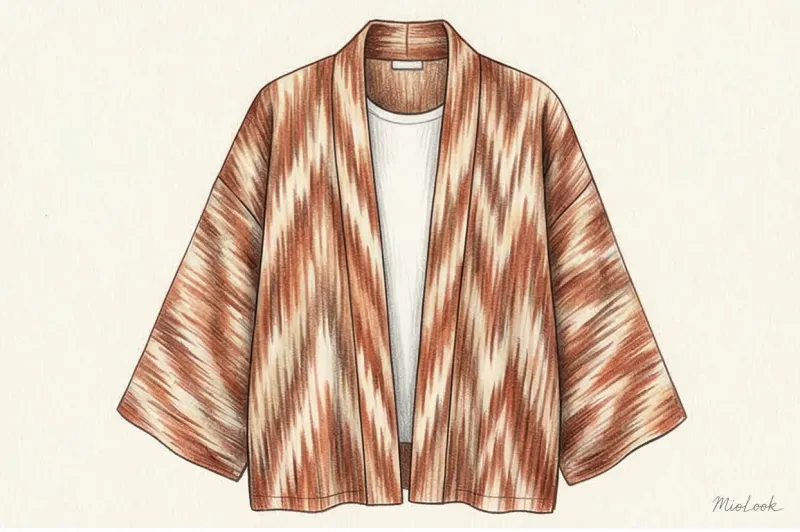
Classic blue and white shibori pairs seamlessly with denim of any thickness, whether it's light-wash straight-leg jeans, Bermuda shorts, or classic raw denim jackets.
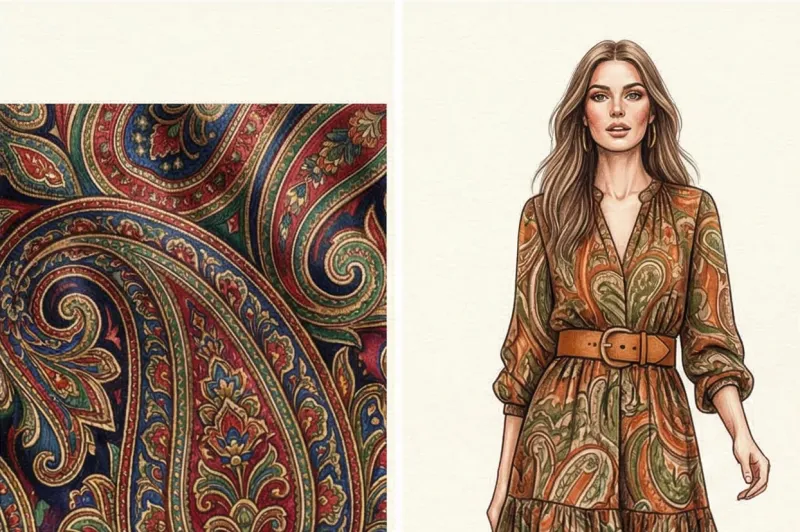
In everyday wardrobes, pieces with this pattern fit into boho, resort, and relaxed casual styles. Loose shirts, maxi dresses, kimonos, and wide-leg palazzo pants with Japanese patterns are perfect for layering summer outfits.
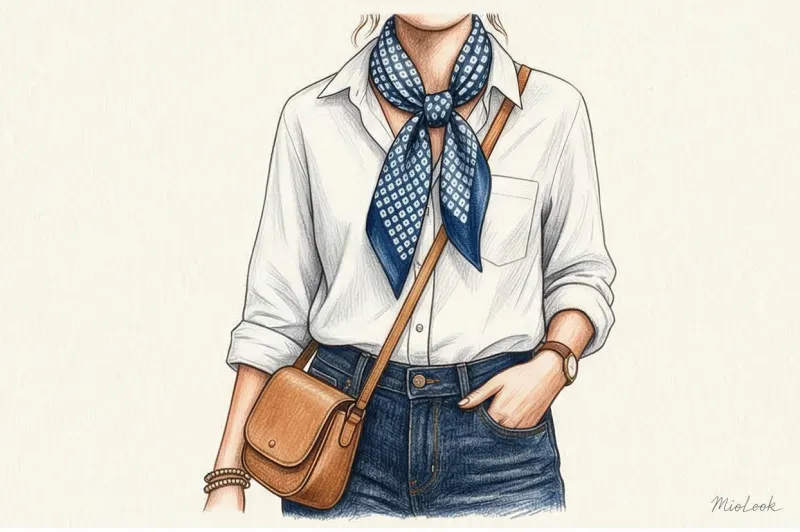
Accessories with shibori prints are used as accent details in minimalist looks. Silk scarves or voluminous textile tote bags add texture and a subtle ethnic touch.