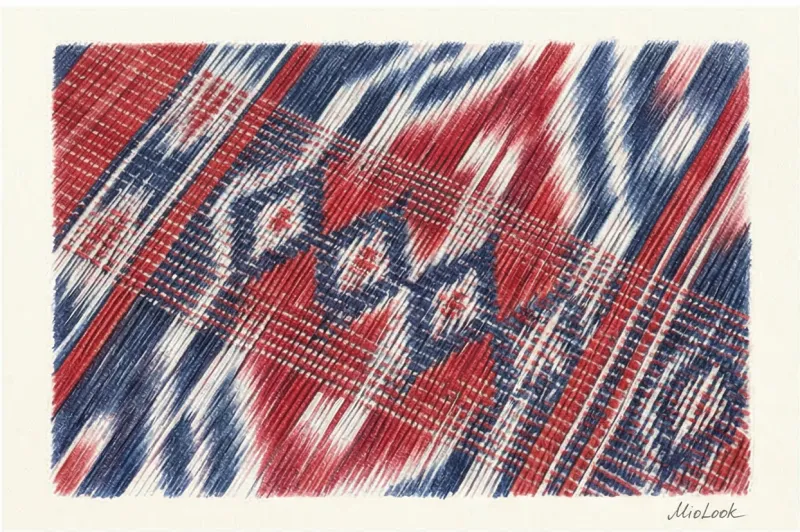
What is ikat print?
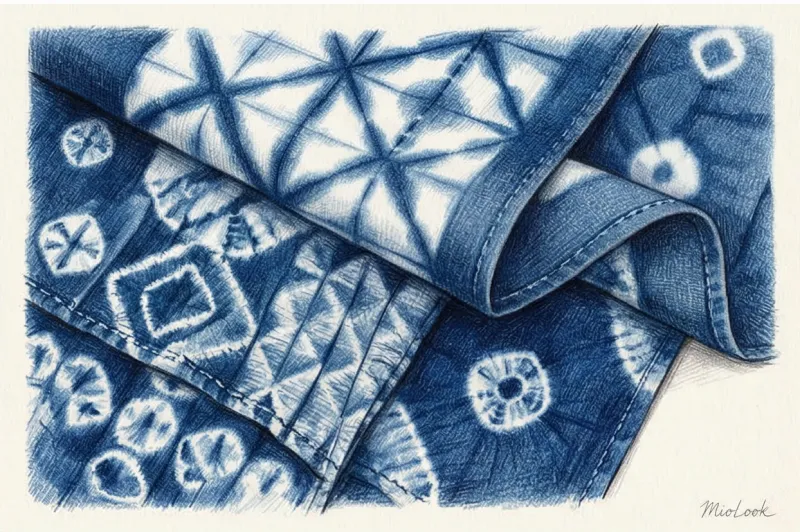
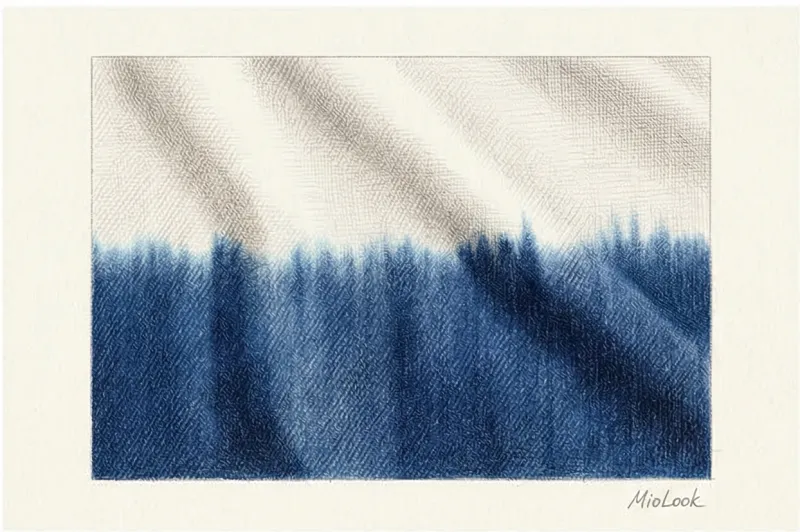
Ikat — is a complex fabric dyeing technique that results in a distinctive pattern with recognizable “blurred” edges.
The term comes from the Malay-Indonesian word "mengikat," meaning "to bind" or "to twist." Unlike traditional factory printing on finished fabric, traditional ikat involves dyeing the threads before they reach the loom. Weavers tightly tie the thread bundles according to the intended pattern to protect them from the dye. The process can be repeated several times to create multicolored designs.
The specific effect of “blurring” of the pattern occurs because during weaving the dyed threads inevitably shift slightly relative to each other.
Distinctive features and types
The main visual characteristic of ikat is the uneven, feathery contours of geometric or abstract shapes, often executed in bright, contrasting colors. Historically, this technique developed in Indonesia, India, Japan, and the countries of Central Asia, where each culture developed its own unique motifs.
There are several traditional variations of this technique. Single ikat is created by dyeing only one row of threads—either the warp or the weft. Dying the warp results in a sharper pattern, while dyeing the weft results in a more diffused design.
Double ikat is the most complex technique, in which both the warp and weft threads are dyed. To ensure the pattern matches, this technique requires the utmost precision in weaving.
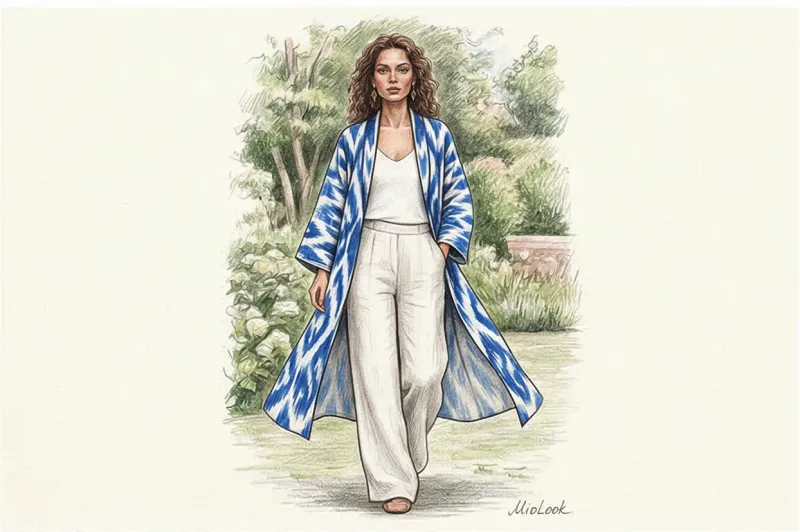
In the contemporary fashion industry, the term "ikat print" is often applied to fabrics in which traditional, washed-out designs are machine-printed over the finished fabric, mimicking the original hand-made texture.
What to combine with
Because of its high visual impact, ikat print works best as the main accent of an outfit, surrounded by basic solid-color pieces.
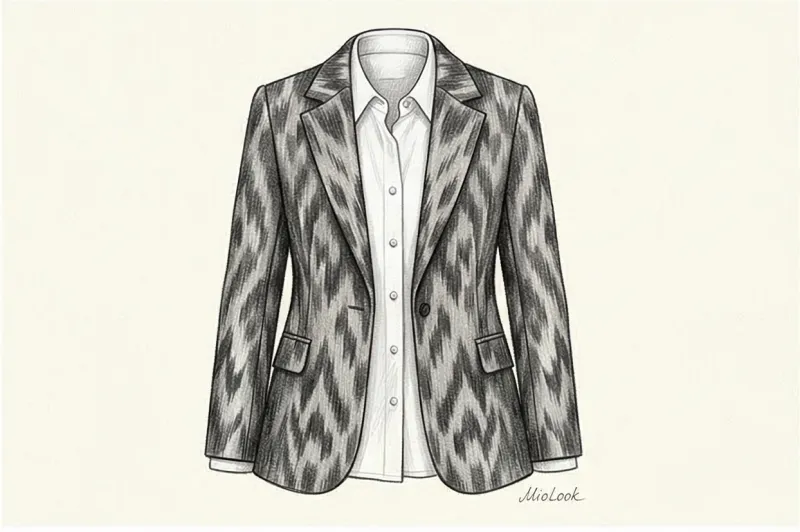
A blouse or jacket with this pattern pairs harmoniously with classic blue denim, white linen trousers, or beige chinos. For a boho-chic look, pair a silk kimono or ikat cape with suede shoes and leather accessories. For example, a braided belt or a fringed bag will highlight the ethnic origins of the pattern.
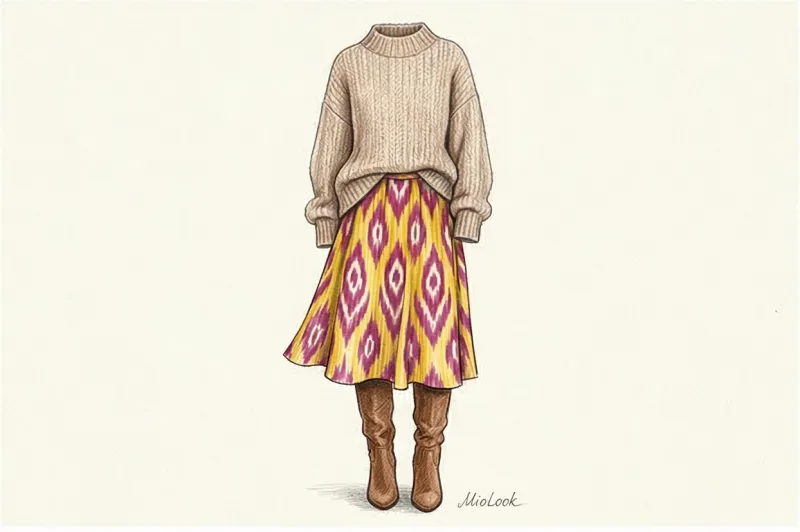
If a large pattern seems too bold for a portrait, the print can be incorporated through accessories. A scarf, a textile tote bag, or shoes with ikat details allow you to add a textured accent without overwhelming the silhouette.