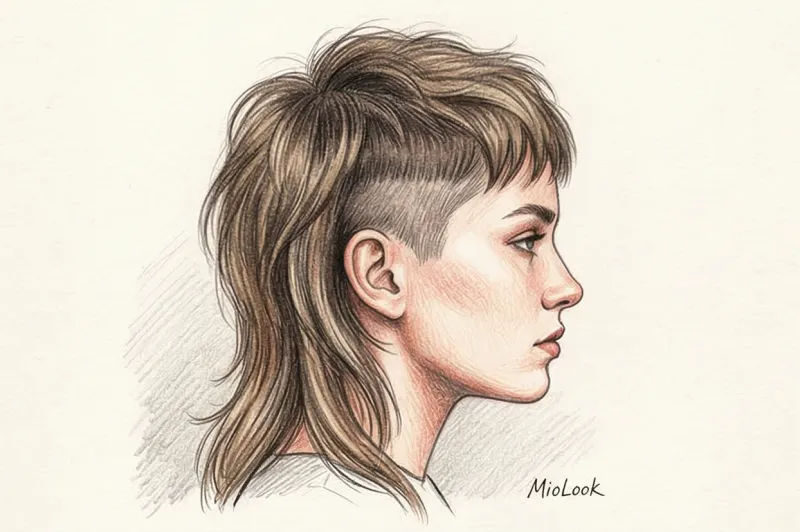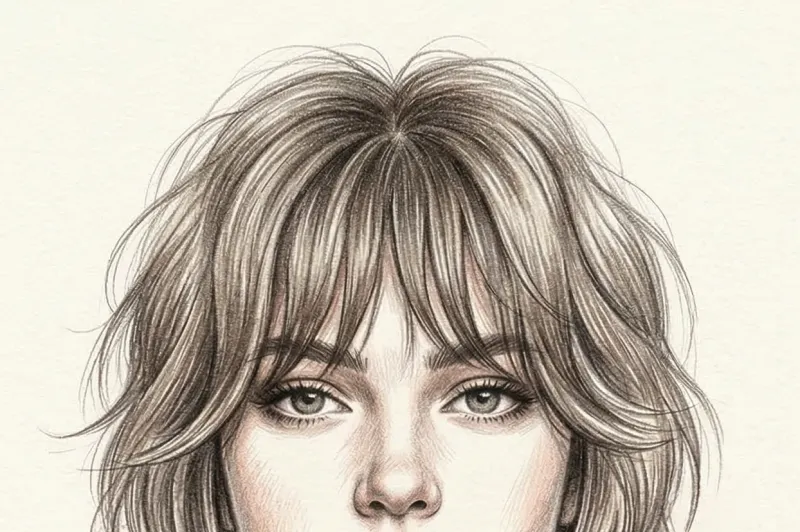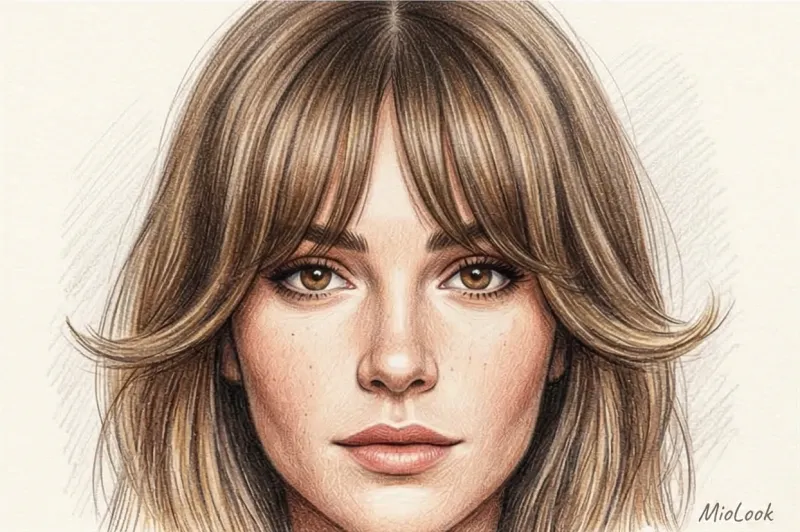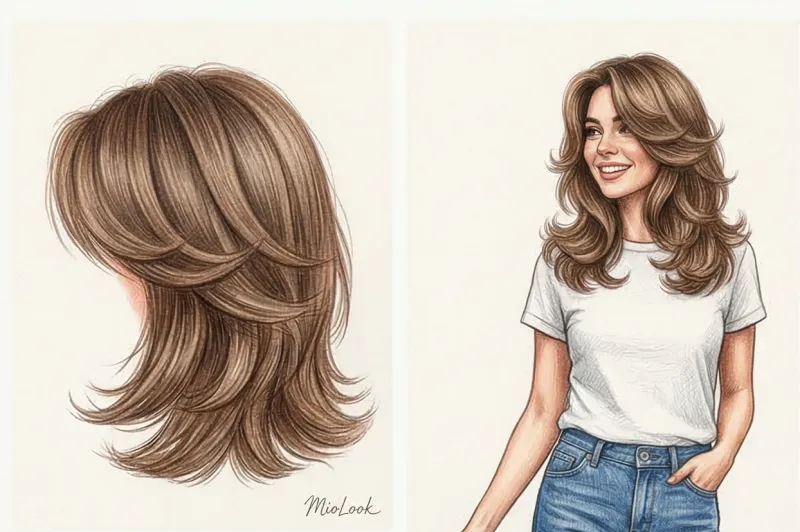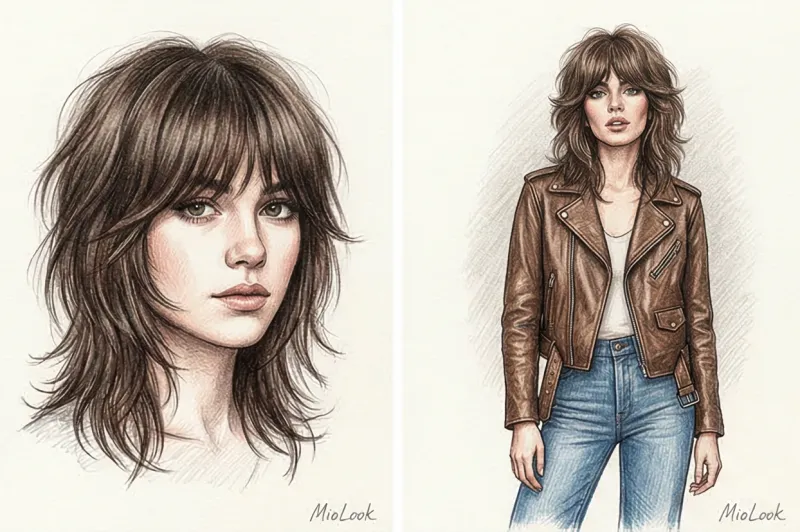
A shaggy haircut is a heavily layered, cascading hairstyle defined by randomly arranged strands and a tousled texture. The cut relies on deep thinning and choppy ends across short, medium, or long lengths to create movement. It is widely used in casual and everyday styling.
What Does Shaggy Hair Mean?
When people ask about the shaggy hair meaning, they are usually curious about both the literal definition and the cultural history behind the look. The term originates from the English word "shaggy," which translates to furry, unkempt, or covered with rough hair. In hairstyling, this translates to a deliberately messy, relaxed aesthetic that rejects rigid structure.
The haircut was pioneered in the early 1970s by American hairstylist Paul McGregor. It gained massive popularity when actress Jane Fonda debuted the look in the 1971 film Klute. This marked a significant departure from the stiff, heavily hairsprayed bouffants of the 1960s. The relaxed, androgynous style was quickly adopted by rock musicians, cementing its status as a symbol of rebellious aesthetics. Icons like Mick Jagger, Joan Jett, and David Bowie all wore variations of the shag, making it synonymous with rock-and-roll culture. Today, understanding what shaggy hair means involves recognizing its legacy as a low-maintenance, edgy alternative to traditional, blunt haircuts.
Key Features of a Shaggy Appearance
Creating a true shaggy appearance requires specific cutting techniques and an understanding of hair architecture. The foundation of the cut is based on strategic volume distribution. The bulk of the hair is concentrated at the crown using short, choppy layers. As the hair travels down towards the ends, the volume thins out significantly, resulting in a characteristic jagged outline.
To achieve this, stylists rely heavily on deep thinning shears or a barber's razor. This technique removes excess density and eliminates straight geometric lines from the cuts. The result is a smooth yet highly textured transition between the different layers, allowing the hair to move freely without feeling weighed down.
Another defining element of the shaggy haircut is the fringe. The shag is almost always accompanied by bangs, which help frame the face and connect the short crown layers to the rest of the hair. The most common pairings include an extended curtain fringe, a jagged straight fringe, or an asymmetrical fringe that blends seamlessly into the side layers. These elements work together to create the signature lived-in, effortless vibe.
Hair Types and Length Variations
The versatility of the shag allows it to be adapted to almost any hair type and length. The cut's geometric shape is most noticeable on naturally wavy and curly hair, as the choppy layers enhance and highlight the natural curl pattern. However, a skilled stylist can successfully execute a shag on straight hair by adding visual volume and movement through aggressive texturizing.
| Characteristic | Description |
|---|---|
| Length Options | Micro-shag (pixie), shoulder-length (classic), long cascading layers |
| Ideal Hair Texture | Wavy and curly hair naturally enhance the cut's shape |
| Cutting Technique | Razor cutting, deep point cutting, heavy thinning |
| Maintenance Level | Low to medium; grows out seamlessly without harsh lines |
| Key Styling Products | Sea salt spray, texturizing powder, matte styling paste |
The haircut offers a wide range of length options. You can wear it as a micro-shaggy cut on a short pixie, which provides a bold, punk-inspired look. The classic shoulder-length version remains the most popular, offering a perfect balance of volume and manageability. For those with longer hair, a shag with a choppy texture throughout prevents the hair from looking flat and heavy, adding a dynamic bounce to the lengths.
How to Style a Shaggy Haircut
A basic shag style requires the right approach to drying and the use of specific texturizing products. Smoothly pulling strands with a round brush contradicts the entire aesthetic of the cut, as a sleek blowout conceals the carefully crafted layers and eliminates the shaggy appearance.
The best drying option is to air-dry your hair. Apply a curl-defining cream or a lightweight mousse to damp hair, scrunch the ends upward, and let it dry naturally. To speed up the process and maximize volume, use a hairdryer with a diffuser attachment. The diffuser enhances the natural wave and encourages the choppy layers to separate.
Once the hair is dry, finishing products are essential. Sea salt sprays add a gritty, beachy texture, while matte pastes help define individual strands around the face. For extra lift at the crown, gently tap a texturizing powder into the roots and massage it in with your fingertips.
Matching the Shag with Your Wardrobe
Stylistically, the shaggy hairstyle harmoniously complements relaxed clothing choices. It is a natural fit for grunge, boho, and casual styles. Think vintage band t-shirts, distressed denim, flowing floral dresses, and worn-in leather jackets. The haircut amplifies the effortless nature of these garments.
Interestingly, the shag also works exceptionally well in a smart-casual business wardrobe. In this context, the hairstyle serves as a contrasting element. It softens the strict formality of classic pantsuits, structured oversized blazers, and crisp basic shirts. An elongated shaggy cut with soft waves adds a modern, slightly rebellious accent to an otherwise traditional and formal look, proving that this 1970s staple remains incredibly relevant today.