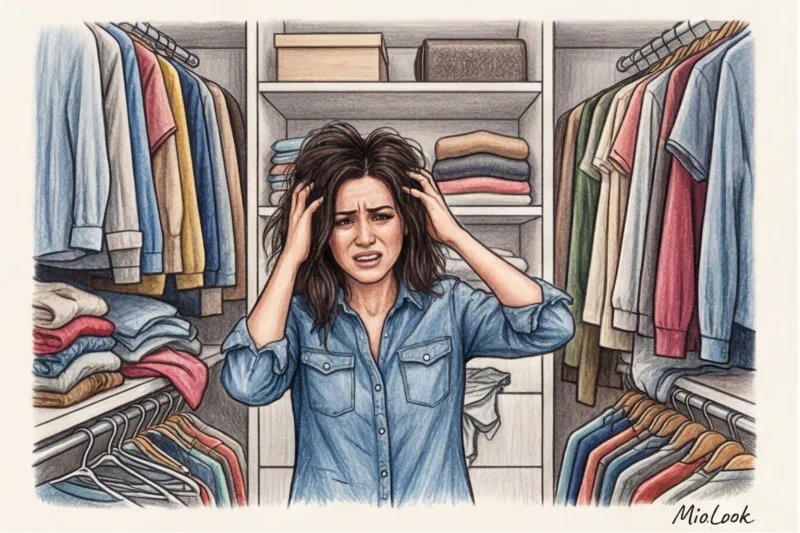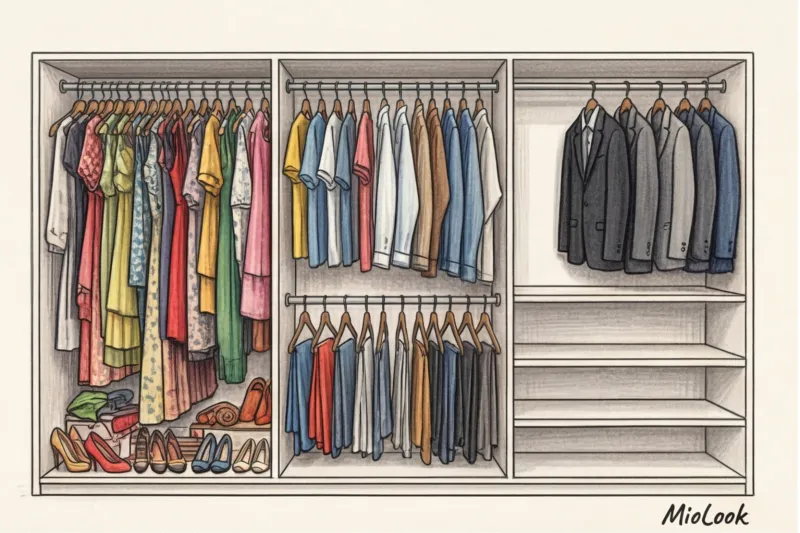
Over 12 years of working as a style coach, I've seen dozens of couples whose mornings began with irritation. And the reason wasn't their personalities, but their furniture. When I first audited one couple, they were on the verge of a serious conflict: the men's heavy, size 52 tweed jackets were literally pressing the wife's delicate silk blouses on adjacent hangers into the wall. And all because they'd ordered the "perfect" closet from the picture, divided exactly in half.
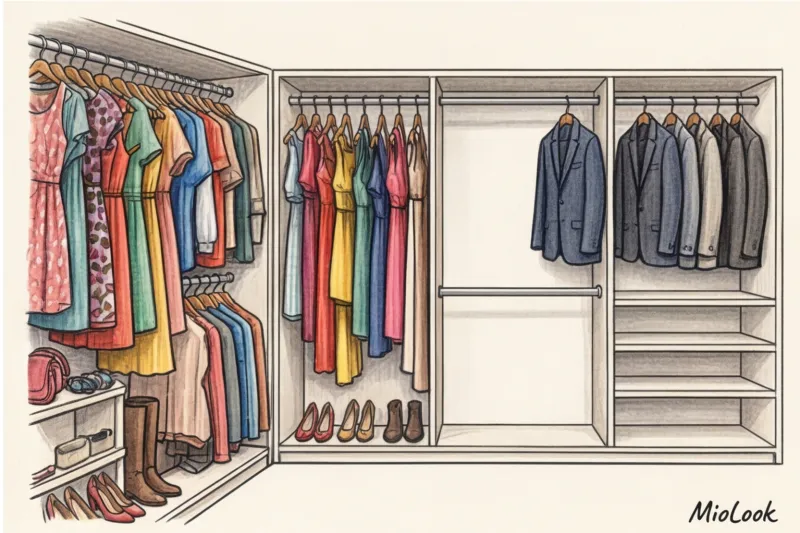
Properly designed dressing room for two It's more than just a place to store things. It's a tool for maintaining peace in the family. We've covered the basic principles of zoning in more detail in our The complete guide to the perfect walk-in closet layout , but when it comes to space for a couple, completely different rules come into play.
Why Symmetry Is the Main Enemy of a Walk-in Closet for Two
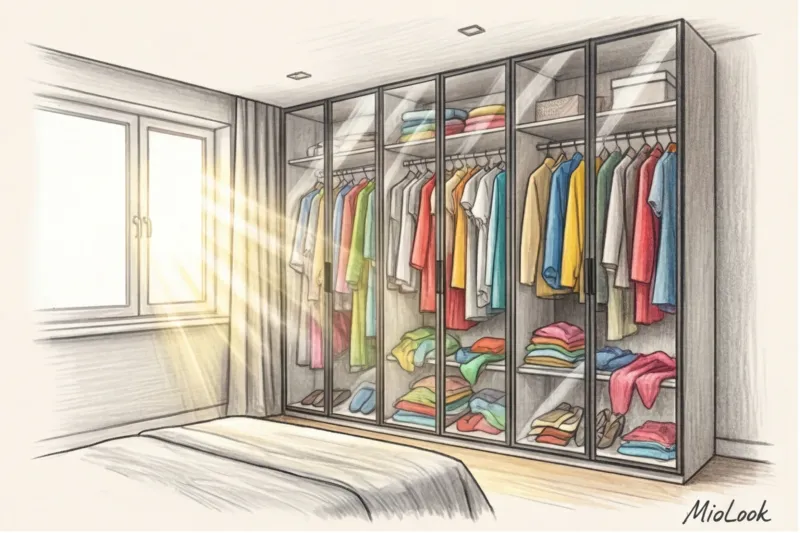
Open Pinterest and you'll see hundreds of photos of symmetrical closets: neat rows of shirts on the left, equally neat rows of blouses on the right. This is a design myth that ruins things and stresses. The ideal walk-in closet for two is always asymmetrical.
Men's clothing is physically heavier and bulkier. A men's wool suit weighs three times as much as a women's slip dress. A woman's wardrobe, according to my statistics, requires 40% more vertical variety: from short crop tops to maxi dresses. Separating the two halves inevitably leads to empty shelves for one partner and catastrophic clutter for the other.
"The concept of 'conflict ergonomics' states that if something is difficult to reach, you'll either stop wearing it or start throwing it on the chair. And if someone else's jacket sleeve catches on your dress every morning, it's only a matter of time before your closet becomes a war zone."
Of course, this principle of asymmetry is less critical if you both wear exclusively unisex oversized clothes of the same size, but in 95% of cases, the difference in sizes is colossal.
Your perfect look starts here
Join thousands of users who look flawless every day with MioLook.
Get access — €0.99 onceAudit and digitization: where does space division begin?
Before calling a surveyor or going to a furniture store, you need to physically count your belongings. You can't divide something you don't know the volume of.
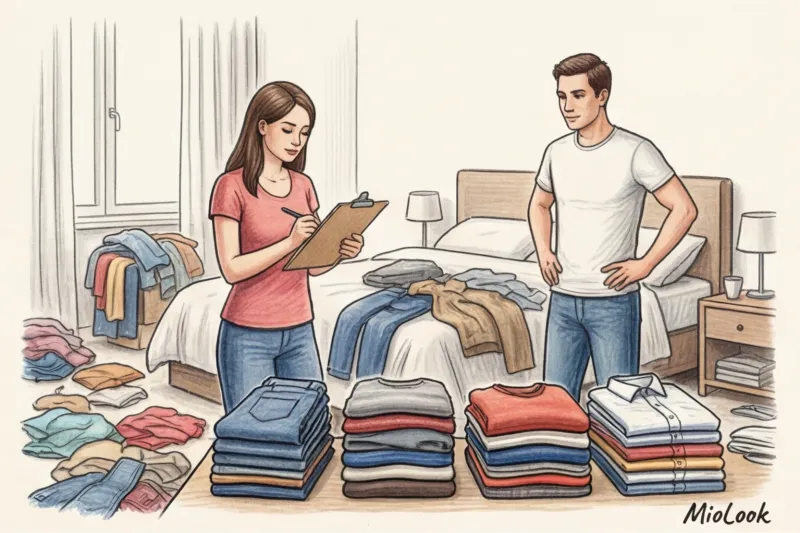
I always give my clients one strict rule: measure extremes Take your wife's longest evening dress and measure its length from shoulder to hem. Then, take your husband's widest pair of winter shoes. These extreme measurements should serve as the starting point for designing the sections.
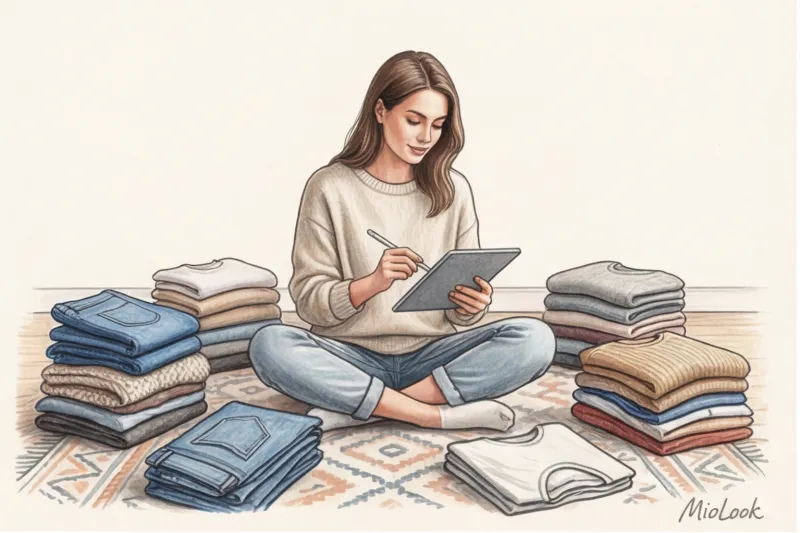
Instead of keeping numbers in your head, I recommend using MioLook To digitize your wardrobe, the smart AI stylist will not only help you create outfits but also visually show you how many shirts, pants, and dresses you actually own, greatly simplifying the calculation of how many hangers and shelves you need.
Male and female specifics: differences in size
The standard depth of a mass-market closet is 55 cm. This is sufficient for women's blouses. However, men's hangers are, on average, 5–8 cm wider than women's (45–50 cm versus 38–42 cm). If you hang a men's jacket in a closet with a depth of 55 cm, the sleeves will constantly rub against the closing doors, quickly leading to creases and wear on the shoulders.
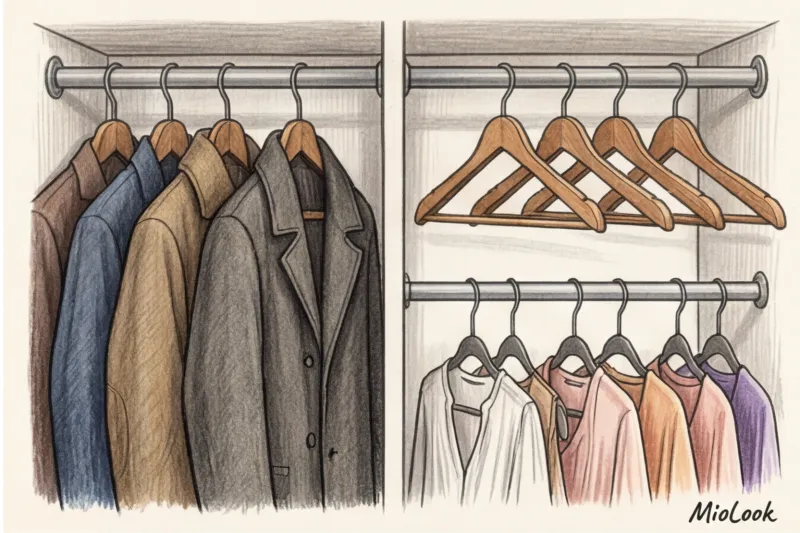
The men's area requires:
- Depth minimum 60–65 cm.
- Reinforced rods (25 mm thick) because five winter coats and suits made of heavy English tweed with a density of 400 g/m² will easily bend a standard aluminum tube.
- Wider sections for folded knits (chunky knit sweaters take up more space).
The Ergonomics of a Shared Morning: How to Avoid Clashes
A well-designed walk-in closet for two takes into account not only the static nature of items but also the dynamics of people. According to ergonomic standards developed by architect Ernst Neufert, the minimum passage width for one person is 60 cm, while for two people to pass each other, at least 120 cm is required.
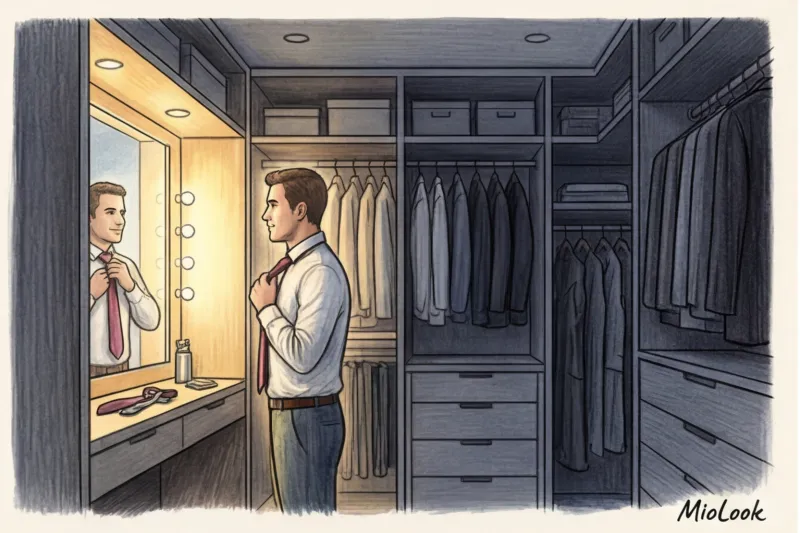
If you wake up at different times, apply the rule "The earlier you get up, the closer you get to the exit." Place the area of the partner who leaves for work first closer to the bedroom or bathroom door. This will minimize movement around the room.
Be sure to consider local lighting scenarios. Installing LED lighting inside the sections themselves, triggered by door opening or movement in a specific area, will allow one partner to calmly choose clothes while the other sleeps in the dark.
Access to MioLook for €0.99 — one-time payment
A smart AI stylist will select the perfect look for every day based on your base.
Get access — €0.99 onceTechnical details: height and bars for him and her
The difference in clothing length dictates a completely different bar architecture.
Men's wardrobes fit perfectly into the two-tier concept in 90% of cases. Shirts, jackets, and folded trousers require a section of approximately 100–110 cm. Two such rods, one above the other, are the most efficient storage method.
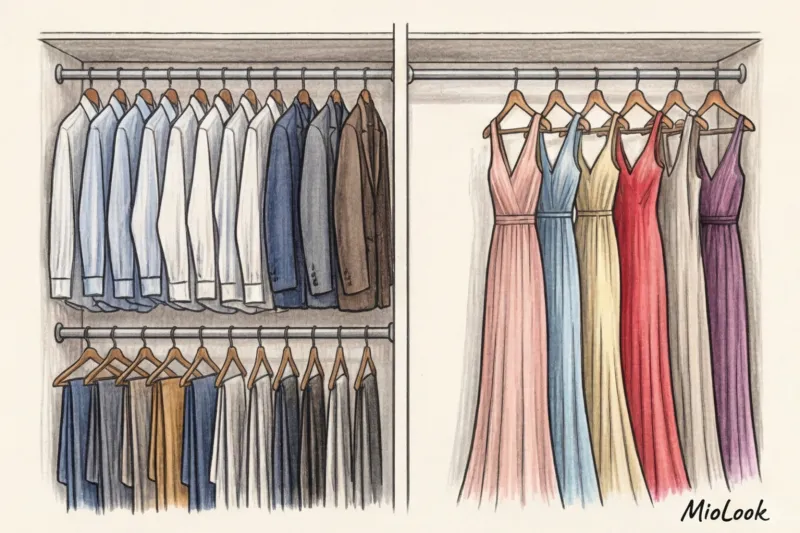
Women's wardrobes are more complex. They vitally require three heights:
- Maxi (150–170 cm): for evening and summer dresses, long coats.
- Midi (130 cm): for knee-length dresses, skirts, trench coats.
- Mini (90–100 cm): for blouses, jackets, tops.
It's important to remember how tightly you hang your clothes. According to the Textile Care Institute, there should be at least 1.5–2 cm of space between hangers to allow for air circulation. Hanging clothes too tightly, literally squashing them together, damages wool and cashmere fibers, creates a musty odor, and creates an ideal environment for moths.
Neutral Territory: What Can and Should Be Stored Together
Every closet has areas that don't belong to anyone in particular. These typically include the upper mezzanines (above 210 cm) and the lowest drawers.
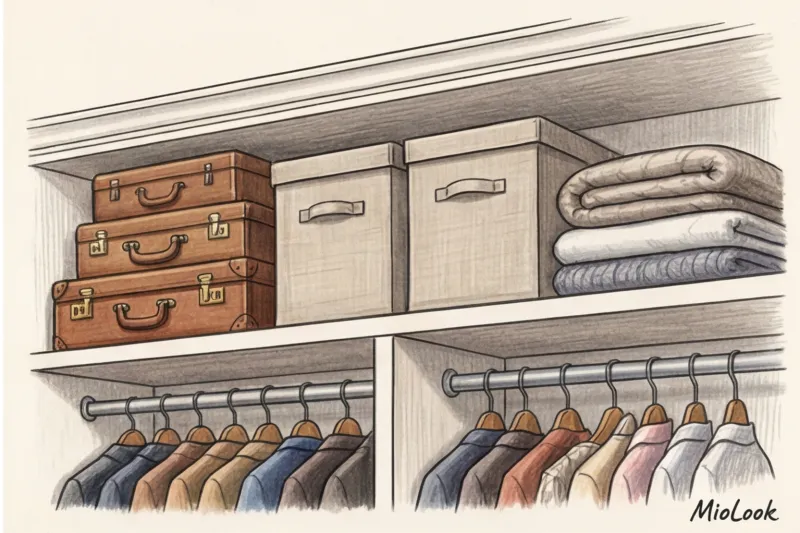
What is sent to neutral territory:
- Suitcases and travel bags.
- Sports equipment (helmets, snowboarding equipment).
- Seasonal blankets and guest textiles.
- Care area: steamer, anti-pilling machines, rollers, suede brushes.
Advice from practice: Never store out-of-season cashmere and silk in plastic vacuum bags. I've seen expensive sweaters (costing over €500) turn into shapeless rags because the fibers were compressed without oxygen for six months. Use bags made of breathable cotton or linen—they're more environmentally friendly and safer for expensive fabrics.
Shoes and accessories: two different universes
Shoe racks are another area of conflict. A standard 30 cm deep rack is perfectly suited for women's shoes up to a size 38. But if your partner has a size 45, their Oxfords and brogues simply won't fit and will hang down, distorting the heel counter.
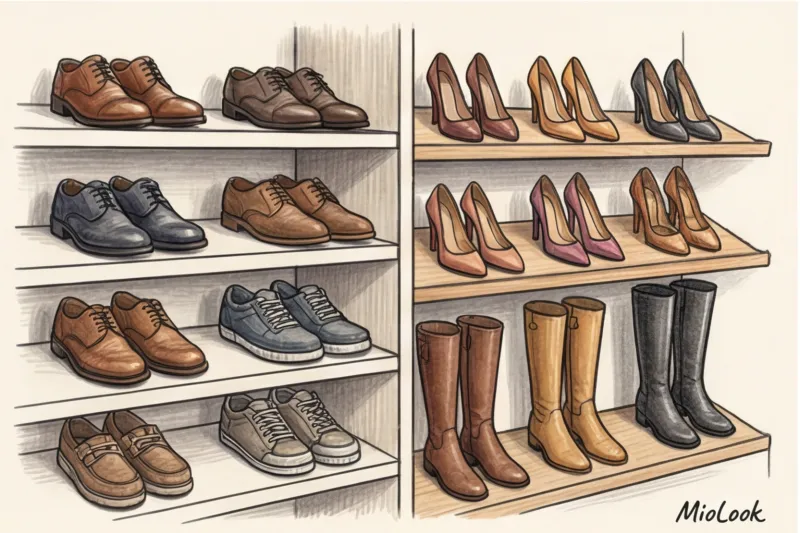
For men's shoes, design straight shelves at least 35 cm deep. For women's heels, slanted shelves with a side rail are more convenient. Pay special attention to tall women's boots—they require a section 45–50 cm high, and they should be stored strictly with shoe trees (or shoe trees) to prevent the leather from bunching up at the ankle.
For high-status accessories—silk ties, leather belts, watches—it's worth setting aside shallow (10–15 cm) drawers with velvet dividers. This will protect the accessories from scratches and dust.
Checklist: 5 Steps to the Perfect Shared Closet
To design a comfortable space for two, follow this algorithm:
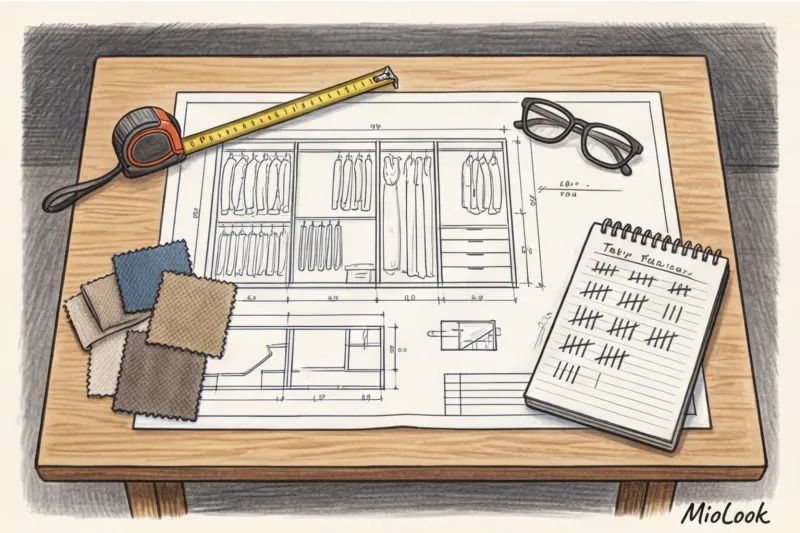
- Get rid of the excess: Before planning your closet, take stock. Take any items you haven't worn in over a year to the dry cleaner and recycle them.
- Take measurements: Measure the length of your longest dress, the shoulder width of your largest jacket, and the length of your largest pair of shoes.
- Design routes: Draw a diagram of your bedroom and closet. Make sure your morning routines don't intersect in any narrow spaces.
- Strengthen the fittings: Choose thick rods and sturdy drawer guides in the men's area, as items there tend to weigh significantly more.
- Invest in hangers: Buy wooden hangers that are similar in design but different sizes: 45 cm for him, 40 cm for her. This will visually unify the space, even if it's asymmetrical.
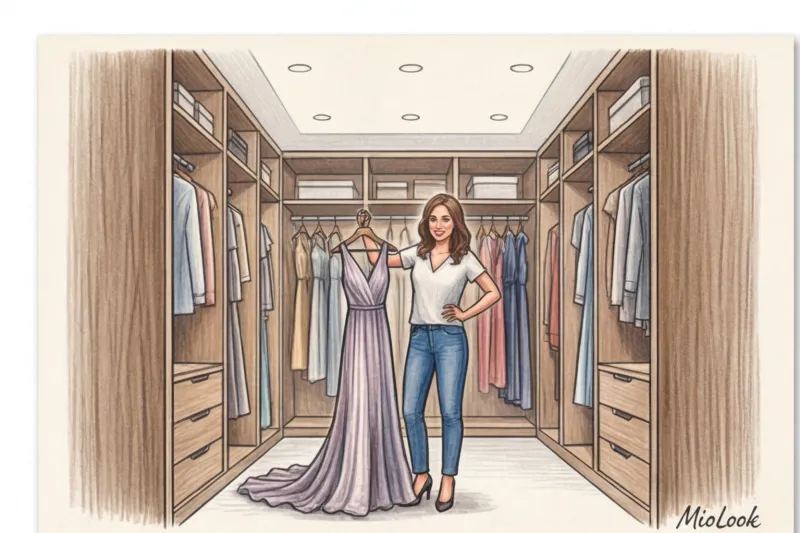
The secret to a harmonious couple's closet isn't dividing the shelves equally, but adapting every centimeter to the actual physical dimensions of your clothes. Allow your closet to be asymmetrical, and you'll notice how getting ready in the morning turns from stressful to enjoyable.