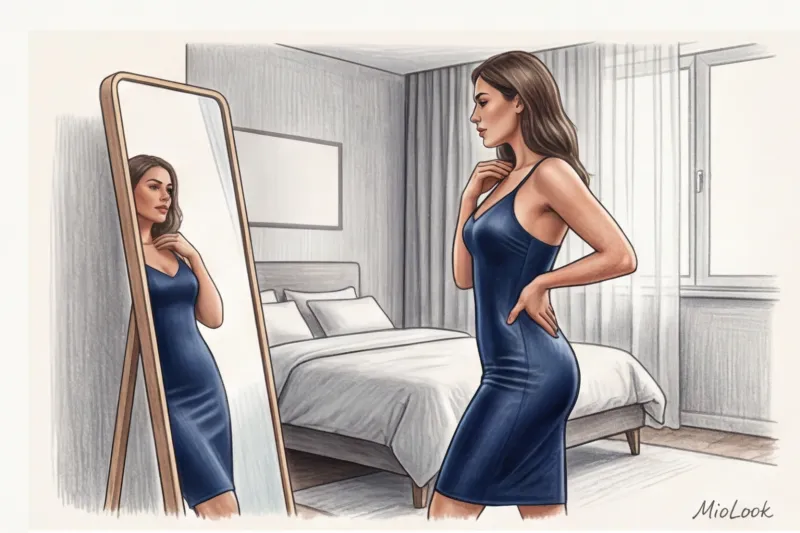
Have you ever noticed how a silk skirt flows like liquid gold on the mannequin, but in the fitting room it treacherously highlights every unevenness and creates unnecessary bulk? Spoiler: it's almost never about your figure. According to statistics from lingerie associations, up to 70% of women wear the wrong base layer every day, ruining the fit of even the most expensive garments. Today, we'll look into this. seamless underwear not from the perspective of a banal “it’s just convenient,” but as a real engineering framework for a status wardrobe.

I talked in more detail about how to properly build a lingerie capsule from scratch in our The Complete Guide to Basic Underwear But today we'll delve into textile physics: why 100% cotton is a bad idea for bodycon clothing, how laser cutting differs from true circular knitting, and how one smart detail can save your business look.
The Anatomy of the Perfect Silhouette: Why Seamless Underwear Matters
The foundation of any style begins with what's hidden from view. Classic lingerie with textured lace, thick elastic bands, and side seams acts as a kind of speed bump for delicate fabrics. Silk, viscose, and fine cashmere will inevitably catch on these uneven surfaces, ruining the designer's intended geometric shape.
I had a particularly revealing case in my practice. A client, a top manager at an IT company, came to me complaining that she had "gained weight for her favorite skirt." The skirt was bias-cut and made of thick silk. In the fitting room, it turned out she had been wearing classic briefs with a tight elastic band underneath, which literally cinched her hips, creating the illusion of excess weight. Once we replaced them with high-quality seamless underwear, the skirt fit perfectly again, and the "extra pounds" vanished into thin air.
"The perfect fit of clothing depends 50% on the cut of the garment itself and 50% on the smoothness of the surface it's worn on. Seamless underwear works like a makeup primer, smoothing out the texture before applying the base color."
There's also a crucial psychological aspect. Sensory comfort is the foundation of confidence. When the edges don't dig into your skin and the clasp doesn't press on your spine, even your posture changes. You stop tugging at your clothes and focus on your tasks.
The Myth of Cotton and the Truth about Technological Fabrics
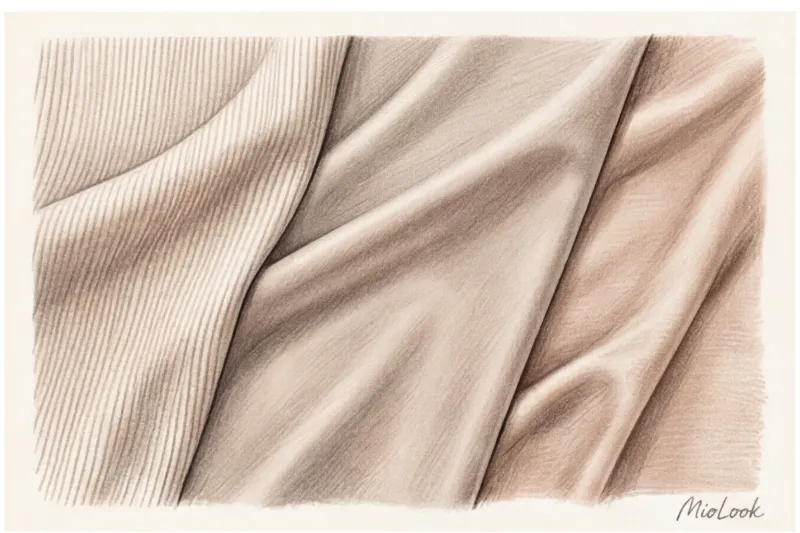
Here I want to challenge one of the most persistent stereotypes: "You should only wear 100% cotton every day." When it comes to invisible support under modern clothing, pure cotton is your worst enemy. It has zero ability to quickly regain its shape after stretching, it quickly loses its shape, and most importantly, it's technically impossible to make cotton products truly thin and seamless.
According to a large-scale study by WGSN (2024) on the evolution of functional textiles, the future of basic underwear lies with high-tech microfiber and modal-polyamide blends. Modern polyamide blends have better wicking properties than cotton: they don't absorb moisture like a sponge, but instead instantly wick it away from the body, allowing the skin to breathe.
The secret to durability lies in elastane. High-quality seamless underwear contains premium fibers (such as Lycra or Roica), which can stretch up to 500% and instantly return to their original shape. This is critical to preventing the edges from fraying (rippling) after a couple of weeks of wear. And if you're concerned about the safety of synthetics, just look for the label. OEKO-TEX Standard 100 This certificate guarantees that the fabric has passed rigorous tests to ensure it is free of harmful substances when in direct contact with the skin.
Organize your lingerie closet
Upload a photo of your basic items to the MioLook app, and a smart AI stylist will suggest the first layer you need for your perfect look.
Get access — €0.99 onceLaser Cutting vs. Circular Knitting: Which Is Really "Seamless"?
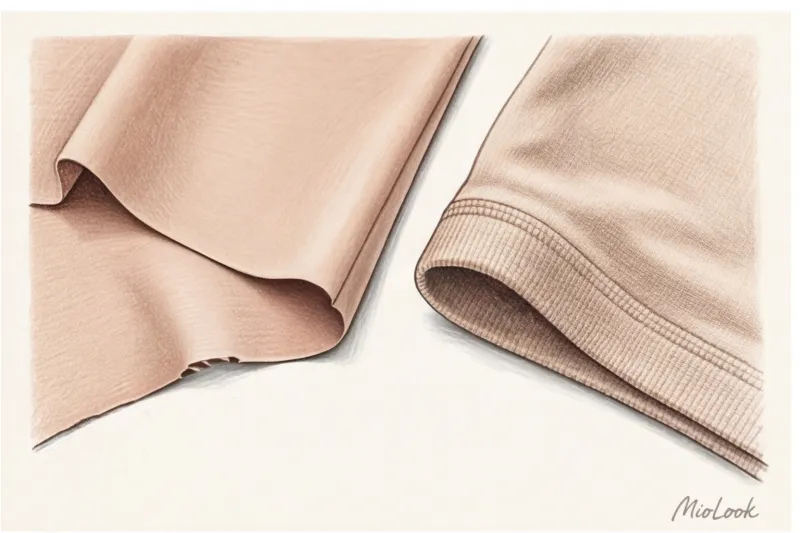
Manufacturers often use the term "seamless" for completely different technologies. If you want to build a smart wardrobe and stop wasting money on ephemeral items, it's important to understand the difference between Free-cut and present Seamless.
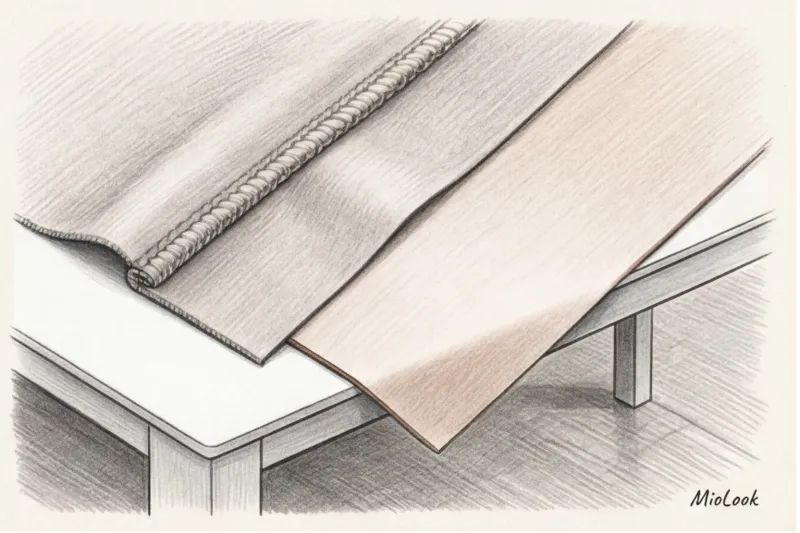
Free-cut technology (laser cutting). This is when a piece is laser-cut from a single piece of smooth microfiber, leaving the edges unfinished. The edges are incredibly thin, perfectly resembling silk. But I have to be honest: this technology has its limitations. On women with fuller hips, the laser edge often curls up as they walk, creating the very contouring we were trying to eliminate.
Seamless technology (circular knitting). This is truly seamless underwear. It's knitted on special machines (the most famous are Italian Santoni machines) into a single tube. There are no side seams. The edges are not cut, but knitted in a special way that prevents them from curling. This underwear is slightly denser than laser-cut, holds its shape perfectly, and is ideal for everyday wear.
Pay attention to printed tags. A quality product will have all the composition information imprinted or woven into the fabric. If you see a sewn-on, rigid tag on a top that claims to be "seamless," it's a compromise that will scratch your skin.
How seamless underwear saves your summer and office wardrobe
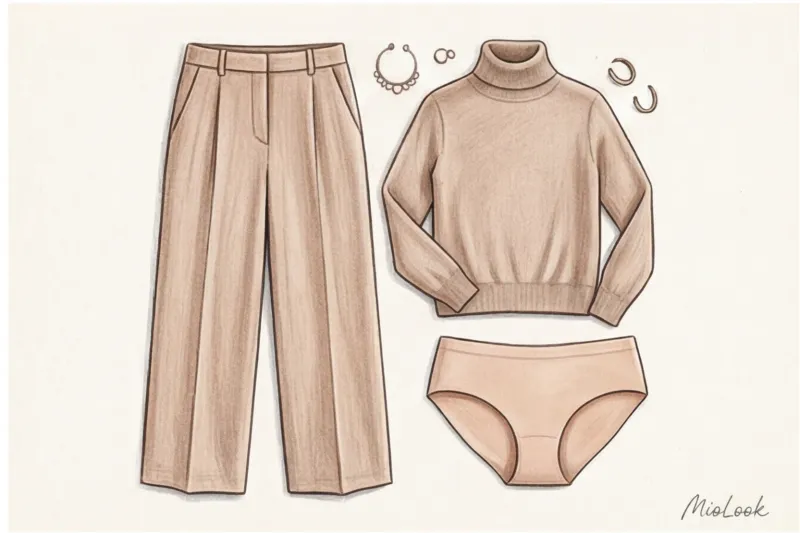
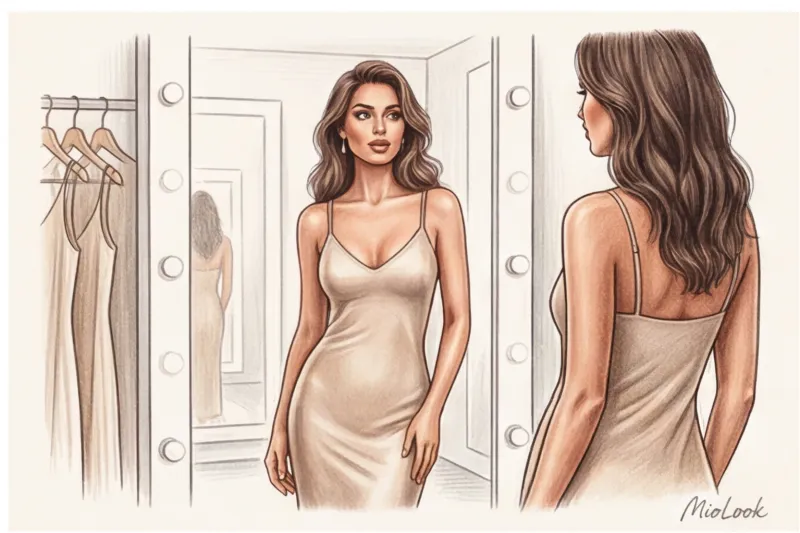
Strict office dress codes don't forgive mistakes in the first layer. Showing the contours of your underwear instantly cheapens your look, making it appear unkempt. This is one of the main rules of a high-status wardrobe—people shouldn't be able to guess where your panties end or your bra begins.
Fine knitwear and silk: a high-risk area
Thin cashmere turtlenecks, viscose tops and translucent blouses require surgical precision in choosing the base. For tops, smooth bra tops with molded cups or microfiber bralettes are ideal.
Remember the golden rule of stylists: never wear white underwear with white or translucent clothing! White creates a sharp contrast with your skin tone and glows through the fabric like a neon sign. Your goal is to find a shade of beige that complements your skin tone (from porcelain to deep caramel).
Palazzo pants and pencil skirts: invisible support
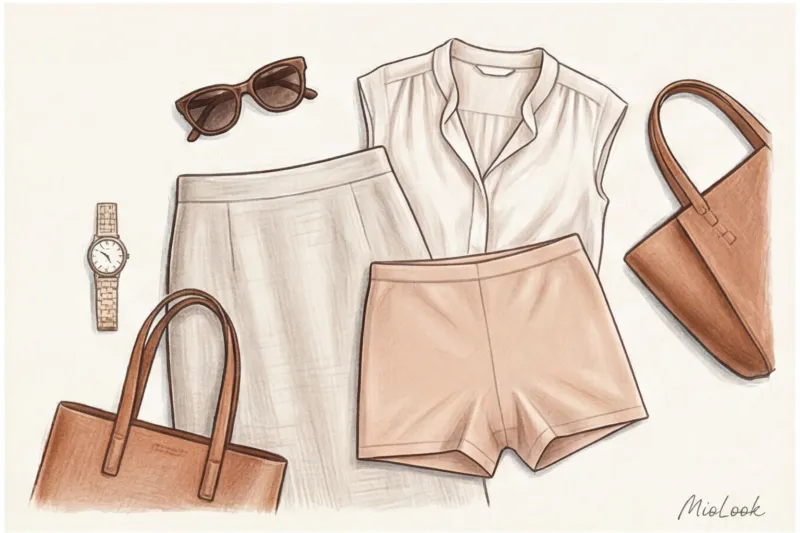
If you wear strict pencil skirts or light-colored summer pants made of flowing fabrics (linen, lyocell), forget about thongs. Many people think thongs are a cure for visible lines. In fact, under thin fabric, they often create a hideous "cut-off buttock" effect, ruining the natural silhouette.
Seamless culottes or nude shorts are much more elegant. They cover the widest part of the thigh, avoid creating lines, and also prevent chafing on the inner thighs in hot weather.
Not sure how to combine things?
Use the MioLook look generator—AI will select the perfect combinations from your closet, taking into account all layers of clothing.
Try MioLookA Stylist's Checklist: How to Choose Quality Seamless Underwear
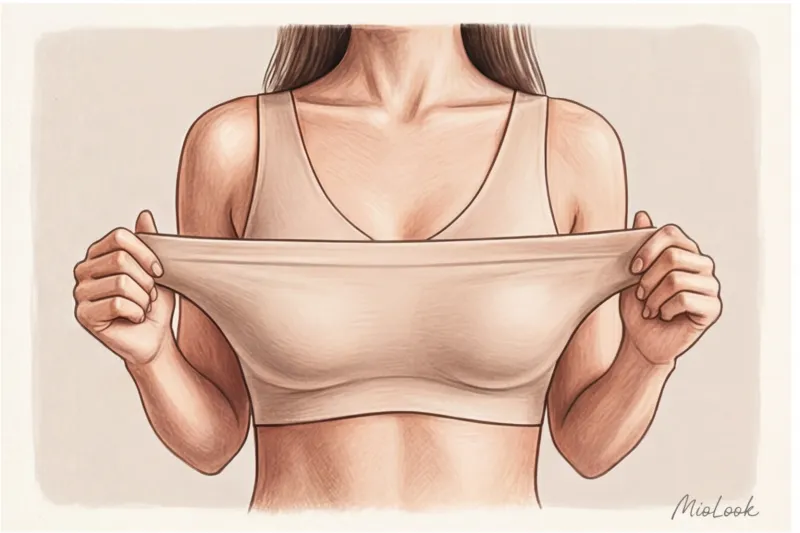
Over the years of working with clients in fitting rooms, I've developed a strict checklist. Before buying an item, perform these four micro-tests right there in the store:
- Tensile test: Gently pull the fabric at the waistband or armhole by 3-4 centimeters and release quickly. The fabric should spring back immediately, without forming any "waves." If the edge remains slightly deformed, the elastane is of low quality and will not last longer than three washes.
- Checking the gusset: In seamless panties, the gusset is often heat-sealed. However, premium brands always have it reinforced with thin cotton threads along the edges. A purely fusible gusset will eventually peel off in the washing machine.
- Twist test: If you're using a free-cut (laser-cut) model, run your finger along the edge with gentle pressure. If the edge immediately curls behind your finger, it will do the same on your body.
And perhaps the most fatal mistake I regularly see is buying seamless underwear "one size too small for a little bit of shapewear." Seamless underwear is not designed to sculpt your figure! Going one size too small will only achieve one thing—the soft elastic edges will dig into your skin, creating bulges where none existed before.
An eco-friendly approach: how to wash microfiber so it lasts for years
Sustainable fashion argues that buying three high-quality basic sets is much more eco-friendly than buying a dozen cheap ones that will end up in the trash within a month. But even the most premium polyamide blends can be ruined by one improper wash.
According to a McKinsey report (2023) on the life cycle of clothing, proper care extends the life of synthetic fabrics by 3-4 times. Here are the key rules for seamless garments:
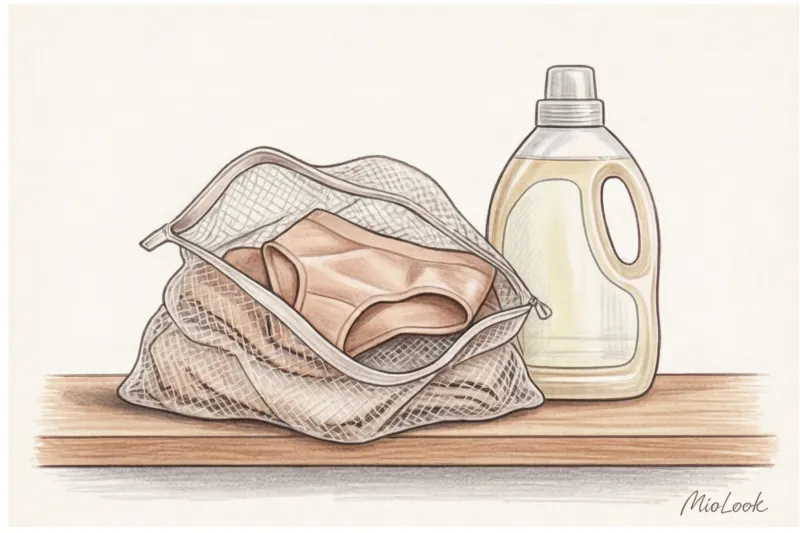
- Temperature conditions: Strictly up to 30-40 degrees Celsius. Elastane literally "cooks" and loses its elasticity in hot water, and the hot-melt adhesive used for flat seams begins to melt.
- The main enemy is the air conditioner: Never add fabric softener when washing microfiber or elastane. Fabric softener coats the fibers with a greasy film, which destroys the elasticity of the fibers and dissolves the adhesive. This causes the fabric to lose its breathability and quickly stretches.
- Laundry bags: If you're washing in the washing machine, be sure to use mesh bags. They'll protect the delicate, smooth fabric from getting caught in the zippers of other items. Dry these items flat, away from radiators.
The Foundation of Your Style: Where to Start Updating Your Base
Let's summarize. Seamless underwear isn't just a matter of comfort; it's a long-term investment in the perfect fit of the rest of your clothing. If your silk blouse doesn't look like the picture, perhaps you don't need a new blouse, but rather the right base layer.
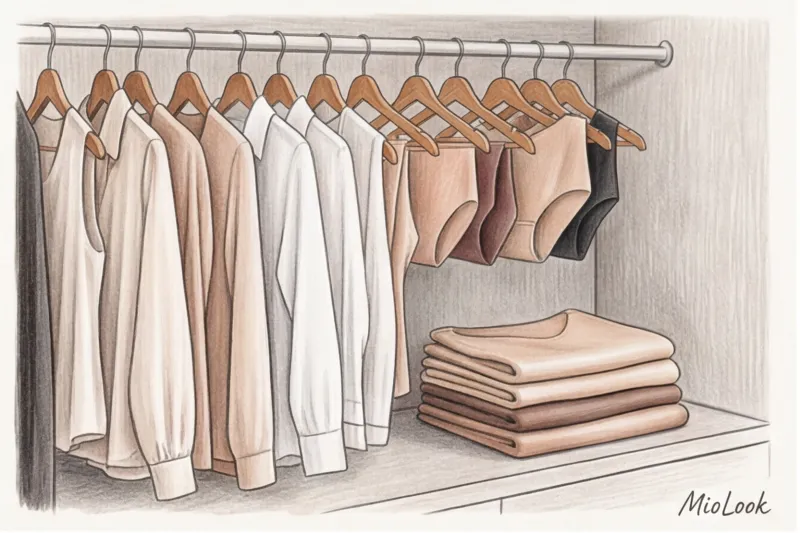
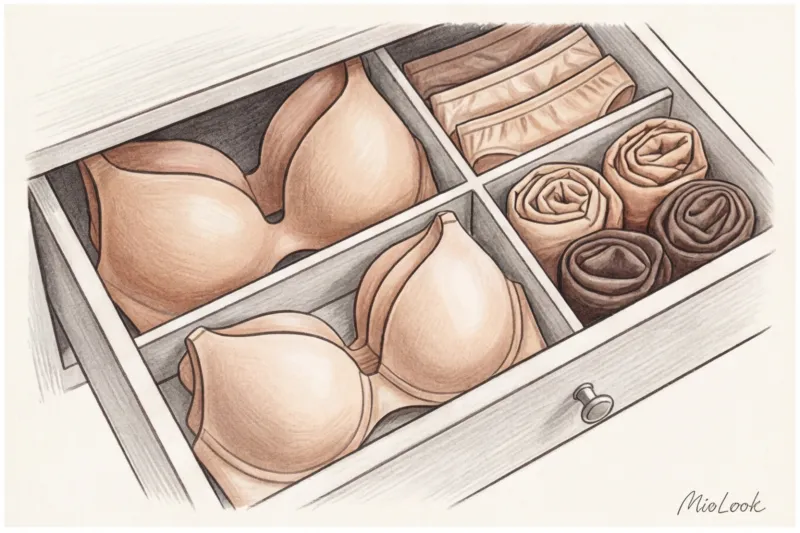
If you're looking to update your basics, I recommend starting with a universal minimum: two sets that perfectly match your skin tone (for light and sheer clothing) and one black set (for dark items). Take an honest inventory of your underwear drawer today. Get rid of anything that's lost its shape, has stretched edges, or causes discomfort.
Your style begins the moment you put on your underwear. Get this first step perfect, and the rest of your look will follow.