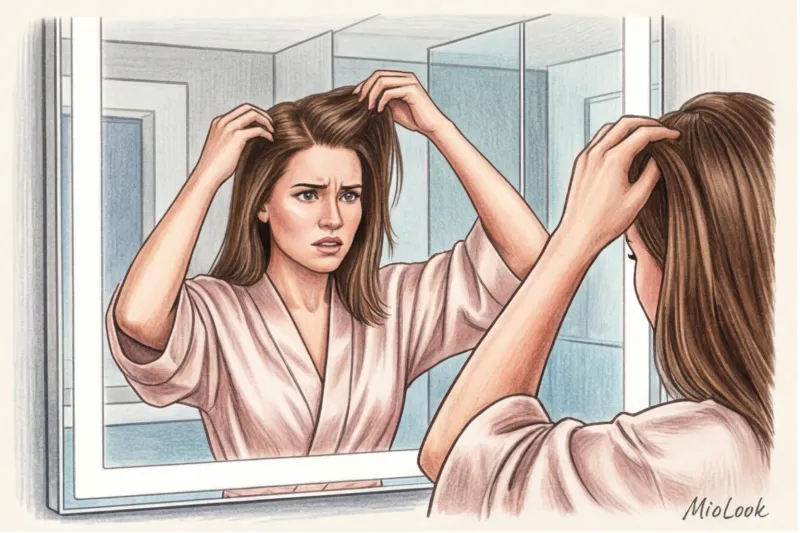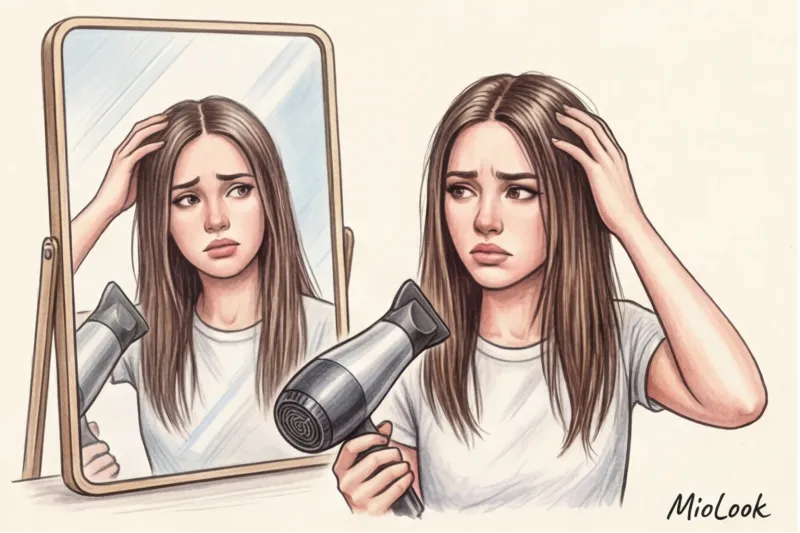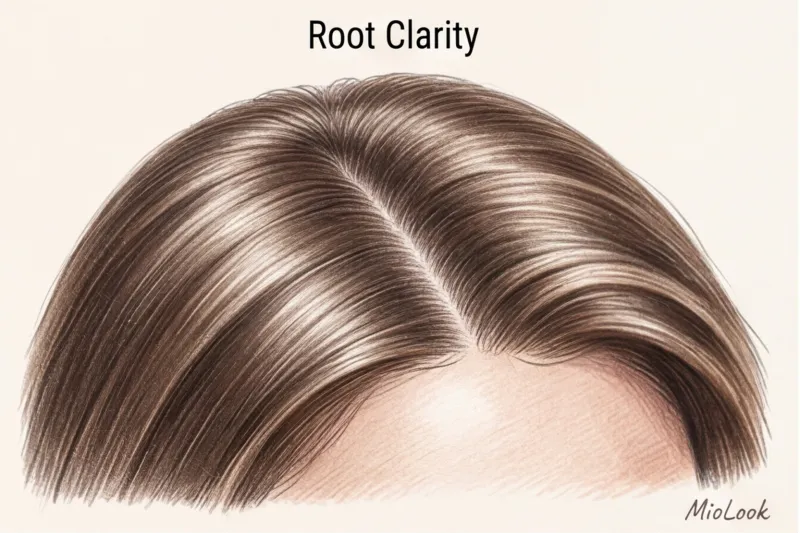
Over 12 years of working as a stylist on film sets and preparing clients for important events, I've learned one hard and fast rule: if the root volume looks heavy and flat, even a perfectly tailored €500 jacket will lose all its luster. Hair is the most important, most noticeable accessory of your look, something that can't be removed or hidden.
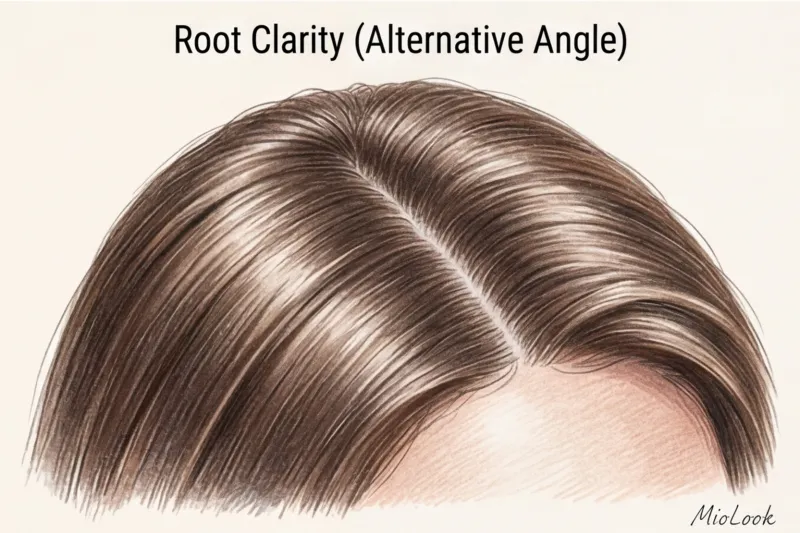
We're used to spending hours choosing our wardrobe and applying makeup, but we often forget that any expensive hairdo begins with a perfect "canvas." And that canvas can't be prepared by washing your hair alone. We've covered this foundation in more detail in our a complete guide to proper hair care for perfect styling Today I want to talk about a product that will change your routine forever.
A properly selected scalp peel is more than just a treatment from a trichologist. For a stylist, it's an essential "primer" essential for achieving airy root volume and long-lasting style that complements your signature look.
What is scalp exfoliation and why regular shampoo isn't enough?
Imagine this: you're getting ready for dinner, grab an expensive foundation, and apply it right over last night's makeup, dusted with street dust. Sounds like a beauty disaster, right? But for some reason, that's exactly what most women do with their hair.
Even if you wash your hair every day, regular cleansing isn't enough. The surfactants (surface-active agents) in basic shampoos are physically incapable of dissolving stubborn impurities. Research by cosmetic chemists shows that shampoo removes only 60–70% of the buildup of polymers. What's left at the roots?
- Silicones from rinse-off conditioners and masks that accidentally come into contact with the skin.
- Microparticles from dry shampoo and hairspray.
- Oxidized sebum (sebum).
- Urban dust and heavy metals from tap water.
Scalp peeling addresses this problem at the chemical level. It gently dissolves the bonds between dead skin cells and breaks down the stubborn polymer film. It's like a deep dry cleaning for your favorite cashmere coat—it allows it to "breathe" again.
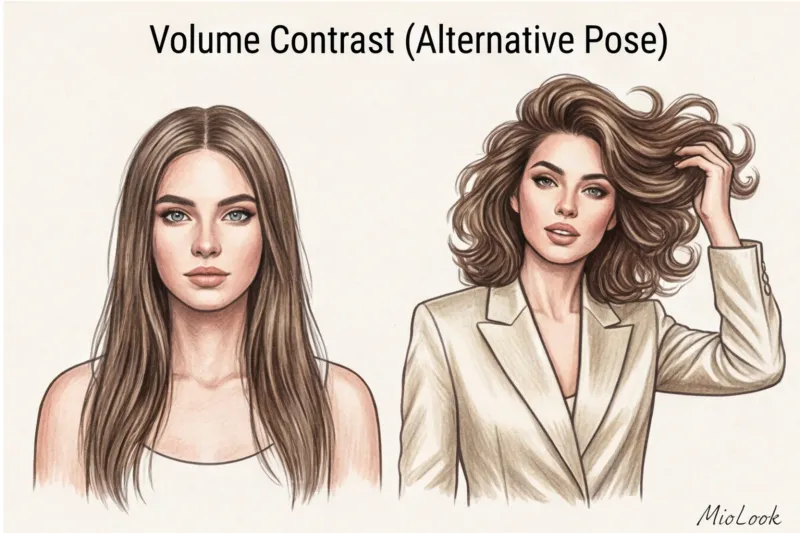
The Main Secret to Long-Lasting Hair: How Exfoliation Restores Root Volume
One of my clients, top manager Darina, once came to me before an important business conference in complete panic. "Isabella, recommend me the most durable hairspray! My hair falls out after two hours, it looks slicked back, and I feel insecure in this suit.".
I looked at her roots. The problem wasn't the hairspray. It was simple physics. Styling product residue and oil weigh down the roots by 15-20%. Gravity takes its toll, and the heavy roots pull the entire hair downward. If you spray a strong-hold hairspray on this uncleaned base, you'll get a "hard helmet effect"—your hair will be stuck together, dull, and stiff.
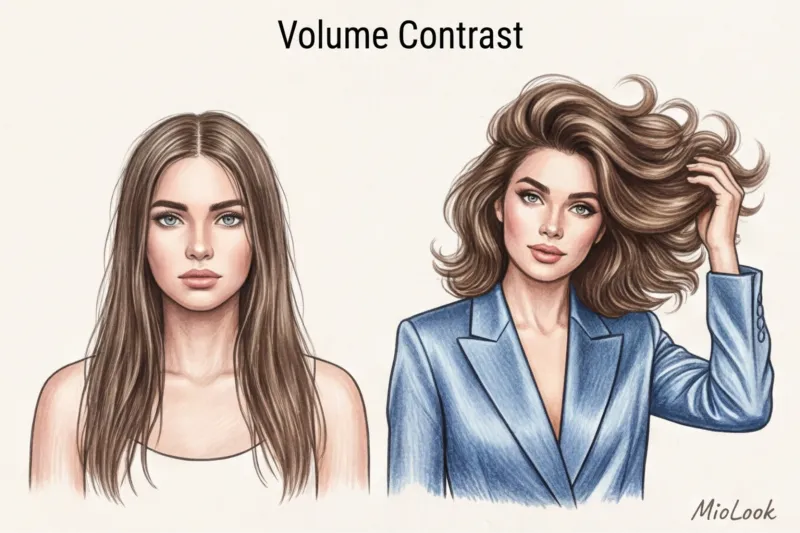
We introduced acid peels into Darina's routine, and magic happened without gallons of hairspray. The stylist's secret formula is: A deeply cleansed scalp + the correct angle of drying the roots with a brush = volume that lasts for 48 hours.
"A clean hair cuticle at the root acts like a microscopic mirror. When it's not clogged with silicones, the hair naturally reflects light, creating that expensive, glossy effect we see in commercials."
Access to MioLook for €0.99 — one-time payment
A smart AI stylist will create the perfect look based on your new luxurious hairstyle.
Get access — €0.99 onceAcids vs. Scrubs: Why I Ban My Clients from Physical Exfoliation
And now the most important thing. If you have a trendy jar of scalp scrub on your shelf containing sea salt, sugar, or, worse, crushed apricot kernels, throw it out right now. Yes, it's a popular trend, but from a hair physiology perspective, it's a crime.
I regularly consult with trichologists, and their verdict is unanimous. The sharp edges of abrasive particles (even the smallest ones) leave micro-scratches on the delicate scalp. Moreover, when rubbed, they literally strip the protective layer from the hair cuticle—a "sandpaper" effect. The result is frizz, breakage at the roots, and micro-inflammation.
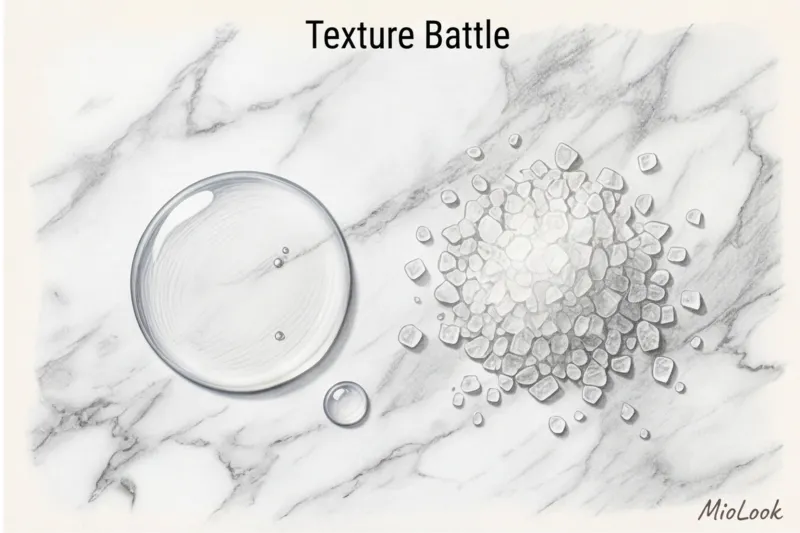
The future belongs to chemical exfoliation—acids (AHA and BHA). The ideal peel works without friction. You simply apply it, and the acids do their job. The gold standard, according to cosmetic chemistry, is BHA (salicylic acid). It's lipophilic, meaning it can penetrate sebum directly into pores, dissolving sebum plugs from the inside. The ideal pH for such a product for home use is 3.5 to 4.5.
Who needs exfoliation: a checklist for analyzing your routine
According to research from the European Hair Research Society (EHRS), scalp cell renewal occurs every 28 days, but this process slows down under the influence of stress, the environment, and age. Who needs urgent chemical exfoliation?
- For fans of dry shampoos and texturizing sprays. If you're like me during fashion weeks and can't live without these products, exfoliation is your insurance against hair loss.
- For those with oily skin. If your hair loses its freshness and sticks together into icicles by the evening of the first day.
- For those who dream of growing their hair longer. Clogged follicles physically interfere with the growth of new hairs and impair blood microcirculation.
- To everyone who has experienced peeling. (Important: do not confuse clinical dandruff, which requires medicinal antifungal agents, with banal flaking due to dryness and accumulation of dead skin cells).
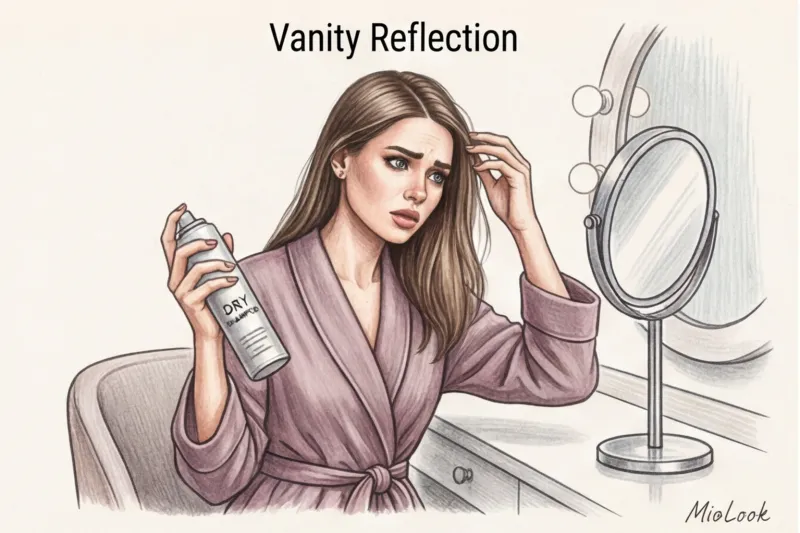
When peeling should NOT be done: I always warn my clients that acids are contraindicated for fresh wounds, exacerbations of psoriasis, eczema, and also on the day of coloring or bleaching (allow the skin to recover for at least a week).
How to properly use scalp peeling at home
This at-home procedure doesn't require any complicated skills, but it does require precision. Get your tools ready: you'll need a comb with a thin tail for creating partings, a couple of hair clips, and a towel.
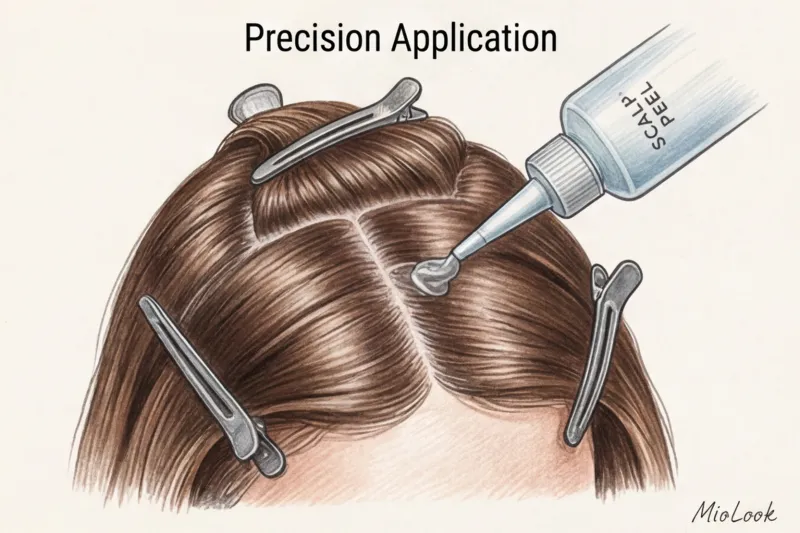
Step 1: Separation and Application
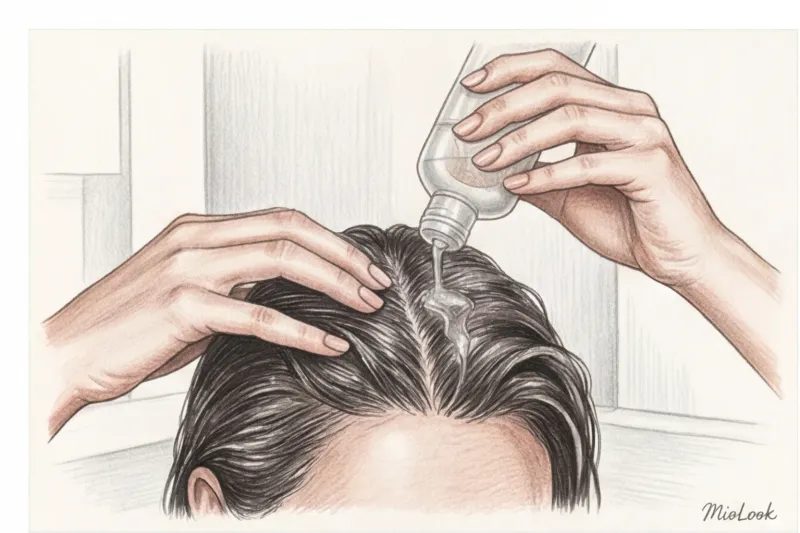
Apply the peeling product only to dry or slightly damp scalp (read the instructions for your specific product carefully, but the dry method is more effective). Part your hair into sections every 1–2 centimeters. Be sure to use a product with a long dispenser—the goal is to get the product directly onto the scalp, not smear it onto the roots.
Step 2: Massage and holding time
After application, gently massage with your fingertips. No nails! Just gentle, circular motions to distribute the product evenly. Then comes the most important part: timing. Strictly adhere to the manufacturer's recommended time (usually 5-15 minutes). Acids don't work on the principle of "longer is better."
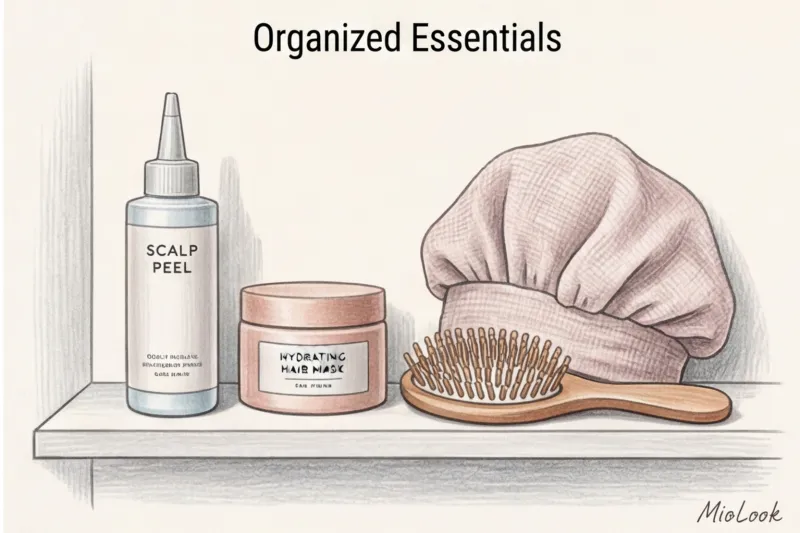
Step 3: Rinsing and Aftercare
Rinse your hair thoroughly with warm (not hot!) water. Then, be sure to double-cleanse with your basic shampoo—surfactants are essential to stop the chemical reaction of acids and wash away dissolved impurities. Since exfoliating can slightly dry out your hair at the roots, be sure to apply a good moisturizing mask to the lengths.
Your perfect look starts here
Join thousands of users who look flawless every day with MioLook, choosing a hairstyle to match their wardrobe.
Get access — €0.99 onceCommon mistakes: why hair may look worse after the procedure
I once had a woman come to me with a literally "burned" and irritated scalp. It turned out she was so impressed by the volume at the roots after her first use of the peel that she started using it every day before washing her hair! What happened? Over-cleansing.
If you use acids more than once a week, you disrupt the lipid barrier. Your skin panics and starts producing sebum at triple the rate to protect itself. Your hair becomes greasy within a couple of hours.
The second common mistake is applying the product to the lengths of the hair. Acid peels are designed for thick scalps. If applied to porous hair, the ends will become stiff, dry, and prone to breakage.
Integrating into your beauty routine: creating the perfect foundation for your style
To make exfoliation your trusted ally and not your enemy, establish a clear schedule. For oily scalps and styling enthusiasts, exfoliate once every 7-10 days. For normal and dry skin, exfoliate once every 14-20 days.
As a stylist, I always recommend syncing your hair care routine with your event calendar. Exfoliate the night before an important event: a job interview, a corporate event, a date, or a photo shoot. The next morning, your hair will look flawless, volume will be effortless, and your hair will have that "old money" look—lively, bouncy, and naturally shiny.
Well-groomed hair is the invisible foundation of your style. You can wear a €40 Zara dress or a €400 premium silk blouse—if your hair looks fresh, voluminous, and healthy, the entire look automatically conveys luxury and confidence.