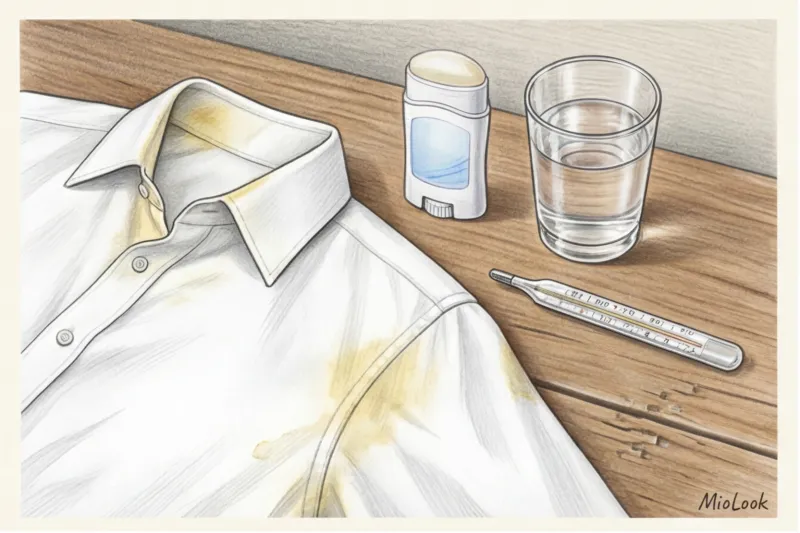
Paris Fashion Week, 2018. With exactly 15 minutes left before the model's runway appearance, a telltale pale yellow stain under the armpit suddenly appears on a flawless white silk Celine blouse. In situations like these, a stylist has no room for error and no time for dry cleaning. That's when I first used the aspirin trick, which saved the show. Over the years of working with premium fabrics, I've learned one thing: most people ruin light-colored clothes simply because they try to clean them using "grandmother's" methods, without understanding the chemical nature of the stains.
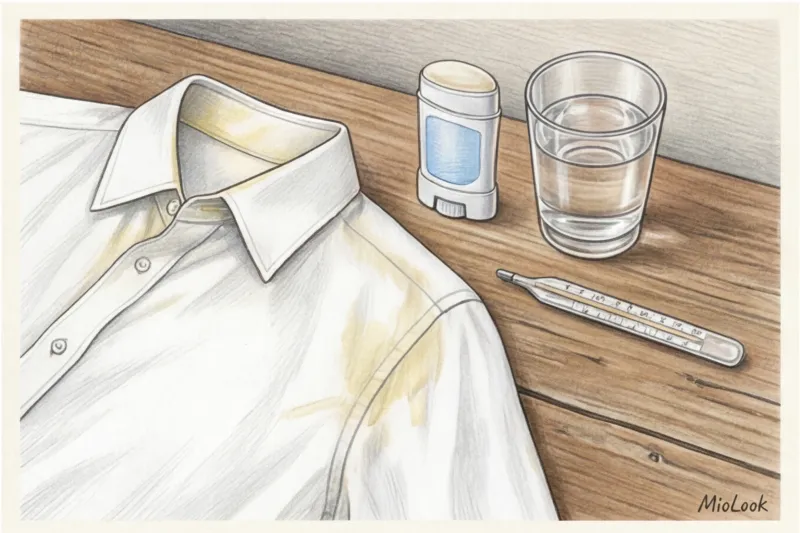
In this article I will tell you, How to remove yellow stains from white clothes without damaging the fabric's structure. We'll explore why traditional products often backfire and learn how to tailor care to specific fabrics. We've covered the basic principles of creating a long-lasting wardrobe in more detail in our The complete guide to proper clothing care: stylist tips.
Anatomy of the problem: why white things turn yellow and how we provoke it
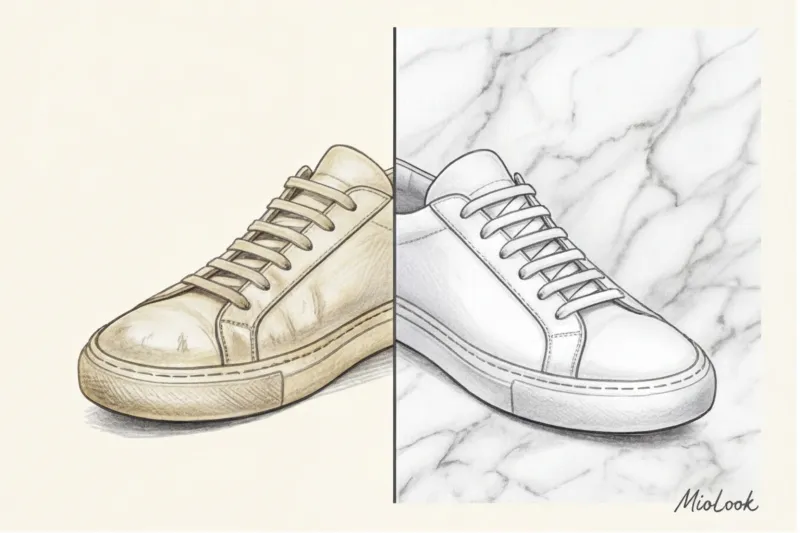
White in a wardrobe is a visual status symbol. But it requires an understanding of basic textile chemistry, not just the ability to press the cotton button on a washing machine. Yellow underarm stains aren't just dirt or ordinary sweat. They're the result of a complex chemical reaction.
According to research by the Hohenstein Institute textile laboratories (2022), aluminum salts, found in 95% of mass-market antiperspirants, react with protein secretions from our bodies and components of laundry detergent. This forms a stable polymer compound that literally becomes woven into the fibers.
"The biggest mistake my clients make is trying to wash these stains in hot water at 60–90°C. High temperatures don't clean the fabric; they act like an oven: the protein coagulates and becomes permanently baked into the fibers. After such washing, 8 times out of 10, the stain becomes permanent."
This is why you should always start saving something with cool water – no hotter than 30 degrees.
Whiteness Destroyers: Why Chlorine Makes Clothes Yellower
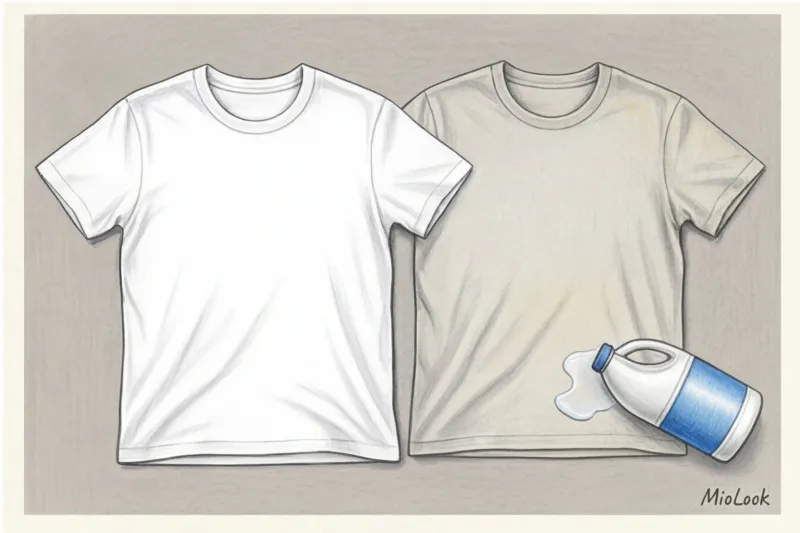
There's a persistent myth that chlorine bleach is a panacea for every white item. This is a dangerous misconception. Chlorine doesn't act like paint, but rather as an aggressive solvent.
I'll let you in on a fabric manufacturers' secret: about 90% of the white cotton and synthetics on the shelves of brands like Zara, COS, or Massimo Dutti aren't naturally crystal white. The natural hue of these fibers is a grayish-yellow (ecru). To achieve dazzling whiteness, factories impregnate the fabric with special optical brightening agents (fluorescent whitening agents).
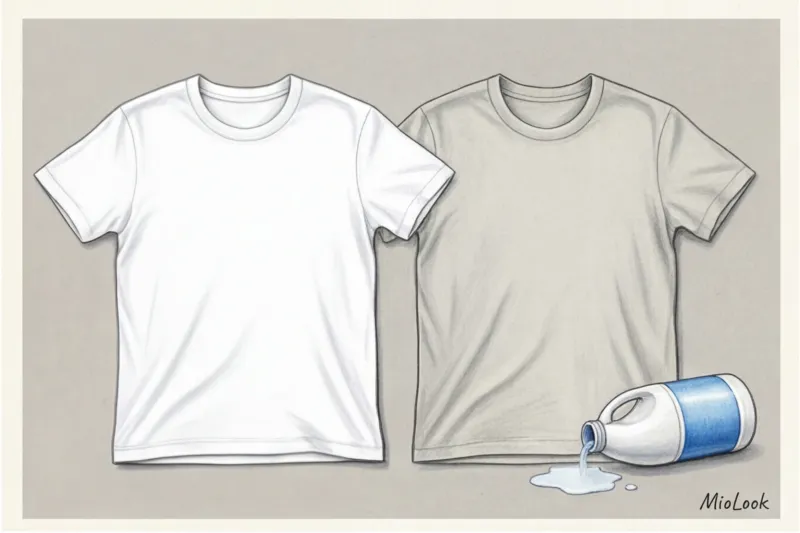
When you soak your favorite shirt in bleach, the harsh chemical simply washes away or destroys this optical pigment. The result is a perfectly clean, germ-free garment, but hopelessly yellowed. This process is irreversible.
Access to MioLook for €0.99 — one-time payment
A smart AI stylist will select the perfect look and help you organize your updated wardrobe.
Get access — €0.99 onceHow to remove yellow stains from white items: choosing the right method for the fabric
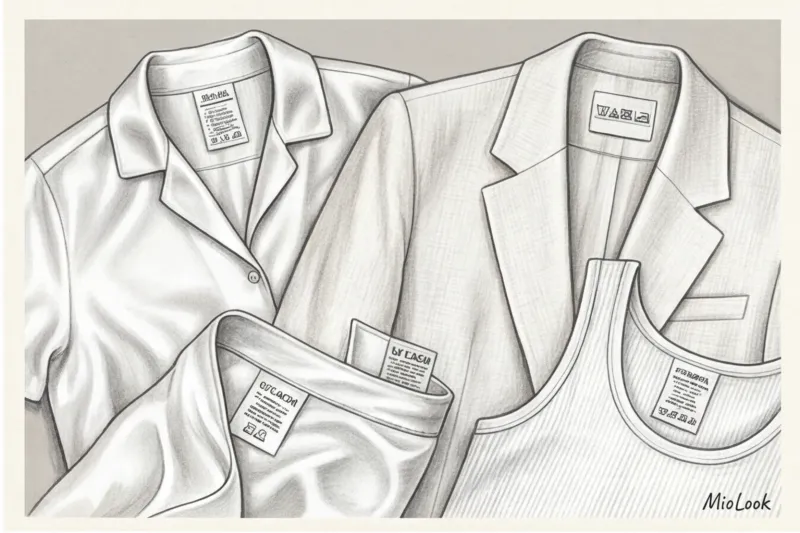
In my practice, I adhere to the philosophy of smart care. The first rule I teach my clients is: care labels are often overly cautious, but the fabric content label is always right. A method that will save a heavy cotton garment is guaranteed to ruin a silk blouse.
Heavyweight cotton and linen: basic shirts and t-shirts
High-density natural plant fibers (150 g/m² and above) withstand alkaline environments well. For basic cotton T-shirts or heavy linen jackets, a paste of baking soda and 3% hydrogen peroxide works best.
- Mix baking soda and peroxide until it reaches the consistency of thick sour cream.
- Apply the mixture to the yellow stain and rub it in gently with an old toothbrush (using soft, circular motions to avoid damaging the weave of the threads).
- Leave for 30-40 minutes, then wash in cool water.
Limitation: This method is not suitable for thin cambric - abrasive soda particles can leave micro-cracks.
Delicate fabrics: silk, viscose and fine blends
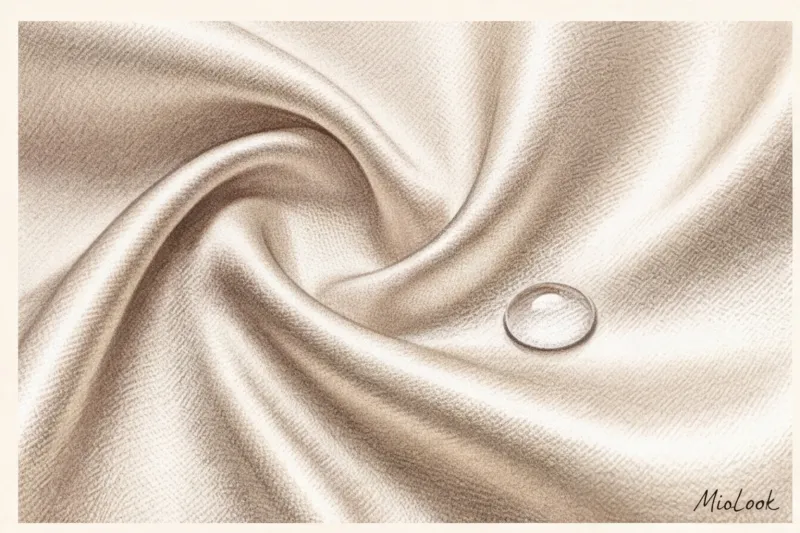
Silk is an animal fiber composed of protein (fibroin). If you use popular enzyme powders or harsh stain removers on it, the chemicals will literally "eat" the fabric. It will lose its luster and unravel after just one wear.
This is where a simple aspirin solution comes in handy. Its acetylsalicylic acid works extremely gently: it breaks the bonds within the protein sweat stain without damaging the silk protein itself.
How I saved that very blouse at the fashion show: I crushed three aspirin tablets, dissolved them in half a glass of lukewarm water, dipped them into the stain, and left them for 10 minutes. Then I simply blotted them with a damp towel. The yellowing was gone instantly.
Synthetics and elastane: sportswear and bras
Modern sports bras and underwear contain high percentages of elastane or spandex. These fibers absolutely do not tolerate bleach and high temperatures—they cause the elastic to melt, lose elasticity, and the fabric to become wavy.
For synthetics, I recommend using classic gall soap. Natural gall works as a powerful natural fat and protein breaker. Wet the stain with cold water, lather generously, let sit for 15 minutes, and rinse thoroughly.
Top 3 Professional Recipes for Removing Stubborn Yellow Sweat Stains
If the stain is already several months old, regular washing is useless. Over the years of testing, I've selected three recipes that really work on different types of stains.
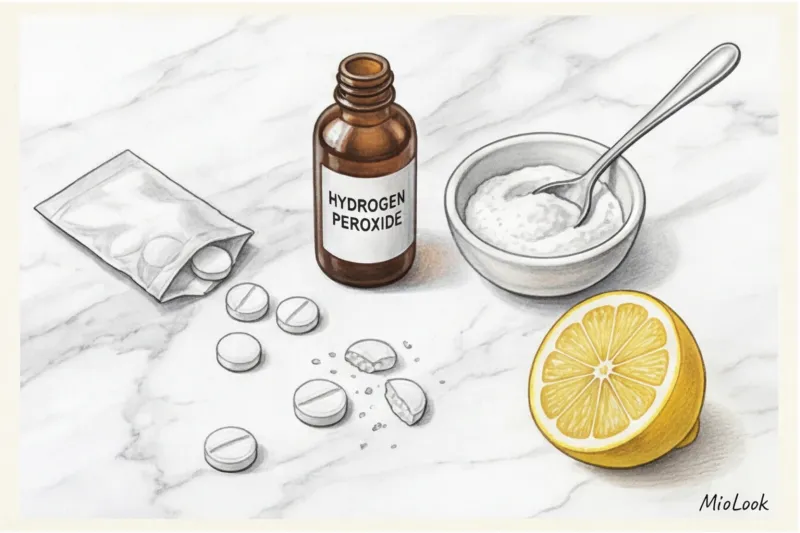
- Recipe #1: Aspirin Punch. Ideal for organic stains. Dissolve 4-5 effervescent or regular aspirin tablets in a glass of warm (not hot!) water. Soak the stained area for 2-3 hours. Suitable for medium-weight shirts.
- Recipe #2: Enhanced triplet. Mix 2 tablespoons of hydrogen peroxide (3%), 2 tablespoons of baking soda, and 1 teaspoon of clear dish soap. Why use dish soap? It breaks down the sebum that holds the stain in, the baking soda acts as a mild abrasive, and the hydrogen peroxide safely lightens the stain. Leave it on for 30 minutes.
- Recipe #3: French Trick (Lemon + UV). This method is often used by vintage dealers in Europe. Apply freshly squeezed lemon juice to the stain, add a pinch of salt, and place the item in direct sunlight for 2-3 hours. According to WGSN Textile Care (2023), ultraviolet light combined with citric acid acts as a powerful natural bleach. Attention: Only works on white cotton and linen! Synthetics may yellow even more in the sun.
Your perfect look starts here
Join thousands of users who look flawless every day with MioLook, keeping their belongings in perfect condition.
Get access — €0.99 onceMarie Antoinette's Secret: How to Restore Crystal Whiteness to Grayed Clothes
What should you do if an item doesn't have localized stains, but has simply acquired a dull grayish-yellow hue over time? This is where fashion history and color theory come to the rescue.
In the royal laundries of 18th-century France, fabrics were never boiled to death. Marie Antoinette's laundresses used blue pigment. Why? Because the human eye is designed to perceive even the slightest blue undertone as a dazzling, crystal-clear white. But a yellowish undertone is perceived by the brain as "dirty" and "old."
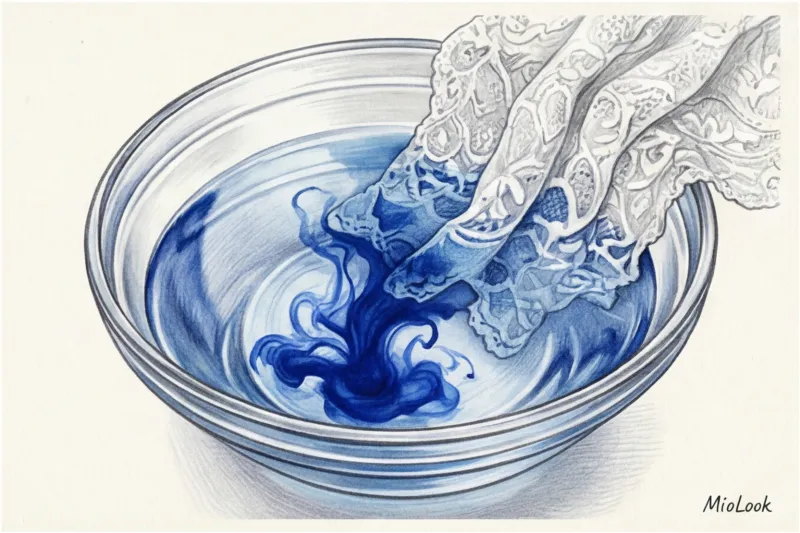
Today, this method is called bluing. Liquid bluing doesn't remove stains; it creates an optical illusion by neutralizing the yellow pigment on the color wheel. Simply add a couple drops of a special solution to the water during the final rinse (the water should turn a pale blue, like a clear sky, not a deep blue), and your shirt will once again look as if you just took the tag off the store.
Prevention: How to wear white so it stays classy
Prevention is the best way to avoid any problem. My clients who invest in white shirts from The Row or Jil Sander strictly adhere to three rules of prevention.
First, choosing an antiperspirant is critical. When wearing expensive white clothing, use deodorants without aluminum salts (look for the label aluminum-free ). They may not be as good at blocking moisture, but at least the sweat won't enter into that destructive chemical reaction.
Secondly, implement the "one-wear rule." Any white item that fits directly next to your skin should be washed after the first wear. Even if you've only worn it for a couple of hours and it seems squeaky clean, invisible sebum and sweat will oxidize within a few days, revealing yellow stains.
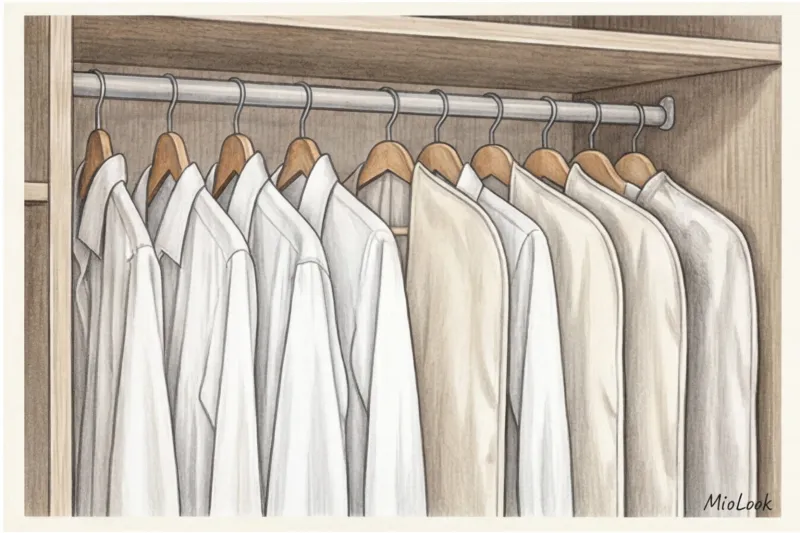
Third, pay attention to storage. Have you noticed that white items turn yellow simply by hanging in your closet for months? This happens due to oxidation of the fibers and a reaction with the plastic. Never store light-colored fabrics in plastic dry cleaners—they don't breathe. Invest in breathable unbleached cotton storage bags (they cost between €15 and €30 each) or line knitwear in drawers with dark blue tissue paper to block out light.
Checklist: A Quick Algorithm for Saving a White Shirt
To summarize, let's formulate a clear action plan. If you spot a yellow spot, don't panic and follow this algorithm:
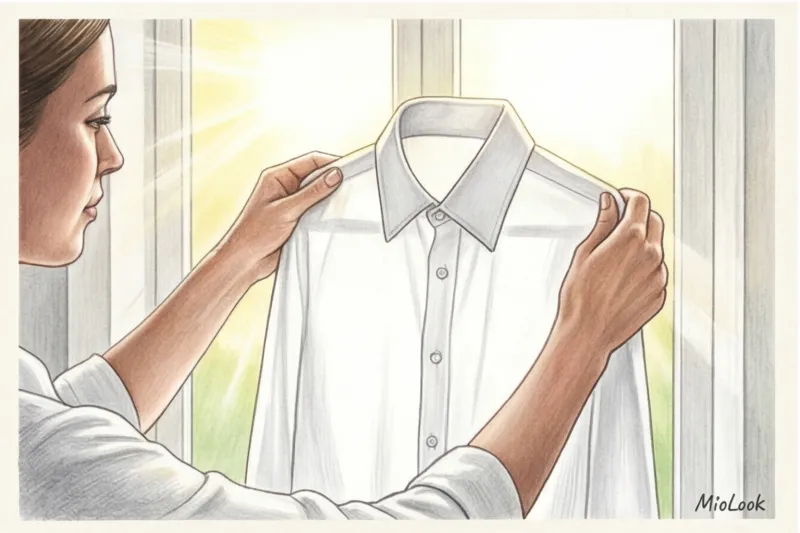
- Stop hot water. Never wash the stain at temperatures above 30°C.
- Read the ingredients. Check the label inside the side seam. Silk and viscose require delicate handling (aspirin), while heavy cotton can withstand heavy artillery (baking soda and hydrogen peroxide).
- Local work. Apply the stain remover only to the stained area for 30–40 minutes; do not soak the entire item in the aggressive solution.
- Liquid products. Wash whites with gels rather than powders—they rinse better and contain fewer optical brighteners, which can damage fabrics over time.
- Proper drying. Never dry white items with stain removal marks on a hot radiator or in a dryer—if any protein microparticles remain, they will become permanently baked in.
White isn't a fuss-free color, but it generously rewards those who know how to care for it. Understanding how fibers and chemistry work transforms wardrobe care from a chore into a conscious process. And remember: your best investment isn't just buying an expensive white shirt, but knowing how to keep it looking impeccable for years to come.