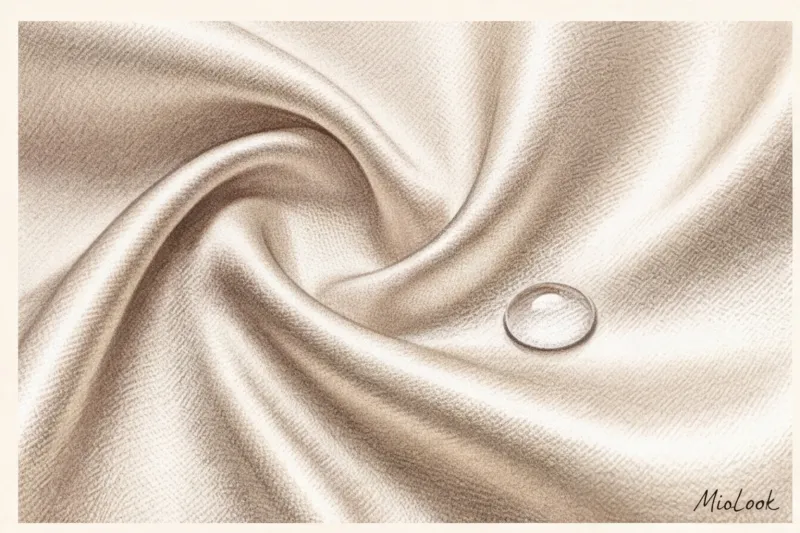
I remember that evening down to the last second. Ten minutes before leaving for an important evening event, my client, gesturing with her glass, dropped a drop of olive oil from her bruschetta right on the center of a vintage Hermès silk scarf. Panic, tears, and a hand instinctively reaching for a harsh mass-market stain remover. "Stop!" I screamed, snatching the bottle. If that chemical mixture had touched the delicate silk, we would have gotten a whitish burnt stain, and our €400 investment would have been reduced to dust. Five minutes later, the problem was solved with some ordinary baby powder from her makeup bag.
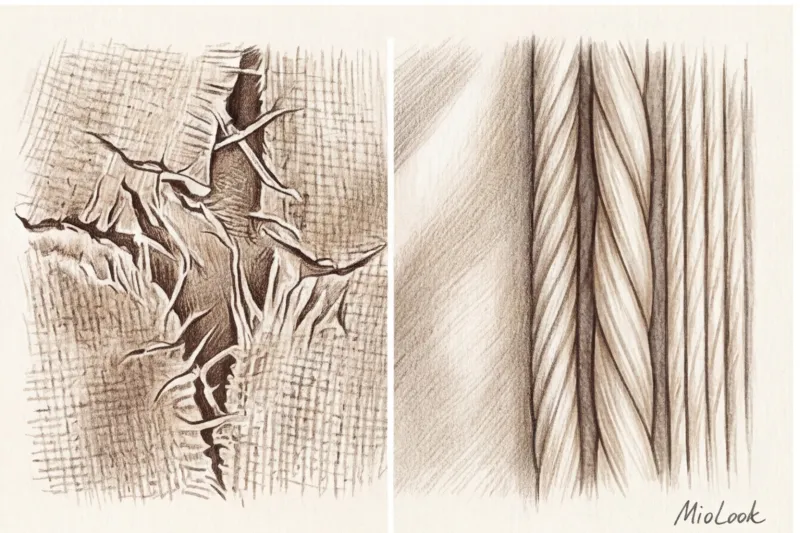
For me, as a personal stylist, the question is, How to remove a stain without chemicals — these aren't just "grandmother's tricks." They're a crucial tool for protecting your wardrobe investment. Knowing how to properly handle fabrics distinguishes a conscious woman with a prestigious wardrobe from one who endlessly buys new items to replace damaged ones. We've covered this philosophy of careful handling in more detail in our the complete guide to eco-friendly wardrobe care , and today I want to share practical secrets that save my capsules every day.
The Hidden Cost of Cleanliness: Why Harsh Chemicals Are Killing Your Basic Wardrobe
Let's talk about money. In styling, there's a concept Cost-per-wear (cost per wear). Imagine: you bought a perfect COS cashmere sweater for €150. If you wear it 30 times, the cost per wear is €5. But if after the second wear you get a coffee stain, spill chlorine bleach on it, and the fibers mat, your cost per wear is €75. Financial disaster.
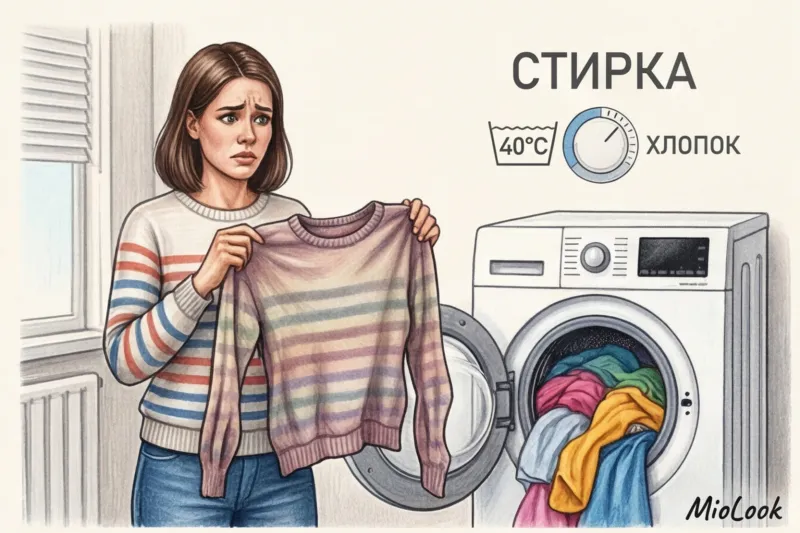
According to research by WGSN textile laboratories (2024), regular use of chlorine-containing bleaches reduces the lifespan of a basic cotton T-shirt by 30-40% after just five washes. What's happening at the micro level? Chlorine and aggressive enzymes literally "eat away" at the elastane. Ever noticed how your favorite jeans suddenly start to bubble at the knees, or how your expensive jacket loses its shape? This isn't "poor fabric quality," it's the inner interlining and spandex being destroyed by chemicals.
Nowadays, most brands, from mass-market to high-end luxury, are switching to blended or eco-friendly fabrics (lyocell, modal, cupra), which absolutely cannot withstand harsh pH levels. Therefore, eco-friendly care is no longer a hippie choice; it's the foundation of a modern, smart wardrobe.
Access to MioLook for €0.99 — one-time payment
A smart AI stylist will select the perfect look for any occasion from your items.
Get access — €0.99 onceThe Internet's Biggest Myth: Why You Shouldn't Mix Baking Soda and Vinegar
And now I'm going to rant. Open any home improvement forum, and you'll see this "magic" recipe: "Sprinkle baking soda on the stain, pour vinegar, wait for it to fizz, and the stain will disappear." In 12 years of working with fabrics, I've seen dozens of items ruined by this advice.
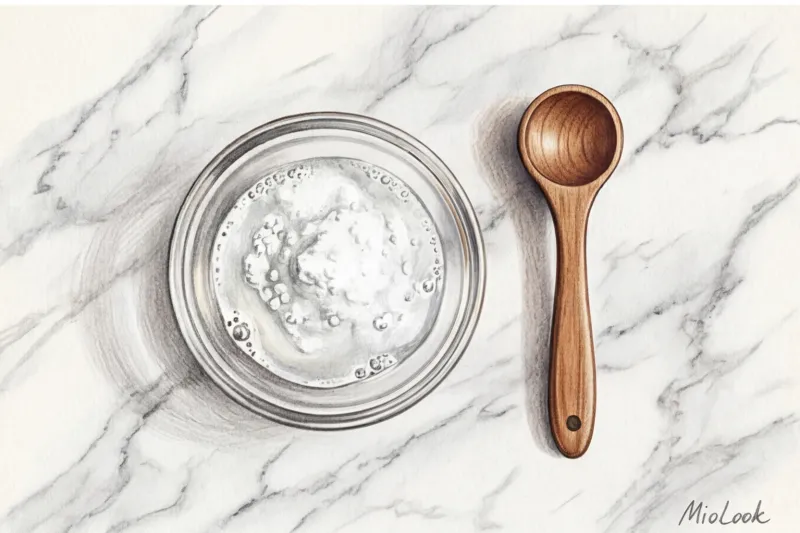
Let's remember our high school chemistry lessons. Baking soda is an alkali. Vinegar is an acid. What happens when you mix them? A violent reaction, releasing carbon dioxide and... forming water with a small amount of sodium acetate (essentially salt). You simply pour slightly salty water onto the stain. The fizzing foam creates a nice illusion of work, but it's completely useless against dirt.
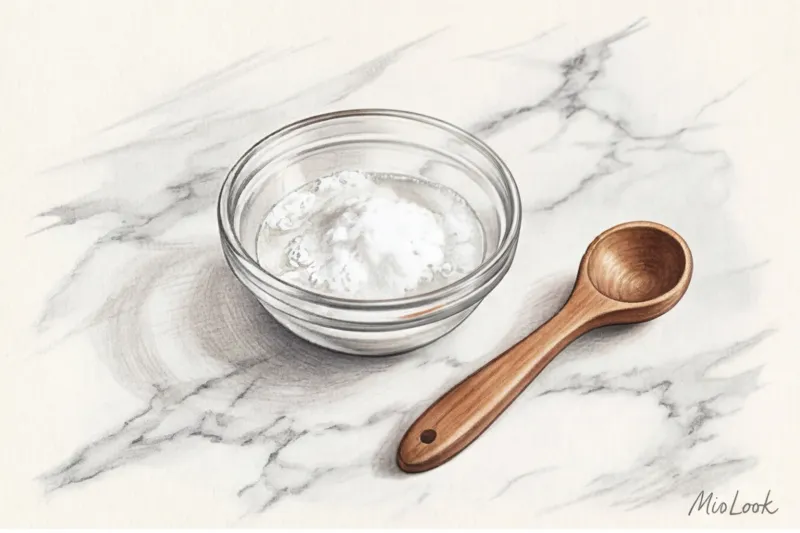
"The basic rule of dry cleaning: use separate cleaning products! Acid (vinegar) dissolves mineral deposits and fixes color. Alkali (baking soda or laundry soap) breaks down fats and organic matter. Mixing them negates the effectiveness of both."
The only fair limitation I should warn you about is that eco-friendly products don't work as well on old, baked-on stains from machine oil or synthetic dyes. In 5% of cases, you'll need dry cleaning, but the other 95% of stains can be removed at home.
How to remove stains without chemicals: quick fixes for different fabric types
The first thing any stylist does before trying to save an item is check the inside label. The solution is always matched to the fabric, not the stain. What saves linen will kill silk.
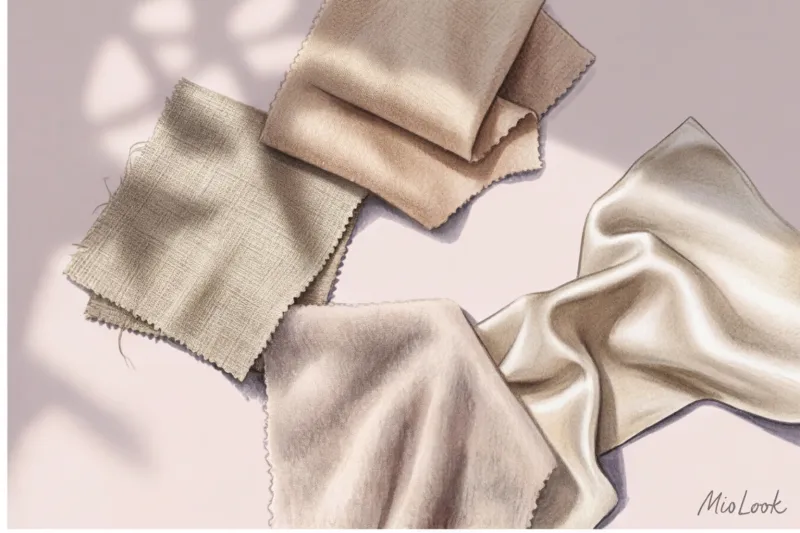
Cotton and flax: steadfast fighters
Natural plant fibers can withstand a lot. My favorite trick for white summer linen suits is a natural UV bleach. Squeeze lemon juice directly onto the berry or wine stain, sprinkle with a light sprinkling of salt, and place the item in direct sunlight for a couple of hours. The UV light combined with citric acid works wonders. And for white office shirts, regular pharmacy hydrogen peroxide (3%) is ideal—it works like an oxygen bleach without damaging the threads.
Wool and cashmere: a delicate approach
Animal fibers (wool, cashmere, alpaca) are made up of a protein called keratin. Remember: any strong alkali (even baking soda) makes wool stiff and brittle. If you get a stain on a sweater from your basic knitted capsule , use only cold water and a drop of glycerin to soften the dirt, then wash with soap root or baby shampoo.
Silk and Viscose: Saving Investments
Viscose is the most insidious fabric of our time. It's beautiful when dry, but as soon as the fibers get wet, they lose up to 50% of their strength! If you start vigorously rubbing a wet spot on a dress from Zara or Massimo Dutti, you'll simply tear a hole. Therefore, for silk and viscose (including caring for silk pajamas ) I use the "home dry cleaning" method. A fresh grease stain should be generously sprinkled with cornstarch or talc, pressed lightly, and left overnight. The powder will draw the grease out of the fibers without a single drop of water.
Top 5 eco-friendly products that every woman should have in her wardrobe
I always recommend that my clients store this set not under the bathroom sink, but rather in a beautiful basket right in their dressing room. Speed is key to success.
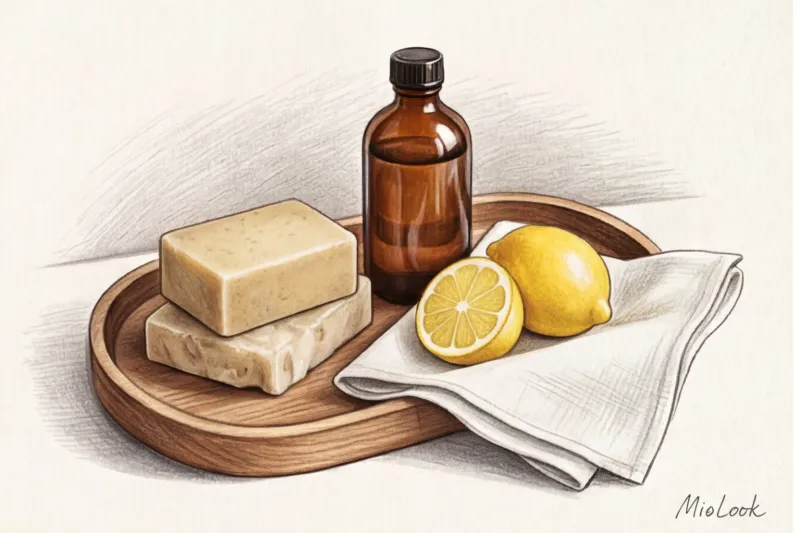
- Laundry (coconut) soap: The perfect natural alkali. Coconut soap (costs about €3-5) cleans collars and cuffs better than any expensive spray.
- Pharmacy glycerin (liquid): My secret weapon. It's amazing at softening stubborn stains (especially coffee and tea) without damaging the dye.
- Hydrogen peroxide 3%: A bottle for €1-2 is the best eco-friendly alternative to chlorine. Indispensable for white t-shirts and shirts.
- Baby talc without additives: First aid when going to a restaurant. Drop a drop of sauce? Sprinkle some talcum powder on it immediately before heading to the restroom.
- White table vinegar: An odor neutralizer and color fixer. Perfectly rinses away soap residue, restoring softness to clothes (replaces synthetic fabric softener).
Your perfect look starts here
Join thousands of users who look flawless every day with MioLook and create your own capsule collection.
Get access — €0.99 onceStains specific to: espresso, wine, lipstick, and sweat
Every stain has its own "character." Working on shoots where boutique items cost thousands of euros, I've learned to cope with even the most terrifying disasters.
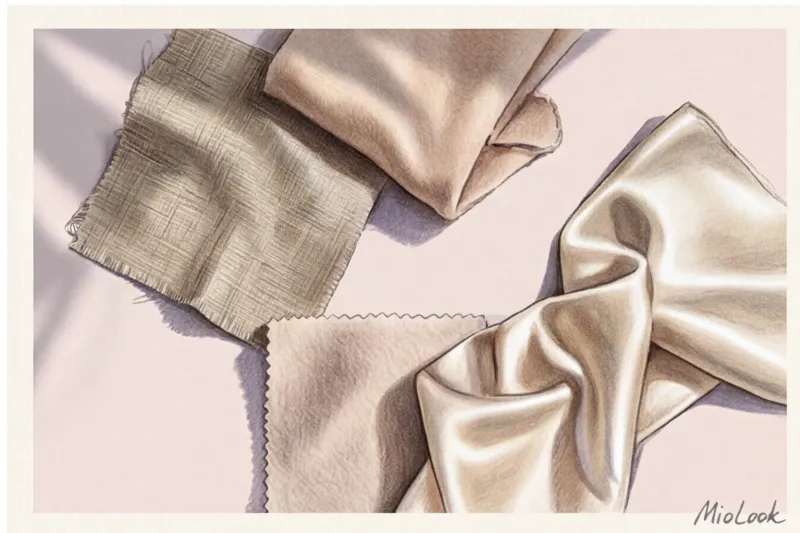
Coffee and tea. They contain tannins—fast-acting plant dyes. If the stain is on thick cotton, stretch the fabric over a sink and pour boiling water on it from a height of half a meter. The boiling water literally "breaks through" the tannins. But if it's silk, only glycerin and cold water are recommended!
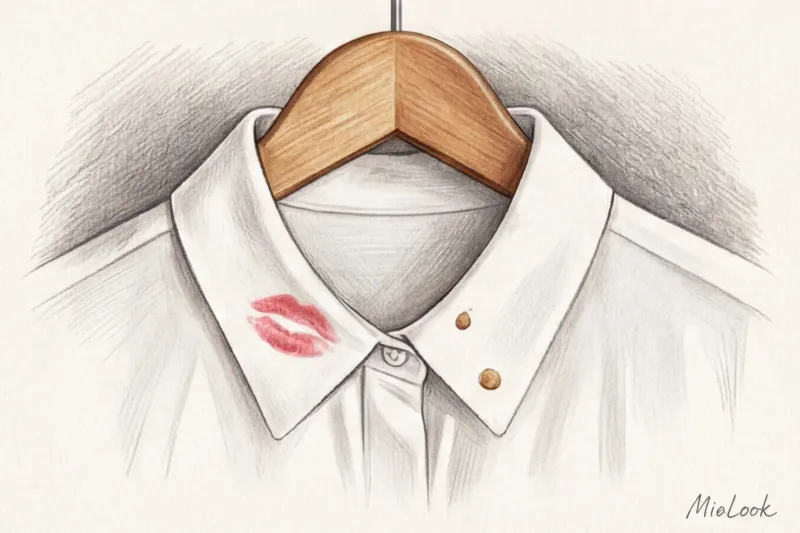
Cosmetics (lipstick, foundation). The biggest pain point for business women: Foundation is pigment mixed with oil. Water is the enemy here! Take a cotton pad, soak it in regular micellar water (the kind you use to remove makeup), and gently blot the collar. Micelles capture oil and dirt without smearing them.
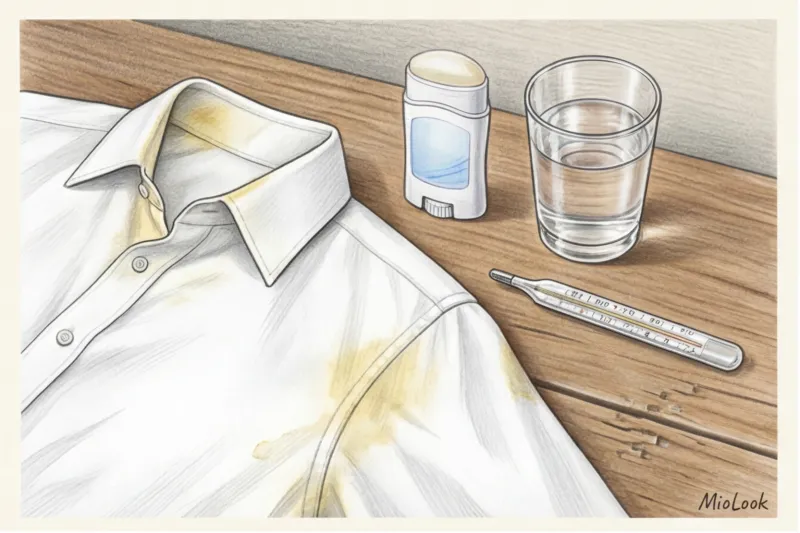
Yellow sweat stains. They appear due to the reaction of aluminum salts (from antiperspirants) with proteins in sweat. Regular washing powder only makes the yellowing worse. The solution: crush 2-3 tablets of regular aspirin (it contains salicylic acid), mix with water to form a paste, and apply to the stain for an hour. To prevent this problem from bothering you at all during important presentations, I recommend reading our article on... On which fabrics are sweat stains completely invisible?.
Checklist: 5 Golden Rules for Eco-Friendly Stain Removal
Here's a step-by-step guide I give to all my clients after a wardrobe review. Take a screenshot or write it down:
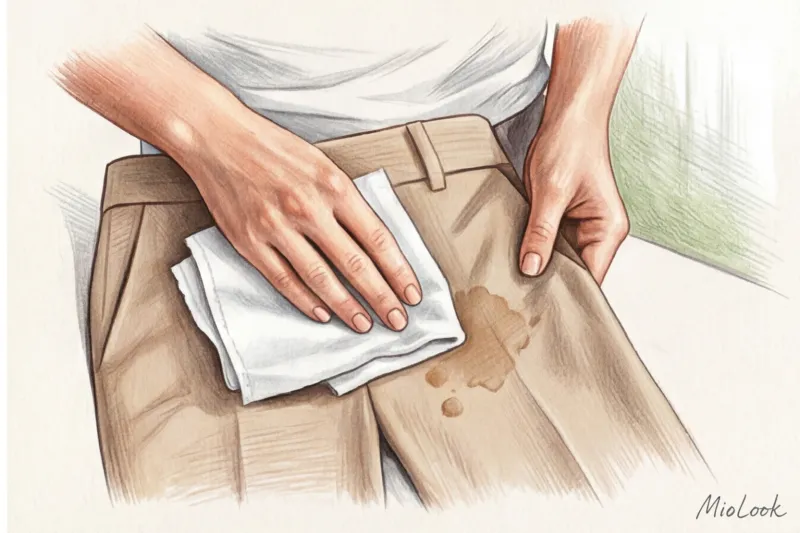
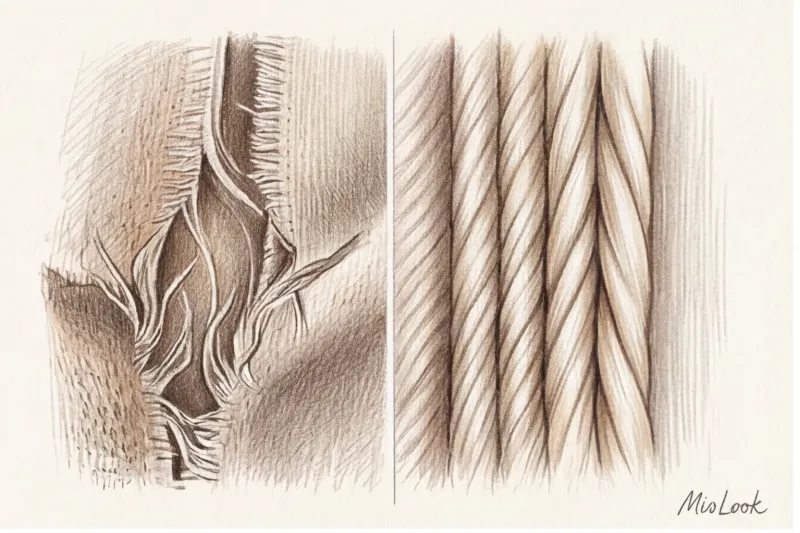
- 1. Blot, don't rub. Friction destroys the twist of the thread. A whitish stain appears that can no longer be removed with paint. Only gentle, treading movements can be used.
- 2. From the edges to the center. If you start blotting the stain from the center outward, you'll end up with a huge halo. Work straight toward the center of the stain.
- 3. Temperature conditions. Never use hot water on protein stains (blood, milk, sweat). The protein will "cook" and become permanently fixed in the fibers. Only ice water.
- 4. Test drive. Test any product (even lemon juice) on the inside seam first.
- 5. Time factor. A fresh stain can be removed in 5 minutes. A stain that's been in the laundry basket for a week will require a lot of effort.
By the way, adding things to MioLook virtual wardrobe It's a stunning psychological shift. When you see your things digitized, like a real collection, you lose the urge to carelessly toss them in the washing machine. You begin to treat them like a curator treats works of art.
Invest in care, not in endless shopping
In a world where we're forced to follow fast-paced trends and constantly update our wardrobes, taking care of our clothes is a form of elegant rebellion. According to a 2023 McKinsey study, extending the life of clothing by just nine months reduces its carbon footprint by 20-30%. But for me, this isn't just about ecology, it's also about self-respect.
Knowing how to remove a stain without chemicals saves you hundreds of euros every year. That money is better spent on a luxurious pair of Italian shoes or theater tickets than on another basic white T-shirt to replace the ruined one. Your wardrobe is a reflection of your life. Care for it with love, using gentle, natural products, and your clothes will look flawless for years to come.