Imagine this: you put on your favorite, perfectly-fitting leather jacket, step outside, and instead of an aura of confidence, you're enveloped by... the sour smell of old sweat or mustiness. Sound familiar? In 14 years of working as a stylist, I've learned one hard and fast rule: a cheap smell can instantly ruin even the most expensive look. And the worst thing you can do in this situation is generously douse your jacket with your favorite perfume.
Leather items are an investment. They're designed to last for decades and age gracefully, acquiring a refined patina. But this process is impossible without proper maintenance. We've already discussed the basic principles in more detail in our a complete guide to caring for leather items , but today I want to address the most delicate issue.
In this article, I won't advise you to soak an expensive item in liters of vinegar. We'll examine the chemistry of the process and find out How to remove odor from a leather jacket safely, preserving its texture, color and your status.
The Anatomy of Smell: Why Skin Absorbs Fragrances (And Why Perfume Makes It Worse)
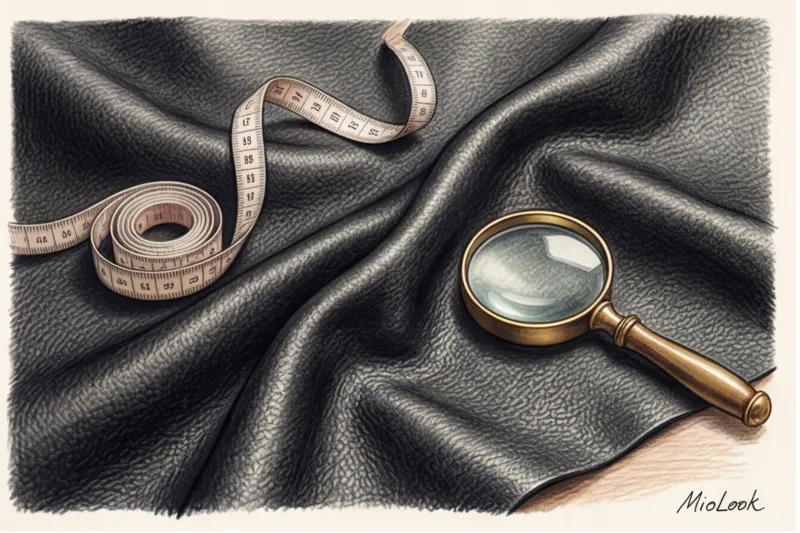
To defeat your enemy, you need to understand how it works. Genuine leather is a living, incredibly porous material. It breathes, releases, and absorbs moisture almost like our own skin.
If you're wearing a jacket made of faux leather (polyurethane), the situation is different. The synthetic material creates a greenhouse effect. You sweat more, the moisture has nowhere to evaporate, and bacteria begin to rapidly multiply in the lining. With genuine leather, sweat and sebum penetrate deeper—into the very structure of the leather (the outer layer of the hide).
"The worst mistake I regularly see clients make is trying to mask the smell of sweat with perfume. The alcohol in perfume dries out the skin, and the mixture of perfume, sweat bacteria, and natural materials creates that unbearable 'second-hand smell' that's almost impossible to get rid of."
Alcohol acts as a solvent: it doesn't kill bacteria in the pores, but rather "imprints" them deeper into the fabric, destroying the protective oil layer. So, if your jacket no longer smells fresh, put down the bottle of Chanel and move on to life-saving measures.
Access to MioLook for €0.99 — one-time payment
A smart AI stylist will find the perfect look with your favorite leather jacket.
Get access — €0.99 onceHow to remove odor from the inside of a leather jacket: working with the lining
In my experience, 8 out of 10 complaints about "odorous leather" have nothing to do with the leather itself. The Pareto principle applies: 80% of the unpleasant odor is concentrated in 20% of the garment's surface area—specifically, the lining in the armpit and collar areas.
The lining (especially if it's cheap polyester rather than breathable viscose) acts as a sponge for bacteria. We wrote about which materials to choose to avoid such situations in the article. Fabrics that don't show sweat stains: A guide for speakers.
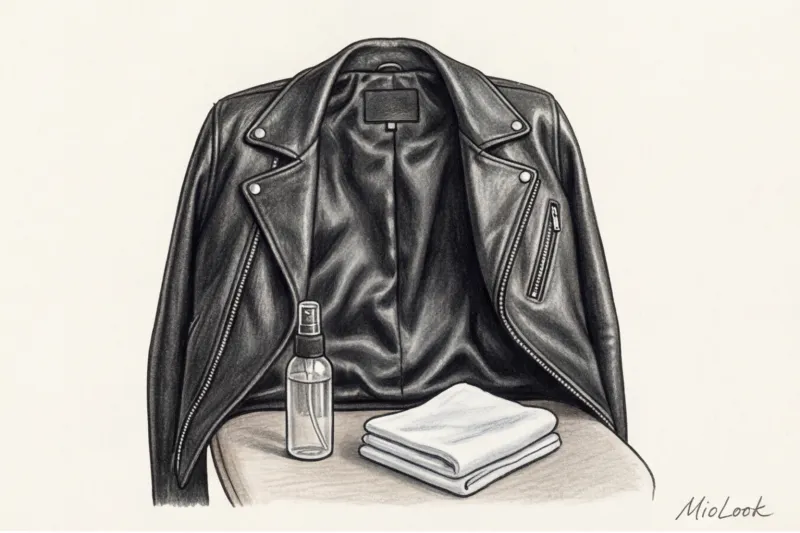
How can I safely clean the lining without getting the leather wet?
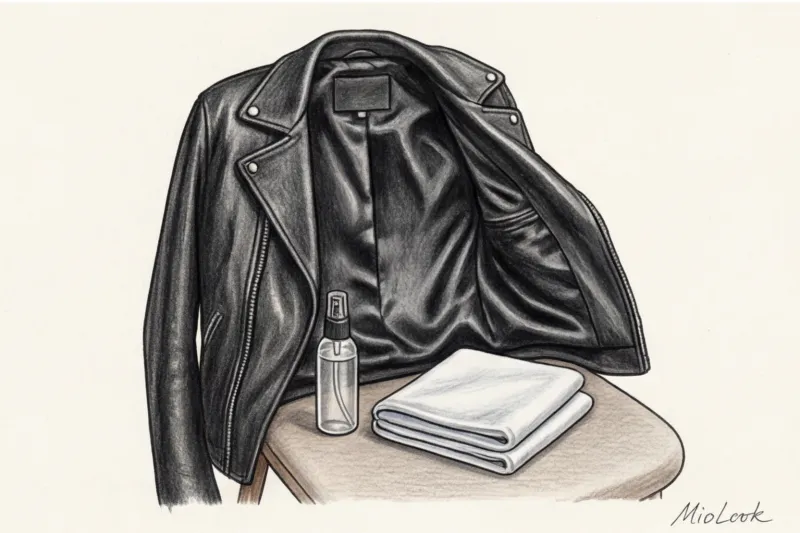
- Turn the jacket inside out. This is a necessary step—we need to isolate the outer skin from any liquids.
- Hang the item on a wide hanger.
- Get a small spray bottle. We want a fine mist, not a jet of water.
- Apply the cleaning solution strictly to the lining seams in the armpit and armhole areas.
- Gently blot (do not rub!) the wet area with a dry microfiber cloth.
Enzyme Cleaners: Stylists' Secret Weapon
If you ask a professional leather restorer how they remove odors, they won't mention baking soda or soap. They'll say enzymes.
Enzyme sprays are biologically active compounds. Enzymes don't mask odor with lavender or citrus. They literally "eat" the proteins and lipids that make up sweat bacteria. Simply spray an enzyme spray (available in household chemicals or pet stores—yes, pet odor removers work perfectly here) onto the lining and let it dry. The odor will disappear, along with the source.
Your perfect look starts here
Join thousands of users who look flawless every day with MioLook. Digitize your wardrobe in minutes.
Get access — €0.99 onceSaving Your Wardrobe: How to Get Rid of the Damp and Mild Smell After the Off-Season
In the fall, clients often come to me with the question: "I took my favorite leather jacket out of the closet, and it smells like grandma's trunk." This smell is caused by mold spores, which thrive in the darkness, lack of ventilation, and slight dampness of closed walk-in closets.
Most people's first instinct is to hang their jacket out on the balcony in the blazing sun. This is a fatal mistake. Direct sunlight literally "bakes" the leather's natural oils. The pigment fades, and the jacket itself becomes stiff and prone to microcracks.
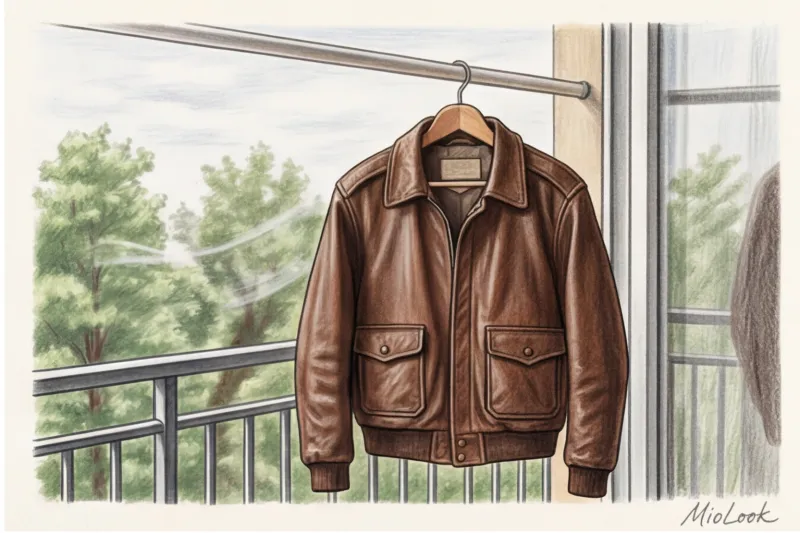
I recommend the "dry bath" method. Place the jacket on a glassed-in balcony or in a room with an open window, but in the shade. Leave it there for 2-3 days. A gentle breeze will gently draw out excess moisture, along with any damp smell, without damaging the fabric.
Folk remedies: what works and what will ruin your item forever
The internet is full of life hacks that make skin specialists' hair stand on end. Let's examine popular methods from a chemical perspective.
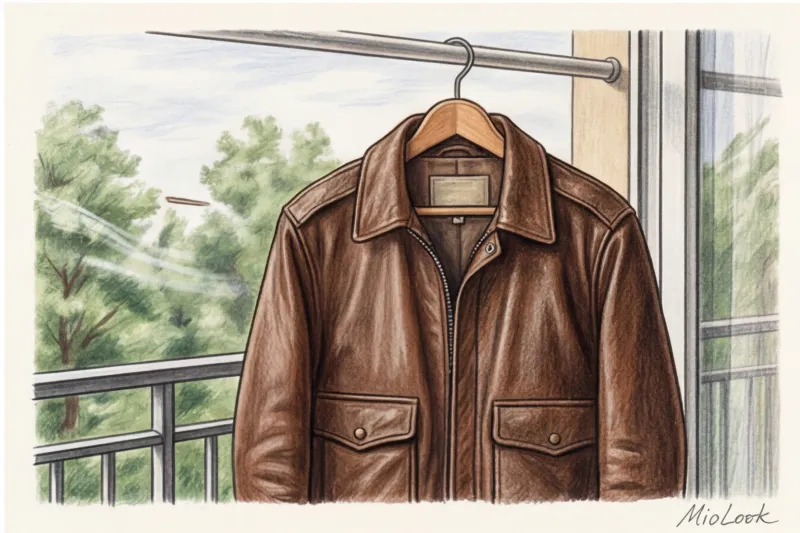
One day, a client came to me in tears. She'd tried to remove the smell of sweat from her vintage Yves Saint Laurent jacket by generously rubbing baking soda directly into the leather under her arms. The result? The leather in those areas had shriveled, turned pale, and become as brittle as cardboard. The €2,000 garment was irreparably ruined.
Why did this happen? According to the international organization Leather Working Group (LWG), during the tanning process, genuine leather acquires a slightly acidic pH balance—between 4.5 and 5.5. Baking soda is a strong alkali (pH around 9). Contact with the leather disrupts its protective barrier, causing chemical burns and drying out the material. Never rub baking soda into your facial skin!
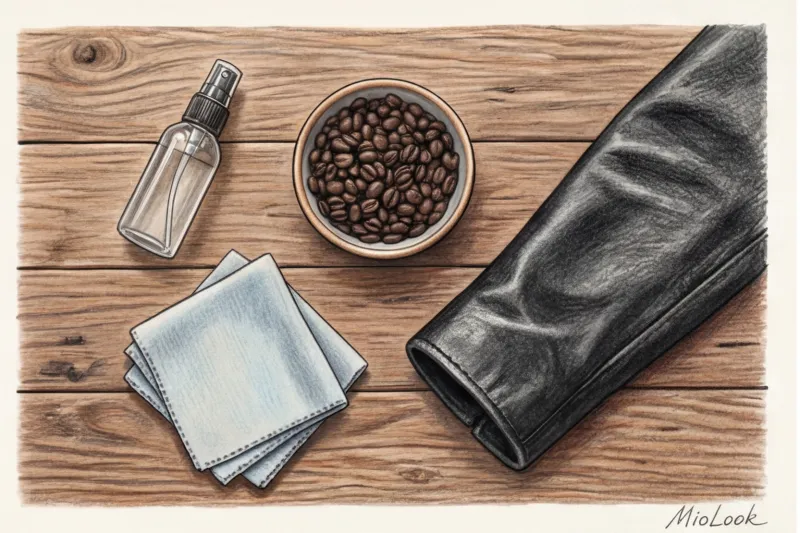
What you can actually use at home:
- Coffee beans: An ideal and safe absorbent for light odors. Place your jacket in a large cotton bag, place a cloth bag filled with freshly roasted coffee beans in the bottom, and zip it up for 3-4 days. The jacket will absorb the light, expensive coffee scent.
- Vinegar: Applies only in a weak concentration (1 part table vinegar to 3 parts water) and only For spraying onto the fabric lining. The acetic acid kills the fungus that causes the musty smell.
Professional ozonation and dry cleaning (when home methods fail)
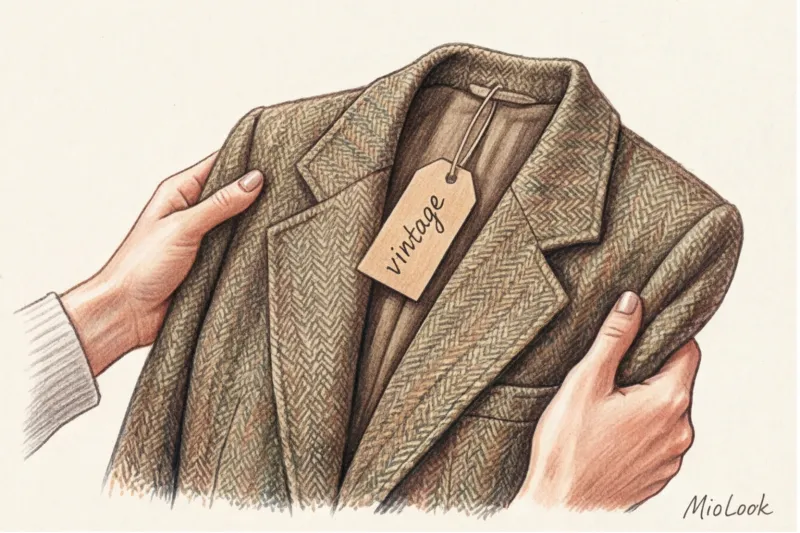
There are situations when household magic is powerless. If you bought a vintage jacket or a second-hand item, it carries a "history"—the sweat, perfume, and lifestyle of its previous owner. Here, you need to resort to heavy artillery.
Many people take their jackets straight to the dry cleaner. I always warn you: traditional dry cleaning (using perchloroethylene) strips leather of its natural oils. After an unsuccessful dry cleaning, your jacket may become stiff, lose its color, or shrink half a size.
My absolute favorite for status and vintage items is ozonation How does it work? The jacket is placed in a special chamber where ozone gas (O3) is introduced. Ozone oxidizes and completely destroys any odor molecules at the cellular level. No water or harsh solvents are used. This is the only 100% safe investment in odor restoration, leaving your item smelling like you just walked out of the boutique.
Ready to get started?
Try the MioLook plan for free—no commitments required. Organize your closet with technology.
Get access — €0.99 onceA stylist's checklist: how to store a leather jacket so it smells like leather
As we discussed in the article Capsule Wardrobe: The Complete Guide Proper storage of essential items increases the lifespan of your items by at least three times. Prevention is always cheaper than restoration. If you want to eliminate unpleasant odors from your closet forever, implement these four rules:
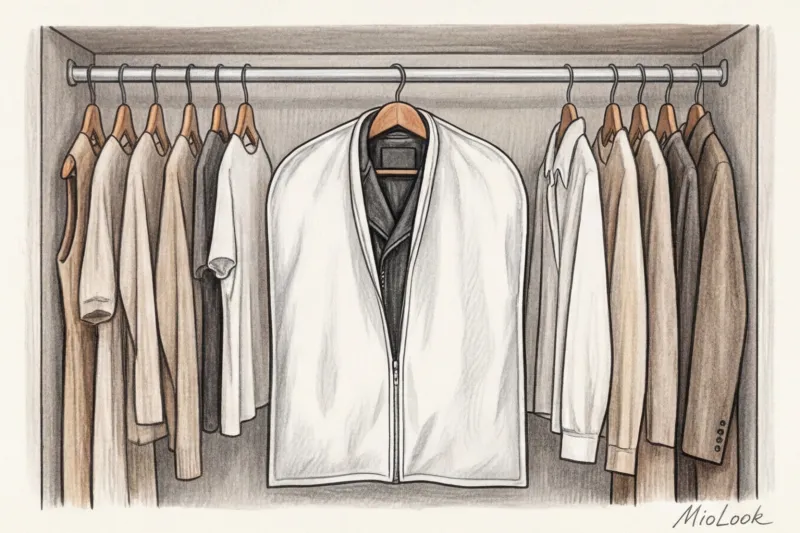
- Refusal of plastic. Never store leather in the plastic bags they give it to you in dry cleaners. The leather will suffocate. Buy breathable cotton bags—they allow air to pass through but protect against dust.
- The right hangers. Thin wire hangers can distort the jacket's shoulders. Use only wide (3-4 cm) wooden hangers. They not only maintain their shape but also ensure proper air circulation inside the zipped jacket.
- Natural sachets. Place a sachet of natural cedar shavings or dried lavender in your closet. Important: the sachet should hang nearby, but do not touch the jacket itself, so that the essential oils do not leave stains on the skin.
- The 24-hour rule. Your skin needs rest. If you've been caught in the rain or have been sweating heavily throughout the day, don't immediately hang your jacket in a cramped closet. Let it air out in an open room for 24 hours.

A leather jacket is a piece with character. It adapts to your habits and your lifestyle. Take good care of it, avoid harsh chemicals, and it will reciprocate—it will fit like a second skin, exuding only the subtle, refined scent of a luxurious material.