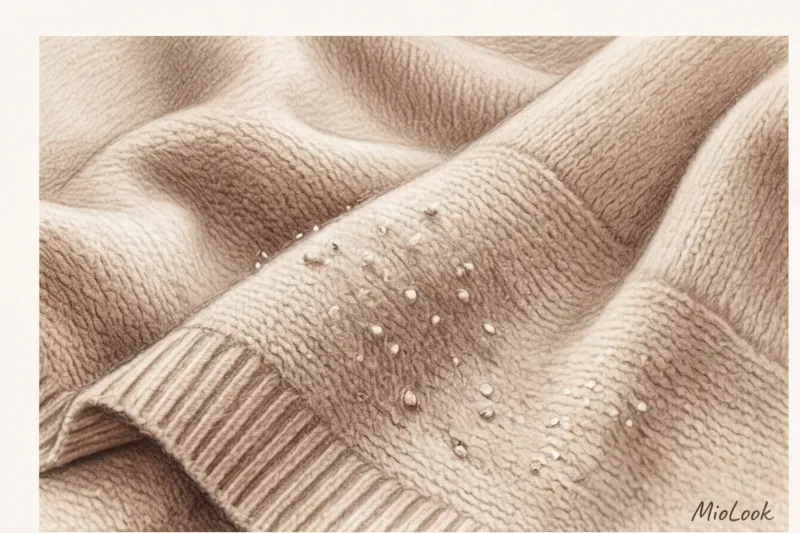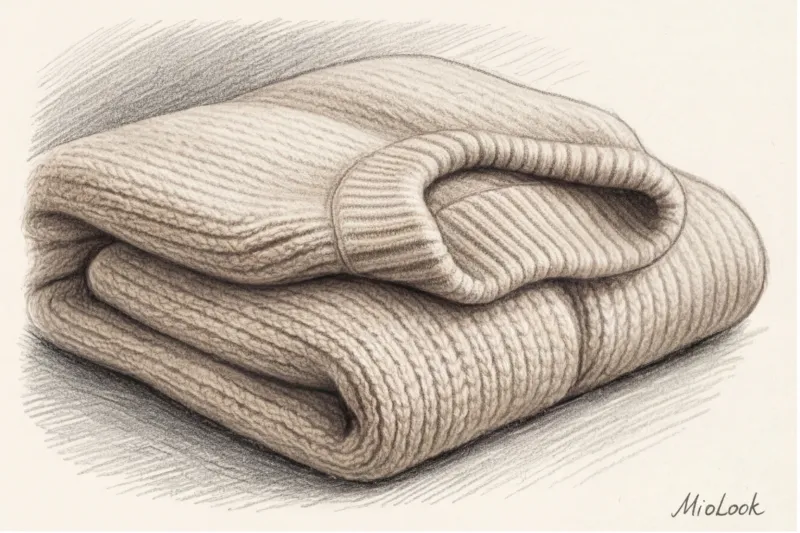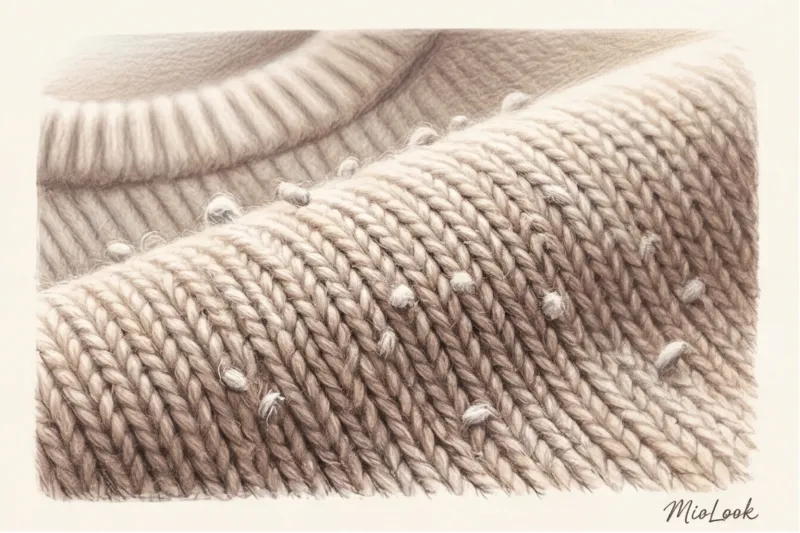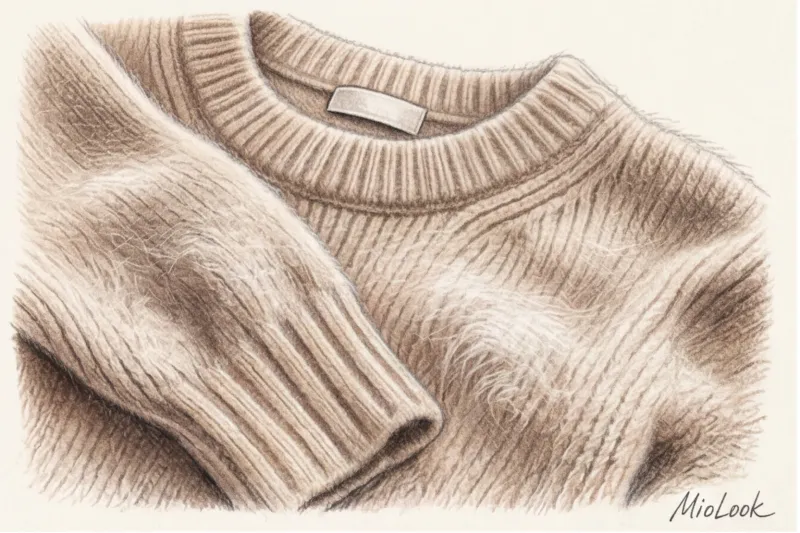
Last Tuesday, my client called me in a complete panic. She was ready to immediately throw away her new €1,500 cashmere sweater from Loro Piana. The reason? After a week of wear, a slight fuzz had formed under the arms and along the sides, which she took as a sign of cheap fabric and defectiveness. It took me fifteen minutes to calm her down and explain the laws of physics of natural fibers.
Over 12 years of working in premium styling, I've constantly encountered this misconception. We're used to thinking that exfoliation is a mass-market trope. In fact, caring for investment pieces requires a deep understanding of the materials. We covered this in more detail in our a complete guide to proper clothing care , but today I want to focus on the biggest pain point for most women. We'll take a detailed look at how to remove lint from clothes without damaging the structure of the fibers, and why your favorite lint roller is the worst thing that could happen to your wardrobe.
The Anatomy of Pilling: Why Even Expensive Items Get Covered in Pilling
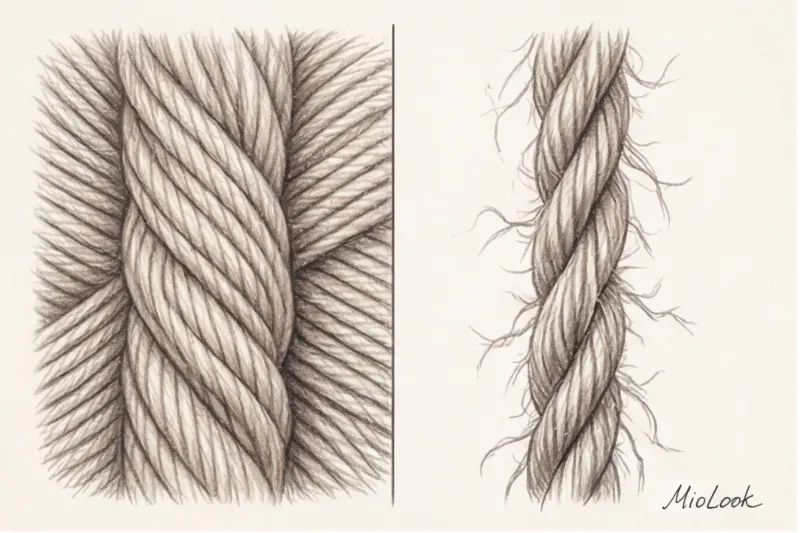
Let's debunk the biggest myth: pilling isn't always an indicator of low quality. The pilling process depends on the structure of the yarn itself, or more precisely, the staple length.
Natural fibers like merino or cashmere have varying lengths. During yarn production, short fibers are twisted together with long ones. During the first few weeks of wear, the short fibers are dislodged from the overall twist due to natural friction and gather into small, soft clumps on the surface. For 100% premium cashmere, this is a completely normal shrinkage process, which experts call "shrinkage." blooming (yarn opening). Once the item sheds this extra short fluff, it will only become softer and stop pilling.
Blended fabrics are a completely different story—for example, when wool is mixed with acrylic or polyester. In the mass-market segment (€30–€80), this is done to reduce costs. The synthetic thread is incredibly strong, acting like fishing line. When short wool fibers pill, the strong synthetic fiber holds the fluff firmly to the surface of the fabric, preventing it from falling off naturally. This is why polyester pills are stiff and remain there forever until you trim them off.
Knowing how to distinguish between the "noble fluff" of natural wool and the harsh pilling of synthetic wool is the first step to creating a prestigious wardrobe.
Your perfect look starts here
Join thousands of users who look flawless every day with MioLook. Organize your smart wardrobe in one click.
Get access — €0.99 onceHidden enemies of your wardrobe: what causes pilling
Most of my clients believe they ruin their clothes solely by wearing them improperly. However, statistics suggest otherwise. According to research by The Woolmark Company (2023), approximately 70% of pilling occurs not on the skin, but in the washing machine drum.
How does this happen? If you half-load your washing machine, your items have too much room to fly. As they spin, wet knitwear slams violently against the drum's metal walls and rubs against other items. Wet wool is especially vulnerable: hot water and harsh alkaline detergents open the hair cuticle (just like when you wash your hair with deep-cleansing shampoo), making the fibers rough and prone to clinging.

But even in our daily routine, we are faced with unobvious mechanical enemies:
- Seat belt in the car: A diagonal strip of pilling from the left shoulder to the right hip is a classic for car enthusiasts.
- Crossbody bags: Stiff leather or fabric straps combined with a heavy bag create intense localized friction.
- Layering errors: Wearing a stiff denim jacket over delicate cashmere is a surefire way to get pilling on your back and sleeves in a single day.
- Office desks: Constant friction of the forearms on the edge of the work table destroys even dense cotton yarn.
Stylist's Tools: How to Professionally Remove Pilling from Clothes
The tool you choose directly affects the cost-per-wear of your garment. The wrong tool can turn a €300 cardigan into a rag in five minutes.
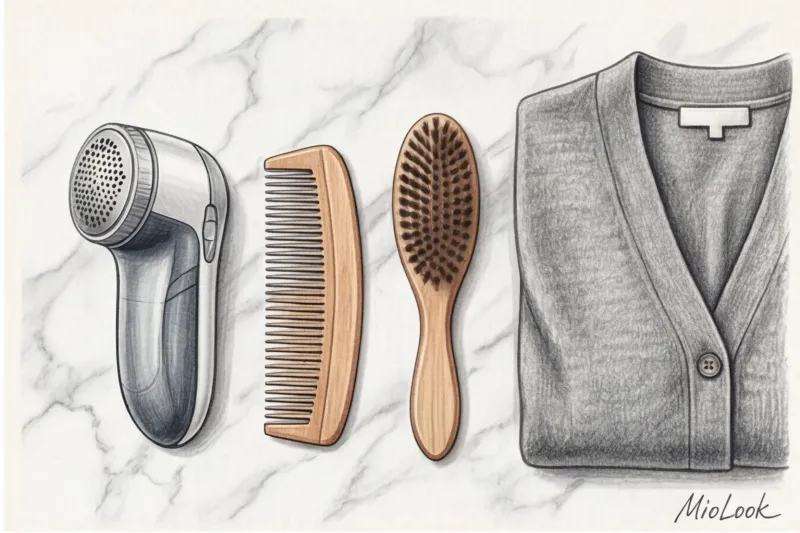
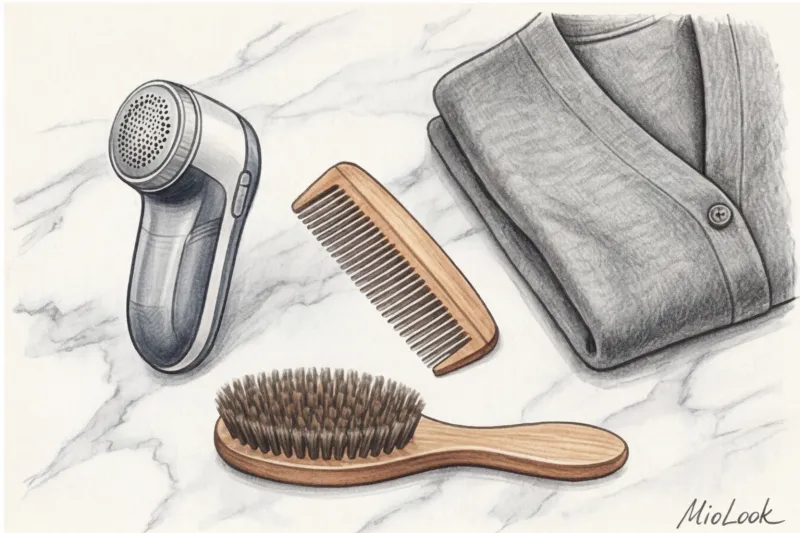
Electric fabric trimmers
For thick, smooth knits, cotton, viscose, and blended fabrics, the best choice is a high-quality electric trimmer. By the way, if you're unsure about the properties of viscose knits, I recommend our analysis: Is viscose synthetic or not? A stylist's analysis..

When choosing a sewing machine, pay attention to the width of the head (the wider the head, the less likely it is to snag) and the ability to adjust the blade height. Cheap machines with dull blades don't cut the lint, but rather tear it out, pulling out new thread.
Technique of use: Never trim an item while it's hanging or while you're wearing it. Lay the sweater flat on a rigid, flat surface (like an ironing board or table). Hold the fabric taut with one hand to avoid any creases, and use gentle, circular movements with the trimmer without applying pressure. The blades should barely touch the fabric.
Cashmere combs and stones (pumice)
This advice doesn't work for all fabrics. Using an electric trimmer on fluffy materials (mohair, alpaca, 100% cashmere) is strictly prohibited. The trimmer will mercilessly cut away the precious halo of fluff that we buy such items for.
There are special wooden combs with fine metal teeth or knitted pumice stones for these hairs. They gently comb out only matted clumps without damaging the main thread. The comb strokes should be short, light, and directed strictly along the grain (from top to bottom), as if you were combing a child's tangled hair.
Access to MioLook for €0.99 — one-time payment
A smart AI stylist will choose the perfect look for you and help you digitize your entire wardrobe.
Get access — €0.99 onceBlacklist: Popular life hacks that ruin things irreparably
Every time I see bloggers' advice online about caring for clothes using household products, I mentally grab my head. Here are the three main ways to ruin your clothes.
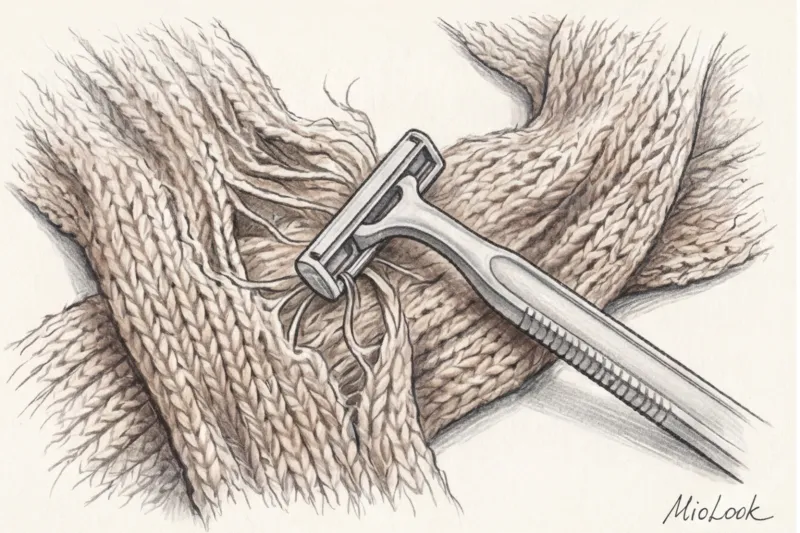
1. A regular razor. This is the most dangerous and persistent myth. A sharp razor blade can't distinguish between surface pilling and the warp thread. By cutting away the pilling, you inevitably cut the yarn itself, thinning it. At best, the garment will lose its density; at worst, a hole will appear in that spot after the next wash.
2. Sticky roller for cleaning clothes. It sounds counterintuitive, but a tape roller is the enemy of knitwear. When you roll the tape over a sweater, the strong adhesive pulls hundreds of new short fibers from deep within the yarn to the surface. Tomorrow, they'll pill, and the pilling will double.
3. Hard sponges for washing dishes. The abrasive side of a kitchen sponge not only cuts off the lint but also completely destroys the twist of the yarn, causing it to fray. The fabric's surface will permanently acquire a scruffy, worn appearance.
Preventative measures: how to wash and store clothes to prevent them from pilling
The best way to prevent pilling is to prevent it. In my experience, implementing just a few habits can reduce the wear and tear of a wardrobe by a third.
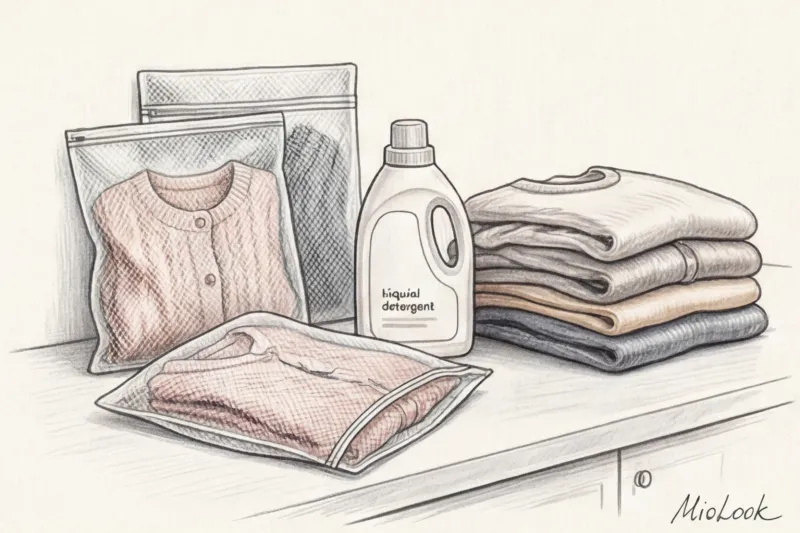
First, the golden rule: all items prone to pilling (from T-shirts to sweaters) are washed only turned inside out Let the friction in the drum be taken by the back side, which no one sees.
Secondly, avoid using dry laundry detergents when washing knitwear. The granules in the detergent don't dissolve immediately and act as a harsh micro-abrasive during the first few minutes of washing, scraping the fabric. Switch to liquid gels or choose eco-friendly washing powder soft action.
Be sure to use special mesh bags for washing delicate items—they limit the movement of the fabric in the drum. The bag should also be appropriate for the size of the item: putting a single thin cardigan in a large bag will have no effect.
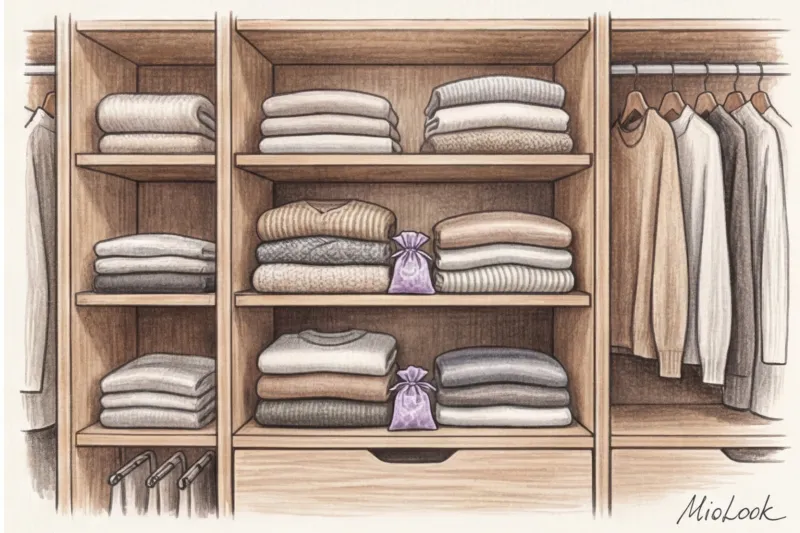
Finally, the "rest" rule, often mentioned in care instructions by premium brands like Loro Piana and Brunello Cucinelli, is essential. Natural wool is a hydrophilic (moisture-absorbing) fiber with shape memory. After a day of wear, the fibers stretch and lose their natural moisture. A sweater should be left to rest for 24-48 hours on a shelf (never on a hanger!) to allow the fibers to regain their structure and springiness. A garment worn three days in a row will pill much faster.
Summary: A checklist for saving and preserving your knitwear
Wardrobe maintenance isn't a tedious chore. It's a sign of respect for yourself and your investment. Let's review the steps you should take when you notice pilling on your favorite item:
- Rate the composition: If it's 100% wool or cashmere, don't panic during the first few weeks of wear—it's just "blooming." If it's a blend, be prepared for regular cleaning.
- Choose the right tool: For smooth cotton and dense weaves, use an electric trimmer on a flat surface. For fluffy mohair and alpaca, use only a delicate cashmere comb. No razors or tape.
- Wash correctly: Turn inside out, place in a laundry bag and use only liquid detergents at the lowest temperatures.
If you want your wardrobe to work for you, rather than you working for it, start systematically tracking your clothes. In the app MioLook You can digitize your items and create outfits that give your favorite sweaters the 48 hours of rest we mentioned above. Proper care starts with proper planning, and pilling is just a temporary problem that you can now professionally address.