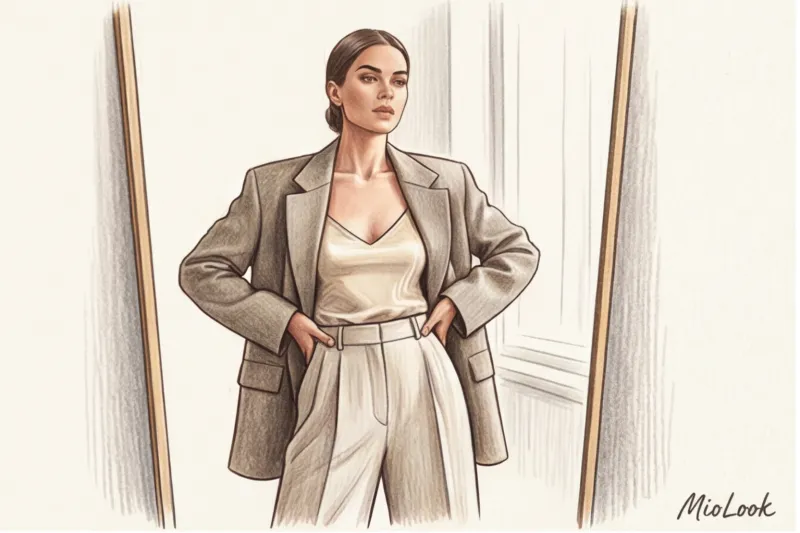
How many times have you read fashion advice along the lines of, "Just put a wide belt over your dress and your waist will naturally appear"? Now admit it, how many times has it actually worked? Spoiler: probably never. Instead of a graceful curve, you ended up with an overly constricted top hat that made it hard to breathe.
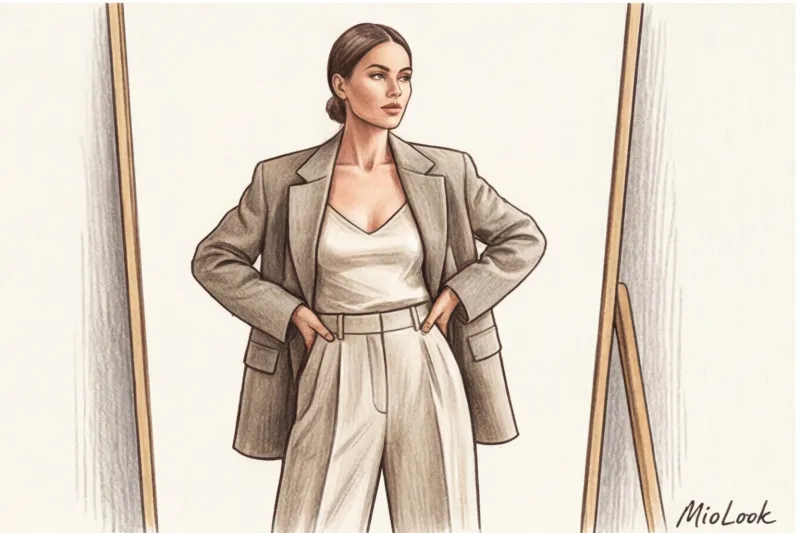
Over 12 years of working as a colorist and image consultant, I've seen dozens of women with a rectangle figure who sincerely considered their bodies "wrong" due to the lack of a defined hourglass curve. But here's the paradox: 90% of runway supermodels have an H-shaped silhouette. Designers adore this figure because it's the perfect canvas for architectural tailoring.
Today we will look at how to build a competent Basic wardrobe for a rectangle body shape , without resorting to physical violence like corsets. We'll be creating optical illusions. Incidentally, we discussed in detail why standard formulas from glossy magazines often lie in our A complete guide to basic wardrobes for different body types.
Why Classic Rectangle Body Shape Tips Are Ruining Your Figure
Let's start with the biggest myth: physically trying to tighten the waist on a straight body type has exactly the opposite effect. Why? It's all about geometry.
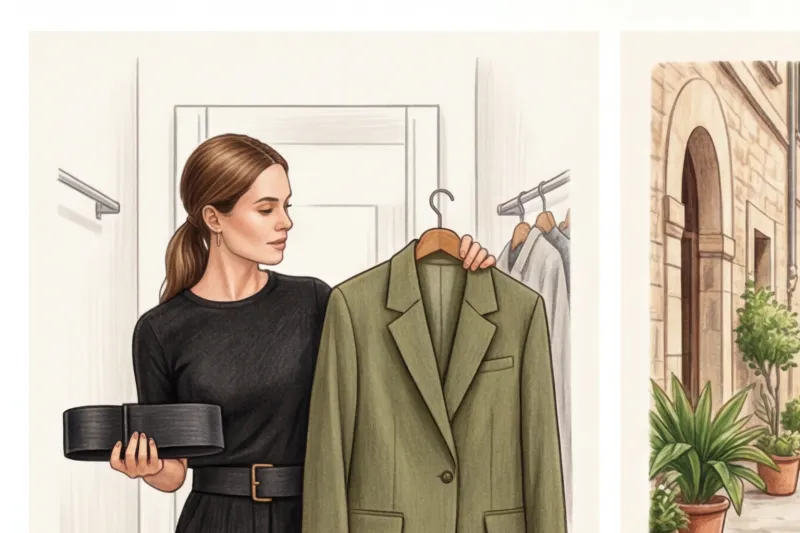
One of my clients, Anna, had been torturing herself for years with wide leather belts, wearing them over thin sheath dresses. When she came to me, her main request was, "Give me a waist." I asked her to remove the belt and wear a structured jacket with accentuated shoulders (we chose a straight-cut style) paired with wide-leg trousers. Her waist appeared instantly, even though we hadn't physically touched it.
A wide, contrasting belt on a straight body doesn't make you look slimmer—it simply creates a distinct horizontal line at your midsection. The human eye catches this line, reads its length, and says, "Aha, that's wide." The true illusion of a waist is created solely by the difference in circumference between your shoulders and hips.
According to the WGSN analytical report (2024), interest in architectural tailoring (structured tailoring) has grown by 40%, and this is great news for those with an H-shaped figure. Your figure is designed to wear clothes that hold their shape, not cling to your body.
Your perfect look starts here
Join thousands of users who look flawless every day with MioLook. Artificial intelligence will analyze your parameters and suggest the best combinations.
Get access — €0.99 onceBody Geometry and Fabric Physics: Key Rules for the H-Silhouette
If your figure doesn't have natural curves, your clothes should too. This is where the physics of fabric comes into play. This is where 8 out of 10 women trip up when shopping.
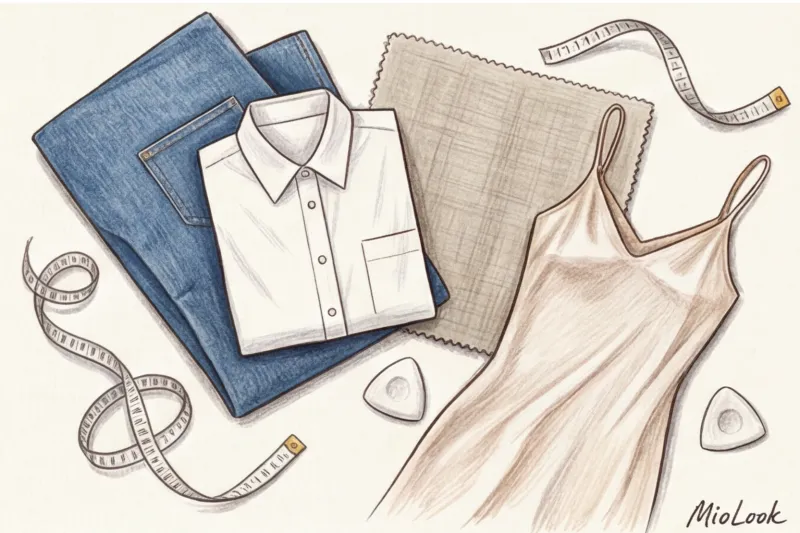
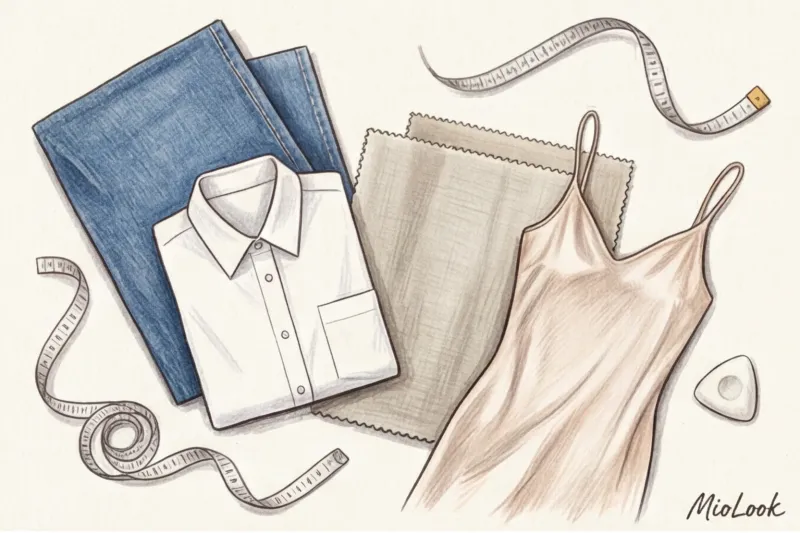
There's a huge difference between flexible fabrics (silk, thin viscose, flimsy jersey) and shaping fabrics (heavy denim, poplin, taffeta, wool). Flexible fabrics flow effortlessly over the body, following its every contour. On a rectangular figure, they merely emphasize straight lines.
"Stiff cotton poplin, which can make an hourglass figure look bulky and square, is a rectangle's best friend. It creates that essential framework"—I repeat this rule at every fitting.
Dense fabrics (from 200 g/m²) hold their shape 3 times better than fine knitwear. They allow you to realize "indentation from the body" rule The ideal clothing for you should live its own life 2-3 cm away from your skin. It's this air space between your body and the fabric that allows you to conceal your true volume and create new ones.
Optical illusions: how color draws the waist
As a certified colorist, I love using Johannes Itten's color theory for body contouring. Color isn't just about mood; it's a powerful tool for manipulating the viewer's gaze.
Principles of visual perception (in particular, the well-known Müller-Lyer illusion) work well in clothing design. How can this be applied in practice?
- Color blocking: Choose dresses or tops with a light or bright center panel and dark side panels. This literally trims off extra inches on the sides.
- Diagonal lines: Avoid horizontal stripes at the waist. Opt for asymmetry, wrap-style cuts, and diagonal draping. These draw the eye down the diagonal, creating movement and slimming the silhouette.
A Basic Wardrobe for a Rectangle Body Shape: Putting Together a Smart Capsule
Stop buying abstract "basic white t-shirts" from glossy magazines. Your capsule wardrobe should be functional and serve a specific purpose—creating the right proportions. Let's look at specific pieces worth investing in.
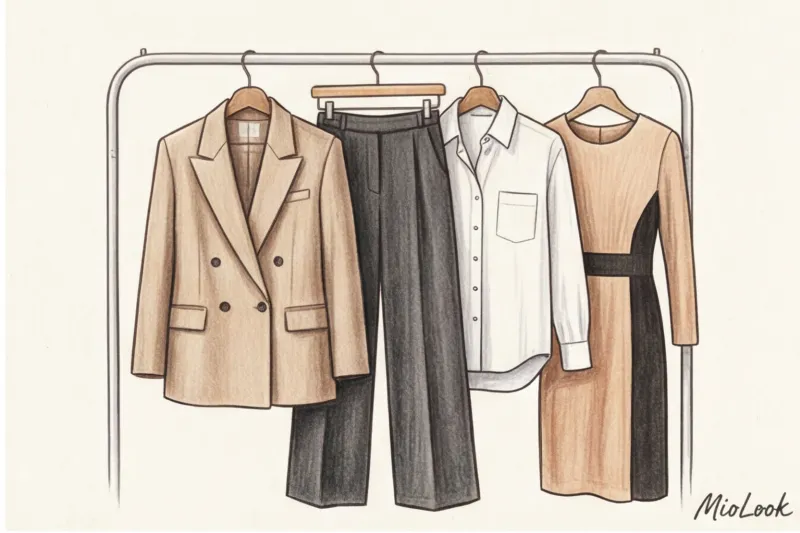
Top: Shoulder girdle architecture
To make the waist appear narrower, we need to slightly broaden the shoulder line. Don't be afraid of shoulder pads—modern styles look delicate and stylish.
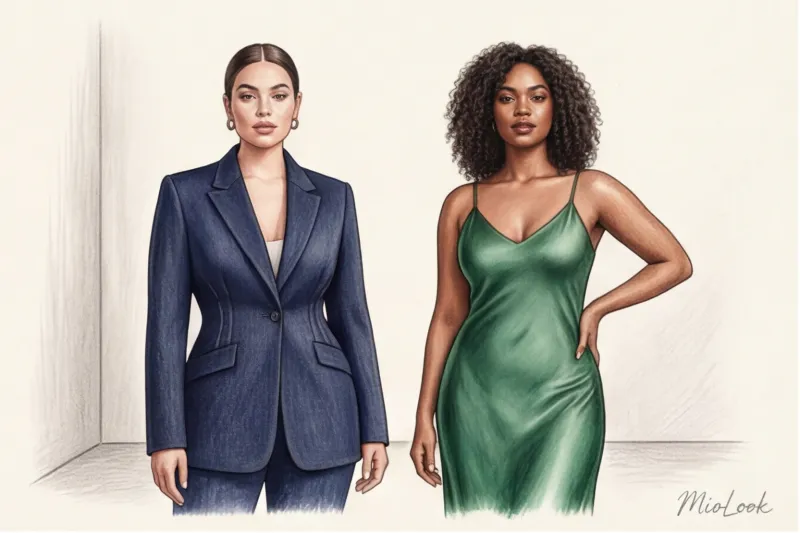
- Jackets with a defined shoulder: Choose straight-cut or slightly fitted styles (but due to the cut, not the elastic!). The length should end below the widest part of the hips.
- Men's cut shirts: Look for a stiff cotton that sits upright. Wear them open over a top or tied loosely at the waist, creating diagonal folds.
- V-necks: They create the desired vertical line and elongate the neck. For more information on how to refine the portrait area, read our article about the perfect hairstyle to match the neckline of your dress.
Bottom Line: Creating the Missing Volume
Skinny jeans are your worst enemy. They cling to narrow hips and slender legs, visually bulking up your torso and turning you into a lollipop.
- Palazzo and wide-leg trousers: Models with a high waist and pleats at the waist (one or two pleats) artificially create volume in the hip area.
- A-line skirts: They must be made of a dense fabric (denim, leather, or heavy cotton). They maintain a bell shape, widening at the bottom.
- Pleated skirts: Vertical pleats add movement, but make sure the pleats are stitched from the waist to the hip line, otherwise they will add extra volume where it is not needed.
By the way, wide-leg jeans are great for more than just casual looks. Check out our collection of ideas if you're planning on trying them. go on a date in jeans.
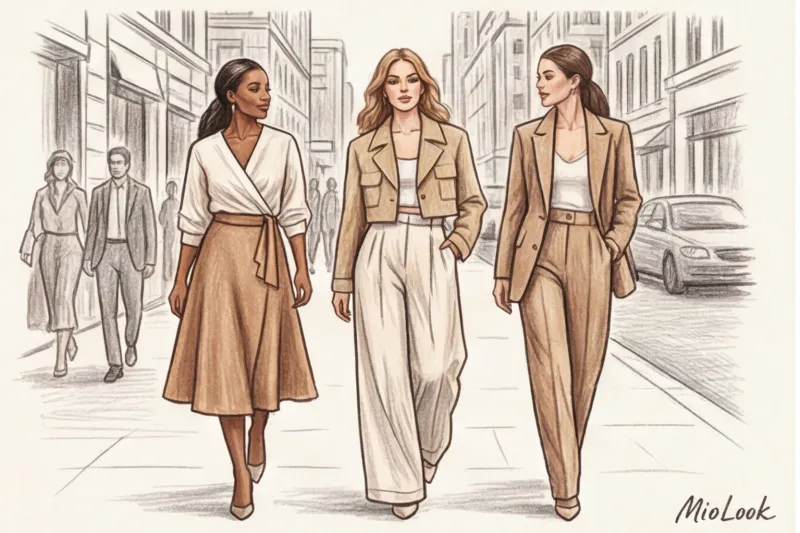
Tired of racking your brains over combinations?
Upload photos of your items to MioLook, and our smart algorithm will create a capsule wardrobe that perfectly suits your body type.
Try the smart wardrobe featureLook Formulas: How to Wear Basic Items Every Day
Having the right pieces is half the battle. You need to know how to combine them. Here are three foolproof formulas I use for my clients.
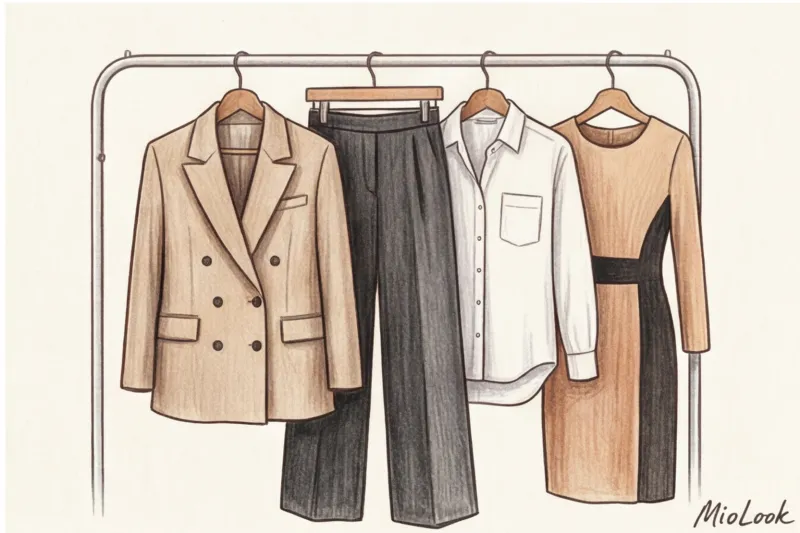
Formula 1: X-silhouette without a belt
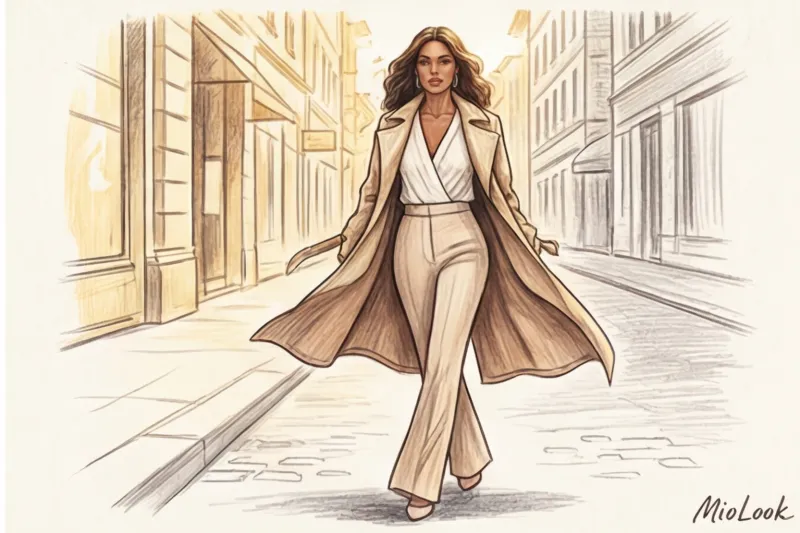
A structured jacket (must be worn open) + a basic, contrasting, figure-hugging top + wide-leg palazzo pants. The jacket creates vertical drawstrings that cut through your silhouette, leaving only a narrow strip of the top visible. Visually, you'll appear twice as slim.
Formula 2: Color Column
A monochrome base (for example, a black turtleneck and black trousers) with a contrasting, longer layer on the outside (a sand-colored trench coat or a thick-knit emerald cardigan). The contrast in light and dark colors is at work here. The eye is drawn to the narrow, dark vertical line inside.
Formula 3: Diagonal and Accent
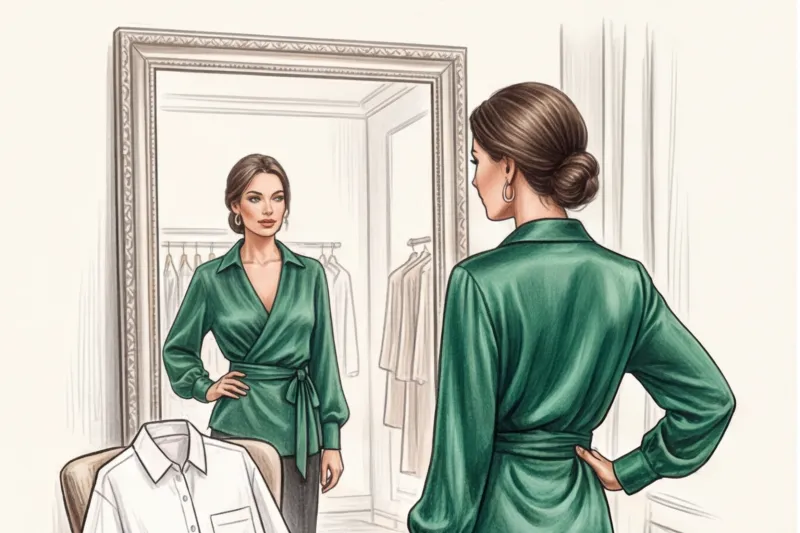
A wrap dress made of thick viscose or cotton + statement shoes. The wrap itself accentuates the waist. But there is important limitation (I promised to be honest): this trick won't work if you have a noticeable belly. A wrap dress made of thin fabric will only accentuate it. In this case, choose a straight-cut shirt dress.
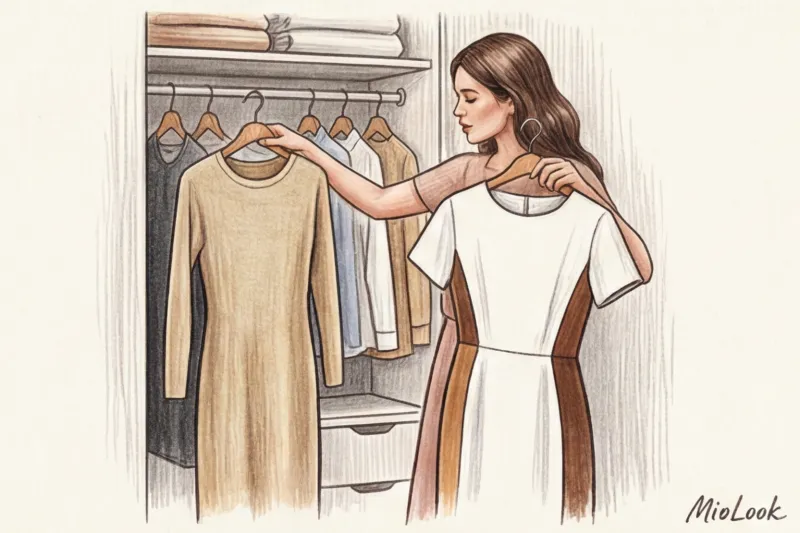
Checklist: A Quick Closet Audit
To put theory into practice, I suggest we conduct a review right now. It will take 15 minutes.
Remove immediately (or leave for the garden):
- Thin, flimsy knitwear (blouses that are see-through and cling to every fold).
- Clothes with elastic at the waist (they gather like an accordion and visually thicken the stomach).
- Shapeless robes made of soft fabrics (they turn a rectangle into a blurry cloud).
What to add first (with price guidelines):
- A proper straight-cut jacket with shoulder pads. Good options are always available in mid-range mass-market stores: from €100 to €150 at COS or Massimo Dutti.
- Wide-leg trousers with pleats in a wool blend (in the €60–€90 range, you can find great options at Zara or Uniqlo).
- A heavy cotton shirt dress (an investment of around €80–€120 that will save you money from the office to brunch).
Stylist's Take: Stop Drawing the Waist, Start Building the Silhouette
The main message I want to convey is this: stop trying to "fix" your body with shapewear and rigid corsets. Your figure is a luxurious framework for the most stylish, expensive, and architectural clothes. Masculine suits, conceptual minimalism, and complex layered cuts look perfect on you—things that look heavy and awkward on other body types.
Choose dense fabrics, use the magic of contrasting verticals, and create volume where it's needed (at the shoulders and hips). Clothes should serve you, not you, who should adapt to them.