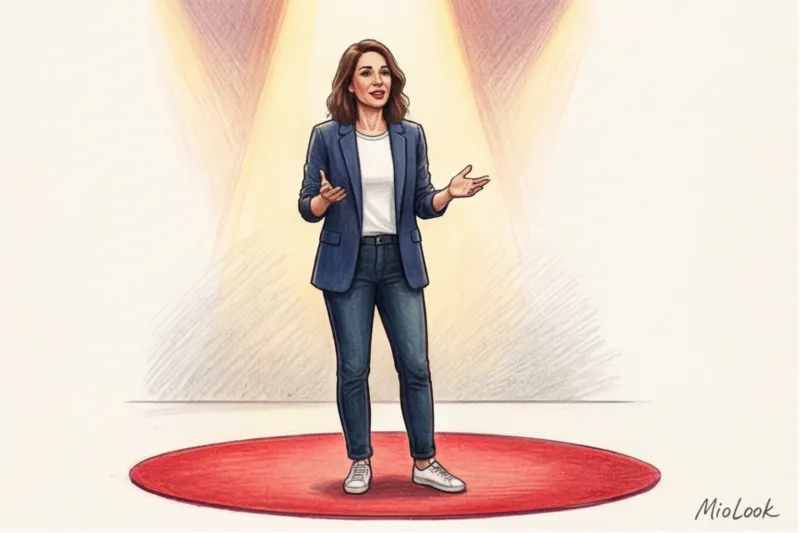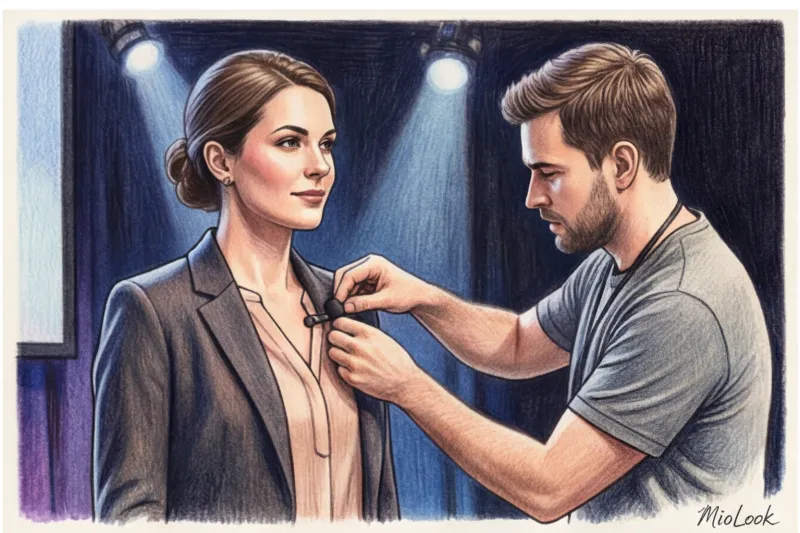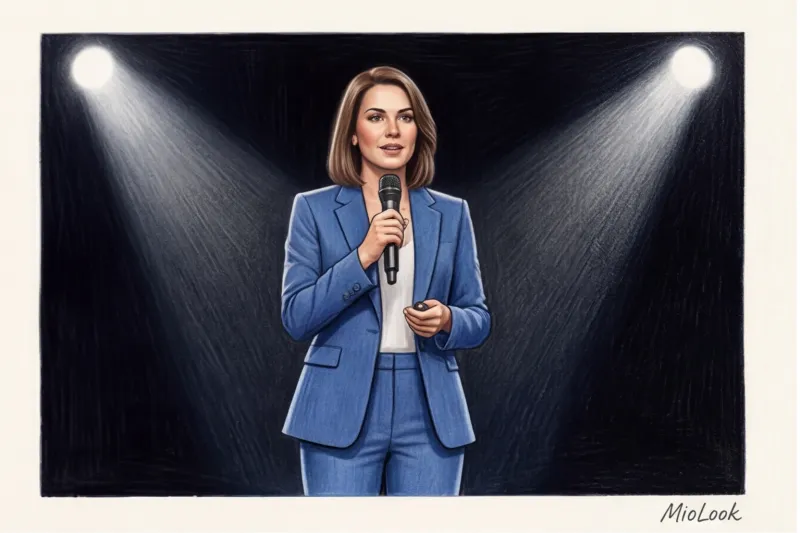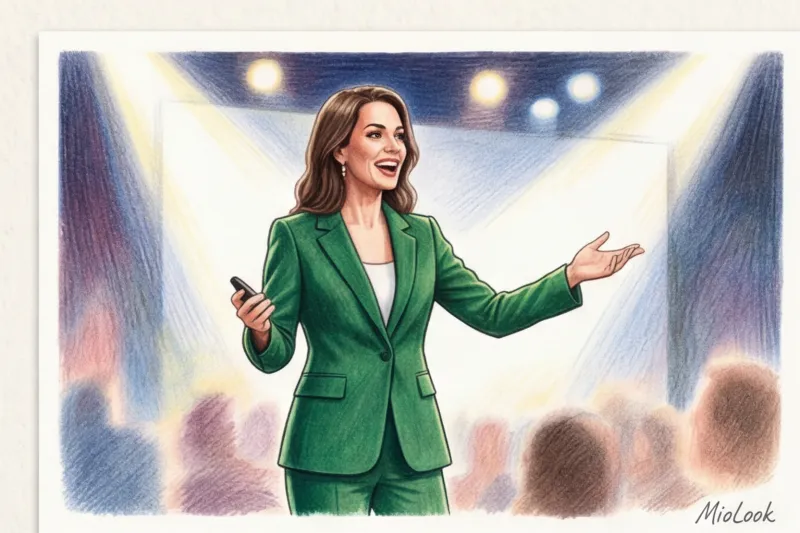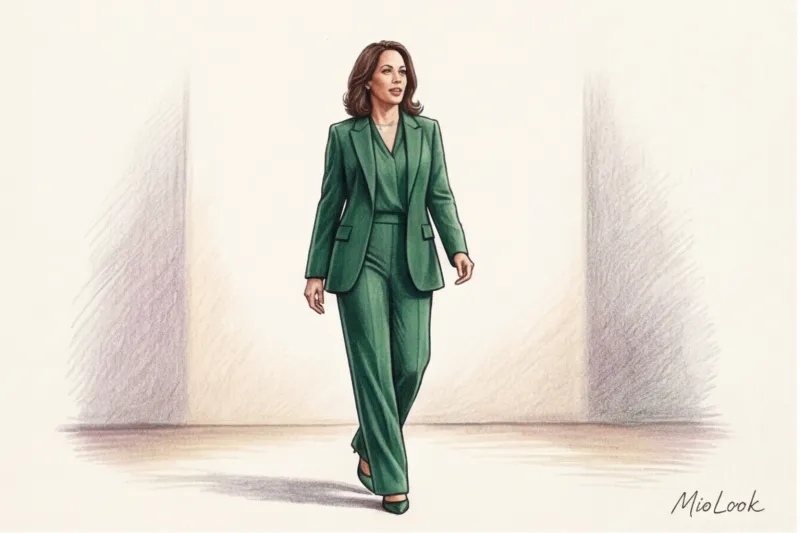
The stage is a physical challenge. Blinding lights, a parched throat, a clicker control in a tense hand, and a heavy lavalier microphone treacherously pulling at the fabric. Most glossy style articles will give you the clichéd advice: "Choose what you feel confident in." But as a practicing stylist and textile researcher, I'll put it differently: a woman's public speaking outfit is more than just a visual statement. It's your engineered armor and a biomechanical instrument.
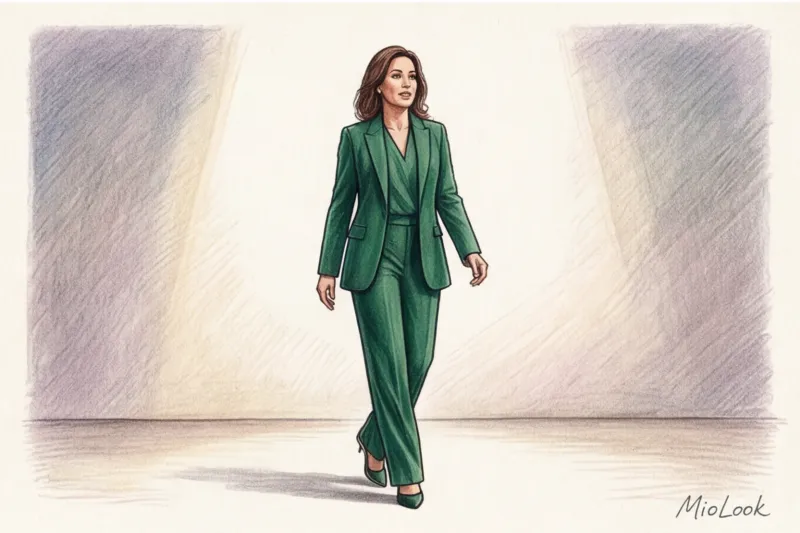
We have already discussed the basic architecture of a business wardrobe in more detail in our a complete guide to the ideal image of a female leader However, speaking to a large audience requires a completely different approach. Here, the rules of the traditional office dress code are broken by the rigorous demands of video cameras, stage acoustics, and extreme temperature control.
Stage Psychology: Why Women's Public Performance Clothing Is a Tool of Influence
The audience makes a decision about your status and expertise within the first seven seconds of eye contact. Before you've even said "Good afternoon," the audience is already assessing your nonverbal cues. According to Albert Mehrabyan's classic 1971 study, 55% of a speaker's perception depends on visual imagery and body language.
But clothing influences more than just the audience—it also influences the speaker themselves. In 2012, researchers at Northwestern University in the United States (H. Adam and A. Galinsky) demonstrated the phenomenon Enclothed Cognition (embodied cognition). The idea is simple: the physical properties of the clothes we wear directly affect our cognitive abilities and confidence levels. By wearing something you associate with leadership, you literally begin to think sharper and speak more persuasively.
That's why your on-stage look should be about 20% brighter, more contrasting, and more structured than your usual everyday style. The stage "eats" detail, so what seems slightly overdone in a meeting room appears calmly confident under the spotlight.
Anatomy of the Ideal Image: Biomechanics, Gestures, and Breathing
Here we come to the main myth of corporate style. It's commonly believed that a formal, classic sheath suit is the best choice for a leader. In fact, a stiff business jacket is a public speaker's worst enemy.
I had a revealing case in my practice. My client, the CEO of a large IT company, was preparing for a TEDx talk. During the dress rehearsal, she was wearing an impeccable but very stiff wool jacket with narrow armholes. I noticed that her voice sounded strangled and her gestures appeared "doll-like" and constrained. The problem lay in the cut: the stiff shoulder line and narrow armholes blocked diaphragmatic breathing. According to anatomy, such a cut can reduce the volume of a deep inhalation by 15-20%. For a speaker, this is disastrous—the voice loses support and begins to tremble.

We replaced this "shell" with a blazer made of thick, high-quality jersey. The result? The client was able to breathe deeply from her belly, her voice dropped a semitone (which always sounds more authoritative), and her arms began to move freely, conveying an openness to the audience.
Soft Tailoring: A New Classic for Speakers
The real choice for a modern leader for the stage is soft tailoring (soft tailoring). These are pieces that look like strict classics, but are made with comfort in mind. They lack rigid, glued chest pads and bulky shoulder pads. Soft tailoring strikes the perfect balance: the visual structure conveys status, while the suppleness of the fabric conveys empathy and modernity.
Access to MioLook for €0.99 — one-time payment
A smart AI stylist will select the perfect look for your next performance based on your preferences and body type.
Get access — €0.99 onceTextile Science for the Stage: Eco-Friendly Fabrics That Don't Let You Down
Have you ever stood under professional stage lights? They can locally increase the temperature around the speaker to 30–35°C. Add to that the natural adrenaline rush, and you get a sauna-like effect.
Over 12 years of working with fabrics, I've developed a strict stop list of materials for the stage:
- 100% polyester: Creates a greenhouse effect. You'll start to choke within ten minutes of the presentation.
- Fine silk (especially plain light-colored): Instantly releases the slightest drops of sweat, changing color when wet.
- Pure flax: You'll be crumpled in the taxi on the way to the conference, and on stage you'll look like you slept in this suit.
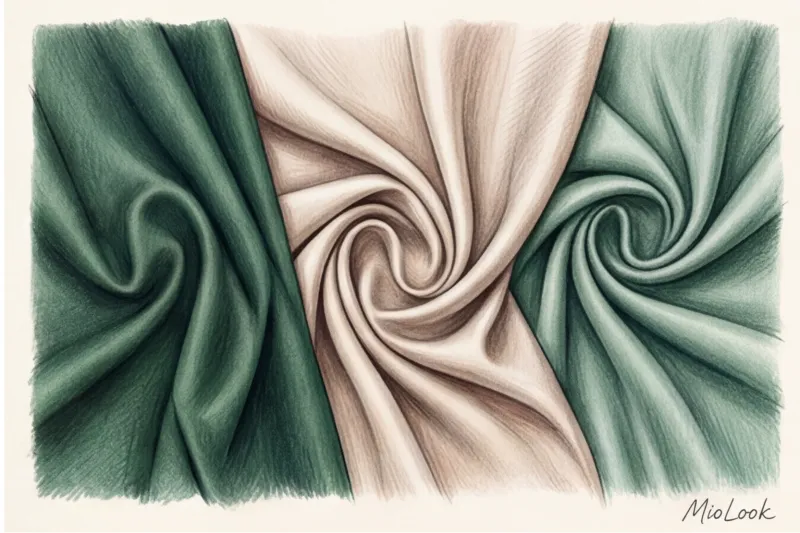
So what should you invest in? Look for fabrics with high hygroscopicity (the ability to wick away moisture) and wrinkle resistance.
"The ideal stage fabric should have a 'spring' effect—it should spring back to its original position after you sit in the chair during a panel discussion."
My absolute favorites:
- High-twist wool: This is a masterpiece of textile engineering. The wool threads are twisted so tightly that the fabric resembles a micro-mesh. It breathes beautifully, feels cool on the skin, and is virtually wrinkle-free.
- Tense Tencel (Tencel / Lyocell): An eco-friendly fiber made from eucalyptus wood. It absorbs moisture 50% better than cotton, has a luxurious matte sheen, and drapes beautifully as you move.
- Cupro: A vegan alternative to silk. Unlike natural silk, cupro regulates heat better and is less prone to staining.
Color architecture: how to control the audience's attention
The key rule for speakers, forgotten by 90% of newbies: your color is dictated not only by your color type but also by the stage backdrop. Always ask the organizers for a photo of the brand wall (stage backdrop) or the lighting color.
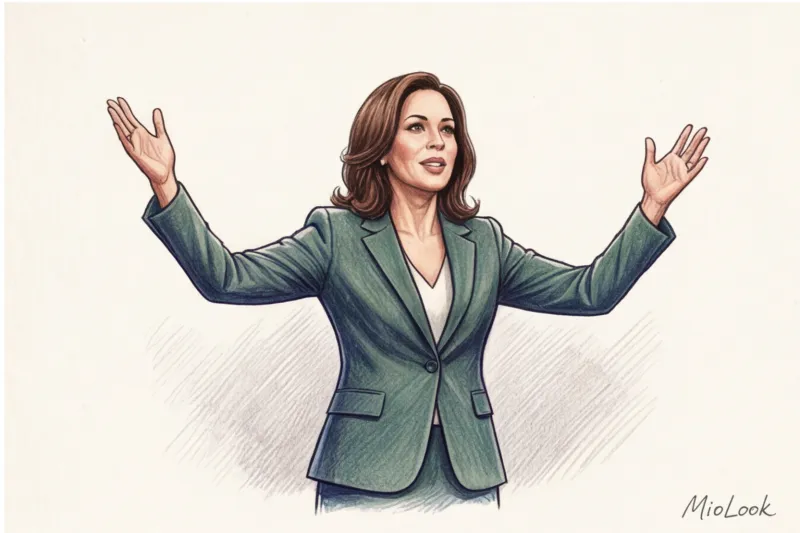
If the background is dark and you're wearing a black suit, the only thing left in the video will be your floating head. You need contrast. Deep yet saturated shades work perfectly against a dark background: emerald, sapphire, wine, or pristine white.
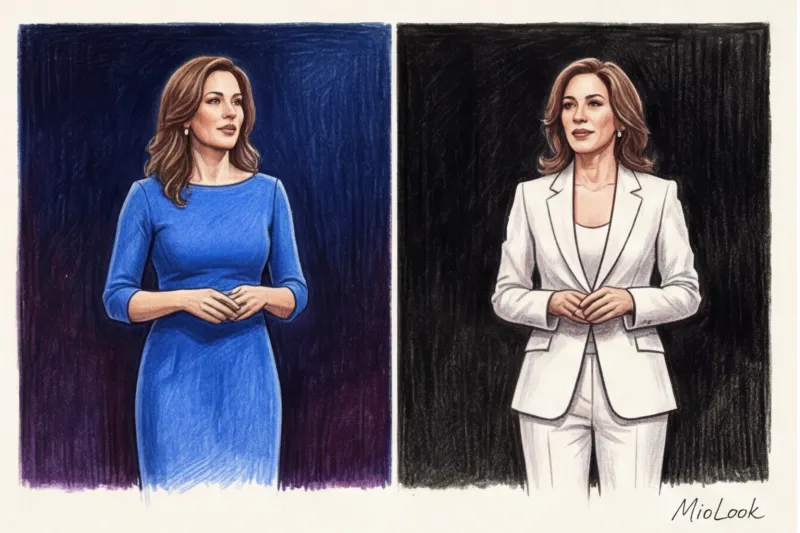
The best visual device for the scene is Total Color (monochrome look). The same color of the top and pants (or skirt) creates a unified vertical line that visually elongates, slims, and, most importantly, doesn't fragment the silhouette. The viewer's gaze isn't drawn to the contrasting waistline, but immediately rises to your face—where meaning is born.
What's absolutely forbidden is wearing small prints (houndstooth, pinstripes, small polka dots). Video camera lenses can't handle such a fine pattern, and a moiré effect appears on the screen—clothing begins to "ripple" and strobe, causing physical dizziness in online broadcast viewers.
Technical dress code: lavalier microphones, cables, and microphones
Have you ever wondered where the sound engineer will hang the microphone block if you're wearing an elegant silk slip dress without a belt? Spoiler alert: you'll either be asked to attach that heavy black rectangle to your underwear, which is incredibly uncomfortable, or you'll have to hold it in your hand for the entire lecture.
Technology integration is a hidden pain point in women's business attire. Men have it easier: they have stiff jacket lapels for a microphone and trouser pockets for a transmitter. Women need to plan for this in advance.
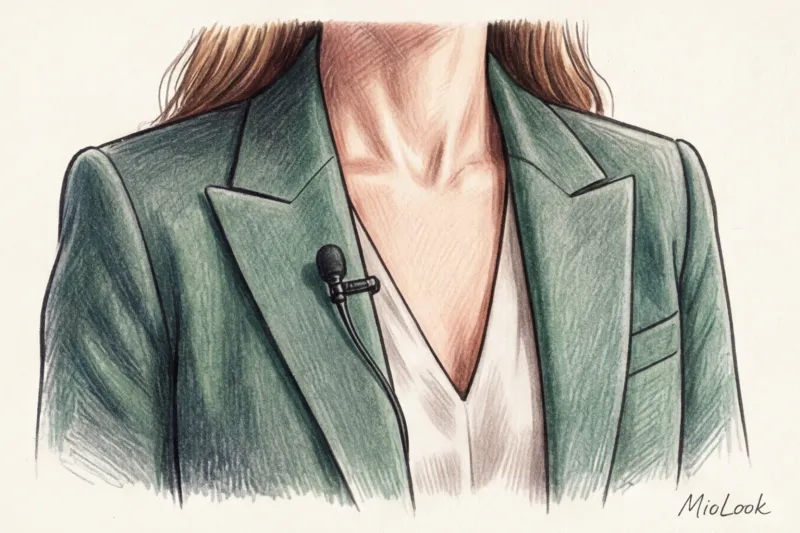
Here's my technical checklist for a speaker:
- Microphone location: A blouse or jacket should have a tight collar or lapel. If you're wearing a thin cotton T-shirt, a clip-on microphone will pull the neckline down, revealing your underwear.
- Place for transmitter: A thick belt, strap or deep pockets in trousers/skirts are required.
- Acoustic silence: No rustling taffeta. No jingling multi-tiered bracelets or long earrings that will hit the microphone when you turn your head. The sound engineer will thank you.
Your perfect look starts here
Join thousands of users who look flawless every day with MioLook. Upload your items, and the AI will create ready-made outfits.
Get access — €0.99 onceConference Shoes: Balancing Stability and Status
I often see women wearing 10-centimeter stiletto heels on stage, wanting to appear taller and more prestigious. From a biomechanical standpoint, this is a fatal mistake.
High, thin stiletto heels shift the body's center of gravity forward. To maintain balance, the speaker begins to subconsciously shift from foot to foot or sway slightly. The audience subconsciously perceives this swaying as a marker of insecurity and anxiety.
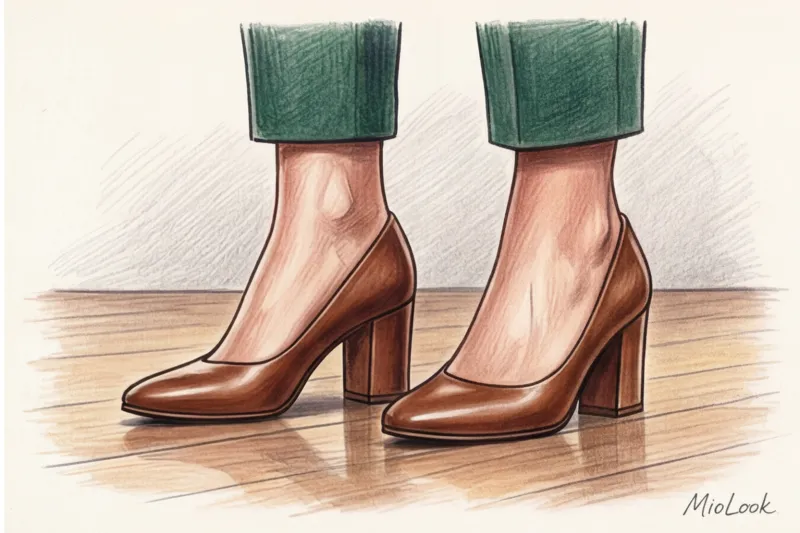
Psychologically, a speaker needs to be "grounded"—solid foot contact with the floor. Therefore, the ideal footwear for stage performance is shoes or ankle boots with a stable block heel (5-7 cm), or elegant leather loafers. Firm support physiologically reduces cortisol levels.
Of course, there are exceptions to this rule. If you're working in a highly conservative banking environment with strict protocol, classic pumps may be a must. In this case, choose a heel height of no more than 6-7 cm (kitten heel) and be sure to wear matte leather or suede. Shiny patent leather reflects the spotlight and draws attention away from your face.
Checklist: Crash Test Your Look Before Going on Stage
Never wear new, untested clothing to an important performance. The day before the event, put on a full set of clothes (including underwear and shoes) and conduct a thorough crash test in front of a mirror.
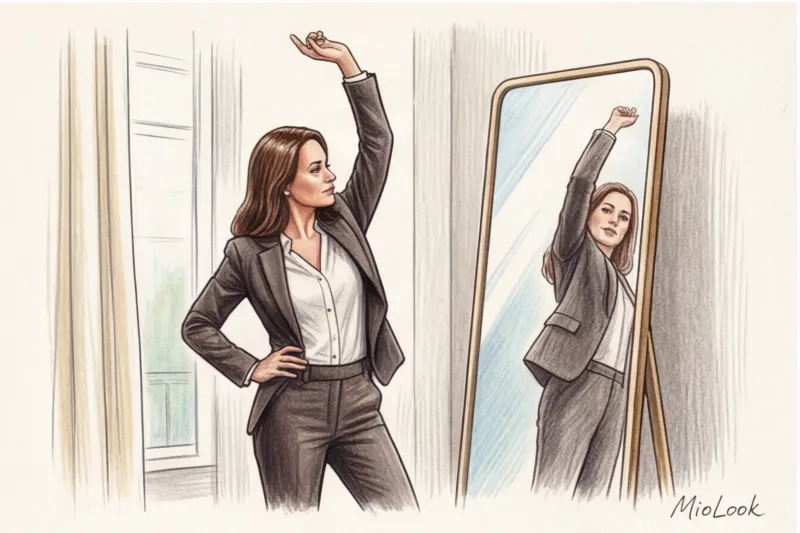
- Raised Hands Test: Raise both arms up, as if pointing to the top of the slide. Your blouse shouldn't be sticking out of your trousers, and your jacket's armhole shouldn't be dragging your entire silhouette down.
- Landing test: Sit in a deep chair (a common format for panel discussions). Check that your skirt isn't riding up too high, that your waistband isn't digging into your stomach, and that you can breathe comfortably.
- Light test: Stand with your back to a bright window or lamp. Make sure the fabric of your skirt or trousers isn't see-through, revealing the contours of your legs—backlighting from spotlights can be a real distraction on stage.
By the way, in order to avoid racking your brains over matching clothes on the eve of the big day, I recommend digitizing your business wardrobe in advance. Using MioLook , you can create and save a "For Performances" capsule so that when you're stressed, you can simply open the app and know exactly what to wear.
Your stage presence shouldn't distract you or your audience. When clothes are designed correctly, they become invisible support. You stop thinking about how you look and start focusing on what you're saying. This is where the magic of a truly powerful performance is born.