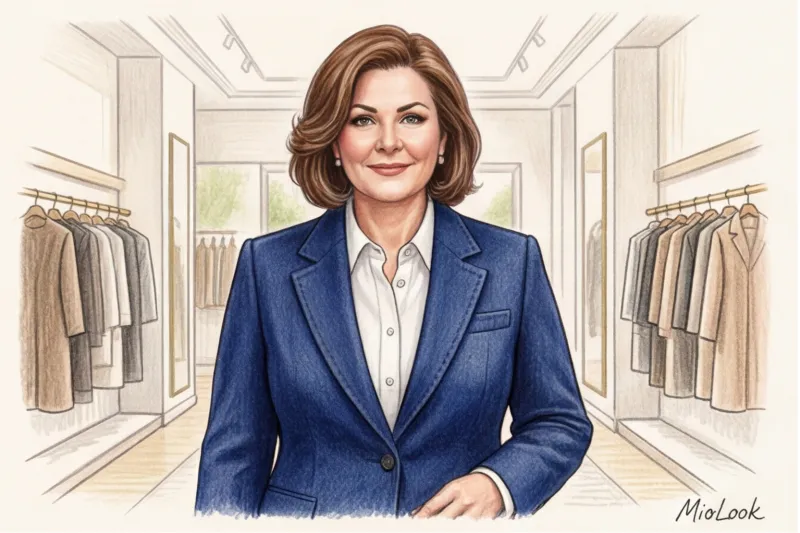
How many loose cardigans and shapeless tunics are hanging in your closet right now? I'd bet at least five. I often hear from successful, accomplished women whose closets are filled with clothes designed to conceal their bodies. But the paradox is that these very soft, comfortable "covers" can actually add five to ten extra pounds.
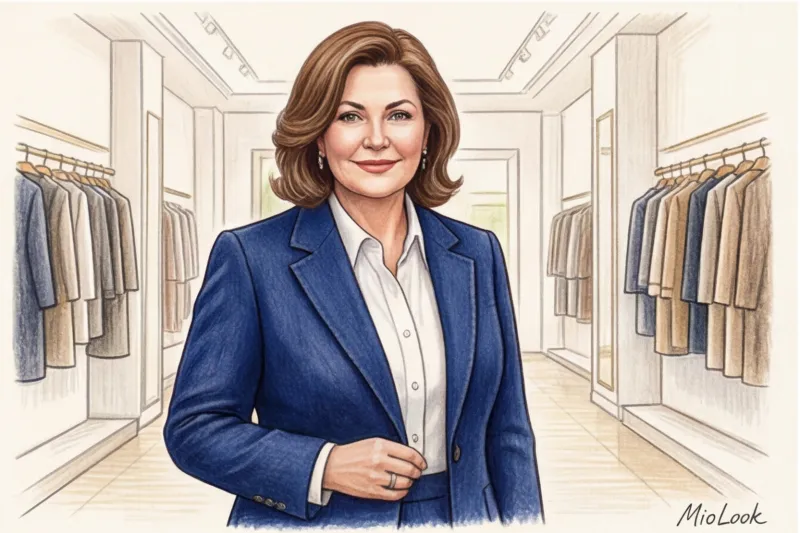
Collecting Basic wardrobe for plus-size women over 50 , we must change the paradigm once and for all. Our goal is not to disguise weight with shapeless rags, but to architecturally construct the silhouette using premium, shape-stabilizing fabrics. We've covered the fundamental principles in more detail in our A complete guide to a basic wardrobe for plus-size women , but today I want to talk about a luxury approach to yourself and your body. You need to invest in quality, not quantity.
Basic Wardrobe for Plus-Size Women Over 50: Architecture Instead of Disguise
Age 50+ is a time when status and stature become more important than fleeting trends. The biggest mistake I've seen for years is buying thinly oversized clothes. A 2022 study by the Fashion Psychology Institute revealed something striking: plus-size women who consistently wear shapeless clothes two sizes too big experience higher levels of body dysphoria. That is, the more you hide, the worse your body image.
I call it "black tunic syndrome." I had a 55-year-old client in my practice, a top manager at a major bank. She came to me wearing an expensive but completely shapeless cashmere robe, complaining of a heavy gait and lack of energy. We ruthlessly discarded 10 similar sweaters and bought two Loro Piana suit jackets with a crisp shoulder line. The effect was stunning: thanks to the garment's rigid frame, she visually "lost" 10 kilograms, her back straightened, and even the position of her head changed.
Your perfect look starts here
Join thousands of users who look flawless every day with MioLook.
Get access — €0.99 onceInvesting in Fabrics: What Conveys Status and Shapes the Silhouette
In premium styling, we always consider cost-per-wear. A cheap knit sweater for 3,000 € that will pill and stretch out after three washes is 1,000 € per outfit. A luxurious jacket for 60,000 € that you'll wear at least 100 times over five years is 600 € per outfit. The mathematics of elegance are merciless to cheap items.
To create the correct "framework" the density of your ideal fabric is crucial. Wool suiting for plus-size sizes should have a density of at least 250 g/m². Only this weight of material can smooth out any unevenness in the figure and create the correct body proportions without bunching up when walking.
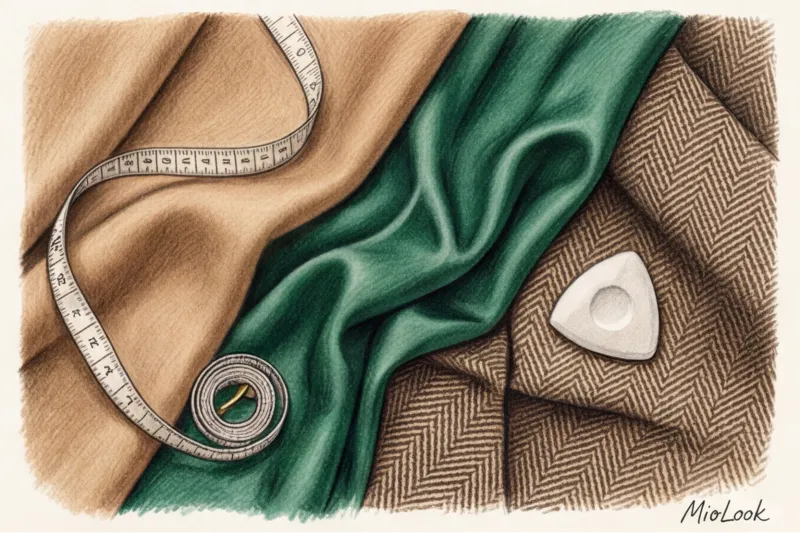
Enemies of Elegance: Fabrics to Get Rid of
The most dangerous counterintuitive myth: "Stretchy fabrics are the most comfortable and best suited for plus-size figures." Forget it. Thin viscose jersey, cheap shiny polyester, and fabrics with over 5% elastane are your worst enemies. Yes, they stretch. But that's precisely why elastane clings to every fold, highlights seams, and makes your look cheap.
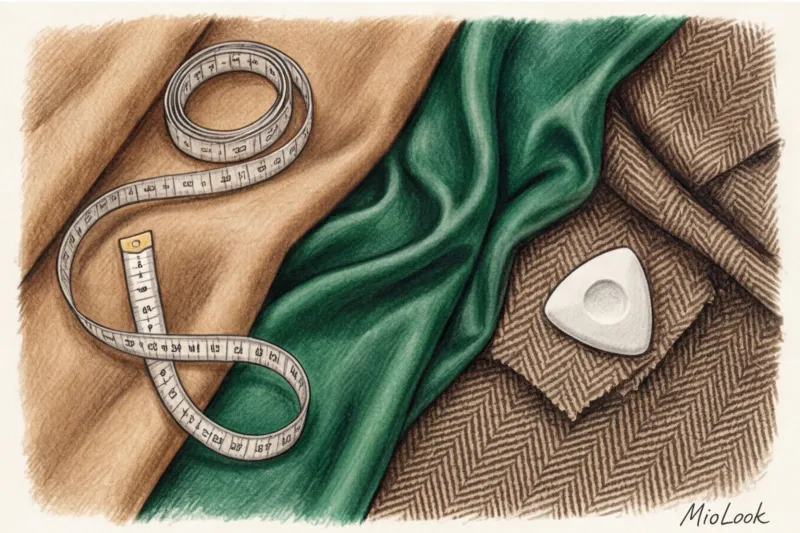
Comfort should not come at the expense of losing shape. Rigid cotton or heavy crepe create a new, slimmer contour, leaving enough air inside for freedom of movement if the garment is cut correctly.
Noble textures: what's worth spending money on
- Thick wool crepe (crepe de chine): The matte, slightly grainy texture absorbs light and visually narrows the silhouette.
- Double-face wool: Ideal for coats and cardigan-coats. It's unlined but holds its shape perfectly.
- Heavy matte silk: flows along the body without sticking to it.
- Structured flax with additives: Pure linen wrinkles too much, but linen with the addition of viscose or silk falls into noble, heavy folds.
The Elegant Capsule Formula: 7 Essential Investments
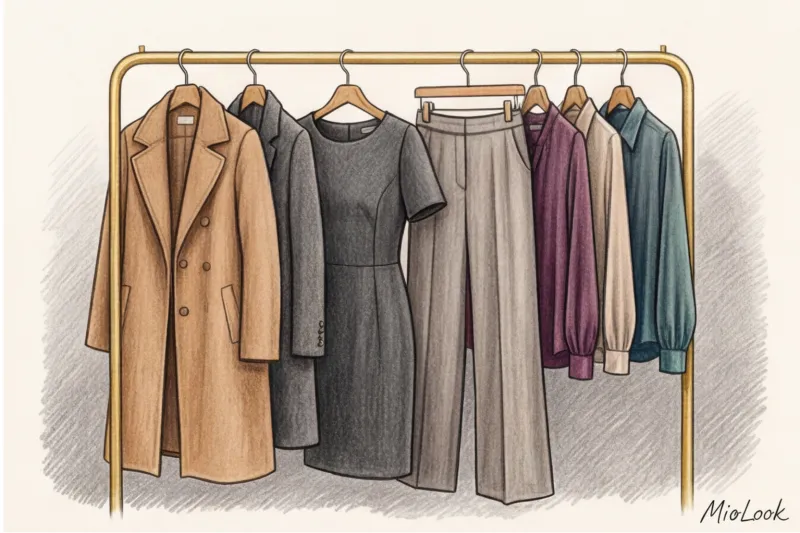
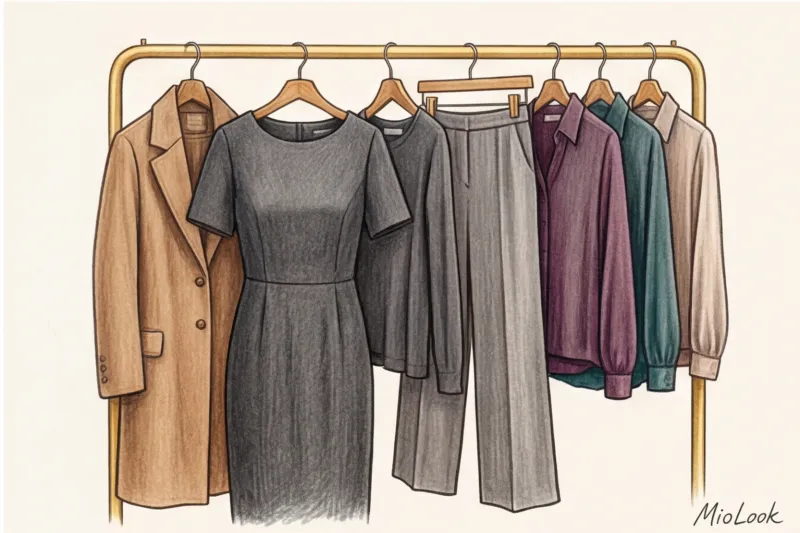
You don't need a huge closet. You need a smart system. Here are 7 elements that will make the perfect office and casual wardrobe for a woman over 50 years old.
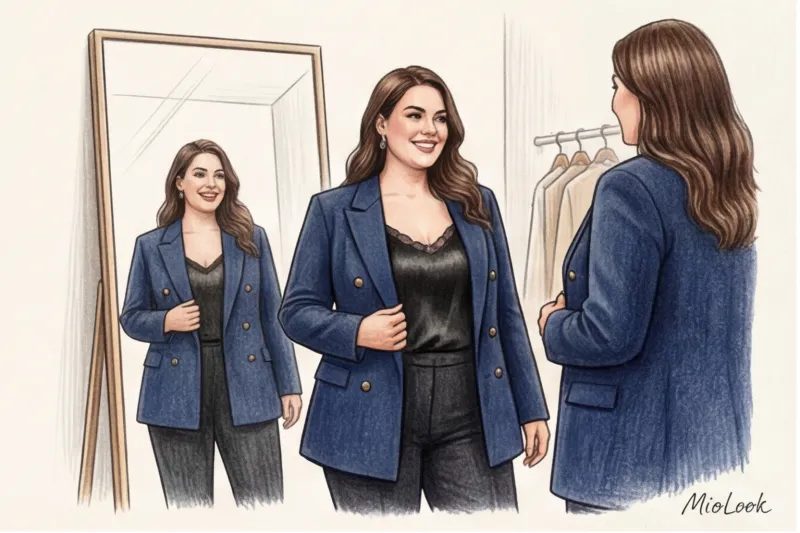
- Structured jacket with a crisp shoulder line. This is the foundation. The Italian school of tailoring (sartorial construction) teaches: a properly cut, high armhole makes the arms appear slimmer, while a precise length that covers the widest part of the hip elongates the figure.
- Straight-cut trousers or palazzo trousers with creases. A crease is a built-in vertical line that always works in your favor. The fabric should be flowing but heavy.
- Sheath dress with a wrap or asymmetrical cut. Ditch tight, thin knits in favor of chunky crepe. Asymmetry breaks up wide horizontal lines.
- A thick cotton shirt or a structured silk blouse. A stand-up collar or a classic pointed collar draws attention to the face.
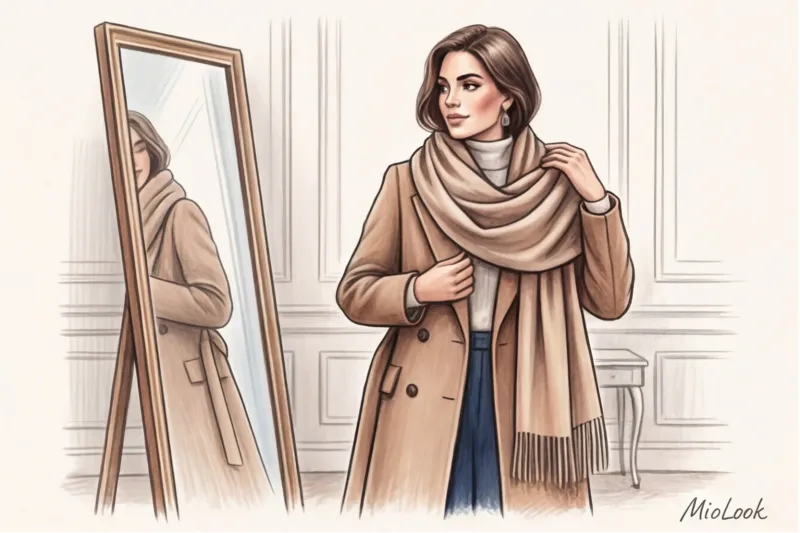
- Classic cut coat. The robe shape or straight men's cashmere robe is the perfect finishing touch to a layered look. winter look.
- A-line midi skirt made of thick fabric. No thin pleats - only large, laid-in folds or a smooth cut.
- High quality top to wear under a jacket. Made of thick silk or viscose, without lace or unnecessary decoration.
"Elegance isn't about being noticed, it's about being remembered. A well-cut, architectural garment is always memorable, unlike boring, baggy clothing."
I must make an important disclaimer here: a structured jacket with classic English lapels doesn't work For women with very large breasts (cup size G or larger) paired with a short neck, a stiff collar will create an armored effect. An alternative would be a collarless jacket (in the Chanel style) or a long vest made of heavy suiting fabric, which will create the desired vertical lines without adding bulk to the bust.
Ready to get started?
Try the MioLook plan for free—no commitments required. Create your capsule in the easy-to-use app.
Get access — €0.99 onceColor and print: a rich palette for women over 50
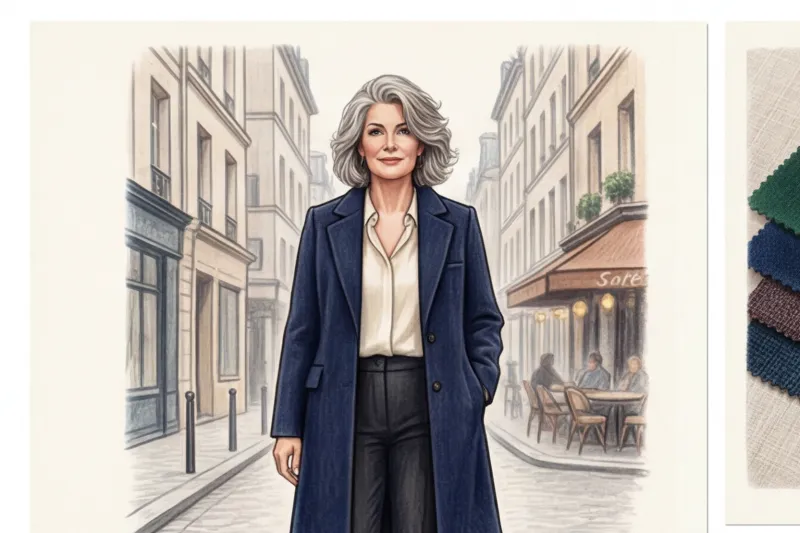
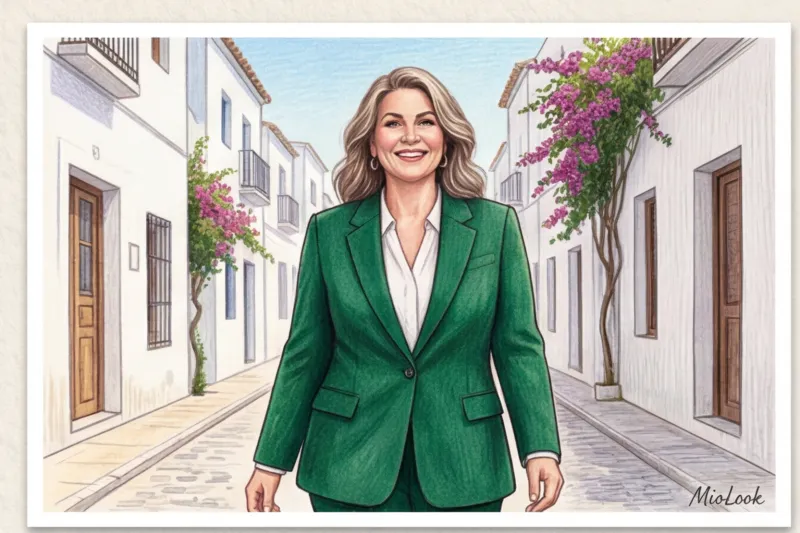
Total black as the main weight-loss tool is the laziest and most outdated stereotype. With age, black on the face often emphasizes wrinkles, under-eye shadows, and makes the image heavy. Replace it with deep "jewel tones" (precious stone colors): sapphire blue, emerald, wine, dark chocolate.
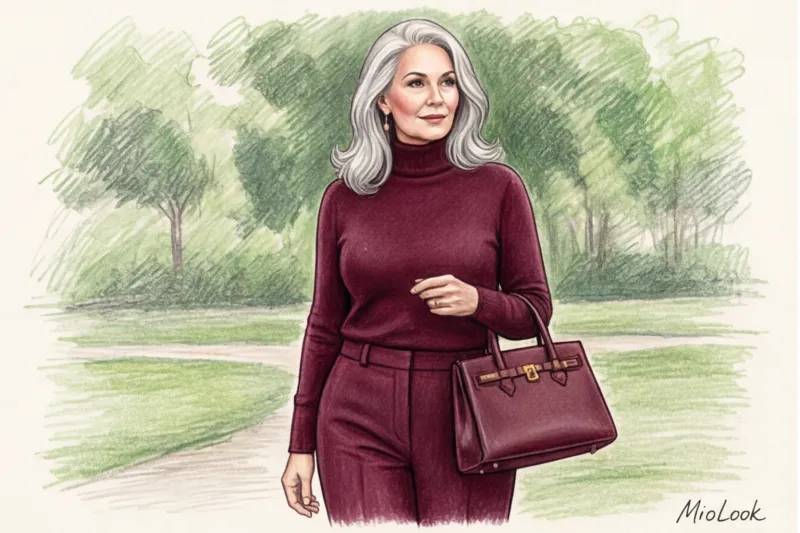
The main secret to elongating the silhouette is monochrome. The optical illusion of a continuous vertical line works flawlessly. Last season I collected capsule for the client For an Apple-shaped figure (with most of the volume in the abdominal area), we created sets in warm caramel and dark chocolate shades: chocolate pants, a matching silk top, and a caramel-colored, chunky-knit, open-front cardigan. The difference in color between the inner layer (top and pants) and the outer layer (cardigan) created a narrow column of color down the center, instantly reducing visual bulk at the waist.
As for prints, avoid small, romantic florals. On a larger figure, a small pattern looks disproportionate, making the body appear even larger. Your choice: geometric abstraction, color blocking, or classic medium-width vertical stripes.
Accessories as status markers and focal points
In the luxury segment we know one rule: well-groomed shoes and a well-chosen status bag They can elevate even the simplest look, consisting of a cotton T-shirt and basic trousers. For plus-size women, the law of proportion is crucial.
Forget micro bags—they make your figure appear larger. Avoid shapeless, soft hobo bags—they only accentuate unwanted curves. Your ideal investment is a structured medium or large tote bag made of stiff leather that holds its shape even when empty.
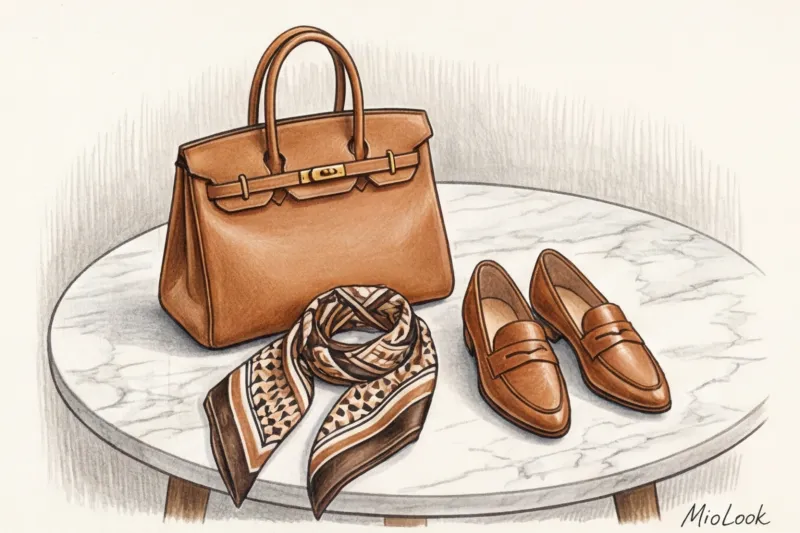
Shoes should follow the line of your leg. Choose models with a pointed or almond toe. A round, blunt toe will add weight to your ankle. A sturdy 5-7 cm heel or elegant leather loafers will make a great everyday staple. Don't forget about your face: a silk scarf or chunky yet understated earrings in smooth metal will draw the attention of your conversation partner to your face.
A stylist's checklist: how to conduct a wardrobe audit
Theory is dead without practice. If you want to change your style, start with a ruthless audit. You can digitize your belongings in an app. MioLook , to clearly see what your current base consists of. In the meantime, here's the step-by-step guide I give my VIP clients before a shopping tour:
- Step 1: Get rid of the “comforters”. Gather up all thin, stretched knits, rolled-up cardigans, and tunics. If a garment doesn't hold its shape on a hanger, it won't hold its shape on you. Put them in a box.
- Step 2: Check the shoulder position. Put on your jackets and coats. The shoulder seam should be exactly where your natural shoulder ends (or slightly wider if there's a shoulder pad). If the seam hangs lower, the garment will make you look hunched and make you look fat.
- Step 3: Compile an investment list. Don't buy five items at once. Start with one perfect heavy wool jacket and one pair of impeccably fitted straight-leg trousers.
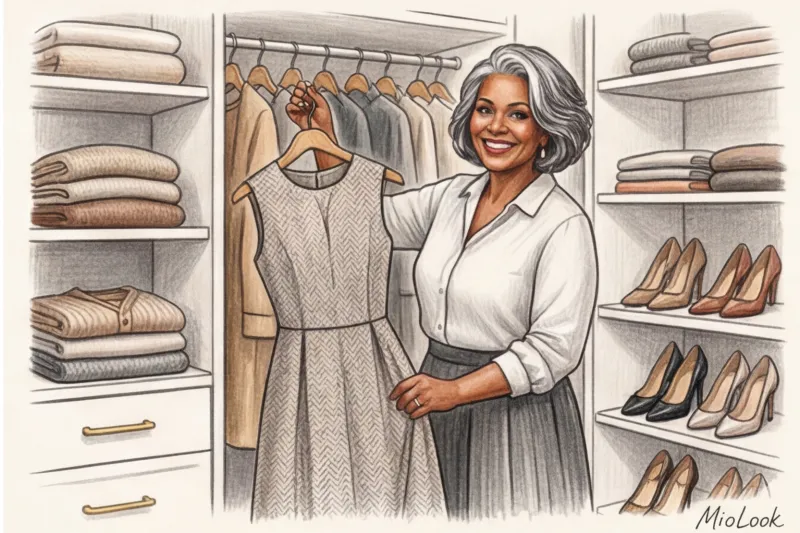
Stop treating your wardrobe like a storage space for camouflage covers. Your body deserves a beautiful, high-quality architectural frame. Once you start choosing thick textures and structured cuts, you'll be amazed at how luxurious and stately you can look every day.