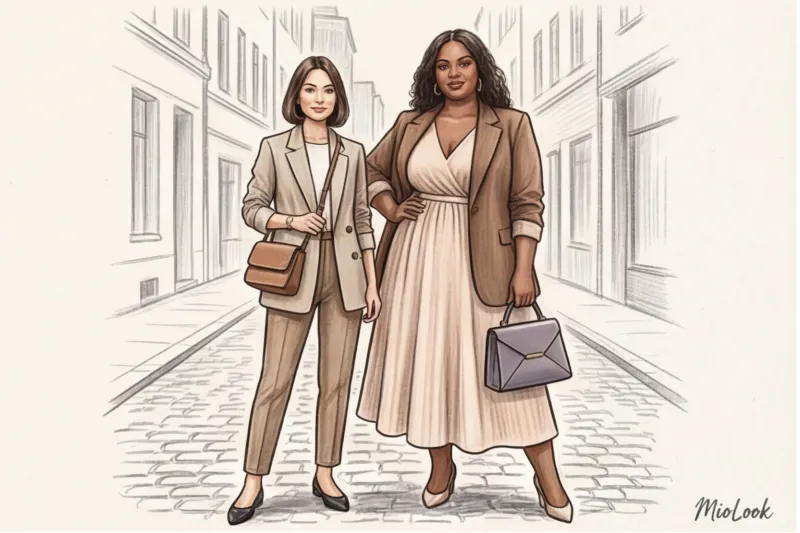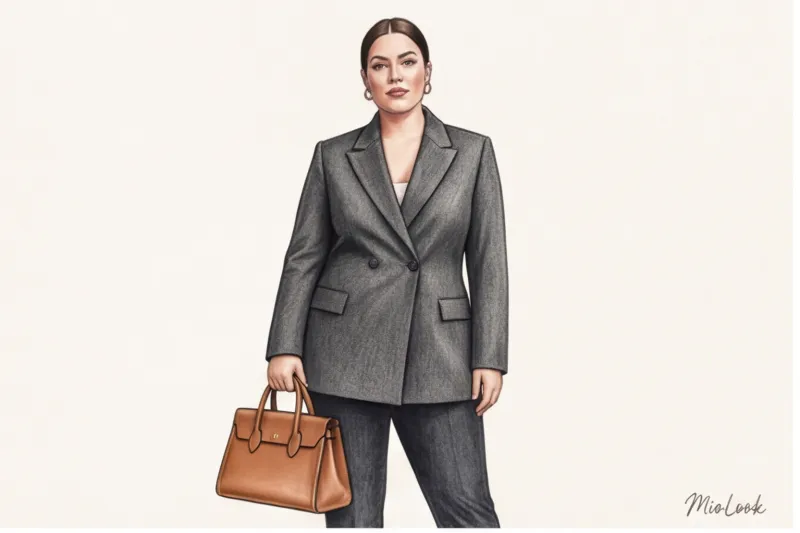
"Buy a huge bucket bag, and it'll make you look like Thumbelina." How many times have you heard this harmful, absurd advice from the glossy magazines of the 2000s? In 12 years as a stylist, I've seen hundreds of women's wardrobes, and I can say with certainty: shapeless accessories don't hide curvature. They make the figure look bulky, bloated, and detract from the image's status.
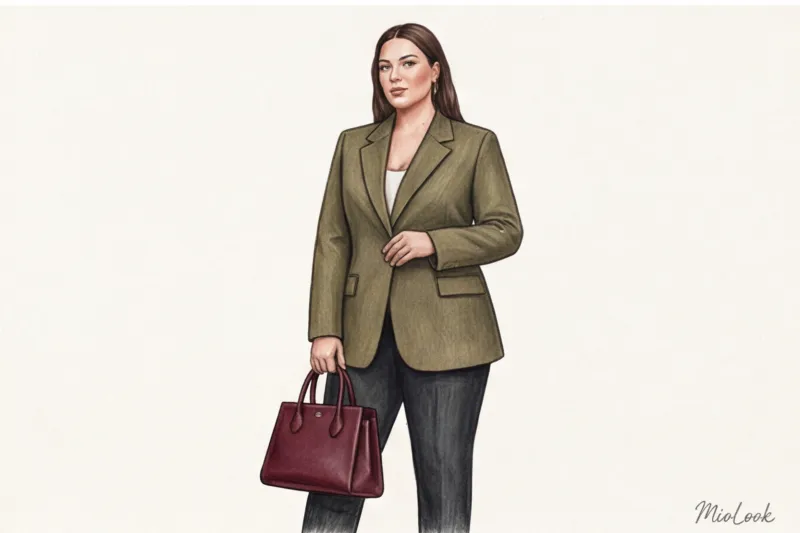
I'm Giulia Rossi, and my approach to styling is based on the principles of Italian architecture. We won't "hide" anything. We'll create the right proportions using clean lines, precise bag geometry, and the right lasts. We've covered the capsule concept in detail in our complete guide. Basic Wardrobe for Plus Size Women: Putting Together a Capsule And today we'll talk about the basics—shoes and bags.
If you've ever searched for "how to choose shoes for full feet," you've likely encountered recommendations to wear exclusively black and avoid heels. Forget that. Let's explore style engineering that works in real life.
Architecture instead of camouflage: why accessories are the supporting structures of an image
Shoes and bags aren't just accessories to a dress. They're focal points that direct the viewer's gaze. The "big body, big details" rule only works halfway. It's not the size that matters, but rigidity of form.
I had a revealing experience in my practice. Anna, a top manager at a logistics company (size 52 RU), came to see me. She loved to wear a soft micro crossbody bag with a thin strap. The bag sat high, the strap cut into her chest, and the micro-detail itself, in contrast, made her stomach area appear three times larger. To top it all off, Anna wore worn-out soft moccasins. Her entire professional status literally dissolved in these shapeless garments.
We swapped the soft crossbody for a rigid, structured Saffiano leather satchel, which she began carrying in her hand, and the moccasins for loafers with a distinct welt. The silhouette instantly elongated, adding a static, expensive feel.
Your perfect look starts here
Join thousands of users who look flawless every day with a smart capsule selection algorithm.
Get access — €0.99 onceHow to Choose Shoes for Full Feet: Engineering the Perfect Pair
The most fatal mistake I see in plus-size clients is buying shoes two sizes too big to compensate for their foot width. This results in tripping, the arch support being out of place, and a bloody heel. Size and width are two different measurements.
When I worked with shoe factories in the Italian Marche region, the craftsmen explained the architecture of the last to me. You should look for brands that produce shoes in H, K, or W/WW (Wide) widths. Premium Italian and German shoes often have a wider toe box to prevent toe compression.
Invest in the right materials: nappa (soft calfskin) and suede will gently mold to your foot after a couple of days of wear. Stiff, cheap, mass-market faux leather will never fit your foot—it'll just deform your joints.
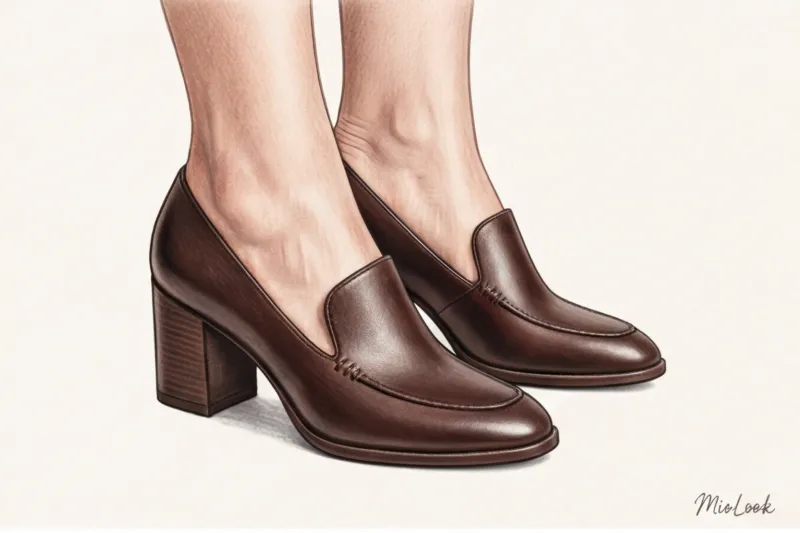
Toe shape and heel construction for harmonious proportions
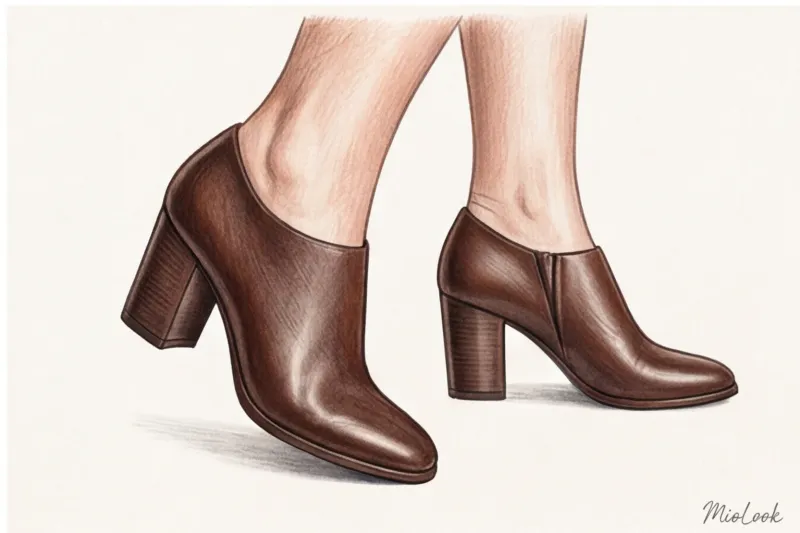
An almond-shaped toe is your best friend. It visually lengthens the leg and makes the ankle look more graceful. A completely round toe (like that of classic ballet flats) makes the foot appear larger and shortens the height.
Now, on to a sore point: stiletto heels. According to the Journal of Applied Biomechanics (2023), a thin stiletto heel weighing over 80 kg disrupts the spinal axis and increases impact load on the metatarsal bone by 40%. Visually, this creates an "ice cream cone" effect—a heavy upper on a dangerously thin base, which is psychologically perceived as instability.
Your alternatives: a block heel, a proper architectural “wine glass” (kitten heel) located strictly in the center of the heel, and a hidden platform in the toe area (1-1.5 cm), which relieves tension from the arch of the foot during status outings.
Secrets to choosing boots for full calves: Let go of compromises
How many times have you struggled to zip up a pair of boots, struggling to pull the leather over your calf? The standard boot shaft in mass-market stores is 35-38 cm. For a full calf, you'll need a model with a circumference of 42-48 cm. These are available in both specialized and premium lines.
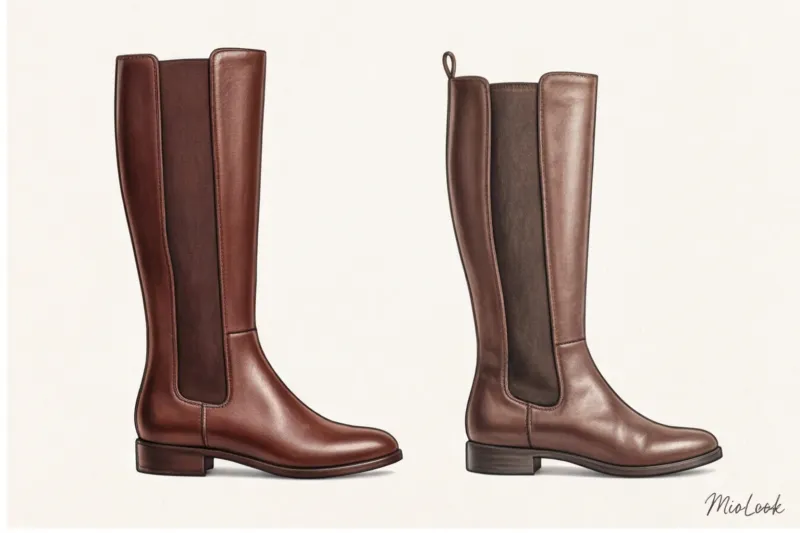
The anatomy of the perfect plus-size boot for women includes hidden elastic inserts (Chelsea elements) along the zipper. They provide that vital 2-3 centimeters of freedom of movement without constricting the foot.
"The biggest mistake is buying boots that end at the widest part of your calf. Shoes should fit where they narrow—that is, right below the knee."
Choose a straight (tubular) shaft. Tubular boots, which don't hug the leg like a stocking but stand up straight, create a straight vertical line. The leg inside such a boot appears significantly slimmer. As for texture, matte leather and thick suede reduce bulk by absorbing light, while glossy leather acts as a magnifying glass.
Access to MioLook for €0.99 — one-time payment
A smart AI stylist will select the perfect look based on your proportions and body type, so you always feel confident.
Get access — €0.99 onceThe Oversized Bag Myth: Why Shapeless Bags Ruin Your Silhouette
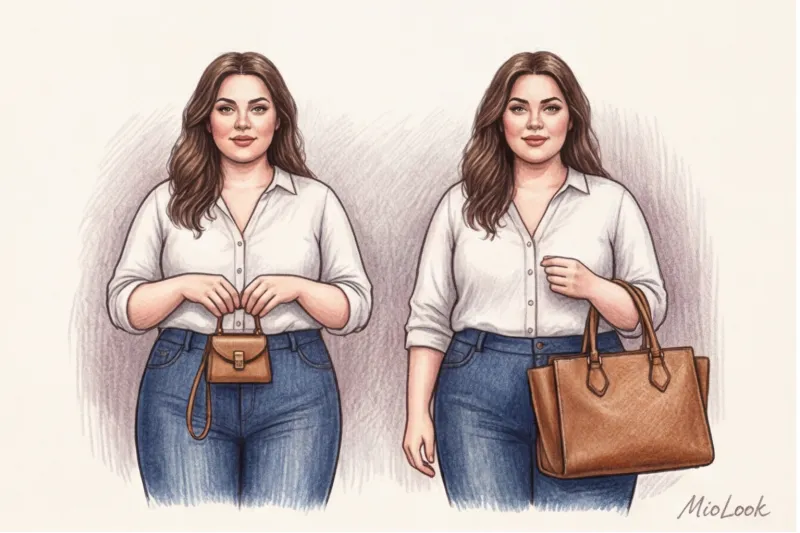
Let's return to the myth I mentioned at the beginning. The idea that a huge, soft bag (hobo or slouchy tote) will make you look petite is fundamentally wrong. A shapeless bag mimics the soft curves of your body, creating a "swollen" silhouette with no distinct lines.
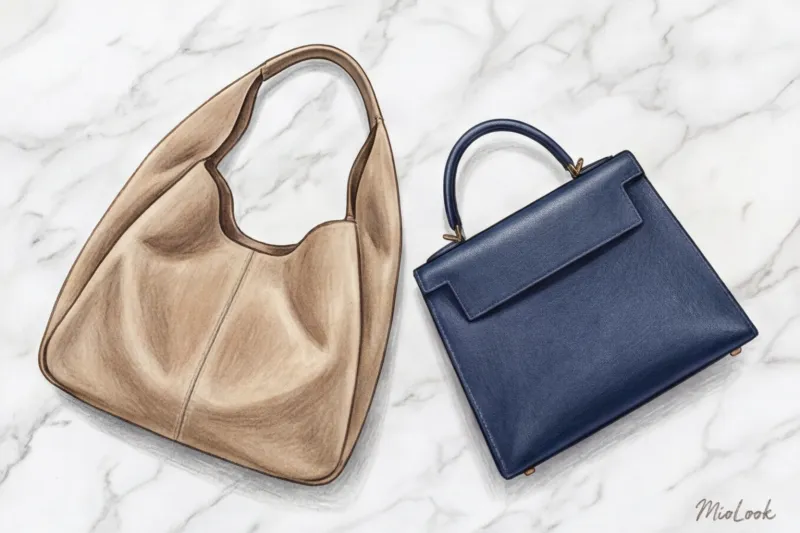
According to the WGSN trend study (2024), architectural bag shapes have returned to the runways precisely because they "pull together" any look. Rigid shapes (satchels, trapeze totes, and box bags) create a contrast. They establish a clear geometry: the bag's right angles contrast with the curves of the figure, and this contrast makes the body appear more toned.
Pay attention to the leather finish. Smooth, dense leather or Saffiano/Epsom texture not only looks much more expensive than fine, soft leather, but also holds its texture perfectly for years. The bag shouldn't sag under the weight of your keys and phone.
Bag Geometry: The Rule of Thirds and Accessory Placement
In styling, we actively use the golden ratio. The proportions of 1/3 and 2/3 define the ideal scale. For plus-size women, micro bags are strictly contraindicated (they'll disappear against the figure), and oversized duffel bags add bulk. Your choice is a medium-large size (30 to 40 cm wide).
But the most important thing is - Where The bag is running out. Have you ever noticed that the length of the strap can add a few extra pounds?
- If the bag ends at the widest part of the hips, it visually widens the pelvis.
- If a short crossbody lies on the chest, it makes the top look monumental.
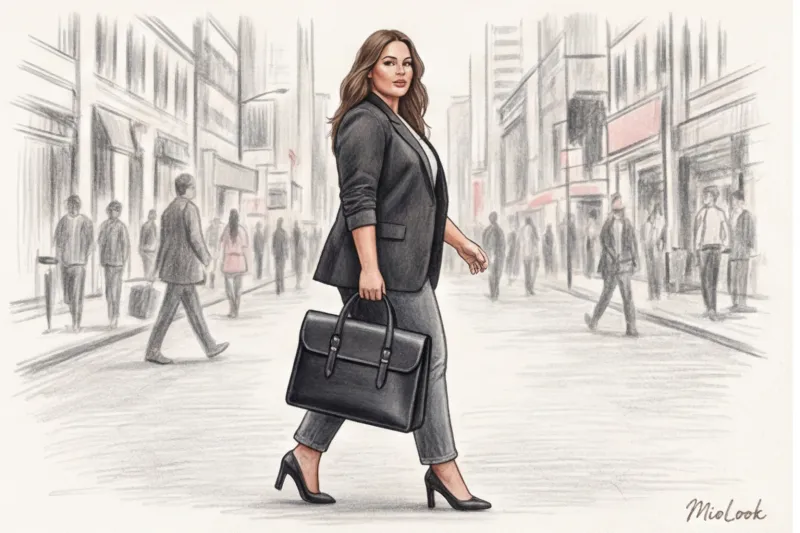
- The ideal placement is for the bag to end at the narrowest part of your figure (under the bust or just below the waist).
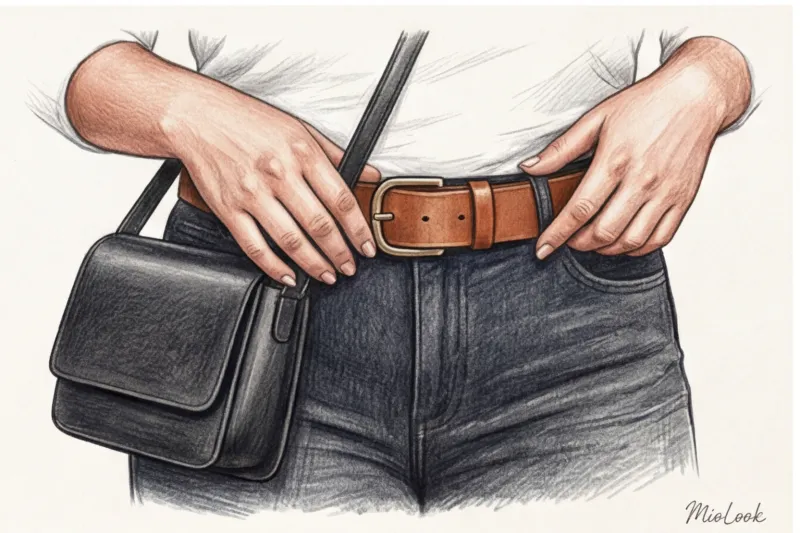
The most prestigious and complimentary way to wear a bag is with a top-handle bag. Carrying one in your hand or in the elegant crook of your elbow creates the perfect distance between the accessory and your body, adding a sense of airiness and lightness to your look.
Checklist: Putting together an investment capsule of plus-size accessories
To cover 90% of your needs, you don't need a huge closet. You just need a well-curated base. Here's a formula that works flawlessly for my clients:
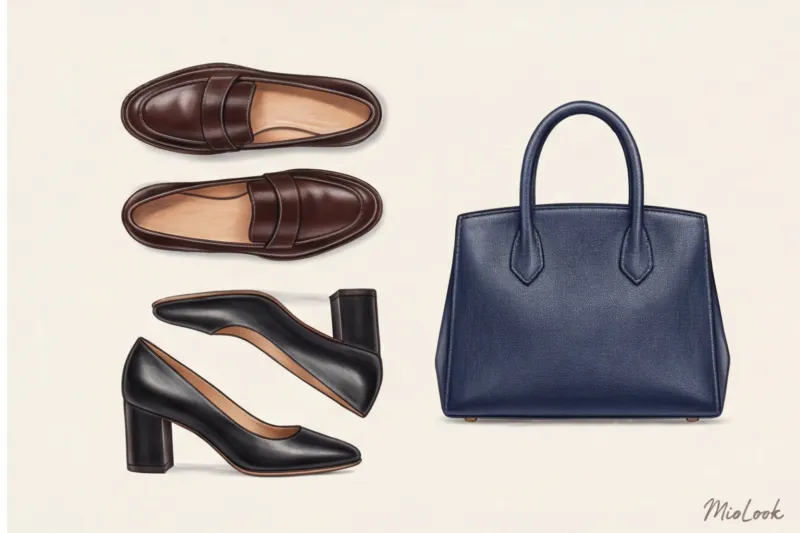
- Basic footwear: Loafers with a thick (but neat, not tractor-like!) sole; almond-shaped toe pumps with a block heel; high tube boots for the cool season.
- Basic bags: a rigid A4 tote for work (keeps its shape even when empty), and a structured medium-sized bag (25-30 cm) for the city.
Now let's do the wardrobe math (cost-per-wear formula). Buying three pairs of cheap faux leather loafers from a mass-market store that will rub your feet, lose their shape within a month, and be thrown away costs about $150. Buying one perfect pair of Italian shoes with the right width costs $300. You'll wear them 100 times a season without pain or tears. The cost per wear is only $3. This is the smartest investment in your comfort and health.
Fair Limit: This calculation and advice for standard wide width (WW) won't work if you have severe lymphedema (severe swelling) or serious orthopedic problems. In this case, mass-market and even premium brands should be replaced with custom-made shoes from an orthopedist—and that's completely normal.
Ready to get started?
Try the MioLook free plan—digitize your accessories collection and create looks without the commitment.
Get access — €0.99 onceStylist's Summary: Your Accessories Are Your Structural Elements
Finding the perfect shoes for full feet and the right structured bag takes time. You'll have to avoid impulse purchases, learn to measure bootlegs with a tape measure, and read the ingredients on the label.
But the results are worth the effort. The main rule of investing in a wardrobe, which I repeat year after year: you can skimp on T-shirts and jeans, but you absolutely can't skimp on shoes and bags.
Shift your focus from the desire to "disguise your full figure" to consciously sculpting your silhouette. Ditch the shoes that hurt and the bags that turn you into a shapeless blob. Choose a firm shape, the right Italian arch support, and a stable heel—and you'll see how not only your reflection in the mirror but also your gait will change.