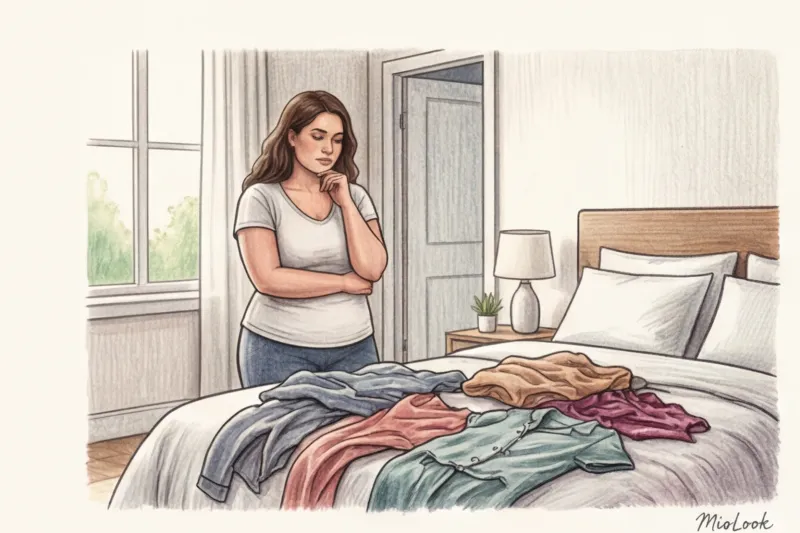
Last week, I was sorting through a new client's wardrobe. We reached the linen drawer, and I saw a classic, painfully familiar scene: two of my husband's faded T-shirts, some pilling synthetic shorts, and a pair of shapeless nightgowns with a terrifying pink print. My silent question left her with a shrug. "Well, who sees me under the covers? And finding something comfortable and attractive for my size 54 is practically impossible.".
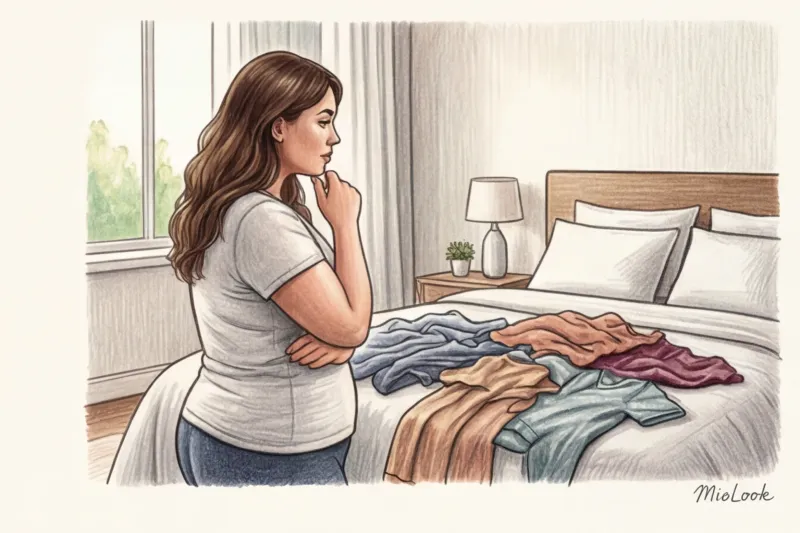
This is a profound misconception that robs you of hours of proper rest. Properly designed pajamas for plus-size women It's not just a piece of oversized fabric. It's a complex, ergonomic product that addresses specific needs: it wicks away excess moisture, prevents chafing, and doesn't block circulation during deep sleep. We've covered the physiology of nighttime rest in more detail in our A complete guide to choosing pajamas for healthy sleep and beautiful skin.
Today I want to talk about loungewear not from the perspective of "how to hide flaws," but through the prism of textile engineering and your personal comfort.
Why standard pajamas for plus-size women often disappoint: design errors and stereotypes
The main problem with mass-market clothing lies in so-called pattern grading. Many budget-sector manufacturers (under €30–€50) skimp on pattern development. They take a successful pattern for a size 44 and simply mathematically increase its proportions to a size 54. The result is a disproportionate "cover" that squeezes the chest but hangs treacherously on the shoulders.
The second common mistake I constantly see in my clients is buying pajamas two sizes too big for the sake of supposed "freedom of movement." What's really happening? Excess stiff fabric bunches up under the covers. Every time you roll over, this mass of fabric twists, forming rough creases and digging into your body. Instead of relaxation, you experience micro-awakenings.
"Your sleepwear shouldn't be oversized. It should be your actual size, but cut correctly, anatomically, with allowance for ease of fit"—I repeat this rule at every consultation.
Access to MioLook for €0.99 — one-time payment
A smart AI stylist will select the perfect look and help you put together a capsule wardrobe for your home.
Get access — €0.99 onceTextile Science: Smart Fabrics for Maintaining a Healthy Microclimate
During sleep, the human body actively regulates temperature and produces between 200 and 500 ml of moisture. In curvy women, this figure often falls at the upper limit of normal. According to the National Sleep Foundation (2023), impaired thermoregulation is the number one cause of fragmented, interrupted sleep.
Cheap polyester, acrylic, and fluffy microfiber create a harsh "greenhouse effect." Moisture doesn't evaporate, your body temperature rises, your brain triggers alarms, and you wake up feeling groggy. While synthetics are easy to handle, natural fabrics have a major catch.
The Hidden Disadvantage of 100% Cotton
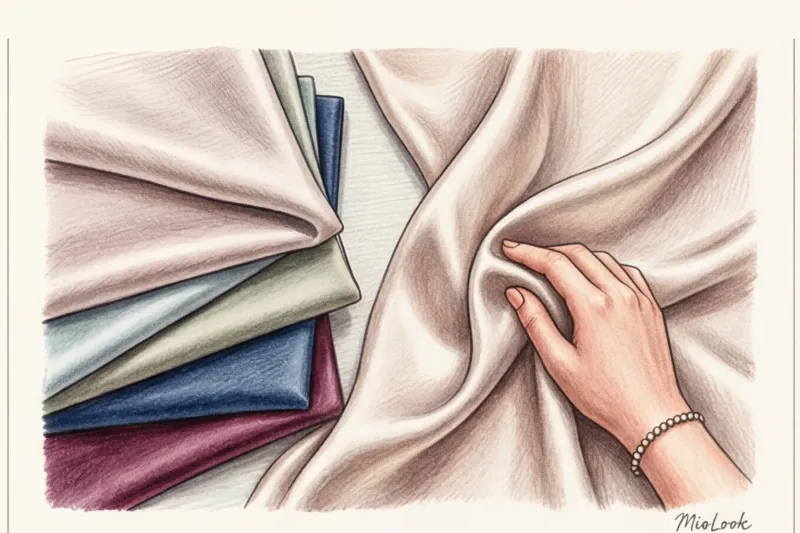
The most counterintuitive piece of advice I give is that 100% cotton is far from the best choice for plus-size sleepwear. Yes, we've been told for decades that cotton is ideal. It does absorb sweat very well. But the problem is that it traps moisture within the fibers and dries disastrously slowly.
When a cotton T-shirt absorbs moisture, it becomes heavy, damp, and cold. This creates a "cold compress" effect, causing the skin beneath the blanket to suddenly cool. When does this rule NOT work? The only exceptions are ultra-fine cotton fabrics, such as cambric or gauze muslin, which are highly breathable. But for basic knitwear, this rule is unwavering.
Tencel, Modal, and Silk: Investing in Quality Sleep
For plus-size women, modern fibers made from wood cellulose are a true salvation. Eucalyptus lyocell (Tencel) and beech modal have a unique structure. Research by Lenzing Group laboratories (2022) proved that Tencel wicks moisture away from the body 50% more effectively than cotton and dries twice as fast.
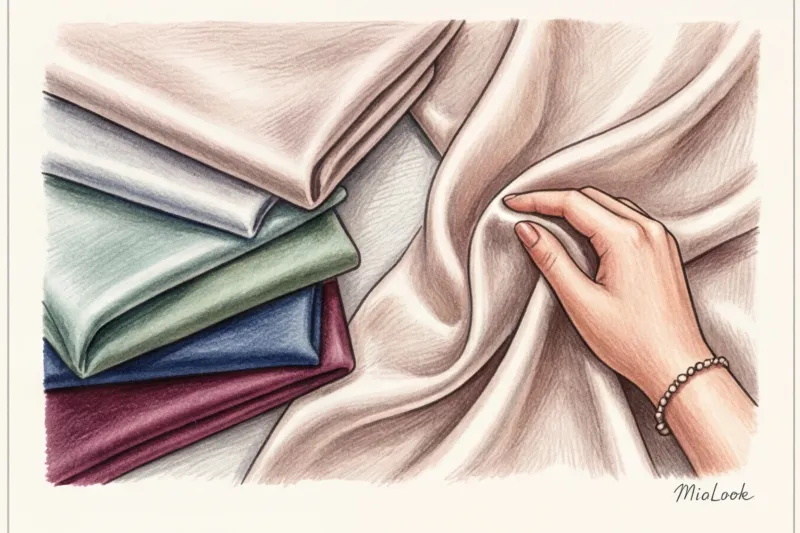
These fabrics have a phenomenal, flowing texture with a light, silky finish. They have a zero-friction coefficient, so your pajamas literally glide across your sheets as you toss and turn. A high-quality lyocell set will cost you between €80 and €130, but the investment will pay for itself from the very first night.
If your budget allows (€200 and up), consider mulberry silk. Its amino acid composition is similar to that of human skin, making it an ideal choice for those prone to contact dermatitis.
The Anatomy of Comfort: Tech Details to Check Before Buying
Even the most expensive fabric won't save a garment if it's poorly stitched. Over 12 years of working as a stylist, I've developed a strict algorithm for checking lingerie seams. I literally turn the garment inside out and stretch the seams by hand.
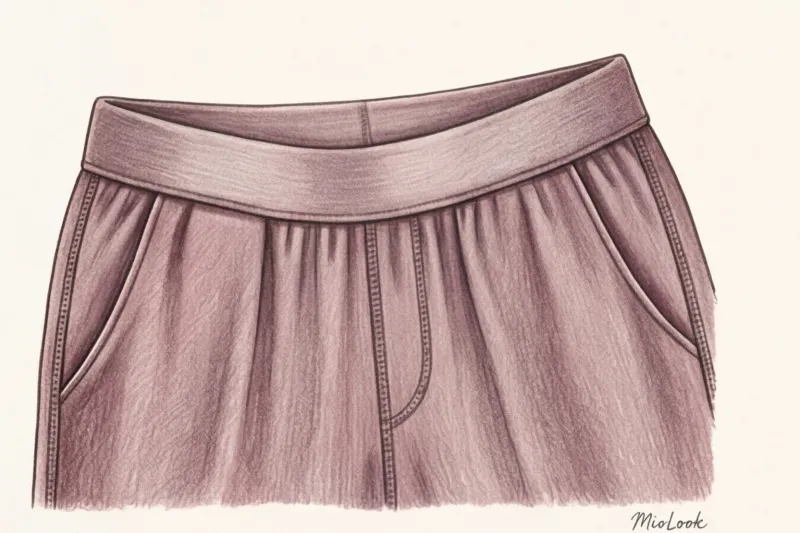
- Correct seams: Look for flatlock seams or French hem stitches. The standard, coarse four-thread overlock stitches used in mass-market garments dig into the skin under the weight of the figure and leave red marks on the skin.
- Belt design: Thin elastic bands and stiff drawstrings are strictly prohibited—they impede lymph flow. A proper waistband should be elastic, at least 3-4 cm wide, and stitched in several vertical places to prevent the elastic from twisting inside the drawstring when washed.
- Presence of gusset: Plus-size pajama pants and shorts must have a gusset (an additional diamond-shaped or oval piece of fabric in the crotch area). This relieves tension when the legs are spread and completely prevents chafing on the inner thighs.
- Marking: No hard sewn-in tags on the neck or side seams. Printed labels only.
Pajamas or nightgown: choosing a style to suit your individual habits
The choice between pants and a nightgown should be dictated not by fashion, but by your usual sleeping position. If you sleep in the fetal position (with your knees pulled up to your chest), a long nightgown will inevitably ride up, bunching up at your waist. Pantsuits are your choice. If you sleep on your back in the star position, a nightgown will provide the greatest sense of freedom.
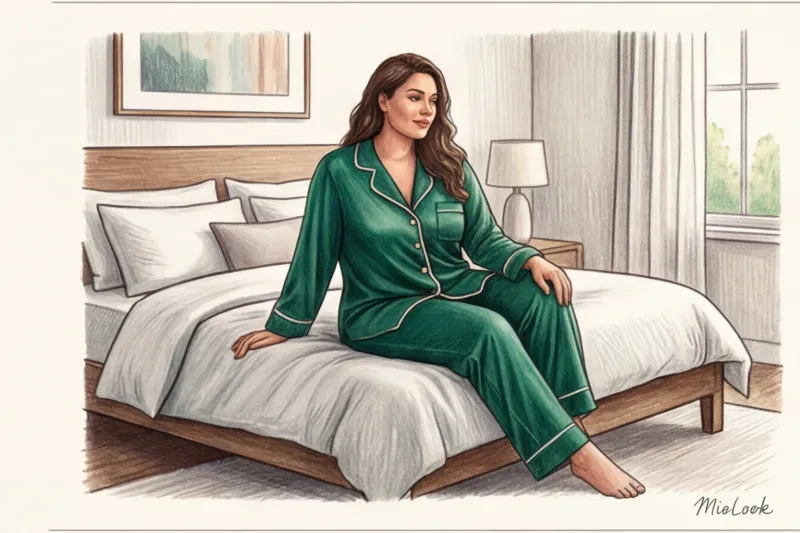
Perfect trouser sets
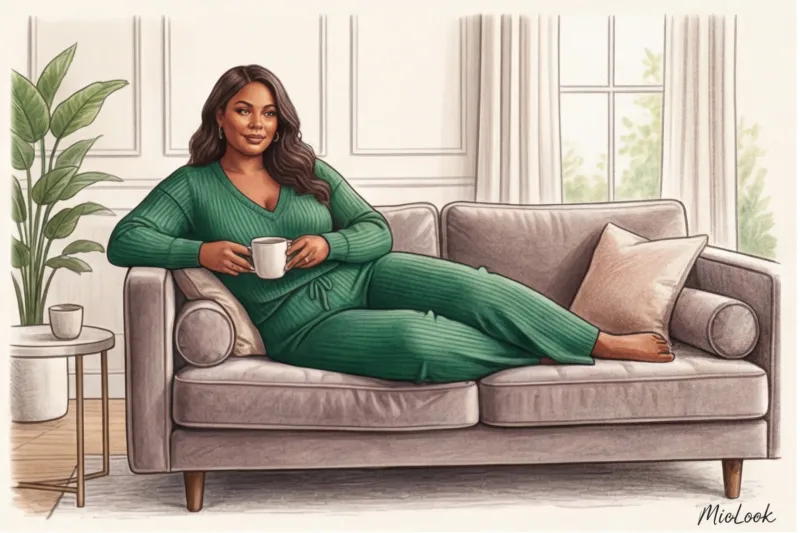
Choose trousers with a mid- or high-waist. This is crucial for protecting your lower back from drafts when you roll over. The legs should be straight or slightly flared (palazzo). Absolutely avoid joggers with tight elastic at the ankles—they can cause severe ankle swelling by morning.
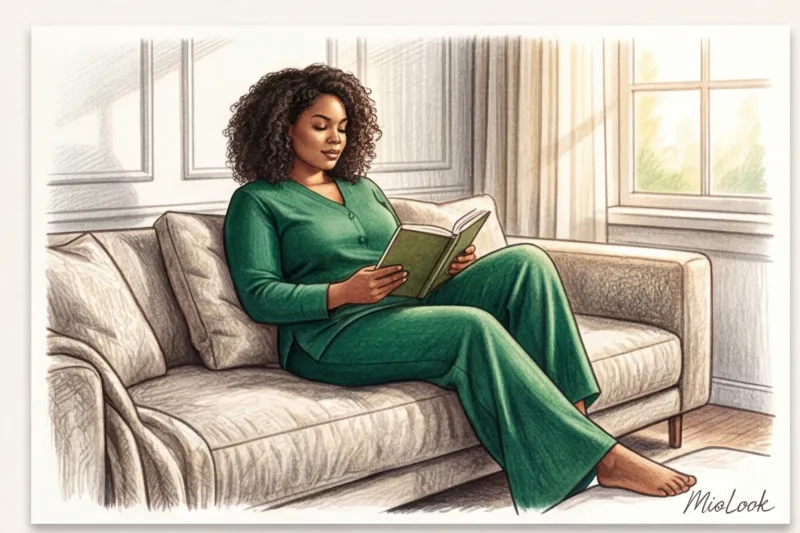
Loose button-down shirts or long sleeves with a significantly dropped shoulder line are ideal for tops. The armholes should not dig into the armpit, as this will block normal circulation in the chest area.
Your perfect look starts here
Join thousands of users who look flawless every day with MioLook, from loungewear to evening wear.
Get access — €0.99 onceShirts of the correct cut
The secret weapon of the perfect plus-size shirt is the bias cut. Fabric cut at a 45-degree angle to the grain achieves phenomenal flexibility. It softly hugs the bust and flares out smoothly at the hips without creating excess bulk. However, there's a caveat: this advice doesn't work well for those with a pronounced apple shape and a large midsection—in these cases, a straight A-line silhouette with a pleated back is better.
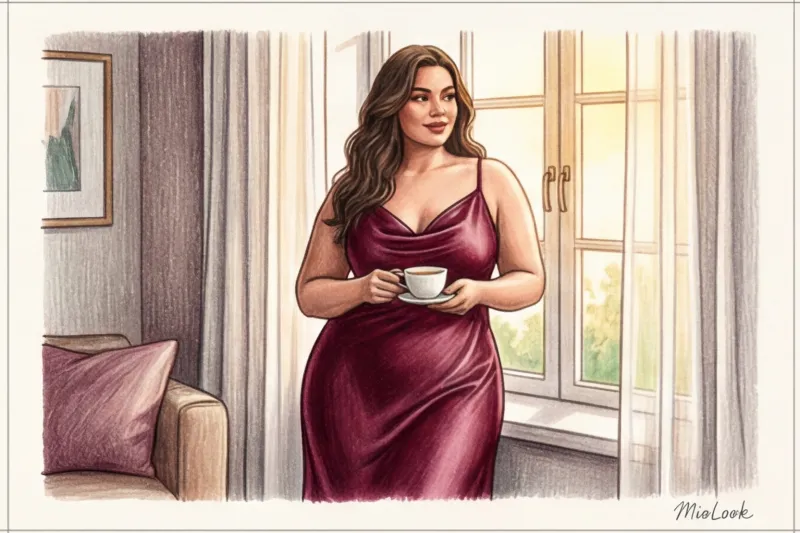
Pay attention to the straps. If you have a full bust, thin spaghetti straps will dig into your shoulders. Choose a width of at least 2-3 cm. A midi length with deep (mid-thigh) side slits will ensure freedom of movement. By the way, the principles of working with proportions are relevant not only for sleepwear: I recommend checking out our article on How to hide a belly and love handles with clothing after 40.
Aesthetics and Psychology: Why It's Important to Ditch the "Grandma" Colors
Loungewear is a marker of how we feel about ourselves. The "nobody sees me" paradigm is destructive to women's self-esteem. You see yourself. Your reflection in the mirror before bed and immediately after waking up sets the tone for the entire day.
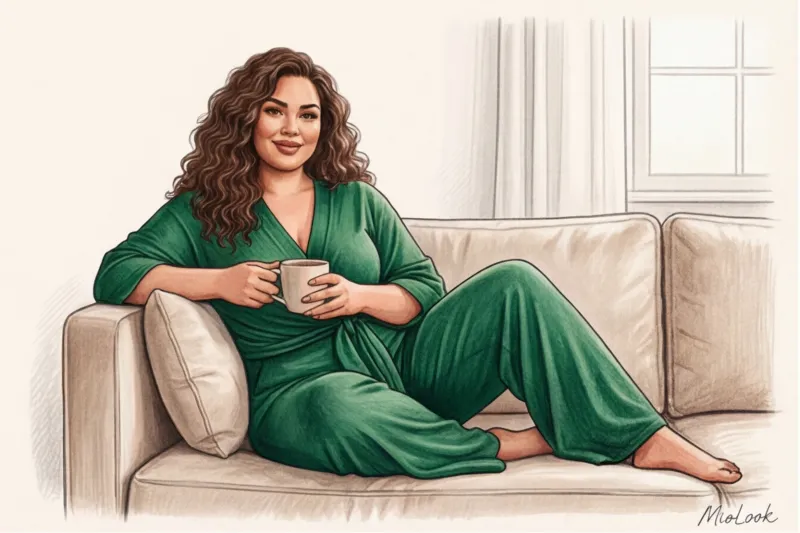
One of my clients struggled with morning sluggishness for years. When we swapped her bland fleece robes for a flowing sapphire modal set, she confessed: "For the first time in a long time, I felt like a woman, not just a tired mother, even before I drank coffee.".
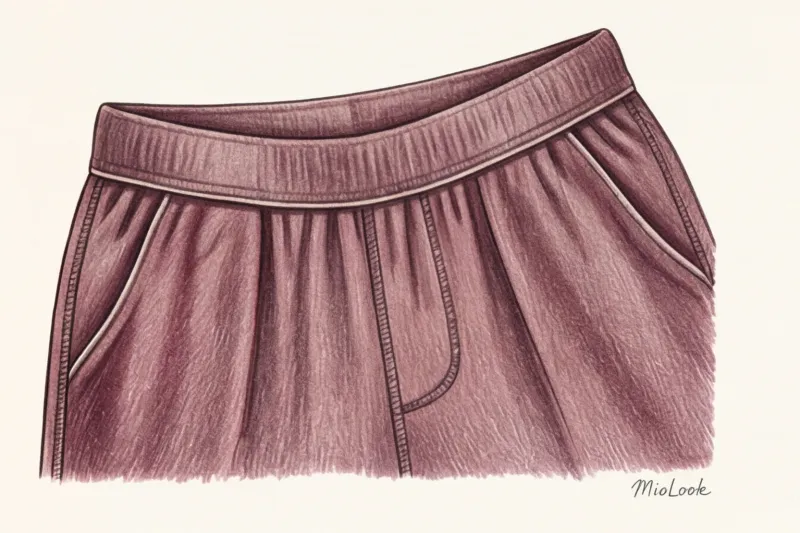
According to the WGSN trend bureau's 2024 report, the loungewear segment is finally moving away from childish prints of teddy bears, bunnies, and coffee cups. These prints visually cheapen the look and dull the appearance. Choose deep, elegant monochrome shades: emerald, sapphire blue, dusty rose, rich burgundy, or dark chocolate.
Look for elegant trim: contrasting silk piping on the lapels, neat mother-of-pearl buttons, delicate inserts of soft, stretchy lace (that doesn't itch!).
Checklist: Auditing Your Linen Dresser
Open your loungewear drawer this evening and do a quick inventory.
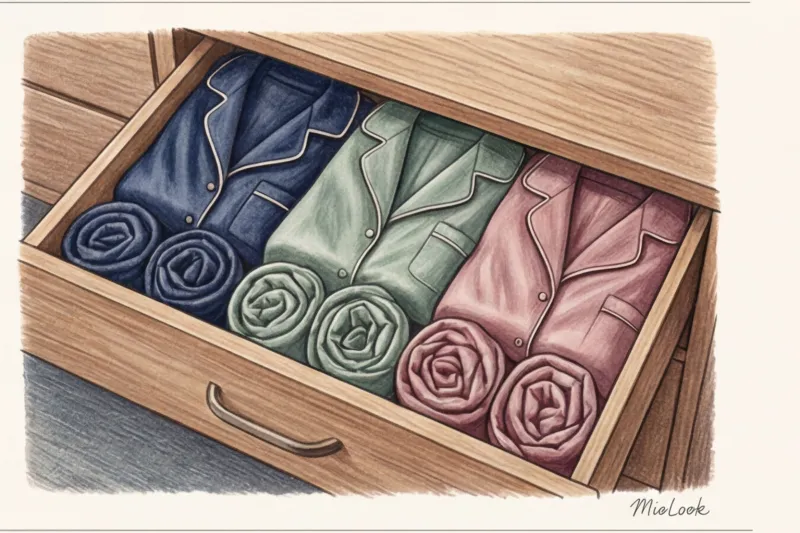
Apply the "3-second rule": if you look at an item and see persistent pilling, stubborn cream stains, a stretched neckline, or faded fabric, recycle it immediately. Items with a damaged fiber structure no longer function as thermoregulators.
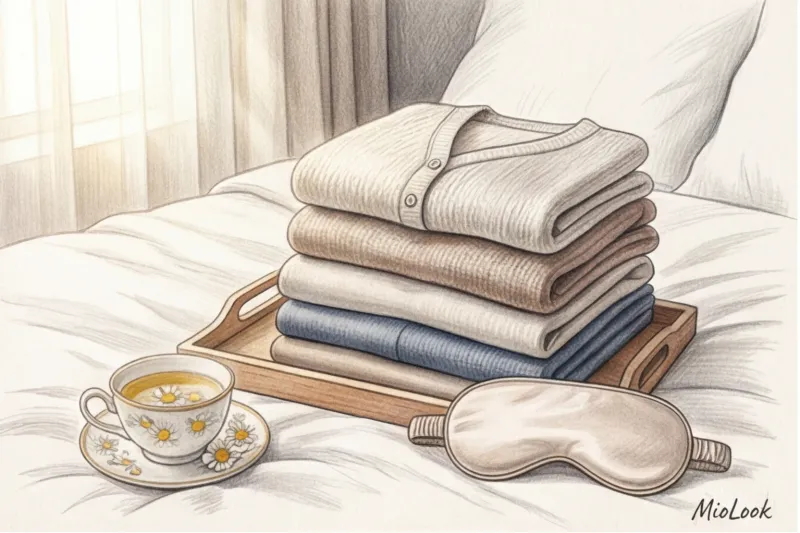
How many pajamas do you need to be happy? The ideal functional capsule consists of:
- Two sets for the cold season (high-density lyocell or micromodal with long sleeves).
- Two sets for summer (midi shirts or sets with shorts made of lightweight tencel).
- One luxurious silk set "for a special mood".
Don't forget about proper care. Premium cellulose fibers (modal, lyocell) and silk require careful handling. Wash them strictly at 30 degrees Celsius, using only liquid detergents for delicate fabrics (powders clog the pores of the material). And most importantly, avoid tumble drying, which destroys the elastane and causes significant shrinkage.
Choosing sleepwear isn't a whim, but a fundamental need for your body's comfort and restoration. Avoid the compromises of "wearing the same old clothes," invest in a quality pair of pajamas with proper seams made from high-tech fabric, and you'll be amazed at how much deeper and more restful your sleep will be.