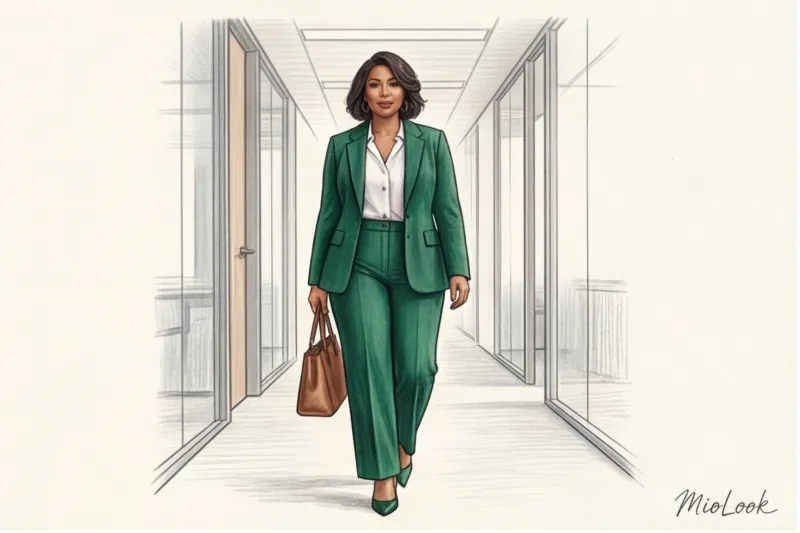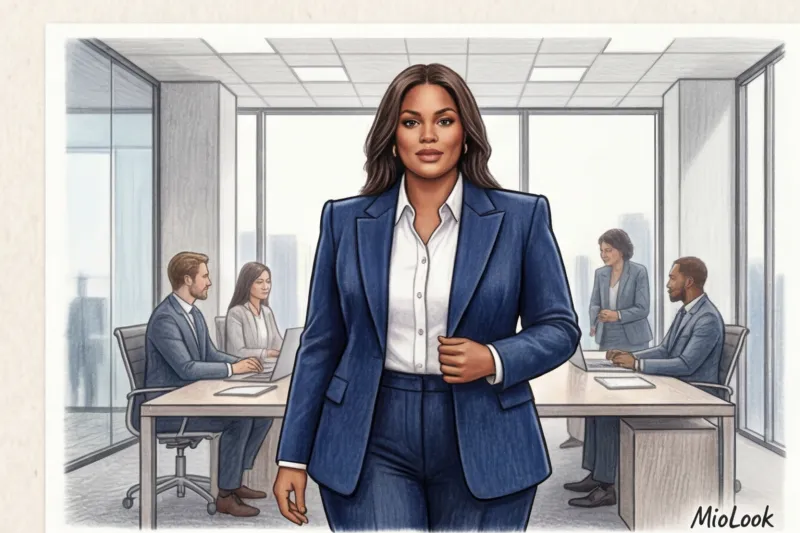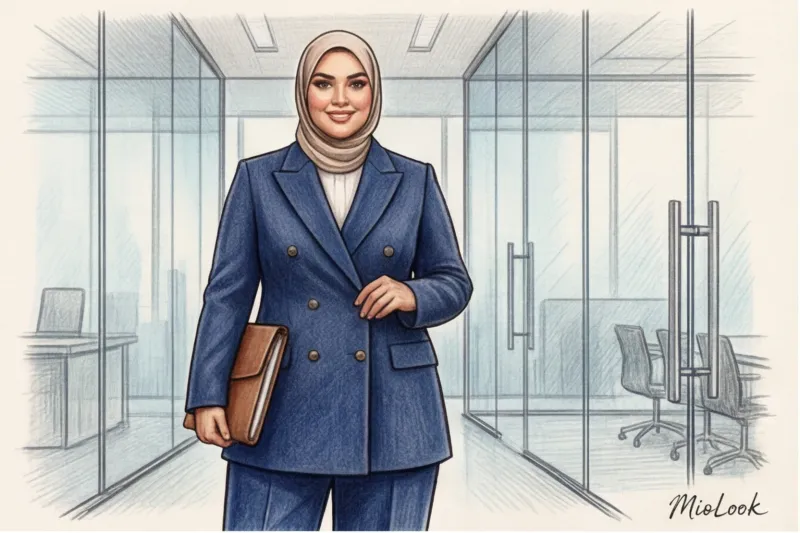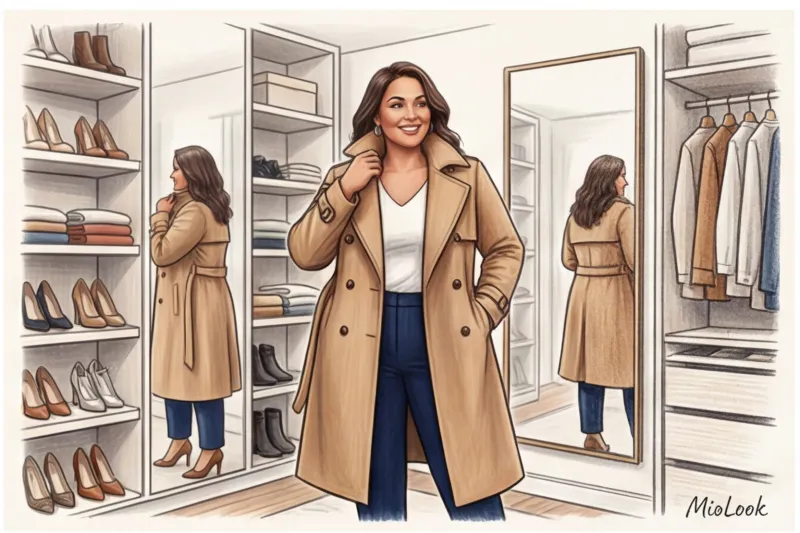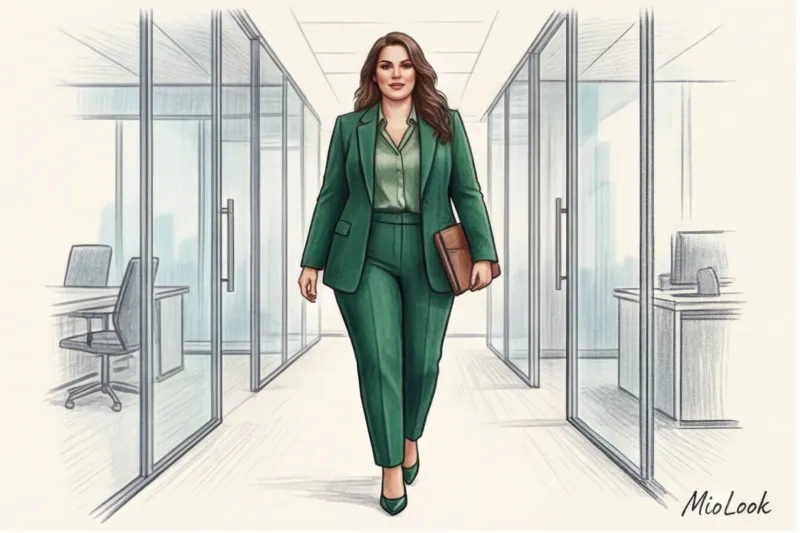
Imagine a typical scene: a boardroom meeting, strategic matters being discussed. A brilliant female CEO with an iron grip enters the meeting room, but she's wearing a shapeless black cardigan that literally screams, "I want to blend in." In my 12 years as an image consultant, I've seen this scenario dozens of times. For some reason, it's believed that business style for plus-size women should be about visually "disappearing" and taking up as little space as possible.
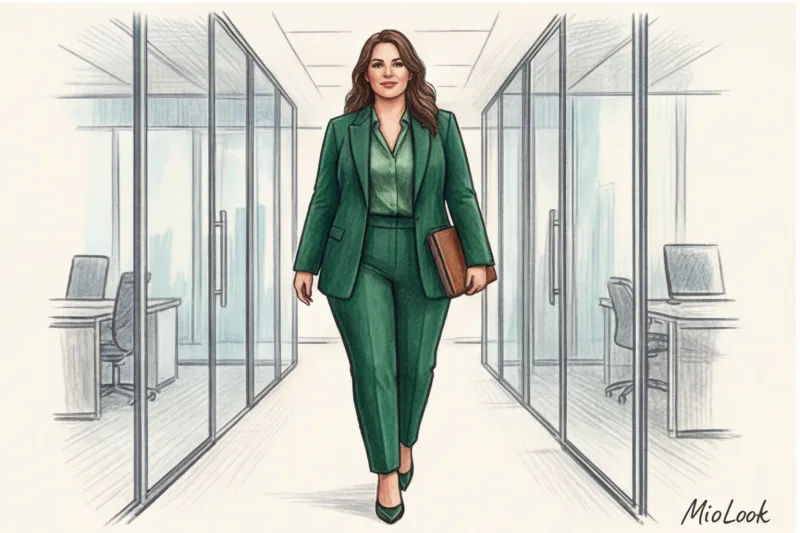
Let's get this straight: status isn't about appearing three sizes too small. Status is about occupying your space with absolute dignity and confidence. I wrote more about the psychology of a leader's wardrobe in our a complete guide to the ideal image of a female leader , and today we'll talk about the pure physics and geometry of plus size style.
I'll show you how to use architectural cuts, fabric density, and color not to "hide flaws," but to firmly control the attention of your interlocutor.
The Myth of Black: Why Business Style for Plus-Size Women Shouldn't Be Gloomy
The most harmful and persistent stereotype in styling is that "black is slimming." As a certified colorist, I am obligated to dispel this myth. Black is slimming. only This applies only if the item is made of a stiff fabric that provides a perfect frame. In 90% of other cases, black knitwear or thin suiting fabric will work against you.
It's all about contrast. In a bright office, a figure dressed in all-black becomes a monolithic, heavy blob. Black emphasizes the silhouette's outer contours. If this contour lacks clear architectural lines, the color will reveal every wrinkle and unevenness.
"One of my clients, the CFO of a large IT company, wore exclusively black suits for years, considering them her armor. When we replaced her "mourning" wardrobe with deep navy blue and rich emerald, her colleagues started asking if she was back from vacation and how she'd managed to lose weight so quickly. We didn't change her clothing size—we changed her focus."
Status Shades for Plus-Size Executives: A Palette of Influence
Color is your nonverbal tool of influence in negotiations. According to Johannes Itten's color theory and modern perceptual psychology, different shades convey different competencies:
- Authority and distance: Deep blue (navy), dark chocolate, graphite, rich wine (marsala). These colors make people listen to you more attentively.
- Empathy and openness: Muted sage, dusty rose, caramel. Perfect for team meetings where you need to show commitment.
Forget the outdated "dark bottom, light top" rule. This scheme mercilessly cuts the figure in half at its widest point. A modern approach is monochrome verticals (a single-color suit) or subtle color blocking, where the jacket and trousers create a single, elongated line, and the top serves as just a subtle pop of color in the portrait area.
Access to MioLook for €0.99 — one-time payment
A smart AI stylist will select the perfect look for your body type and color type.
Get access — €0.99 onceFabric is everything: the secret to a luxurious and sophisticated silhouette
If I were asked to give just one piece of advice to plus-size women, it would be this: burn thin, flimsy knitwear. Thin viscose, cheap polyester, and soft cotton are the main enemies of a classy look. They cling to the body, emphasizing every anatomical detail, and detract from the silhouette's cohesion.
A prestigious wardrobe obeys the laws of physics. You need fabrics that create their own framework. Clothes should define lines, not simply cling to what's already there.
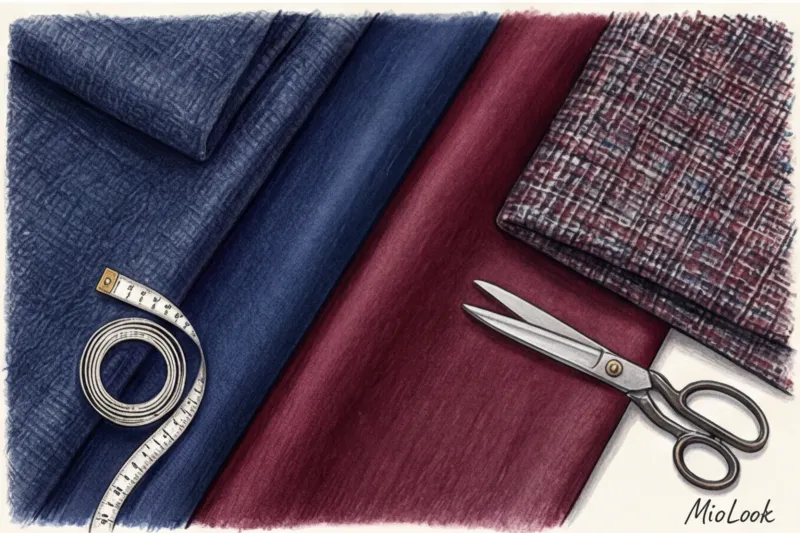
When buying, pay attention to the density. Look for suiting fabrics with a density of 250-300 g/m². Your best friends:
- Dense blended wool (with the addition of 2-5% elastane for comfort);
- Crepe (its grainy texture perfectly absorbs light and conceals volume);
- Whipcord.
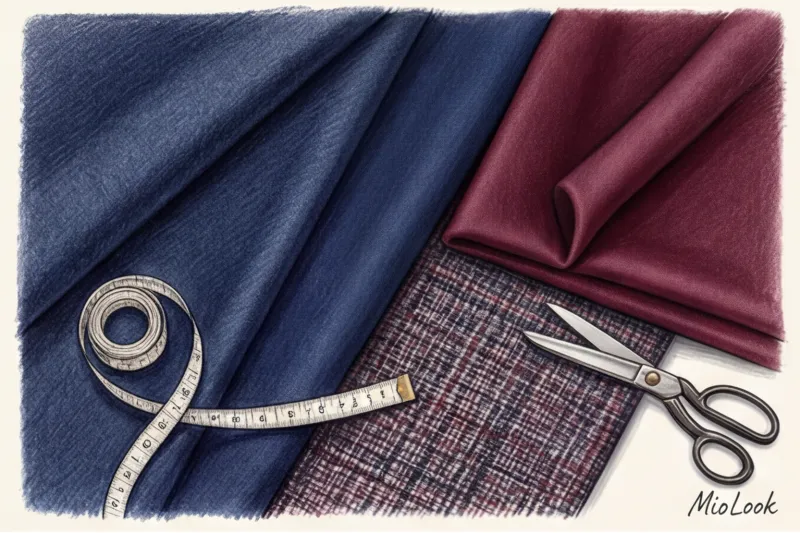
Important limitation: This rule doesn't work with voluminous textures. For example, a classic, loose bouclé tweed (in the Chanel style) will visually add at least 5 kilograms to your figure, especially if you have a prominent décolletage. Save it for accessories or choose smooth, tightly twisted threads.
Also, avoid any shiny materials. Satin, silk with a strong sheen, and lurex fabrics reflect light, visually expanding the area they're worn on. Matte fabrics absorb light and create a more compact silhouette.
Cut and Fit: How to Stop Hiding and Start Taking Control
The second most common mistake after all-black is trying to hide behind oversized clothing. Robes, loose tunics, and oversized jackets, all designed for men, make a large figure appear monumental and shapeless. In business, shapelessness is subconsciously interpreted as a lack of discipline.
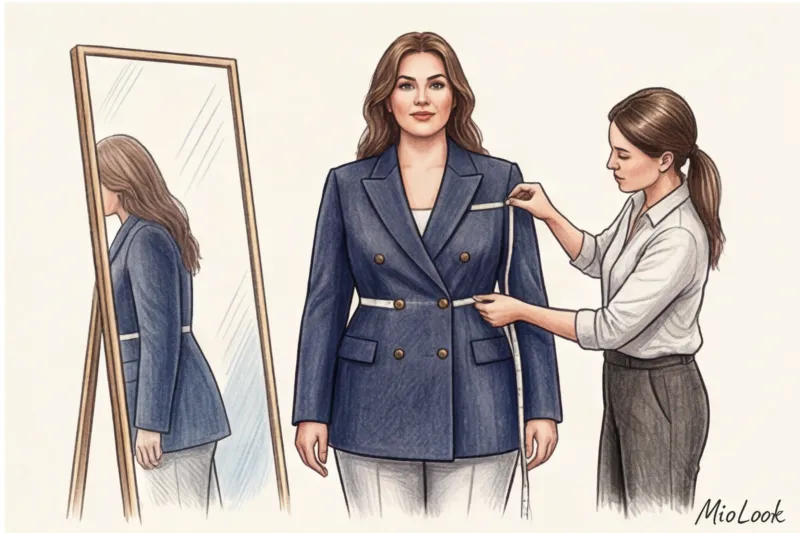
Bespoke tailors have a golden rule: "There should be air between the body and the fabric, but not wind." Clothing should be semi-fitted, outlining the contours of the body, but not cutting into it.
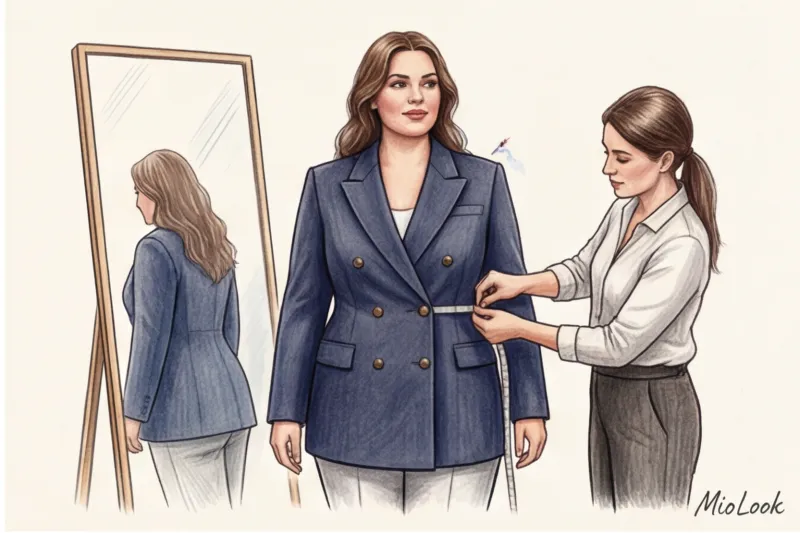
The cornerstone of a business wardrobe is shoulder line Statistically, 80% of the impression of your status and composure is conveyed by your shoulders in the first seven seconds of a meeting. Clear, slightly accentuated shoulder pads on a jacket work wonders: they visually balance proportions, making wide hips less noticeable against a structured top.
Pay attention to the length of your jacket. Never let the horizontal hemline end at the widest part of your hips—this will visually widen them as much as possible. The ideal length is either slightly higher (at the hipbone) or lower (covering the buttocks).
Trousers and skirts: creating the right vertical lines
Avoid skinny pants. On a fuller figure, they create a "carrot" effect, emphasizing the bulk of the upper body. Opt for straight-leg trousers with a crease or bootcut styles (slightly flared from the knee). A pressed crease creates a powerful vertical line, lengthening the legs.
When it comes to skirts, forget about knee-length skirts, which cut into the wrong places. A tight, midi-length pencil skirt (below the knee, to the narrowest part of the calf) with an elegant back slit will provide both ample stride and a flawless silhouette.
Your perfect look starts here
Join thousands of users who look flawless every day with MioLook.
Get access — €0.99 onceScale Matters: Status Accessories for Plus Size Women
In art and design, there's a law of proportion. The same applies to style. Against a stately, large woman, micro-handbags, thin 1cm-wide straps, and delicate stiletto heels look comical. They create contrast, emphasizing the body's volume.
Status accessories for a plus-size executive should be proportionate to her size:
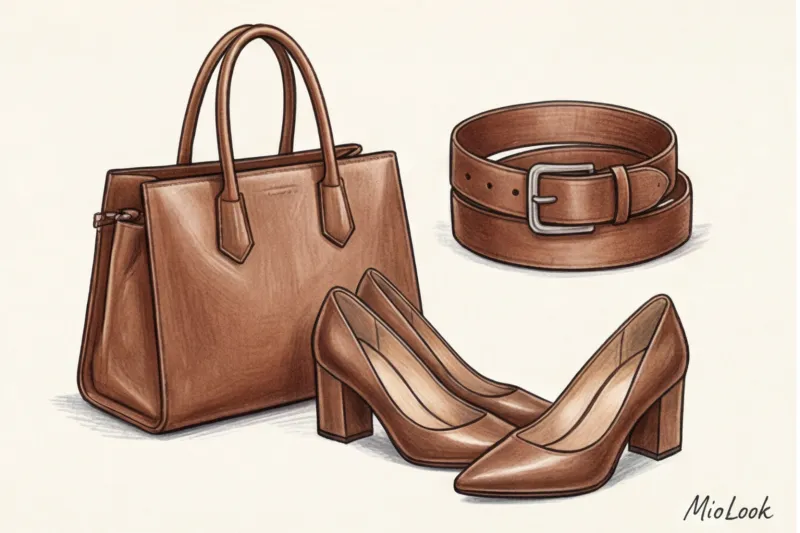
- Bags: A rigid frame, A4 size, or a large tote. Soft bucket bags will simplify the look. High-quality, minimalist hardware without unnecessary shine.
- Shoes: A sturdy block heel (5-7 cm) or elegant loafers with a thick sole. Choose a slightly pointed or almond-shaped toe—it visually lengthens the leg and makes the ankle look more graceful, unlike a round or square toe.
- Watches and jewelry: The dial diameter of a high-status watch should be 36-40 mm. A thin watch measuring 24 mm will be lost on the wrist. The same goes for chains and earrings—choose medium to large calibers.
Enclothed Cognition: Why Comfort is the Foundation of Leadership
In 2012, Northwestern University researchers Hayo Adam and Adam Galinsky introduced the term into science. Enclothed Cognition (embodied cognition). Their experiments proved that clothing directly influences our cognitive abilities and self-confidence.
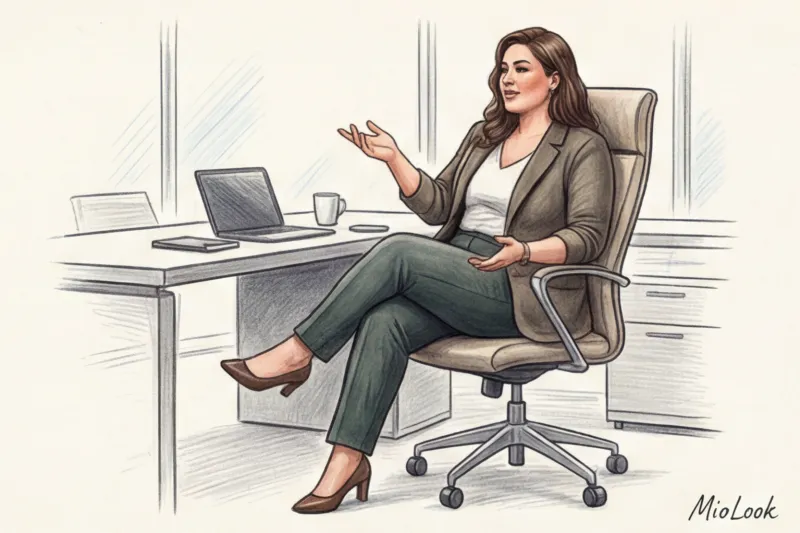
I often tell my clients: you can't convincingly defend a multi-million-dollar budget if you can't breathe in a stiff jacket and the waistband of your trousers is digging into your stomach. Physical discomfort is immediately noticeable to those around you. You start fidgeting, your breathing becomes shallow, and your voice loses its deep, authoritative timbre. Those around you might not realize it's the tight armholes—they'll assume you're nervous about the subject of the negotiation.
Modern business style doesn't require sacrifice. Choose innovative fabrics. Wool with added elastane looks just as classy, but allows for freedom of movement. Many premium brands now make classic trousers with hidden elastic waistbands—they look like a formal suit on the outside, but feel like comfortable joggers on the inside.
Checklist: 5 Steps to a Status-Changing Wardrobe for a Female Leader
Theory without practice is dead. Here's a concrete algorithm you can start applying this evening:
- Strict audit: Remove from your active wardrobe all flimsy knitwear, shapeless cardigans, and thin viscose items that don't hold their shape.
- Definition of palette: Find your deep status shades (emerald, sapphire, marsala) and replace at least half of your black items with them.
- Investment in Power Suit: Buy one perfectly tailored suit made of a thick fabric. Important: buy a size that fits comfortably around the widest part of your body, then take it to a tailor to have the waist and sleeve length adjusted. The cost of the adjustment will be worth it a hundredfold.
- Accessories scaling: Replace small embellishments and delicate pins with proportionate, architectural pieces.
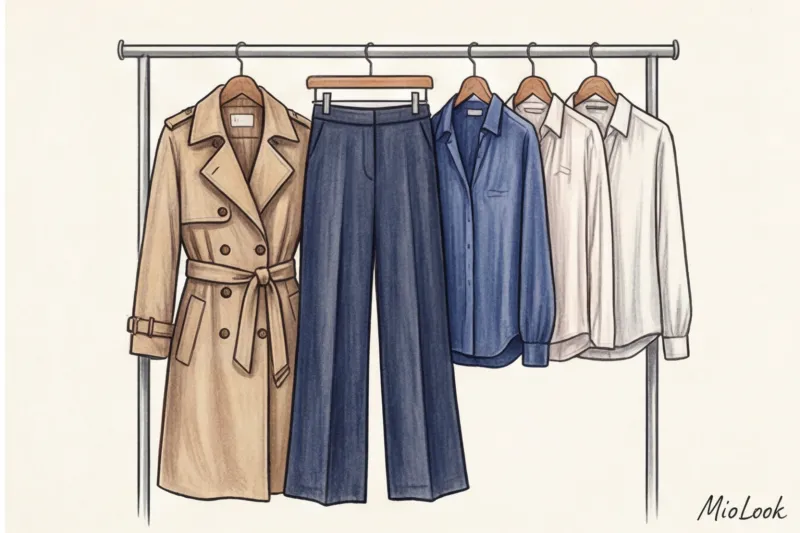
- Wardrobe digitization: To avoid wasting your morning hours wondering “what to wear,” upload your new ideal items to MioLook app The smart wardrobe feature will help you create dozens of fresh outfits from 5-7 basic items.
Remember the most important thing: your clothing size doesn't determine your professionalism. But how you present your experience and expertise determines how quickly you'll be heard. Stop apologizing for your figure with baggy clothes. Choose thick fabrics, clean lines, and deep colors—and let your wardrobe work for your authority.