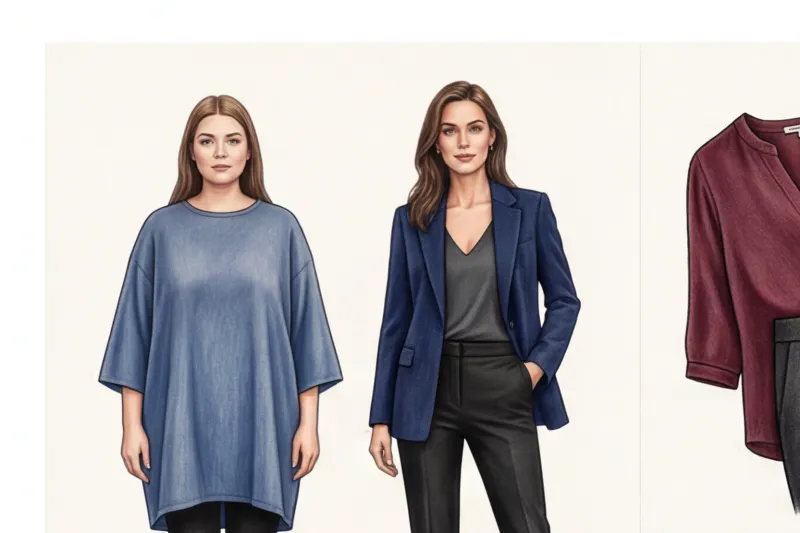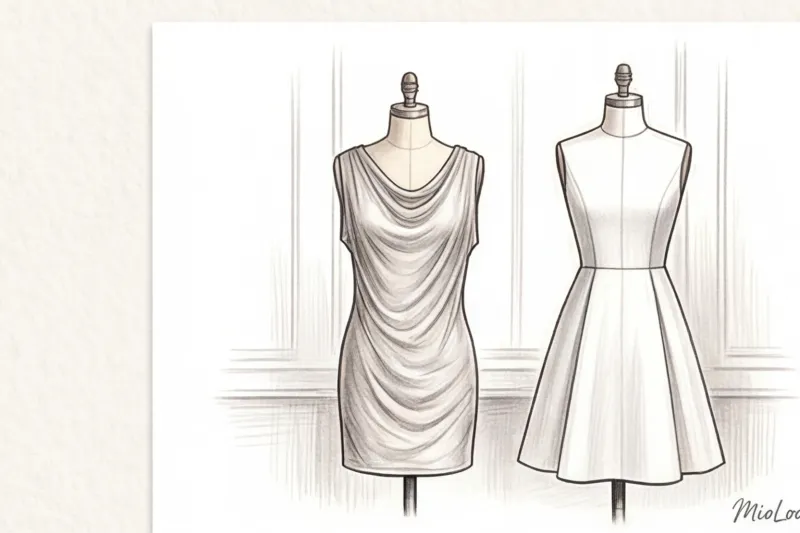
Over 12 years as a stylist, I've reviewed hundreds of wardrobes. And do you know what almost all of my apple-shaped clients' closets had in common? An abundance of "apology pieces." That's my personal term for shapeless black tunics, flowing rompers, and oversized cardigans made of flimsy knits. Women bought them not because they liked the design, but to hide. When we're looking for what clothes for plus size women with big bellies works best, glossy magazines of the early 2000s still whisper to us: “hide, drape, pull in.”
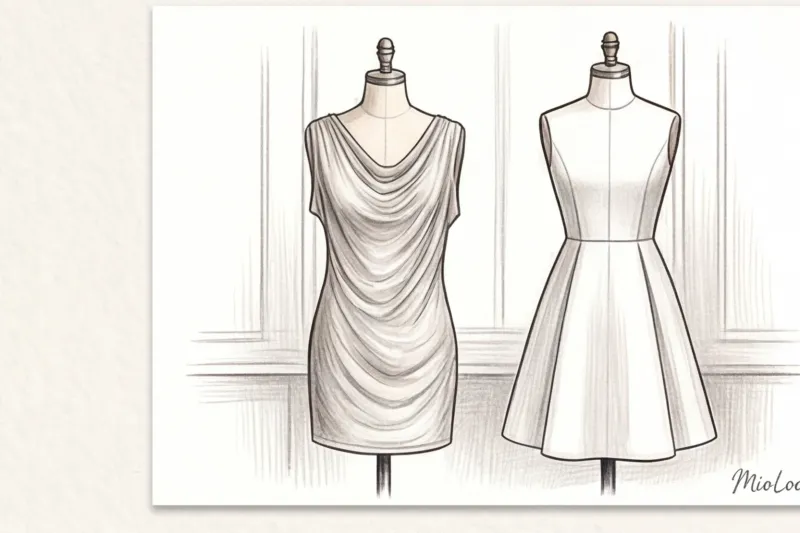
We have told you more about the history of this stylistic misconception in our A complete guide to a basic wardrobe for plus-size women Today, I want to offer you a radically different approach. We'll no longer "mask" anything. We'll apply the laws of textile physics and learn how to construct an architectural silhouette that holds its shape regardless of your body's contours.
The Anatomy of the Apple Shape: Why the Old Rules No Longer Work
Let's be honest about the facts. The apple-shaped figure has amazing natural advantages: you typically have slender, long legs, narrow hips, and a shapely buttocks. The bulk is concentrated exclusively in the abdominal area (belly) and is often accompanied by a full bust.
One of my clients, Anna, a 38-year-old IT executive, spent years hiding her figure in voluminous robes. Her logic was simple: if the garment doesn't cling to her stomach, then it's not visible. In practice, this approach backfired. The shapeless fabric hid her beautiful, slender legs and narrow hips, visually widening her entire silhouette to the extent of her widest point (her stomach). Anna became a monolithic rectangular block.
The Myth of Empire Style and the Treachery of Fine Knitwear
The most harmful and persistent online advice for women with a belly is to wear empire-line dresses (with a seam just below the bust). Now imagine the geometry: the seam runs directly under the bust, and then the fabric falls freely downwards. What happens if there's a protruding belly underneath this fabric? The result is a classic maternity silhouette. The empire line acts like a neon arrow, pointing precisely to the area you wanted to distract from.
The second enemy is thin viscose or polyester knitwear. According to statistics, 80% of plus-size clothing in the mass market is made from cheap blended fabrics with a high elastane content. Such fabrics are physically incapable of holding their shape. They cling to every fold, sink into every anatomical depression, and highlight even those nuances of the body that aren't actually there.
Tired of shapeless things?
Try MioLook for free: A smart AI stylist will create the perfect look based on your proportions and body structure.
Get access — €0.99 onceIdeal clothing for plus-size women with a big belly: the architectural cut rule
The secret to a stylish wardrobe for the "apple" body type lies in the transition from the concept of a "cover" to the concept of a "frame." Clothes should create their own, independent silhouette.
A body with soft lines requires a rigid, architectural frame. If the fabric of your clothing can't stand on its own, it won't be able to shape your silhouette.
The foundation of your wardrobe is straight or slightly A-line lines. The shoulder line is crucial. If your belly protrudes, we need to visually balance this mass. Jackets with small but firm shoulder pads immediately create balance: the shoulder girdle takes the structural load, and the belly visually recedes into the background.
Textile Physics: How Fabric Density Decides Everything
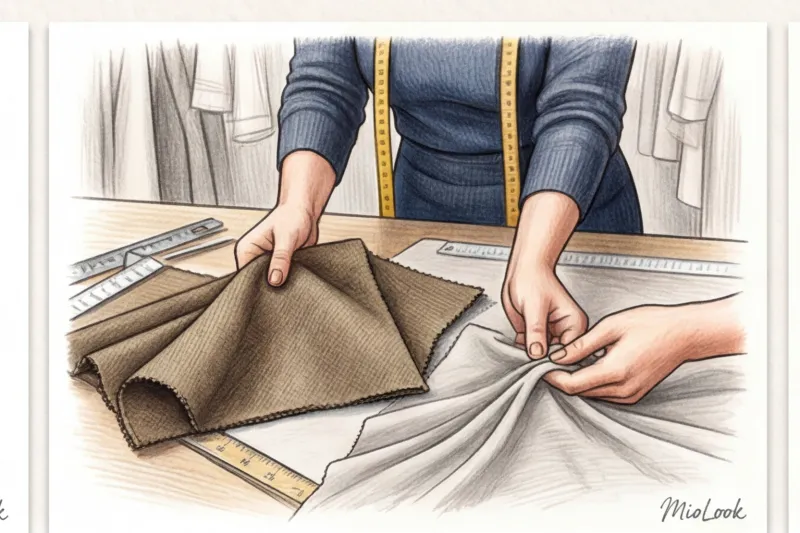
Clothing engineering uses a concept called "drape coefficient." The higher it is, the softer the fabric flows over the body. For an apple-shaped figure, we need fabrics with a low drape coefficient—those that resist gravity.
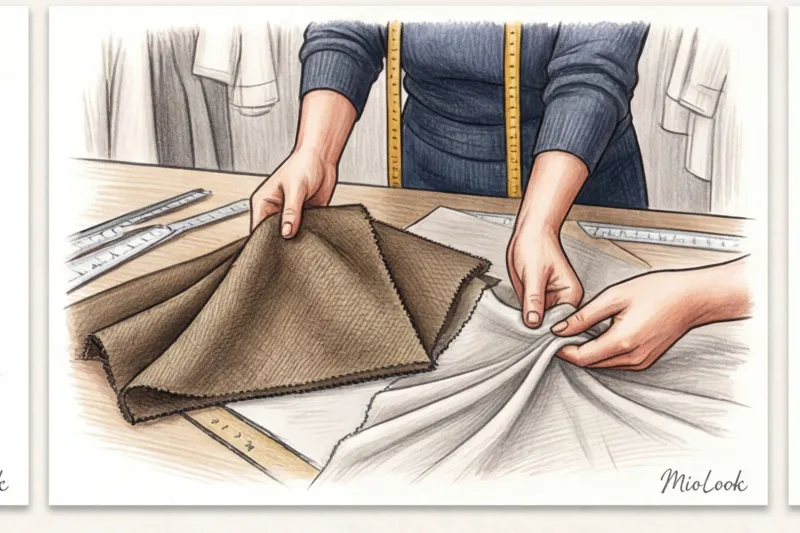
When shopping with clients, I always spend Crash Test in a Fist Try this today: go to a store, grab the hem of a dress or the edge of a jacket, squeeze the fabric tightly in your fist for 5 seconds, and then release.
1. If the fabric remains a pitiful, wrinkled rag, hang it back up.
2. If the fabric springs back, straightens out instantly, or feels like thick canvas, we've found a candidate.
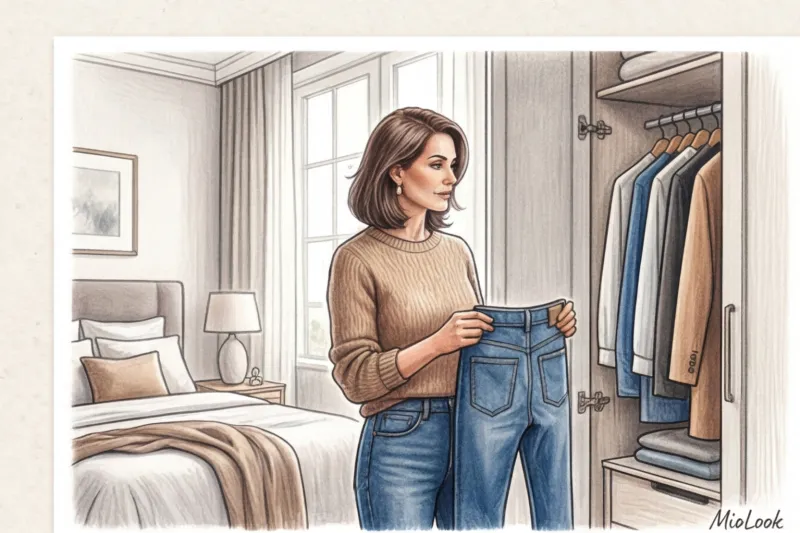
Instead of stretch denim, look for raw denim made from 100% cotton. Instead of thin silk, look for dense poplin weighing at least 180 g/m². Instead of a soft cardigan, look for wool gabardine. Yes, these fabrics may feel unusually stiff for the first 10 minutes of wear, but they act as a supportive exoskeleton.
A Basic Wardrobe for an Apple-Shaped Body: 5 Essentials
Building a capsule wardrobe requires investing in the right pieces. Skip the 20 cheap "sweaters." You only need five perfect structural elements.
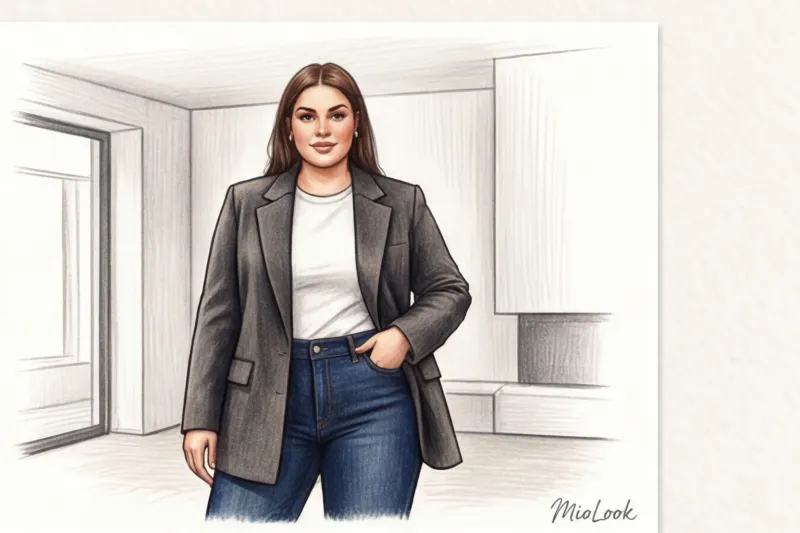
Long straight-cut jacket
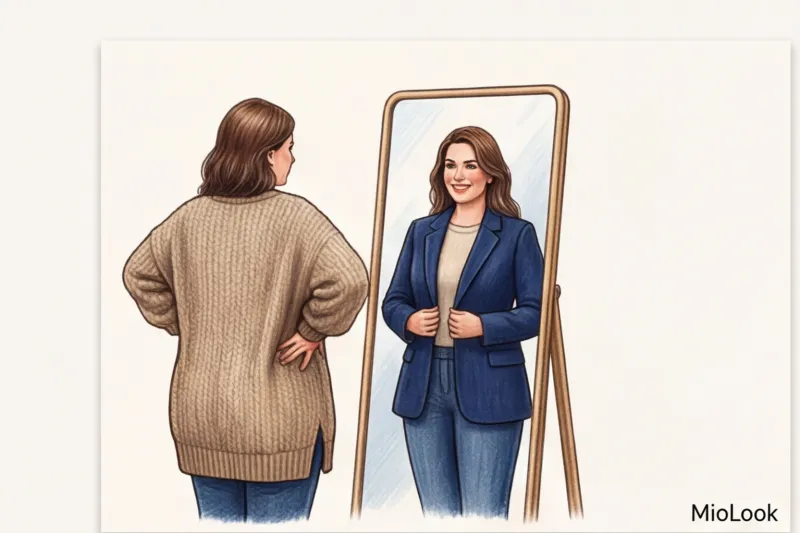
This is your magic wand. The jacket should be strictly single-breasted, made of thick wool or heavy cotton. We only wear it unbuttoned. The length of the jacket is critical: it should end below the widest part of the stomach, preferably mid-thigh. No fitted styles from the 2010s—only a straight, slightly masculine cut.
Mid-rise trousers made of thick fabric
Here lies another counterintuitive insight. Fashion blogs scream, "Everyone needs a high waist!" But for an apple-shaped figure, high-waisted pants often roll down, creating an unflattering roll under the belly, or digging into the ribs. Your ideal choice is a mid-rise, which sits just under the protruding part of the belly. A flat front is a must, with no pleats, folds, or bulky pockets.
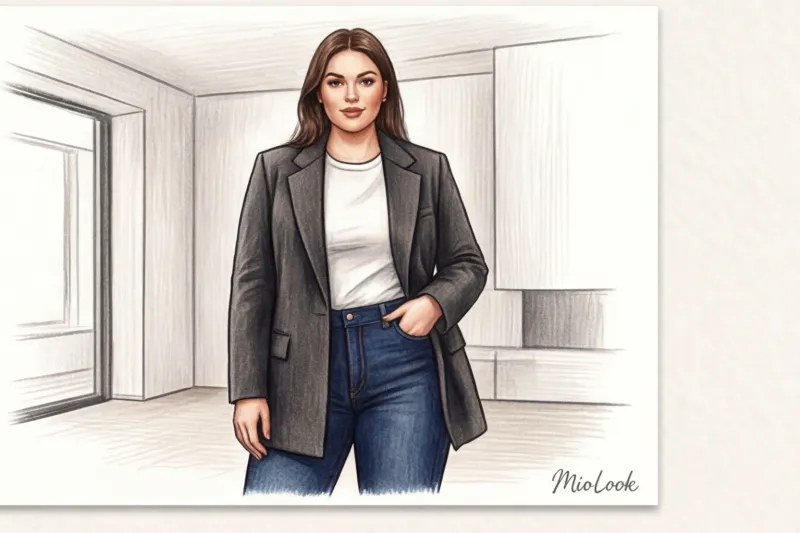
Shirt dress made of shape-resistant cotton
Why is a crisp shirtdress so much better than a soft wrap dress? A viscose wrap dress is tricky: it often flares out over a full bust and clings treacherously to the waist. A stiff cotton shirt holds its shape. By unbuttoning the top three buttons, you create a perfect V-neckline that draws attention to your face and head area.
Tidy up your closet
Digitise your belongings and create the perfect capsule wardrobe with the Smart Wardrobe feature.
Try the MioLook appThe Art of Optical Illusions: How to Hide Your Belly with Layers
According to the principles of Gestalt psychology, the human brain is lazy: it judges the width of an object based on its closest visible boundaries. This can be controlled using the "Color Column" technique.
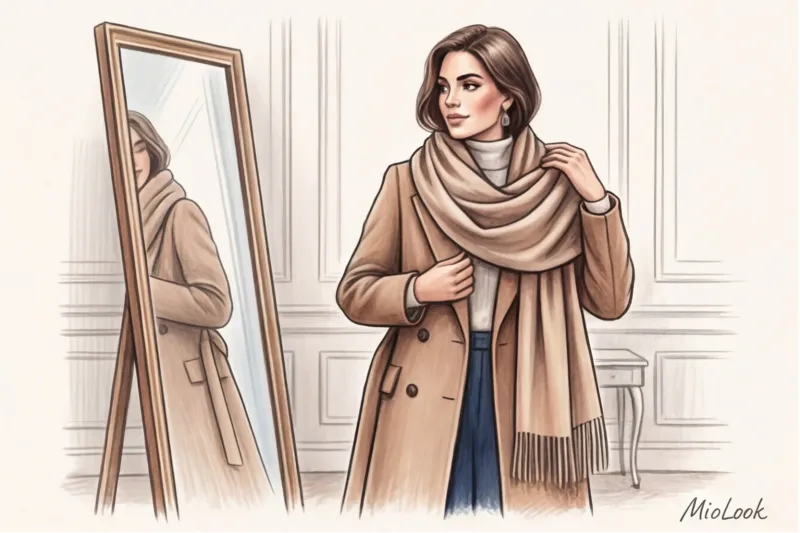
The method involves wearing a base layer in a single color (for example, a navy top and navy pants) and layering a contrasting open jacket or heavy trench coat (for example, camel) over it. As a result, the two jacket flaps create sharp vertical lines. The observer's eye perceives your width not by the actual contours of your body, but by the distance between these flaps. Physically, this reduces the visual width of your torso by up to a third.
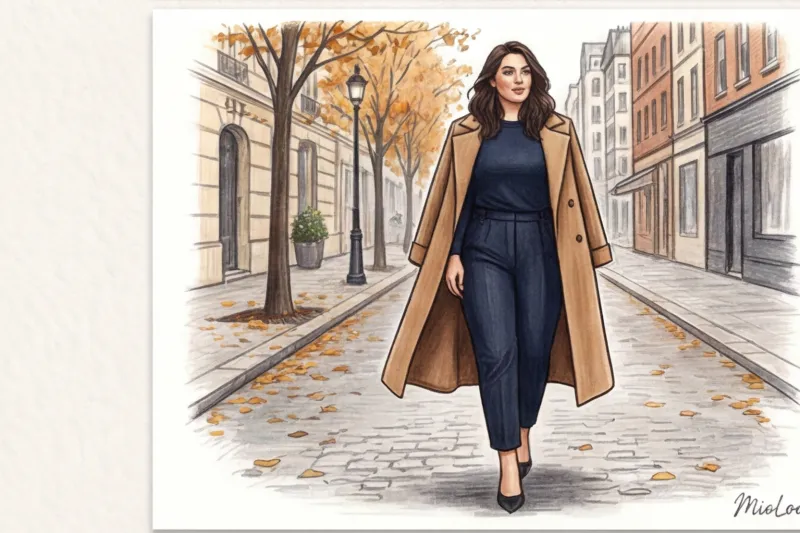
When it does NOT work: As a stylist, it's my duty to warn you that this illusion is shattered if the top layer is a thin knit cardigan. Soft knitwear won't create a straight vertical line; it will simply curve around your belly, drawing attention to it.
Eco-checklist: investing in things that will last for years
The shift to architectural cuts is directly linked to conscious consumption and sustainable fashion. A McKinsey study (2024) on clothing durability found that structured garments made from dense natural fibers last 3-4 times longer than mass-market knitwear.
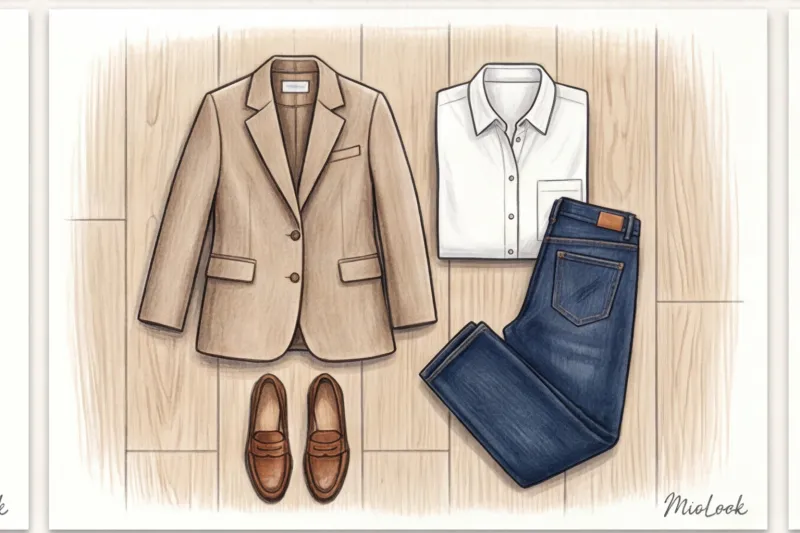
Before purchasing an item, check it using this mini-checklist:
- Elastane percentage: Avoid fabrics with more than 2-3% elastane. Elastane threads quickly deteriorate from body heat and washing, causing the garment to sag and lose its original shape.
- Seam quality: If the fabric is thick, the seams should be reinforced. Pull the seam apart—if the threads are visible, the fabric will soon "pull."
- Presence of lining: Jackets, trousers and skirts lined with viscose or cupro always fit better, as the lining absorbs friction, preventing the main fabric from wrinkling on the stomach.
Conclusions: Your silhouette is your rules
It's time to stop apologizing for your body with dull, shapeless clothes. Your figure, with its beautiful legs and defined bust, is a wonderful foundation. The purpose of your clothes is to be a worthy frame for this foundation, not a mere furniture cover.
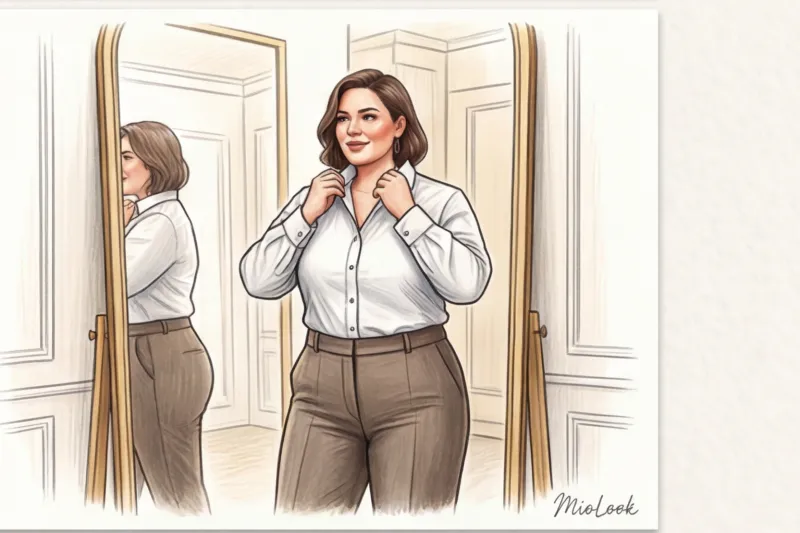
The key insight I want you to take away today is that fabric density is more important than the size on the tag. Make "crash testing" a new shopping habit. Create a foundation of five architectural pieces, use strong vertical lines, and let quality tailoring do the work.
Your perfect look starts here
Join thousands of users who look flawless every day with MioLook. Artificial intelligence will help you create a capsule wardrobe that flatters your figure.
Get access — €0.99 once